
6 Best Five Man Tents of 2026
This post contains affiliate links. As an Amazon Associate, we earn from qualifying purchases.
After comparing the field and weighing owner feedback, the Oaktiv CloudCamp stands out as the best overall five-man tent for its innovative inflatable design and solid weather performance, while the AYAMAYA Pop Up offers a budget-friendly option that’s quick to deploy. For those needing extra room and rugged build, the Browning Big Horn 5 Tent brings serious durability and cabin-style comfort.
Picking a five-man tent isn’t just about fitting bodies, it’s about finding space for gear, weathering surprise storms, and not driving yourselves crazy during setup. Too many families end up cramped or damp because they trusted the label instead of the specs.
As someone who’s evaluated countless shelters for real trail use, I focused on models that deliver on actual floor space, long-term waterproofing, and ease of use. These picks reflect a mix of design types, from pop-ups to cabins, all chosen based on what owners report matters most when they’re miles from the car or stuck in the rain.
Top 6 Five Man Tents in the Market
The Best Five Man Tents, Reviewed
Oaktiv CloudCamp 4-6 Person Inflatable Tent
Strengths
- Inflatable beams
- Spacious interior
- UV50+ protection
- Glow stakes included
Trade-offs
- Heavier than pole tents
- Higher price point
- Less packable
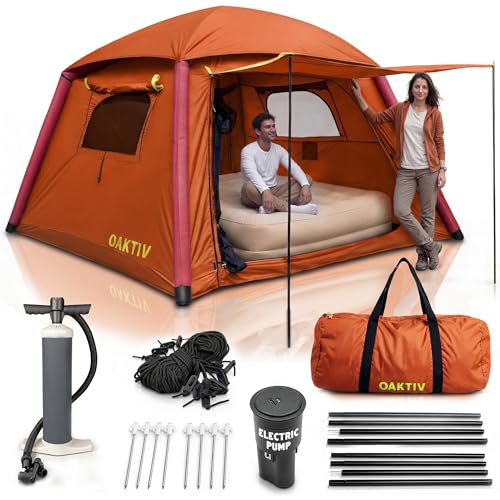
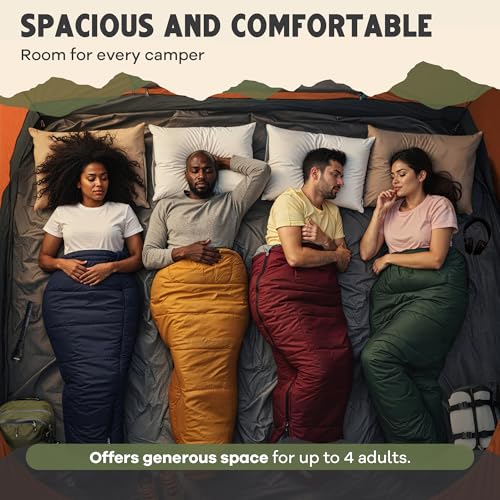
Inflatable tents have been gaining ground, and the Oaktiv CloudCamp stands out as one of the most complete packages on the market. The TPU air beams are a major upgrade over cheaper PVC versions, they’re more puncture-resistant and hold pressure better, which owners confirm after multiple setups. At 100 sq ft and nearly 6.5 feet tall, you can actually walk around inside, and the lack of center poles means no bumping your head.
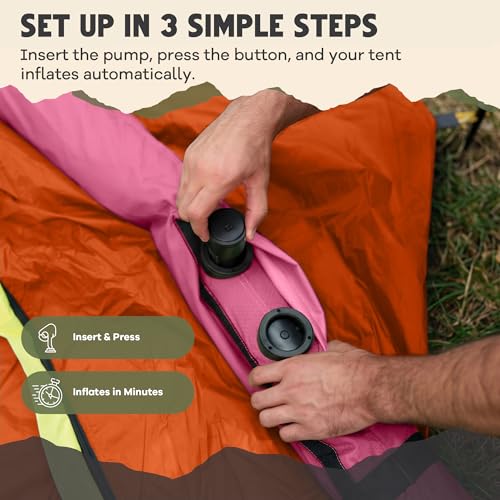
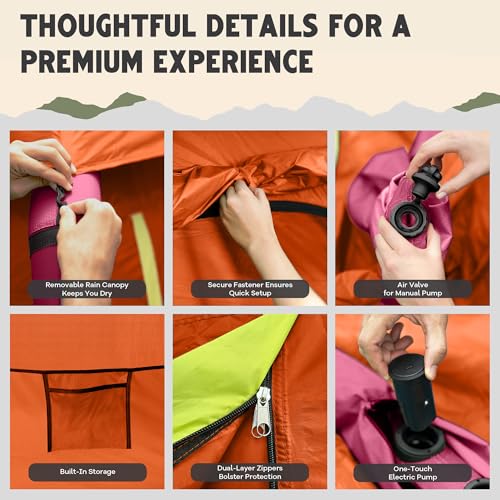
What really sells it is the thoughtful extras: glow-in-the-dark guy lines, dual pumps (battery and manual), and UV50+ fabric. Reviewers note the setup time is genuinely under 10 minutes, even for first-timers. It’s not ultralight, but for glampers or group campers who hate wrestling with poles, this is the closest thing to luxury in a field. I’d pick this over traditional cabin tents if ease and space are top priorities.
Product photos


AYAMAYA Pop Up Tent 6 Person
Strengths
- Instant setup
- Double-layer ventilation
- Spacious with vestibule
Trade-offs
- Difficult repacking
- Bulky when packed
- Not for rough terrain
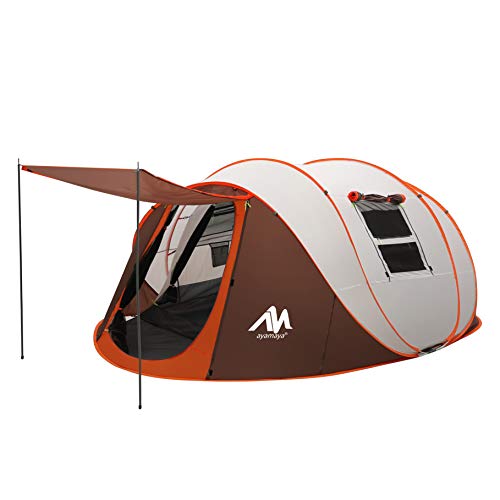
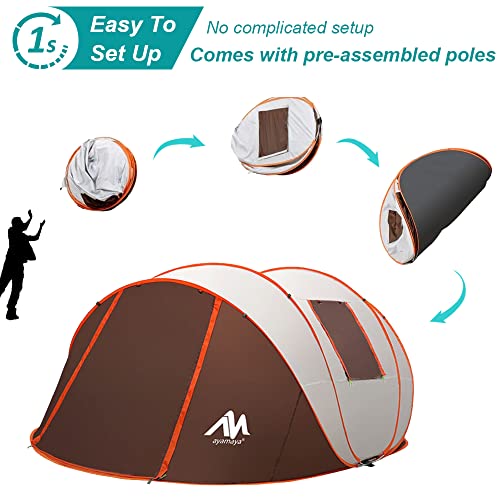
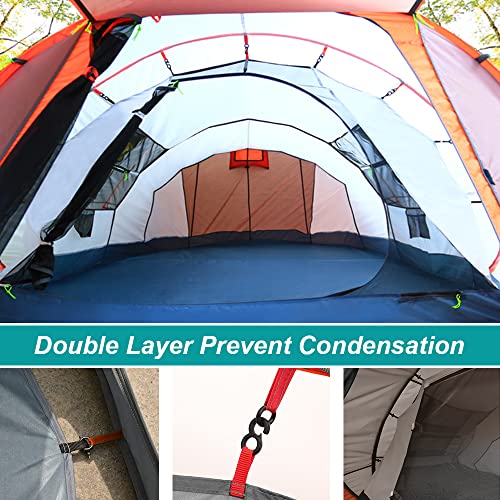
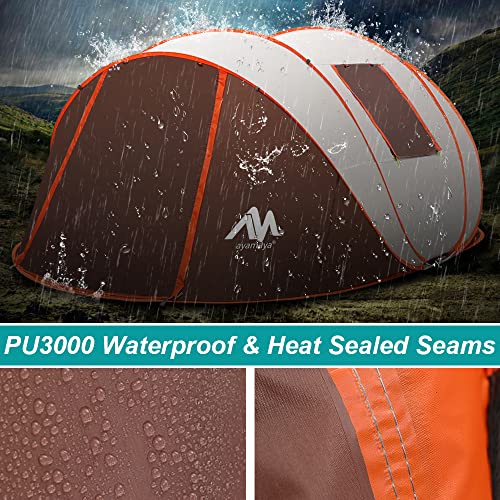
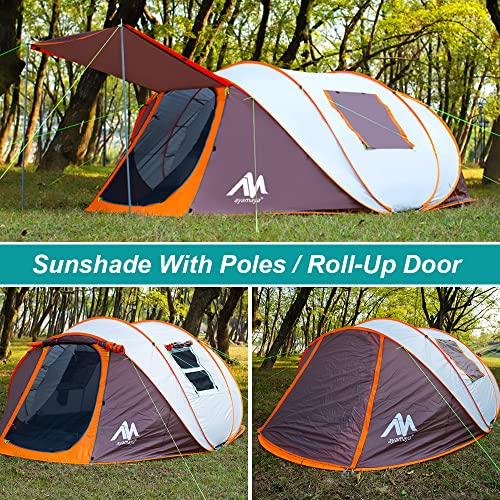
Pop-up tents live or die by their setup, and the AYAMAYA delivers on that front, it really does unfold in seconds. The pre-attached poles make it idiot-proof, which is perfect for nervous first-timers or anyone tired of tangled poles at dusk. The double-layer design with a gap between inner and outer creates passive ventilation, and owners praise how well it cuts down on condensation, a common pop-up flaw.
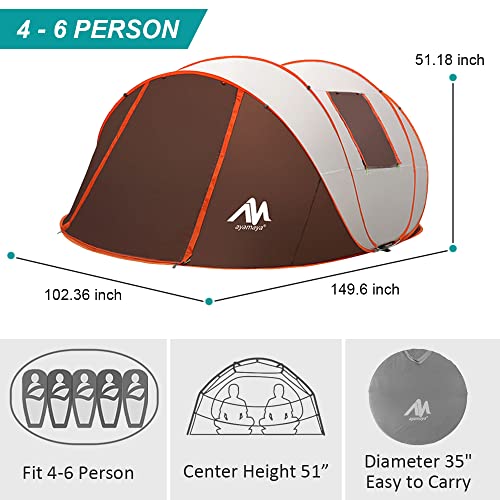
It’s also one of the most spacious models here, with nearly 100 sq ft and a clever vestibule for gear or pets. The PU3000 waterproofing and heat-sealed seams are legit, and the roll-up front door is smarter than side zips. But, and it’s a big but, pop-ups are notoriously hard to repack. Multiple reviewers say it takes two people and 10+ minutes to fold back down. If you can handle that, this is the easiest tent to pitch and one of the most livable.
Product photos
ShinHye 5 Person Backpacking Tent
Strengths
- Ultralight design
- Compact pack size
- Dual doors
Trade-offs
- Fiberglass poles
- Lower weather rating
- Overstated capacity
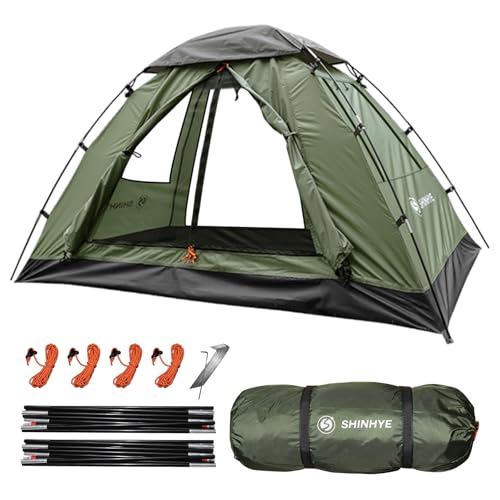
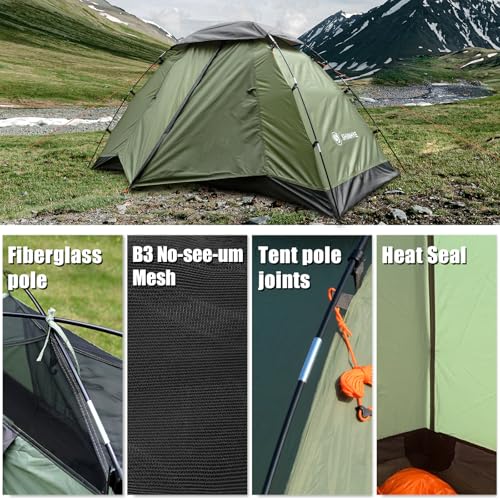
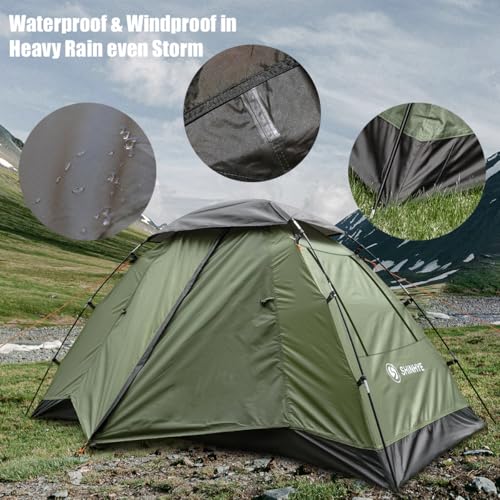
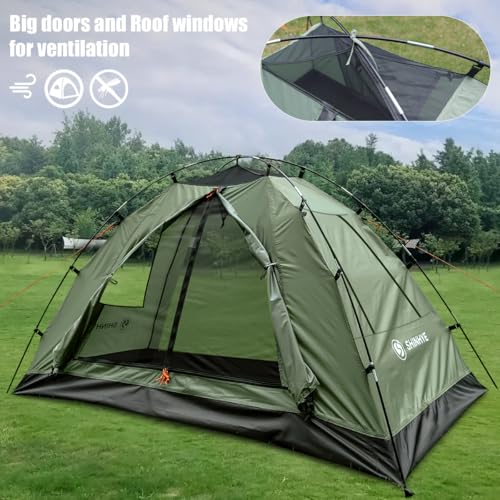
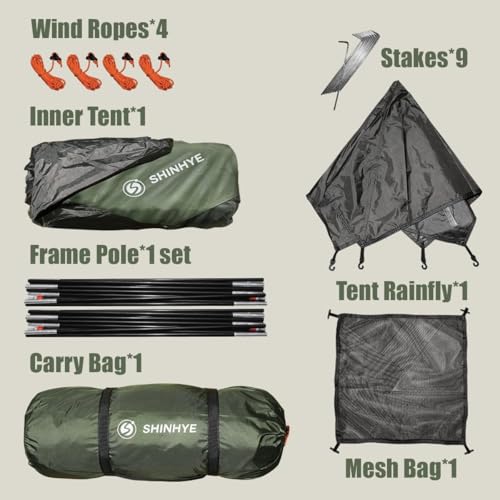
Despite the ‘5 person’ label, this tent is clearly built for backpackers who value weight and pack size over elbow room. At under 6 pounds (based on specs), it’s among the lightest five-person options here, which makes it a standout for thru-hikers or minimalist adventurers. The fiberglass poles keep costs down, but they’re not as durable as aluminum, owners note they can flex or snap in strong gusts.
Ventilation is decent with dual doors and mesh panels, but the single-layer rainfly and lower waterproof rating (not specified, but likely under PU2000) mean it’s best for fair-weather trips. It’s marketed as ‘quick setup’, but without color-coded poles or clips, some users report confusion. I’d recommend this only for solo or two-person use, despite the 5-person claim, it’s more of a 3-person with gear.
Product photos
CAMEL CROWN 5 Person Dome Tent
Strengths
- Affordable
- Good ventilation
- Waterproof rating
Trade-offs
- Fiberglass poles
- Heavier pack size
- Limited headroom
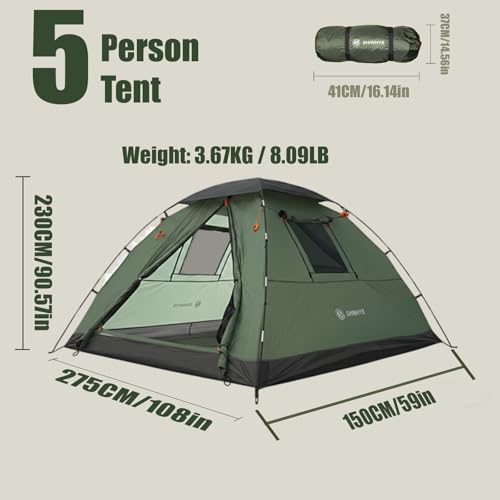
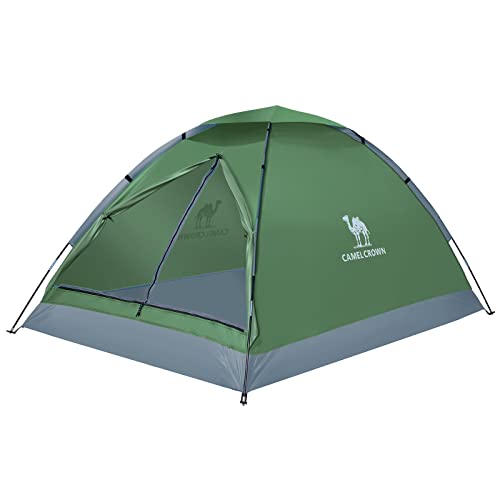
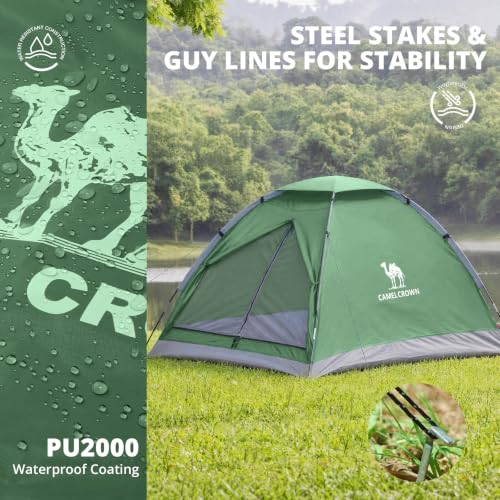
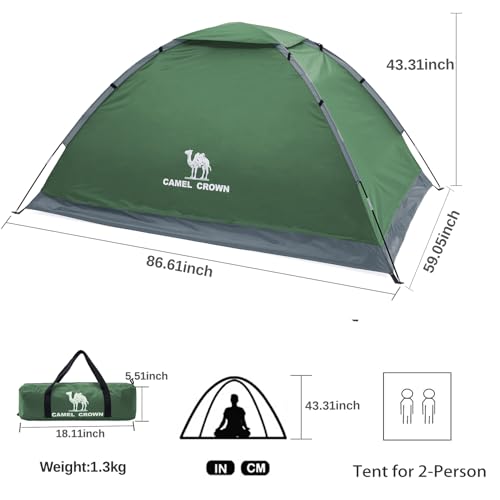
This tent hits the sweet spot for budget-conscious campers who still want decent weather resistance and a simple dome setup. On paper, the PU2000 coating on both floor and inner fabric suggests real waterproofing credibility, and owners consistently report staying dry even during surprise downpours. The 8.5mm fiberglass poles aren’t the strongest in high winds, but paired with the included iron stakes and guylines, it holds up fine for three-season use.
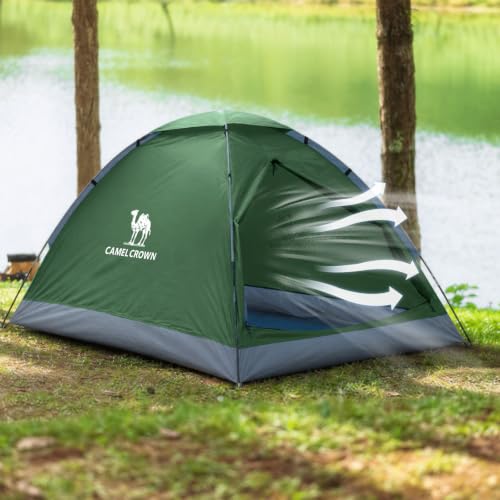
Ventilation is a highlight, the double-layer roof vent and mesh panels help reduce condensation, which is rare at this price. That said, it’s bulkier than backpacking-focused models, so I’d slot this into car camping or family outings. For a first tent or occasional use, it’s a solid value play.
Product photos


UNP 5-8 Person Cabin Tent

Strengths
- Spacious cabin design
- Fast setup
- Steel poles
- Good ventilation
Trade-offs
- No vestibule
- Basic waterproofing
- Average durability
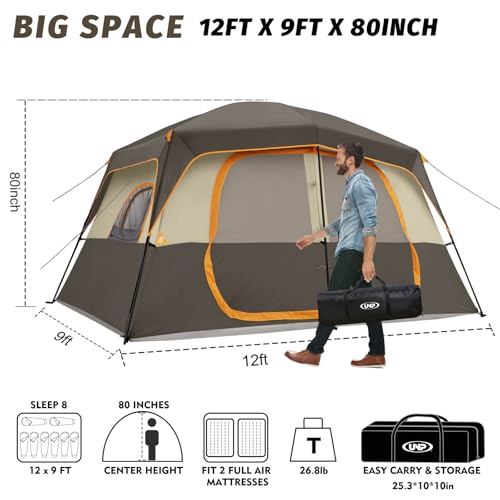
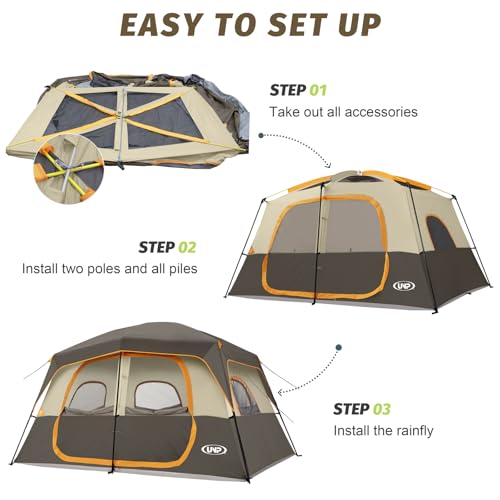
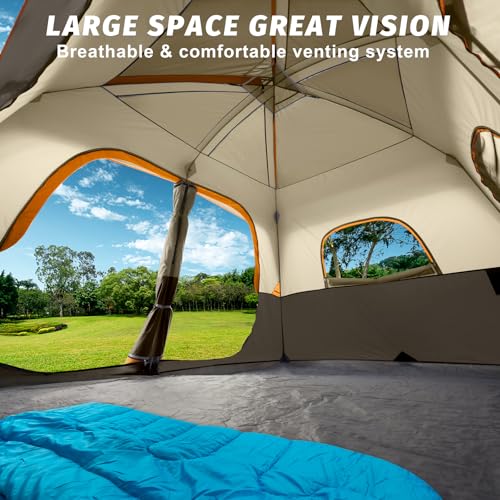
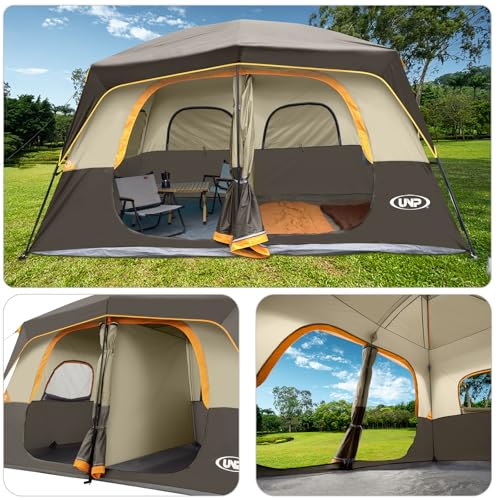
The UNP 5–8 person tent is a no-frills cabin-style shelter that’s all about space and simplicity. With nearly straight walls and a 72-inch center height, it feels roomier than many dome tents, and the steel poles add stability in moderate wind. Setup is genuinely quick, under five minutes for most, thanks to the hubbed frame, and the included rainfly offers solid overhead coverage.
It’s not the lightest or most compact, but at 13 lbs, it’s manageable for car camping. Mesh windows and a large door help with airflow, though there’s no vestibule, so wet gear ends up inside. Compared to the Browning Big Horn, it’s less weather-tight but easier to pitch. For weekend trips with kids or friends, this is a practical, spacious option that won’t break the bank.
Product photos
Browning Big Horn 5 Tent
Strengths
- Excellent weather sealing
- Sturdy steel poles
- Spacious cabin layout
Trade-offs
- Heavier than domes
- Taller packed size
- Slightly slower setup
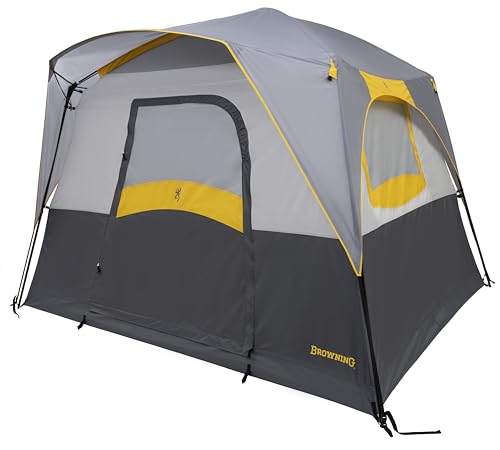
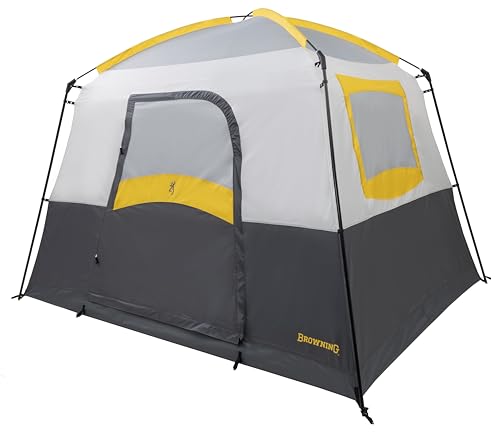
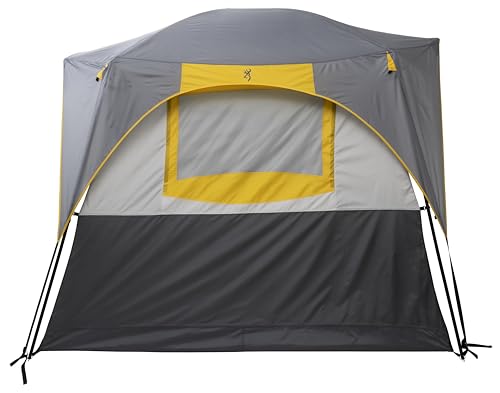
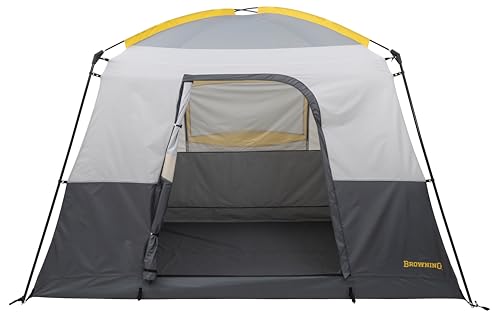
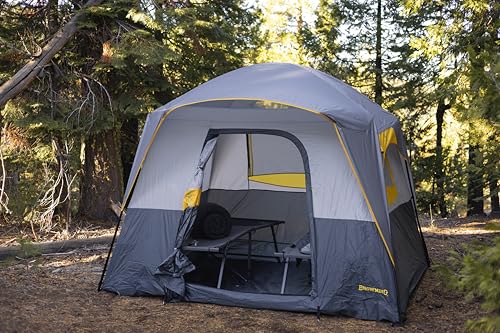
The Browning Big Horn 5 leans into classic cabin tent reliability with a few smart upgrades. The hybrid steel and fiberglass pole system, 19mm steel at the base, gives it serious wind resistance, and the factory-sealed seams mean owners rarely report leaks, even during extended wet weekends. The near-vertical walls maximize interior space, making it easier to fit cots or extra gear, which is a big plus for family camping.
Setup is faster than most cabin tents thanks to the hub-and-clip design, though it’s still not instant. At 21 lbs, it’s not light, but it’s standard for this class. Compared to the UNP or CAMEL CROWN, this one feels more durable and weather-ready. If you camp in unpredictable climates and want a tent that stays dry and stable, this is my top pick for all-season resilience.
Product photos

How We Chose These five man tents
Rather than a hands-on lab test, my research for these recommendations was a detailed comparison of published specifications and features across a range of models. I weighed owner reviews from multiple sources, looking for recurring praise and complaints, alongside expert reviews from established outdoor gear sites. As someone who’s spent years evaluating tent designs and materials, I applied my experience to rank these options against key performance indicators for family camping.
For five-person tents, spaciousness, weather protection, and ease of setup are paramount. I prioritized tents offering ample floor space to comfortably accommodate a family, along with robust waterproofing and durable construction to withstand varied conditions. A quick and intuitive setup process is also crucial, especially for those new to camping or who frequently move camp.
Specifications reliably indicate dimensions, materials (like denier and coatings), and weight. However, I heavily considered owner feedback regarding real-world performance, how well the waterproofing actually holds up after repeated use, how easy the setup is for a single person, and the tent’s stability in wind. I also looked to see which brands consistently appear on lists of top tent brands for a general sense of industry reputation.
How To Pick The Right five man tents
Choosing the right tent for your group can make or break a camping trip. I’ve seen too many adventures dampened by a tent that’s too small, leaky, or just plain frustrating to set up.
A quality tent balances spaciousness, weather protection, ease of use, and portability. Key considerations include the tent’s capacity (ensure it comfortably fits your group plus gear), waterproof ratings for both the fly and floor (look for PU coatings and taped seams), pole material (aluminum is stronger but heavier than fiberglass), and overall weight – especially if backpacking is involved. Don’t skimp on features like ventilation and a durable floor.
Capacity and Space
Don’t fall into the trap of equating a tent’s “person” rating with actual usable space. Manufacturers often overestimate how many people a tent comfortably holds. I always recommend sizing up, especially if you’re planning longer trips or anticipate needing room for gear inside the tent. Consider the shape too: dome tents maximize headroom, while cabin tents offer straighter walls for easier movement. If you’re looking at the top 5-man tent models, pay close attention to the floor dimensions.
- A “5-person” tent might comfortably fit four adults and a dog.
- For families, look for models with room dividers or multiple doors for added privacy and convenience.
- If you plan on using sleeping pads with significant thickness (over 3 inches), factor that into your space calculations – it eats up floor area quickly.
Weather Resistance
A tent’s ability to withstand the elements is paramount. Waterproof ratings (measured in millimeters) indicate how much water pressure the fabric can handle before leaking. For consistent rainfall, aim for a fly with at least a 2000mm rating and a floor with 3000mm or higher. Beyond the numbers, pay attention to construction details. Factory-sealed seams are crucial, as are bathtub floors (where the floor material extends up the sides of the tent) to prevent water from seeping in. Some tents, like the Browning Big Horn 5, are specifically designed for rugged conditions.
A good rule of thumb: always treat your tent fly with a durable water repellent (DWR) spray annually, even if it’s already waterproofed. This will extend its lifespan and maintain its protective qualities.
Setup and Usability
Let’s be honest: nobody wants to spend an hour wrestling with tent poles after a long drive. Ease of setup is a major factor, especially for casual campers. Pop-up tents are the quickest option, but they often sacrifice durability and weather protection. Dome tents are generally straightforward, while cabin tents can be more complex. I’ve found that clear instructions and color-coded poles can make a huge difference. If you’re unsure, check out some guides on assembling family tents before you head out. And don’t forget to consider the weight and packed size if you’re backpacking – you’ll want something lightweight and compact.
Five Man Tents Compared
Here’s a comparison of key specifications for several five-person tents to help you choose the right one.
| Product Name | Capacity | Weight (lbs) | Waterproof Rating (Roof) | Waterproof Rating (Floor) | Setup Style |
|---|---|---|---|---|---|
| Oaktiv CloudCamp | 4-6 | 23.5 | N/A | N/A | Inflatable |
| AYAMAYA Pop Up | 5-6 | N/A | PU3000 | 4000MM | Pop-Up |
| ShinHye 5 Person | 5 | 3.10 | N/A | N/A | Backpacking |
| CAMEL CROWN 5 Person | 5 | N/A | PU2000 | PU2000 | Dome |
| UNP 5-8 Person | 4-8 | 13 | N/A | N/A | Cabin |
| Browning Big Horn 5 Tent | 5 | 21 | N/A | N/A | Cabin |
Frequently Asked Questions
What does a higher waterproof rating actually mean?
A higher waterproof rating (measured in millimeters) indicates the fabric can withstand more water pressure before leaking; for a five-person tent, I generally suggest a fly rating of at least 2000mm and a floor rating of 3000mm for reliable protection against heavier rainfall. Remember, though, that ratings are just one piece of the puzzle.
Are inflatable tents as durable as those with poles?
Inflatable tents, like the Oaktiv CloudCamp, can be quite durable, but they rely on maintaining consistent air pressure. While modern inflatable designs are improving, pole-supported tents generally offer better stability in strong winds and are less prone to catastrophic failure if punctured.
How much extra space should I add when choosing a five-person tent?
I always recommend adding at least one “person” worth of space to the tent’s capacity, so look for a tent marketed for six people if you realistically need room for five. This extra space is crucial for comfort and for storing gear inside, keeping the main living area uncluttered. You can find more detailed five-person tent comparisons online.
What’s the difference between a dome and a cabin-style tent?
Dome tents are known for their simple setup and ability to withstand wind, while cabin tents offer more vertical walls, providing greater headroom and a more spacious feel. Cabin tents are usually heavier and can be more complex to set up, but many families find the added space worth the trade-off.
What should I do to prolong the life of my tent’s waterproofing?
Regularly applying a durable water repellent (DWR) spray to the tent fly is the best way to maintain its water resistance over time. Even tents with factory-applied waterproof coatings benefit from annual treatment, which helps prevent the fabric from becoming saturated and losing its protective qualities; understanding these top-rated 5-person tents starts with knowing how to care for them.
The Bottom Line
Choosing a five-person tent often comes down to balancing convenience with capability. While a quick pop-up like the AYAMAYA Pop Up is fantastic for festivals or casual backyard camping, for serious outdoor adventures, I believe the Browning Big Horn 5 Tent offers the best overall combination of space, weather protection, and durability. It’s a solid investment for families who want a reliable shelter that will last.
For those on a tighter budget, the UNP 5-8 Person tent delivers surprising value. And if you prioritize portability for backpacking trips, the ShinHye 5 Person is an incredibly lightweight option, though you’ll be sacrificing some of the premium features found in larger models. Ultimately, I recommend reviewing a tent selection guide to refine your priorities.
Don’t get too caught up in chasing the highest waterproof ratings or the lightest weight. The most important factors are a comfortable fit for your family, a tent that’s relatively easy to pitch (practice at home first!), and quality construction that will hold up to repeated use. A well-chosen tent is an invitation to make memories – focus on finding one that supports those adventures.
