
7 Best One Person Hiking Tents of 2026
This post contains affiliate links. As an Amazon Associate, we earn from qualifying purchases.
The Underwood Ultralight Trekking Pole Tent stands out as the best overall one person hiking tent, combining serious weather protection with a minimal weight. For those on a budget, the Sutekus Camouflage Single Person Tent offers a solid entry point, while the Naturehike Ultralight Freestanding Tent brings strong versatility with its freestanding design.
Picking a solo tent isn’t just about size, it’s about trusting your shelter when the wind picks up or the rain won’t stop. Too many hikers learn the hard way that a flimsy or poorly designed tent can turn a dream trip into a soggy mess.
As someone who’s researched hundreds of shelters and spent years analyzing what holds up, I focused this guide on real-world performance. These picks are based on specs, owner feedback, and what actually matters when you’re miles from the trailhead: weight, weather protection, and smart design.
Top 7 One Person Hiking Tents in the Market
The Best One Person Hiking Tents, Reviewed
Underwood Ultralight Trekking Pole Tent
Strengths
- Ultra lightweight
- Excellent waterproofing
- Versatile setup
Trade-offs
- No trekking poles included
- Lower headroom
- Requires practice for optimal pitch
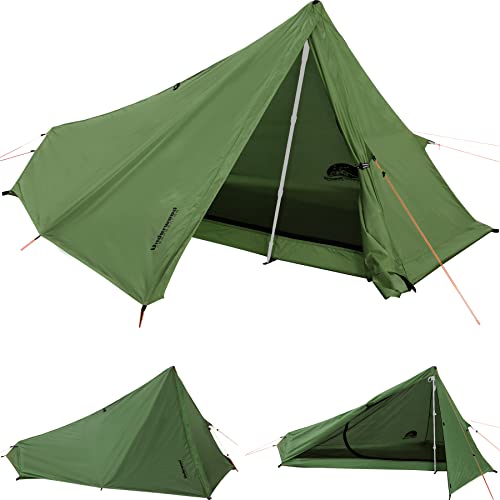
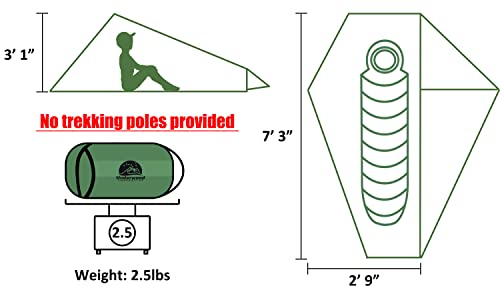
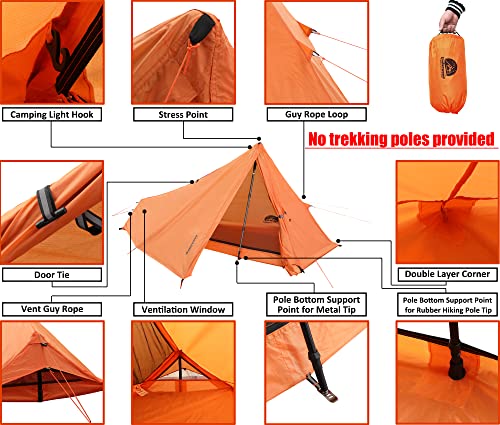
I’ve always had a soft spot for trekking pole tents, they cut weight smartly, and this one executes the idea well. At 2.5 lbs, it’s among the lightest true shelters here, and the 7’3″ length gives taller hikers some relief. The PU 5000 coating and factory-sealed seams are standout specs for weather protection, and reviewers consistently praise how dry they stayed during downpours. The dual-layer door and side mesh window deliver solid airflow, though condensation can build up if the vestibule isn’t tensioned right, a common issue in this class.
What really sets it apart is the setup flexibility: use trekking poles, any long stick, or just hang the guyline from a tree. That’s huge for minimalist hikers. But be warned, it doesn’t come with trekking poles, so if you don’t already have them, that’s an extra cost. Still, for those committed to cutting pack weight, this is a strong contender.
Product photos


Naturehike Ultralight Freestanding Tent

Strengths
- Footprint included
- High headroom
- Good ventilation
Trade-offs
- Slightly bulky packed size
- Pole clips could be sturdier
- Higher price point
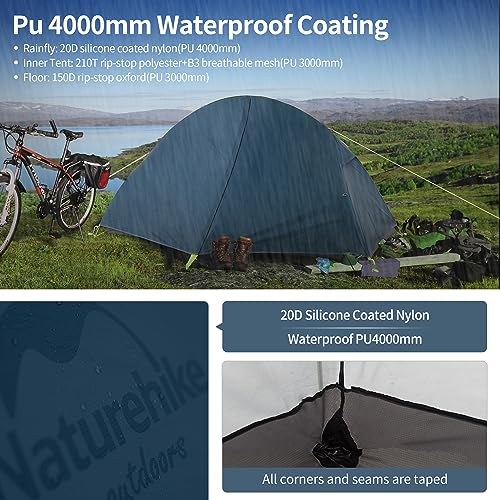
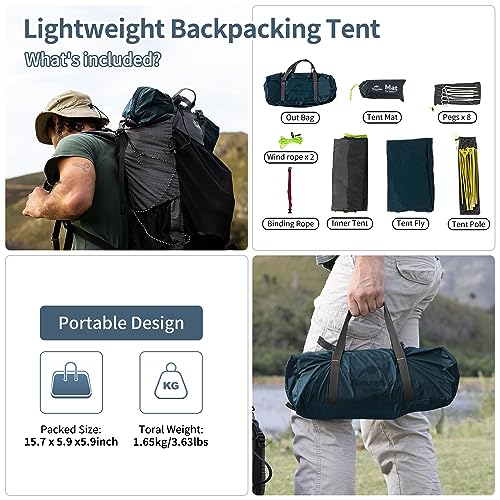
The inclusion of a footprint changes the game here, most ultralight tents make you buy that separately, adding cost and hassle. At 3.63 lbs, it’s not the lightest, but the 20D silicon-coated nylon offers great strength-to-weight ratio, and the PU4000mm rating means solid rain protection. The 43.3” peak height is unusually tall for a solo tent, giving real sitting-up room, which a lot of owners appreciate after long days on the trail.
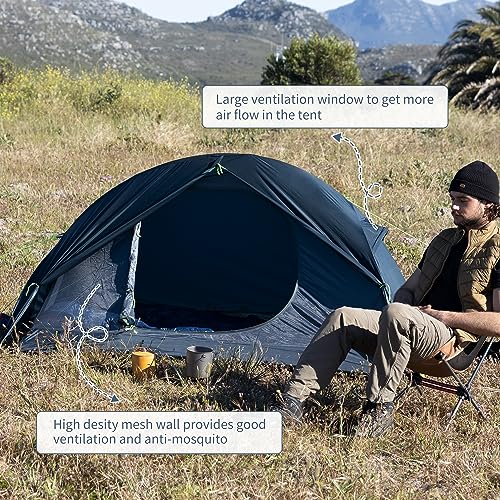
Ventilation is strong thanks to the double-layer design and B3 mesh, and the freestanding Y-pole setup takes under five minutes. Some users mention the clips feel a bit flimsy, but overall durability holds up. Compared to the Night Cat, it’s slightly heavier but much more rugged and better ventilated. For bikepackers and hikers who want convenience and comfort, this is a smart pick.
Product photos


Clostnature Ultralight Backpacking Tent
Strengths
- Superior ventilation
- Freestanding design
- Spacious interior
Trade-offs
- Slightly heavier
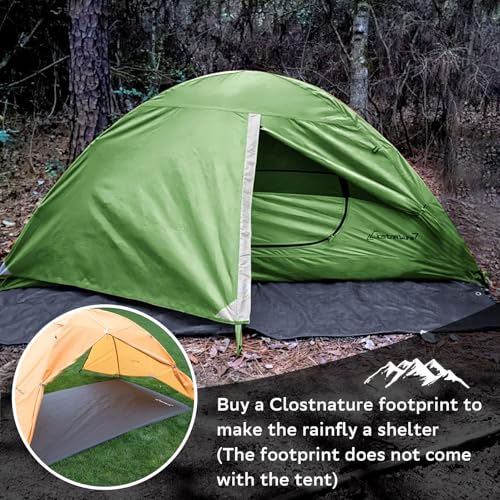
- Rainfly coverage could be better
- Packed size larger than ultralights
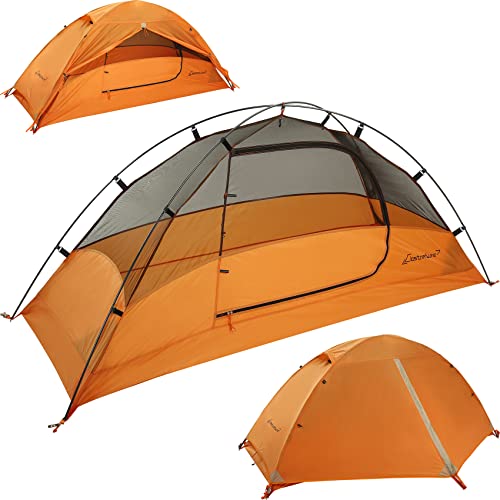
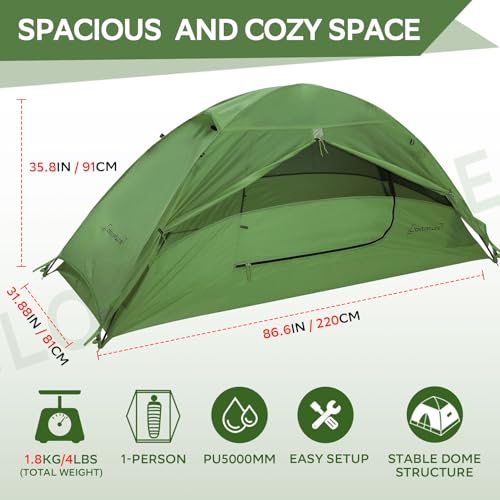
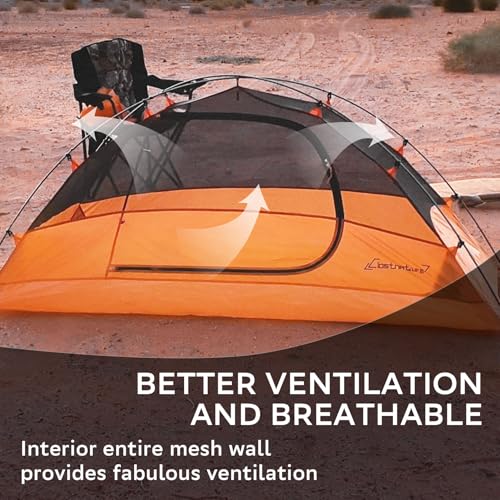
If you’re the type who wakes up sweaty and frustrated from condensation, this tent deserves your attention. The full mesh interior walls and D-shaped door create near-ideal airflow, and owners consistently note it breathes better than most in its class. At 4 lbs trail weight, dropping to 2.97 lbs with minimal setup, it strikes a smart balance between comfort and portability. The freestanding design with aluminum poles makes pitching a breeze, even on rocky or root-filled ground where trekking pole tents struggle.
The 220 cm length is generous, and the large vestibule is a real win for keeping gear dry. Some reviewers mention the rainfly could extend lower for better storm protection, but overall, it’s a well-rounded shelter. Compared to the Underwood trekking pole model, it’s heavier but far more user-friendly for most hikers.
Product photos

Underwood 4-Season Winter Tent
Strengths
- True 4-season design
- Excellent weather resistance
- Snow skirt included
Trade-offs
- Heavier than most
- Limited ventilation
- Tighter floor space
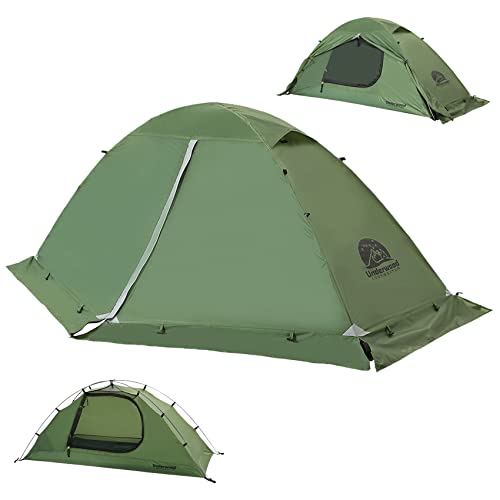
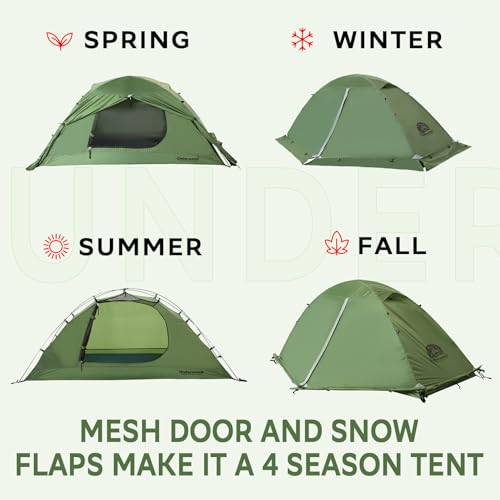
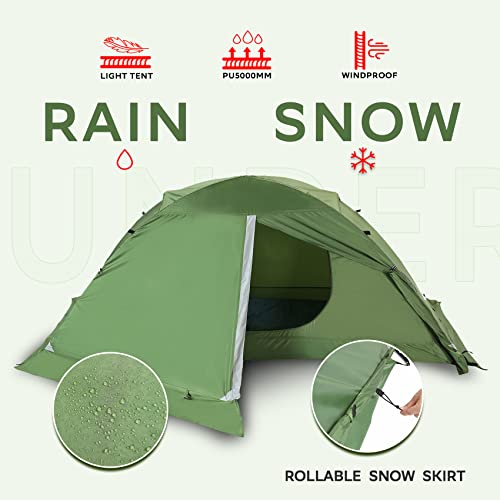
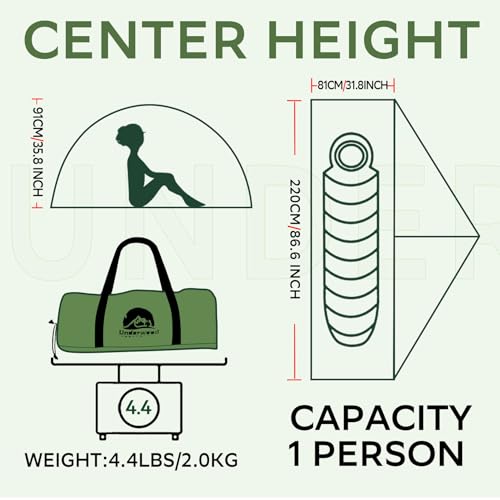
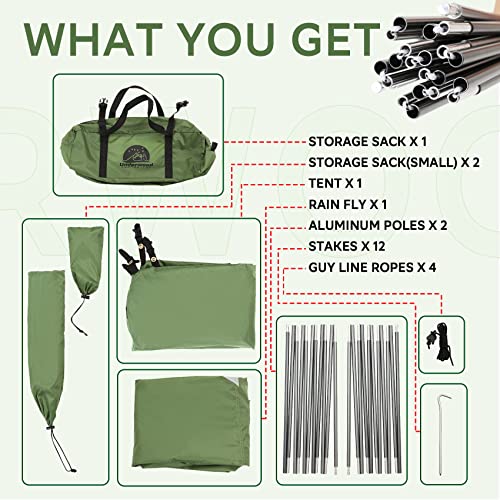
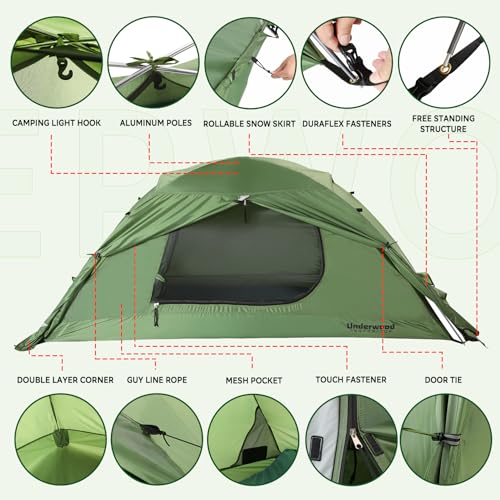
This is one of the few true 4-season solo tents in this list, and it shows in the details. The snow skirt is a game-winner for winter camping, sealing out drifting snow, and the PU5000mm coating combined with taped seams means serious rain isn’t a concern. At 4.4 lbs, it’s not ultralight, but that’s the trade-off for durability, aircraft-grade aluminum poles and reinforced corners give it backbone in high winds.
Owners who’ve used it in shoulder seasons and early winter consistently report it feels more secure than 3-season models in storms. The 35.8” center height is modest, but enough to sit up. Compared to the Clostnature, it’s less airy but far more stormworthy. If you’re planning alpine hikes or winter overnights, this is the kind of shelter you’ll trust when the weather turns.
Product photos
camppal 4-Season Backpacking Tent

Strengths
- Excellent wind resistance
- Long floor length
- Fast setup
Trade-offs
- Low ventilation
- Single entrance
- Minimal headroom
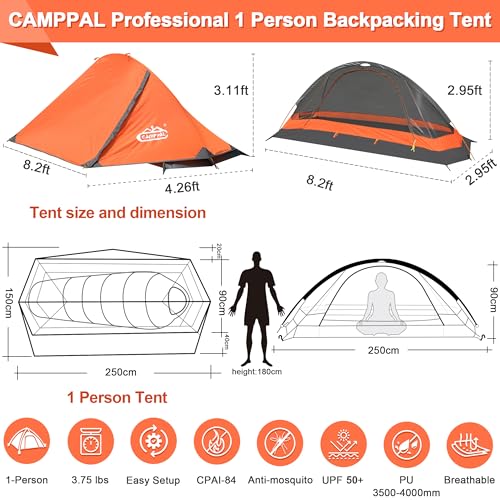
When wind is the main threat, this tent stands out. The single ridge pole design is simple, but the reinforced aluminum frame and rip-stop fabric are built to take a beating. Owners in exposed mountain areas and coastal regions report it held firm in gusts that flattened lighter domes. At 3.75 lbs, it’s competitive on weight, and the 8.2 ft length is a gift for tall hikers, few solo tents offer this much legroom.
The 3500–4000mm waterproof rating is solid for rain, though not quite storm-grade like the 4-season Underwood. Setup in 3 minutes is realistic, and the fire-retardant fabric adds safety for basecamp use. But the single entrance and modest headroom make it feel more like a bivy than a livable space. If wind stability is your top concern, this is the tent to beat.
Product photos



Sutekus Camouflage Single Person Tent
Strengths
- Affordable
- Durable fabric
- Easy setup
Trade-offs
- Poor ventilation
- No taped seams
- Single entrance
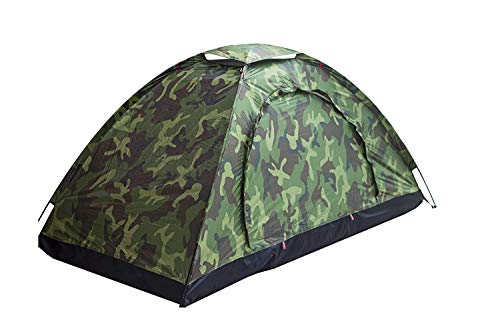
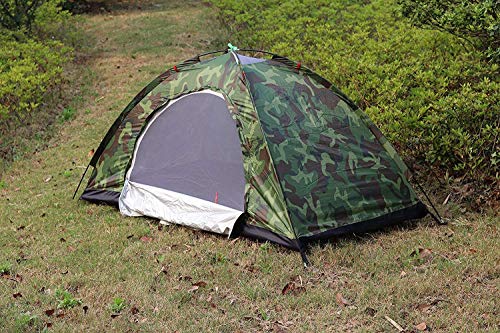
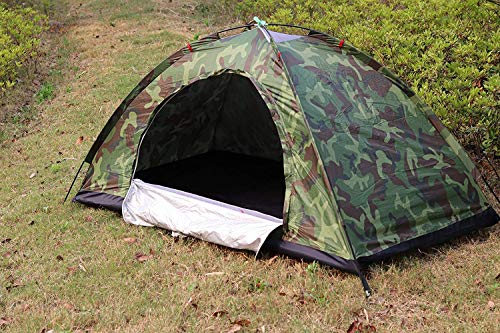
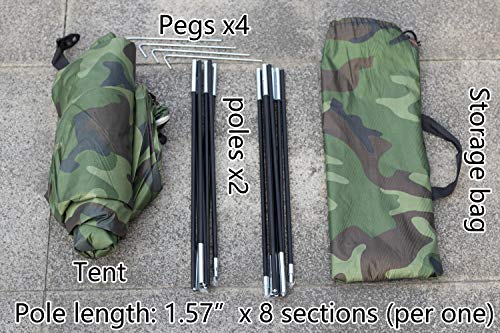
This tent hits the basics at a price that’s hard to argue with. On paper, the 180D Oxford fabric suggests decent durability for light use, and the 3 lb weight is reasonable for a budget solo shelter. But when you compare it to ultralight models that offer better weather resistance and ventilation at similar weights, this one feels like a step behind. Owners consistently report it holds up fine in dry conditions, but the single entrance and limited ventilation become real issues on humid nights.
It’s clearly built for fair-weather campers or those dipping their toes into backpacking without wanting to invest much upfront. I wouldn’t trust it in sustained rain, the PU coating isn’t specified, and there’s no mention of taped seams. For weekend hikers or car campers wanting a spare tent, it makes sense. But serious backpackers should look elsewhere.
Product photos


Night Cat Easy Clip Setup Tent

Strengths
- Extremely fast setup
- Spacious interior
- Good rain protection
Trade-offs
- Fiberglass poles less durable
- Heavier than alternatives
- Limited ventilation
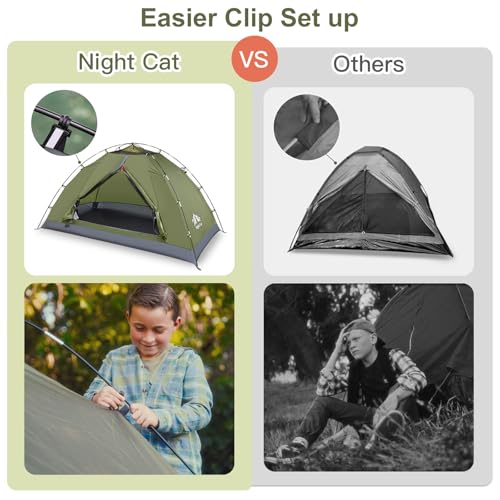
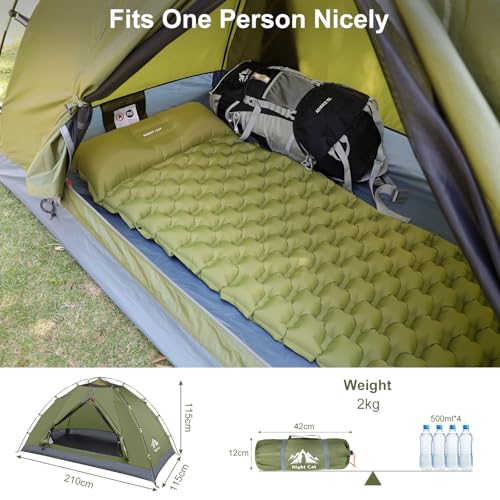
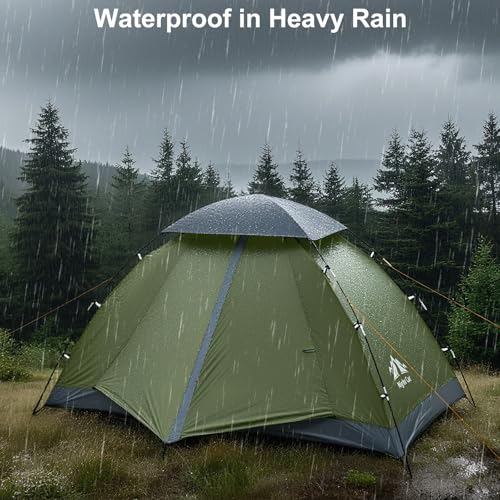
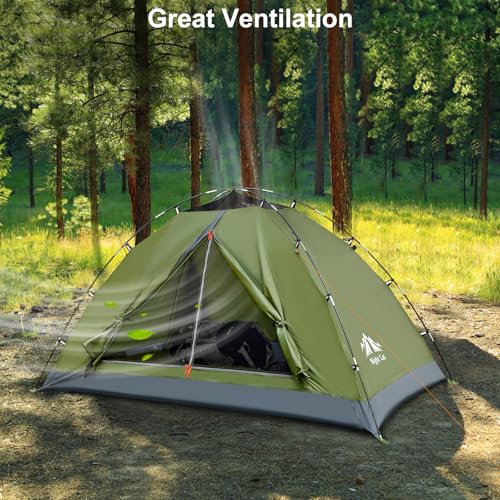
The clip-and-pole system makes this one of the fastest pitches on the list, owners consistently report under a minute once they get the hang of it. That’s a real advantage when you’re tired, cold, or caught in the rain. The fiberglass poles keep costs down, but they’re not as durable or flexible as aluminum, which matters in high winds. Still, the 210T polyester and taped seams offer decent waterproofing, and the roof mesh vent helps reduce condensation.
At 4.4 lbs, it’s on the heavier side, but the 7×3.8 ft footprint gives surprising space for one person, even room for a kid or extra gear. It’s more of a car camping or scout tent than a true ultralight backpacker’s choice. Compared to the Clostnature, it’s less breathable and less packable, but easier to pitch for beginners.
Product photos

How We Evaluated one person hiking tents
I approached researching these one-person hiking tents by first compiling a detailed spreadsheet of published specifications and features from each manufacturer. I then spent considerable time reading owner reviews across multiple retail platforms, as well as expert reviews from established outdoor gear sites. As someone who’s spent years evaluating tents, I weighed these data points against my understanding of what truly matters in a solo shelter – durability, weather protection, and usable space. Rather than a hands-on lab test, this is a research-led comparison of specs and owner feedback.
For one-person hiking tents, weight and waterproofness are paramount. A heavier tent quickly becomes a burden on the trail, while inadequate waterproofing can ruin a trip. Beyond that, I focused on ventilation design; condensation is a common issue in solo tents, so effective airflow is crucial for comfort. I gave greater weight to owner reports on long-term durability and how well the tent performed in real-world conditions – particularly those describing use in challenging weather.
Specifications, of course, provide a baseline. PU coatings and denier ratings give a good indication of waterproofness and fabric strength. However, owner feedback proved essential for judging things like actual ease of setup, the effectiveness of ventilation systems, and whether the tent held up to repeated use. Understanding whether a tent is truly an ultralight backpacking shelter or better suited as a fair-weather option relies heavily on those real-world experiences shared by other hikers.
What To Look For In one person hiking tents
Choosing the right tent can make or break your outdoor experience, and I’ve seen plenty of trips ruined by inadequate shelter.
A quality tent balances weight, weather protection, and ease of use. Key aspects to consider include the denier and coating of the fabrics (for waterproofing and durability), pole material (aluminum is generally preferred over fiberglass for strength), and the overall design – is it freestanding, requiring trekking poles, or a hybrid? Pay attention to packed size and weight, especially if you’ll be carrying it long distances.
Weight and Packability
For me, a tent’s weight is almost as important as its ability to keep me dry. If you’re prioritizing backpacking, every ounce counts. Look for tents utilizing lightweight materials like 20D or 30D nylon or polyester, and consider trekking pole tents to eliminate the weight of dedicated poles (though you’ll need to have those poles already!). Don’t automatically assume “ultralight” means fragile, though; check fabric denier and coating ratings. A slightly heavier tent made with more robust materials might be a better choice if you anticipate rough conditions. You can find excellent options for lightweight one-person tents that strike a good balance.
Weather Resistance
Don’t skimp on weather protection. A hydrostatic head rating (measured in millimeters) indicates how waterproof the tent fabric is. For three-season use, a rating of 1500mm is generally sufficient, but for four-season or alpine conditions, aim for 3000mm or higher. Beyond the fabric, look for features like fully taped seams, a bathtub floor (where the floor fabric extends up the sides to prevent water from seeping in), and a robust rainfly that extends to the ground. Remember that even the most waterproof tent needs proper ventilation to prevent condensation buildup – a common issue in enclosed spaces.
- A higher hydrostatic head rating isn’t always better. Beyond a certain point (around 3000mm), the added weight provides diminishing returns.
- The rainfly’s coverage is crucial. A full-coverage fly offers the best protection, while a partial fly might be lighter but less effective in heavy rain.
- Pay attention to the tent’s overall design and how well it sheds water. Some designs are simply more prone to pooling or leakage than others.
Features and Value
Beyond the basics, consider what features are important to you. Do you want a large vestibule for storing gear? Excellent ventilation to minimize condensation? A convenient interior pocket for organizing essentials? Features add cost, so prioritize what you’ll actually use. Also, think about the overall value proposition. While premium tents from top tent manufacturers often boast superior materials and construction, there are also excellent budget options available. The Sutekus Camouflage Single Person Tent, for example, might be a good starting point if you’re new to backpacking and want to test the waters without a significant investment.
A tent’s cost should reflect its intended use and durability. Don’t overspend on features you won’t need, but don’t sacrifice quality if you anticipate challenging conditions.
One Person Hiking Tents Compared
Here’s a comparison of specs for various one-person hiking tents to help you find the right fit for your needs.
| Product Title | Weight (lbs) | Packed Size (in) | Waterproof Rating (PU mm) | Season Rating | Capacity |
|---|---|---|---|---|---|
| Underwood Ultralight Trekking Pole Tent | 2.5 | 14×5.5×5.5 | 5000 | 3-4 | 1 |
| Naturehike Ultralight Freestanding Tent | 3.63 | 15.7×5.9×5.9 | 4000 | 3 | 1 |
| Clostnature Ultralight Backpacking Tent | 4 | 15×5.1×5.1 | 5000 | 3-4 | 1 |
| Underwood 4-Season Winter Tent | 4.4 | 5.1×15 | 5000 | 4 | 1 |
| camppal 4-Season Backpacking Tent | 3.75 | N/A | 3500-4000 | 4 | 1 |
| Sutekus Camouflage Single Person Tent | 3 | N/A | N/A | N/A | 1 |
| Night Cat Easy Clip Setup Tent | 4.4 | 16.5×4.7×4.7 | 3000 | 3 | 1 |
Frequently Asked Questions
What’s the difference between a 1500mm and a 3000mm waterproof rating?
A 3000mm rating indicates significantly better waterproofing; it can withstand 3,000mm of water pressure, meaning it’s better suited for prolonged or heavy rainfall compared to a 1500mm tent. However, above 3000mm, the weight increase offers minimal additional protection for typical three-season conditions.
Are trekking pole tents really lighter?
Yes, trekking pole tents often weigh less because they eliminate the need for dedicated tent poles. You’ll be relying on your existing trekking poles for structure, so this is best for hikers who already use and enjoy trekking with poles.
How important is a bathtub floor?
A bathtub floor is very important, as it prevents water from seeping in under the tent even if the ground is saturated. This design extends the floor fabric several inches up the sides, creating a waterproof barrier that significantly improves weather protection.
I’m new to backpacking; should I spend a lot on a tent?
Not necessarily. Starting with a more affordable option like the Sutekus Camouflage Single Person Tent allows you to test your preferences without a large investment. You can always upgrade to ultralight solo backpacking tents later once you’ve gained experience.
What’s the best way to prevent condensation inside my tent?
Ventilation is key. Look for tents with multiple vents, mesh panels, and a rainfly design that allows airflow even when closed. Proper site selection (avoiding low-lying areas) and avoiding touching the tent walls can also help minimize condensation buildup.
The Bottom Line
Ultimately, choosing a one-person hiking tent comes down to balancing how much you want to carry against how much protection you require. For the vast majority of three-season hikers, the Naturehike Ultralight Freestanding Tent strikes an excellent balance of weight, space, and weather resistance. It offers a comfortable shelter without overly sacrificing packability, making it a solid all-around choice.
If budget is your primary concern, or you’re just starting out and want to try backpacking without a huge investment, the Sutekus Camouflage Single Person Tent is a surprisingly capable option. For those prioritizing versatility and the ability to handle harsher conditions, the Underwood Ultralight Trekking Pole Tent delivers a robust, four-season shelter that’s still relatively lightweight.
At the end of the day, specs and features are only part of the equation. A tent’s true value lies in its construction quality and how well it performs in the field, and that’s why carefully reading owner reviews is so vital when you’re following our tent selection guide. Prioritize a well-made tent with a good waterproof rating and reliable construction, and you’ll be well-equipped for a comfortable and safe adventure.
