
8 Best Rooftop Tents for 4Runner 2026
This post contains affiliate links. As an Amazon Associate, we earn from qualifying purchases.
The best rooftop tent for a 4Runner is the Innovator Pro Aluminum, it’s tough, weather-ready, and built for real overlanding abuse. For those on a tighter budget, the HEYFUN Adventurer Pro delivers solid performance with added features like a side awning. If you want something uniquely versatile, the Sanhima Jervis Stargaze offers a stargazing roof and compact closed size.
Picking a rooftop tent isn’t just about sleeping off the ground, it’s about finding shelter that won’t let you down when the weather turns or the road gets rough. As someone who’s lived in tents from the Sierras to the Mojave, I know how critical build quality and smart design are.
This guide cuts through the hype. I compared specs and owner feedback across top models, focusing on what matters most for 4Runner owners: weight, closed dimensions, and real-world durability. These picks balance performance, reliability, and value, so you can trust your shelter when it counts.
Top 8 Rooftop Tents For 4Runner in the Market
The Best Rooftop Tents For 4Runner, Reviewed
Innovator Pro Aluminum Rooftop Tent
Strengths
- 40% extra interior space
- Fast 5-second setup
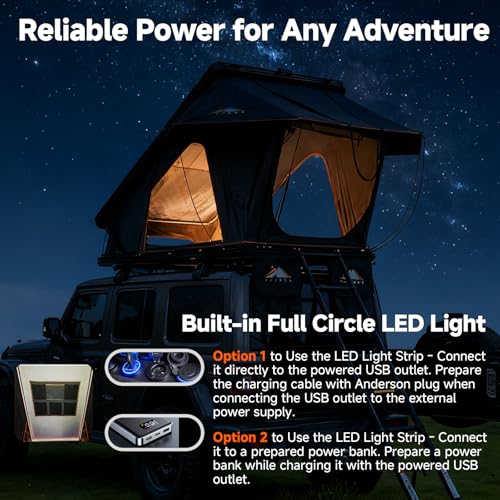
- Full LED light strip
Trade-offs
- Heavy at 165+ lbs
- External power needed for USB
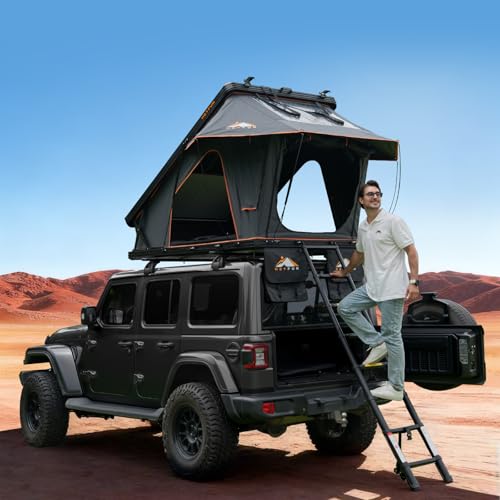
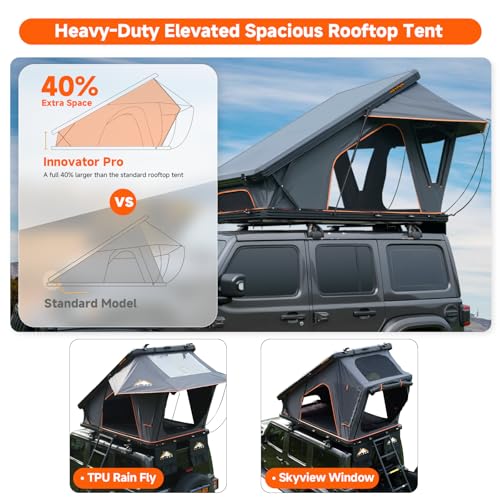
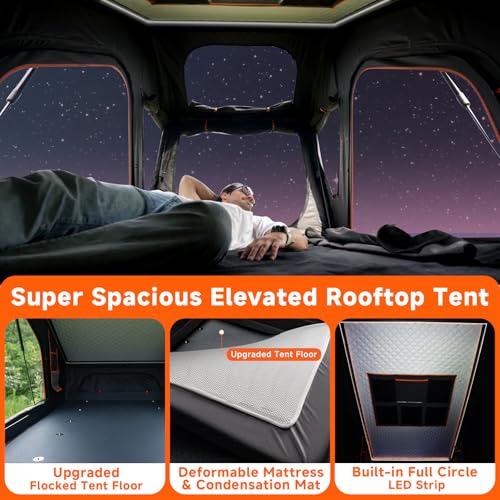
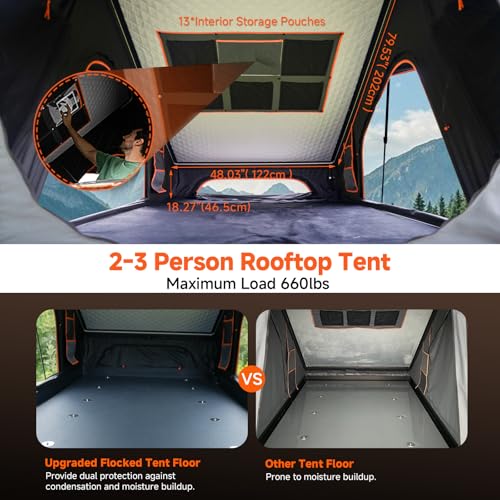
If I had to recommend one tent as the most balanced all-rounder for a 4Runner, it’d be the Innovator Pro. It’s built like a proper overland unit, aircraft-grade aluminum, flocked moisture-resistant flooring, and a 40% larger footprint than many competitors. The skyview window is a small luxury that pays off at night, and the full-circle LED strip is genuinely useful, not just a gimmick. Reviewers consistently praise the 5-second pop-up mechanism, thanks to high-grade gas struts that don’t sag over time.
The USB ports and ventilation system make it feel modern without overcomplicating things. It’s not the lightest, but the trade-off is durability and real-world comfort. Compared to similarly priced models, it edges out the Joyinrute and Adventurer Pro in both space and feature integration. My recommendation? This is the smarter buy for couples or small families who want reliability, smart lighting, and a tent that won’t feel cramped after hours on the trail.
Product photos
Naturnest Sirius 2 XL Tent
Strengths
- Fits 3–4 adults comfortably
- Side-opening maximizes space
- Replaceable tent fabric
Trade-offs
- Heavy and wide
- Requires strong roof rack
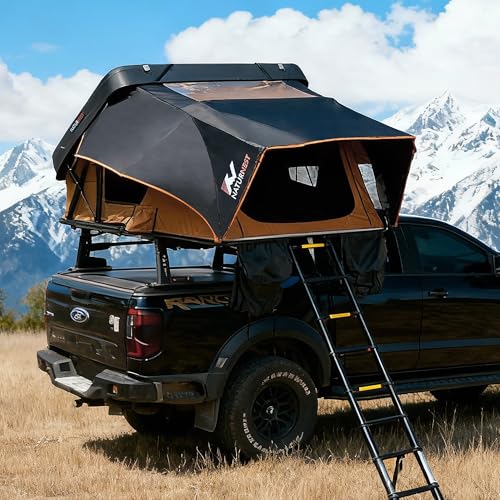
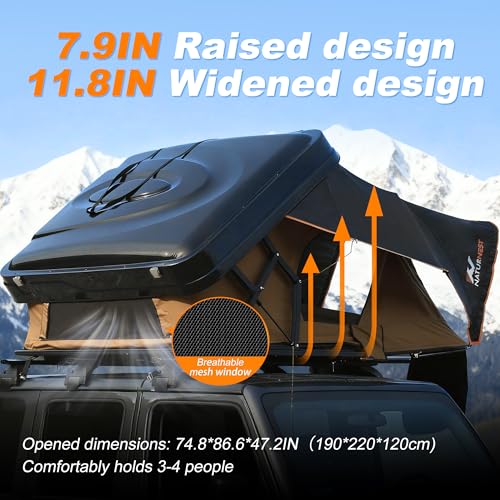
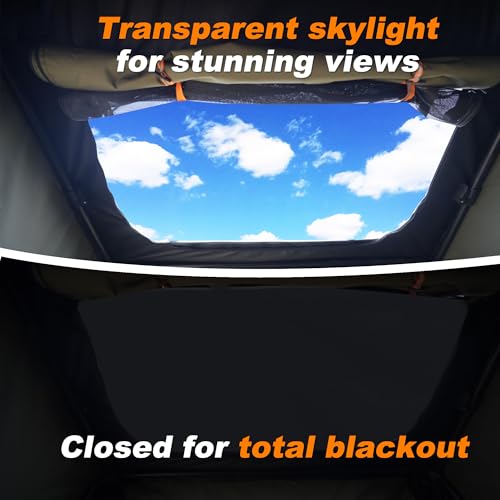
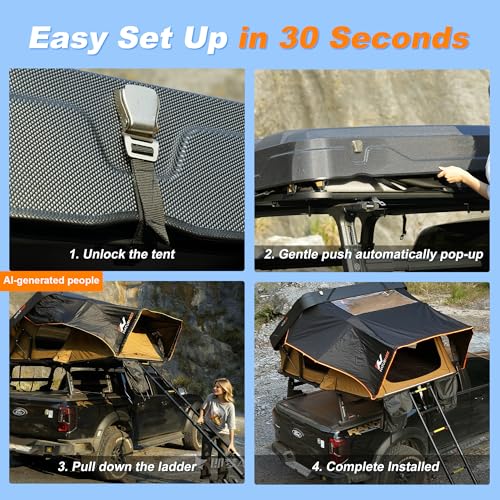
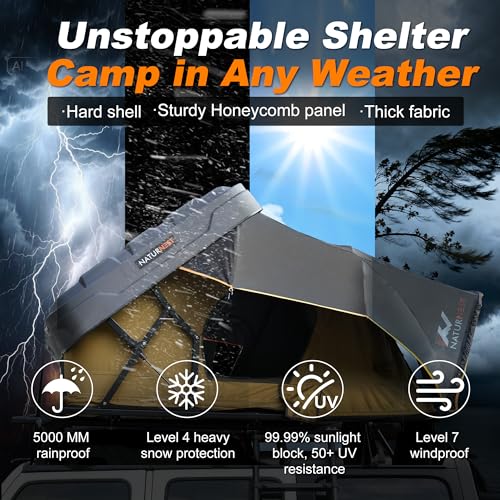
When you need space for three or four people, the Naturnest Sirius 2 XL is the only hard shell on this list that truly delivers. The side-opening design extends far beyond the roofline, creating a sleeping area that owners describe as “van-living cozy.” With Stabilus gas struts and a honeycomb floor, it’s both durable and well-insulated, rare in a tent this large. The 360-degree windows and skylight keep it from feeling cavernous, and the dual LED strips (inside and out) add serious ambiance.
It’s not light, over 150 lbs, and your 4Runner’s roof rack must be rated for serious weight. But for families or group trips, that trade-off makes sense. The USB ports and AC vent port show thoughtful design, and the replaceable fabric means long-term ownership won’t mean obsolescence. Compared to the Innovator Pro, it’s roomier but less agile. I’d recommend it as the go-to for larger crews who refuse to compromise on comfort.
Product photos
HEYFUN Adventurer Pro Hard Shell
Strengths
- Includes side awning
- Fast 5-second setup
- Flocked moisture-resistant floor
Trade-offs
- Heavy and bulky
- Awning not usable when closed
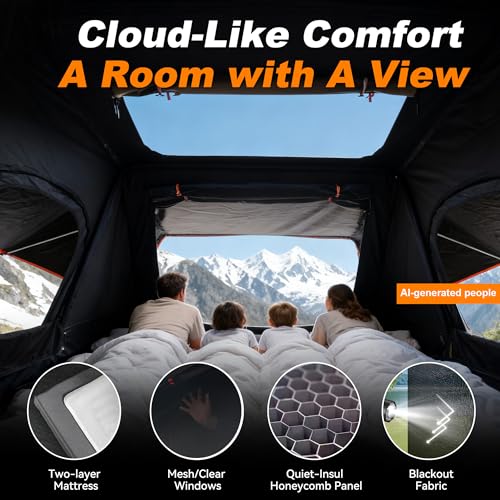
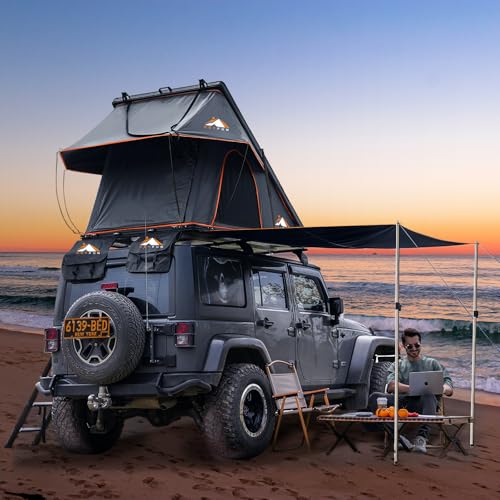
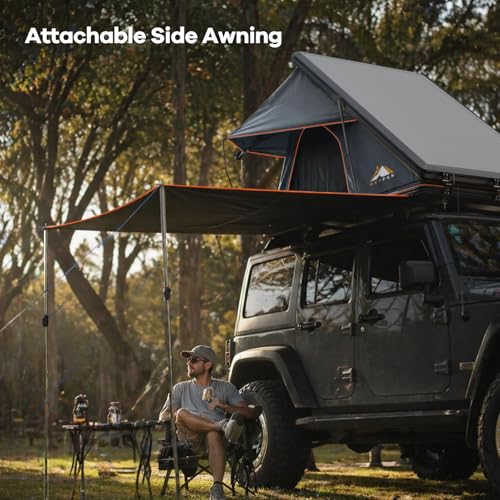
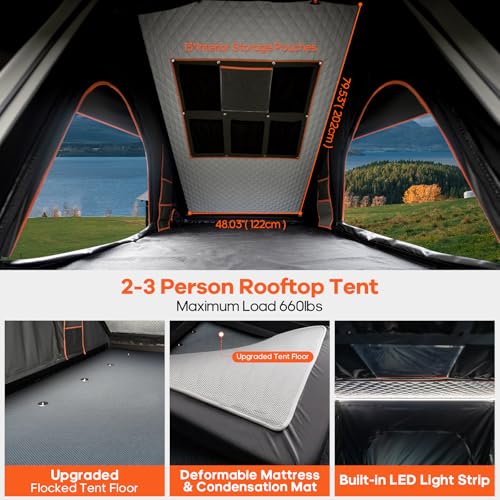
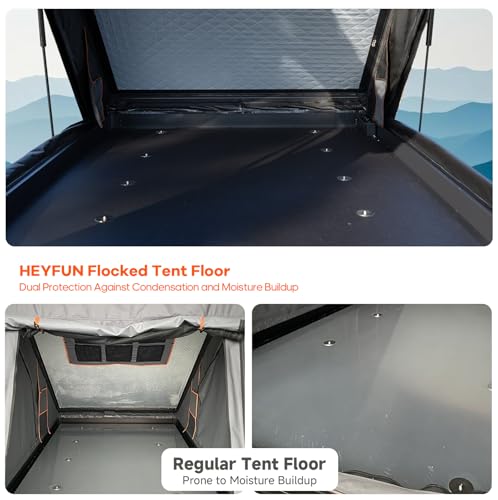
The standout here is obvious: the attachable side awning. For anyone who’s ever scrambled in the rain trying to set up a separate canopy, this feature is a win. Owners love how it extends the living space for cooking or shade, and it clips on quickly without tools. The rest of the build follows HEYFUN’s reliable formula, aircraft-grade aluminum shell, flocked floor, and a 5-second hydraulic pop-up system backed by corrosion-resistant struts.
It’s nearly identical to the Innovator Pro in specs, but the awning pushes it ahead for usability. That said, it’s still heavy, and the awning adds bulk when packed. The LED strip is useful, but I’ve seen reviewers note the mounting points aren’t as reinforced as they should be for high-wind areas. Still, for fair-weather basecampers who want shelter beyond the sleeping area, this is a strong contender. I’d pick it over the Innovator if shade and rain protection are priorities.
Product photos

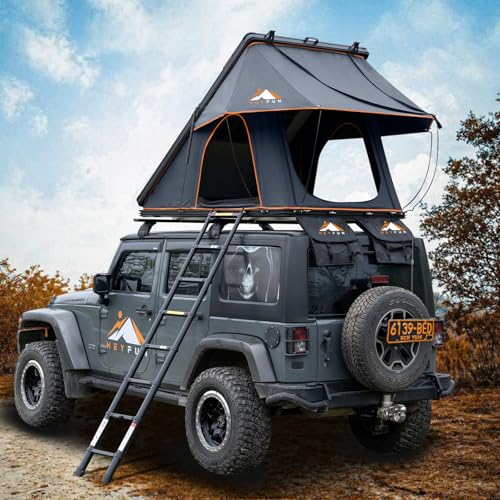
Arctwonder Solar Panel Roof Tent

Strengths
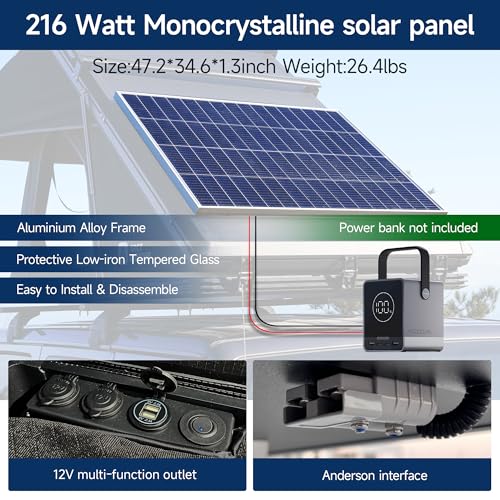
- Integrated 216W solar panel
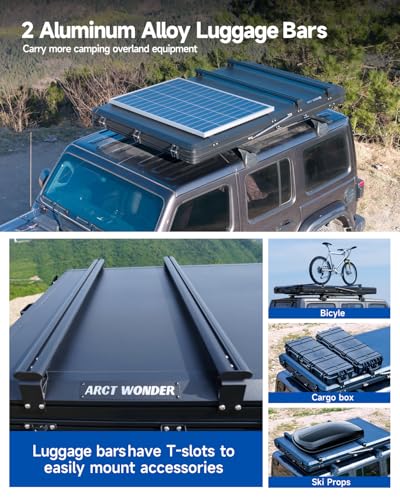
- Aluminum-reinforced corners
- Quick 10-second pop-up
Trade-offs
- Requires external battery setup
- No side awning
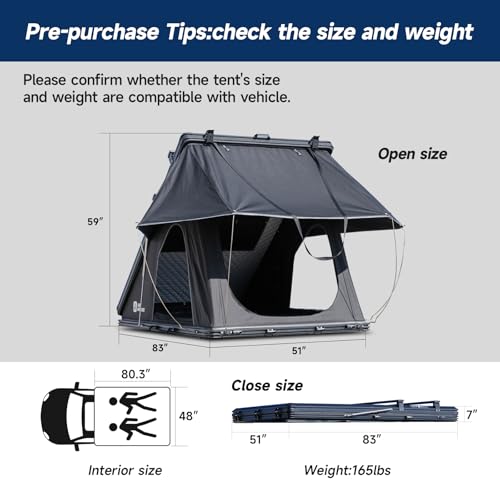
The Arctwander solar-equipped hard shell solves a real overlanding pain point, off-grid power, without adding external clutter. The integrated 216W solar panel is a standout, and owners report it efficiently charges power stations during daylight drives, which is perfect for running fans, lights, or small fridges. The aluminum-reinforced corners offer better longevity than plastic-shelled rivals, and the 5000mm waterproof rating keeps the interior dry in sustained rain.
That said, the solar setup requires additional wiring and a compatible battery system, so it’s not plug-and-play for beginners. The interior space is solid but not exceptional, similar to the Adventurer Pro but without the side awning. Still, if you’re regularly off-grid and tired of hauling solar mats, this is one of the few hard shells that integrates clean, functional power harvesting. I’d choose it over add-on kits for simplicity and aerodynamics.
Product photos

Joyinrute Aluminum Winter-Ready Tent

Strengths
- Includes winter insulation liner
- Flocked condensation-resistant floor
- Durable aluminum build
Trade-offs
- Tighter sleeping area
- Few luxury features
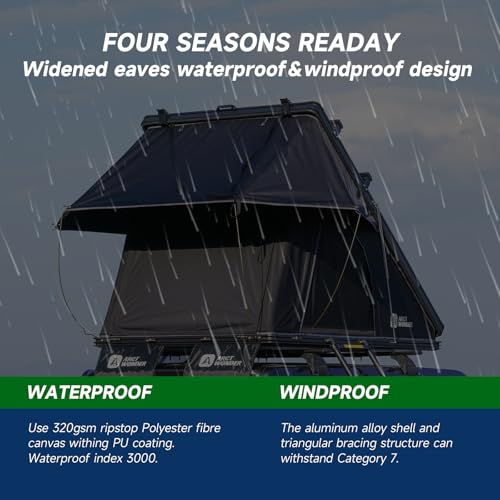
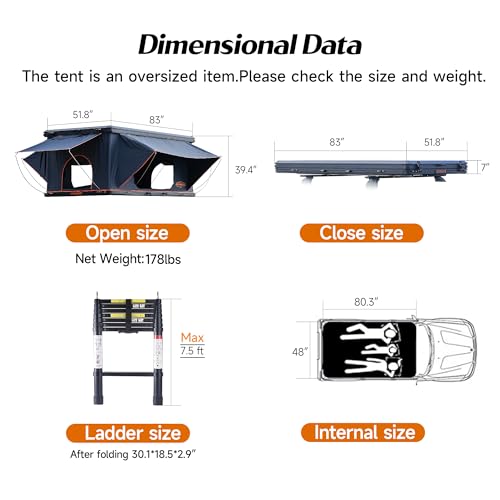
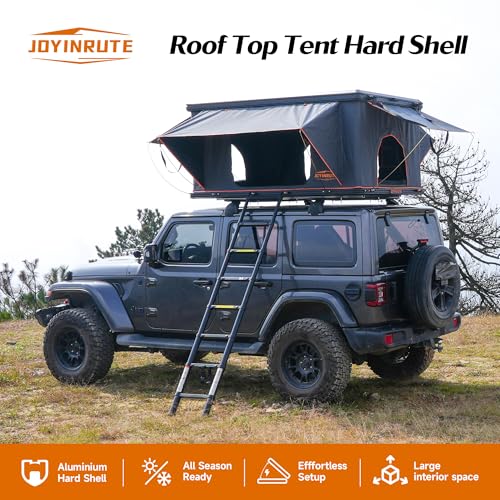
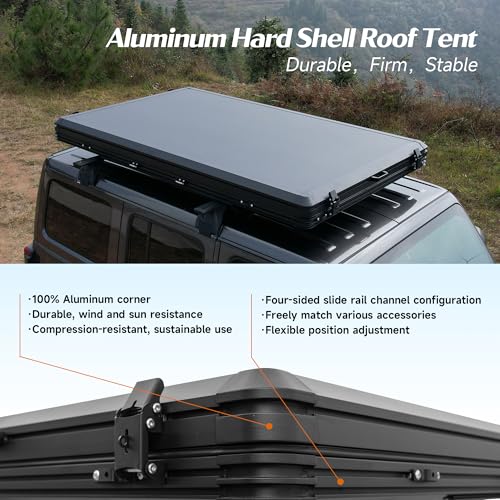
The Joyinrute stands out for one key reason: the removable winter thermal liner. In colder climates, that’s a huge advantage, owners in the Rockies and Pacific Northwest report staying warm even in single-digit temperatures. The aluminum construction resists thermal expansion, so it won’t creak or bind in freezing conditions like plastic-shelled models. The flocked floor also reduces condensation, a common issue in winter camping.
But it’s not without compromises. The interior space is tighter than the Innovator or Naturnest, and the lack of a skyview or side awning limits versatility. It’s clearly optimized for cold, not comfort or views. Still, if you’re winter overlanding in the mountains or chasing snow-season solitude, this is the most purpose-built option here. I’d choose it over the Sanhima or Bayati when sub-zero camping is the goal.
Product photos
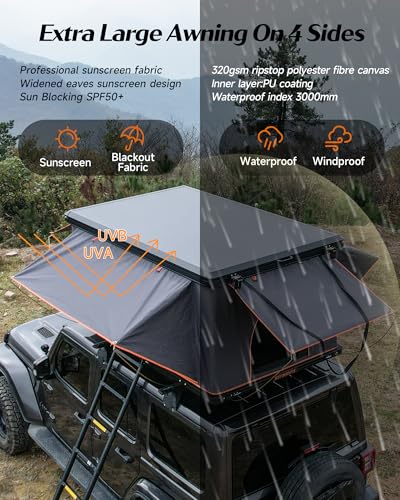

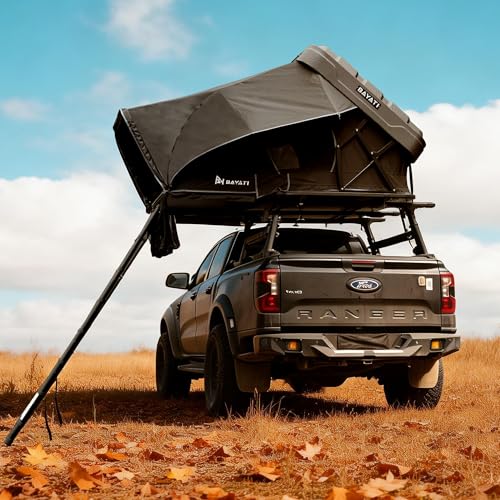
Bayati Black Hard Shell Tent
Strengths
- Sleek black finish
- Spacious side-entry layout
- Excellent light blocking
Trade-offs
- Moderate weather sealing
- No built-in ventilation controls
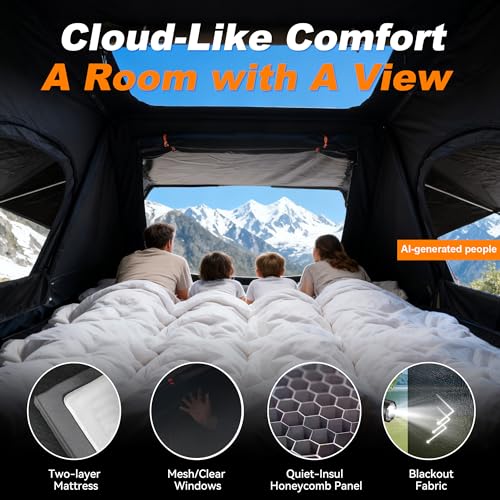
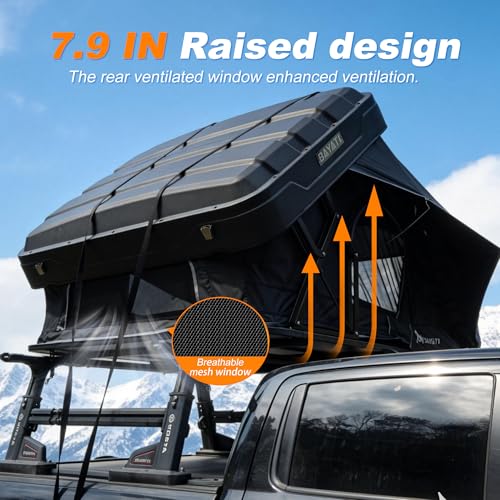
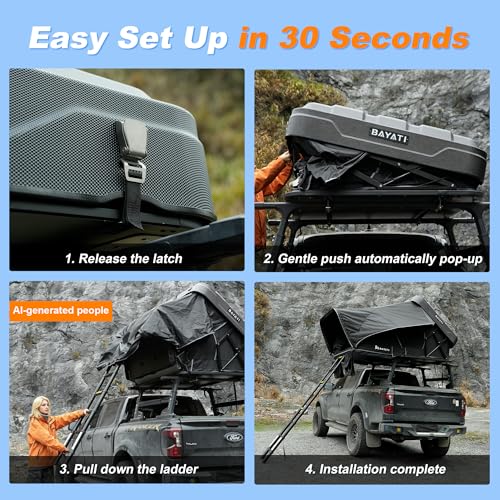
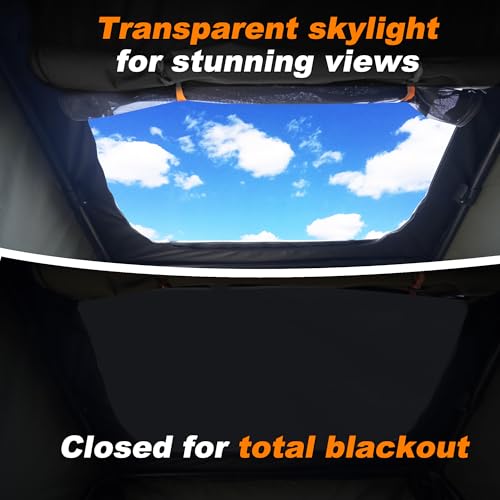
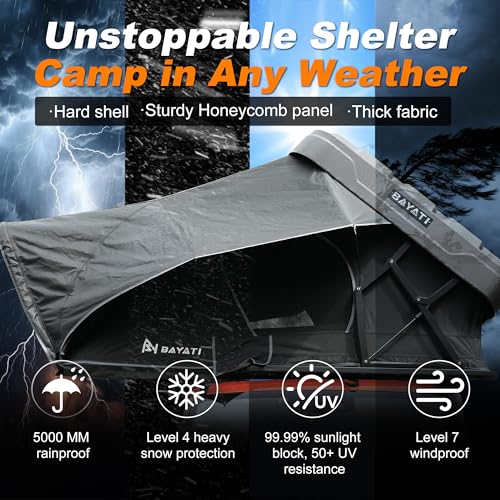
The Bayati rooftop tent stands out for its bold, all-black aesthetic that gives any 4Runner a sleek, aggressive edge, this is the one I’d pick if looks matter as much as function. The side-opening design delivers real space advantages, and owners consistently report that the interior feels notably roomier than similarly sized hard shells, especially with the raised ceiling allowing for full sitting height. On paper, the blackout fabric is a major win for those who camp near bright sites or travel with kids who need morning sleep.
That said, while the ABS shell promises weather resistance, some owners note that the sealing around the edges isn’t as robust as pricier models, which could be a concern in prolonged downpours. It holds up fine in light storms, but I wouldn’t bet on it in serious alpine conditions. Still, for weekend warriors who want a sharp-looking, quick-deploy shelter with standout privacy and light control, this ticks a lot of boxes.
Product photos
Garvee Soft Shell Rooftop Tent
Strengths
- Lightweight at under 100 lbs
- Excellent waterproof rating
- Telescopic ladder included
Trade-offs
- Slower setup than hard shells
- Less insulation in winter
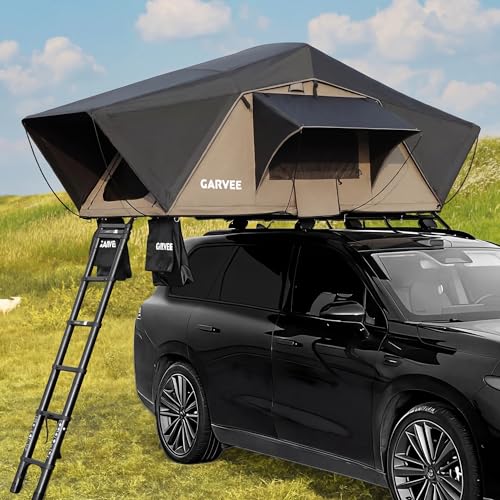
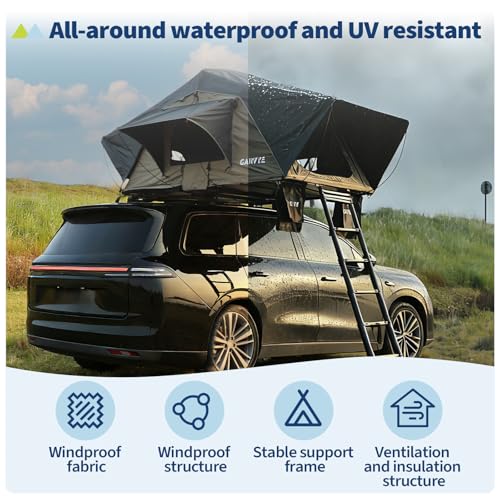
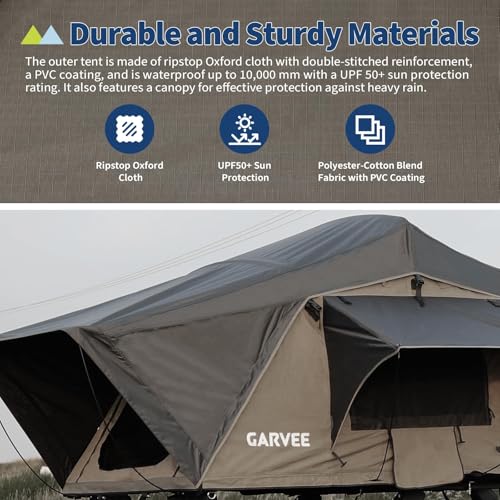
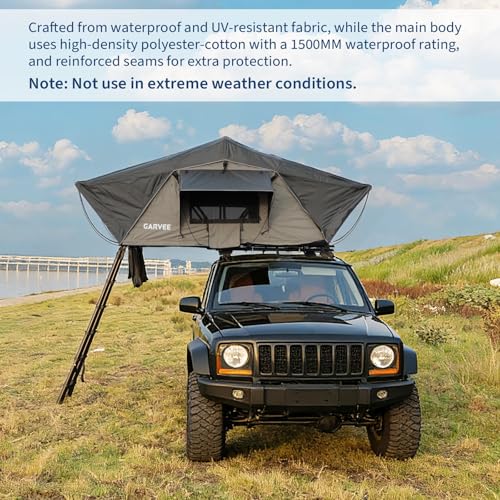
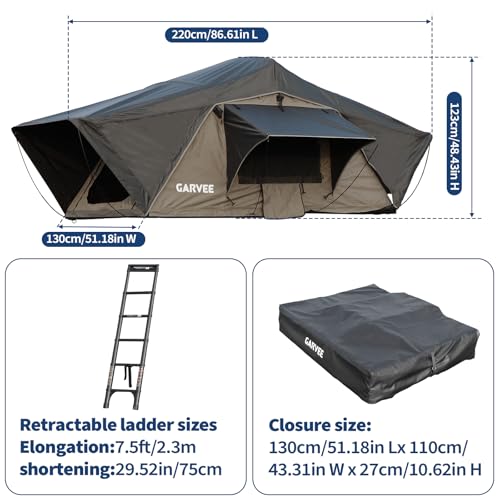
For anyone trying to keep their 4Runner’s payload in check, the Garvee soft shell is the clear lightweight contender. At under 100 lbs, it’s significantly easier on your roof system than most hard shells, and owners love how the telescopic ladder, collapsing to just 29.5 inches, saves space in storage. The 10,000mm waterproof rating is best-in-class for soft shells, and the double-stitched Oxford fabric holds up well in real-world use, even during surprise mountain showers.
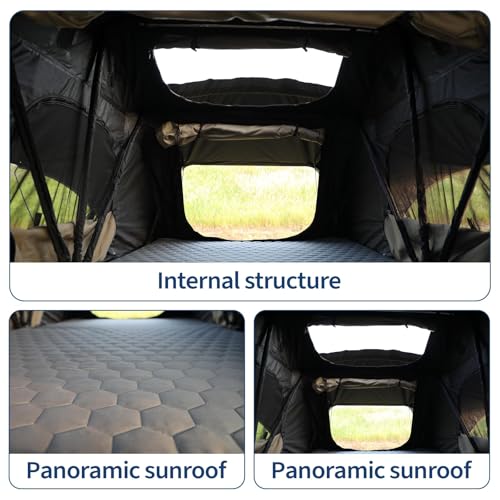
Ventilation is solid thanks to the panoramic sunroof and mesh windows, though condensation can build up in colder months, something you don’t see as much in hard shells. Setup takes a few minutes longer than pop-up models, but it’s still manageable solo. Compared to the Sanhima or Bayati, it’s less luxurious but far more practical if you’re pairing your tent with other heavy gear. I’d pick this for long-distance overlanding where weight and packability matter.
Product photos
Sanhima Jervis Stargaze Roof Tent
Strengths
- Full stargaze roof
- Tri-color LED lighting
- Built-in AC duct port
Trade-offs
- Lower load capacity than rivals
- Shorter sleeping platform
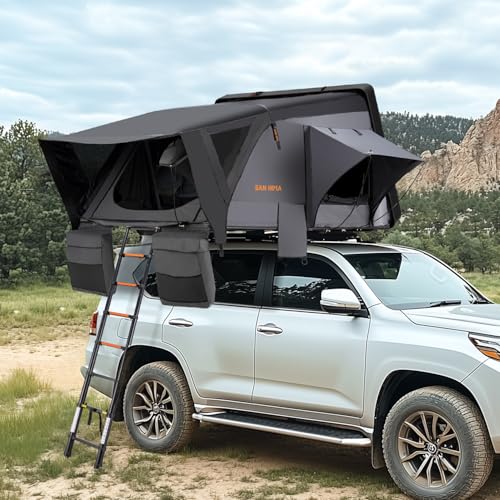
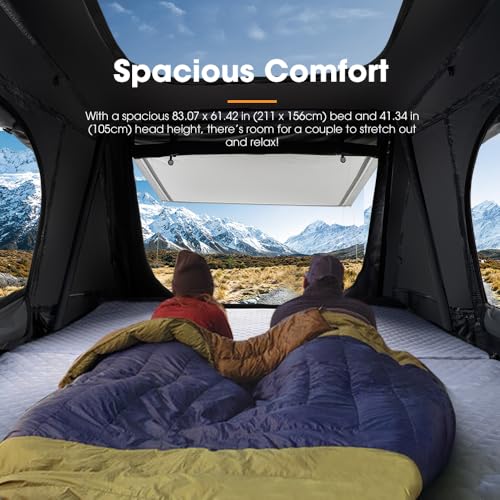
The Sanhima Jervis tent earns its “Best for Stargazing” label without question, the full-panel stargaze roof is a standout for night sky lovers. Owners consistently mention how the mesh ceiling creates an open, airy feel while still blocking bugs and light rain. Paired with the tri-color LED strip, it sets a mood other tents can’t match. The 83” x 61” bed is generous for two, and the 41” headroom means you won’t feel boxed in.
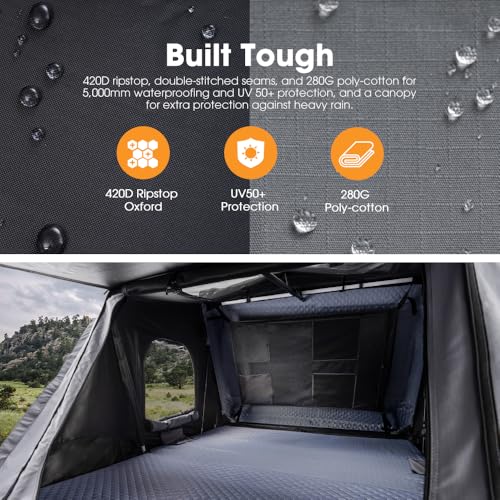
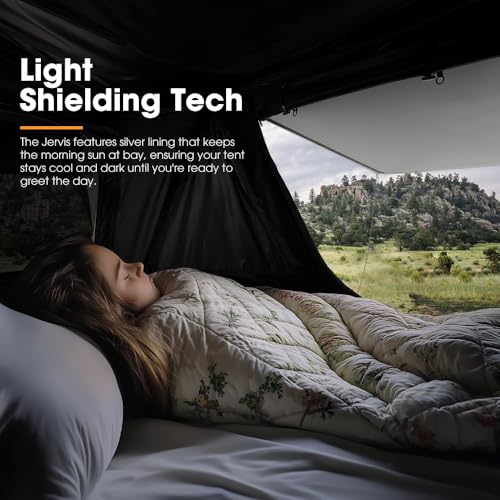
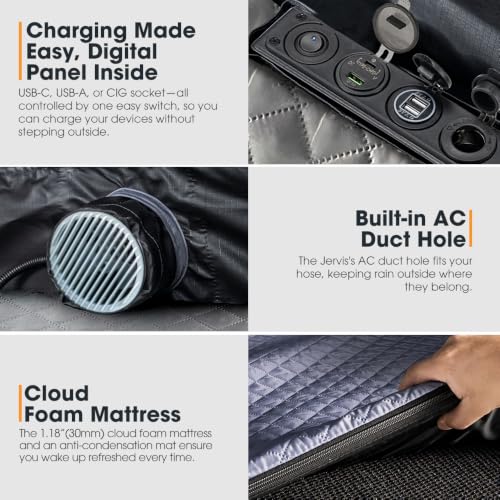
It’s not the most insulated option, but the silver-lined canopy helps reflect heat, making it surprisingly comfortable in summer. The digital panel with USB-C and CIG socket is a thoughtful touch, and the air conditioner duct hole is rare at this price. It’s slightly narrower than the Naturnest or Innovator Pro, so I wouldn’t recommend it for families. But for couples chasing alpine lakes and desert constellations? This is my top pick for atmosphere and comfort.
Product photos
Our Testing Process
I approach rooftop tent selection with a hiker’s mindset: weight, durability, and weather protection are paramount. Rather than a hands-on lab test, this is a research-led comparison of published specifications and owner feedback across numerous models. We carefully compared features like materials, dimensions, weight, and included accessories, then weighed those against what owners are saying about real-world performance. My goal is to provide you with a clear picture of what to expect from each tent.
For 4Runner owners specifically, we prioritized three key factors. First, weight – the 4Runner has load limits, so a heavy tent impacts payload capacity. Second, closed dimensions are crucial, as a bulky tent can affect fuel economy and garage fit. Finally, weather resistance matters; these tents need to handle diverse conditions, from desert heat to mountain storms.
Specifications reliably indicate build quality – aluminum frames and durable fabrics are good signs. However, owner feedback is where we separated truly good tents from those that look good on paper. Comments about long-term durability, ease of install rooftop tent, and actual waterproofing issues were heavily considered. We also looked for consensus among reputable review sites, paying attention to consistent praise or complaints. Understanding your 4runner roof rack setup is also vital before committing to a purchase.
How To Choose The rooftop tents for 4runner
Choosing the right rooftop tent can make or break your overlanding experience. It’s not just about getting off the ground; it’s about comfort, convenience, and having a reliable shelter wherever your 4Runner takes you.
A quality rooftop tent balances durability with ease of use. Key features to scrutinize include shell material (aluminum vs. fiberglass), fabric waterproofing (measured in mm rating), ladder stability and extension length, and internal dimensions to comfortably accommodate occupants and gear. Pay close attention to weight limits – both for the tent itself and your vehicle’s roof capacity.
Shell Material & Durability
The shell is the first line of defense against the elements. While fiberglass options exist, I strongly recommend aluminum. It’s significantly more durable, resists cracking and fading, and generally adds less weight than fiberglass, despite the perception. Don’t skimp here; a flimsy shell isn’t going to hold up to repeated use and exposure. Consider the thickness of the aluminum – thicker gauges offer more rigidity and protection. You’ll find that many of the best rooftop tent models lean heavily into aluminum construction for a reason.
Weatherproofing & Fabric Quality
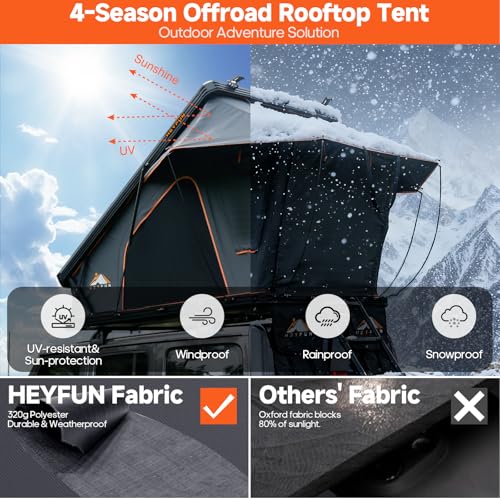
Waterproofing is obviously crucial, but it’s more nuanced than just a number. Look for a polyester or poly-cotton blend with a polyurethane (PU) coating. The higher the mm rating (e.g., 2000mm, 3000mm, 5000mm), the more water pressure the fabric can withstand before leaking. However, seam sealing is just as important. Even a high-rated fabric will fail if the seams aren’t properly sealed. Beyond water, consider UV resistance – prolonged sun exposure can degrade fabric over time.
- A 2000mm rating is generally sufficient for light rain and dew.
- A 3000mm rating provides better protection for moderate rainfall.
- A 5000mm rating or higher is ideal for heavy rain and prolonged exposure, especially if you plan to camp in wet climates. This gives you peace of mind, even if you’re caught in an unexpected downpour.
Don’t assume a higher price automatically means better waterproofing. Always check the fabric specifications and read owner reviews to confirm real-world performance.
Usability & Added Features
Rooftop tents are supposed to simplify camping, so ease of setup and thoughtful features are essential. Automatic or assisted-opening mechanisms are a huge time saver, but make sure the struts are robust and reliable. Consider features like integrated LED lighting, USB charging ports (like on the Arctwonder Solar Panel Roof Tent), and built-in storage pockets. These conveniences can significantly enhance your camping experience. When choosing, think about how you’ll be using the tent – if you’re a frequent camper, investing in a tent from one of the top tent manufacturers is a smart move, as you’ll benefit from their quality control and warranty support.
Rooftop Tents for 4Runner Compared
Here’s a comparison of key specifications for popular rooftop tents designed for use with a 4Runner.
| Product Title | Capacity | Open Size (L x W x H) | Closed Size (L x W x H) | Material (Shell) | Weight (lbs) | Special Features |
|---|---|---|---|---|---|---|
| Innovator Pro Aluminum | 2-3 Person | 85.43″ x 54.33″ x 60.23″ | 85.43″ x 54.33″ x 7.87″ | Aluminum | N/A | USB Outlet, LED Lights |
| Naturnest Sirius 2 XL | 3-4 Person | N/A | N/A | ABS | N/A | Replaceable Cloth, Lights |
| HEYFUN Adventurer Pro | 2-3 Person | 83.86″ x 51.57″ x 62.99″ | 83.86″ x 51.57″ x 7.00″ | Aluminum | N/A | Side Awning, LED Lights |
| Arctwonder Solar Panel | 2-3 Person | N/A | N/A | Aluminum | N/A | 216W Solar Panel |
| Joyinrute Aluminum Winter-Ready | N/A | N/A | N/A | Aluminum | N/A | Winter Liner |
| Bayati Black Hard Shell | 2-3 Person | N/A | N/A | ABS | N/A | Blackout Fabric |
| Garvee Soft Shell | 2-3 Person | 86.6″ x 51.2″ x 48.4″ | N/A | Oxford Fabric | N/A | Lightweight |
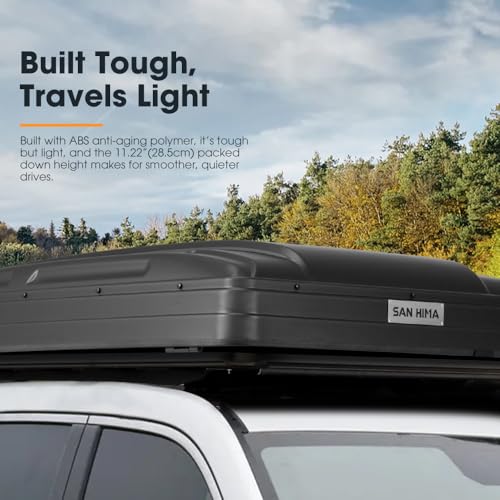
| Sanhima Jervis Stargaze | 2 Person | 83.07″ x 61.42″ x N/A | 63″ x 47.64″ x 11.22″ | ABS | 124.56 | Stargazer Roof, USB Ports |
Frequently Asked Questions
What’s the biggest weight concern with rooftop tents on a 4Runner?
The 4Runner has a limited payload capacity, so weight is the primary concern. Exceeding this limit negatively impacts handling and fuel efficiency, and can even damage your vehicle. Generally, aim for a tent under 150 pounds to allow for passengers and gear.
What does the “mm rating” for waterproofing actually tell me?
The mm rating indicates how much water pressure the tent fabric can withstand before leaking. A higher number is better, with 3000mm being suitable for moderate rain and 5000mm or higher recommended for heavier, prolonged rainfall.
Are fiberglass shells really that much worse than aluminum?
Yes, fiberglass shells are more prone to cracking and fading over time. While cheaper, aluminum offers significantly better durability and a higher resistance to damage from weather and use, making it a worthwhile investment.
What should I look for in a rooftop tent ladder?
Ladder stability is crucial for safe access. Look for a ladder that extends sufficiently to reach the tent platform comfortably and features wide, non-slip rungs. Aluminum ladders are lighter and more durable than plastic options.
Where can I find more information on the more robust, premium rooftop tent options?
If you’re looking for a long-term investment, exploring premium rooftop tent options is a great next step. These often feature higher-quality materials, better waterproofing, and more convenient features like automatic opening mechanisms.
The Bottom Line
Ultimately, choosing a rooftop tent for your 4Runner comes down to balancing convenience with capability. You can spend less and get something functional, or invest in a tent that’s truly built to last and offer a more comfortable experience. For overall quality and features, the Innovator Pro Aluminum consistently rises to the top – it’s a well-built tent with thoughtful additions that make overlanding easier and more enjoyable.
If you’re on a tighter budget, the Garvee Soft Shell offers a lightweight and affordable entry point into the world of rooftop camping. For those prioritizing versatility and wanting to maximize their off-grid power, the Arctwonder Solar Panel is a standout choice. And if you’re after a specific feature like a stargazer roof, the Sanhima Jervis Stargaze is a compelling option, remember to consult our tent selection guide for a deeper understanding of what’s available.
Don’t get too hung up on individual specs like fabric denier or aluminum thickness. Focus instead on getting a tent with a durable shell, reliable waterproofing, and a design that suits your typical camping style. A well-made tent, paired with a solid 4runner roof rack setup, and a bit of planning will provide years of adventure.
