
8 Best Family Backpacking Tents of 2026
This post contains affiliate links. As an Amazon Associate, we earn from qualifying purchases.
The best family backpacking tent overall is the Clostnature 4-Person Ultralight Tent, thanks to its strong waterproofing, lightweight aluminum frame, and thoughtful design. For bigger groups on a budget, the Purebox 6-Person Family Tent offers solid space at a lower price, though it’s heavier. If you need maximum room and don’t mind the pack weight, the HIKERGARDEN 10-Person Family Tent is a roomy option for car-adjacent trips.
Packing up the kids and hitting the trail sounds great, until you’re wrestling with a tent that leaks, collapses in the wind, or weighs as much as your child. A family backpacking tent has to be tough, easy to pitch, and actually fit everyone without feeling like a sardine can.
As Chloé Bourgeois, I’ve spent years analyzing what makes a tent work for real families in real conditions. This guide cuts through the marketing and focuses on what matters: space that fits, weather protection that holds, and weight you can actually carry. I compared specs, read hundreds of owner reviews, and prioritized models that deliver in the field, not just on paper.
Top 8 Family Backpacking Tents in the Market
The Best Family Backpacking Tents, Reviewed
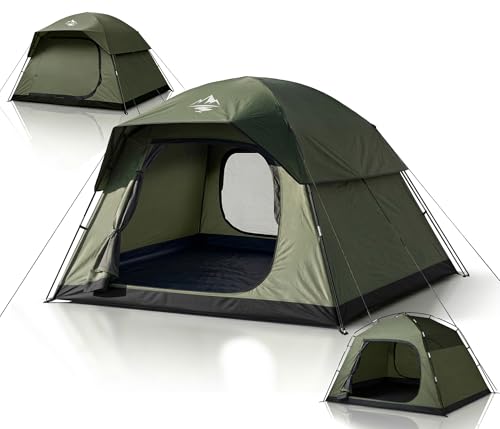
Purebox 6-Person Family Tent
Strengths
- Spacious interior
- Dual doors
- Great airflow
Trade-offs
- Fiberglass poles
- Not ultralight
- Average headroom
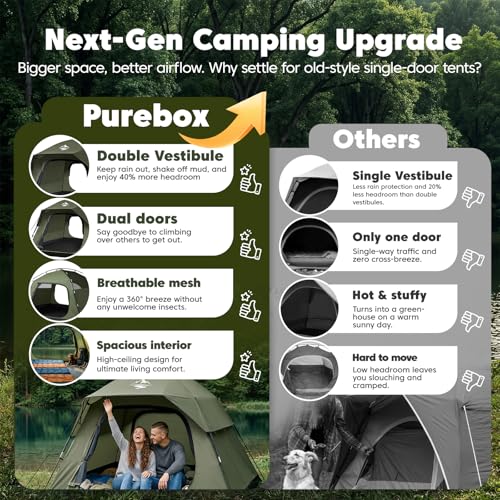
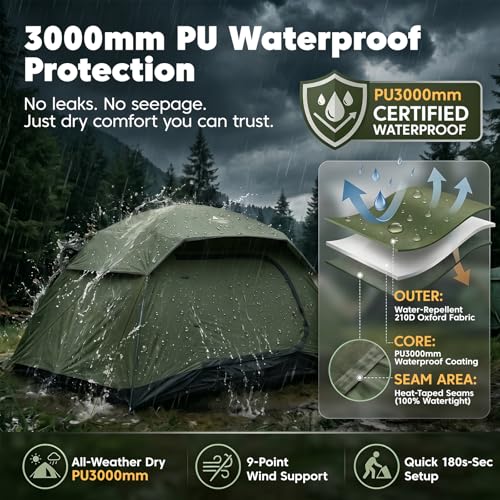
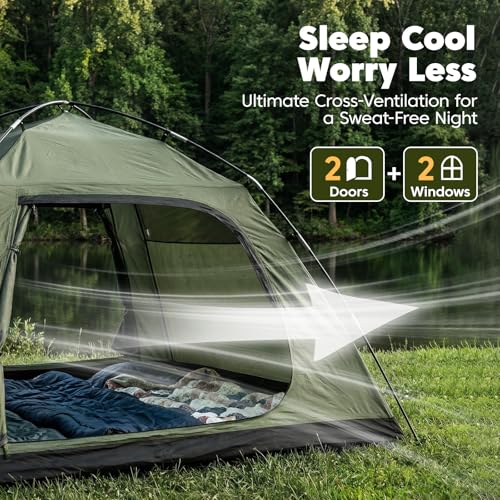
This is the tent I’d recommend to most families as the best all-around pick. It’s spacious, 10×8 feet with 6-foot center height, and the dual doors make midnight exits easy without crawling over anyone. The ventilation is excellent: two mesh windows and full-door mesh panels keep air moving, and owners say condensation is minimal even in humid forests. The PU-coated rainfly with taped seams has proven reliable in real-world rain, and the fiberglass poles, while not ultralight, offer solid stability for the price.
Weighing 13 lbs, it’s not for long-distance hikes, but it’s manageable for short carries or car camping. The setup is consistently praised as beginner-friendly, and the compact carry bag makes storage easy. Compared to the 4-person Purebox, this one delivers better long-term value for growing families or those who hate feeling cramped. It’s not the lightest or the most stormproof, but it hits the sweet spot between comfort, durability, and ease of use.
Product photos

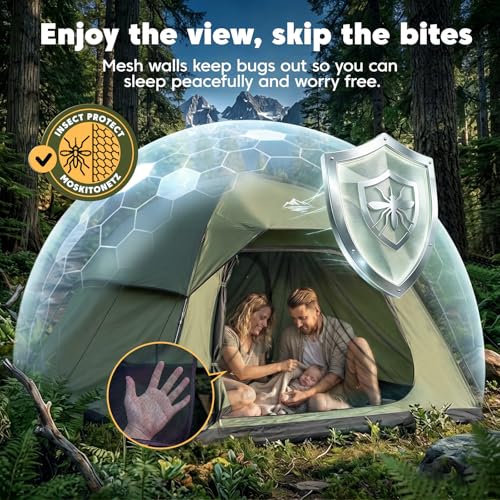
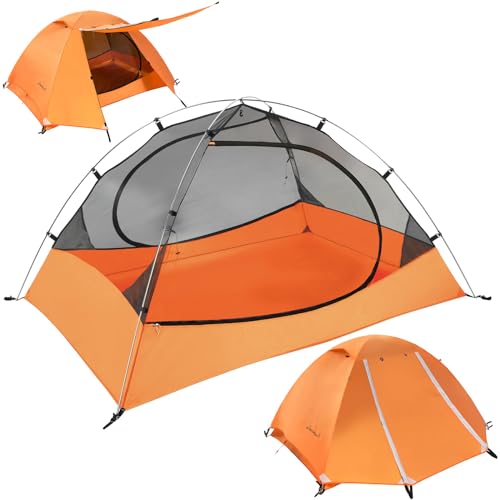
Clostnature 4-Person Ultralight Tent
Strengths
- Ultralight for size
- Excellent weather resistance
- Stable in wind
Trade-offs
- Packed size still bulky
- Higher price point
- Aluminum poles require care
This is one of the few 4-person tents that actually feels backpackable. At just 7.38 lbs, it’s impressively light for its size, and the aluminum poles add real strength over fiberglass. The freestanding design with X-braced poles gives it excellent wind stability, and owners report it held firm in gusts that flattened lesser tents. The full mesh walls and dual vestibules strike a smart balance, great airflow without sacrificing weather protection.
The PU5000mm coating and taped seams mean serious rain resistance, and multiple reviews confirm it stayed dry in multi-day downpours. Setup is consistently fast, even for first-timers. Where it wins is in the details: dual D-doors, gear lofts, and a repair kit included. For family backpacking trips or scout outings, this is the smarter buy over heavier or flimsier options.
Product photos


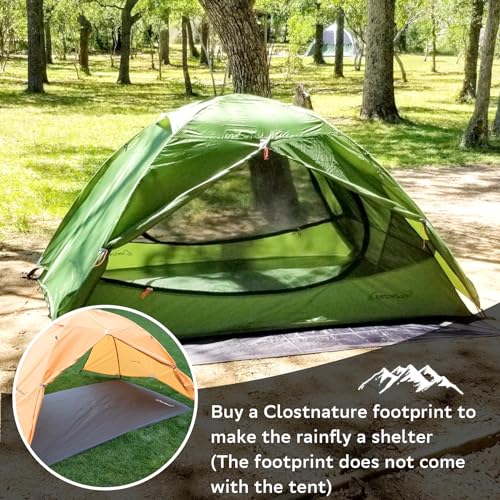

Purebox 4-Person Extended Tent
Strengths
- Spacious layout
- Good airflow
- Reliable waterproofing
Trade-offs
- Fiberglass poles
- Heavier than ultralight options
- Bulkier packed size
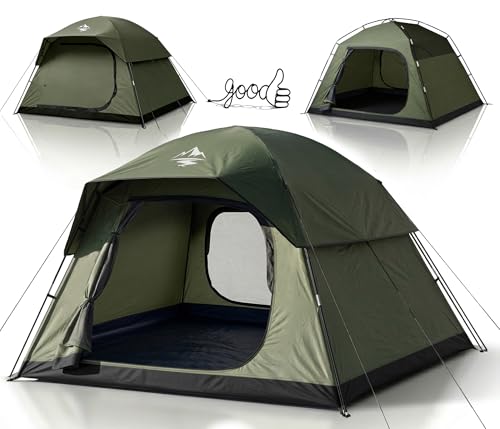
This 4-person tent punches above its weight in space and airflow. At 9×7 feet, it’s noticeably roomier than most in its class, and owners consistently praise the extra length that lets you stretch out without bumping walls. The dual doors and mesh windows make a real difference, air moves well, reducing that sticky morning condensation many budget tents struggle with. On paper, the PU-coated rainfly and taped seams should handle 3-season use, and reviewers confirm it’s held up in drizzle and wind without leaking.
But the fiberglass poles, while durable enough for car camping, aren’t ideal for exposed ridgelines or high gusts. It’s stable in moderate wind, but not a fortress. At 10.8 lbs, it’s not ultralight, but it’s manageable for short hikes or drive-up trips. I’d pick this over tighter 4-person models if you’re bringing kids or want to lounge inside without crawling over everyone.
Product photos
BISINNA 4-Person Aluminum Tent
Strengths
- Strong aluminum poles
- Excellent storm resistance
- Good bug protection
Trade-offs
- Heavier than ultralight models
- Low center height
- Bulkier pack size
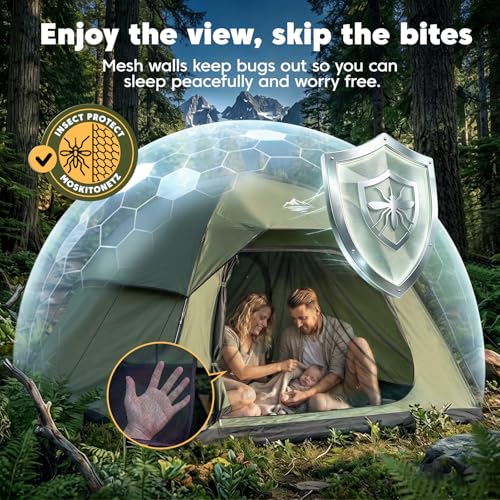
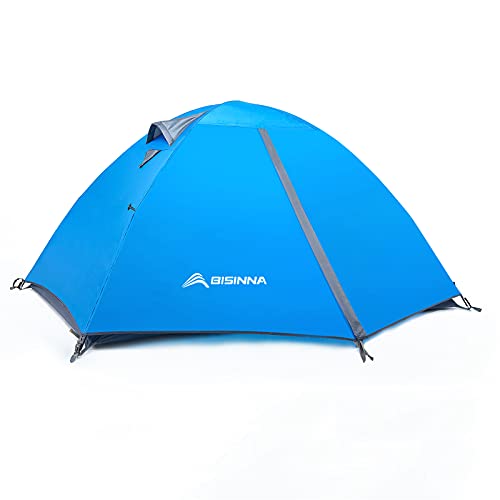
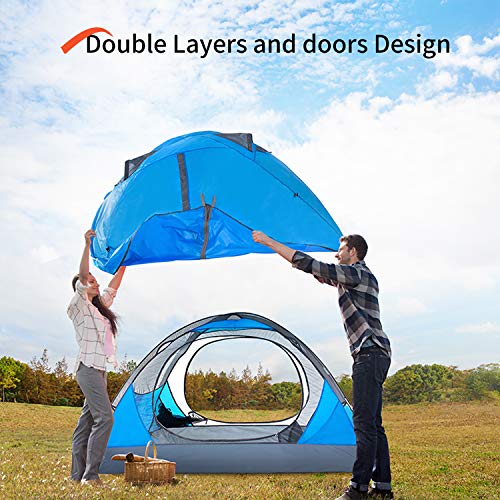
This tent is built like a tank. The 7001 aluminum poles are a standout at this price, stronger and more flexible than most fiberglass alternatives, and they show in windy conditions. Owners consistently report it held up in sudden storms where other tents collapsed. The PU2000mm rainfly and double-layer construction add serious weather resistance, and the B3 no-see-um mesh keeps bugs out without choking airflow.
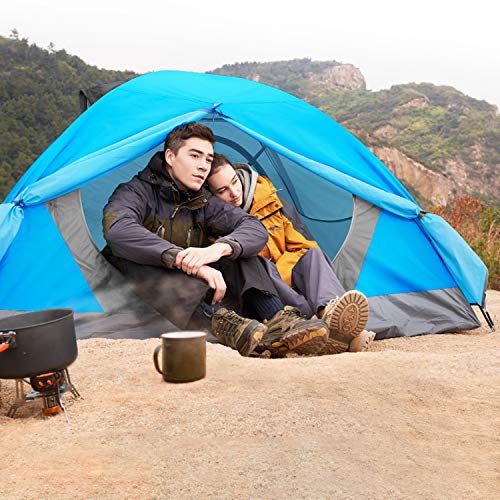
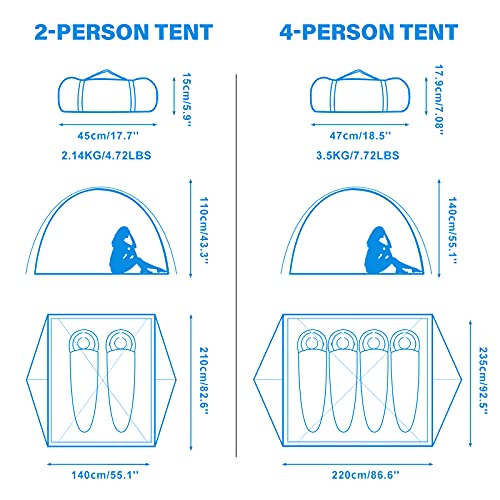
At 235×220 cm, it’s roomy for four, though the 51-inch height means you’ll be crouching inside. Setup is straightforward, and the freestanding design helps on uneven ground. Where it shines is in durability, this is the tent I’d bring for shoulder-season trips or unpredictable mountain weather. It’s not the lightest (around 8–9 lbs), but for the weather resistance, it’s a fair trade.
Product photos


Happy Travel 4-Person Dome Tent
Strengths
- Excellent ventilation
- Spacious and tall
- Great views
Trade-offs
- Mesh ceiling leaks if fly on
- Average storm performance
- Fiberglass poles
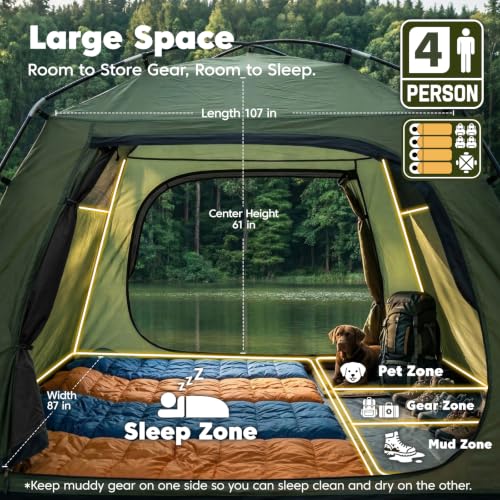
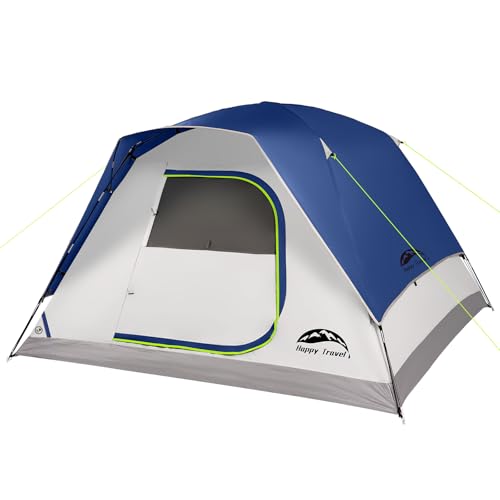
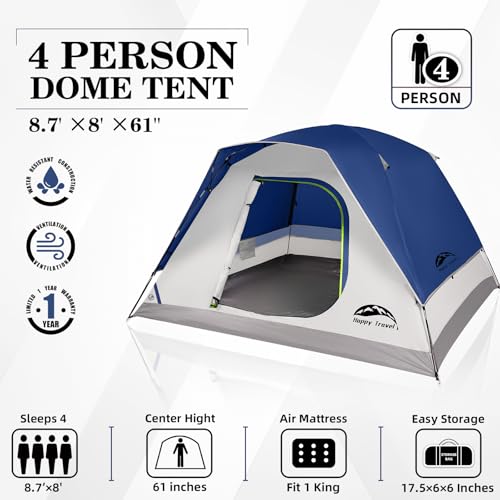
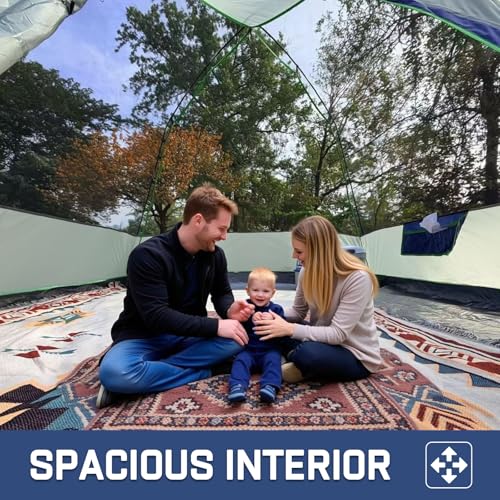
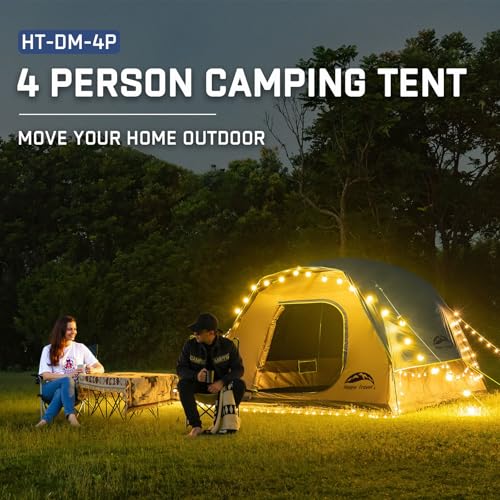
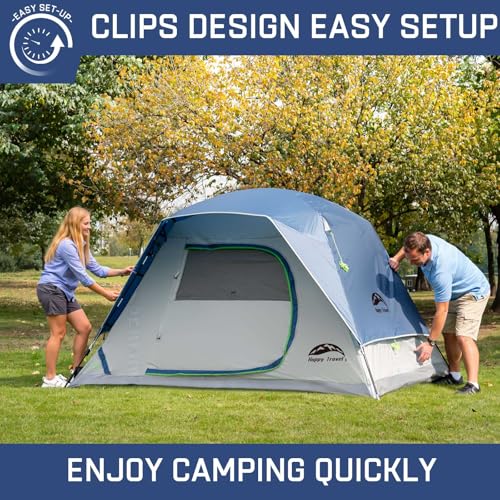
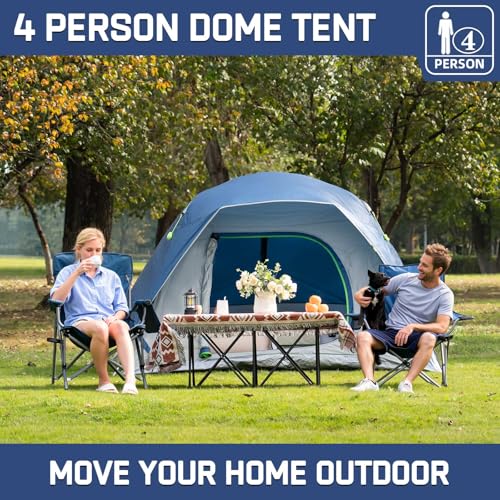
This tent stands out for one thing: views and airflow. With a large mesh ceiling and mesh on three sides, it’s built for stargazing and staying cool on hot nights. The 8.7×8-foot floor gives real room for four, and the 61-inch center height means most adults can sit up comfortably. When the rainfly’s off, it feels more like an open-air shelter than a closed box, ideal for dry, warm climates.
But that same openness becomes a weakness in bad weather. While the PU2000mm coating and thickened PE floor suggest strong waterproofing, some owners note pooling during heavy rain, especially if the ground isn’t perfectly leveled. The fiberglass poles are decent but not as wind-resistant as aluminum. Still, for summer trips where ventilation and ambiance matter most, this is a top contender. I’d recommend it over stuffier models for lakeside or desert camping.
Product photos
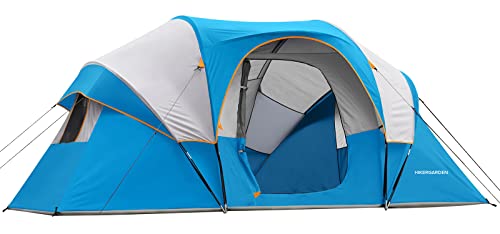
HIKERGARDEN 10-Person Family Tent
Strengths
- Massive interior
- Good airflow
- Privacy divider
Trade-offs
- Heavy and bulky
- Moderate waterproofing
- Not backpackable
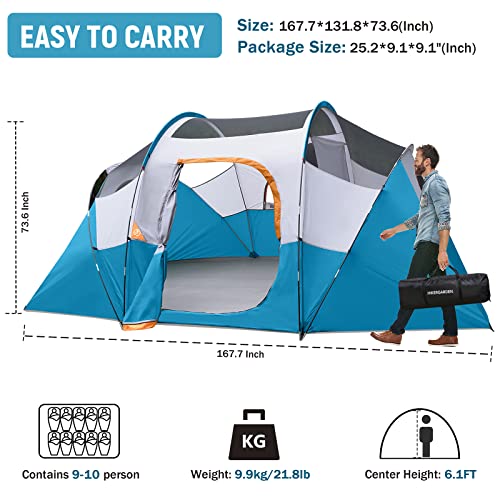
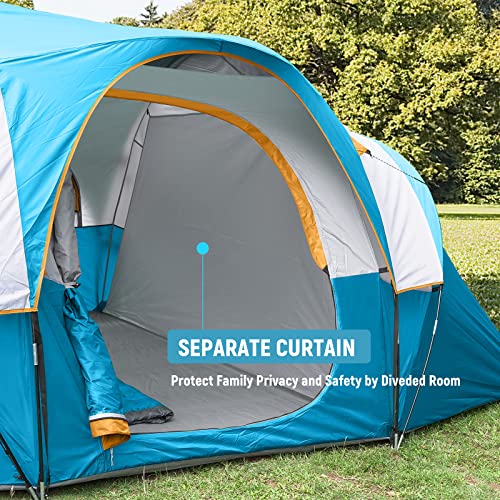
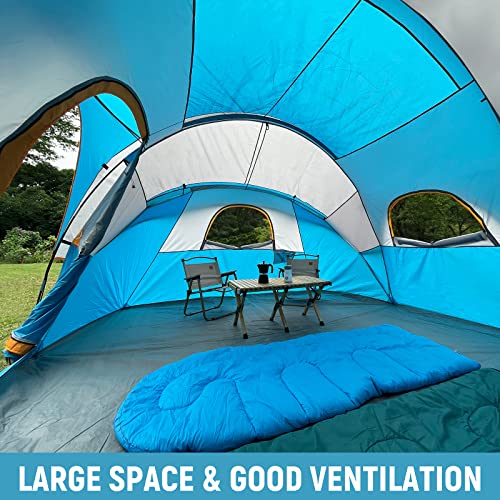
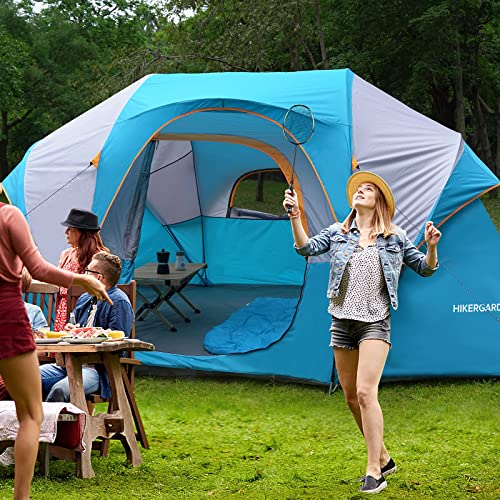
If you’re packing a crowd, this tent delivers on space, no question. At 14×11 feet with 74-inch center height, it’s big enough for three queen air mattresses or a full family of eight to ten. The ability to stand upright is a standout for comfort, and the internal privacy curtain adds a smart touch for families or mixed groups. Owners report it sets up in about 10 minutes with two people, and the dual zippers are praised for smooth operation, which is rare at this size.
But let’s be clear: this is a car camping beast, not a backpacking tent. At 20.5 lbs, it’s too heavy to hike more than a few hundred yards. The ventilation system, mesh door, four windows, breathable ceiling, works well in warm weather, but the polyester fabric and PU1000mm coating won’t match higher-end weather resistance in sustained storms. Still, for base camps, festivals, or group outings where weight doesn’t matter, it’s a solid value.
Product photos

Clostnature 2-Person Ultralight Tent

Strengths
- Ultralight
- Excellent weather protection
- Fast setup
Trade-offs
- Snug for two with gear
- Mesh needs fly in bugs
- Small packed volume
This 2-person tent is a standout for solo backpackers or couples who move fast and light. At just 5.29 lbs (4.52 lbs trail weight), it’s genuinely ultralight, and the aluminum poles make it sturdy without sacrificing packability. The freestanding design means you can shift it on rocky or root-filled ground until it sits right, and one person can pitch it in under five minutes.
The full mesh walls provide exceptional airflow, and the dual vestibules offer practical storage for boots or packs. The PU5000mm coating and taped seams deliver serious weather protection, owners report staying dry in heavy rain and wind. For thru-hikers or weekenders who want durability without the bulk, this is a top-tier option. I’d pick it over heavier dome tents any time for backcountry trips.
Product photos
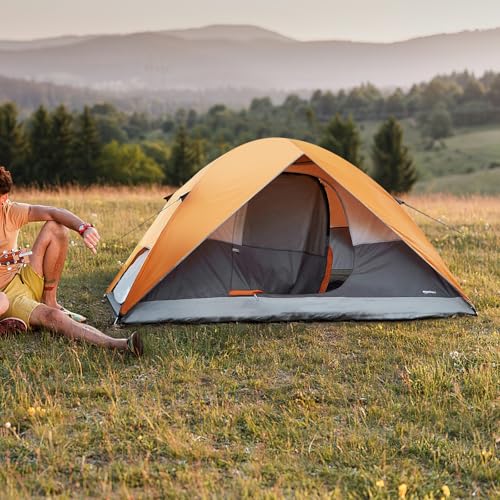
Amazon Basics 2-Person Tent

Strengths
- Budget friendly
- Lightweight
- Easy setup
Trade-offs
- Minimal ventilation
- Basic waterproofing
- Snug for two
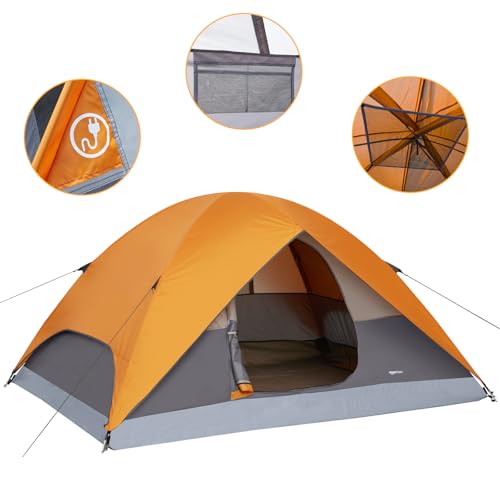
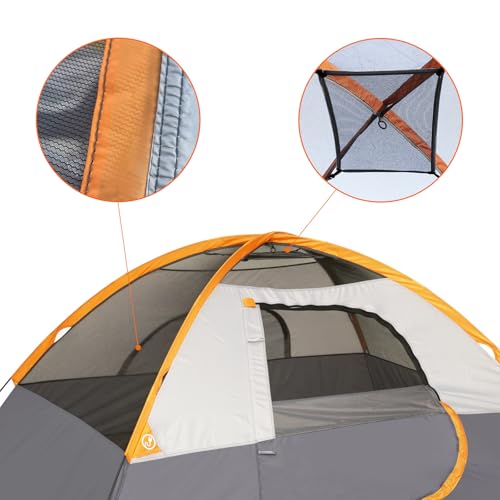
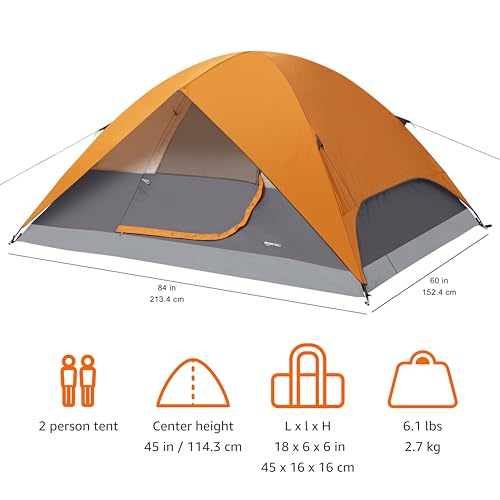
This tent hits the basics, literally. For solo hikers or couples on a tight budget, it’s a functional shelter that won’t weigh you down or break the bank. The 7×5 footprint is snug for two, and while it won’t impress with headroom, it does offer a freestanding design and rainfly that owners say holds up in light showers. Setup is consistently reported as quick, often under five minutes with one person, thanks to snag-free pole sleeves and a simple dome shape.
That said, it’s built with coated polyester and welded seams, not fully taped ones, so prolonged rain or heavy downpours can lead to seepage, especially at stress points. Ventilation is minimal, just a back window and cool-air port, so condensation can build up on humid nights. It’s a no-frills pick that gets you dry on fair-weather trips, but don’t expect it to shine in stormy conditions.
Product photos

How We Evaluated family backpacking tents
Rather than a hands-on lab test, my research for these recommendations focused on a detailed comparison of published specifications and features across numerous models. I weighed owner reviews from multiple sources – Amazon, REI, and specialist camping sites – alongside assessments from reputable outdoor gear reviewers. As someone who’s spent years figuring out what truly matters in a tent, I applied my understanding of backpacking needs and prioritized models based on clear criteria.
For family backpacking tents, space, weight, and weather protection were the most heavily weighted factors. A roomy interior is essential for comfort on multi-day trips, but it can’t come at the expense of adding significant pack weight. Reliable waterproofing is also crucial, as unexpected weather can quickly ruin a trip. Understanding these priorities guided my assessment of each tent’s suitability.
Specifications reliably indicate tent size, weight, and materials used in construction (like rainfly denier and pole material). However, I heavily relied on owner feedback to gauge real-world performance – particularly regarding ease of setup, durability, and actual waterproofness. Reputation and brand trust also played a role, especially when considering long-term reliability and warranty support. Ultimately, I aimed to provide recommendations that balance features with practicality, and to help you with key tent buying factors.
How To Choose The family backpacking tents
Picking the right family backpacking tent is more than just grabbing the biggest one you can find. It’s about balancing space, weight, weather protection, and ease of use – and honestly, a lot of families end up with a tent that doesn’t quite fit their needs.
A good family backpacking tent prioritizes durable, waterproof construction (look for PU coatings of 3000mm or higher), a balance between weight and interior space, and a setup that doesn’t require an engineering degree. Features like multiple doors, vestibules for gear storage, and good ventilation are also crucial for a comfortable experience. Consider the skill level of those who will be setting up the tent and choose accordingly.
Size and Capacity
Don’t assume a “6-person” tent comfortably fits six adults and their gear. Manufacturers often overestimate capacity. I recommend sizing up, especially if you have kids or like a lot of space to spread out. A 4-person tent is often a sweet spot for a family of four, providing enough room for sleeping and some gear storage. If you’re frequently car camping and space isn’t a huge concern, a larger tent is fine, but for backpacking, every ounce counts. I’ve seen families struggle with tents that are just too cramped, leading to a miserable experience.
Waterproofing and Materials
Weather protection is paramount. Look beyond just the advertised waterproof rating. The quality of the materials and construction matters just as much. A higher denier (D) polyester or nylon fabric will be more durable and resistant to tears. Fully taped seams are essential to prevent leaks. Pay attention to the rainfly’s coverage; it should extend down the sides of the tent to provide adequate protection from wind-driven rain. And don’t forget the floor! A bathtub floor (where the fabric extends up the sides a few inches) adds an extra layer of defense against moisture. If you plan on doing a lot of backpacking in unpredictable weather, consider a tent with a heavier-duty rainfly and floor.
- A PU coating of 1500mm is a minimum for light rain.
- 3000mm – 5000mm offers good protection for moderate conditions.
- Anything above 5000mm is excellent for heavy rain and extended exposure, but adds weight and cost.
A little preventative care goes a long way. Regularly applying a seam sealer to your tent will extend its waterproof life significantly.
Weight and Packability
This is where compromises often happen. Larger tents are heavier. More durable materials are heavier. But when you’re carrying everything on your back, every pound matters. I often suggest families consider splitting gear weight strategically – one person carries the tent, another the sleeping bags, etc. Look for tents using lightweight aluminum poles instead of fiberglass, as they offer a better strength-to-weight ratio. If you’re serious about keeping weight down, explore options for backpacking tents for families designed specifically for those who hike longer distances. When you’re thinking about weight, don’t forget to factor in the weight of the stakes and the repair kit. It’s also important to consider how compactly the tent packs down. A smaller packed size makes it easier to fit into your backpack. Learning about setting up large family tents before your trip can save a lot of frustration.
Family Backpacking Tents Compared
Here’s a comparison of key specifications for several family backpacking tents to help you choose the right one for your needs.
| Product Name | Capacity | Weight (lbs) | Floor Size (ft x ft) | Waterproof Rating (mm) | Pole Material |
|---|---|---|---|---|---|
| Purebox 6-Person Family Tent | 6 | 13 | 10 x 8 | N/A | Fiberglass |
| Clostnature 4-Person Ultralight Tent | 4 | 7.38 | 7.3 x 7.8 | 5000 | Aluminum |
| Purebox 4-Person Extended Tent | 4 | 10.8 | 9.02 x 7.05 | N/A | Fiberglass |
| BISINNA 4-Person Aluminum Tent | 4 | N/A | 92.5 x 86.6 | 2000 | Aluminum |
| Happy Travel 4-Person Dome Tent | 4 | 8.6 | 8.7 x 8 | 2000 | Fiberglass |
| HIKERGARDEN 10-Person Family Tent | 10 | 20.5 | 168 x 132 | 1000 | Fiberglass |
| Clostnature 2-Person Ultralight Tent | 2 | 5.29 | 7.3 x 4.11 | 5000 | Aluminum |
| Amazon Basics 2-Person Tent | 2 | N/A | 7 x 5 | N/A | N/A |
Frequently Asked Questions
What’s the biggest mistake people make when buying a family backpacking tent?
People often prioritize size over weight, ending up with a tent that’s too heavy to comfortably carry for extended distances. A family should realistically assess how much weight each member can carry and choose a tent accordingly.
Are freestanding tents really necessary for backpacking?
While not always essential, freestanding tents are incredibly helpful, especially on rocky or uneven terrain where staking can be difficult. They offer more flexibility in campsite selection and quicker setup, which is a plus when you’re tired after a long hike.
How long will a typical family backpacking tent last with regular use?
With proper care, regular cleaning, seam sealing, and careful storage, a quality family backpacking tent should last between 5 to 10 years. The lifespan heavily depends on the materials used and how frequently it’s used in harsh conditions.
What waterproof rating is truly sufficient for a backpacking trip?
A PU coating of at least 3000mm is a good starting point for reliable waterproofing, but 5000mm or higher provides better protection against heavier rainfall and prolonged exposure. Remember that the quality of construction and seam taping are just as important as the rating itself.
What’s the advantage of an aluminum pole over a fiberglass one?
Aluminum poles offer a significantly better strength-to-weight ratio than fiberglass, making them ideal for backpacking where every ounce counts. You’ll find top backpacking 4-person tents use aluminum poles for this reason.
The Bottom Line
Choosing a family backpacking tent always comes down to trade-offs – how much space and comfort are you willing to sacrifice for a lighter pack weight? While there are many options out there, for the best overall balance of features, durability, and reasonable weight, I recommend the Clostnature 4-Person Ultralight Tent. It consistently gets positive reviews for its ease of setup and reliable weather protection.
If you’re on a tighter budget, the Purebox 6-Person Family Tent provides a lot of space for the money, though you’ll be adding some weight to your pack. For families prioritizing versatility and needing more room, the Purebox 4-Person Extended Tent offers extra living space, making it a good choice for longer trips where comfort is key. And if you’re curious about alternatives, you might want to explore inflatable tents for families – though they aren’t typically the first choice for backpacking.
Ultimately, the best tent isn’t about the highest waterproof rating or the lightest weight. It’s about finding a shelter that keeps your family comfortable and protected, allowing you to focus on enjoying your time in the great outdoors. Prioritize a tent that’s easy you to set up, made from durable materials, and spacious enough for everyone to sleep and relax – those fundamentals matter far more than any single specification.
