
Where to Rent a Tent for a Party: A Planner’s Guide
This post contains affiliate links. As an Amazon Associate, we earn from qualifying purchases.
Rent a party tent by first locking down three specifics: your final guest count, the exact surface material in your yard, and a booking date at least 3-4 weeks out for summer weekends. Use published sizing charts from rental pros, like a 20×40 tent for 70-80 people, and always disclose hard surfaces like concrete upfront, as they require heavy ballast blocks that affect cost and logistics.
Picture this: you’ve sent the invites, planned the menu, and the forecast looks perfect. Then the rental truck arrives, and the crew chief takes one look at your brick patio and shakes his head. “We can’t stake here. We’ll need the ballast truck, and that’s a different job.” Your budget just sprouted a new line item, and your timeline is shot.
I’ve been there, not as a client, but as the extra pair of hands. Last summer, I helped a friend set up a 20×40 pole tent for a family reunion. We ignored the rental company’s soil assessment, drove a stake into what felt like solid ground, and punctured a shallow irrigation line. The resulting geyser soaked the DJ’s equipment and cost us a $500 emergency plumber call. It was a visceral lesson in why the ground under your feet is the most critical part of the plan.
This isn’t about picking a tent color. It’s about translating your backyard vision into the exact specs a rental company needs: square footage, anchor type, and a date circled in red on their peak-season calendar. Let’s get your party covered, without any last-minute surprises.
Key Takeaways
- Never guess your tent size. Use a rental company’s published capacity chart. For example, a 20×40 High Peak Tent from Noblesville Tent & Event fits 70-80 guests with tables.
- Your surface dictates the entire job. Grass allows staking; concrete, asphalt, or pavers require 700lb concrete ballast anchors per leg, which adds cost and equipment.
- Book early for peak season. For a summer Saturday, especially during graduation season (May-June), secure your rental 3-4 weeks in advance.
- Prioritize a frame tent for hard surfaces. The lack of center poles offers greater layout flexibility where you can’t drive stakes, a lesson I learned after a rainy graduation party.
- Understand what you’re renting. A pop-up canopy is for shade and light wind protection only, not a storm.
What Type of Tent Do You Actually Need?
You’ll get this question within 30 seconds of calling a rental company. Your answer dictates everything from the truck they send to the final invoice. It’s the first filter for your event.
Frame tents utilize a freestanding aluminum structure with no center poles, allowing installation on any surface using weighted ballast. Pole tents rely on central support poles and perimeter ropes staked into soft ground, creating a traditional peaked profile. Pop-up tents are lightweight, user-assembled aluminum shelters designed for temporary shade and minimal weather protection.
Frame Tents: The Flexible Workhorse
This is my go-to recommendation for backyard parties, even though it often costs 15% more than a pole tent. The reason is flexibility. After a sudden downpour at my nephew’s graduation, we were able to quickly zip on solid sidewalls without having to work around central poles, keeping the buffet table perfectly dry. The entire space is usable, which is perfect for a dance floor or mingling. The trade-off is setup complexity; it requires a pro crew and, on hard surfaces, those massive 700lb concrete blocks per leg that Noblesville Tent & Event uses.
Pole Tents: The Classic (But Finicky) Choice
They offer that beautiful, swooping silhouette you see at vineyards. They’re often less expensive to rent. But they’re divas about their environment. Every rope needs a stake in soft, unobstructed earth. If your yard has irrigation, septic lines, or tree roots, most companies will walk away. You also sacrifice interior space to the central poles.
Pop-Up Canopies: The DIY Shade Solution
From the YouTube transcript of a rental business owner: these are “money makers” because they’re simple. A 10×20 pop-up is something you can often handle yourself. But heed the owner’s warning: they are “really just meant for shade.” The lightweight frames are rated for maybe 15-20 mph wind. For a casual afternoon barbecue, they’re perfect. For a formal evening event, they won’t cut it.
TL;DR: Choose a frame tent for versatility on any surface, a pole tent only for soft, hazard-free ground, and a pop-up for simple, DIY shade.
How Do You Size a Tent for Your Guest List?
Throw out the guesswork. The only rule that matters is the rental company’s capacity chart. These numbers account for table footprints, chair space, and walking aisles, things your eyeball estimate always misses.
Let’s use real data. J & J Tent And Party Rentals specifies a 40’x40’ pole tent seats about 88 guests at 60” round tables, with space left for a 12’x12’ dance floor and buffet. Their 40’x80’ frame tent comfortably fits 200. Noblesville Tent & Event lists a 20×40 High Peak Tent (800 sq ft) for 70-80 people.
| Tent Size (ft) | Square Footage | Seated Guest Capacity | Ideal Event Type |
|---|---|---|---|
| 20×40 | 800 | 70-80 | Intimate wedding, family reunion |
| 30×60 | 1,800 | 120-150 | Large birthday, corporate gathering |
| 40×80 | 3,200 | 200 | Large wedding reception |
| 20×20 | 400 | 30-40 | Small cocktail party, dessert station |
These capacities are your baseline. Now, add everything that isn’t a person in a chair. A 12’x12’ dance floor is 144 sq ft. A buffet line needs another 50. A bar? Tack on 30. Add it up, then compare to the chart.
Common mistake: Ordering based on square footage alone, a 20×20 tent (400 sq ft) sounds spacious until you try to fit 40 people, a gift table, and a drink cooler inside. The dance floor ends up in the flower beds.
When in doubt, go one size up. The cost of a slightly larger tent is always less than the cost of a cramped, uncomfortable party. For truly expansive events, you’ll be looking at specialized large party tents designed for festival-scale crowds.
Does Your Yard’s Surface Type Affect the Rental?
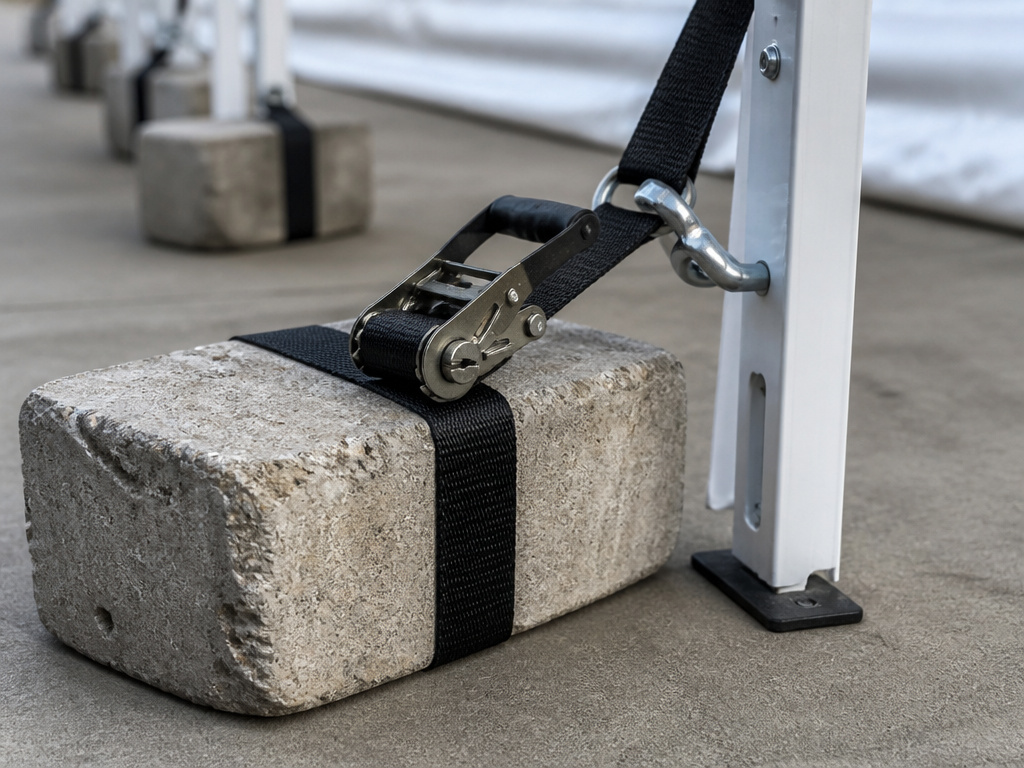
Absolutely. This is the make-or-break detail most people forget until the truck is in the driveway. Grass is simple. Concrete changes everything.
Soft Surfaces: Grass, Dirt, Acceptable Gravel
Here, the crew can stake. For pole tents, they’ll drive long steel anchors. For securing a pop-up party tent on grass, many crews (and that YouTube business owner) swear by spiral tie-down stakes from Amazon, secured with a ratchet strap. The ground must be clear of hidden utilities.
Hard Surfaces: Concrete, Asphalt, Pavers
Staking is off the table. You cannot drill into a public sidewalk or your new stamped concrete patio. Instead, each tent leg sits on a massive weight. Noblesville Tent & Event uses 700lb concrete ballast anchors per leg on hard surfaces. A modest 20×40 frame tent might have 15 legs. That’s over 5 tons of concrete being placed with a forklift.
And speaking of weight, my back still aches remembering the time we misjudged the slope of a client’s driveway. The blocks started to creep. Lesson learned? Always use the leveling shims the crew brings, even if they say it’s ‘probably fine.’ That ‘probably’ is where budgets go to die.
Concrete is unforgiving.
You must tell your rental company the exact surface during the first quote. The switch from a “stake package” to a “ballast package” is a significant cost adder and requires different equipment.
- Call 811 or your local utility marking service at least two business days before the rental. It’s free and prevents a catastrophic (and expensive) strike.
- Note any slope in your yard.
- Identify the exact material: “poured concrete driveway,” “clay pavers on sand,” etc.
Before you start: Failing to disclose a hard surface or underground utilities can lead to delayed setup, added fees for ballast equipment, or property damage. A stake hitting a gas line poses a severe safety risk and can result in service disruption and four-figure repair bills.
What Accessories Turn a Canopy Into a Venue?
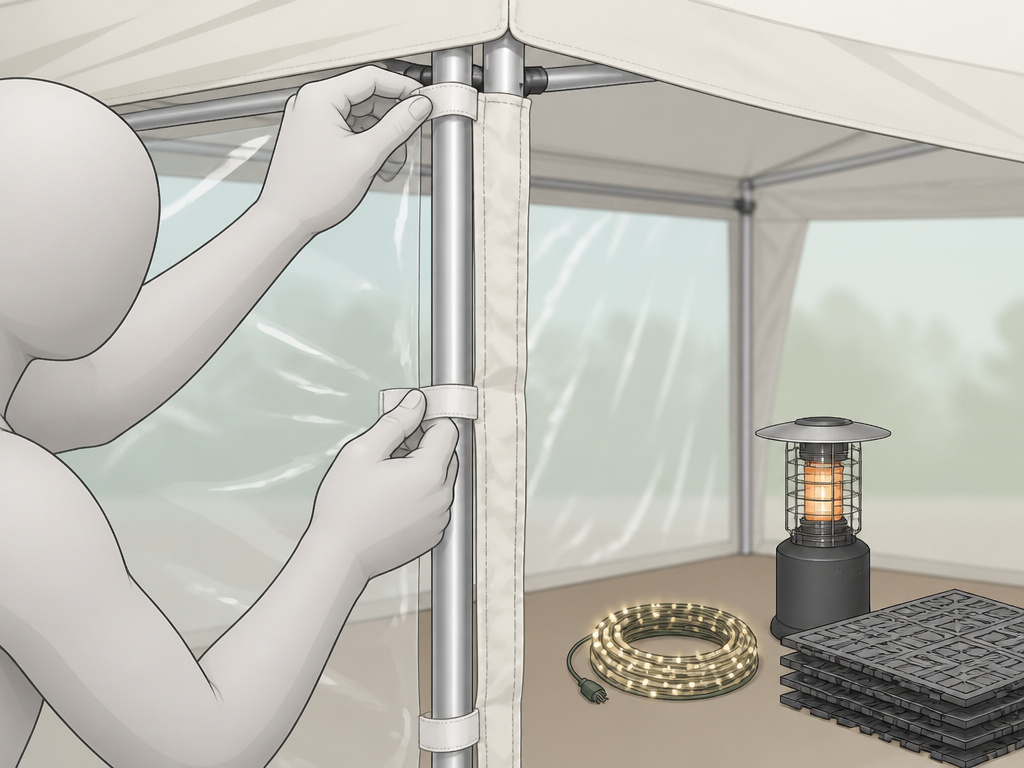
The tent is just your roof. The accessories are what create atmosphere, comfort, and function. This is where your party tent accessories list comes to life.
Sidewalls: Your Climate and Privacy Shield
You typically choose from solid vinyl (full protection, darker inside), mesh (bug-free airflow), or clear window panels (light with a wind break). I specify heavier 10oz vinyl walls when I’m near the coast because they snap less in constant wind than standard 8oz ones.
Lighting: Non-Negotiable for Evening Events
Drab, shadowy tents kill mood. Options include:
* Commercial-grade LED string lights (like the Brightech Ambience Pro series for longevity).
* Festive globe lights.
* Uplighting to wash the canopy in color.
Good tent lighting ideas transform the space from a garage-like shelter to a magical enclosure.
Climate Control & Flooring
For summer heat, portable evaporative coolers or even dedicated tent air conditioners can be rented. For chilly nights, commercial patio heaters extend the season. Interlocking plastic flooring or a simple subfloor system keeps heels from sinking into grass and defines the party space.
Don’t forget the basics you can bundle from the same company: tables, chairs, linens, and a portable restroom trailer from a supplier like United Site Services for larger events. A thorough camping gear list from your rental pro ensures you don’t forget the serving tables or trash cans.
How Far in Advance Should You Book?
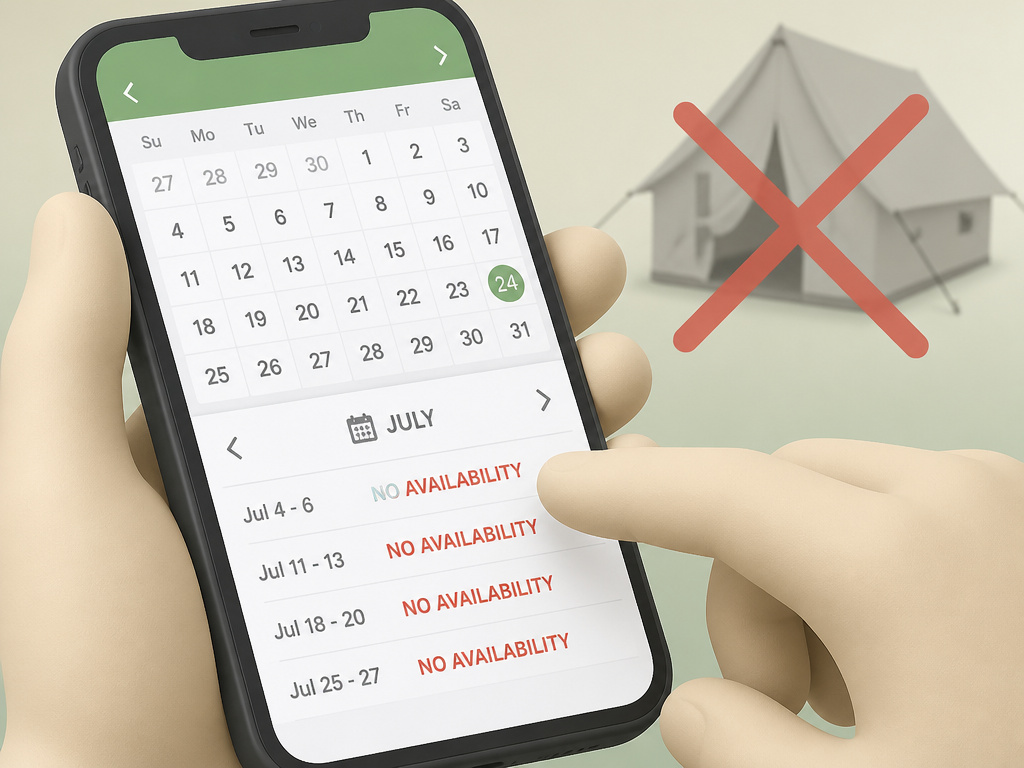
Start early. For a prime summer Saturday, “early” means 3-4 weeks minimum. Noblesville Tent & Event explicitly advises booking 3–4 weeks ahead for the May–June graduation season rush. Popular dates book solid by April.
When you contact companies, have this info ready:
* Event date, plus required setup and takedown windows.
* Exact address and surface type (send a phone video of the site if you can).
* Final guest count and a basic layout sketch.
* Your rain plan (e.g., “We will add solid sidewalls if rain is forecast”).
The quote should break down the tent rental, delivery/setup/takedown, all add-ons, and any insurance waiver. Get it in writing. Ask about cancellation policies and weekend pickup surcharges. Companies with clear online sizing charts, like J & J Tent or Noblesville, are usually more transparent to work with.
TL;DR: Contact multiple local companies 4+ weeks before a summer event, armed with your guest count and site details, to compare transparent quotes.
Frequently Asked Questions
How much does it cost to rent a party tent?
Costs vary wildly by size, type, and location. A small 20×20 frame tent may start around a few hundred dollars. A large 40×80 frame tent with sidewalls, flooring, and lighting can easily reach several thousand. The only way to get an accurate price is a detailed quote based on your specific needs.
Can I set up a rented tent myself?
For frame and pole tents, no. Professional installation is required for safety and insurance reasons. For pop-up canopies, many companies offer a customer pickup-and-setup option, which is cheaper but places the anchoring responsibility on you.
What if the weather turns bad on my event day?
Most rental contracts include a weather clause. You can usually add sidewalls last-minute for a fee. Rescheduling for severe weather like high wind warnings may be possible, but last-minute cancellations typically forfeit the deposit. Always have a contingency plan.
Do I need a permit for a tent in my backyard?
Local ordinances differ, but many require a permit for structures over a certain size (often 200 square feet). Your rental company usually knows the local rules and may handle the permit process for an additional fee. It is your responsibility to ask.
Are pop-up tents safe for wind?
They have strict limits. As noted in the YouTube research, they are rated for roughly 15-20 mph winds. Proper anchoring with adequate weight (80-100 lbs per leg on concrete) is critical. They are not suitable for storms or strong, sustained wind.
Before You Go
Renting a party tent is a logistics puzzle with three fixed pieces: your headcount, your ground, and your date. Match the first to a real capacity chart, not a guess. Survey the second with a critical eye for concrete and slopes. And lock down the third well before the summer rush hits a local company’s calendar.
The goal isn’t just to have a tent. It’s to have the right tent, one that disappears into the background of a great party because it fits perfectly, stands securely, and handles whatever the evening throws at it. Whether you’re comparing canvas tent options for a rustic vibe or just need a simple shelter, the specifics you nail down in that first phone call make all the difference. Now, go plan a party that’s memorable for all the right reasons.
