
How to Heat a Tent in Winter Safely & Effectively
This post contains affiliate links. As an Amazon Associate, we earn from qualifying purchases.
To safely heat a tent in winter, match your heat source to your power and tent type, then enforce a strict safety protocol: active cross-ventilation, a separate carbon monoxide detector at sleeping height, and a fireproof base. Electric is safest but needs serious watts; propane requires constant vigilance; wood demands a specialized “hot tent” with a proper stove jack.
The cold isn’t your only enemy on a winter campout. The real threats are silent and sneaky: carbon monoxide pooling in a still tent, or condensation soaking your sleeping bag by dawn because you sealed the vents to keep the warmth in. I’ve chased the cozy dream of a heated tent from the Adirondacks to the Scottish Highlands, and I’ve learned the hard way what separates a magical evening from a miserable, or dangerous, night.
This isn’t about generic advice. This is a real-world walkthrough of your three practical options, packed with the specific math, the named gear that works, and the safety routines you cannot improvise.
Proper heating of an enclosed shelter requires understanding combustion byproducts, thermal dynamics, and manufacturer safety certifications. For fuel-based devices, adherence to standards like ANSI Z21.103-2017 is critical, and independent atmospheric monitoring is non-negotiable.
Key Takeaways
- Never trust a heater’s Oxygen Depletion Sensor (ODS) as your CO monitor. It only trips at critically low oxygen (~18%); carbon monoxide can reach dangerous levels long before. A separate, battery-operated detector like the First Alert CO710 is mandatory.
- Condensation is inevitable. Heating moist air inside a cold shell creates water. You must manage it with top and bottom venting, or you’ll wake up to a damp, cold environment.
- Your sleeping pad is your primary heater. A pad with an R-value of 4 or higher is essential for winter to block ground cold. No portable heater can compensate for this foundational heat loss.
- Electric heat is a math problem. A 1500W heater needs a power source that can deliver that wattage continuously. A small power station will be drained in minutes; you typically need a campsite hookup or a massive, heavy battery unit.
- Wood heat is a system, not an accessory. It requires a dedicated hot tent with a professionally installed stove jack. Never cut a hole in a standard tent.
What’s Your Realistic Heating Strategy?
Before you buy a single gadget, diagnose your trip. Are you at a drive-in site with an electrical post? Backpacking miles from the grid? Setting up a basecamp for a week? Your context dictates your only sane choices. A heater is the last piece of your warmth system, not the first.
I learned this on a brutal February trip in Wyoming. I brought a powerful propane heater but skimped on my sleeping pad, thinking the heater would cover the difference. I was cold, miserable, and burned through two fuel cylinders in one night. The ground sucked the heat right out of me. Now, I build my kit from the ground up: R-5 pad, appropriate bag, then I consider supplemental heat.
TL;DR: Choose your heat method based on your power access and shelter type, not on a dream of toasty perfection.
Electric Heaters: The Plug-In Reality Check
Electric heating is the safest from a combustion standpoint, no flame, no carbon monoxide. But your risk shifts to power logistics. The equation is brutally simple: does your power source have the wattage and the watt-hours?
A common 1500W ceramic space heater pulls 12.5 amps. Run it for an hour, it consumes 1.5 kilowatt-hours (kWh). Let’s see what that means for real gear.
| Power Source | Continuous Output | Capacity (Watt-Hours) | Can Run a 1500W Heater For… | Verdict |
|---|---|---|---|---|
| Campsite Hookup (15A) | ~1800W | Grid-powered | Hours, no problem | Ideal, if available |
| Jackery 2000 Pro | 2000W | 2160Wh | ~1 hour 25 minutes | Heavy, expensive, short runtime |
| Jackery 1000 | 1000W | 1002Wh | ~40 minutes | Brief warm-up only |
| EcoFlow River 2 (300W) | 300W | 300Wh | Will not start | Useless for heating |
The table reveals the trap. People use a power station for lights and phones, then plug in a heater. It either trips instantly or dies in minutes. For reliable off-grid electric heat, you need a unit like the Jackery 2000 Pro, a 50+ lb investment.
If you have the outlet, my go-to is a simple ceramic heater like the Lasko 754200. Its mechanical dials survive damp cold better than finicky digital panels. But remember, electric heat is dry, which feels great, but it still pushes your moist breath against cold walls. Condensation remains your enemy.
Common mistake: Pairing a 1500W heater with a 300W power station, the heater either fails to start or drains the battery in under 15 minutes, leaving you cold and with dead essentials.
TL;DR: Electric heat needs serious, sustained power. It’s best for drive-in sites with hookups, not for true backcountry.
Propane Heaters: My Love-Hate Relationship
That familiar hiss and the immediate radiant punch of a Mr. Heater Little Buddy is a beautiful thing, until you catch the faint, acrid tang of incomplete combustion on a dead-still night. That smell is your warning. I love propane’s portability, but I’ve developed a militant respect for its risks.
The U.S. Consumer Product Safety Commission explicitly warns against using portable heaters while sleeping in an enclosed space. They say that because people ignore it and get poisoned. Your only mitigation is strict, active ventilation and independent monitoring.
I learned this the hard way on a trip to the Adirondacks. Trusting the heater’s ODS, I zipped the vents to keep the -10°F wind out. Within an hour, my separate First Alert CO710 started chirping at 35 ppm. I had a dull headache. I shut it off, opened everything, and spent a miserable, shivering night that taught me the ODS is a last-ditch fail-safe, not a monitor. I was the monitor, and I’d failed.
The Non-Negotiable Propane Protocol
- Placement is everything. Use it on the floor on a fire-resistant mat (like an aluminized fiberglass sheet), with a one-foot clearance from everything.
- Light it with the door wide open. Let it run for a minute outside before bringing it in to ensure clean combustion.
- Establish cross-ventilation immediately. Top vent open fully, lower vent or door cracked 2-3 inches. This isn’t for comfort; it’s to evacuate CO and feed the flame.
- Stay awake for the first 30 minutes. Watch your separate CO detector. If it makes a peep, shut down and air out.
Before you start: Carbon monoxide is odorless and can cause unconsciousness before symptoms appear. In a small tent, poisoning happens fast. Always use a heater certified for indoor use (look for ANSI Z21.103-2017 compliance) and never operate one while asleep.
Cold also affects propane cylinders. A half-full tank in deep cold may not vaporize fuel properly, causing a sputtering flame that produces more CO. Keep the cylinder inside your tent (away from the heater) to keep it warm.
TL;DR: Propane heat is effective but demands your constant, vigilant management. The ODS is not your CO alarm.
The Wood-Burning Dream: It’s a Specialized Gear Set
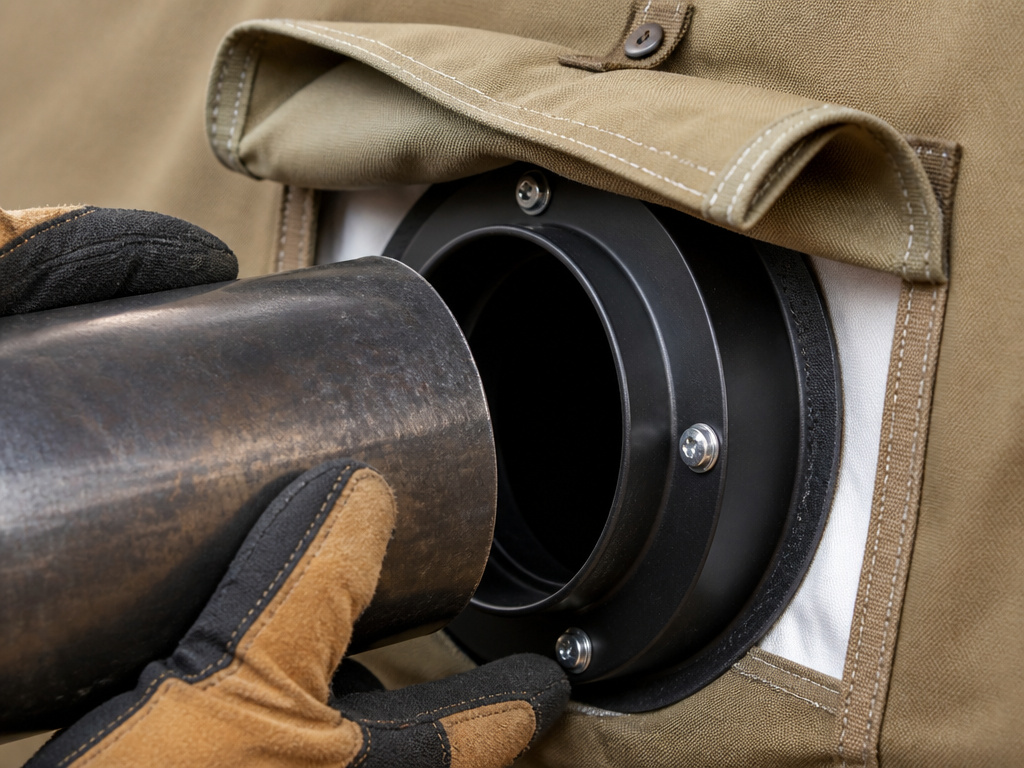
The crackle of a wood stove inside a canvas shelter is the pinnacle of winter camping comfort. It’s also a specific gear ecosystem, not a DIY project. You need a hot tent designed from the outset with a stove jack, a fire-resistant sleeve (Nomex or Fiberglass) with a metal flashing ring.
You cannot safely create this by cutting a hole in your standard nylon tent. The pipe heat will melt synthetic fabric, and a single spark means a catastrophic fire. This is one area where improvisation is a direct path to disaster.
| Gear Component | Why It’s Essential | What Happens Without It |
|---|---|---|
| Certified Stove Jack | Fireproof pass-through for stove pipe | Pipe melts/burns tent fabric; immediate fire hazard. |
| Fire-Resistant Floor Mat | Protects tent floor from embers & radiant heat | Floor chars and ignites; ground moisture can steam, damaging floor. |
| Spark Arrestor | Prevents live embers from escaping the pipe | Embers land on tent roof, creating burn holes and weakening material. |
| Stove-Specific Tent Material | Withstands radiant heat (e.g., canvas) | Synthetic nylon sags, degrades, and loses waterproofing from the heat. |
If you’re going this route, invest in proper canvas tents with stove jacks and pair them with a purpose-built hot tent stoves sized for your tent’s volume. The payoff is a dry, radiant heat that lasts, but the trade-off is significant weight and setup time.
TL;DR: Wood heat is a luxury system for basecamping. It requires specialized gear, never modify a standard tent.
What About DIY Candle Heaters?
You’ve seen the viral hack: flower pots over tea lights. One detailed YouTube experiment using a cooking pot and eight candles raised a tent’s interior temperature about 10°C (18°F) after 90 minutes. The creator noted the cozy ambiance.
Then he issued a stark warning: if the candles are too close or the pot too low, heat builds up and can cause a sudden, explosive “jet flame” that vaporizes the wax. He explicitly said never pour water on it (causing a steam explosion), but to smother it with a blanket.
The flaw isn’t the modest heat gain; it’s the extreme fire risk from a tiny misstep inside a flammable nylon tent. You’re trading minimal warmth for a high chance of burning your shelter down. For safe, radiant warmth, boil water, fill a Nalgene, wrap it in a sock, and place it in your sleeping bag. It provides focused heat for hours with zero fire risk, a trail-proven technique.
Your Sleeping System: The Bedrock of Warmth
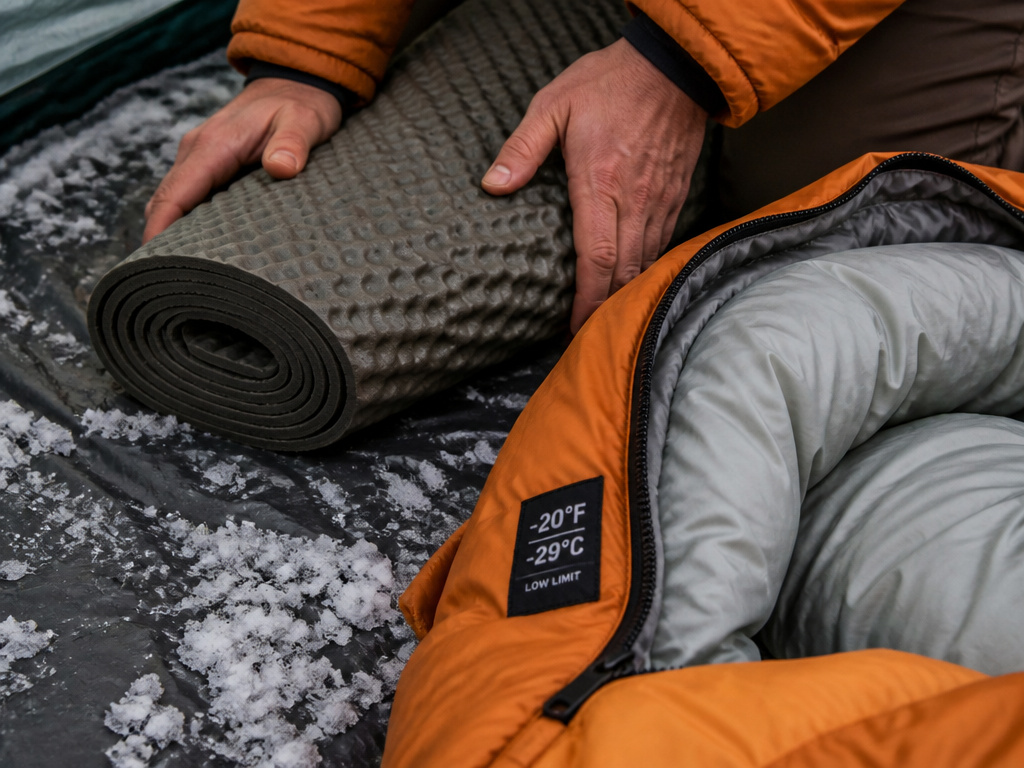
A heater warms the air. Your sleeping bag and pad insulate you. No heater can compensate for a weak sleeping system. The ground is a massive heat sink; without a barrier, you’ll lose warmth all night.
For winter, your sleeping pad needs an R-value of 4 or higher. Summer pads sit around R-2. That difference is the gap between sleeping soundly and shivering uncontrollably by 3 AM. Pair it with a bag rated at least 10°F lower than your expected overnight low.
This foundational warmth reduces your reliance on a heater, letting you use it in short, safer bursts. Think of your tent camping equipment as an integrated system. A sturdy high-wind tent retains heat better than a flapping summer model. The right tent camping accessories, like a fleece liner, add a few precious degrees.
Common mistake: Prioritizing a fancy heater over a high-R-value pad. You’ll burn fuel fighting the cold coming from the ground, and you’ll still lose.
TL;DR: Invest in a winter-grade pad and bag first. They work silently all night with zero risk.
Managing the Inevitable: Condensation
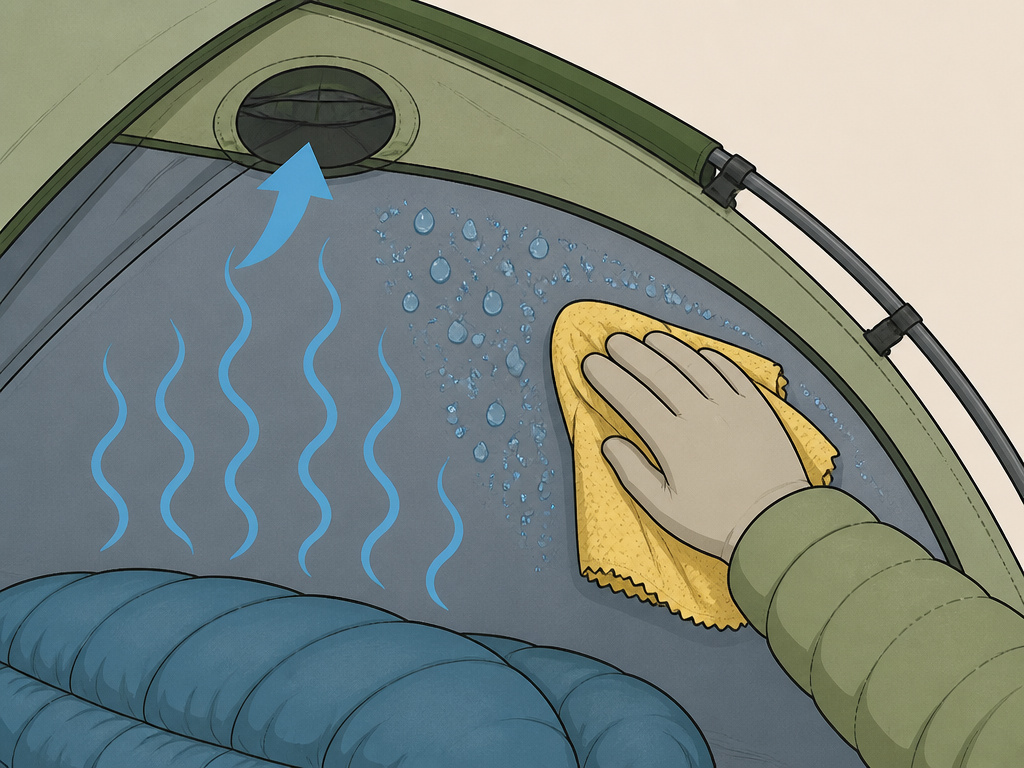
Heating a tent guarantees condensation. Warm, moist air from your breath and clothes hits the cold wall and turns to liquid. In sub-freezing temps, it becomes frost. When the heater stops or the sun hits the tent, it melts and drips, often right onto your bag.
You manage it with ventilation and absorption. Keep the top vent open as the primary escape route for warm, moist air. Crack a lower vent to allow drier, cooler air to enter. This crossflow is critical. If moisture beads up, wipe it with a microfiber towel before it drips. A canvas tent breathes better than nylon, passively reducing some interior moisture.
Accept that some condensation is inevitable. The goal is control, not elimination. A towel and disciplined venting are your main tools.
Frequently Asked Questions
Can I use a regular camping propane heater inside my tent?
No. You must use a heater specifically certified for “indoor” or “enclosed space” use, like those complying with ANSI Z21.103-2017. These have the essential ODS and tip-over switches. Outdoor patio heaters lack these and will produce lethal carbon monoxide levels quickly.
How much ventilation do I need with a propane heater?
Open the top vent fully and crack a lower vent or door panel 2-3 inches. What if it’s snowing or brutally windy? Crack the door’s mesh panel only and use your pack as a windbreak outside to prevent a direct blast. The goal is an air gap, not a gale. If you must seal up, you cannot run the heater.
Is it safe to sleep with a heater running in the tent?
Official guidance from the U.S. CPSC says no, never operate a fuel-burning heater while sleeping. The risk of a malfunction or a vent becoming blocked is too high. Warm the space before bed, then turn it off and rely on your sleeping system.
What’s the best heater for a small two-person tent?
For small spaces, a lower-wattage electric heater (like a 750W model) is safer if you have power. For off-grid, the Mr. Heater Little Buddy is popular, but you must be fanatical about ventilation. Always ensure your two-person winter tents have adequate venting options for your chosen method.
Can I use a wood stove in my normal tent if I’m careful?
Only if it is a dedicated hot tent with a professionally installed stove jack. “Careful” doesn’t prevent synthetic fabric from melting under pipe heat or catching a spark. This is a strict gear requirement, not a technique.
The Bottom Line
Heating a tent is a calculated risk management exercise. Electric ties you to power but removes combustion risk. Propane is portable but demands your constant attention. Wood is luxurious but requires heavy, specialized gear.
Start not with a heater, but with your personal insulation: a sleeping pad rated R-4 or higher and a bag rated for the conditions. That’s your true warmth foundation. Then, choose supplemental heat that matches your trip reality, not your fantasy.
Rehearse the safety drill until it’s instinct: vents open, detector on, clearance clear, awake for the first 30 minutes. That discipline is what transforms a winter night under nylon from an endurance test into an adventure. Stay warm, and stay smart out there.
