
7 Best 1 Man Tents of 2026
This post contains affiliate links. As an Amazon Associate, we earn from qualifying purchases.
The Underwood Ultralight Trekking Pole Tent is the best overall 1-man tent for backpackers who want a durable, weather-ready shelter without the weight, while the Night Cat Pop-up Camping Tent stands out as a simple, fast-setup option for casual campers on a budget. For those needing serious four-season performance, the Underwood 4-Season Winter Tent earns its spot with rugged build and reliable protection.
Picking the right 1-man tent isn’t just about saving weight, it’s about finding a shelter that won’t fail when the weather turns or leave you soaked from condensation by morning. As someone who’s spent years reviewing gear for real trail use, I know how critical it is to balance specs with actual owner experiences.
This guide cuts through the hype, focusing on what matters most: weight, weather resistance, and ventilation, all based on a deep explore product specs, verified user feedback, and design trends that hold up in the wild.
Top 7 1 Man Tents in the Market
The Best 1 Man Tents, Reviewed
Underwood Ultralight Trekking Pole Tent
Strengths
- Extremely lightweight
- Uses trekking poles
- Large vestibule
Trade-offs
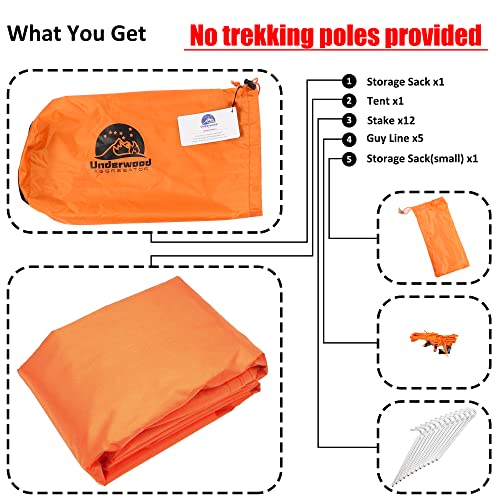
- Requires trekking poles (not included)
- Condensation if not ventilated
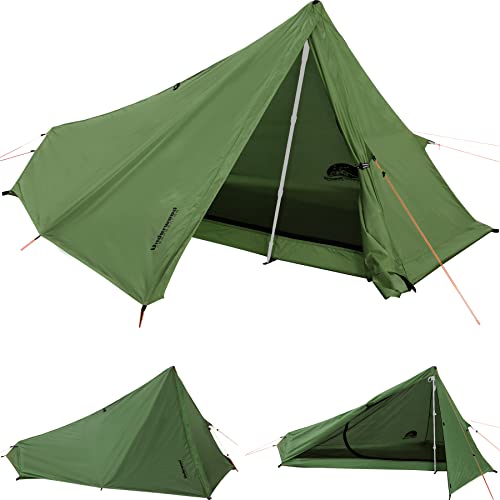
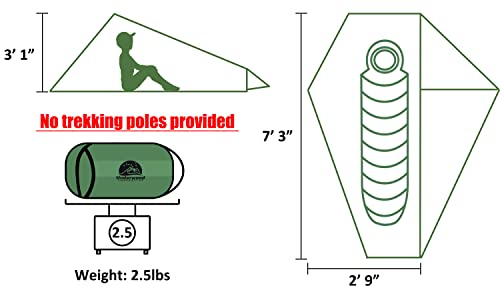
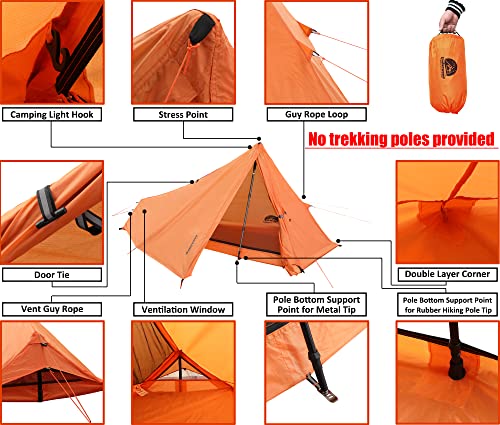
This Underwood Aggregator trekking pole tent is, hands down, the smartest ultralight design on this list. At just 2.5lbs and packing down to 14×5.5 inches, it’s a dream for weight-conscious hikers. The real win? It uses your trekking poles as the frame, eliminating the need to carry separate tent poles. Owners love how fast it pitches (under 2 minutes) and how well it sheds rain thanks to the PU5000mm coating and sealed seams.
It’s not perfect, condensation can build up if the vestibule isn’t staked properly, but the double-layer door and mesh panel help. The large vestibule is a major plus for gear storage, and the freestanding option (using the included short pole) adds versatility. Compared to the Night Cat or ShinHye models, this one wins on innovation and efficiency. For thru-hikers or minimalist campers, it’s the obvious choice.
Product photos


Night Cat Pop-up Camping Tent

Strengths
- Instant setup
- Compact folded size
- Lightweight for pop-up
Trade-offs
- Not for serious backpacking
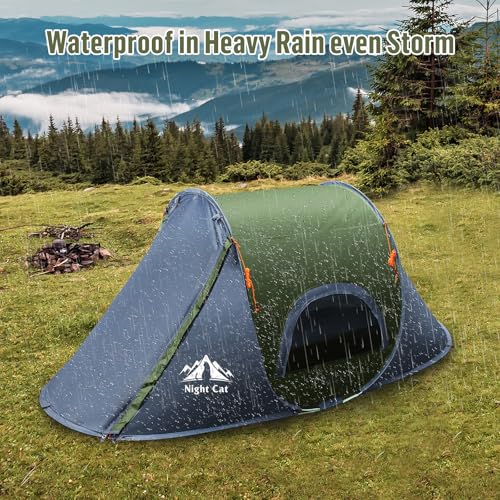
- Limited storm resistance
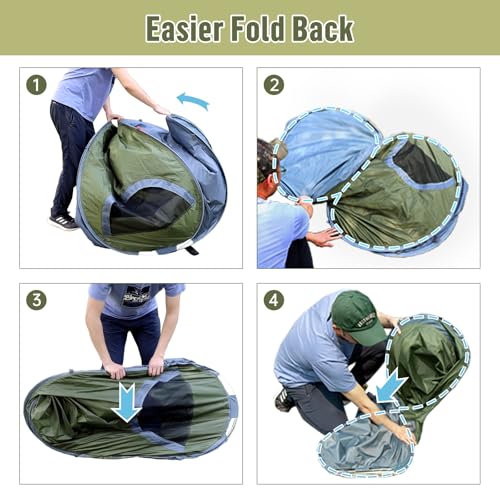
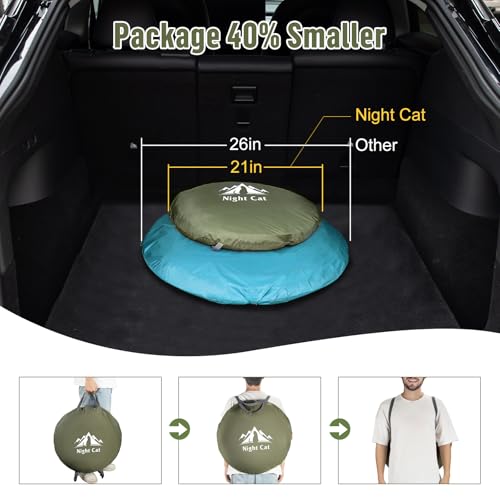
If setup speed is your top priority, this pop-up tent delivers. The instant 3-second deployment is real, just toss it and it springs open. The 40% smaller pack size than traditional pop-ups is a legit improvement, and at 1.5kg (3.3lbs), it’s light for a pop-up. Owners love it for festivals, beach trips, and car camping where convenience trumps packability.
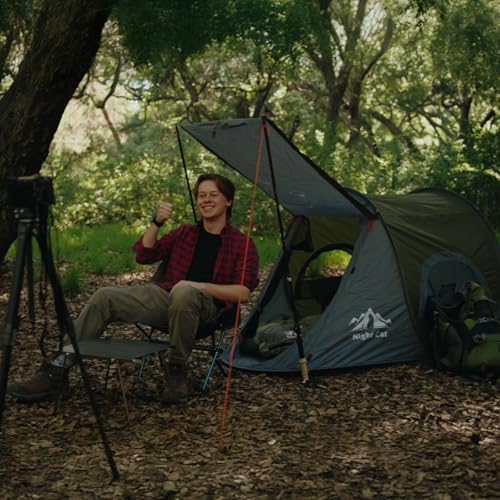
But it’s not built for rugged trails. The PU2000mm rating and 6mm poles are fine for light rain, but it’s not stormproof. Ventilation is decent with two windows and a large door, and you can rig a porch with trekking poles, but that’s not included. As a backpacking tent, it’s too bulky and fragile. But as a “set it and forget it” shelter for easy outings, it shines.
Product photos

Underwood 4-Season Winter Tent
Strengths
- True 4-season build
- Excellent waterproofing
- Snow skirt included
Trade-offs
- Tight floor space
- Heavier than 3-season options
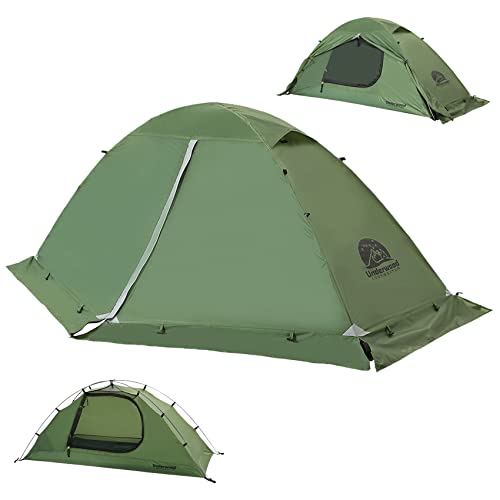
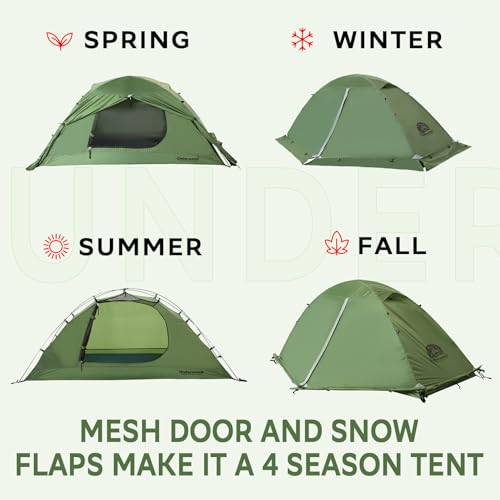
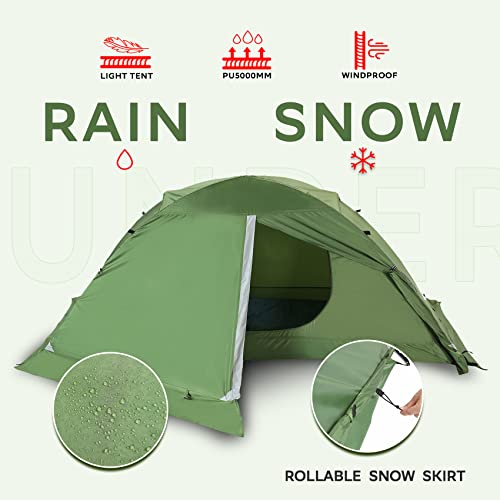
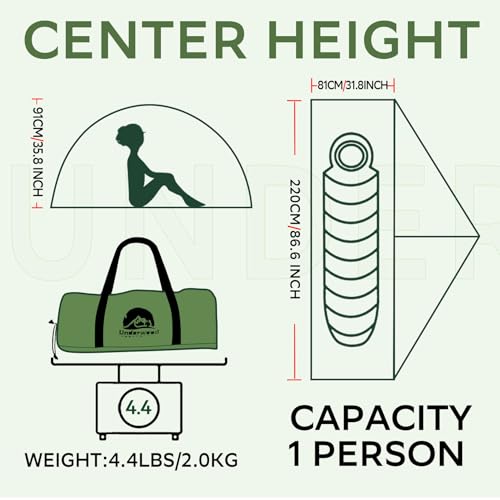
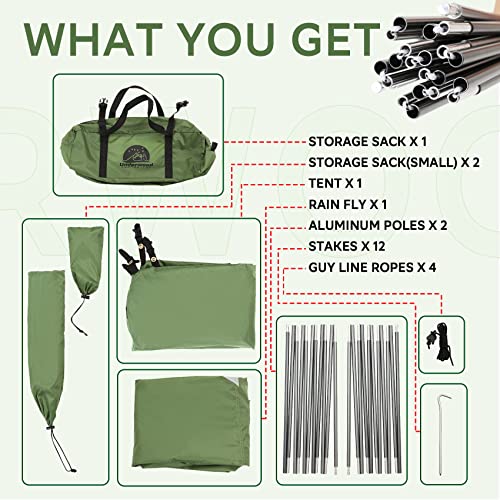
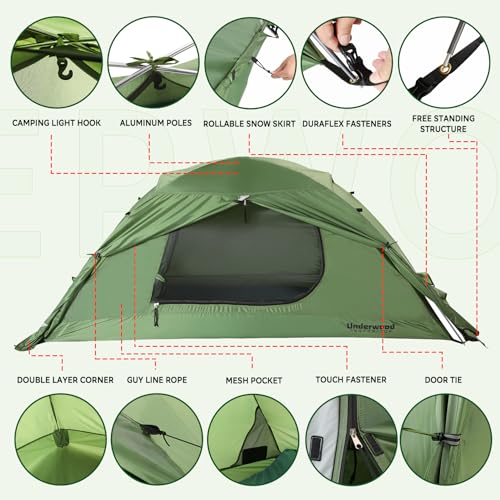
This is one of the few true 4-season solo tents under 5lbs, and it shows in the details. The PU5000mm coating, full rainfly, snow skirt, and aircraft-grade aluminum poles signal serious cold-weather intent. Owners in alpine and winter conditions report it sheds snow well and stays dry, even during prolonged storms. The 35.8-inch center height is modest, but enough to sit up in, and the double-layer door helps manage condensation.
It’s not the roomiest, floor size is tight for tall users, but the focus is clearly on survivability, not comfort. The freestanding design makes setup easier on uneven ground, and the interior mesh pocket and gear loft add practicality. Compared to 3-season models, it sacrifices breathability for weatherproofing, so expect some dampness on still nights. But if you’re heading into snow or high winds, this is the kind of shelter that earns its keep.
Product photos
Night Cat Upgraded Backpacking Tent

Strengths
- Spacious interior
- Fast clip setup
- Good airflow
Trade-offs
- Heavier than ultralight options
- Fiberglass poles less durable than aluminum
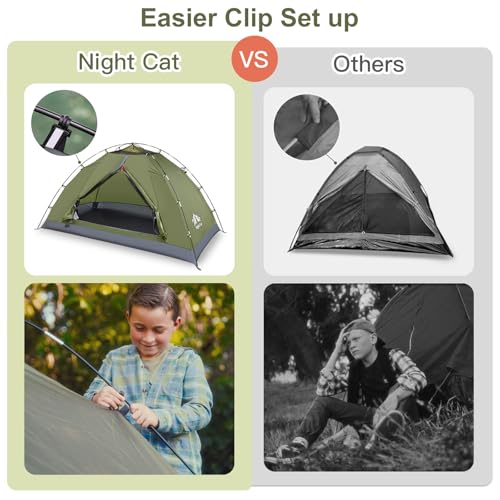
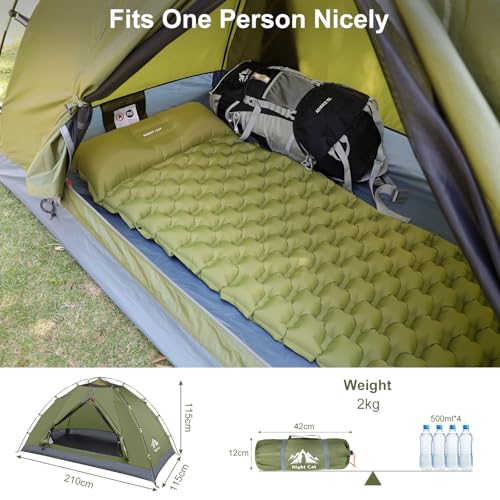
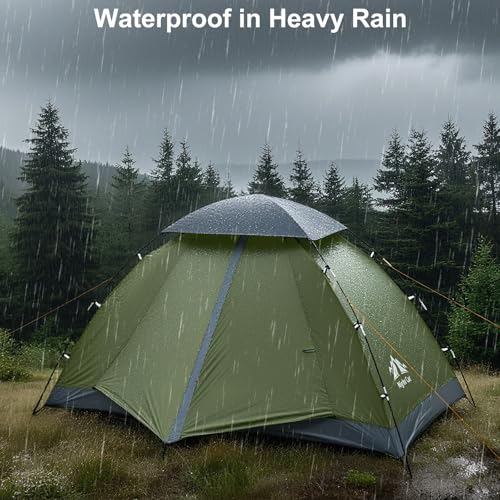
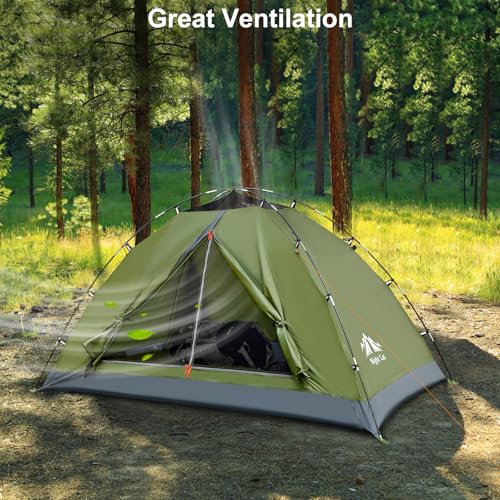
This tent hits a sweet spot for hikers who want more space than a typical solo shelter but still need something packable. On paper, the 7×3.8×3.8ft footprint is generous for one adult, and owners consistently report it fits a sleeping bag, pad, and backpack with room to spare, rare in this class. The clip-based pole system stands out as a real upgrade over sleeve designs, letting campers pitch it fast, especially useful when weather rolls in.
The PU 3000mm waterproofing and taped seams are solid for rain, and the included fiberglass poles hold up in moderate wind when properly staked. That said, ventilation is where it earns its ‘Best Ventilation’ tag, large mesh door and roof window keep airflow high, which helps cut down on condensation, a common issue in single-wall or poorly vented tents. Still, it’s not ultralight, and the 4.4lb weight adds up on long treks.
Product photos

camppal 1 Person Lightweight Tent

Strengths
- Aluminum poles
- Long sleeping area
- Stable in wind
Trade-offs
- Moderate ventilation
- Slightly bulky pack size
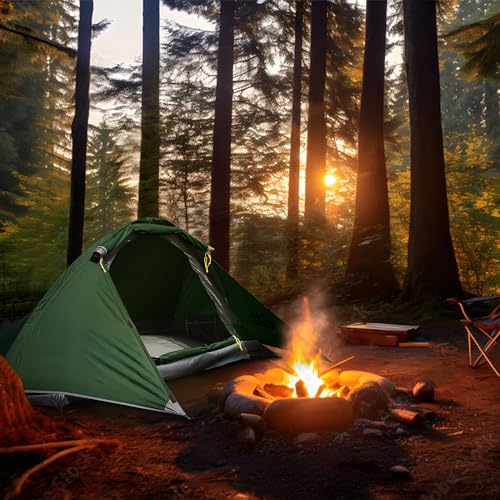
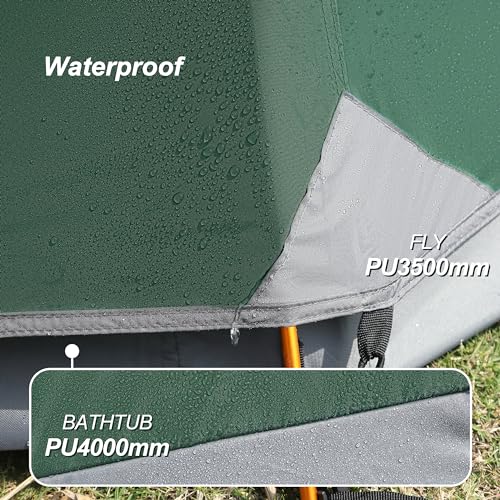
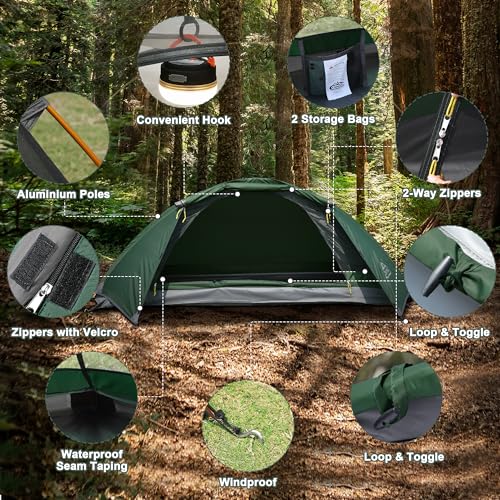
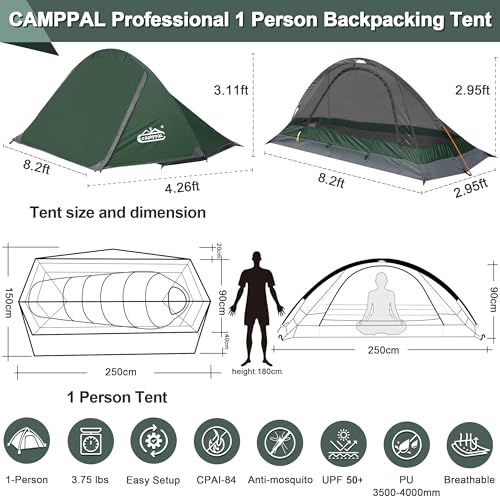
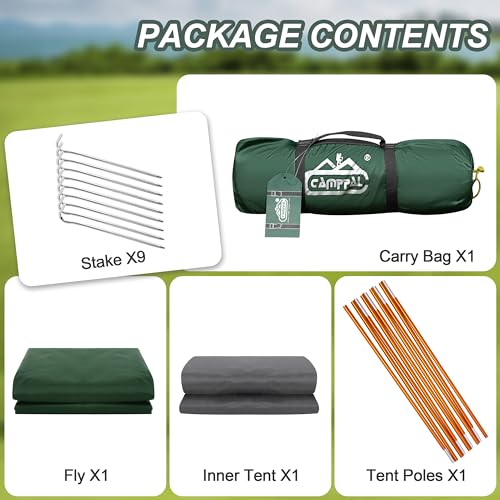
If you’re after a do-it-all solo tent that won’t break the bank, this camppal model makes a strong case. At 3.75lbs, it’s not the lightest, but the aluminum poles and 3500-4000mm waterproof rating give it real all-season chops, especially compared to cheaper polyester builds with fiberglass frames. Owners praise its stormworthiness, noting it held firm in wind and heavy rain, no small thing for a tent in this range.
The 8.2ft length is a standout. Tall users (6ft+) consistently say they can lie flat without toe pressure, and the extra space helps with gear storage. Setup is beginner-friendly thanks to the single ridge pole design, though it’s not instant, more like 3 minutes with practice. It’s not the most breathable tent out there, so expect some condensation on still, damp nights. But for the balance of durability, weather resistance, and value, it’s hard to beat.
Product photos
Sutekus Camouflage Single Person Tent
Strengths
- Low cost
- Lightweight
- Simple design
Trade-offs
- No waterproof rating
- Minimal ventilation
- Few included stakes
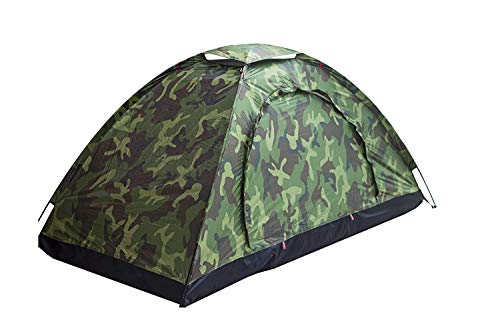
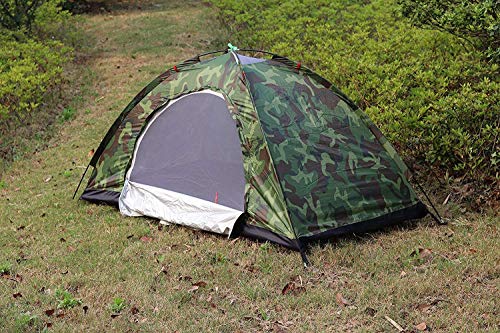
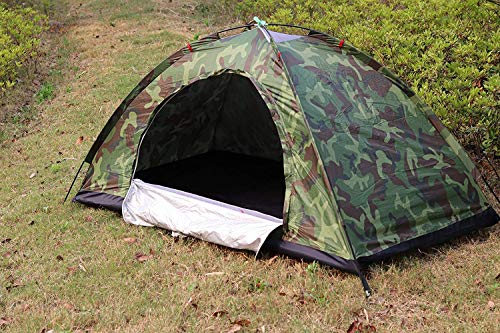
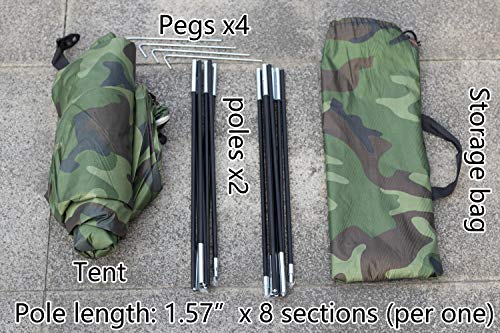
This Sutekus tent is clearly built for budget buyers who just need basic shelter. At 3lbs and with a simple 78.7-inch length, it’s compact and light enough for short hikes, but the 180D Oxford fabric, while durable, makes it feel more like a backyard or festival tent than a serious backpacking shelter. It lacks features common in pricier models, no full rainfly, no ventilation details, and only four stakes included.
Owners report it works fine in dry conditions, but struggles in wind and rain due to the basic design and lack of guy lines or taped seams. There’s no mention of waterproof ratings or pole type beyond “two poles,” which raises red flags for weather resistance. It’s not terrible for the price, but it’s barebones. I’d only recommend it for car campers or emergency kits where weight and weather aren’t concerns.
Product photos


ShinHye Ultralight 1 Person Tent

Strengths
- Lightweight
- Simple setup
- Breathable mesh
Trade-offs
- Fiberglass poles prone to bending
- Limited storm durability
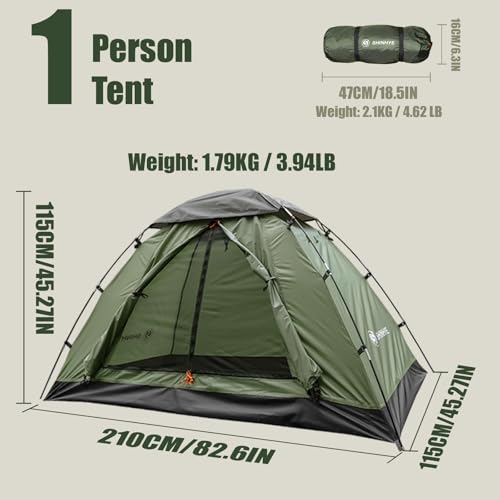
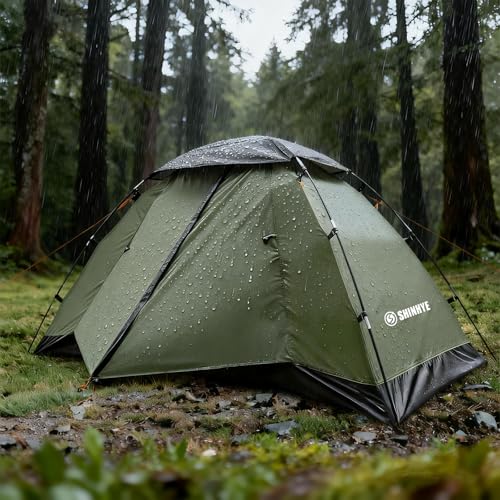
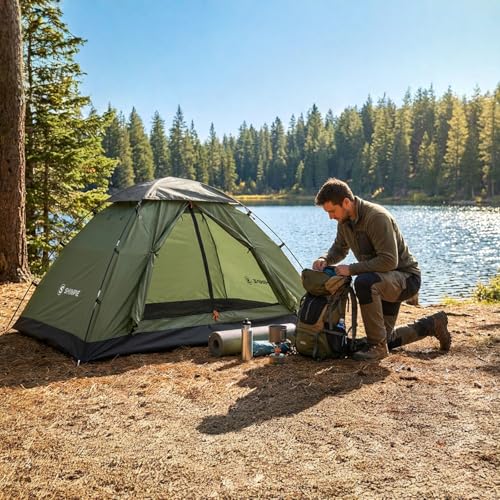
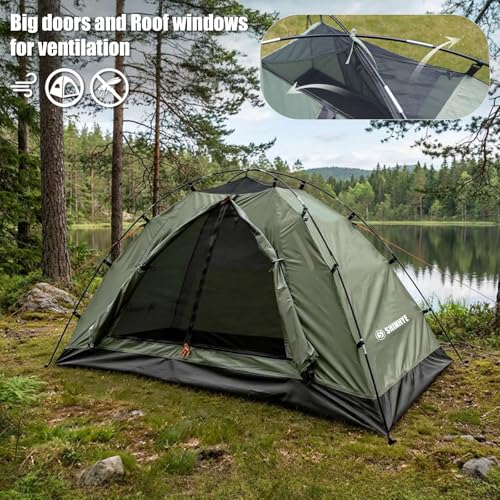
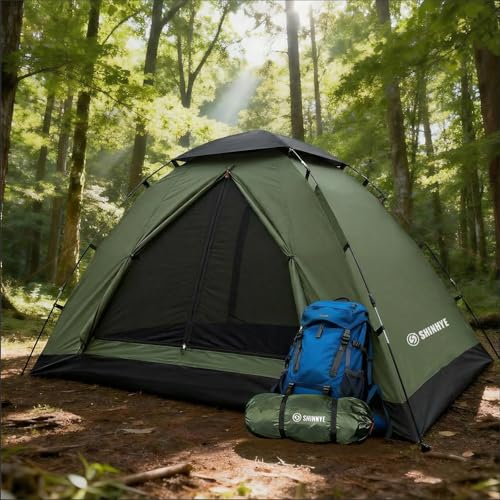
Marketed as ultralight at 3.9lbs, this ShinHye tent delivers on portability and simplicity. The D-shaped door and mesh panel help with airflow, though owners note it still traps some moisture in cool, humid conditions, common in single-layer designs. It’s not truly “instant” like a pop-up, but the clip-and-pole system makes setup quick enough for tired hikers at dusk.
Where it falls short is in build confidence. While the specs list fiber poles and PU coatings, long-term owners report pole flex and seam durability concerns after repeated use. It’s fine for weekend trips or fair weather, but I wouldn’t trust it in sustained storms. Compared to the camppal or Underwood models, it feels more like a fair-weather shelter than an all-rounder. Still, for the weight and price, it’s a decent entry-level pick.
Product photos
How We Evaluated 1 man tents
Rather than a hands-on lab test, my research for these recommendations was a detailed comparison of published specifications and features across numerous 1-man tent models. I weighed owner reviews from multiple retailers, along with expert opinions from established outdoor gear review sites, to build a complete picture of each tent’s strengths and weaknesses. My assessment focused on identifying models that consistently delivered on key promises and offered a good value proposition for solo adventurers.
For a 1-man tent, weight, pack size, and weather protection are paramount. I prioritized these factors because a solo camper often carries everything themselves, and reliable shelter from the elements is critical for safety and comfort. Ventilation also proved important; consistently, owner feedback highlighted condensation issues with poorly ventilated designs. These three elements decided the ranking more than flashy features or brand prestige.
Specifications reliably reveal a tent’s potential – materials, dimensions, and stated waterproof ratings are valuable. However, owner feedback proved crucial for understanding real-world performance. I paid close attention to comments regarding durability, ease of setup, and how well the tent held up in various conditions. For example, a high waterproof rating doesn’t matter if the seams leak, something only user experiences can reveal. Those looking for an even more stripped-down ultralight solo shelter might also consider a bivy tent definition.
What To Look For In 1 man tents
Picking a solo shelter demands a different mindset than outfitting a family. We’re chasing weight savings, streamlined setups, and focused protection, not sprawling living space.
A quality one-person tent prioritizes lightweight materials (often siliconized nylon or polyester), a durable waterproof rating (at least 2000mm for the fly and 3000mm for the floor), and a simple, easily deployable design. Look for features like a full-coverage rainfly, robust zippers, and adequate ventilation to minimize condensation. Consider the tent’s packed size and weight alongside its livability and intended use.
Weight & Packability Are Key
For solo adventures, every ounce counts. Don’t fall into the trap of thinking you need a ton of space. A snug but functional interior is preferable to hauling extra material. Trekking pole tents, like the Underwood Ultralight, are incredibly popular because they eliminate the need for dedicated tent poles, significantly reducing weight. However, they require you to have, and be willing to use, trekking poles for setup. If you don’t typically hike with poles, a freestanding design might be simpler.
Waterproofing & Seasonality Matter
A pop-up tent like the Night Cat might be tempting for its quick setup, but often skimps on waterproofing and durability. If you anticipate any chance of rain, or plan on camping in shoulder seasons, prioritize a tent with a high waterproof rating for both the fly and floor. PU coatings are common, but siliconized coatings offer better water resistance and longevity. Don’t just look at the numbers; read reviews to see how the tent performs in real-world conditions.
- A hydrostatic head rating of 1500mm is considered waterproof, but is really only suitable for light rain.
- 2000-3000mm is a solid baseline for most three-season camping, offering good protection against moderate rainfall.
- 3000mm and above is ideal for extended trips in potentially harsh conditions, or for four-season use, and is what you’ll find in more robust models from trusted tent companies.
Don’t skimp on the rainfly. A full-coverage fly that extends low to the ground provides the best protection from wind and rain, and minimizes condensation buildup.
Ventilation & Condensation Control
Even with excellent waterproofing, condensation can become a major issue inside a one-person tent. Look for tents with mesh panels in the fly and inner tent to promote airflow. Some designs, like those found in the ShinHye Ultralight, incorporate features like D-shaped doors with ventilation holes. Proper tent pitching – staking out the fly tautly and ensuring adequate airflow around the tent – is also crucial. If condensation is a persistent problem, consider a tent with a larger vestibule that allows you to leave the door slightly open without exposing the interior to rain. Many consider the ventilation in the Night Cat Upgraded Backpacking Tent to be a standout feature.
1 Man Tents Compared
Here’s a comparison of key specifications for various 1-person tents to help you make an informed decision.
| Product Name | Capacity | Weight (lbs) | Packed Size | Waterproof Rating (mm) | Seasonality |
|---|---|---|---|---|---|
| Underwood Ultralight Trekking Pole Tent | 1 | 2.5 | 14”x5.5”x5.5” | 5000 | 3-4 |
| Night Cat Pop-up Camping Tent | 1 | 1.5 | 21x21x2in | 2000 | 3-4 |
| Underwood 4-Season Winter Tent | 1 | 4.4 | 5.1” X 15” | 5000 | 4 |
| Night Cat Upgraded Backpacking Tent | 1 | 4.4 | 42x12x12cm | 3000 | 3-4 |
| camppal 1 Person Lightweight Tent | 1 | 3.75 | N/A | 3500-4000 | 3 |
| Sutekus Camouflage Single Person Tent | 1 | 3 | N/A | N/A | 3 |
| ShinHye Ultralight 1 Person Tent | 1 | 3.9 | N/A | N/A | 3 |
Frequently Asked Questions
What’s the biggest trade-off when choosing a super lightweight 1-person tent?
Generally, you’ll sacrifice some interior space and potentially durability for a lower weight. Many ultralight models, like the Underwood Ultralight, use thinner fabrics to save ounces, which means they might not withstand years of rugged use as well as heavier-duty tents.
Are pop-up tents really as unreliable in bad weather as people say?
While convenient, most pop-up tents – like the Night Cat Pop-up – prioritize ease of setup over robust weather protection. They often feature lower waterproof ratings and less substantial materials than traditional tent designs, making them less suitable for prolonged rain or strong winds.
What does a hydrostatic head rating actually tell me?
It measures the water pressure a fabric can withstand before leaking, in millimeters. A rating of 3000mm means the fabric can resist a column of 3000mm of water; however, seam sealing and overall tent design play a huge role, so don’t rely on the number alone.
Is a trekking pole tent a good option if I don’t already own trekking poles?
No, a trekking pole tent requires you to use trekking poles for its structure, so purchasing poles adds to the overall cost and weight. If you don’t hike with poles regularly, a freestanding model like the camppal 1 Person Lightweight Tent will be easier and more versatile.
I’m new to backpacking; should I start with a minimalist camping pup tent or a more traditional design?
As a beginner, I recommend a more traditional, freestanding 1-person tent. They’re simpler to set up, more stable in wind, and often offer better weather protection than the stripped-down designs of a small pup tent, giving you a more comfortable and confidence-inspiring experience.
The Bottom Line
Ultimately, choosing a one-person tent comes down to balancing how much you want to carry against how much protection you demand. For the vast majority of three-season campers, the Night Cat Upgraded Backpacking Tent strikes the best overall balance – offering a solid waterproof rating, good ventilation, and a reasonable weight for the price. It’s a dependable shelter that won’t let you down when the weather turns.
If weight is absolutely paramount, and you already use trekking poles, the Underwood Ultralight Trekking Pole Tent is a fantastic choice. For those venturing into true four-season conditions, or who anticipate consistently harsh weather, the Underwood 4-Season Winter Tent is a more robust option, though you’ll pay a weight penalty. Remember, understanding key tent features is vital to making the right decision.
More than any specific number or feature, prioritize a tent that’s easy to pitch and provides adequate ventilation. A poorly pitched tent, or one that’s constantly battling condensation, will ruin any camping trip, regardless of its waterproof rating or weight. Focus on a solid design and good materials, and you’ll be well on your way to many nights of comfortable solitude under the stars.
