
What Is a Canopy Tent Called? Names, Uses & How to Choose
This post contains affiliate links. As an Amazon Associate, we earn from qualifying purchases.
A canopy tent is a portable, open-sided shelter with a metal frame and fabric roof, designed for shade and light weather protection. You’ll most accurately call it a pop-up canopy, shade tent, or portable gazebo, depending on its specific design and your intended use.
If you’ve ever spent an hour online comparing a “10×10 pop-up” to a “10×10 portable gazebo” only to realize they’re the same product, you’re not alone. The naming chaos is real. Retailers use terms interchangeably to catch searches, leaving you to decode the jargon.
I’ve pitched my fair share of these shelters, from windy beach days with my @dacia_uk Adventure crew to soggy farmers’ markets. I’ve also watched a brand-new canopy become a twisted metal kite because someone (okay, it was me once) skimped on the right anchors. Let’s cut through the marketing and get to what you actually need to know, from the right name to search to the gear that will keep yours grounded.
Key Takeaways
- Pop-up canopy is the most accurate term for the fast, scissor-frame design. Shade tent is a broader, generic name, while portable gazebo implies a more decorative, semi-permanent backyard fixture.
- Your choice between steel and aluminum frames dictates durability versus portability. Steel handles wind better but rusts; aluminum is lighter and corrosion-resistant but can bend.
- Anchoring is non-negotiable. On grass, use 10-inch steel spiral stakes. On concrete, you need at least 20 lbs per leg. I use four 25-pound Eurmax EZ Weight Bags after a cheaper set failed at a tailgate.
- These shelters excel at sun protection and light rain but are not designed for storms, high winds, or bug protection without specific add-ons like sidewalls.
- Match your search term to your activity: “market canopy” for vending, “beach canopy tent” for the shore, and “camp canopy” for vehicle-based adventures.
What exactly should I call it?
The umbrella term is “canopy tent,” but the specific name you use should signal your priority: speed of setup, pure function, or aesthetics.
Pop-Up Canopy is your go-to term for the classic, instant shelter. It refers explicitly to the scissor-mechanism frame that “pops” open, often letting one or two people set up in under five minutes. This is the term used in the Wikipedia entry on pop up canopy and by most manufacturers. If quick deployment is your main goal, start your search here.
Shade Tent is the generic, function-first name. It describes the primary job, blocking the sun, and covers everything from basic tarp canopy shelters to more substantial structures. It’s a useful search term if the pop-up mechanism isn’t a must-have.
Portable Gazebo leans into style and a more permanent feel. You’ll see this name on models with decorative flourishes like scalloped valances, lattice-style side panels, or powder-coated frames in colors beyond basic silver. It suggests a backyard fixture rather than a purely utilitarian tool.
A canopy tent is defined as a structure consisting of a roof supported by poles, used for providing temporary shelter outdoors. This definition from the Cambridge Dictionary definition of canopy tent correctly captures the universal feature across all naming variations.
Niche uses spawn more specific names. A Market Canopy implies commercial-grade durability, often with a steel frame and plain white roof. A Tailgate Tent might include vehicle attachment points, perfect for an SUV tailgate shelter. Campers might look for a Camp Canopy designed to attach to a vehicle or stand alone over a picnic table.
TL;DR: Need speed? Search “pop-up canopy.” Need shade on a budget? Try “shade tent.” Want something pretty for the garden? Look at “portable gazebos.”
Steel vs. Aluminum: Which frame is right for you?
The frame material is the single biggest decision, impacting weight, durability, and how you’ll use it. Most product pages are vague, touting a “sturdy metal frame.” You need to dig deeper.
I learned this the hard way. I chose a lightweight, no-name aluminum frame for a windy lakeside market because it was easy to carry. A 25 mph gust bent two legs permanently during its first season, costing me $150 in replacement parts and a day of lost sales. The alloy grade, which most brands hide, matters immensely.
Steel frames are the workhorses. They handle moderate wind loads better and are the default for commercial use and larger heavy-duty canopies. The trade-off is significant weight, a 10×10 can weigh 50-60 lbs, and vulnerability to rust. After a season of beach use, I’ve seen powder-coated steel develop orange spots at the joints. For rust prevention, I now apply a thin coat of Boeshield T-9 to the joints after any seaside outing.
Aluminum frames are champions of portability, often 40% lighter. They won’t rust, making them ideal for coastal or humid environments. However, they can bend under stress. My friend’s higher-grade KingCamp aluminum frame has survived three seasons, while my cheap one failed instantly. The lesson? Not all aluminum is equal.
| Frame Material | Ideal Use Case | Typical 10×10 Weight | Critical Thing to Check |
|---|---|---|---|
| Steel | Frequent setups, markets, windy areas, need for overhead attachments. | 45–65 lbs | Tube wall thickness; look for at least 0.7mm. |
| Aluminum | Beach trips, picnics, tailgates, anywhere minimizing carry weight is key. | 28–42 lbs | Alloy grade (6000-series is better) and tube diameter. |
Common mistake: Choosing a frame based solely on material name. A cheap, thin-walled steel tube can wobble more than a quality, thick-walled aluminum one. Always check the tube diameter. I won’t buy a stand-up canopy tent with legs skinnier than 1 inch.
TL;DR: For strength and frequent commercial use, choose steel. For easy carrying and salt-air environments, invest in a quality aluminum frame with a robust tube diameter.
How do I keep a canopy tent from blowing away?
Think of your canopy as a sail on a stick. Even a 15 mph wind creates enough lift to turn it into a dangerous projectile. Proper anchoring isn’t a suggestion; it’s the most critical part of your canopy camping equipment checklist.
Your method is dictated by the surface. The flimsy stakes and thin straps included in the box are almost always insufficient for anything beyond a perfectly calm day.
On Grass or Dirt: You need 10-inch steel spiral stakes. Drive them in at a 45-degree angle away from the leg. The included plastic stakes pull out with pathetic ease. A proper steel stake holds over 200 pounds of force. Use one per leg with a ratchet strap for a solid, triangulated hold.
On Concrete or Asphalt: Stakes are impossible. Here, weight is everything. The rule is a minimum of 20 pounds per leg on a calm day. For any forecast with wind, I use four 25-pound Eurmax EZ Weight Bags, the generic 15-pound bags from a big-box store failed me in a 15 mph gust at a tailgate. Simply hanging a duffel bag or a gallon jug of water is an invitation for disaster.
In Windy Conditions: Guy lines are your best friend. Attach them to the top frame corners, not the legs, and run them out at a 45-degree angle to the ground. This transfers lifting force away from the structure. A model with a vented roof is also a wise investment, as it allows wind to pass through rather than getting underneath and acting like a parachute.
Before you start: Never leave a canopy unattended in gusty conditions, even with weights. A sudden 30+ mph gust can snap straps, topple the frame, and cause serious property damage or injury within seconds. Always check the forecast and take it down if winds are predicted to rise.
TL;DR: Steel spiral stakes for dirt. Heavy, purpose-made weight bags (20+ lbs per leg) for pavement. Always use guy lines in any breeze. The included accessories are a starting point, not a solution.
What are canopy tents good for (and not good for)?
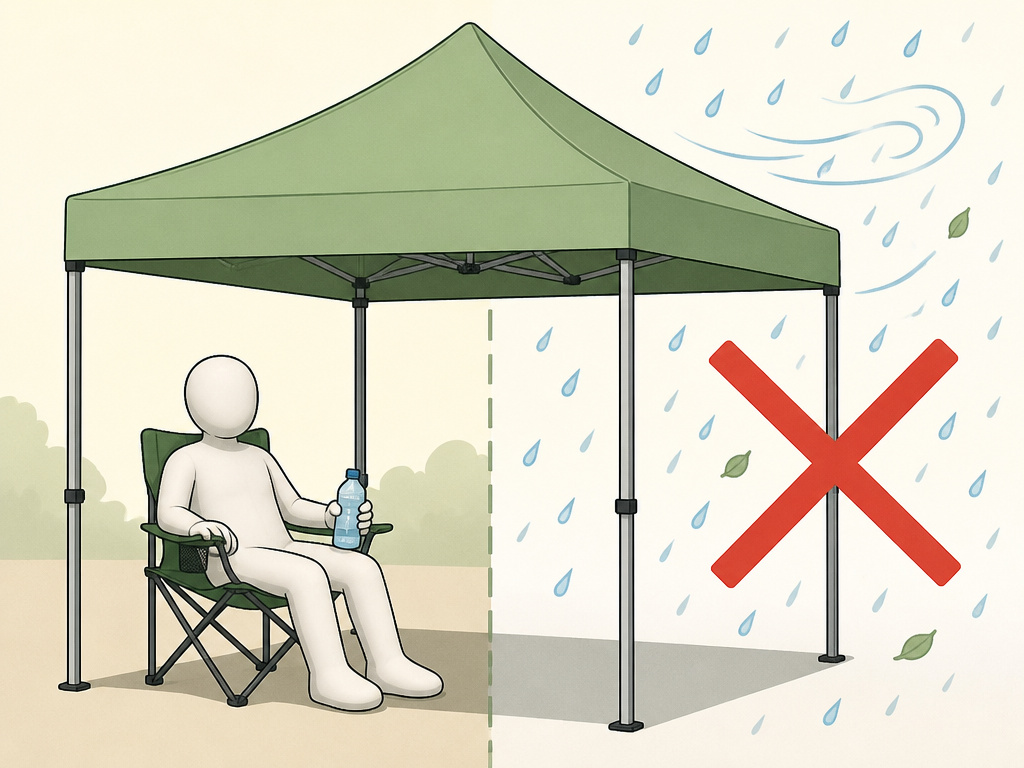
Understanding the limits of a canopy tent is what separates a happy user from someone with a pile of broken poles and soaked gear. They are brilliant tools for specific jobs and terrible substitutes for others.
A canopy tent excels as a sun shield and social hub. Its open sides create a defined, shaded space perfect for a market booth, a backyard party, or a cooking area at your car camping canopy site. With added canopy tent lighting like clip-on LEDs, it transforms into a lovely evening venue.
It is not a storm bunker or a bug-free zone. Water will eventually find a way through seams or driven rain will come in sideways. Without add-on screen walls, insects have free access. It also provides zero insulation against cold.
The most common failure I see is water pooling on a low-slope roof. The weight stresses the seams until they leak. A good canopy has a pronounced peak. If the roof in the product photo looks even slightly flat, keep scrolling.
| Scenario | Is a Canopy Tent a Good Fit? | What You’ll Need |
|---|---|---|
| Farmers Market on a Sunny Day | Excellent. Provides essential vendor and customer shade. | Steel frame, white roof, proper weights for pavement. |
| Beach Day with Kids | Perfect. Lightweight shade you can move as the sun shifts. | Aluminum frame, UPF 50+ fabric, sand bag anchors. |
| Sudden Afternoon Thunderstorm | Poor. Light rain okay, heavy downpours will lead to leaks and blow-over risk. | Take it down before the storm hits. |
| Overnight Camping Sleep Shelter | Terrible. No protection from bugs, wind, or ground moisture. | A proper enclosed tent for sleeping, with the canopy as a daytime living space. |
TL;DR: It’s a champion of shade and social space. It is a poor choice for heavy rain, high wind, overnight sleeping, or any situation where you need enclosed protection.
How do I choose the right canopy tent?
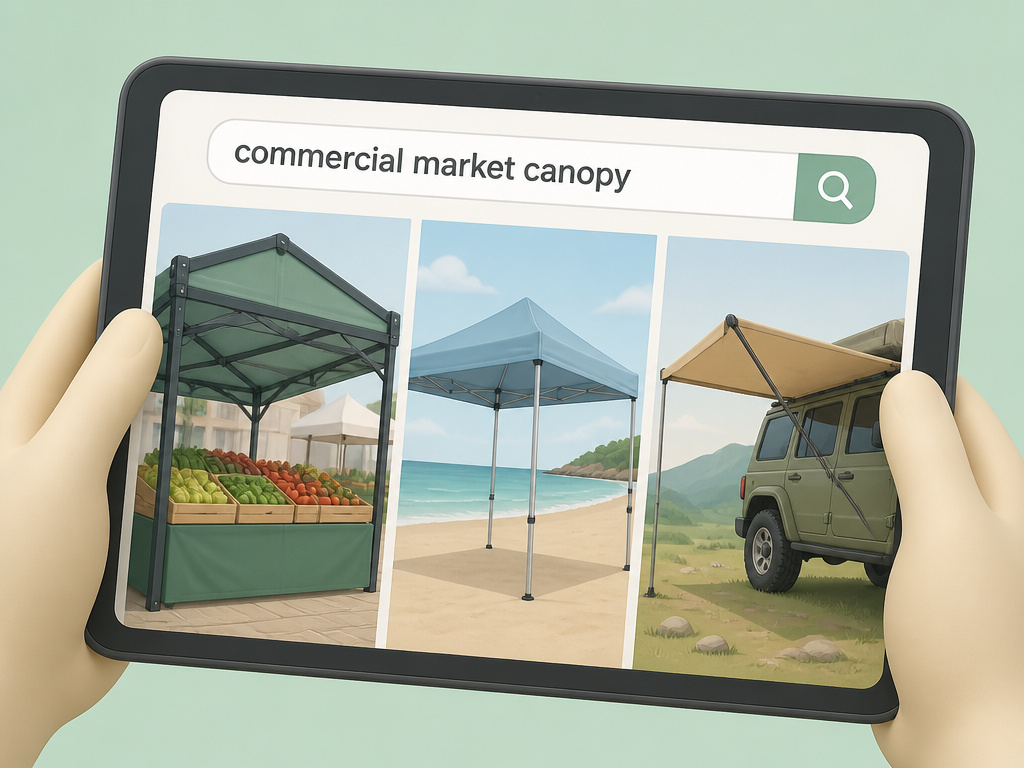
The “best” canopy is the one that matches your primary activity. Your use case dictates the search term, key features, and even the ideal frame material.
For Farmers Markets or Craft Fairs: Search “commercial market canopy” or “pop-up canopy.” Prioritize a steel frame for season-long durability. Look for a plain white roof (it looks professional and is cooler inside) and a reliable leg-lock mechanism. Always check venue rules, for example, the City of Portland’s Saturday Market requires a fire-retardant certificate, which the Eurmax Commercial White Roof provides, but many generic Amazon models do not.
For Beach or Park Days: Search “beach canopy tent” or “portable sun shelter.” Lightweight aluminum is key. Features like sand pockets on the legs, a carrying bag with backpack straps, and a high UPF rating are critical. These easy setup canopies are all about quick shade and easy transport.
For Tailgating or Backyard BBQs: Search “tailgate tent” or “portable gazebo.” Here, aesthetics and convenience features like built-in cup holders or flag poles might matter. An aluminum frame is often sufficient for these occasional uses.
For Car Camping or Overlanding: Search “camp canopy” or “awning tent.” You need durability and often integration with your vehicle. These are less about instant pop-up design and more about robust fabrics and strong pole sleeves for off-grid shelter canopies. Look for models designed to attach to your roof rack or stand alone as a garage.
Common mistake: Buying a canopy based solely on price and size for a one-time event, only to discover you need it for a different, more demanding use later. Investing in a slightly more robust model suited to your most frequent activity saves money in the long run.
TL;DR: Match your search to your main event. Markets need sturdy, steel-frame pop-ups. Beach days demand lightweight, high-UPF aluminum shelters. Camping requires durable, integrable designs.
Frequently Asked Questions
What’s the difference between a canopy tent and a camping tent?
canopy tent is primarily a roof with open sides, designed for shade and social space. A camping tent is a fully enclosed shelter with walls and a floor, designed for sleeping, privacy, and protection from insects and the elements. One is for gathering outside; the other is for staying inside.
Can you sleep in a canopy tent?
You shouldn’t. Without walls or a floor, you’re exposed to insects, wind, rain, and animals. For sleeping, you need a proper camping tent. Some camping shelter canopies are designed to have a tent attached underneath, creating a covered living area, but the canopy itself is not a sleep shelter.
How long does a canopy tent last?
With proper care, a quality canopy lasts 3-5 years of regular seasonal use. The fabric usually fades from UV exposure before the frame fails. To hit the 5+ year mark, I hand-wash my Eurmax fabric with Nikwax Tent & Gear Solarwash each season to prevent UV degradation and store it loosely folded in a dry basement, never crammed in its bag in a hot garage.
Are pop-up canopies waterproof?
Most are water-resistant, not waterproof. They can handle a light shower, but sustained rain will seep through seams. For reliable rain protection, you need a model specifically marketed as “waterproof” with sealed seams and a steep roof pitch, and you should add detachable sidewalls.
What size canopy tent do I need?
10×10 foot canopy is the most versatile, fitting over a standard picnic table or market table. For a larger group or more gear, a 10×20 or 13×13 provides more space. For personal shade at the beach, a 5×5 or 8×8 is sufficient. Always measure your intended space, including the leg footprint, not just the roof coverage.
Can one person set up a canopy tent?
Yes, most pop-up canopies are designed for 1-2 person setup. The scissor mechanism lets one person unfold and extend the frame. However, draping the canopy cover on larger models and securing it properly is much easier with two. Anchoring it securely in any breeze is also a two-person job for safety and effectiveness.
Before You Go
The name game is confusing, but your need is simple: you want reliable shade. Call it a pop-up canopy when you need speed, a shade tent when you need function, or a gazebo when you want style. Let your primary activity guide your search and your choice between a sturdy steel or a portable aluminum frame.
Your most important purchase, however, isn’t the canopy itself, it’s the proper anchoring system for your surface. Invest in real steel stakes or heavy weight bags from the start. The stuff in the box is barely enough for a photo shoot.
These shelters are fantastic for creating instant, welcoming outdoor space. Respect their limits in wind and rain, maintain them with care, and they’ll be a trusty companion for countless adventures, from backyard birthdays to trailhead meet-ups with your crew. Now go enjoy that shade.
