
8 Best Hygrometers for Grow Tents 2026
This post contains affiliate links. As an Amazon Associate, we earn from qualifying purchases.
The VIVOSUN AeroLab THB1S is our top pick for its reliable accuracy, long-term data logging, and smart features. If you’re watching your budget, the TempPro TP150 delivers solid performance with impressive humidity accuracy for the price. For growers needing multi-point monitoring, the AC Infinity B1 stands out with its remote sensor support and app integration.
Grow tents demand precise climate control, and guessing your humidity levels isn’t an option. Too much moisture invites mold. Too little stresses plants. A lot of cheap hygrometers give inconsistent readings, leaving you chasing problems instead of preventing them.
This guide cuts through the noise. We compared specs and real-world feedback to find hygrometers that actually hold up under grow tent conditions, focusing on sensor quality, data tracking, and features that help you stay in control without being in the room.
Top 8 Hygrometers For Grow Tents in the Market
The Best Hygrometers For Grow Tents, Reviewed
VIVOSUN AeroLab THB1S Wireless Hygrometer
Strengths
- External probe included
- Dual-channel monitoring
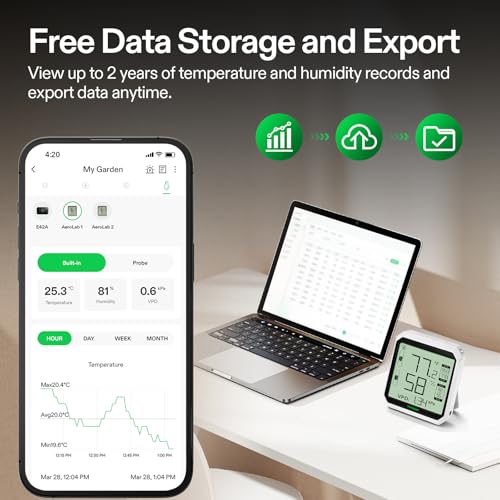
- Free 2-year data storage
Trade-offs
- App can be slow
- Battery life average
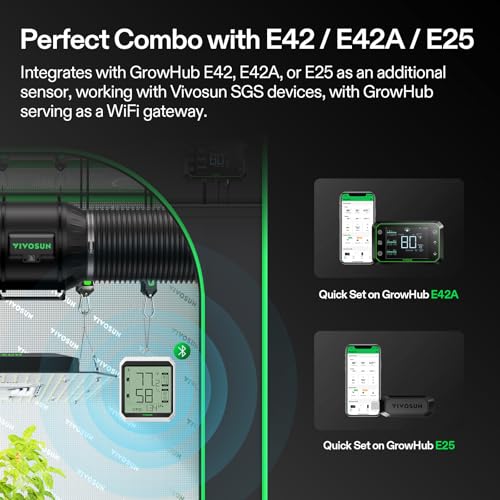
- WiFi requires GrowHub
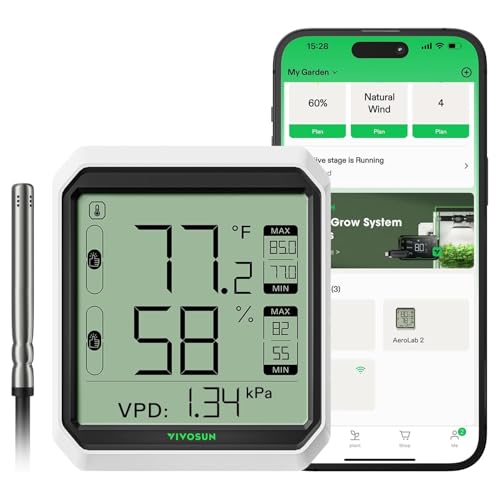
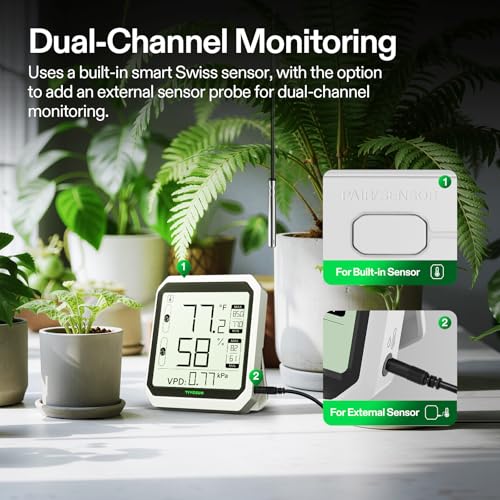
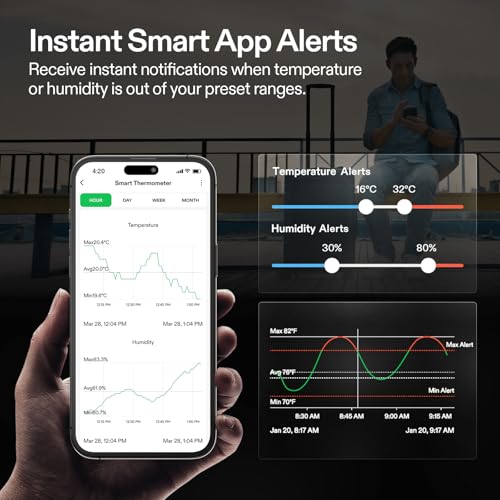
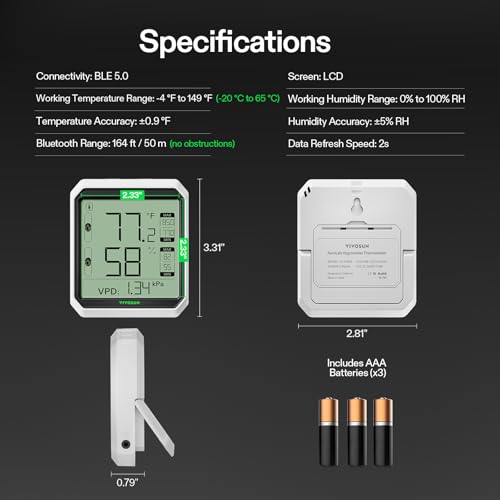
This is the most complete package in the list, Swiss sensor, external probe, VPD, app alerts, 2-year free data storage, and dual-channel monitoring. Owners consistently praise its accuracy and the flexibility of placing the probe inside the canopy while keeping the main unit visible. The large LCD and comfort icons make it easy to read without opening the app.
It also integrates with VIVOSUN’s GrowHub ecosystem, which is a big plus if you’re already using their controllers. Compared to the AC Infinity B1, it’s more versatile with wireless expansion and better app-based alerts. The only real downside is the app’s occasional lag, but the free cloud storage and dual-sensor support make it the most well-rounded option overall.
Product photos
AC Infinity B2 Smart Hygrometer
Strengths
- Reliable app
- Backlit display
- Multiple mounting options
Trade-offs
- No external sensor
- Bluetooth only
- Limited historical storage
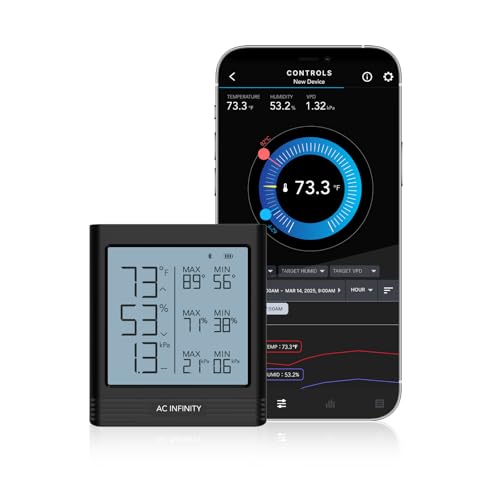
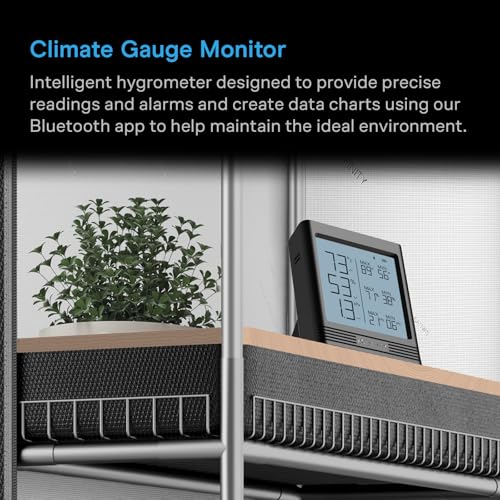
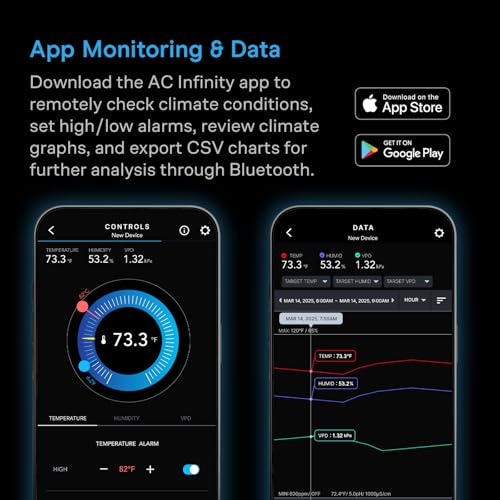
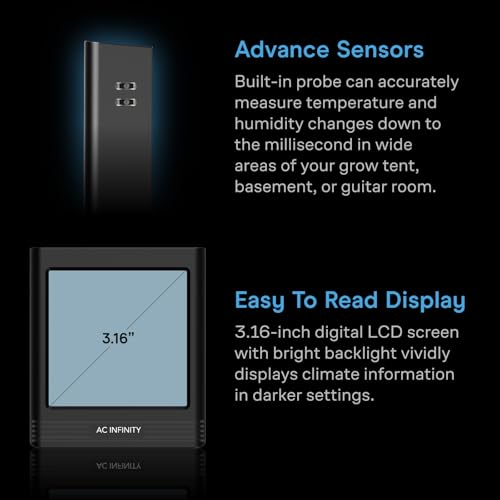
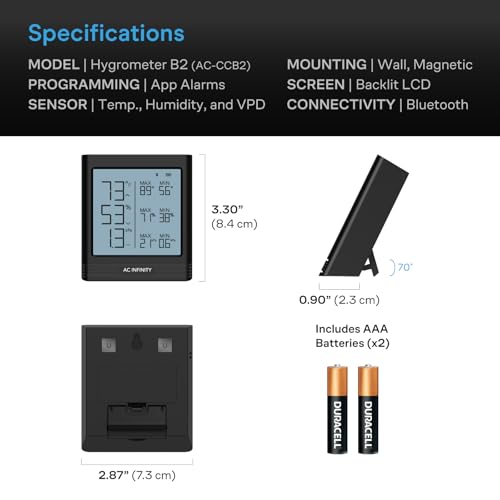
The B2 skips the external probe and relies on a built-in sensor, making it simpler but less flexible than the B1. It still delivers strong app integration, with clean graphs, alerts, and CSV exports that users appreciate for tracking grow cycles. The backlit LCD is easy to read at night, and the magnetic/wall/kickstand options make placement a breeze.
Owners note the app is more polished than VIVOSUN’s, with fewer crashes and smoother data syncing. But since it’s Bluetooth-only, you’ll need to be nearby to check readings unless you pair it with another system. Compared to the SensorPush, it’s less about deep data logging and more about daily usability. It’s a clean, reliable daily driver, just not the best for long-term remote tracking.
Product photos

AC Infinity B1 Smart Hygrometer
Strengths
- Wired remote probe
- Fast refresh rate
- Magnetic mounting
Trade-offs
- No WiFi support
- Shorter Bluetooth range
- Probe cable limits placement
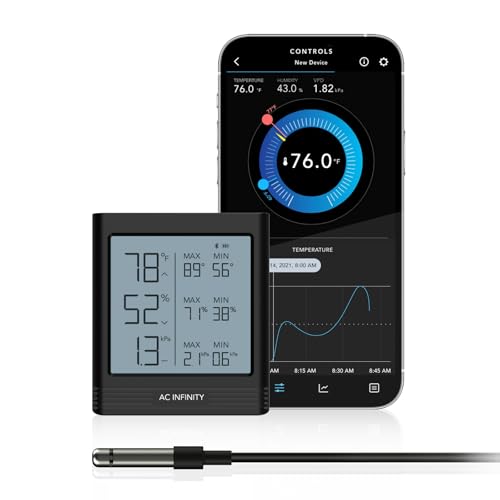
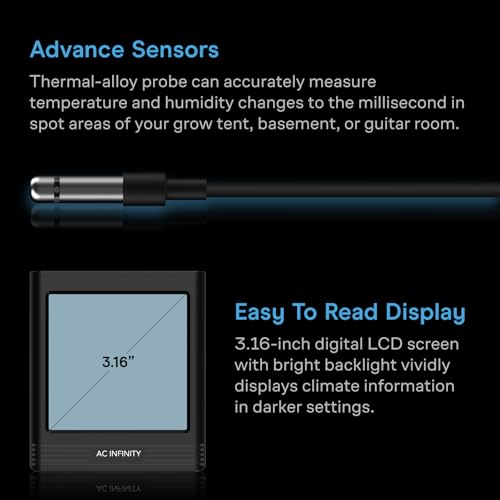
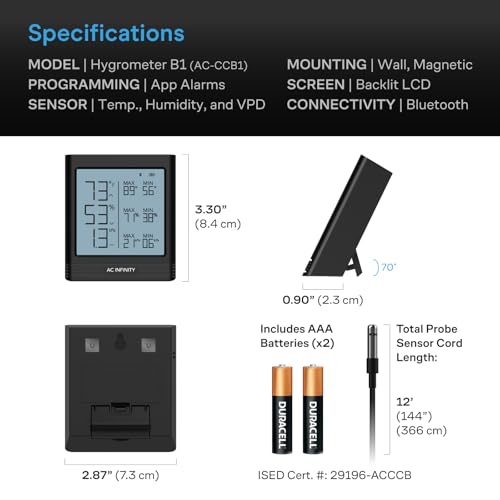
The B1’s external sensor probe is its killer feature, it lets you monitor microclimates directly in your canopy or at soil level, which is critical during flowering. The corded design avoids wireless dropouts, and owners report fast, reliable updates. Combined with the app’s alarms and CSV export, it’s a solid choice for serious growers who need precision in specific zones.
It lacks WiFi, but Bluetooth works well within range, and the magnetic back adds easy mounting flexibility. Compared to the VIVOSUN THB1S, it doesn’t have dual wireless channels, but the wired probe is more dependable than most external wireless sensors. If you’re managing multiple tents, you’ll need one per zone, but the accuracy justifies it.
Product photos

SensorPush HT1 Smart Sensor

Strengths
- Excellent data logging
- Heat index support
- Long Bluetooth range
Trade-offs
- WiFi requires extra purchase
- No built-in display
- App limited to Bluetooth proximity
The SensorPush HT1 stands out for its long-term data logging and heat index tracking, which is rare at this level. On paper, it’s built for precision and ease, no complex setup, solid Bluetooth range, and 20 days of onboard memory make it reliable for passive monitoring. Owners consistently report it holds up well in fridges, wine cellars, and even grow tents where constant logging matters more than instant alerts.
Its real strength is in the details: VPD and dew point readings are a big plus for growers, and the ability to export years of data via app is something most competitors don’t offer. But you’ll need the G1 WiFi Gateway (sold separately) for remote access, which adds cost and complexity. Compared to VIVOSUN or AC Infinity models, it’s less plug-and-play for grow tent use unless you’re already invested in SensorPush’s ecosystem.
Product photos



Geevon Wireless Hygrometer 3 Sensors
Strengths
- 3 remote sensors
- Long range
- Large backlit display
Trade-offs
- Lower accuracy
- No app or VPD
- Batteries not included
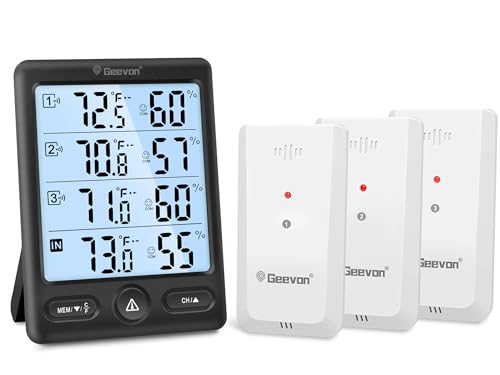
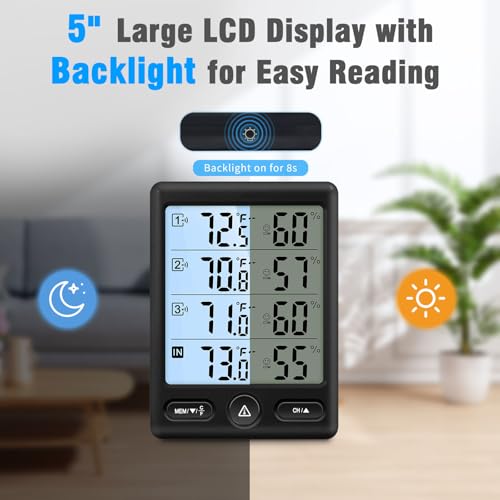
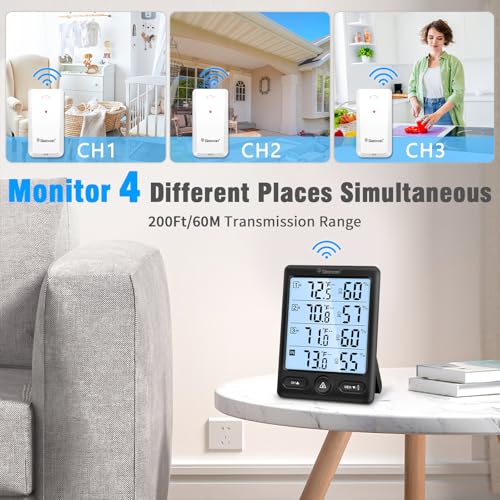
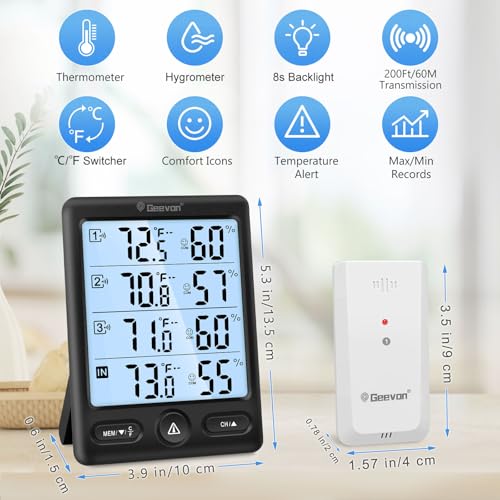
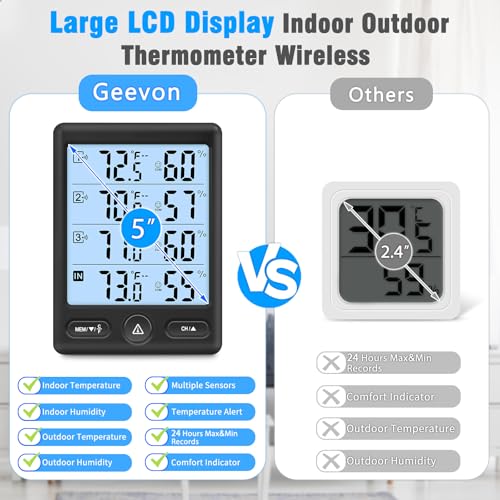
If you’re monitoring multiple rooms or zones, the Geevon system is hard to beat. With three wireless sensors and a 200-foot range, it’s ideal for tracking conditions across a basement, grow tent, and nursery simultaneously. The 5-inch backlit LCD is easy to read at night, and the max/min alerts with audible alarms add peace of mind.
On paper, the ±1.8°F and ±5% RH accuracy is acceptable, though not top-tier. Owners say it’s best for general home use, not precision grows. Compared to the Inkbird or VIVOSUN models, it lacks VPD and app integration, but the multi-sensor coverage is unmatched at this price. Just note: batteries aren’t included, and the outdoor sensors need weatherproofing.
Product photos
TempPro TP150 Hygrometer
Strengths
- Water-resistant
- Clear display
- Affordable
Trade-offs
- No app connectivity
- No data logging
- No VPD support
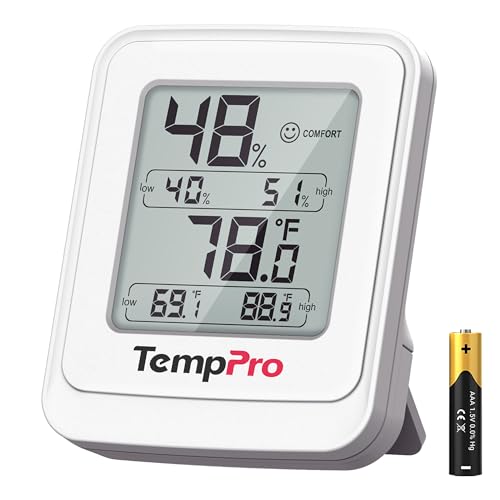
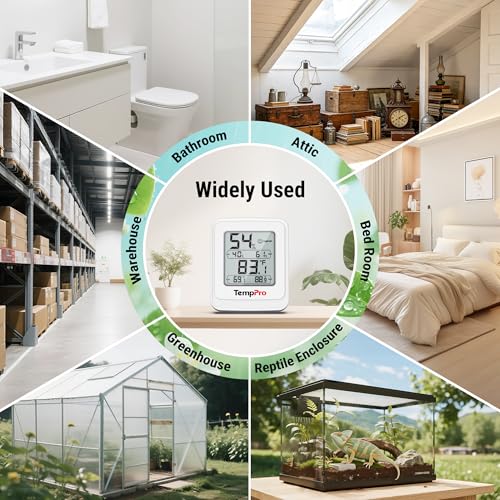
The TP150 wins on simplicity and price. It’s a no-frills, rugged hygrometer with IPX5 resistance, so it holds up in wet grow tents and greenhouses where other units might fail. The 10-second update speed and ±1℉/±2% RH accuracy are solid for the class, and the magnetic back makes it easy to stick on ducting or trays.
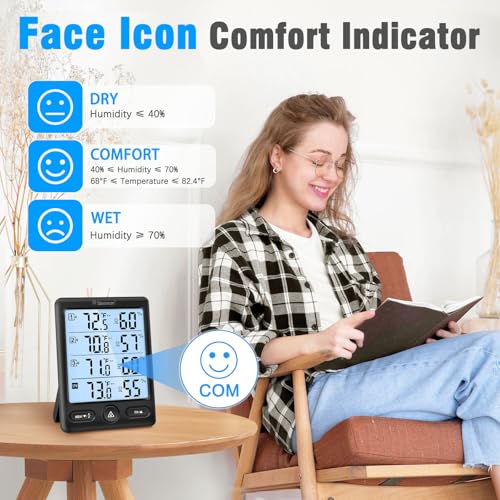
Owners love the large display and comfort icons, it’s easy to glance at and know if conditions are off. But it lacks Bluetooth, logging, or VPD, so it’s purely for real-time monitoring. Compared to the VIVOSUN or AC Infinity models, it’s a downgrade in tech, but for beginners or backup use, it gets the job done without fuss.
Product photos


VIVOSUN AeroLab THB1 Wireless Hygrometer
Strengths
- Good accuracy
- VPD tracking
- Affordable
Trade-offs
- No external probe
- App can be glitchy
- Limited mounting options
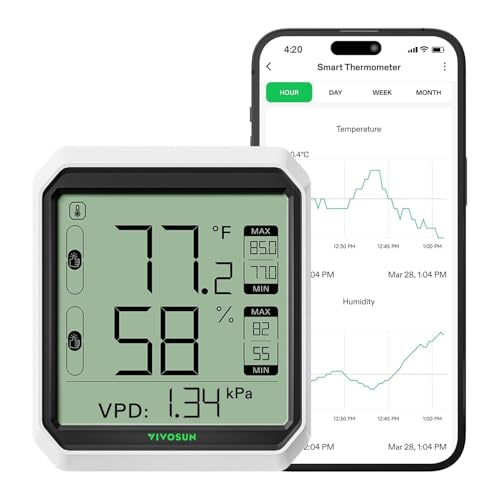
This model delivers a lot for the price, especially with VPD support and dual-channel capability on paper. It uses a Swiss sensor, which owners say translates to stable, consistent readings in grow tents and basements. The big LCD screen and visual comfort indicators make it easy to read at a glance, and the Vivosun app integration adds value with remote alerts and data history.
It’s essentially a stripped-down version of the THB1S, missing the external probe. That might not matter if you’re monitoring ambient air, but it limits placement flexibility. Compared to the AC Infinity B1, it’s more affordable but less versatile. Still, for budget-conscious growers who want VPD and app alerts without overspending, this is a smart middle ground.
Product photos
Inkbird ITH-13-B Hygrometer 2-Pack
Strengths
- High sensor accuracy
- Long battery life
- 2-pack value
Trade-offs
- No VPD
- No external probe
- App is basic
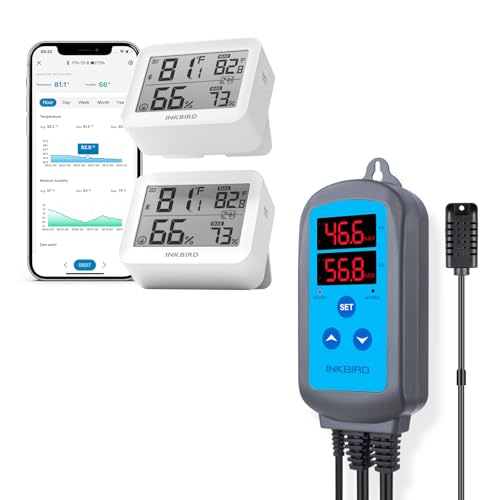
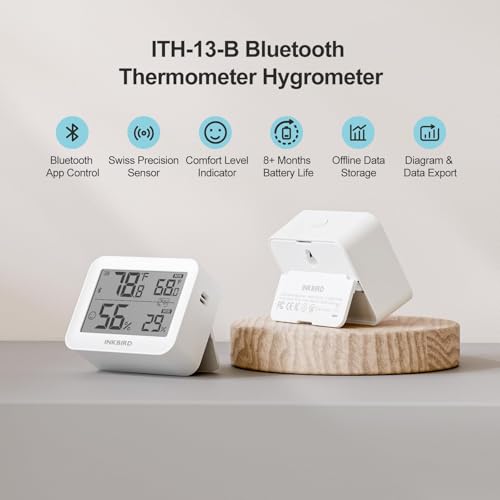
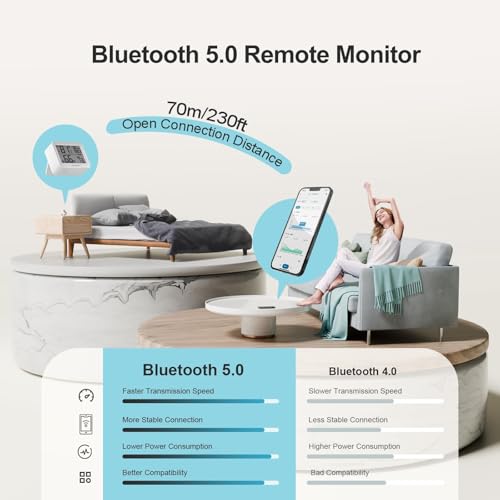
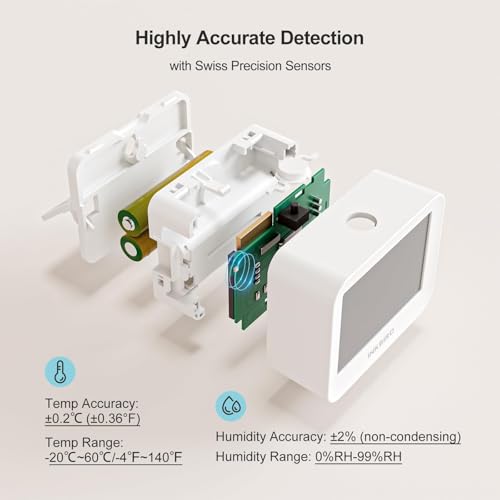
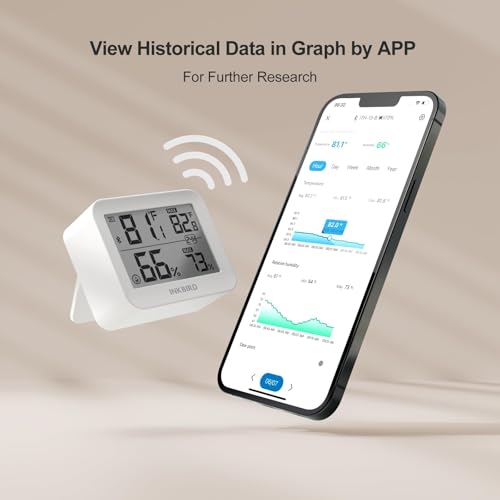
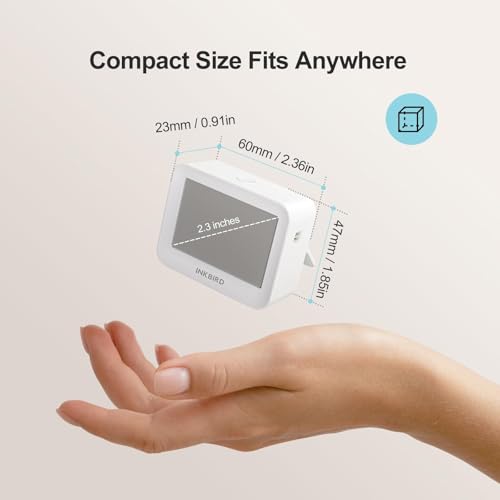
The Inkbird ITH-13-B bundle stands out for precision and battery life, Swiss-made Sensirion sensors deliver ±0.36°F accuracy, which is elite for this category. Owners report rock-solid stability in wine cellars and nurseries, and the 300-day offline data storage is unmatched. Bluetooth 5.0 gives it strong range, and the 8-month battery life means less maintenance.
Pairing it with the IHC200 controller makes it a powerful combo for automated humidity control, which is rare at this price. Compared to the SensorPush, it logs more data without needing extra hardware. The downside? No VPD, no external probe, and the app is functional but basic. Still, for users who want lab-grade accuracy and long-term reliability, this is the pick.
Product photos
How We Picked These hygrometers for grow tents
Rather than a hands-on lab test, this selection is a research-led comparison of published specifications and owner feedback. I looked at a wide range of hygrometers marketed for grow tents, then narrowed the field by comparing features like accuracy, sensor types, data logging, and smart capabilities. We weighed owner reviews from multiple sources, including gardening forums and major retail sites, against expert reviews from horticultural publications. This helped identify consistent strengths and weaknesses across models.
For grow tents, consistent accuracy and the ability to monitor VPD (vapor pressure deficit) are paramount. We prioritized hygrometers with Swiss-made sensors, as these consistently appear in top-rated models and are known for reliability. Smart features, like app connectivity and alerts, also ranked highly, as they allow for remote monitoring and quick responses to environmental changes. Understanding how to prevent condensation in grow tents is closely linked to having accurate humidity readings, so those features were key.
Published specifications reliably detail sensor accuracy and measurement ranges. However, real-world performance and build quality are best assessed through owner feedback. We paid close attention to reviews mentioning long-term calibration stability and the usefulness of data logging features. Reputation and brand consistency played a role, too; established brands with positive track records generally received higher consideration. Ultimately, our recommendations balance technical specs with the experiences of other growers looking to control humidity in enclosed tents.
Choosing The Right hygrometers for grow tents
Choosing the right hygrometer is crucial for maintaining a stable environment in your grow tent, and ultimately, a successful harvest.
A quality hygrometer offers precise temperature and humidity readings, data logging capabilities, and user-friendly features like remote monitoring. Look for models with accurate sensors (Swiss-made sensors are often preferred), clear displays, and the ability to track historical data for analysis. Consider whether you need a single-point measurement or multi-sensor capabilities for larger grow spaces.
Sensor Accuracy & Range
Don’t assume all hygrometers are created equal. Accuracy isn’t just about the stated ± percentage; it’s about consistency. A hygrometer that fluctuates wildly, even within a small margin of error, is less useful than one that consistently reports a slightly less precise reading. Look for models utilizing sensors from reputable manufacturers like Sensirion (found in the Inkbird ITH-13-B) or those specifying their accuracy standards. Also, consider the range. If you’re dialing in specific humidity for different plant stages, a wider range offers more flexibility.
Data Logging and Connectivity
Modern hygrometers go far beyond simply displaying current conditions. The ability to log data over time is invaluable. This allows for identifying trends, spotting potential issues before they escalate, and fine-tuning your environmental controls. Some, like the SensorPush HT1, offer impressive on-board storage and export options. Bluetooth connectivity, featured in many models, lets you monitor conditions remotely via a smartphone app, and receive alerts if conditions drift outside your desired range. Maintaining ideal grow tent humidity levels is a lot easier when you don’t have to be physically present.
- Basic models display current readings only.
- Mid-range options log data for a limited time (e.g., 24-48 hours) and may offer basic charting.
- Advanced models (SensorPush, Vivosun AeroLab) boast extensive data storage (months or even years), detailed charting, data export, and remote access.
Practicality & Value
Ultimately, the best hygrometer is the one that fits your needs and budget. Don’t overspend on features you won’t use. If you’re a hobby grower with a small tent, a reliable, accurate model like the TempPro TP150 might be sufficient. However, if you’re running a larger operation or need precise control, investing in a smart hygrometer with remote monitoring and extensive data logging – like the AC Infinity B2 – is worthwhile.
Don’t chase the highest sensor count if you don’t need it. A single, accurate sensor placed strategically is often more valuable than several inaccurate ones.
It’s also important to remember that even the best hygrometer can’t fix underlying issues. If you’re consistently battling high humidity and mildew, addressing ventilation and air circulation is critical. Knowing how to remove mildew from grow tents is a skill every grower should have.
Hygrometers for Grow Tents Compared
Here’s a comparison of key specifications for hygrometers suitable for grow tent environments.
| Product Name | Accuracy (Temp) | Accuracy (Humidity) | Wireless? | App Support? | Data Logging? | Remote Sensor? |
|---|---|---|---|---|---|---|
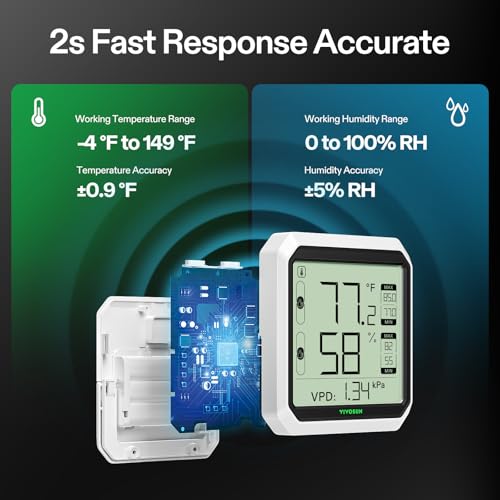
| VIVOSUN AeroLab THB1S | ±0.9℉ | ±5%RH | Yes | Yes | 2 Years | Optional |
| AC Infinity B2 | N/A | N/A | Yes | Yes | Yes | No |
| AC Infinity B1 | N/A | N/A | Yes | Yes | Yes | Yes |
| SensorPush HT1 | N/A | N/A | Yes | Yes | 20 Days/Unlimited | No |
| Geevon Wireless Hygrometer 3 Sensors | N/A | N/A | Yes | No | N/A | Yes (3) |
| TempPro TP150 | ±1℉ | ±2%RH | No | No | N/A | No |
| VIVOSUN AeroLab THB1 | ±0.9℉ | ±5%RH | Yes | Yes | 2 Years | Optional |
| Inkbird ITH-13-B | ±0.2°C/±0.36°F | ±2%RH | Yes | Yes | 300 Days/2 Years | No |
Frequently Asked Questions
What level of accuracy do I really need in a grow tent hygrometer?
For most growers, an accuracy of ±5% for humidity and ±1°F for temperature is sufficient. However, if you’re working with sensitive plants or dialing in precise VPD targets, prioritizing a hygrometer with ±2% humidity accuracy, like the Inkbird ITH-13-B, is a good idea.
Can a wireless hygrometer’s signal be interfered with inside a grow tent?
Yes, the metallic nature of tent poles and reflective materials can sometimes interfere with wireless signals. Choosing a model with Bluetooth, which generally has a shorter but more reliable range, and keeping the receiver relatively close to the sensor minimizes potential issues.
How often should I calibrate my hygrometer?
Calibration frequency depends on the model and usage, but generally, once or twice per year is recommended for maintaining accuracy. Some advanced models, like the Vivosun AeroLab, offer self-calibration features, while others require manual adjustment using a calibration salt kit.
Are multi-sensor hygrometers necessary for smaller grow tents?
No, a single, accurately placed sensor is usually adequate for smaller tents (under 4’x4’). Multi-sensor systems, like the Geevon with three sensors, are more valuable for larger spaces or when you need to monitor humidity gradients in different areas of the tent.
What’s the best way to address consistently inaccurate readings, even with a new hygrometer?
First, try repositioning the hygrometer away from direct airflow or heat sources. If the problem persists, consider using best humidifiers for tents to introduce a known humidity level and compare it to your hygrometer’s reading, then recalibrate if necessary.
The Bottom Line
Choosing a hygrometer often comes down to balancing how much control you want with how much fuss you’re willing to deal with. If you simply need reliable readings, the TempPro TP150 offers excellent accuracy for the price. However, for growers serious about optimizing their environment, the VIVOSUN AeroLab THB1S really stands out – it offers a fantastic blend of accuracy, data logging, and smart features that take the guesswork out of maintaining ideal conditions.
For those prioritizing versatility and remote monitoring, the AC Infinity B2 is an excellent choice. Growers needing to monitor multiple points within a larger tent will appreciate the Geevon Wireless Hygrometer 3 Sensors, though accuracy can be a trade-off with multi-sensor systems. And if data logging is critical, the Inkbird ITH-13-B provides an impressive amount of storage for detailed analysis.
Ultimately, the most expensive hygrometer won’t solve underlying problems. Focusing on good ventilation, proper air circulation, and actively working to stop condensation in indoor tents will do more for your grow than any single specification. Accurate readings are important, but understanding why your humidity is fluctuating is what truly leads to a healthy, thriving garden.
