
8 Best Three Person Tents of 2026
This post contains affiliate links. As an Amazon Associate, we earn from qualifying purchases.
The Marmot Crane Creek 3P stands out as the best overall three-person tent, offering reliable weather protection and thoughtful design. For budget-conscious campers, the Clostnature Lightweight 3 Person Tent delivers solid performance without breaking the bank. If quick setup is a priority, the Mimajor 2-3 Person Pop Up Tent is a strong contender.
Most people don’t realize how cramped a three-person tent can feel once you factor in sleeping bags, gear, and real-world comfort. What looks spacious in photos often ends up being a tight squeeze for three adults.
This guide cuts through the marketing by focusing on what actually matters: space, weather resistance, and ease of use. I looked at specs, owner feedback, and brand reputation to find tents that perform well beyond the brochure claims.
Top 8 Three Person Tents in the Market
The Best Three Person Tents, Reviewed
Marmot Crane Creek 3P Tent
Strengths
- Excellent pole strength
- Great vestibule space
- PFAS-free materials
Trade-offs
- Packed size on larger side
- No included footprint
- Higher price point
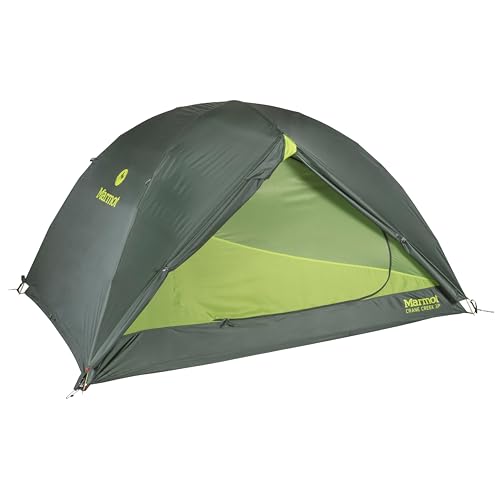
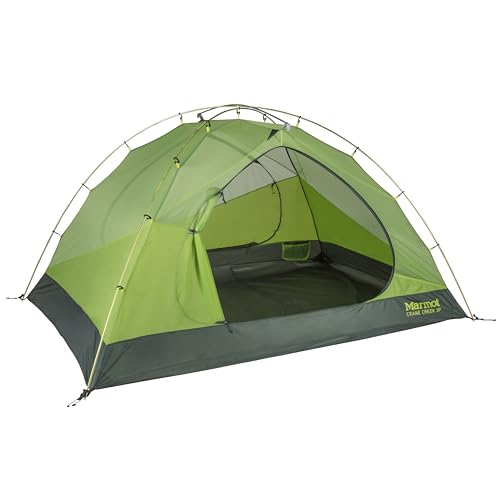
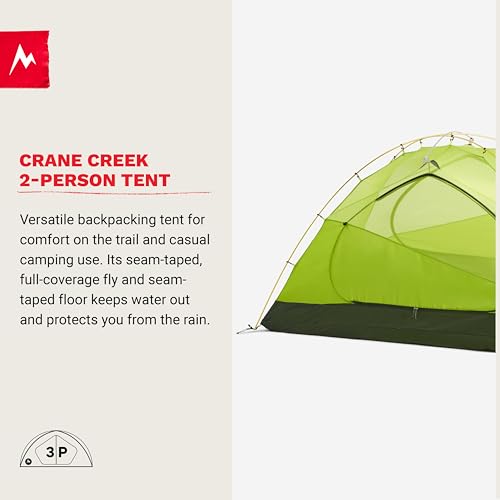
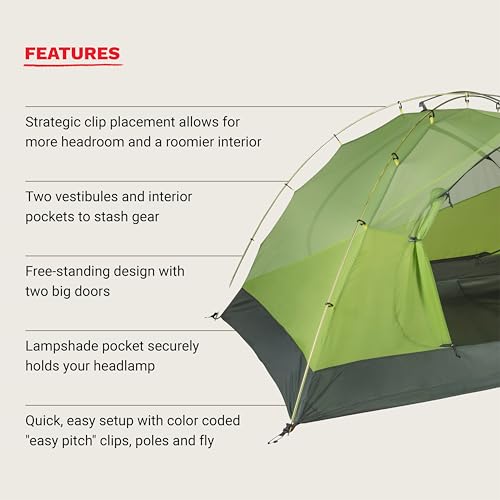
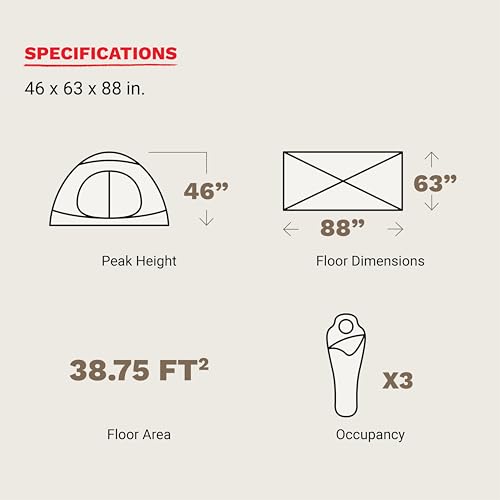
If there’s a tent that balances weight, weather protection, and livability better than the Marmot Crane Creek 3P, I haven’t seen it in this lineup. At 41.5 sq. ft, it’s spacious without being bulky, and the 7000-series aluminum poles give it serious backbone in wind, owners regularly praise its stability in gusts that flattened lighter domes. The seam-taped fly and floor keep moisture out, and the PFAS-free construction is a win for eco-conscious hikers.
The dual D-doors and vestibules make this a dream for shared trips, no more waking your partner to exit. It’s not the cheapest, but the build quality justifies it. Some note the packed size is a bit large for ultralight lists, but for most backpackers, it’s a fair trade. My pick if you want one tent to handle everything from spring snowmelt to fall alpine ridges.
Product photos
Clostnature Lightweight 3 Person Tent

Strengths
- Excellent waterproofing
- Freestanding design
- Two vestibules
Trade-offs
- Slight weight penalty
- Inconsistent stitching reports
- Condensation in humidity
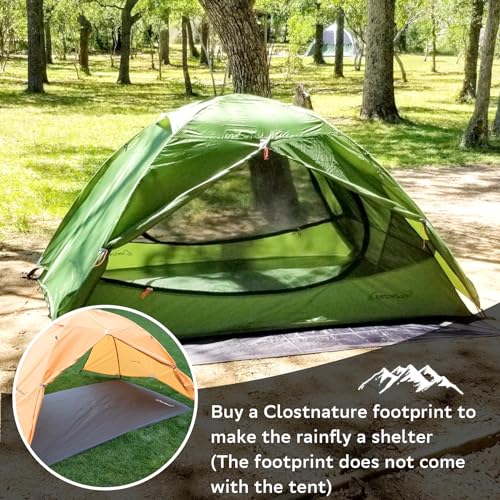
For budget-conscious backpackers who still want weather protection and room to breathe, the Clostnature tent is hard to ignore. The PU 5000 coating on the floor and fly gives it one of the highest waterproof ratings here, and owners consistently say it holds up in heavy rain, no small thing on a three-season trek. At 2.8 kg, it’s not the lightest, but the freestanding design and two vestibules make it a practical choice for real trips.
I’d pick this over pricier options if you’re building your first kit or need a dependable workhorse without breaking the bank. The dual D-doors and full mesh walls improve airflow dramatically, though condensation can build in cool, still nights. Some users note stitching quality varies slightly, but the one-year warranty covers most concerns.
Product photos



Purebox 2/3 Person Dome Tent
Strengths
- Great weight-to-space ratio
- Removable blackout fly
- 3-year warranty
Trade-offs
- Poles not freestanding
- Zippers can snag
- Rainfly fit issues reported
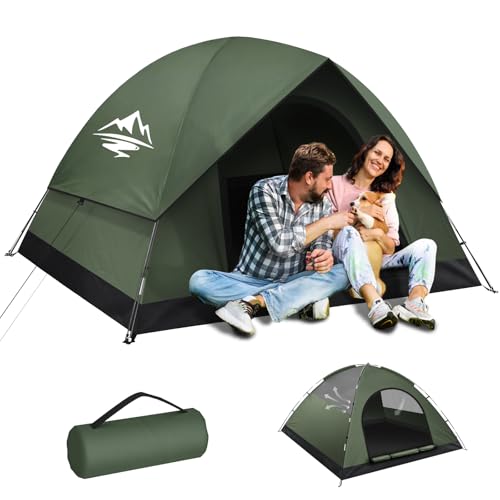
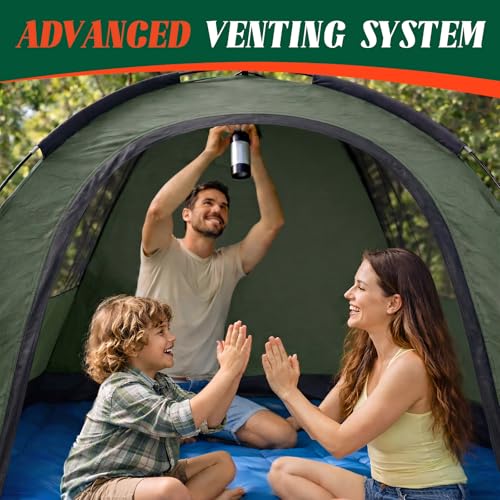
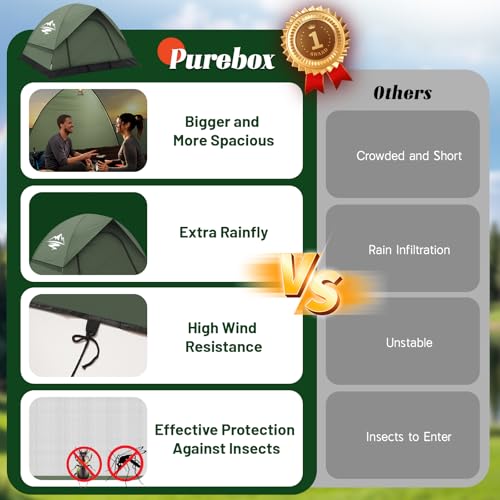
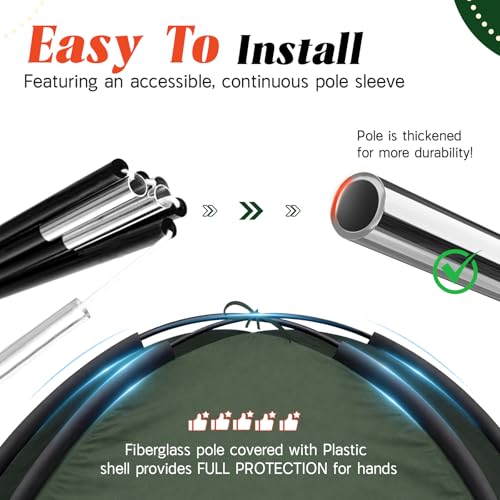
The Purebox tent hits that sweet spot between family-friendly space and backpacker-friendly weight, at 2.8 kg, it’s light enough to carry without groaning, and the 84-inch square floor plan gives three adults room to sleep without elbows crossing boundaries. Owners praise how easy it is to pitch solo, and the clip-on pole system is intuitive even for beginners.
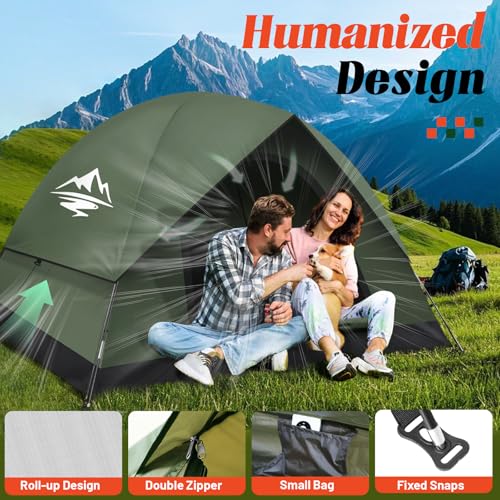
Where it really shines is versatility. The removable blackout rainfly and three-sided mesh offer excellent climate control, and multiple users report using just the fly as a picnic shelter, something not all tents pull off cleanly. The 3-year warranty is a standout, showing real confidence in build quality. Still, the poles aren’t freestanding, so you’ll need to stake it early in setup.
Product photos
Coleman Sundome 3 Person Tent

Strengths
- Proven weather resistance
- Simple, reliable setup
- Durable fabric
Trade-offs
- Heavy for backpacking
- Single door
- Condensation in humidity
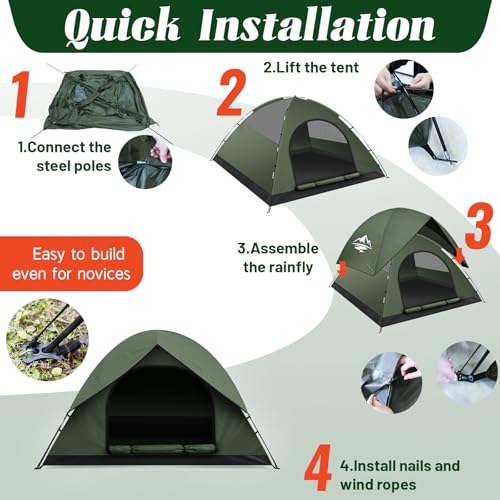
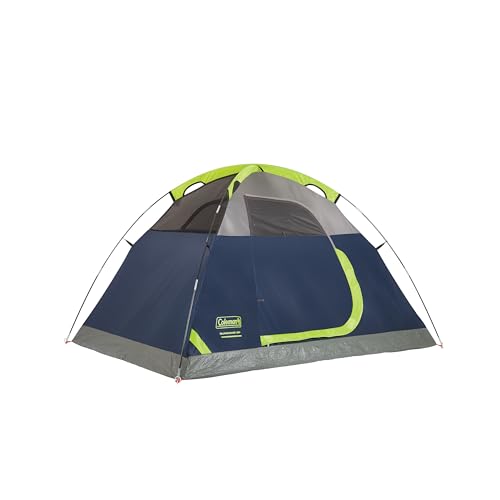
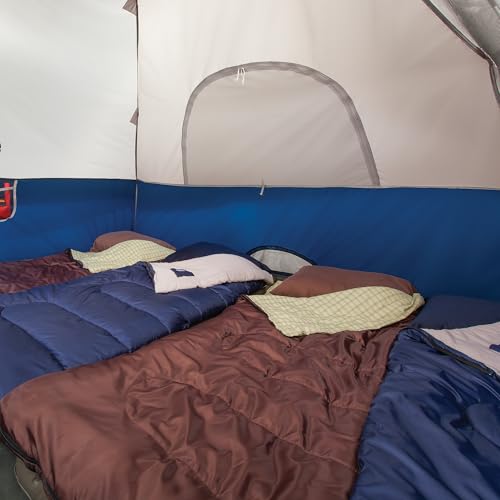
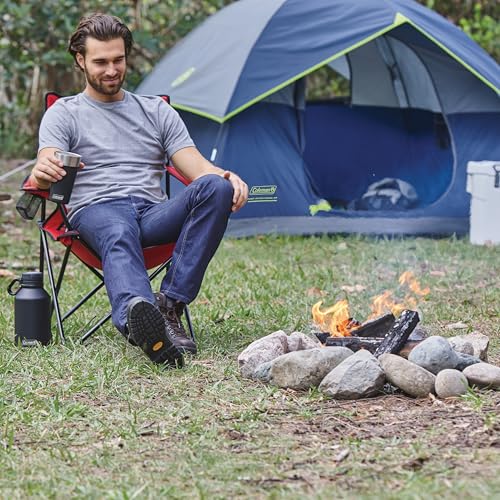
The Coleman Sundome is the tent equivalent of a trusty old pickup, nothing flashy, but it shows up every time. It’s built for car campers, and the 10-minute setup with snag-free sleeves is exactly why so many families keep coming back to it. The WeatherTec system with inverted seams genuinely keeps water out, and the durable Polyguard fabric has held up across seasons for countless owners.
But it’s not for everyone. At over 4 kg (for the 3-person), it’s heavy for backpacking, and the single door limits access. Ventilation is good on paper, but in muggy weather, some users report noticeable condensation. Still, for weekenders, backyard sleepovers, or first-time campers, this is the kind of tent that makes camping feel accessible.
Product photos
Forceatt 3 Person Backpack Tent

Strengths
- Roomy interior
- Welded floor
- Smooth zippers
Trade-offs
- Flexible poles in wind
- Mesh ceiling exposed
- Average rainfly coverage
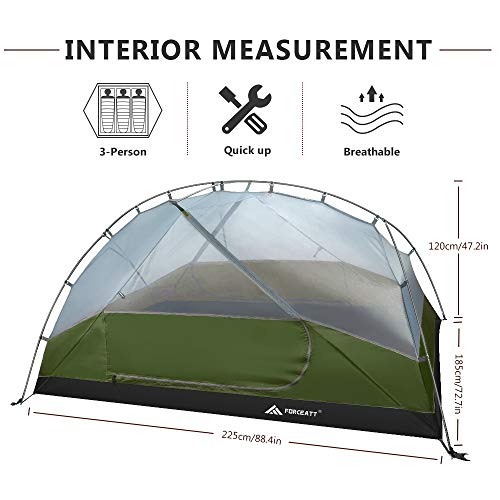
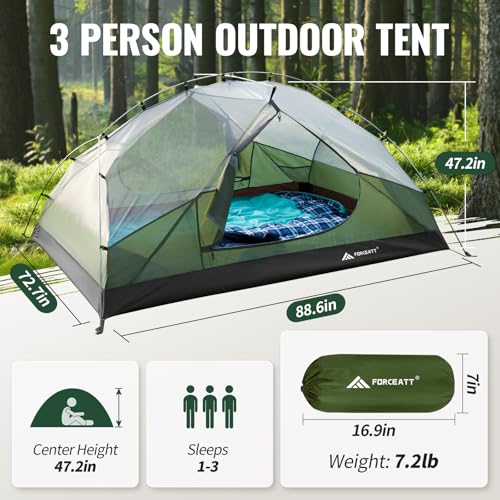
The Forceatt tent packs a surprising amount of durability into a 3.3 kg frame. With a welded bathtub floor and 200T coating, it’s built to handle wet ground and shoulder-season trips, owners in Pacific Northwest conditions report it held up well in drizzle and wind. The 88.4-inch length is noticeably roomier than most 3-person models, giving taller campers actual legroom.
Setup is fast and tool-free, and the No. 8 zippers are smooth, a small but appreciated touch. But the mesh ceiling, while great for airflow, can feel exposed in bugs-heavy areas, and some users mention the poles feel slightly flexible in high winds. Still, for the weight and price, it’s a strong contender for those wanting near-four-season toughness without the bulk.
Product photos



Mimajor 2-3 Person Pop Up Tent
Strengths
- Fastest setup
- Dual-use rainfly
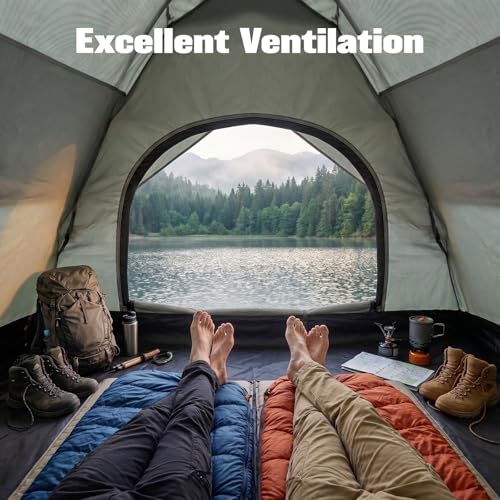
- Good ventilation
Trade-offs
- Not backpackable
- Mixed wet-weather reports
- Bulky packed size
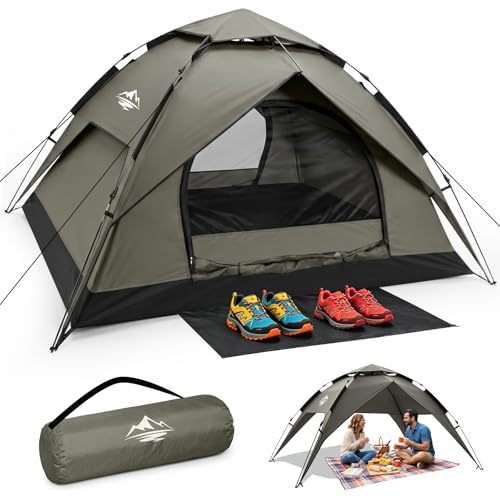
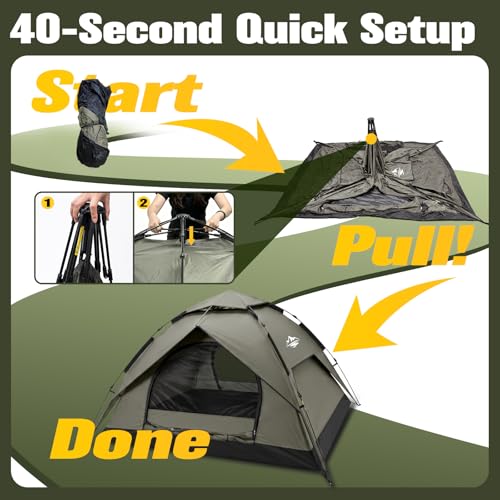
If you’re the kind of camper who wants to roll up, pop a tent open, and be inside with a coffee before the sun crests the trees, this Mimajor automatic tent makes a strong case. The 40-second hydraulic setup is real, owners consistently report it works as advertised, as long as you follow the leg-expansion step carefully. That kind of speed is rare in this category, and for car campers or festival-goers, it’s a major win.
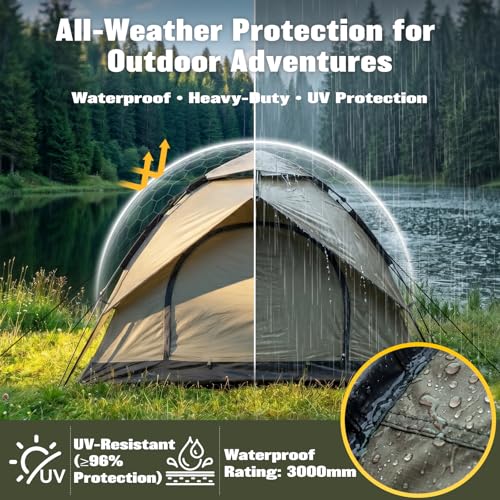
But that convenience comes with trade-offs. At 3.5 kg, it’s not backpackable, and the rigid frame limits flexibility on uneven ground. The 3500mm waterproof rating sounds solid on paper, but real-world feedback shows mixed performance in prolonged downpours, some users report seepage at stress points. Still, the dual-use design (rainfly as standalone shelter) adds real value for versatile outdoor use.
Product photos


Naturehike Cloud River 3 Person Tent
Strengths
- Outstanding ventilation
- Lightweight aluminum poles
- Separate fly use
Trade-offs
- Low waterproof rating
- Fly offers limited coverage
- Pegs are flimsy
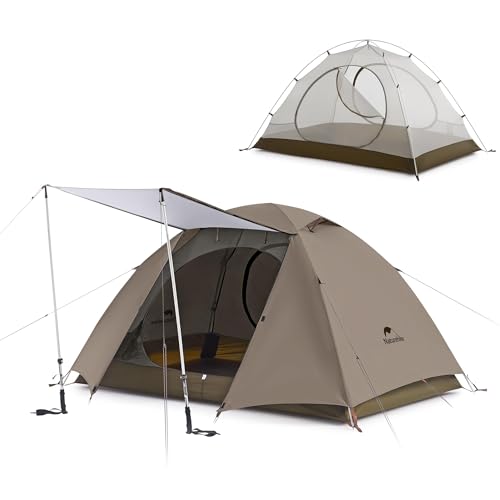
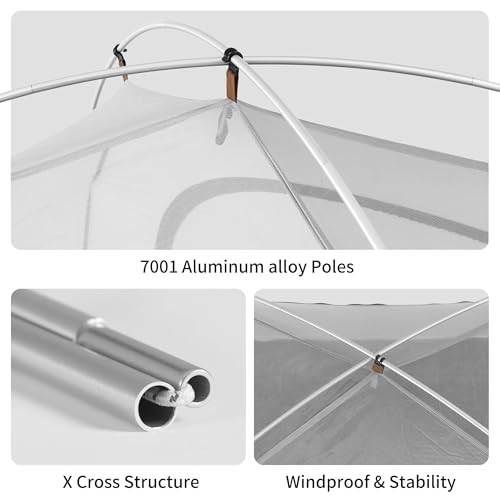
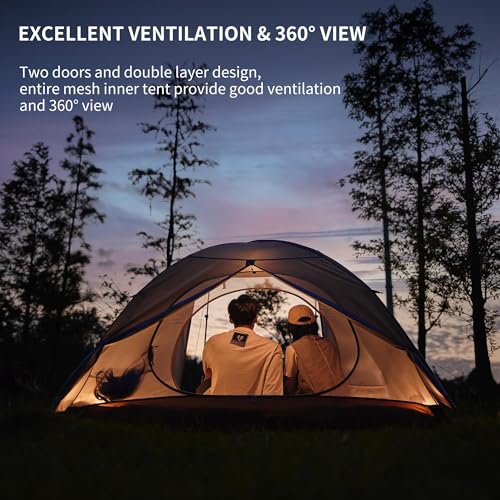
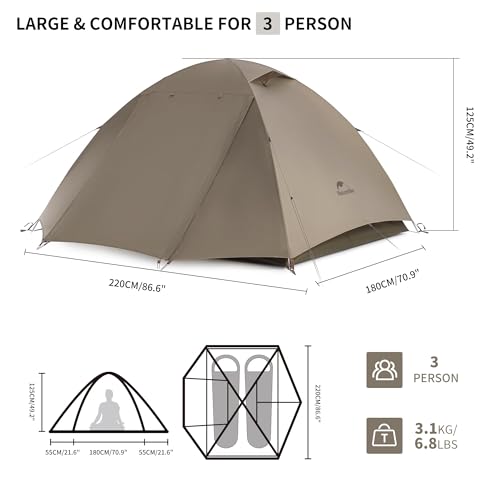
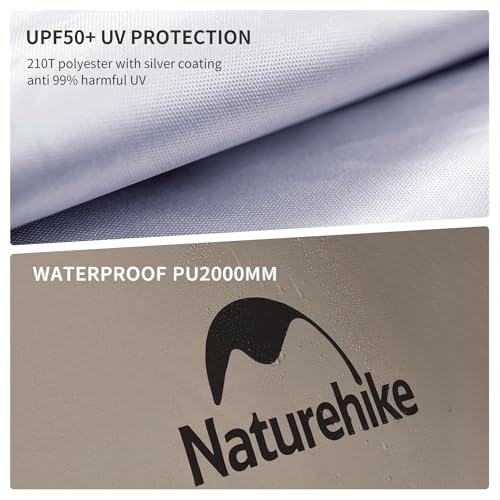
The Naturehike Cloud River stands out for one reason: airflow. With full mesh walls, dual doors, and ceiling vents, it’s one of the most breathable 3-person tents here, and owners in humid climates consistently praise how well it handles condensation. The 7001 aluminum poles are a quality upgrade over fiberglass, and the 5-minute setup is smooth once you get the X-pole rhythm down.
It’s not the most storm-ready tent, 2000mm waterproofing is the bare minimum for rain, and the fly doesn’t extend far, so heavy side rain can creep in. But for warm-weather backpacking, bikepacking, or summer festivals, it’s a breath of fresh air, literally. The ability to use the fly alone as a tarp is a nice bonus for minimalist setups.
Product photos
CORE 3 Person Dome Camp Tent

Strengths
- Smart storage design
- Good airflow
- Stable pole system
Trade-offs
- Low waterproof rating
- No included footprint
- Average storm performance
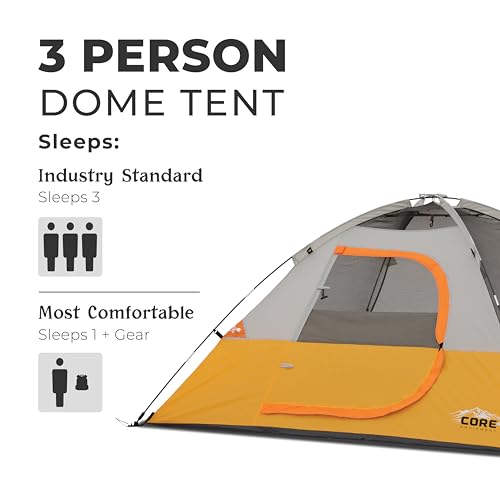
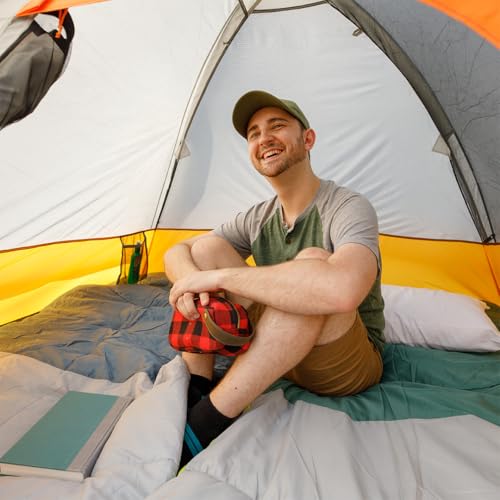
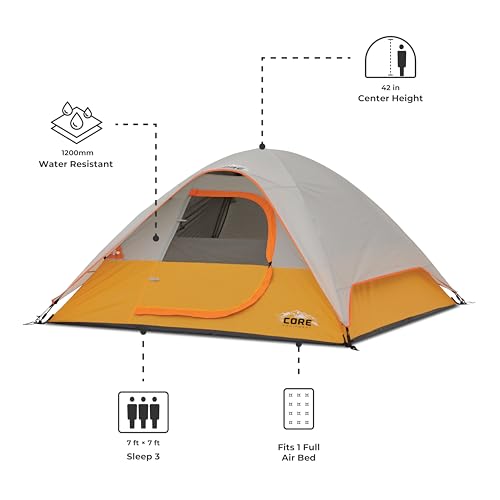
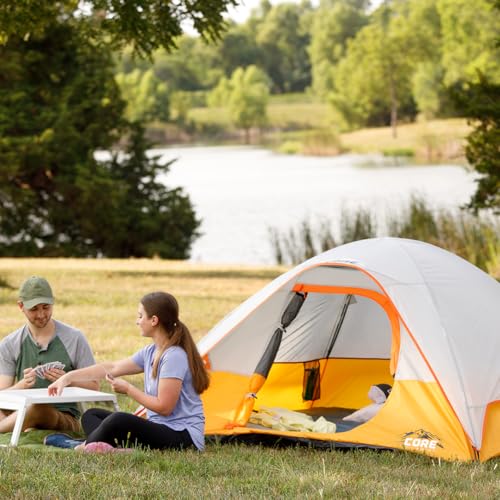
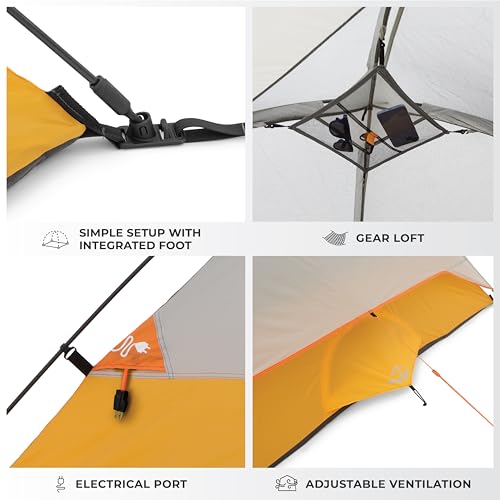
CORE’s 3-person tent feels like it was designed by someone who’s actually annoyed at digging through a stuff sack in the dark. The ball-and-socket pole system genuinely speeds up setup, and once it’s up, the interior organization stands out, those overhead gear lofts and wall pockets are standouts for keeping headlamps, phones, and snacks off the floor. For families or couples who like to camp with comfort, this is a thoughtful layout.
Ventilation is smartly executed too, with ground-level intakes and a mesh ceiling that works well in humid conditions. But the 1200mm waterproof rating is underwhelming compared to others in this list, fine for fair weather, but I wouldn’t bet on it in a sustained storm. It holds up in light rain, but owners note it’s best paired with a footprint in wet conditions.
Product photos
How We Evaluated three person tents
Rather than a hands-on lab test, my research for these recommendations was a detailed comparison of published specifications and features across numerous three-person tent models. I weighed owner reviews from major retailers alongside expert opinions from sites specializing in outdoor gear. This allowed me to build a ranking based on real-world feedback and objective data, focusing on what truly matters to campers. My goal was to identify tents that deliver the best balance of performance and value.
For three-person tents, several factors stand out as most important. Spaciousness – interior dimensions and peak height – are crucial for comfortable nights. Waterproofing, indicated by mm ratings for the rainfly and floor, is paramount for staying dry in unpredictable weather. Finally, a good balance between weight and durability determines how easily a tent can be transported and how well it will withstand repeated use.
Specifications reliably reveal things like weight, dimensions, and waterproof ratings. However, owner feedback proved invaluable for assessing real-world performance aspects like ease of setup, ventilation effectiveness, and long-term durability. Reputation – looking at brands known for quality and customer service – also played a significant role in my final assessments. If you’re unsure about your specific needs, consulting a tent selection guide can be a helpful first step.
What To Look For In three person tents
Picking the right tent can feel overwhelming, but focusing on a few key areas will make the process much simpler.
A quality tent balances weight, weather protection, and livability. Look for durable materials like polyester or nylon with a waterproof coating (measured in mm), robust pole construction (aluminum is preferable to fiberglass), and thoughtful design features like effective ventilation and adequate vestibule space. Seam sealing and a full rainfly are essential for staying dry.
Size and Occupancy
Don’t assume a “three-person” tent comfortably fits three adults. Manufacturers often overestimate capacity. I’ve found that for a comfortable night’s sleep, especially on longer trips, it’s better to size up. Consider your sleeping arrangements – are you all using sleeping bags, or do some prefer thicker pads? Also, think about how much gear you’ll be bringing inside the tent with you. If you’re planning on sharing the space with a lot of equipment, especially on a trip requiring backpacking three-person tents, you might want to consider a four-person model.
Weather Resistance
The advertised waterproof rating (in millimeters) is a good starting point, but it isn’t the whole story. A 2000mm rating is generally considered sufficient for light rain, but for more exposed conditions or prolonged downpours, you’ll want at least 3000mm. More important than the rating, however, is the overall construction. Fully taped seams are crucial, as water will find its way through any untreated stitching. A bathtub floor (where the floor material extends up the sides of the tent) provides extra protection against ground water.
- A high denier fabric (e.g., 75D) is more durable and tear-resistant than a lower denier fabric.
- Look for a rainfly that extends all the way to the ground to provide maximum coverage.
- Consider the tent’s ability to withstand wind. A robust frame and well-placed guylines are essential for stability in blustery conditions.
Usability and Features
Beyond the basics, consider the features that will make your camping experience more enjoyable. Easy setup is a huge plus, especially if you’re arriving at your campsite after dark. Some tents use innovative pole designs or clip systems that drastically reduce setup time. Don’t overlook the importance of ventilation. Mesh panels and adjustable vents help prevent condensation buildup and keep the tent comfortable. Many tents now include features like gear lofts, storage pockets, and even integrated lighting to help you stay organized. Understanding the tent vestibule benefits can also be a great way to maximize space and keep your gear protected.
A good tent is an investment. Don’t skimp on quality, and prioritize features that will enhance your comfort and safety in the outdoors.
Three Person Tents Compared
Here’s a comparison of key specifications for popular three-person tents to help you make an informed purchase.
| Product Title | Capacity | Weight (lbs) | Floor Area (sq ft) | Waterproof Rating (mm) | Packed Size |
|---|---|---|---|---|---|
| Marmot Crane Creek 3P Tent | 3 | N/A | 41.5 | N/A | N/A |
| Clostnature Lightweight 3 Person Tent | 3 | 6.17 | N/A | 5000 | 16.5×6.3×6.3 in |
| Purebox 2/3 Person Dome Tent | 2-3 | 6.2 | N/A | N/A | N/A |
| Coleman Sundome 3 Person Tent | 3 | N/A | N/A | N/A | N/A |
| Forceatt 3 Person Backpack Tent | 3 | 3.3 | N/A | N/A | 43×18 cm |
| Mimajor 2-3 Person Pop Up Tent | 2-3 | 3.5 | 41.7 | 3000 | 29.9×7.4×7.4 in |
| Naturehike Cloud River 3 Person Tent | 3 | 6.8 | N/A | 2000 | 52x16x16 cm |
| CORE 3 Person Dome Camp Tent | 3 | N/A | N/A | 1200 | N/A |
Frequently Asked Questions
What’s the biggest mistake people make when buying a three-person tent?
Many buyers focus too much on the “three-person” label and don’t consider their actual space needs. For a truly comfortable experience, especially with gear, I generally recommend looking at models marketed for four people, or exploring spacious car camping tents for three.
What waterproof rating is really necessary for a three-person tent?
While a 2000mm rating can handle light rain, 3000mm or higher is best for reliable protection in wetter conditions. However, remember that fully taped seams and a bathtub floor are just as crucial as the numerical rating for preventing leaks.
Are aluminum poles worth the extra cost?
Yes, aluminum poles are significantly more durable and stronger than fiberglass, making them a worthwhile investment if you plan on using your tent frequently or in challenging conditions. They also contribute to a lighter overall weight, which is important for backpacking.
How important are vestibules on a three-person tent?
Vestibules are incredibly useful for storing muddy boots, backpacks, and other gear, keeping the inside of your tent cleaner and drier. They effectively expand your usable space, especially during inclement weather, and are a key feature to consider when looking at [three-person car camping tents].
What should I do if condensation builds up inside my tent?
Proper ventilation is key to minimizing condensation. Look for tents with mesh panels and adjustable vents. If condensation does form, wipe it down with a clean cloth to prevent it from dripping on your gear and sleeping bag – and consider investing in a [roomy 3-person camping tents] with enhanced airflow.
The Bottom Line
Choosing a three-person tent often comes down to balancing how much you value ease and speed versus ultimate weather protection and durability. For the best overall combination of features, space, and a reasonable price, I recommend the Marmot Crane Creek 3P Tent. It consistently receives high marks from owners for its livability and reliable performance in a variety of conditions.
If budget is a primary concern, the Purebox 2/3 Person Dome Tent delivers a surprising amount of space for the money. For those prioritizing lightweight portability for backpacking, the Forceatt 3 Person Backpack Tent offers an impressively low weight without sacrificing too much in terms of comfort. When you’re looking at options, remember to research the top tent manufacturers to find a brand with a solid reputation.
Ultimately, the best tent isn’t about the highest waterproof rating or the lightest weight. It’s about finding a shelter that keeps you comfortable, dry, and safe, allowing you to fully enjoy your time in the outdoors. Focus on a robust design, quality materials, and a fit that suits your typical camping style – those fundamentals will serve you far better than any single standout spec.
