
8 Best Tents for Large Families 2026
This post contains affiliate links. As an Amazon Associate, we earn from qualifying purchases.
The CORE 12 Person Instant Cabin Tent with LED Lights is the best overall pick for large families, offering reliable weather resistance, quick setup, and smart features like built-in lighting. For a more budget-friendly option, the CORE 12 Person Instant Cabin Tent delivers the same smart layout without the lights. If you need maximum versatility and extra room to spread out, the CAMPROS 12-Person 3-Room Family Tent provides unmatched floor space.
Families don’t just need a tent, they need a livable space that can handle gear, weather, and the chaos of camping with kids. Too many tents promise “12-person” capacity but deliver cramped, drafty shelters that fall apart in the wind.
This guide cuts through the marketing hype. I compared real dimensions, weather specs, and owner feedback to find models that actually perform. These picks balance space, durability, and usability so your family can stay dry, organized, and comfortable on any trip.
Top 8 Tents For Large Families in the Market
The Best Tents For Large Families, Reviewed
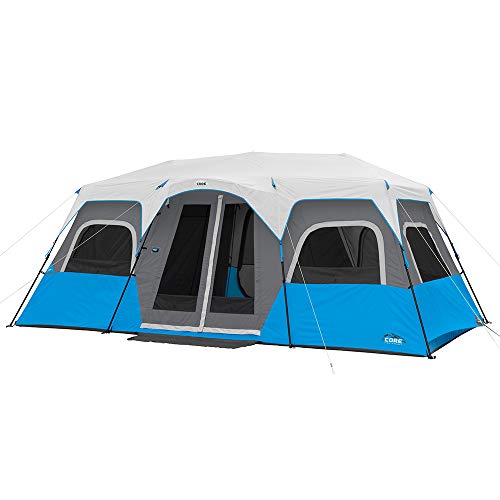
CORE 12 Person Instant Cabin Tent with LED Lights
Strengths
- Built-in 3-level LED lights
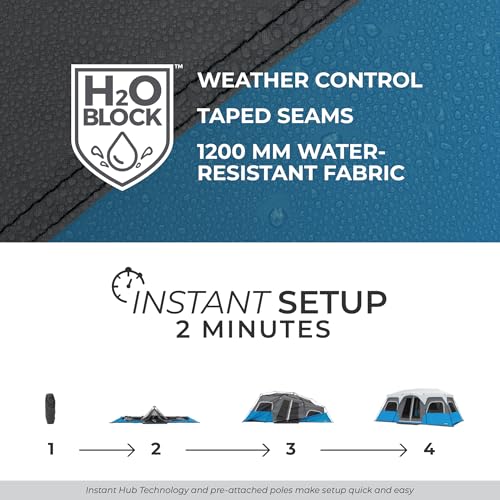
- Instant 2-minute setup
- Spacious with room dividers
Trade-offs
- Heaviest option at 54 lbs
- Bulky packed size
- Lights require battery or power source
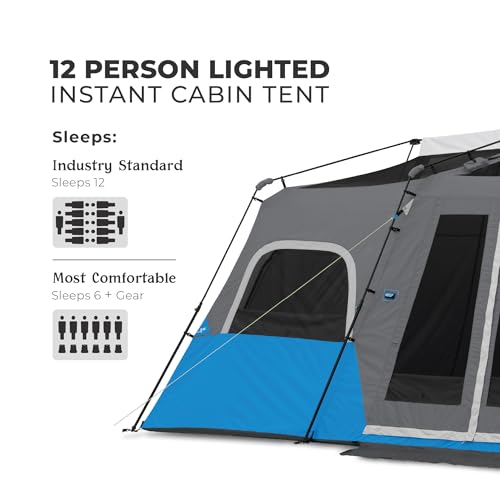
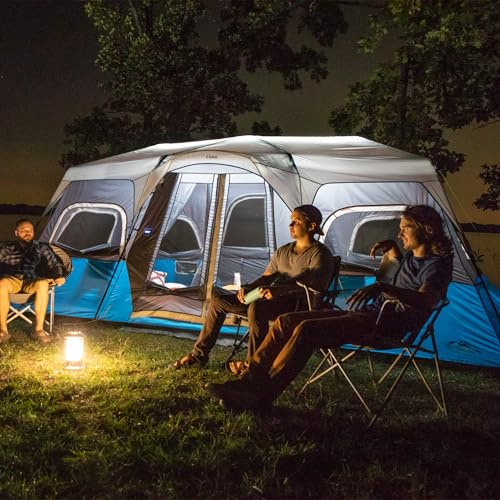
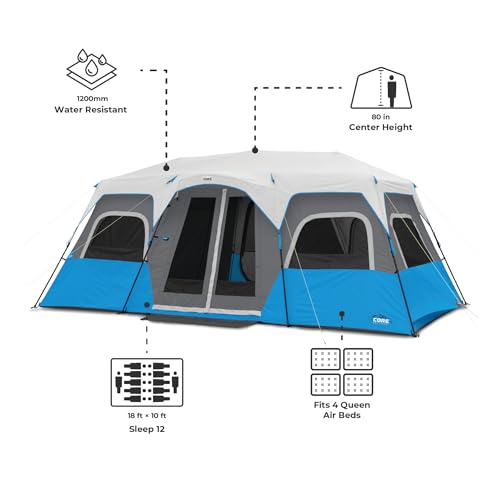
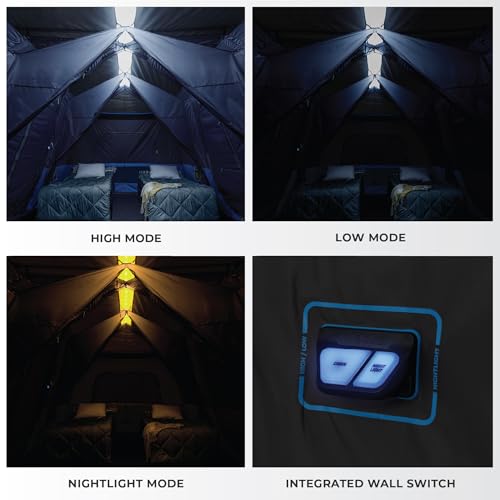
This is the tent I’d pick if I were outfitting my own family rig for car camping, everything from the instant setup to the built-in lighting makes life easier. The footprint and height match the non-lighted CORE 12-person model, so you still get that massive 18 x 10-foot interior and 80-inch headroom. But the integrated LED system is the real upgrade: three brightness levels, a night-light mode, and a wall switch mean no fumbling for lanterns at 2 a.m.
Owners love the convenience, and unlike clip-in lights, these don’t take up headspace or get in the way. The room dividers, H20 Block tech, and ventilation are identical to the standard model, so you don’t lose any core functionality. It’s heavier at 54 lbs, but that’s the trade for added features. For families with kids, this tent reduces friction in ways that seem small but add up fast.
Product photos
FanttikOutdoor Zeta C12 Pro Max Instant Cabin Tent

Strengths
- Sets up in 90 seconds
- Excellent headroom and layout
- Full mesh for visibility
Trade-offs
- Mixed durability reports
- Heavy and bulky
- Can overheat in sun
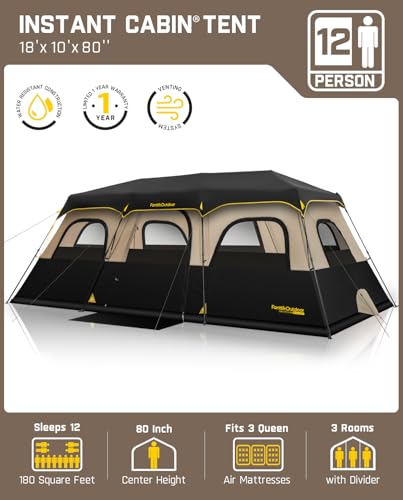
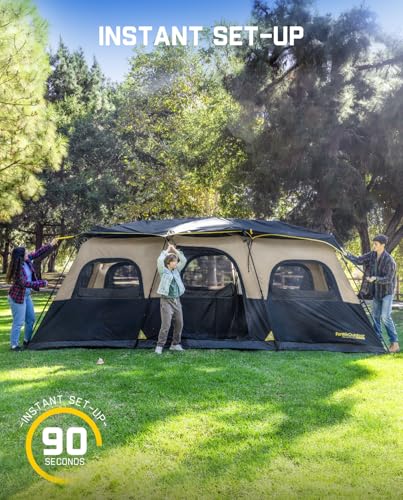
The Zeta C12 Pro Max lives up to its ‘instant’ claim, owners confirm two people can get it up in under 90 seconds, thanks to pre-attached poles and a scissor-style frame. That speed is unmatched, and for families with young kids or short daylight windows, it’s a massive advantage. The 80-inch headroom is generous, and the triple-room layout with zippered divider offers real privacy, almost like a tiny camping apartment.
The materials sound premium, SBS zippers, B3 mesh, carbon frame, but real-world feedback is mixed on durability. Some owners praise the wind resistance, while others report pole issues after repeated use. The 360-degree mesh and floor vents boost airflow, but like many instant tents, it can feel like a greenhouse in direct sun. It’s not the lightest at 45+ lbs, but the carry bag helps.
Product photos

CORE 12 Person Instant Cabin Tent
Strengths
- True 12-person size
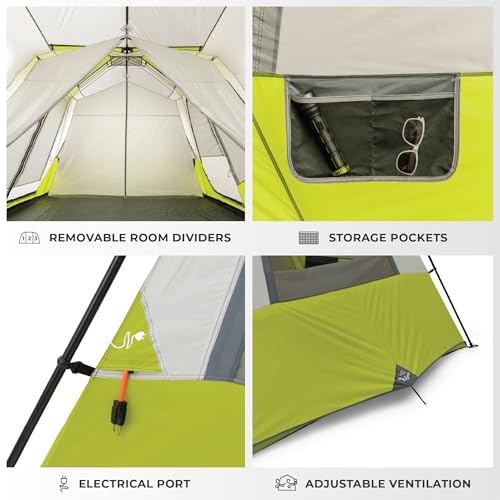
- Includes two room dividers
- Reliable weather resistance
Trade-offs
- Heavy at 48 lbs
- Large packed size
- No built-in lighting
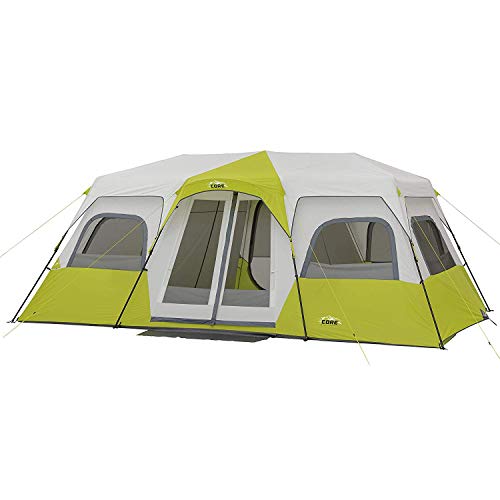
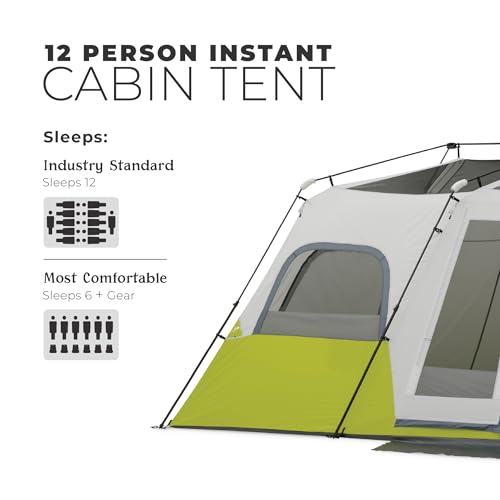
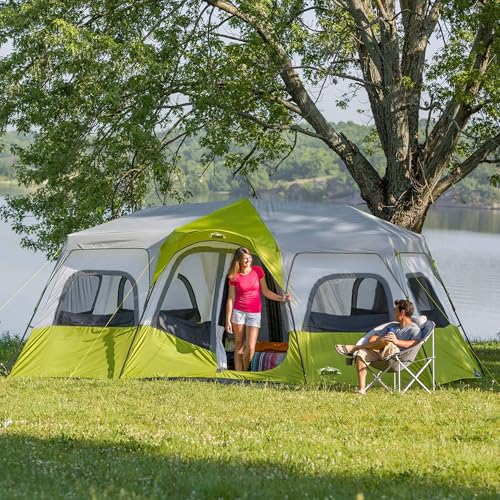
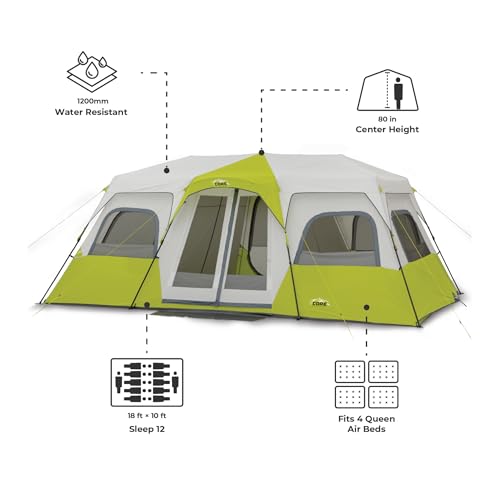
If you need space and simplicity without breaking the bank, this CORE 12-person tent is one of the smarter buys in the cabin category. At 18 x 10 feet, it genuinely fits four queen air mattresses, and the 80-inch ceiling means adults can move freely. The two included room dividers create three private zones, a huge plus for families with teens or multiple couples.
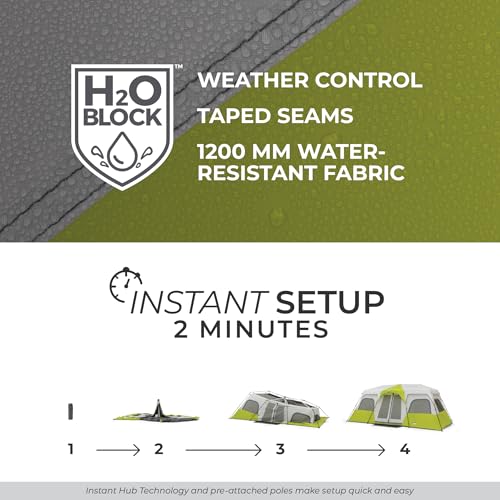
The H20 Block system with 1200mm coating, taped seams, and sealed zippers delivers dependable rain protection, and owners say it holds up well in wind when properly staked. Ventilation is solid with the mesh ceiling and ground-level vents, though condensation can build in humid weather. At 48 lbs, it’s heavy, but that’s expected for this size. It’s the no-frills workhorse of the CORE lineup, durable, fast to set up, and well-priced for its capacity.
Product photos
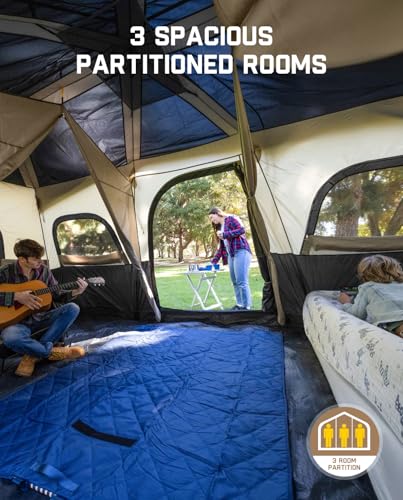
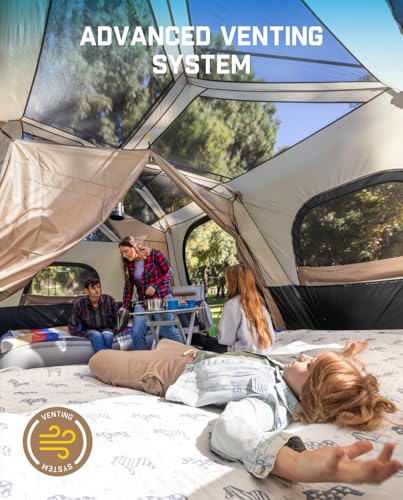
CAMPROS 12-Person 3-Room Family Tent

Strengths
- Spacious 3-room layout
- Good mesh ventilation
- Easy color-coded setup
Trade-offs
- Moderate condensation risk
- Rainfly can sag if not tight
- Heavy for backpacking
This 12-person cabin tent delivers on space and structure, offering 180 sq. ft. and a 72-inch center height, plenty of room for multiple air mattresses and gear. On paper, it’s built for families who want elbow room and privacy, with two removable curtains dividing the interior into three functional zones. That layout is a real win for parents trying to corral kids or couples needing separation during long trips.
The 185T polyester with PU1000mm coating suggests decent rain resistance, and owners report staying dry in light storms, though heavy downpours sometimes lead to seepage if the rainfly isn’t perfectly tensioned. Ventilation is solid thanks to six large mesh windows and a mesh roof, but some users mention condensation in humid conditions, common in cabin tents without aggressive airflow. The color-coded poles help, but at this size, two people are really needed to pitch it efficiently.
Product photos


Portal 8 Person Tent with Screen Porch

Strengths
- Large screen porch
- Great cross-ventilation
- Stable tunnel design
Trade-offs
- Less interior space than cabin tents
- Not for extreme weather
- Fiberglass poles, not carbon
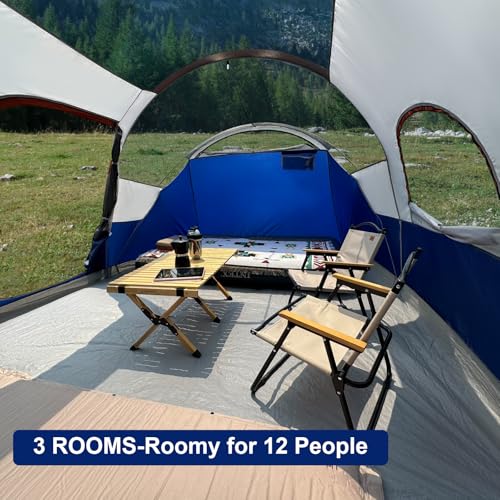
If you’re after a tent that blends indoor comfort with outdoor immersion, this Portal model is worth serious consideration. The 6-foot-deep screen porch is a standout, it’s a true bug-free hangout zone, perfect for morning coffee or letting dogs in and out without inviting every mosquito in the county. The tunnel design with 66D fabric isn’t the burliest in high winds, but it holds steady in moderate conditions, and the removable rainfly gives flexibility depending on the forecast.
At 20 feet long and 76 inches tall, it fits two air mattresses with room to spare. The mesh ceiling and multiple windows deliver on ventilation, and owners consistently praise how airy it feels even on muggy nights. Setup takes about 15 minutes with two people, and the color-coded poles help, but it’s not instant like pop-up models. Compared to full cabin tents, it’s lighter and more aerodynamic, but less spacious overall.
Product photos


UNP 8 Person Waterproof Tunnel Tent

Strengths
- High 1500mm waterproof rating
- Steel poles for stability
- Large screen porch
Trade-offs
- No room dividers
- Basic interior organization
- Limited privacy options
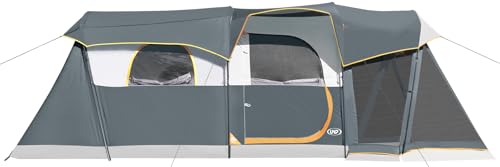
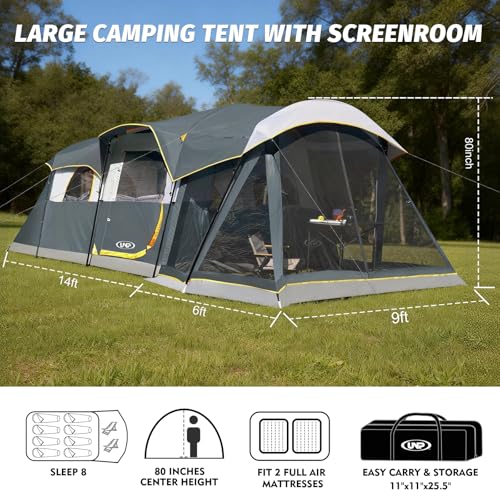
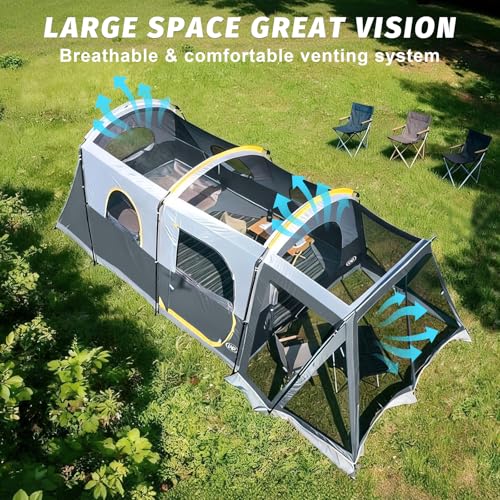
This UNP 8-person tunnel tent stands out as a budget-conscious choice that doesn’t skimp on key features. With a 1500mm hydrostatic rating, it’s more water-resistant than most in this list, and the eight steel leg poles add real structural confidence in gusty conditions. The 20-foot length includes a 6-foot screen porch, giving families a dedicated outdoor room, ideal for cooking or relaxing out of the sun.
Ventilation is strong thanks to four oversized mesh windows and a mesh ceiling, and owners report minimal condensation, even in humid areas. The color-coded setup is manageable in 15 minutes with two people, and at 30 lbs, it’s one of the lighter large tents here. It lacks room dividers, so privacy is limited, but for car campers who want durability and value, that’s a fair trade.
Product photos
UNP 10 Person 2-Room Family Tent

Strengths
- Excellent mesh ceiling view
- Good airflow from multiple windows
- Spacious for 10 people
Trade-offs
- Single room divider only
- Rain protection inconsistent
- Awning may not block heavy rain
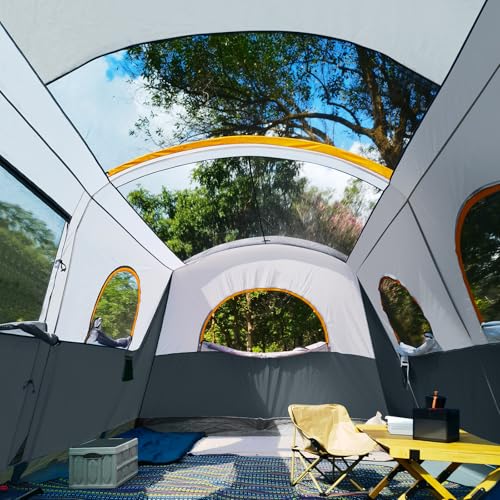
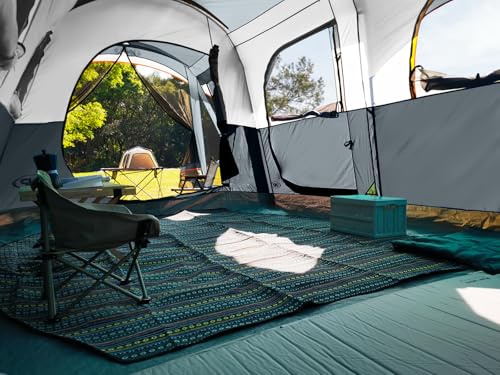
With 18 x 9 feet of floor space and a 78-inch peak height, this UNP tent is roomy and well-ventilated, making it a solid pick for families who prioritize airflow and stargazing. The large mesh roof is a standout, owners love lying back and watching the night sky, and the triple-side mesh windows really do keep things breezy in warm weather. The single privacy curtain creates two zones, which isn’t as flexible as three-room models, but still enough for separating adults and kids.
The PU1000mm waterproofing holds up in drizzle, but some feedback points to moisture creeping in during sustained rain, likely due to the awning design not fully shielding the door. Setup is quick with color-coded poles, and the larger carry bag is a thoughtful touch, repaking doesn’t feel like a wrestling match. Still, it’s not the most storm-worthy option here.
Product photos


CORE 9 Person Instant Pop Up Tent
Strengths
- Sets up in 2 minutes
- Good weather protection
- Smart ventilation design
Trade-offs
- No room dividers
- Smaller than 9-person claim
- Limited privacy
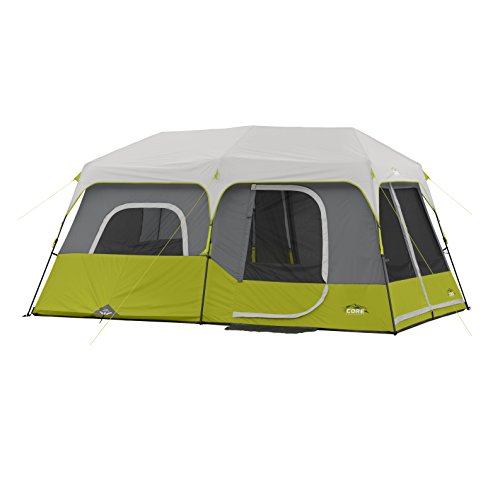
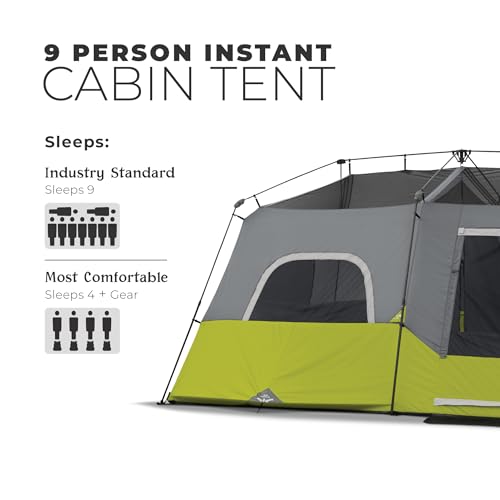
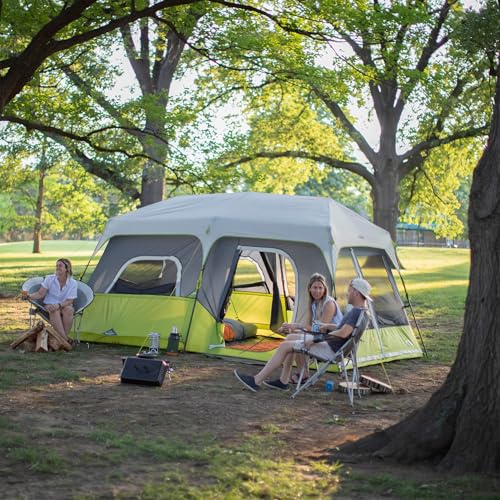
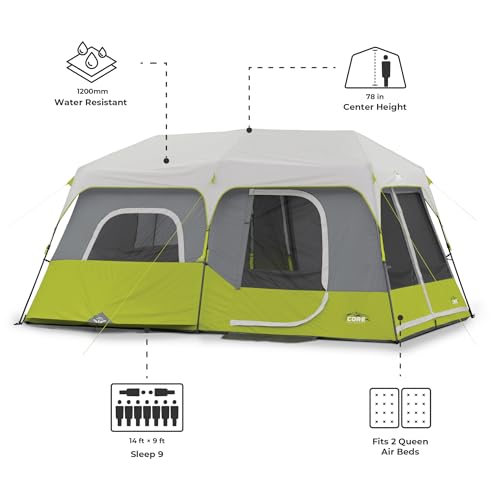
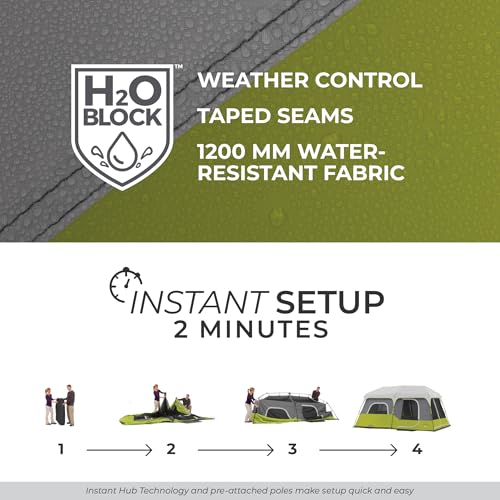
This CORE model hits a sweet spot for smaller families or groups who want instant setup without oversizing their shelter. At 14 x 9 feet, it’s snug for nine but very comfortable for four to six with gear, realistically a 6-person family tent. The pop-up design works as advertised: two people can be done in under two minutes, and the pre-attached poles eliminate frustration.
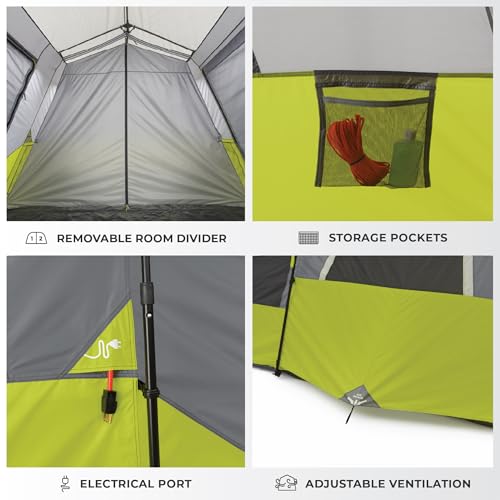
H20 Block tech with 1200mm coating and fully taped seams gives it solid weather resistance, and owners consistently report staying dry in rain. The mesh ceiling and lower vents create smart airflow, reducing that stuffy cabin-tent feel. Storage pockets are a small but appreciated touch. Compared to larger CORE models, it’s lighter and easier to manage, though it lacks room dividers.
Product photos
How We Evaluated tents for large families
Rather than a hands-on lab test, my research for these recommendations involved a detailed comparison of published specifications and features across numerous models. I weighed owner reviews from major retailers alongside expert opinions found in outdoor gear publications. As someone who lives for finding the right shelter for outdoor adventures, I applied my experience to prioritize factors crucial for large groups, ultimately ranking tents based on a combination of these elements.
For families needing substantial space, the most important factors quickly became capacity (realistic sleeping space, not just a headline number) and weather protection. A tent that can comfortably fit everyone and withstand wind and rain is essential. Durability also ranked high, since frequent use and potential rough handling are common with family camping. Understanding large family tent types helped me categorize the options and assess their suitability.
Specifications reliably indicate tent dimensions, fabric denier (a measure of thickness), and waterproof ratings. However, I heavily relied on owner feedback to gauge real-world ease of setup, ventilation performance, and the long-term durability of zippers and seams. Reputation with experienced campers also factored in; some brands consistently receive praise for quality construction, while others are known for cutting corners. Knowing the differences between frame tents for groups and other styles was key to evaluating overall construction.
Choosing The Right tents for large families
Finding the right tent for your family is about more than just floor space; it’s about creating a comfortable, functional home base for your adventures.
A quality family tent prioritizes durable, waterproof construction (at least 2000mm rating for the rainfly), a robust frame capable of withstanding wind, and thoughtful design features like room dividers, ample ventilation, and convenient storage. Consider packed size and weight if you plan to transport it frequently, and always check owner reviews for real-world feedback on ease of setup and weather resistance.
Size and Sleeping Capacity
Don’t fall for the manufacturer’s stated “person” capacity. These numbers are always optimistic. I recommend sizing up, way up, from your actual headcount. A “12-person” tent might comfortably fit six adults with gear, or a family of four who like to spread out. Think about how you actually camp. Do you bring air mattresses? Do the kids need space to play inside on rainy days? A good rule of thumb is to add two “people” to the listed capacity for a more realistic assessment. If you’re unsure, err on the side of more space; you can always leave some unused, but you can’t magically create it.
Weather Protection and Materials
A sudden downpour can ruin a trip, so prioritize a tent with solid weather protection. Look for fabrics with a high hydrostatic head (HH) rating – 2000mm or higher for the rainfly is a good starting point, and 3000mm is even better, especially if you camp in consistently wet conditions. Don’t skimp on the groundsheet or footprint; this adds a crucial layer of protection against moisture wicking up from the ground. Beyond the fabric, pay attention to taped seams and a full-coverage rainfly. Proper assembling large tents is also key; a poorly secured rainfly is as good as no rainfly at all.
A little preventative maintenance goes a long way. Always re-waterproof your tent’s rainfly annually, or after extended use in harsh conditions, to maintain its water resistance.
Features & Usability
Beyond the basics, consider features that will make your family camping experience more enjoyable. Room dividers are a lifesaver for privacy, especially with older kids. Built-in lighting, like in the CORE 12 Person Instant Cabin Tent, can eliminate the need for lanterns, and multiple doors allow for easier access. Ventilation is critical to prevent condensation, so look for multiple windows and vents. And, let’s be honest, ease of setup matters. If you’re new to large family tents, an instant-pop-up design can save you a lot of frustration. Many families find that choosing between a traditional dome style or a cabin-style tent comes down to personal preference, but I often recommend looking at spacious camping tents for families with cabin-style designs for the added headroom and livability.
- Door Configuration: One large door is fine, but multiple doors (especially on cabin-style tents) make getting in and out much easier, preventing bottlenecks.
- Storage Pockets: These are essential for keeping small items organized and off the floor. More pockets are always better.
- E-Port Access: A dedicated port for running a power cord inside the tent is a surprisingly useful feature for charging devices or running a fan. This is especially convenient if you’re looking at best tents for big families.
Tents for Large Families Compared
Here’s a comparison of specifications for tents designed to accommodate large families.
| Product Title | Capacity | Floor Size (ft x ft) | Center Height (in) | Waterproofing (mm) | Setup Time | Rooms |
|---|---|---|---|---|---|---|
| CORE 12 Person Instant Cabin Tent with LED Lights | 12 | 18 x 10 | 80 | 1200 | 2 min | 3 |
| FanttikOutdoor Zeta C12 Pro Max Instant Cabin Tent | 12 | 16.7 x 10 | 80 | N/A | 90 sec | 3 |
| CORE 12 Person Instant Cabin Tent | 12 | 18 x 10 | 80 | 1200 | 2 min | 3 |
| CAMPROS 12-Person 3-Room Family Tent | 12 | 20 x 9 | 72 | 1000 | <10 min | 3 |
| Portal 8 Person Tent with Screen Porch | 8 | 20 x 8 | 76 | N/A | 15 min | 1 |
| UNP 8 Person Waterproof Tunnel Tent | 8 | 20 x 9 | 80 | 1500 | 15 min | 1 |
| UNP 10 Person 2-Room Family Tent | 10 | 18 x 9 | 78 | 1000 | 10 min | 2 |
| CORE 9 Person Instant Pop Up Tent | 9 | 14 x 9 | 78 | 1200 | 2 min | 1 |
Frequently Asked Questions
What’s the biggest mistake people make when buying a large family tent?
People often underestimate the space they truly need. Don’t rely on the stated “person” capacity; add two people to that number to account for gear and comfortable movement, or consider looking at high-capacity camping tents to be extra sure.
How important is the tent’s waterproof rating, really?
A higher waterproof rating is crucial, but it’s not the whole story. Look for at least 2000mm on the rainfly, but also check for taped seams and a full-coverage design, these are equally important for staying dry.
Are “instant” tents as durable as those with a traditional frame?
Instant tents have improved dramatically in recent years. While older models sometimes sacrificed durability for convenience, many newer instant tents use quality poles and fabrics, but it’s still worthwhile to read reviews specifically addressing longevity before choosing from durable large group tents.
What does “denier” mean when looking at tent fabric?
Denier refers to the fabric’s thread thickness; higher denier generally means a more durable and abrasion-resistant material. For family tents, I suggest looking for a rainfly with at least 75D polyester, and ideally 150D or higher for increased weather protection.
Is a tent with a screen porch really worth the extra cost?
A screen porch adds significant value for families. It provides a bug-free zone for relaxing, playing games, or even cooking, and offers extra covered storage space – especially if you are looking at best large floor space tents.
The Bottom Line
Ultimately, choosing a tent for a large family often comes down to balancing convenience with control. Do you want something that practically sets itself up, or are you willing to spend a little more time for potentially better quality and weather protection? For the best overall experience, I consistently recommend the CORE 12 Person Instant Cabin Tent with LED Lights. It strikes a fantastic balance between ease of use, spaciousness, and features most families will appreciate.
If you’re on a tighter budget, the CAMPROS 12-Person 3-Room Family Tent offers a surprising amount of space for the price, though you’ll sacrifice some of the instant setup convenience. For those prioritizing versatility and wanting a screened porch for bug-free lounging, the Portal 8 Person Tent with Screen Porch is a solid choice. And if you need something a bit smaller, but still roomy, take a look at the CORE 9 Person Instant Pop Up Tent.
More than any specific waterproof rating or pole material, remember that a successful camping trip depends on careful tent selection guide. Don’t get hung up on chasing the highest specs; focus on finding a tent that realistically fits your family, your camping style, and the conditions you’re likely to encounter. Prioritizing those fundamentals will create far more lasting memories than any fancy feature.
