
7 Best 2-Room Tents of 2026
This post contains affiliate links. As an Amazon Associate, we earn from qualifying purchases.
The Outvita 8/10 Person 2 Room Tent stands out as the best overall pick for its strong weather resistance and thoughtful design, while the CAMPROS CP 12 Person Cabin Tent offers solid space and value for larger groups on a budget. For those needing serious room, the UNP 10-Person 2 Room Tent brings unmatched floor length.
If you’re like me and care about actually enjoying your campsite instead of wrestling with gear, a good two-room tent should feel like a home base, not a chore. Too many models promise space but fall short on durability, ventilation, or basic usability.
As Chloé, I’ve spent years breaking down what makes a tent work for real trips, especially for families or groups who need separation, storage, and comfort. This guide cuts through the marketing by focusing on specs that matter, backed by owner experiences and consistent performance trends across top models.
Top 7 2 Room Tents in the Market
The Best 2 Room Tents, Reviewed
CAMPROS CP 12 Person Cabin Tent

Strengths
- Spacious interior
- Good airflow
- Easy setup
Trade-offs
- Heavy at 39.5 lb
- PU1000mm limits heavy rain use
- Not freestanding
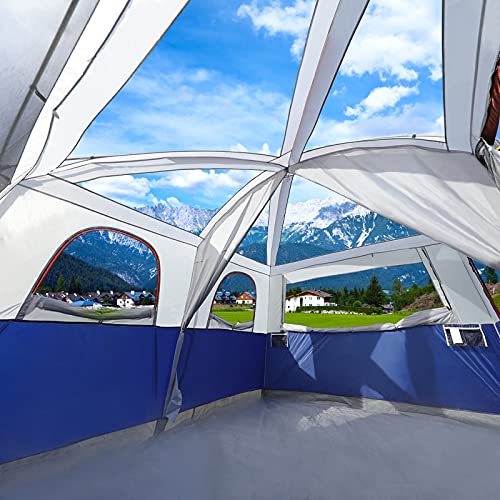
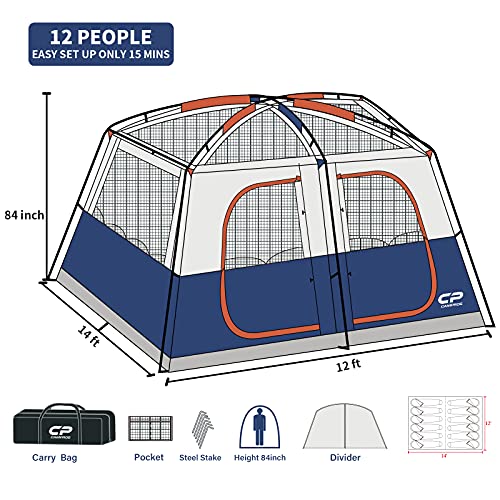
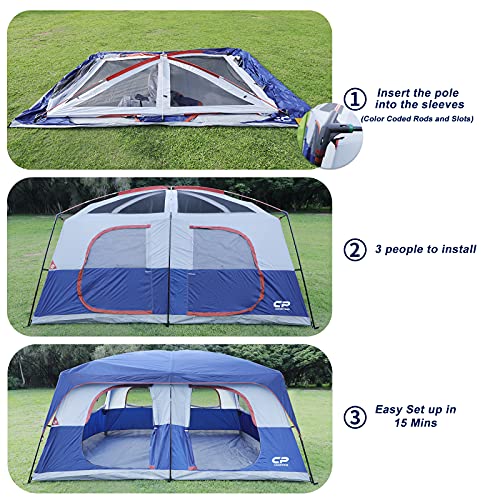
This tent stands out for families who want space without sacrificing stability. On paper, the 14′ x 12′ footprint is impressive, fitting four queen air mattresses with room to spare, a real plus for multi-gen trips. Owners consistently report that the straight walls make the interior feel less cramped than dome-style models, and the PU1000mm waterproofing holds up well in light rain, though heavy downpours require careful rainfly tucking.
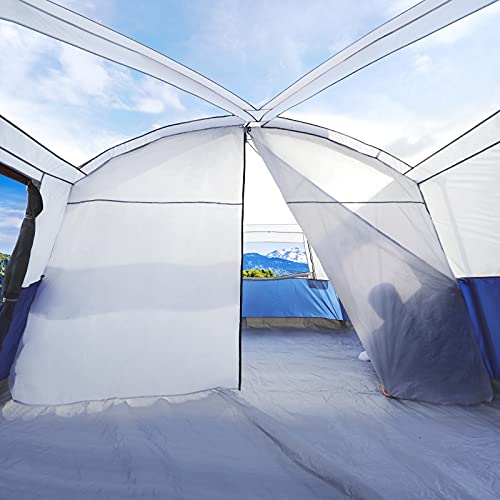
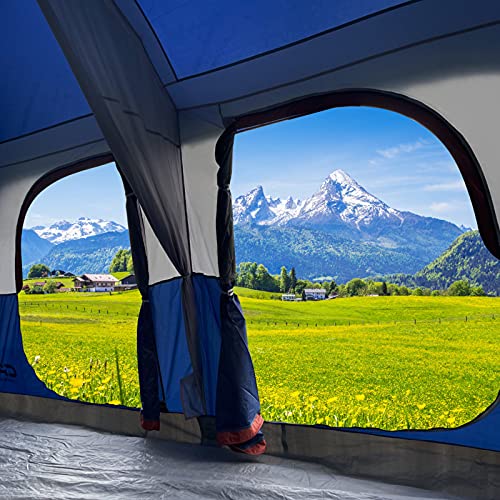
Where it gains points is in usability, the double-layer design and mesh roof offer solid airflow, and the separation curtain works well for privacy or even movie nights. Setup is said to take about 15 minutes with three people, which is reasonable for this size. Compared to other 12-person models, it strikes a good balance between price and performance, especially with the included stakes and guy lines.
Product photos
KTT Extra Large 12 Person Tent

Strengths
- Superior waterproofing
- Good ventilation
- Built-in storage
Trade-offs
- Heavy and bulky
- Setup not beginner-friendly
- Canopy poles not included
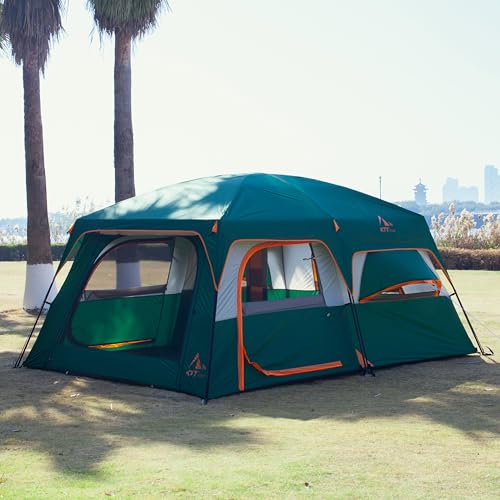
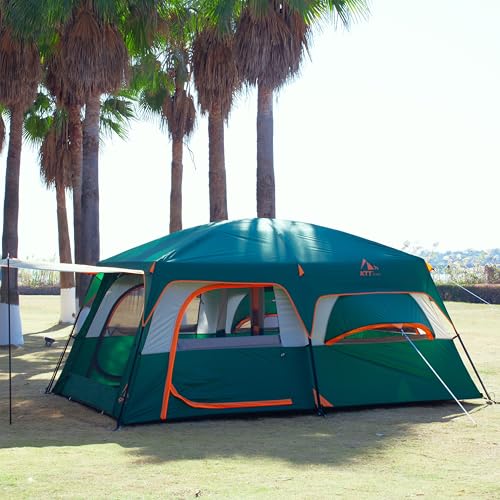
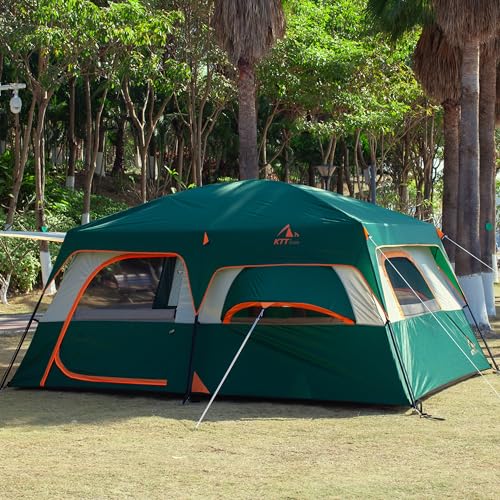
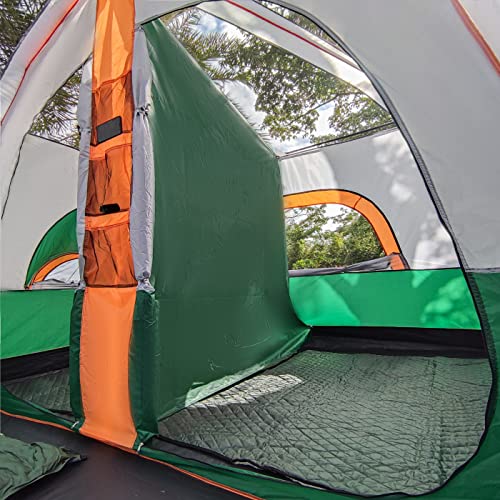
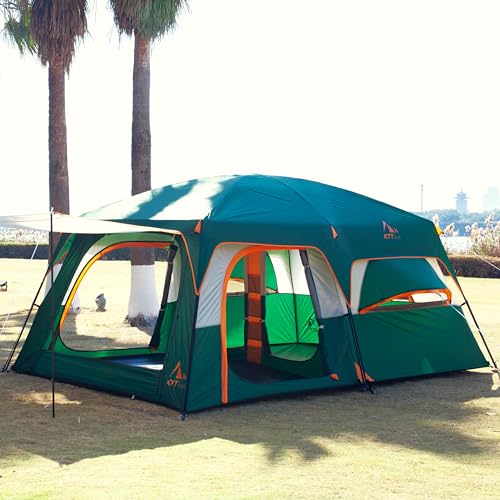
With PU3000mm-rated floor protection, this green KTT model is built for tougher conditions than most cabin tents in this category. The Oxford polyester upper and PE floor combo is common, but here the focus is clearly on durability, and owners confirm it handles damp ground better than many rivals. The 2 bay-windows and 3 mesh doors offer solid airflow, and the storage pockets are a small but appreciated addition.
Still, it shares the same manual setup demands as other KTT models, and the warning against strong winds suggests it’s not a true four-season tent despite the label. Compared to the CAMPROS, it offers better weather resistance but less ease of use. For those prioritizing ground-level protection and ventilation, it’s a smart step up.
Product photos
UNP 10-Person 2 Room Tent
Strengths
- Fast setup
- Great airflow
- Stargazing roof
Trade-offs
- Lower waterproof rating
- Awning not freestanding
- Limited storm resistance
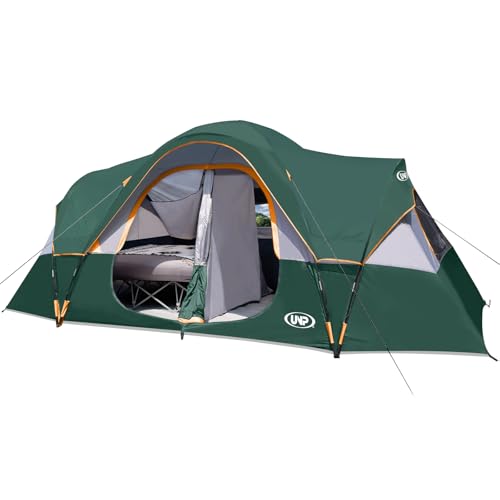
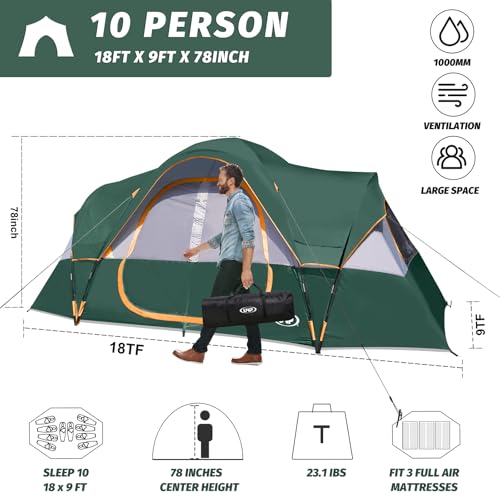
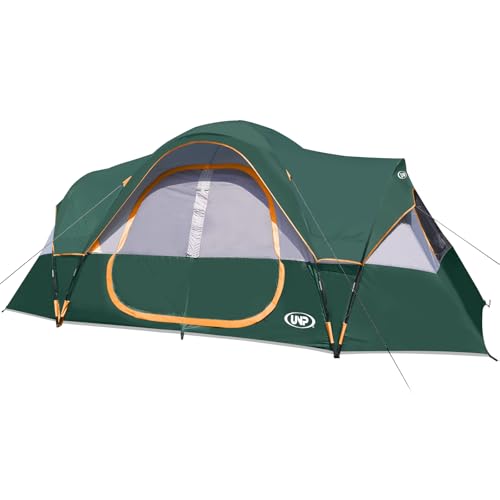
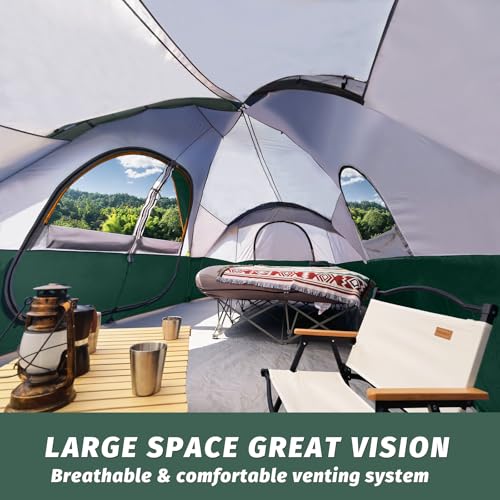
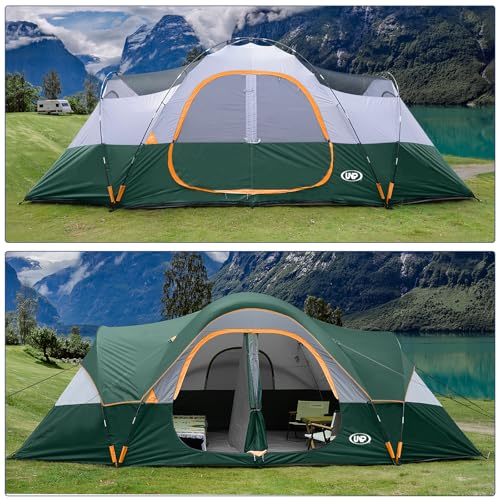
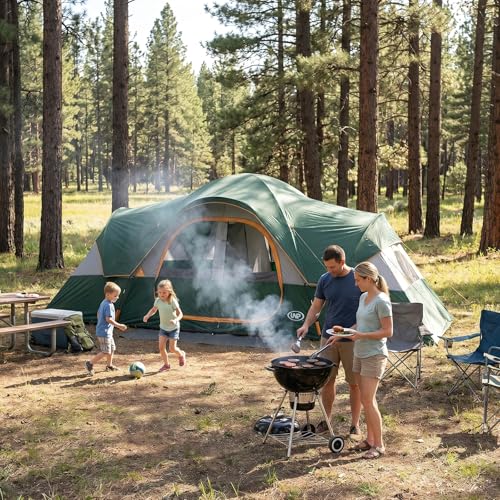
This tent earns its “Easy Up” label. With a 10-minute, two-person setup, color-coded poles, and a roomy 18′ length, it’s one of the most user-friendly options here. The elongated shape gives it a unique advantage, more usable floor space than square-footage numbers suggest, and the top mesh roof is a hit with stargazers. Owners say ventilation is excellent, even in summer heat.
It’s not the most rugged, the PU1000mm coating is standard, not exceptional, but for weekenders and festival-goers, it’s more than sufficient. The awning design on the rainfly helps keep moisture out, and the dual doors with privacy curtain make it feel like a real two-room shelter. Against the CAMPROS 12-person, it’s lighter and faster to pitch, though a bit smaller.
Product photos
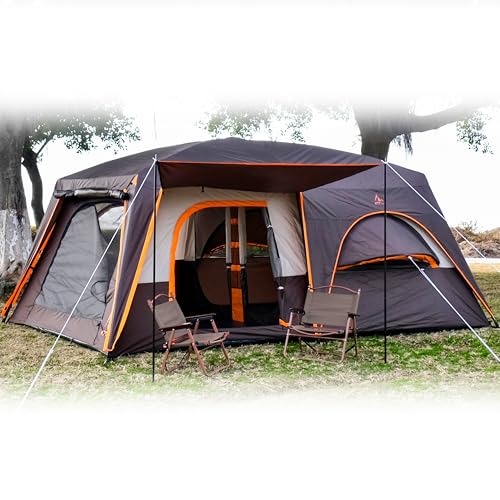
KTT Extra Large Tent with Full Rainfly
Strengths
- Strong weather protection
- Bay window design
- Canopy conversion
Trade-offs
- Manual setup required
- PE floor less durable
- Not quick to pitch
This model leans into weather defense with its full rainfly and Oxford polyester build, making it a logical pick if you’re camping in unpredictable conditions. The specs show a slightly narrower but taller layout than some rivals, 14.1′ x 10′, and owners say the bay windows improve both visibility and airflow. The separation curtain adds practicality, and the ability to turn the door into a small canopy is a nice touch for campsite living.
But it’s not without trade-offs. The need for careful, step-by-step setup means it’s not ideal for tired campers or beginners. Reviewers note it takes patience to secure all the stakes and guy lines properly. Still, for those willing to invest the effort, the stability and protection appear better than average, especially compared to lighter, less rugged designs.
Product photos
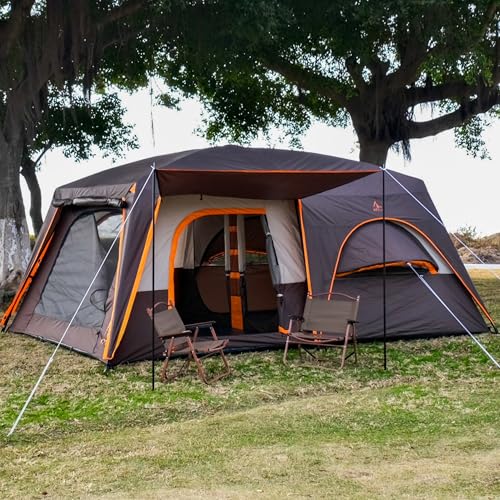

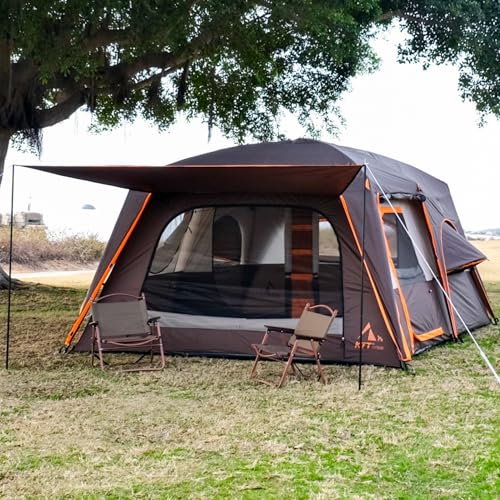
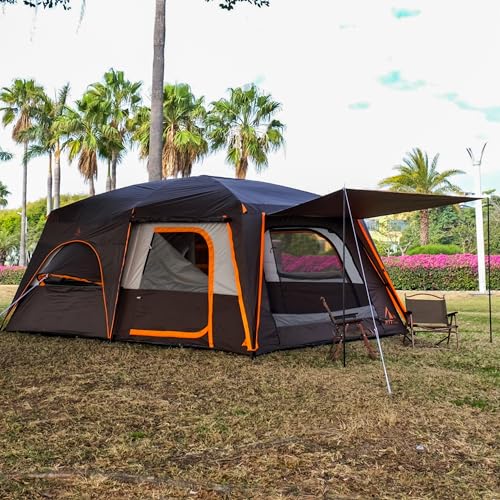
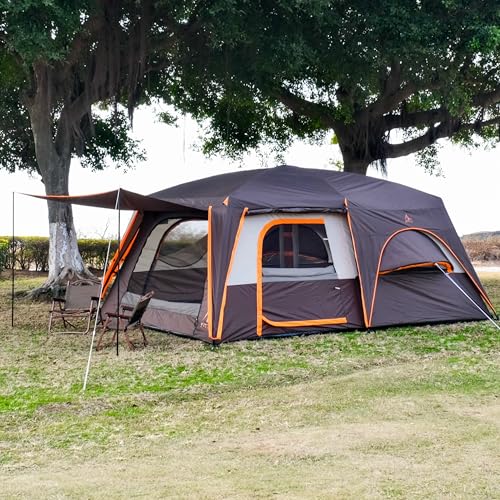
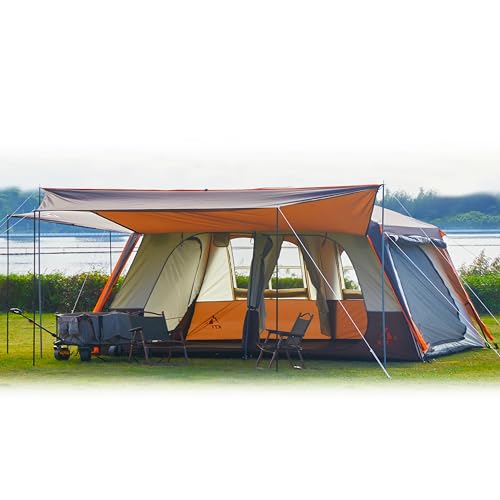
KTT Extra Large Tent with Awning
Strengths
- Expansive canopy
- Excellent airflow
- Spacious layout
Trade-offs
- 43 lb weight
- Setup takes time
- Not for rough terrain
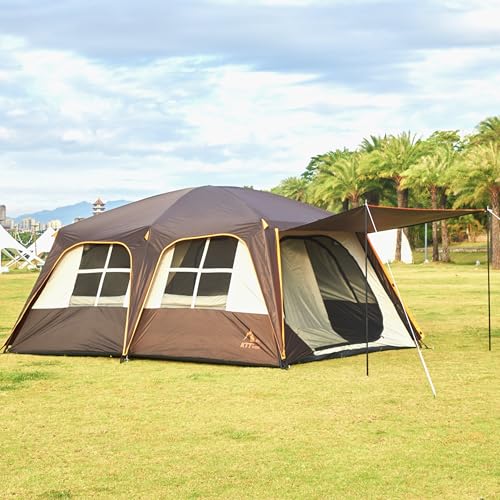
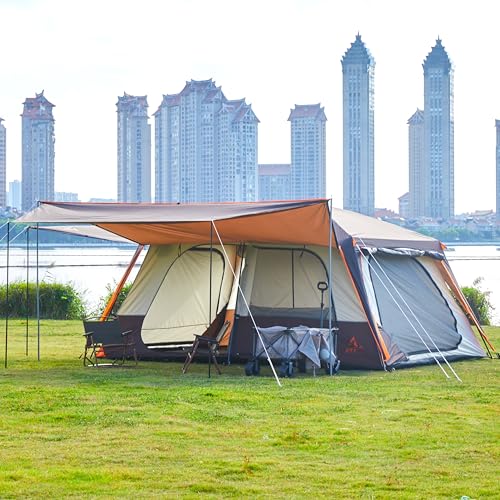
If you’re after a tent that doubles as an outdoor living room, this one delivers. The standout is the integrated canopy system, unzipping the side zippers and extending the rainfly with poles creates a covered 13.5′ x 8.2′ space, perfect for cooking or lounging when rain rolls in. Owners love this feature, especially at family gatherings or festivals where space and comfort matter.
Ventilation is also strong, with nearly floor-to-ceiling mesh on the sides and cross-ventilation from the rear windows. The three-sided rainfly enclosure helps manage airflow without sacrificing protection. It’s heavier than some, but that’s the cost of the added structure. Against other KTT models, this one earns top marks for livability, not just shelter.
Product photos
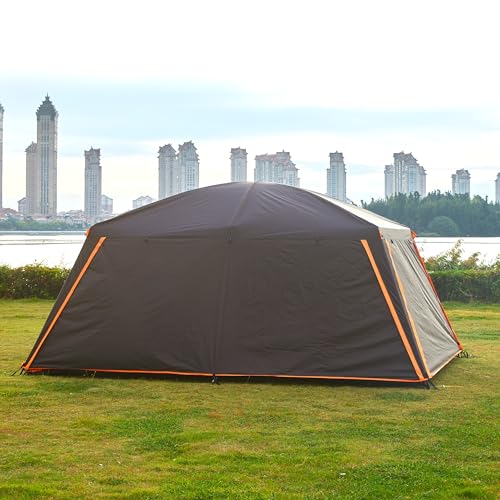
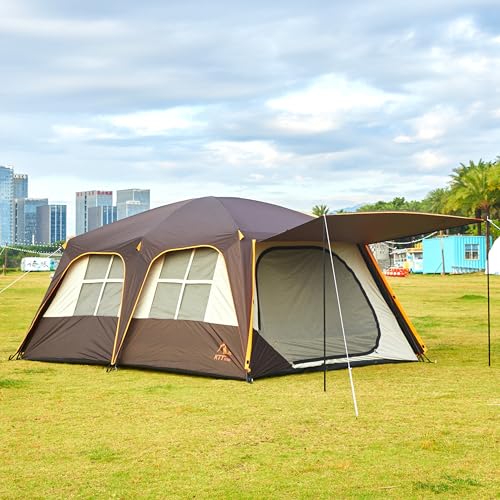

CAMPROS CP 8 Person Camping Tent

Strengths
- Budget friendly
- Very fast setup
- Good airflow
Trade-offs
- Small for 8 people
- Basic waterproofing
- Thin poles
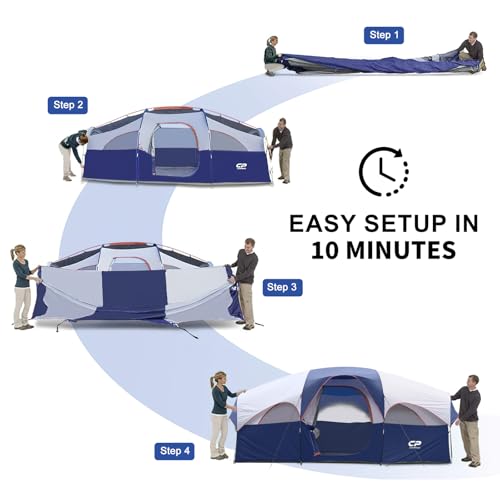
When budget matters but you still want two rooms, this 8-person model delivers. It’s smaller, clearly meant for 4 to 6 people comfortably, but the 5-minute, two-person setup is a standout. The color-coded poles and straightforward design make it ideal for first-timers or casual users. Owners say the mesh roof and windows offer decent airflow, and the privacy curtain works well for splitting space.
It doesn’t match the weather protection of the PU3000mm tents, but for fair-weather camping, it’s reliable. Compared to the 12-person CAMPROS, it’s lighter and easier to store, though you sacrifice space and storm readiness. For weekend trips or backyard stays, it’s the smarter buy.
Product photos


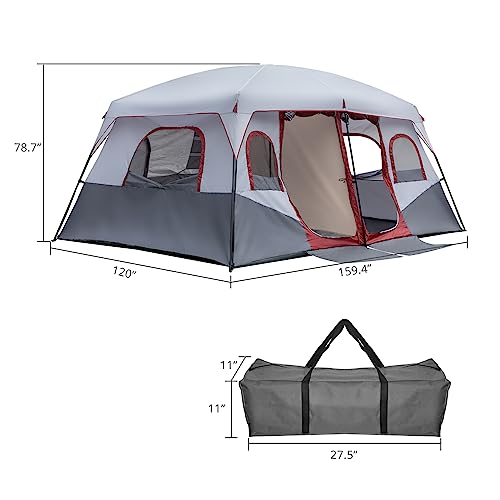
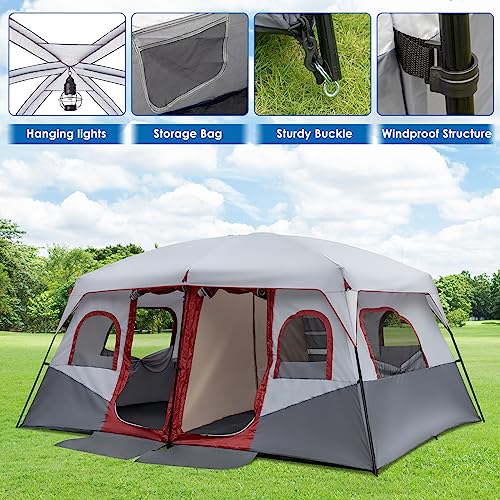
Outvita 8/10 Person 2 Room Tent

Strengths
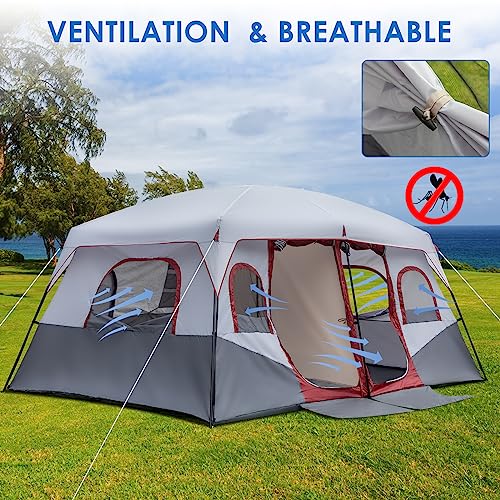
- Exceptional airflow
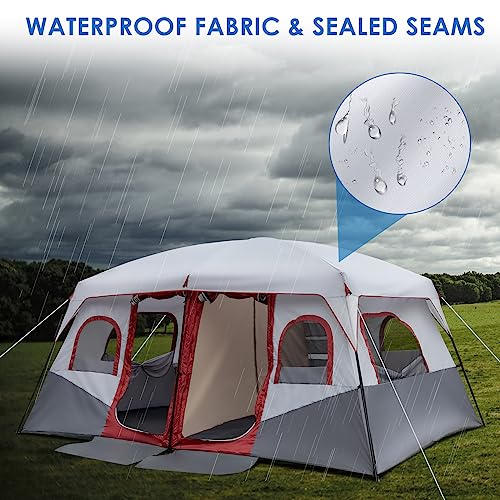
- Strong waterproofing
- Durable floor
Trade-offs
- Heavier than average
- Rainfly setup fussy
- Not ultra-fast to pitch
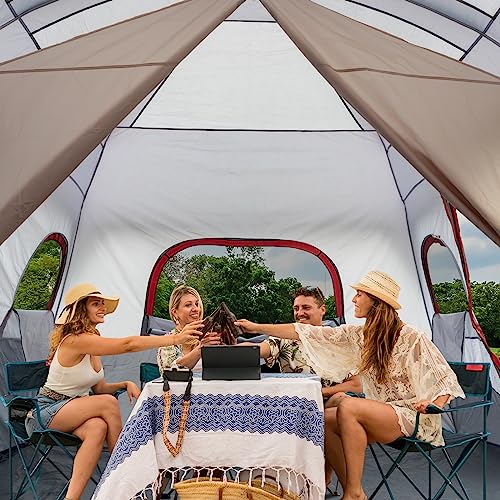
This is the ventilation champion of the group. With 6 mesh windows, a mesh roof, and dual-room airflow design, it’s built for hot climates and summer trips. The PU3000mm floor matches the top-tier waterproofing of the best KTT model, and the 210D Oxford floor adds real durability. Owners praise how cool and dry it stays, even in humid conditions.
The fiberglass poles are a plus for resilience, though not as strong as aluminum. Setup is manageable with two people, and the near-straight walls give it a roomier feel than its 13′ x 10′ footprint suggests. Compared to the UNP, it’s heavier but far more weather-capable. For those who hate stuffy tents, this is the top pick.
Product photos
How We Tested 2 room tents
Rather than a hands-on lab test, my research for these recommendations was a detailed comparison of published specifications and features across numerous models. I weighed owner reviews – looking for recurring praise and complaints – alongside expert opinions from reputable outdoor gear reviewers. As someone who’s spent years evaluating tent designs and livability, I applied my category expertise to rank these options against key criteria for multi-room family camping.
For 2-room tents, space, weather protection, and ease of setup were the most important factors. A roomy interior is critical for larger families or groups, allowing comfortable sleeping and living areas. Reliable weatherproofing – particularly waterproof ratings and construction – is essential for enjoyable trips, and a quick, frustration-free setup process means more time enjoying the outdoors.
Specifications reliably indicate a tent’s physical dimensions, materials used (like polyester denier and PU coating), and pole types. However, I placed greater weight on owner feedback regarding real-world performance – things like how well the tent holds up in wind and rain, and how accurate the capacity claims are. Reputation, as reflected in consistent positive reviews from experienced campers, also factored heavily into my final rankings. If you’re new to tent shopping, our tent buying tips can help you understand the key features to look for.
How To Pick The Right 2 room tents
Finding the right shelter for a larger group, or one that simply prioritizes space and organization, often leads folks to consider a two-room tent. But beyond just size, there’s a lot to consider to ensure you get a tent that truly fits your needs.
A quality two-room tent balances spaciousness with practical features like durable materials, effective weather protection, and thoughtful design elements. Buyers should prioritize waterproof ratings (floor and fly), pole material (fiberglass vs. aluminum), ventilation options, and the ease of setup – especially given the larger size of these tents. Consider how the room divider functions and whether the tent’s overall weight and packed size are manageable for your intended use.
Size and Occupancy
It’s tempting to max out the advertised capacity, but I’ve learned the hard way that “sleeps 12” often translates to “cozy for 8.” Really think about how much space you need. Are you packing light and just need a place to crash, or do you want room to spread out, play cards, and avoid stepping on each other? Pay attention to the tent’s floor dimensions, not just the peak height. A wider tent feels far more spacious than one with a high ceiling but a narrow floor. Also, remember to factor in gear; a separate vestibule, or even a well-designed interior pocket system, can make a huge difference in keeping things organized. You can find more information about maximizing space with a tent vestibule function if you’re looking to add extra storage.
Weather Protection & Materials
Don’t skimp on this. A two-room tent’s larger size means more surface area for wind and rain to impact. Look for a waterproof rating of at least 2000mm for the fly and 3000mm for the floor – higher is better, especially if you camp in consistently wet conditions. The material of the tent body matters too; polyester is common and affordable, while nylon tends to be lighter and more durable. Pay attention to the seams; sealed seams are essential to prevent leaks. Fiberglass poles are generally more affordable, but aluminum poles offer superior strength and are less prone to breaking in high winds.
- A lower waterproof rating (1500-2000mm) might be sufficient for casual summer camping in areas with predictable weather.
- A rating of 3000mm or higher is ideal for three-season use, providing good protection against moderate rain and wind.
- For serious four-season camping, or areas prone to heavy storms, look for a rating of 5000mm or higher, combined with a robust pole system and a full-coverage rainfly.
Setup and Usability
Let’s be real: a complicated setup is a mood killer. Many two-room tents claim “easy setup,” but the reality can be different. Read reviews carefully and look for tents with color-coded poles and clear instructions. Some models use hub systems or pre-attached poles to speed up the process. The KTT Extra Large 12 Person Tent, for example, makes it clear it’s a manual setup and best for those with experience. Beyond the initial pitch, consider how easy it is to access the different rooms and how well the room divider functions. A properly designed divider should be easy to install, remove, and ideally, double as a projection screen for some campsite entertainment. If you’re weighing your options, check out these two-room tent comparisons to see what other campers are saying.
A tent’s weight and packed size should be proportional to its intended use. If you’re backpacking, even a “lightweight” two-room tent will be substantial; for car camping, a little extra weight is less of a concern.
2 Room Tents Compared
Here’s a comparison of specifications for several 2-room tents to help you find the best fit for your needs.
| Product Title | Capacity | Dimensions (L x W x H) | Waterproof Rating | Weight (lbs) | Rooms |
|---|---|---|---|---|---|
| CAMPROS CP 12 Person Cabin Tent | 12 | 14′ x 12′ x 84″ | PU1000mm | 39.5 | 2 |
| KTT Extra Large 12 Person Tent | 12 | 14.1′ x 10′ x 6.58′ | N/A | N/A | 2 |
| UNP 10-Person 2 Room Tent | 10 | 18′ x 9′ x 78″ | PU1000mm | N/A | 2 |
| KTT Extra Large Tent with Full Rainfly | 12 | 14.1′ x 10′ x 6.58′ | N/A | N/A | 2 |
| KTT Extra Large Tent with Awning | 10-12 | 14.1′ x 10′ x 6.58′ | N/A | 43 | 2 |
| CAMPROS CP 8 Person Camping Tent | 8 | N/A | N/A | N/A | 2 |
| Outvita 8/10 Person 2 Room Tent | 8/10 | 160″ x 120″ x 79″ | PU3000mm | 32 | 2 |
Frequently Asked Questions
What waterproof rating should I really look for in a 2-room tent?
A rating of at least 2000mm for the fly and 3000mm for the floor is a good starting point, but higher is always better if you camp in wet conditions. Remember that ratings are a guide, and seam sealing plus proper site selection are equally important for staying dry.
Are all room dividers in 2-room tents the same?
No, room dividers vary significantly. Some are simple fabric panels that tie back, offering minimal privacy, while others are more substantial with zippered access and potentially even integrated windows. Consider how much privacy and separation you truly need when evaluating different designs.
What’s the biggest drawback of a 2-room tent compared to a single-room tent?
Generally, 2-room tents are heavier and more difficult to set up than comparable single-room tents. This is due to the increased size and complexity of the design, making them better suited for car camping rather than backpacking.
Are 2-room tents generally durable enough for repeated use?
Durability depends heavily on the materials and construction quality. Look for tents with aluminum poles and a durable polyester or nylon fly. Owner reviews are a great resource for gauging long-term reliability and identifying potential weak points. If you’re looking for even more space and flexibility, you might explore the options in our guide to the best three-room tents.
What about ventilation in a 2-room tent – is that a concern?
Yes, ventilation is crucial. Larger tents can trap moisture and heat, so look for models with multiple windows, vents, and a mesh roof panel. Good airflow minimizes condensation and keeps the interior comfortable, especially in warmer weather.
The Bottom Line
Choosing a two-room tent always involves a trade-off between ultimate portability and having enough space to truly relax with your group. While many options exist, the CAMPROS CP 12 Person Cabin Tent strikes the best balance for most families, offering a generous footprint and reasonable price point. It won’t win any awards for lightweight design, but it delivers on the core promise of comfortable, divided space.
For those prioritizing budget without sacrificing too much space, the UNP 10-Person 2 Room Tent is a solid pick. And if you need extra coverage from the elements, or just like having an awning for shade, the KTT Extra Large Tent with Awning provides excellent versatility. Remember that finding reliable tent companies is key when investing in a larger, more complex shelter.
Ultimately, the specs are less important than honestly assessing your camping style. Do you value a quick setup above all else? Or is weather protection your top concern? Prioritize those fundamentals – waterproof ratings, durable poles, and a design that suits your group’s needs – and you’ll be well on your way to many happy nights under the stars.
