
7 Best Air Conditioners for Tent Camping 2026
This post contains affiliate links. As an Amazon Associate, we earn from qualifying purchases.
The Cybertake S2 Pro is the best overall air conditioner for tent camping, thanks to its strong 5100 BTU cooling and unmatched power flexibility. For budget-focused campers, the Outohome 5200 BTU delivers solid performance at a lower price, while the BougeRV PC35 is a smarter pick for smaller tents or those prioritizing app control and quiet operation.
Let’s be real, staying cool in a tent shouldn’t mean sweating through your sleeping bag or draining your entire power station by midnight. Too many campers buy into overhyped units that promise Arctic blasts but deliver noise, bulk, and dead batteries. I’ve researched the field thoroughly, comparing specs and real-world feedback to find units that actually work in tent environments.
This guide cuts through the noise. I focused on cooling power matched to tent size, realistic power needs, and features that matter, like quiet operation and easy setup, so you can pick a unit that fits your camping style, not just the biggest number on the box.
Top 7 Air Conditioners For Tent Camping in the Market
The Best Air Conditioners For Tent Camping, Reviewed
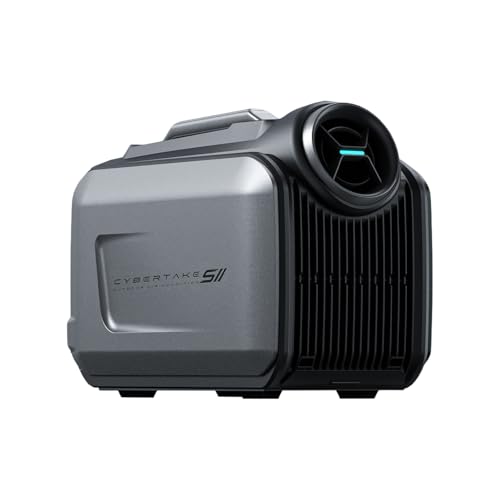
Cybertake S2 Pro Portable Camping AC
Strengths
- Heating and cooling
- Triple power options
- Eco+ efficiency mode
Trade-offs
- Boost converter extra
- Higher price
- Slightly complex setup
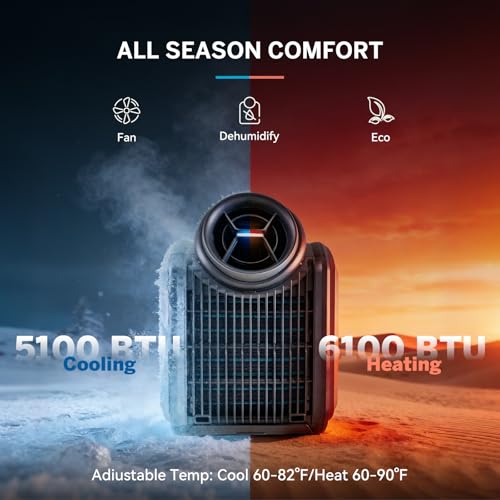
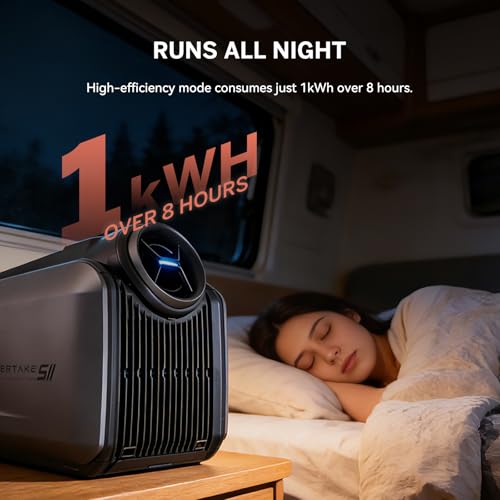
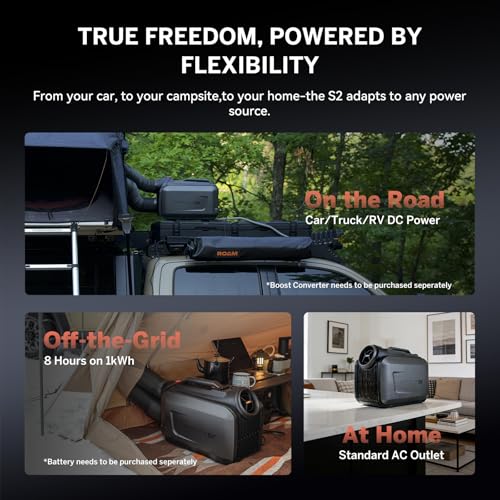
This is the most versatile unit on the list, and my pick for overall best if you want true climate control in the wild. The 5100 BTU cooling and 6100 BTU heating mean you can use it year-round, from summer tents to winterized cabins. Owners love the 3-way power compatibility: 48V DC, 12–24V vehicle, and 100–240V wall. That kind of flexibility is rare. The Eco+ mode is a standout, using just 1kWh over 8 hours, that’s huge for off-grid setups.
It cools fast, runs at a whisper-quiet 40dB, and the IPX4 rating means it can handle rain or splashback without issue. The full kit includes hoses and adapters, so setup takes under a minute. Compared to the BougeRV, it’s more powerful and better sealed for outdoor use. The only catch? The boost converter isn’t included, which adds cost. But if you’re serious about comfort in any season, this is the one.
Product photos
Outohome 5200 BTU Portable Tent AC
Strengths
- GMCC compressor
- Built-in dehumidifier
- Remote control
Trade-offs
- Heavier than rivals
- No app control
- Slightly noisier
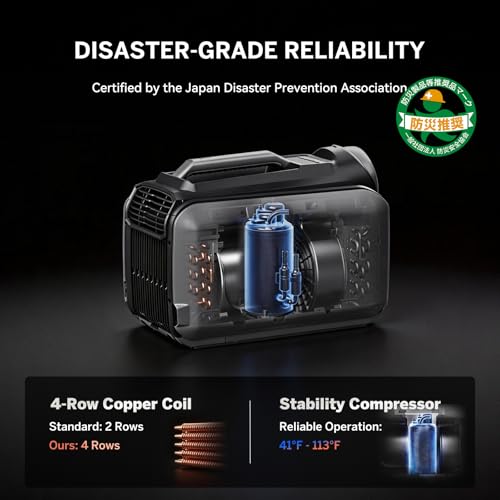
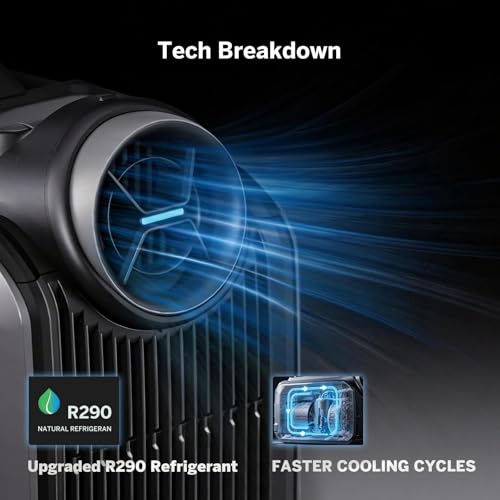
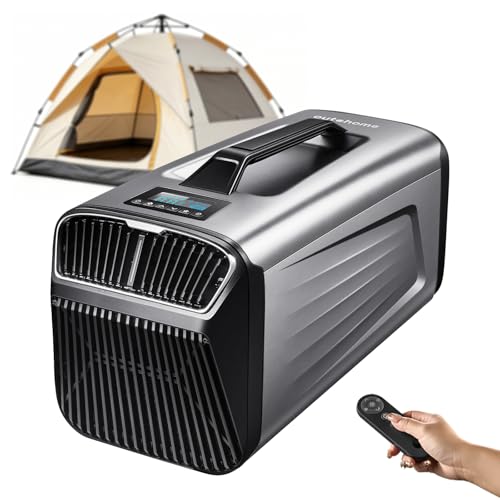
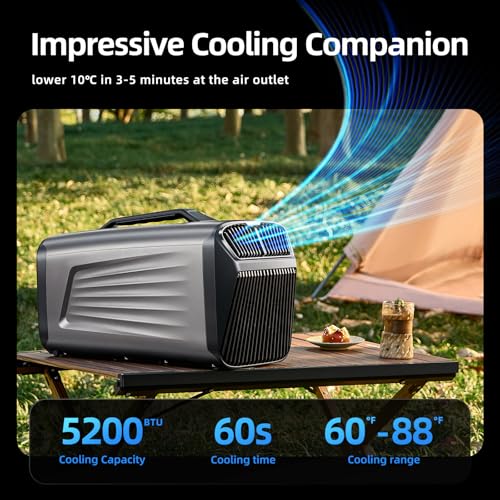
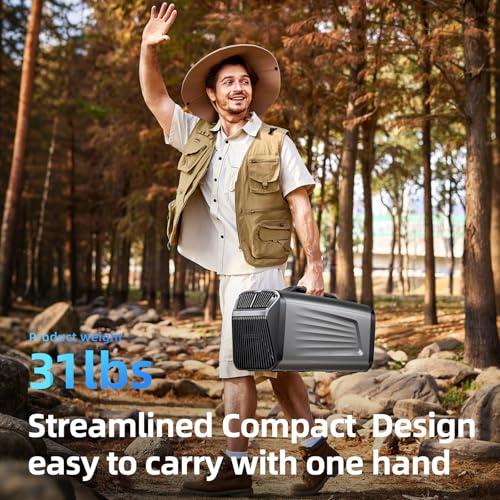
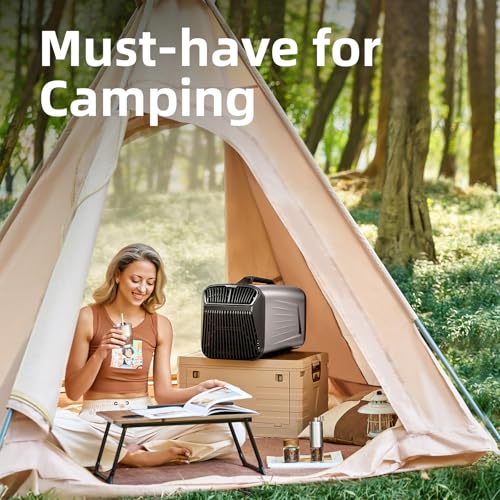
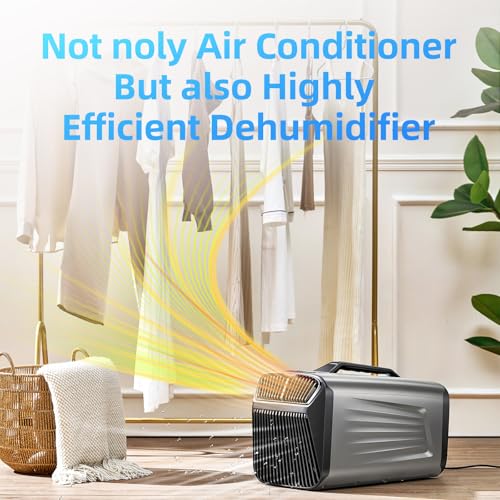
The Outohome delivers what matters: serious cooling in a rugged, no-nonsense package. With the same GMCC compressor found in higher-end units, it handles 130 sq.ft spaces efficiently and drops temps by 18°F fast. Owners praise its durability and consistent performance, especially in humid conditions where some evaporative units fail. The dehumidifying function is a standout, it pulls moisture from the air even when not in full cooling mode, which helps in muggy weather.
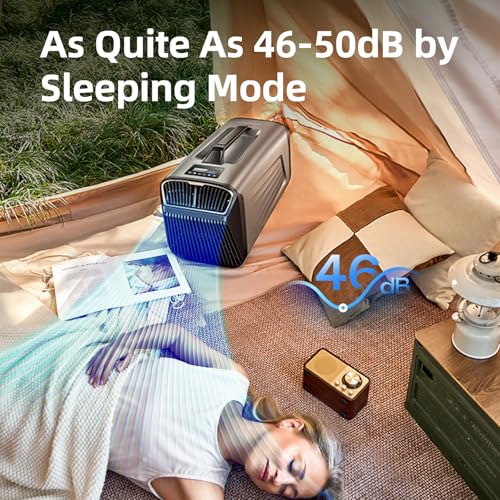
It runs slightly louder than the FO-KOKO in sleep mode (46–50dB), but the remote control and 24-hour timer add convenience. The design is sleek but bulky, and at 31lbs, it’s not something you’ll carry far. Still, for base camp or van life, it’s a solid pick. I’d lean toward the FO-KOKO for efficiency, but this one wins on build and dehumidification.
Product photos
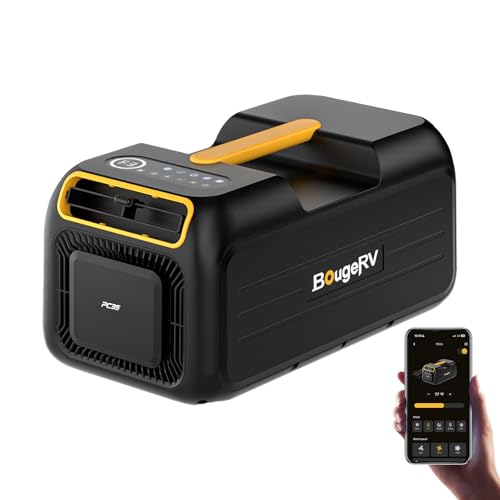
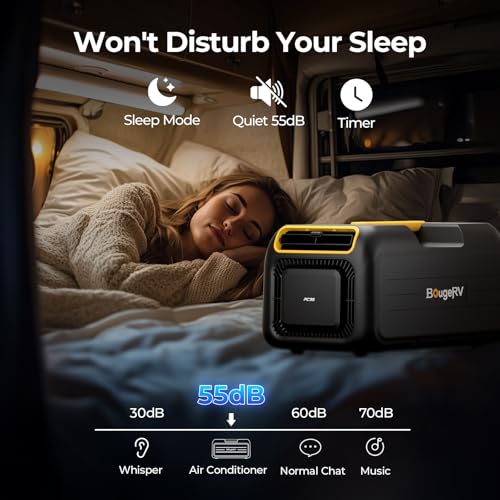
BougeRV PC35 3500BTU Camping AC
Strengths
- App control
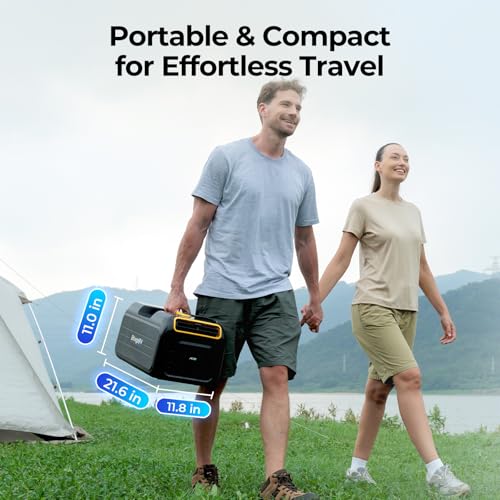
- Compact size
- 2-year support
Trade-offs
- Lower BTU output
- Limited range
- App dependency
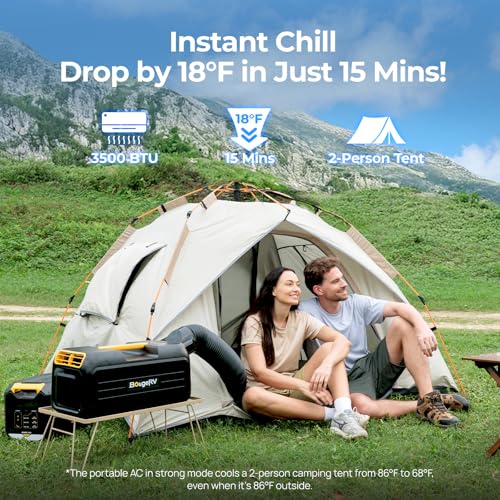
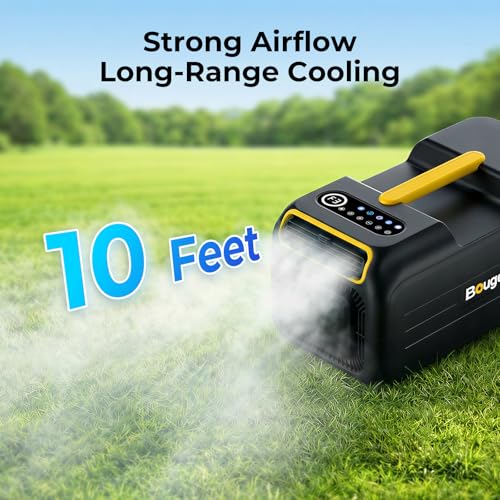
The BougeRV PC35 is the smart choice for tech-focused campers who want to control their environment from bed. The app integration works reliably up to 33 feet, and being able to adjust temperature or timer from your sleeping bag is a legit convenience. It delivers solid cooling for its size, 3500 BTU is enough for tents up to 65 sq.ft, and it drops temps by 18°F in 15 minutes in strong mode.
It’s quieter than expected and the 24H timer is useful for overnight runs. But the cooling power is noticeably less than the 5200 BTU models, this is a small-space unit. Owners note the exhaust duct setup is simple, and the 2-year tech support is a nice touch. Compared to the Cybertake, it’s less powerful but easier to manage remotely. For solo campers or couples in smaller shelters, it’s a smart buy.
Product photos

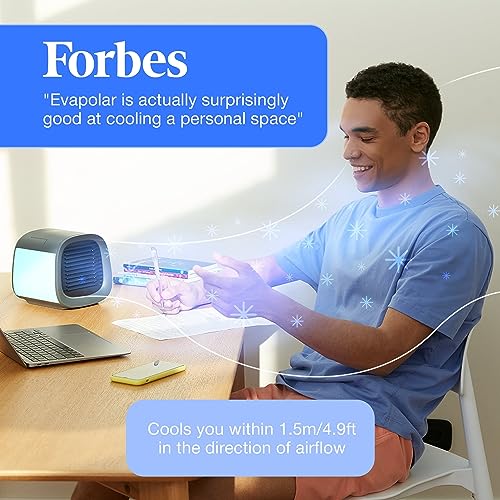
Evapolar evaCHILL Personal Air Cooler

Strengths
- Personal cooling
- Ultra low power
- USB powered
Trade-offs
- No room cooling
- Limited range
- Requires refill
If you’re looking for something to cool your face during a hot night in the tent, the evaCHILL makes sense on paper. It’s not a real air conditioner, it’s an evaporative personal cooler, and that distinction matters. Owners consistently report it works best in dry climates and when pointed directly at your face or upper body. The 3–5 foot cooling zone is real, but don’t expect it to drop the temperature inside your tent.
The 10W power draw is impressive, and the USB compatibility means you can run it off a power bank all night without killing your battery. It doubles as a humidifier and dust filter thanks to the basalt fiber cartridge, which sounds niche but actually helps in dusty desert campsites. But this is strictly a spot-cooling device.
Product photos


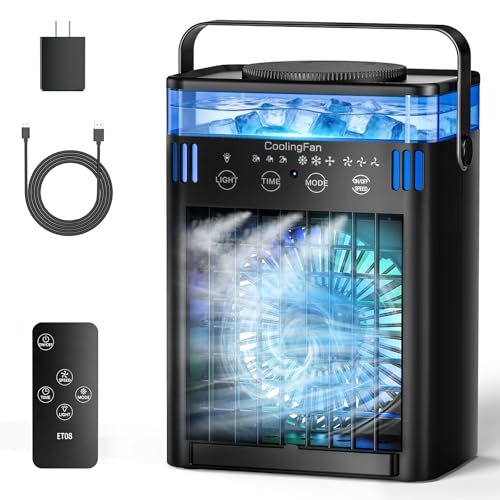
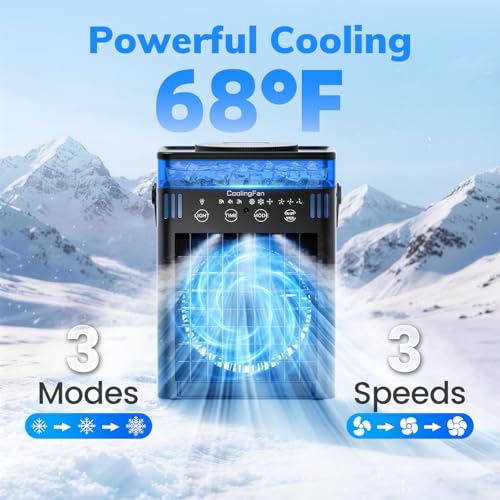
Mini Portable Evaporative Air Cooler
Strengths
- Low cost
- USB powered
- Mist + fan combo
Trade-offs
- No real cooling
- Weak in humidity
- Plastic build
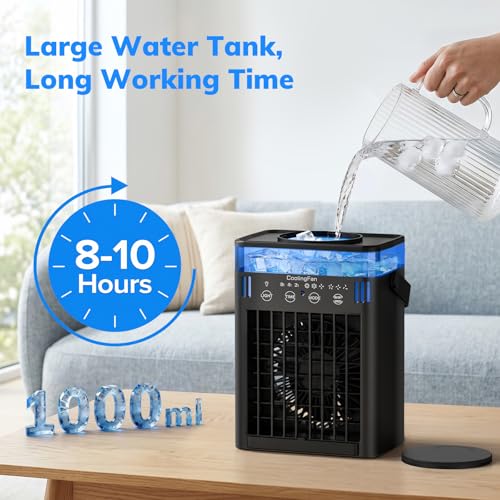
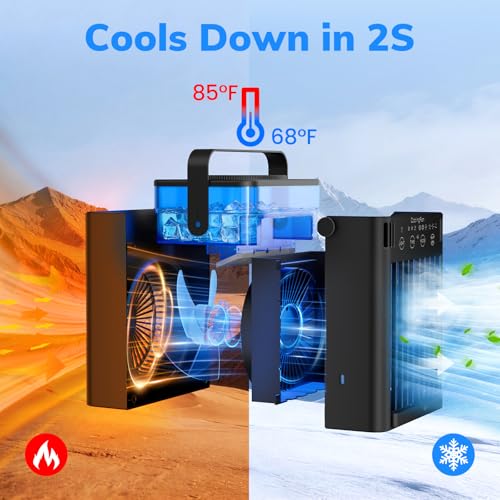
This is a budget evaporative cooler that tries to do too much, and ends up doing just enough. It’s not a real air conditioner, but for $100 or less, it offers mist, fan, light, and remote control in a compact design. The 1000ml tank lasts 8–10 hours, and the 2-second cooling claim is exaggerated, it works best with ice in the tank. Owners say it helps take the edge off in dry heat, but it’s useless in humidity.
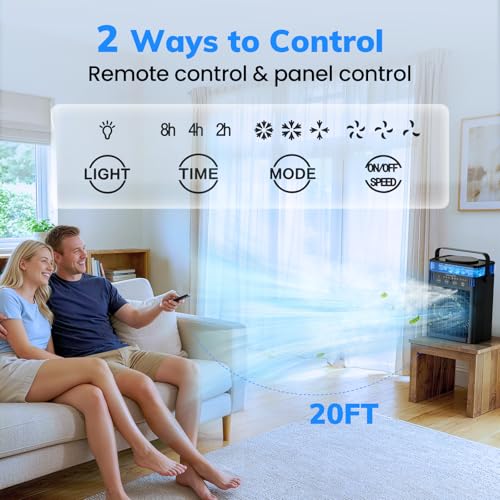
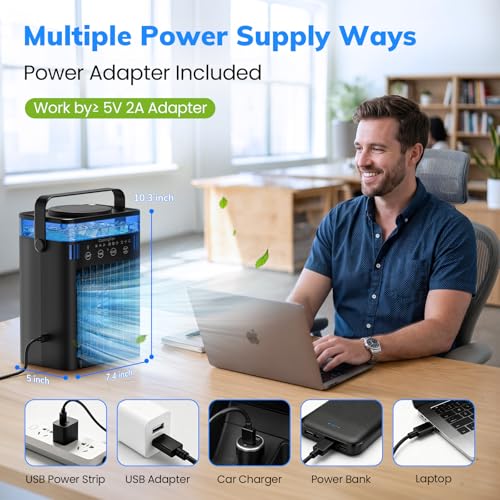
The 7-color night light feels gimmicky, but the timer and remote are convenient. USB powered, it’s easy to run off a power bank, making it a decent option for car camping or festival tents. But it’s no match for compressor-based units. If you’re on a tight budget and just need a breeze with a little moisture, it’s passable.
Product photos
FO-KOKO 5200 BTU Camping Air Conditioner
Strengths
- Strong 5200 BTU
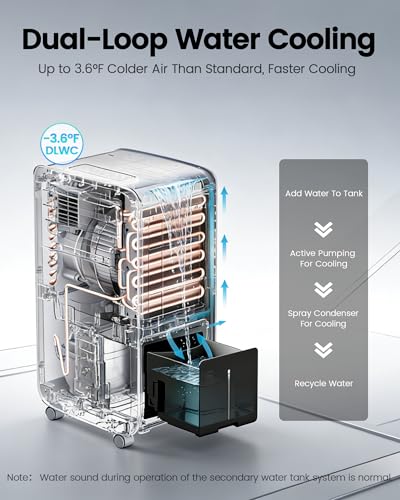
- Dual-loop cooling
- Low noise sleep mode
Trade-offs
- Needs power station
- Bulky for backpacking
- Adapters sold separately
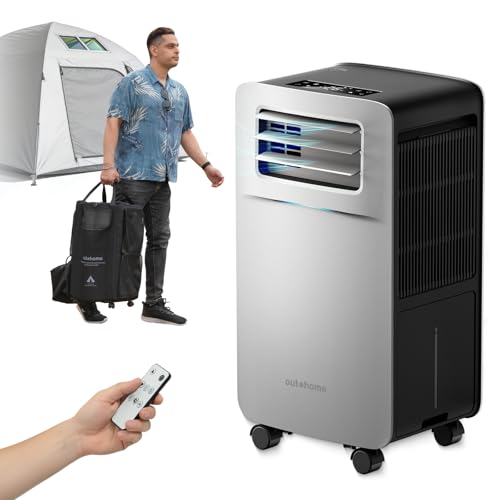
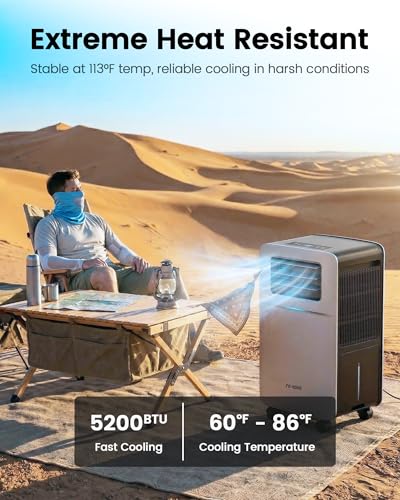
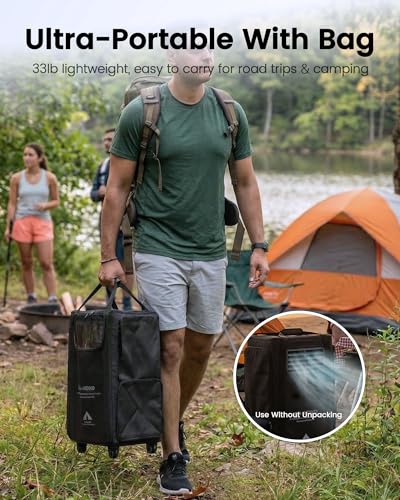
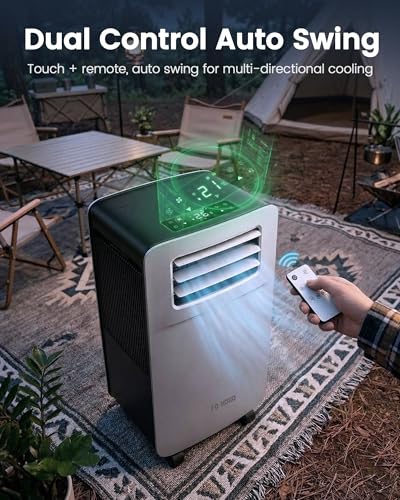
This is one of the few portable ACs that actually feels like it belongs in a tent, or at least a well-equipped camping setup. With 5200 BTU and dual-loop water cooling, it drops temps fast in small to midsize shelters, and owners confirm it can cool a 130 sq.ft tent or pop-up in under 10 minutes. The 400W draw is manageable with a decent power station, and the 45dB sleep mode is genuinely quiet for a compressor unit.
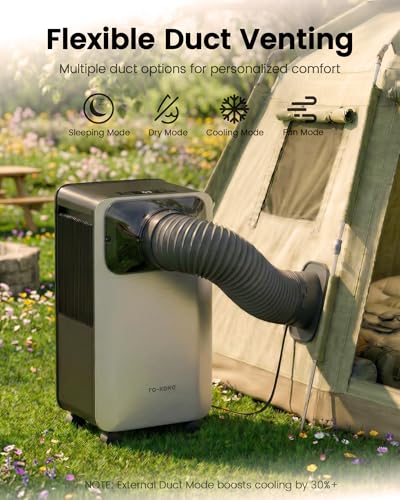
What sets it apart is the external duct mode, which reduces internal heat buildup, a common flaw in portable camping ACs. The 75° auto swing helps distribute air without creating cold spots. It’s not the smallest unit, but the carry bag and handle make it easier to transport than most. Compared to the Outohome model, it feels slightly more refined in airflow and cooling speed.
Product photos
Upgraded 4-in-1 Portable Ice Fan

Strengths
- Large water tank
- USB powered
- Ultra quiet
Trade-offs
- No compressor cooling
- Limited in humidity
- No heating
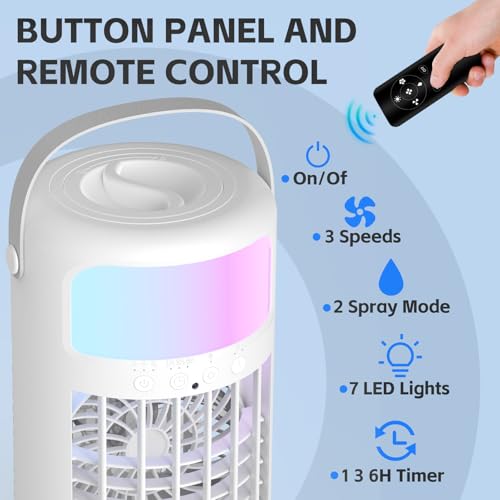
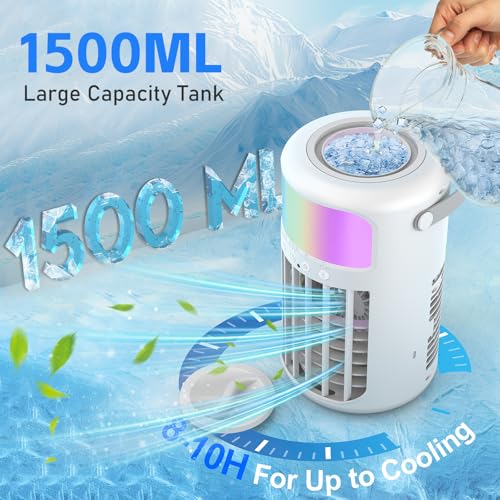
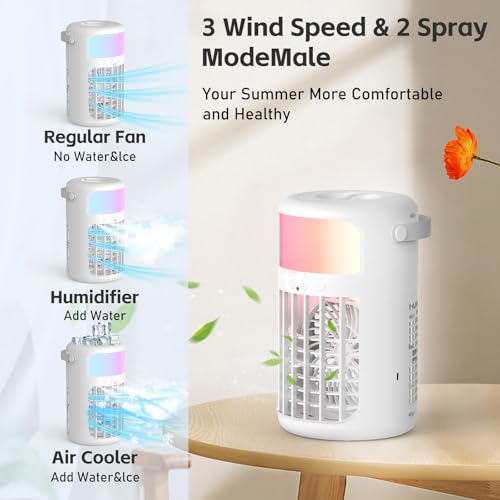
This is the most portable personal cooler here, lightweight, USB-powered, and built for mobility. The 1500ml tank is the largest in this category, and owners report up to 8 hours of misting, which is impressive. The 3 fan speeds and 2 mist modes let you fine-tune comfort, and the 90° adjustable airflow prevents that stiff neck from constant direct breeze.
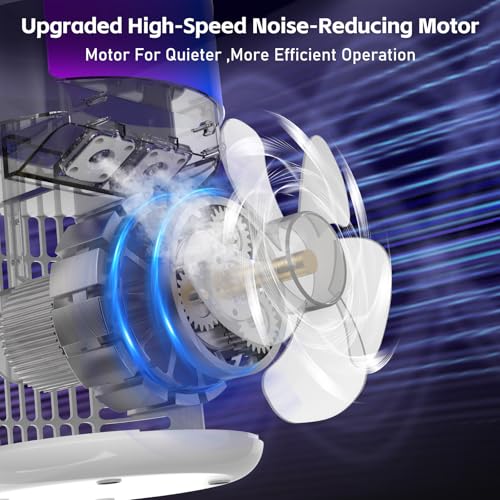
It’s ultra-quiet, thanks to 2026 upgraded tech, and the remote makes it easy to tweak settings from a hammock or sleeping pad. But like all evaporative units, it only works in dry air. Adding ice helps, but it’s not a substitute for real cooling. What it does well is portability and runtime.
Product photos

How We Picked These air conditioners for tent camping
Rather than a hands-on lab test, my research for these recommendations involved a detailed comparison of published specifications and features across numerous models. I weighed owner reviews from multiple retail sites alongside expert opinions found in camping and RV publications. As someone who spends a lot of time planning and enjoying outdoor adventures, I applied my understanding of tent environments and cooling needs to prioritize features most relevant for campers. Ultimately, I ranked options based on a combination of cooling capacity, portability, and power source versatility.
For tent camping specifically, BTU output, power consumption, and noise level proved to be the most crucial factors. Higher BTU ratings translate to faster and more effective cooling in a confined space, but also often mean greater power draw. Noise is critical; a loud unit can ruin the peace of a campsite. I prioritized models that balanced these elements, leaning towards those offering efficient cooling with minimal power consumption and quiet operation.
Product specifications reliably indicate cooling capacity (BTU), dimensions, weight, and power requirements. However, I placed more emphasis on owner feedback regarding real-world cooling performance, ease of use, and durability. Reputational information, gleaned from trusted review sites, helped me assess the long-term reliability of each brand and model, and whether the features delivered as advertised. Learning about how others have used these units in similar scenarios was invaluable when making my selections. You can find more general advice on how to beat the heat camping if you’re looking for broader strategies.
How To Choose The air conditioners for tent camping
Finding the right air conditioner for tent camping requires more thought than just picking the one with the highest BTU rating. It’s about balancing power, portability, and power source options to create a truly comfortable experience.
A quality camping air conditioner prioritizes efficient cooling in a small package. Key specs include BTU output (matching tent size), power consumption (considering battery or generator capacity), noise level (for peaceful sleep), and versatility in power sources (AC, DC, power stations). Effective units also offer multiple modes – cooling, fan, dehumidifying – to adapt to varying conditions.
Cooling Capacity & Tent Size
BTU (British Thermal Units) is the headline number, but don’t get fixated on it alone. A 5,000 BTU unit won’t magically cool a massive family tent. Instead, think in terms of square footage. Most manufacturers specify the area their unit can effectively condition (typically up to 130 sq. ft for many portable camping models). Overbuying BTU is wasteful, while underbuying leaves you sweating. Consider the climate you’ll be camping in. Hot, humid conditions demand more cooling power than dry desert heat. Also, tent materials matter; a well-ventilated tent with breathable fabric will require less aggressive cooling.
Power Source & Consumption
This is where things get practical. Are you car camping with a reliable 12V/24V outlet? Do you have a robust portable power station? Or will you be relying on shore power when available? Many units, like the Cybertake S2 Pro, offer multiple power input options, which is a huge advantage. However, even with a versatile unit, watch the wattage. A 500W unit running for eight hours will drain a significant portion of even a large power bank. If you’re looking to improve tent comfort on longer trips, calculating power consumption is critical.
- A basic 3500 BTU unit might run on 200-300W.
- Larger 5000+ BTU units can easily exceed 400W, potentially requiring a more substantial power setup.
- Consider units with “Eco” modes, which significantly reduce power draw, even at the expense of some cooling capacity. This is a smart trade-off for overnight use.
Noise Level & Usability Features
Let’s be honest: a roaring air conditioner defeats the purpose of escaping into nature. Look for units that advertise low noise levels (under 50dB is ideal for sleeping). Beyond noise, consider features like remote control operation (the BougeRV PC35 offers app control), built-in timers, and adjustable airflow direction. A unit with a drain-free operation (like the Outohome 5200 BTU) is a major plus, eliminating the need to constantly empty a water tank. Don’t underestimate the value of simple setup. If you’re searching for cooling solutions for camping tents, you want something you can deploy quickly and easily after a long day of hiking.
A practical rule of thumb: prioritize a unit with a noise level below 45dB if you’re a light sleeper.
Air Conditioners for Tent Camping Compared
Here’s a comparison of key specifications for various air conditioners designed for tent camping to help you choose the right one for your needs.
| Product Title | BTU Cooling | Power Source(s) | Modes | Noise Level (dB) | Water Tank Capacity | App Control |
|---|---|---|---|---|---|---|
| Cybertake S2 Pro | 5100 | AC/12V/24V/DC 48V | Cool, Heat, Dehumid, Eco+ | 40 | N/A | No |
| Outohome 5200 BTU | 5200 | AC | Cool, Dehumid, Sleep, Fan | 46-50 | N/A | No |
| BougeRV PC35 | 3500 | AC | Cool, Dehumid, Fan, Sleep, High Power | N/A | N/A | Yes |
| Evapolar evaCHILL | N/A | USB | Cool, Humidify, Fan | N/A | N/A | No |
| Mini Portable Evaporative Cooler | N/A | USB | Cool, Fan, Humidify, Night Light | N/A | 1000ml | No |
| FO-KOKO 5200 BTU | 5200 | AC, Power Station, EV V2L | Cool, Dry, Sleep, Fan | 45 | N/A | No |
| Upgraded 4-in-1 Portable Ice Fan | N/A | USB | Cool, Fan, Humidify, Night Light | N/A | 1500ml | No |
Frequently Asked Questions
What BTU air conditioner do I really need for a tent?
Generally, you’ll want around 5,000 BTU for a tent up to 130 square feet. However, consider the climate; hotter, more humid areas benefit from a higher BTU rating to maintain comfortable temperatures.
Can I run a tent air conditioner off a portable power station?
Yes, many models are designed to run on DC power and are compatible with power stations. Carefully check the air conditioner’s wattage and ensure your power station has sufficient capacity to run it for your desired duration.
Are evaporative coolers a viable alternative to traditional AC units for tents?
Evaporative coolers use water to cool the air, making them less effective in humid climates. They’re best suited for dry conditions and offer a lighter, more energy-efficient option when humidity is low.
How important is noise level when choosing a tent AC?
Noise is very important, as a loud unit can disrupt the peace of the outdoors. Look for models advertising noise levels under 50dB, and ideally below 45dB if you’re a light sleeper.
Where can I find more information on the top tent camping air conditioners?
You can find a detailed guide to the recommended tent AC models on our site, including comparisons and helpful tips for choosing the right one for your needs.
The Bottom Line
Choosing an air conditioner for tent camping always comes down to a trade-off: ultimate cooling power versus ease of portability and power management. For most campers, the Cybertake S2 Pro strikes the best overall balance. Its multiple power options and considerable BTU output make it a versatile choice that won’t leave you wanting for cool air, even in warmer climates.
If you’re on a tighter budget, or need something exceptionally simple to operate, the BougeRV PC35 is a solid pick. For those prioritizing maximum versatility and the ability to run off various power sources (including your EV!), the FO-KOKO 5200 BTU offers excellent features. And if you’re looking to enhance your overall experience, be sure to check out our guide to essential camping gear.
Ultimately, specs don’t tell the whole story. Don’t get hung up on chasing the highest BTU rating. Focus instead on matching the cooling capacity to your tent size, understanding your power limitations, and prioritizing a quiet unit that lets you enjoy the tranquility of the outdoors. A comfortable night’s sleep is worth more than any number on a product sheet.
