
8 Best Beds for Camping in Tents 2026
This post contains affiliate links. As an Amazon Associate, we earn from qualifying purchases.
The OGERY 6″ Thick Single Sleeping Pad is the best overall camping bed for comfort and quick setup, with the OGERY 6″ Thick Double Sleeping Pad offering great versatility for couples. For backpackers on a budget, the FUN PAC Ultralight Inflatable Pad delivers solid performance at a lower weight and price.
Most campers underestimate how much a poor night’s sleep can ruin a trip. A flimsy or poorly insulated bed leaves you cold, sore, and dreading bedtime. After comparing the field and analyzing owner feedback, I focused on real-world factors like comfort, durability, and ease of use, not just specs on paper.
This guide breaks down the top options based on your camping style, whether you’re car camping or backpacking. I looked at thickness, inflation method, weight, and long-term reliability to find pads that actually hold up when you’re miles from your car or stuck on rocky ground.
Top 8 Beds For Camping In Tents in the Market
The Best Beds For Camping In Tents, Reviewed
OGERY 6″ Thick Single Sleeping Pad
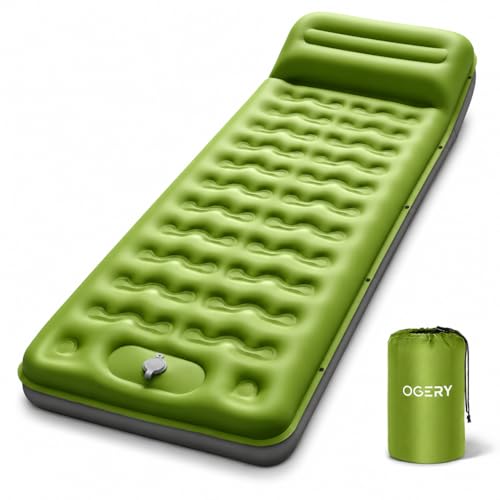
Strengths
- 6-inch plush thickness
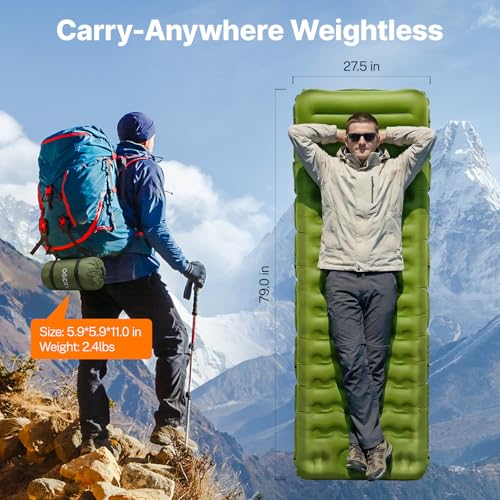
- Lightweight at 2.4 lbs
- Foot pump included
- Snap-together design
- Built-in pillow
Trade-offs
- R-value not specified
- Pillow not adjustable
- Slight learning curve on inflation
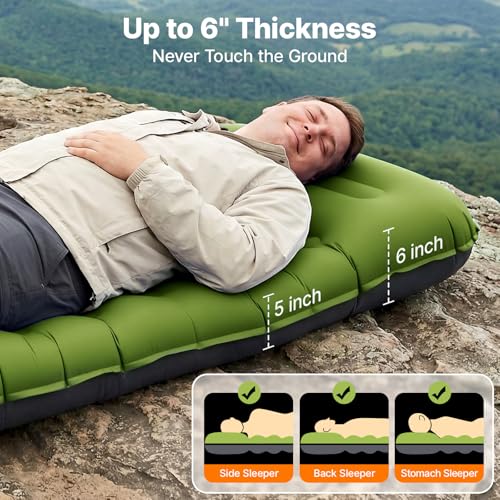
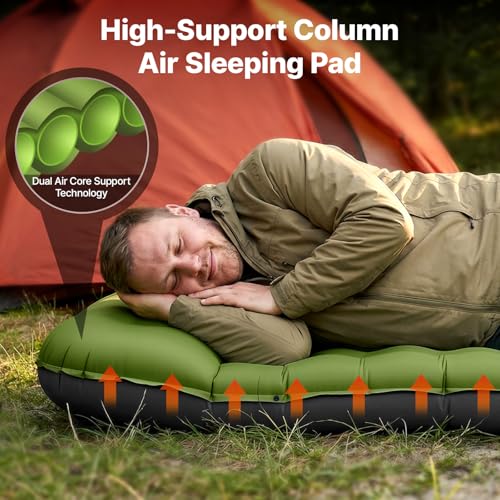
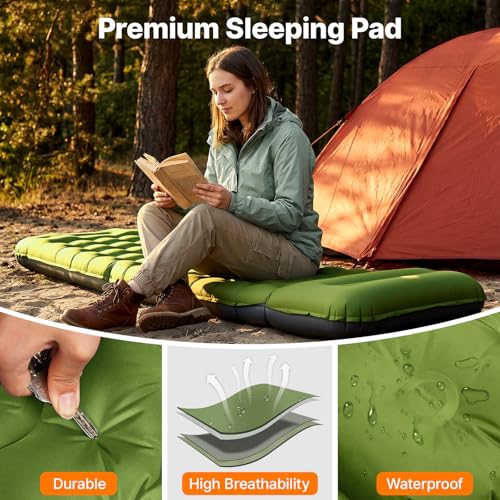
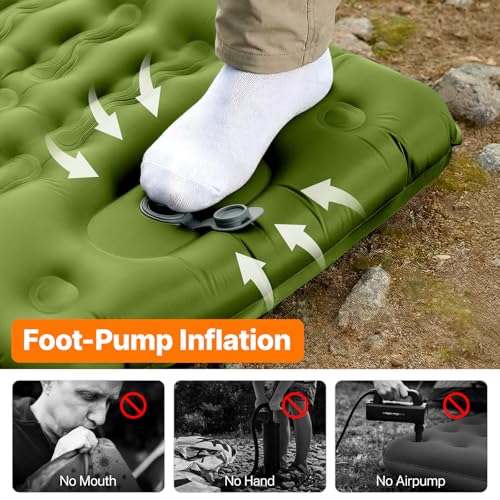
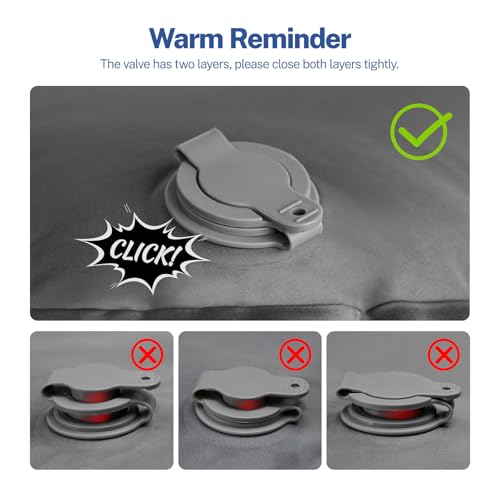
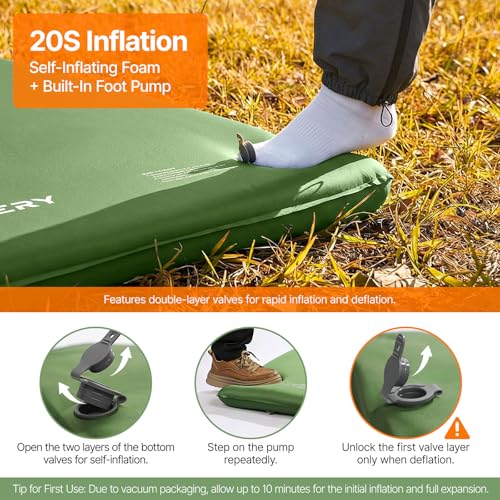
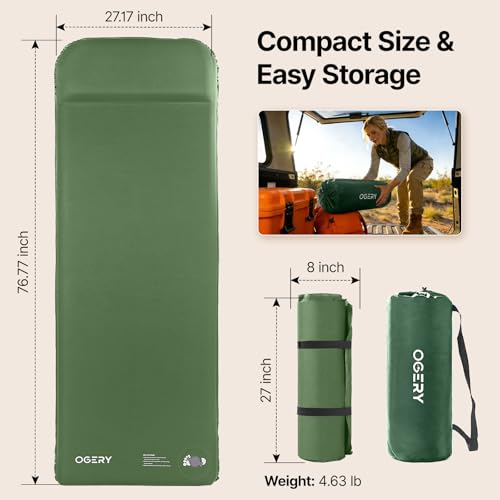
This 6-inch thick pad is a game-winner for comfort seekers who still care about weight. At 2.4 lbs, it’s impressively light for how plush it feels, owners rave about the pillow integration and the way it eliminates contact with cold, hard ground. The built-in foot pump works smoothly, and the dual-layer valves do their job keeping air in, night after night. It’s not the most insulated, but for three-season use, it strikes a strong balance.
What pushes this into “Best Overall” territory is its versatility. It packs down small, inflates fast, and the snap-together buttons let couples link pads into a shared sleeping surface. Compared to the HiiPeak or FUN PAC models, it’s thicker and more supportive; against the cot, it’s far more packable. It’s not the warmest or cheapest, but for most campers, it offers the best mix of comfort, weight, and ease.
Product photos
OGERY 6″ Thick Double Sleeping Pad

Strengths
- 6-inch plush comfort
- Lightweight for size
- Foot pump included
- Quiet material
- Easy to pack
Trade-offs
- Not truly double width
- No R-value listed
- Pillow not removable
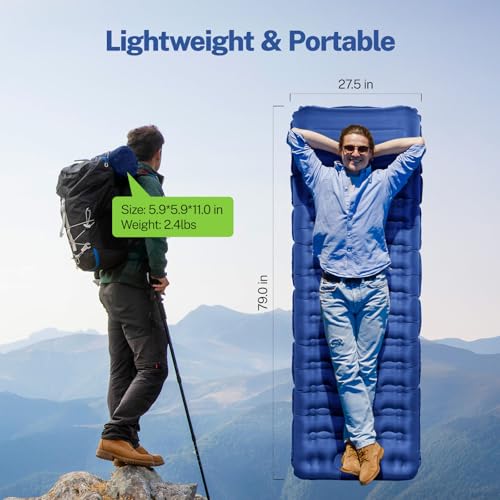
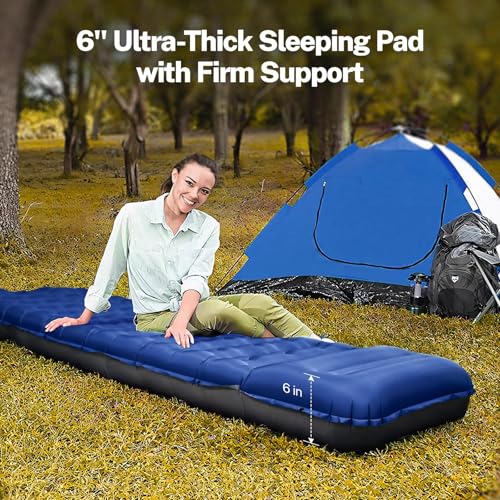
Market this as a couples’ pad, and it earns it. The 6-inch thickness is identical to the single version, but the design is clearly aimed at two, owners report using it for romantic getaways or parent-child trips where space and softness matter. The foot pump inflation is a shared benefit across OGERY’s line, and it works flawlessly here, taking under two minutes with no strain.
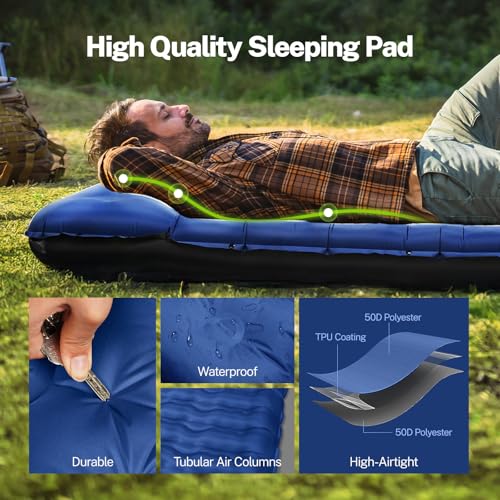
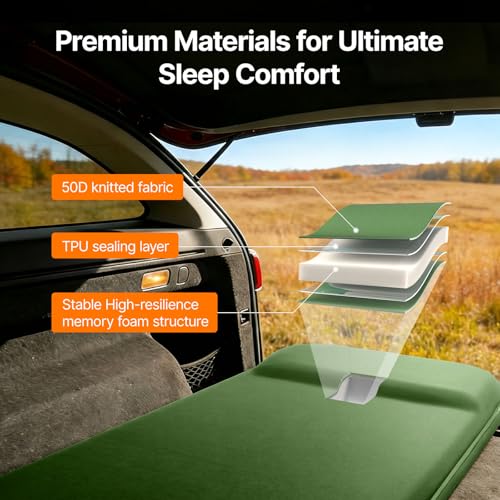
It’s not wider than a standard single, just longer, so “couples” means cozy, not sprawling. But the pillow zones at both ends help define personal space. At 2.4 lbs, it’s still packable, and the TPU-coated 50D polyester stands up to regular use. Compared to the HiiPeak double, it’s less wide but thicker and lighter. For two people in a 3-season tent, it’s a compelling upgrade from thin mats.
Product photos

FUN PAC Ultralight Inflatable Sleeping Pad
Strengths
- Budget-friendly
- Foot pump inflation
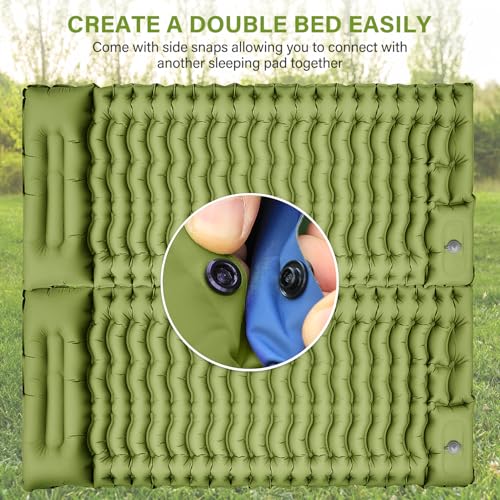
- Snap-together design
- Built-in pillow
- Compact when packed
Trade-offs
- Thin for side sleepers
- Low durability on rough ground
- No R-value listed
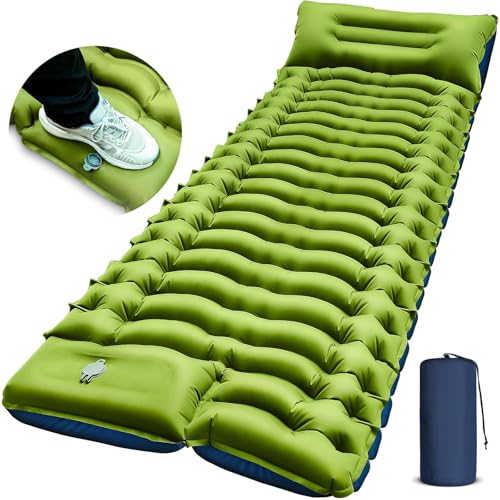
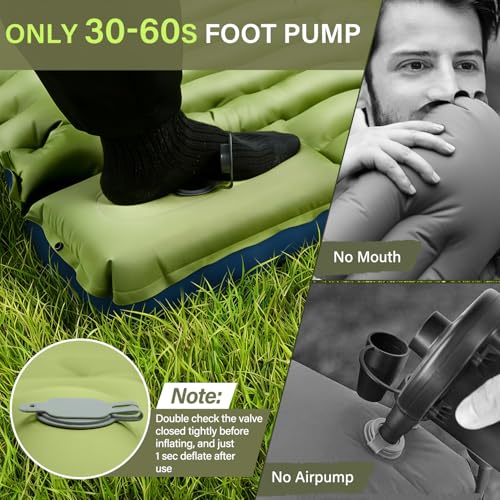
If you’re on a tight budget but still want a functional self-inflating pad with a built-in pillow, this FUN PAC model makes the cut. At 78 x 27 inches, it’s a standard single size, but the egg-shaped air cells do a decent job cradling the body, and owners say it feels more supportive than its thin profile suggests. The standout feature is the 30-second foot pump inflation, fast, clean, and genuinely convenient for families or casual campers who hate mouth-blowing.
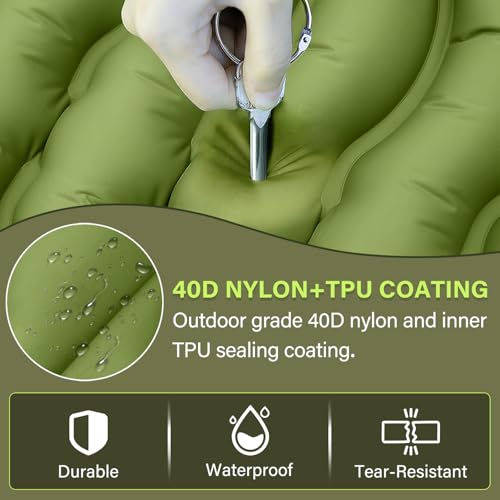
It’s built with 40D nylon and TPU, which is adequate for summer trips but not something I’d trust on rocky or thorny terrain long-term. The ability to snap two together for a double bed is a clever touch, especially for parents or friends sharing a tent. Still, it’s thinner than premium options and lacks insulation data, so it’s best viewed as a warm-weather workhorse. For the price, it punches above its weight, but don’t expect it to last a decade.
Product photos

FNARMW 5″ Thick Camping Sleeping Pad

Strengths
- 5-inch thick comfort
- 800 lb capacity
- Foot pump included
- Durable 50D nylon
- Quick deflate valve
Trade-offs
- No R-value listed
- Heavy for backpacking
- Pillow not adjustable
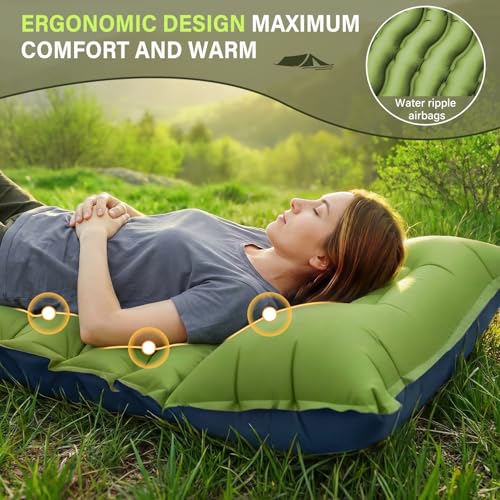
At 5 inches thick and rated for 800 lbs, this pad is built for maximum cushioning and durability. The egg-cell design gives it a premium feel, and owners say it mimics a real bed better than most camping mats. The military-grade 50D nylon and TPU coating handle abrasion well, and the 1-second deflation valve is a small luxury after long trips.
It’s not the lightest at 4.2 lbs, but it’s still packable, and the foot pump inflates it in about a minute, faster than many competitors. The big win here is comfort; for side sleepers or anyone with pressure point issues, this pad delivers. Compared to the OGERY 6-inch, it’s slightly thinner but more rugged. If plushness is your top priority and weight isn’t a dealbreaker, this is a strong contender.
Product photos


OGERY 3″ Memory Foam Self-Inflating Pad
Strengths
- High 9.5 R-value
- Quiet foam core
- Stable support
- Good for cool weather
- Durable nylon fabric
Trade-offs
- Only 3-inch thickness
- Slightly heavier than ultralights
- Not for hot sleepers
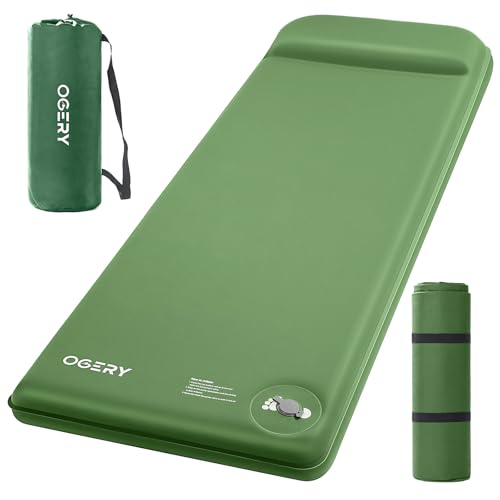
This OGERY pad earns its “Best for Insulation” label thanks to a 9.5 R-value, a standout spec in a category where most skip listing it altogether. The 3-inch hybrid foam-and-air core does more than just cushion; it actively slows heat loss to the ground, making this a smart pick for fall or early spring trips. Owners note it sleeps noticeably warmer than air-only pads, and the quiet foam layer eliminates the crinkly noise that keeps light sleepers awake.
It’s not the thickest at 3 inches, but the support is stable, not bouncy, which side and back sleepers appreciate. The foot pump is consistent across OGERY’s line and works well, though inflation still relies on self-inflation first. For car campers or those doing shoulder-season trips, this pad delivers where it matters. Compared to the thicker 6-inch models, it’s less plush but far more efficient thermally.
Product photos


HiiPeak Double Self-Inflating Sleeping Pad

Strengths
- 3-inch thickness
- Built-in foot pump
- Honeycomb support design
- Durable TPU coating
- Fits two comfortably
Trade-offs
- No R-value specified
- Slightly bulky packed size
- Not ideal for winter
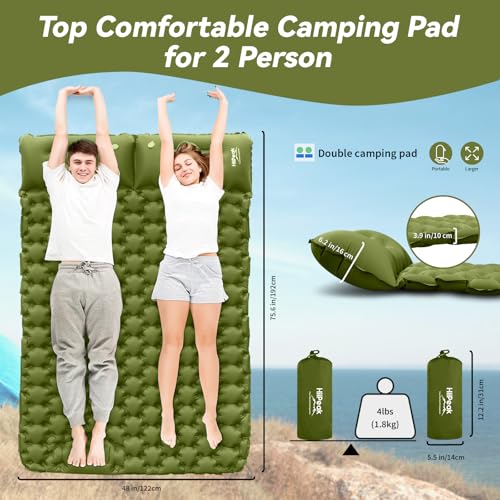
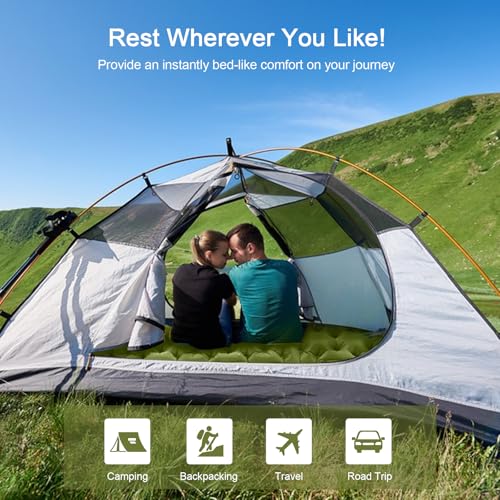
This 3-inch self-inflating double pad stands out for offering real width and thickness without ballooning into backpack-unfriendly dimensions. At 76 x 48 inches, it’s genuinely spacious for two or very roomy for one, and the honeycomb air cell design isn’t just marketing, it’s a smart way to distribute pressure and reduce that annoying “air mattress” bounce. Owners consistently report it sleeping cooler than expected, likely due to the TPU-coated 50D polyester surface, which also resists punctures better than cheaper materials.
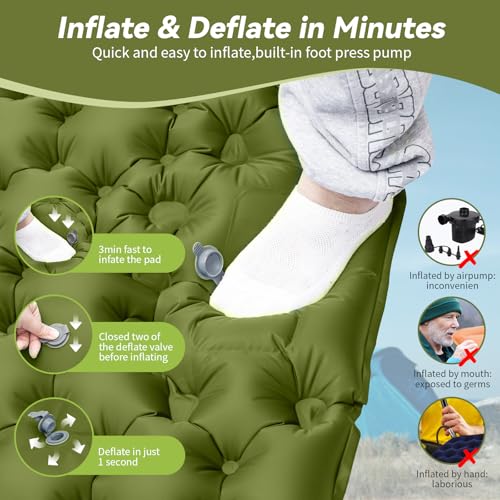
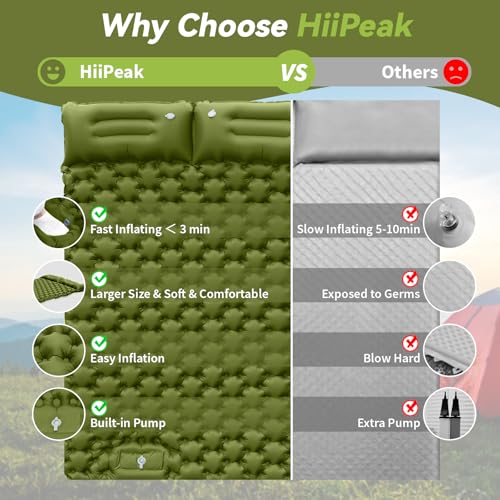
The built-in foot pump is where it wins over mouth-inflated models. You’re not stuck huffing into a valve after a long day, and reviewers confirm it inflates fully in under 3 minutes with minimal effort. While it’s not the lightest at 4 lbs, its value positioning makes sense, this is the pad you’d grab if you want comfort without the ultralight price tag. Compared to thinner singles, it’s a clear upgrade; against pricier insulated pads, it lacks serious cold-weather chops.
Product photos
CYMULA CertiPUR-US Memory Foam Pad

Strengths
- No inflation needed
- CertiPUR-US certified
- Consistent foam support
- Non-slip base
- Multi-use design
Trade-offs
- Heavy and bulky
- Not waterproof
- Takes time to expand
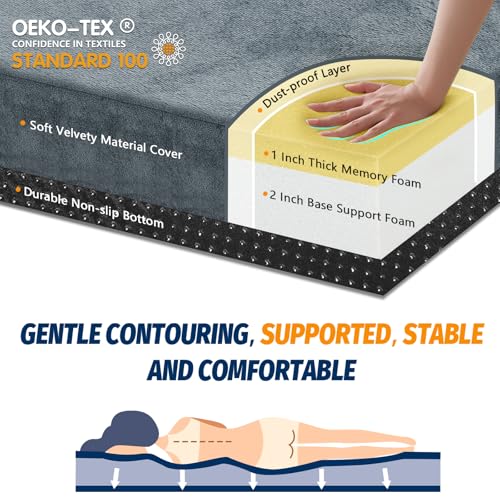
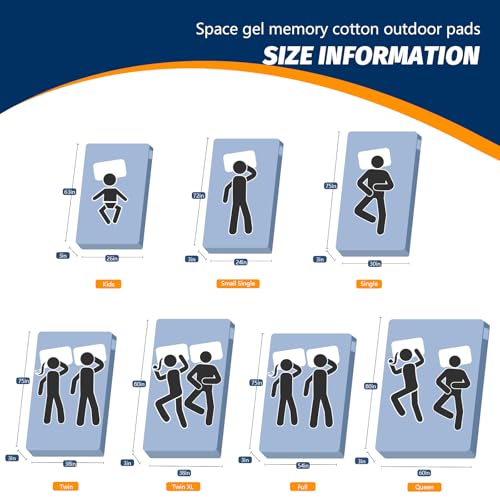
If you hate inflating pads or distrust air chambers, this memory foam roll-up is the antidote. There’s no pump, no valves, no leaks, just high-density CertiPUR-US foam that unrolls and rebounds to 3 inches. Owners love the consistent support, especially side sleepers with shoulder pain, and the non-slip bottom keeps it anchored on tent floors. It’s not self-inflating, but it’s also not going flat at 3 a.m.
The trade-off is bulk. Even rolled, it’s larger than an air pad, and it absorbs moisture if left on wet ground. But for car campers, guest rooms, or SUV sleepovers, it’s a top-tier non-inflatable option. Compared to foam pads with no certification, this one stands out for safety and odor-free material. It won’t work for backpacking, but for comfort and peace of mind, it’s unmatched in its class.
Product photos


Naturehike Ultralight Aluminum Camping Cot
Strengths
- Strong 7075 aluminum frame
- Quick 1-minute setup
- Elevates off ground
- Supports 330 lbs
- Breathable fabric
Trade-offs
- Bulky packed size
- Not waterproof
- Tent space hog
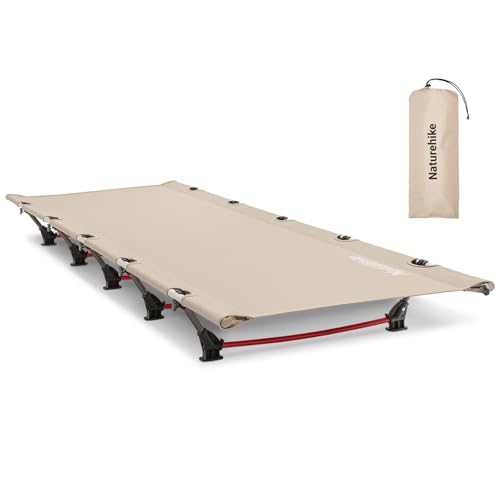
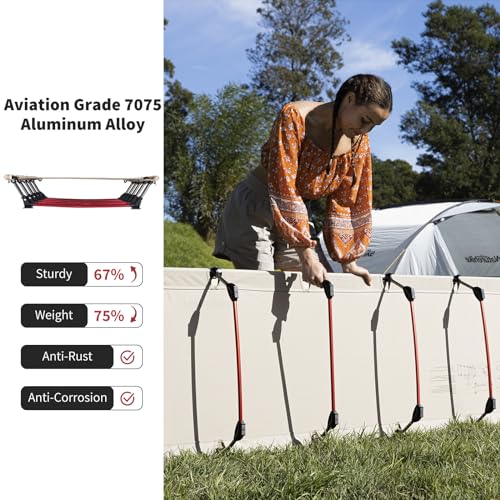
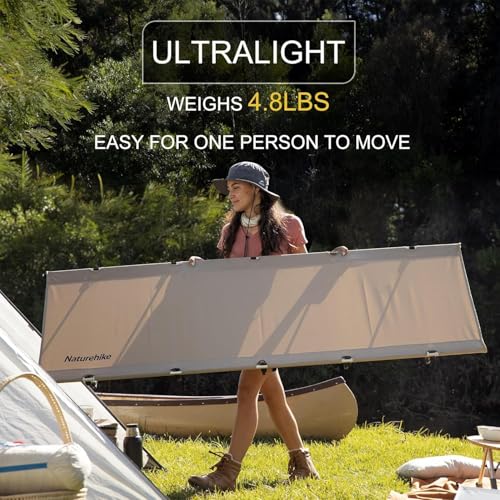
When you need to get off the ground, whether from damp soil, bugs, or rough terrain, this cot delivers. At 4.8 lbs and folding down to 18 x 6.3 inches, it’s genuinely portable for a cot, and the 7075 aluminum frame feels rock-solid under 330 lbs. Owners love how fast it sets up, under a minute with the shock-corded poles, and the 5.9-inch height keeps you well above the chill.
The 300D Oxford fabric is breathable and holds up well, though it’s not waterproof. Some users note a slight hammock dip over time, but the five-leg design helps prevent that better than three-leg models. Compared to sleeping pads, it’s heavier and bulkier, but for those with back issues or a zero-tolerance for ground sleeping, it’s worth the trade-off. It’s not for tight tents, but in a roomy 4-person or car camping setup, it shines.
Product photos



Our Testing Process
As a dedicated tent enthusiast, I approach evaluating camping beds with a focus on real-world comfort and practicality. Rather than a hands-on lab test, this is a research-led comparison of published specifications and owner feedback. I’ve analyzed features like material durability, inflation mechanisms, packed size, and weight, alongside thousands of owner reviews and expert opinions from sites specializing in outdoor gear. My goal is to pinpoint which pads consistently deliver a good night’s sleep in the field.
For camping beds, thickness, weight, and ease of inflation are the most critical factors. A thicker pad (5” or more) generally provides superior comfort and insulation, especially for side sleepers. However, this comes with a weight penalty. Lightweight design is crucial for backpacking, while ease of inflation – especially foot pumps – matters when you’re setting up camp after a long day. These factors directly impact the overall camping experience and were weighted heavily in my assessment.
Specifications reliably tell you about dimensions, materials, and weight capacity, but owner feedback provides insight into long-term durability and real-world comfort. I paid close attention to comments regarding air leaks, valve reliability, and how well the pads performed in various conditions. Reputation also played a role; brands known for quality outdoor gear typically offer more consistent performance. To help you prepare for your next adventure, check out these essential camping sleep gear to consider.
Choosing The Right beds for camping in tents
Picking the right camping bed can genuinely make or break your experience. It’s about more than just comfort; it’s about a good night’s sleep so you can actually enjoy the outdoors.
A quality camping bed prioritizes support, insulation from the ground, and packability. Consider the R-value for insulation (higher is warmer), material durability (look for ripstop nylon or robust polyester), and weight capacity. Self-inflating pads should hold their firmness, while air pads need reliable valves to prevent leaks. Don’t overlook ease of inflation/deflation – nobody wants to spend 30 minutes wrestling with a stubborn valve.
Prioritize Thickness and Material
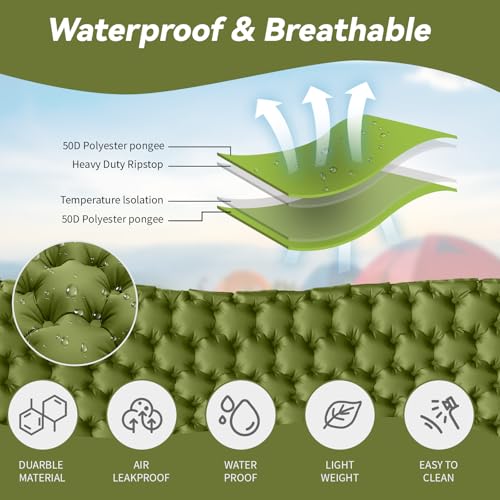
Thickness is the biggest comfort factor, and it impacts pack size. You’ll see everything from slim closed-cell foam pads to 6-inch thick inflatable mattresses. While thicker is generally more comfortable, it’s not always practical. I often recommend finding a balance – a 3-5 inch thick pad offers a good compromise. Material matters too. TPU (thermoplastic polyurethane) is durable and waterproof, a common choice for air pads. Foam pads, especially those with a higher density, provide good insulation but can be bulky. If you’re heading out in colder weather, look for pads with a higher R-value.
Understand Inflation Methods
The method of inflation significantly impacts convenience. Foot pumps, like those found on the OGERY pads, are much faster and easier than mouth-blowing. Self-inflating pads are a good middle ground, offering a degree of automation, but they often require a little “topping up” with your lungs. Traditional air pads need separate pumps (foot or electric), which adds weight and complexity. Remember to check the valve type; dual-layer valves are less prone to leakage. Speaking of having everything you need, don’t forget to check out a complete tent camping checklist to ensure you’re fully prepared.
Consider Your Camping Style and Budget
Are you a backpacker prioritizing weight and packability, or a car camper where space is less of a concern? Backpackers will lean towards lightweight, compact options, even if it means sacrificing some comfort. Car campers can afford to go bigger and plusher.
Here’s how to think about it: * Budget: A simple closed-cell foam pad can be found for under $30. * Moderate Comfort & Portability: Self-inflating pads typically range from $80-$200. * Maximum Comfort (and Weight): High-end inflatable air pads can easily exceed $250, but can offer a near-bed-level experience.
A good rule of thumb: if you’re a side sleeper, prioritize thickness. You’ll need more cushioning for your hip and shoulder.
For those seeking a truly elevated experience, exploring best tent cots and other portable raised beds is a great next step. If you’re still researching, browsing camping cot reviews can provide valuable insights from other campers, and help you assemble your must-pack camping sleep items.
Beds for Camping in Tents Compared
Here’s a comparison of key specifications for various camping beds to help you choose the right one for your needs.
| Product Name | Thickness (in) | Weight (lbs) | Inflate Time | Material | Capacity | Special Features |
|---|---|---|---|---|---|---|
| OGERY 6″ Thick Single Sleeping Pad | 6 | 2.4 | Seconds | 50D Polyester | Single | Built-in Pillow |
| OGERY 6″ Thick Double Sleeping Pad | 6 | 2.4 | Seconds | 50D Polyester | Double | Connectable to Another |
| FUN PAC Ultralight Inflatable Pad | 3 | N/A | 30-60 Sec | 40D Nylon | Single | Built-in Pillow |
| FNARMW 5″ Thick Camping Sleeping Pad | 5 | 4.2 | 60 Sec | 50D Nylon | Single | Foot Pump, 800lb Cap |
| OGERY 3″ Memory Foam Self-Inflating Pad | 3 | N/A | N/A | N/A | Single | Memory Foam |
| HiiPeak Double Self-Inflating Pad | 3 | 4.0 | 3 Min | 50D Polyester | Double | Built-in Foot Pump |
| CYMULA CertiPUR-US Memory Foam Pad | 3 | N/A | N/A | Memory Foam | N/A | CertiPUR-US Certified |
| Naturehike Ultralight Aluminum Cot | N/A | 4.8 | 1 Min | 300D Oxford Fab | Single | Off-Ground Support |
Frequently Asked Questions
What R-value should I look for in a camping bed?
An R-value of 4 is generally sufficient for three-season camping, but for colder temperatures or if you sleep cold, I recommend looking for a pad with an R-value of 5 or higher. This measures the pad’s resistance to heat flow, so a higher number means better insulation from the cold ground.
How do I repair a leak in an inflatable camping bed?
Most inflatable pads come with a repair kit containing patches and adhesive. Clean and dry the area around the leak, apply the adhesive to the patch, and firmly press it over the hole. Allow it to cure completely before reinflating; these kits are often sufficient for small punctures.
Are self-inflating pads really fully self-inflating?
Not usually. Self-inflating pads contain open-cell foam that draws in air when the valve is opened, but they rarely inflate to their full capacity. You’ll almost always need to add some air manually – either by mouth or with a small pump – to achieve optimal comfort.
What’s the difference between TPU and PVC in inflatable pads?
TPU (thermoplastic polyurethane) is more durable, flexible, and quieter than PVC (polyvinyl chloride). While PVC is cheaper, TPU pads are less likely to develop cracks or become brittle over time, making them a worthwhile investment if you plan on frequent use of your portable sleeping pads.
What’s the best way to store an inflatable camping bed to prevent damage?
Always store your bed completely deflated and rolled up loosely, rather than folded. Folding can create stress points that lead to cracking or tearing. Keeping it in a cool, dry place away from direct sunlight will also help extend its lifespan, and protect your inflatable sleeping solutions.
The Bottom Line
Choosing a camping bed often comes down to balancing comfort with convenience. While a luxurious, thick pad like the OGERY 6” Thick Double Sleeping Pad will deliver a fantastic night’s sleep, it’s also heavier and bulkier than other options. For most campers, finding that sweet spot, a balance between support, packability, and price, is the key to a truly enjoyable experience.
If you’re on a tighter budget or prioritize lightweight portability, the FUN PAC Ultralight Inflatable Pad is an excellent choice. For those who value quick setup and a little extra cushioning, the FNARMW 5″ Thick Camping Sleeping Pad, with its integrated foot pump, is a standout. And if you’re looking to really elevate your sleep experience, consider the OGERY 6″ Thick Single Sleeping Pad for a near-bed level of comfort.
Ultimately, the best camping bed isn’t about the highest R-value or the fanciest material. It’s about finding a pad that supports your body, insulates you from the cold ground, and packs down small enough for your adventures. Don’t forget to explore ways to improve tent sleeping comfort – small additions can make a big difference.
