
8 Best Camping Tents for Family 2026
This post contains affiliate links. As an Amazon Associate, we earn from qualifying purchases.
The CORE 12 Person Family Cabin Tent stands out as the best overall for large families needing serious space and solid weather resistance, while the CORE 9 Person Instant Cabin Tent is our top pick for hassle-free setup and reliability. For budget-conscious campers, the Happy Travel 6 Person Cabin Tent offers solid performance without the high price tag.
Picking a family tent isn’t just about fitting bodies inside. It’s about surviving a surprise downpour, giving everyone room to breathe, and not spending an hour wrestling poles while the kids get restless. Too many families learn the hard way that a tent’s advertised capacity rarely matches reality.
This guide cuts through the marketing hype. I looked at real dimensions, owner feedback on durability and weather performance, and setup ease, because a tent that works in theory but fails at the campsite isn’t worth much. These picks balance space, protection, and practicality based on what actually matters when you’re camping with family.
Top 8 Camping Tents For Family in the Market
The Best Camping Tents For Family, Reviewed
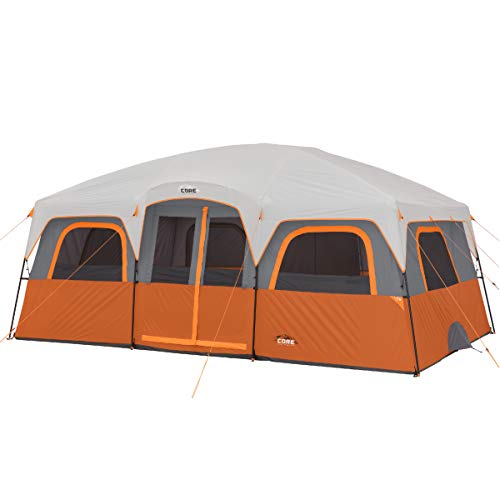
CORE 12 Person Family Cabin Tent
Strengths
- Spacious cabin layout
- Effective weather protection
- Functional room divider
Trade-offs
- Heavy and bulky
- Not backpackable
- Longer setup than instant tents
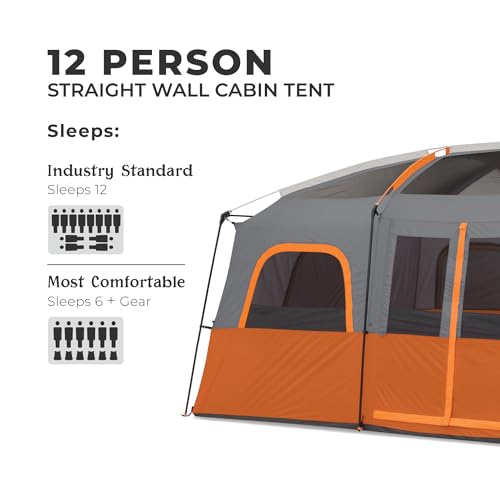
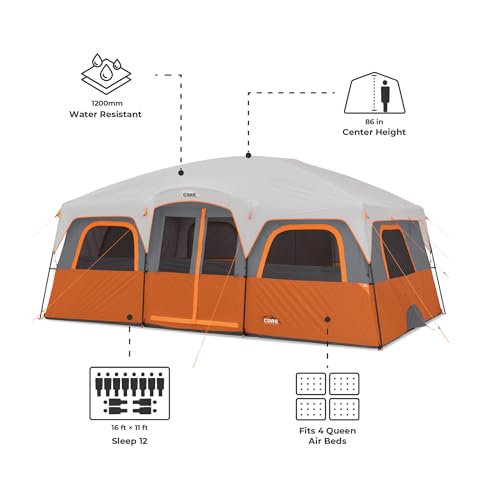
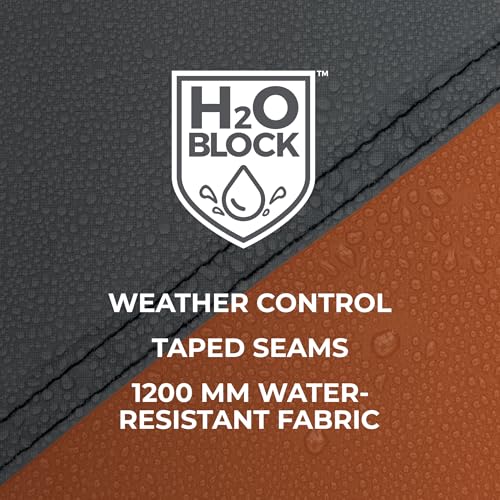
This CORE 12 Person Tent is a serious contender for families who want space, stability, and smart design without stepping into the luxury glamping tier. On paper, the nearly straight walls and 16×11 footprint deliver on the cabin tent promise, actual usable floor space is rare in this class, and owners consistently report being able to fit four queen air beds with room to move. The H20 Block Technology with 1200mm rating and fully taped seams holds up well in sustained rain, and the inclusion of steel stakes and guylines means it won’t fold under moderate wind.
The room divider is a standout feature, not just a flimsy curtain, but a functional partition that creates two private zones, which is huge for families with teens or couples sharing. Reviewers note it cuts down on noise and visual clutter. Where it stumbles slightly is weight and pack size, it’s strictly car camping gear. But for what it is, this is the kind of tent that makes group trips feel manageable.
Product photos

FanttikOutdoor Zeta C12 Pro Max Tent

Strengths
- 90-second setup
- High headroom
- Excellent ventilation
Trade-offs
- Heavy for portability
- Rainfly attachment finicky
- Expensive for cabin class
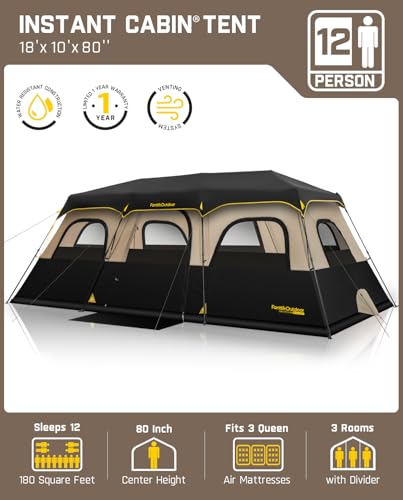
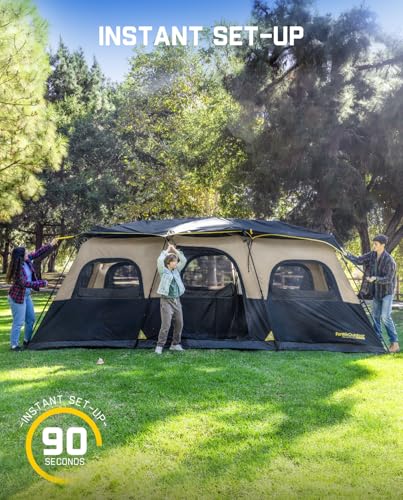
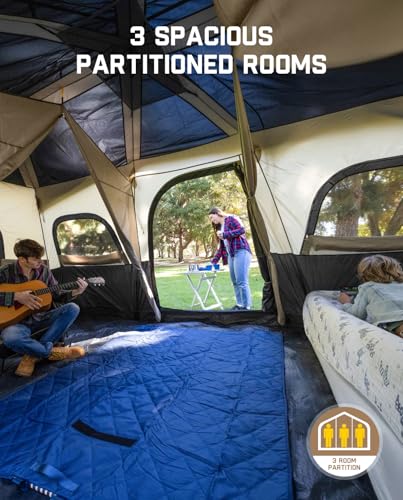
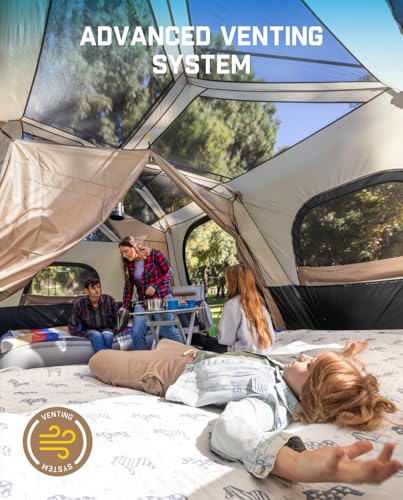
If you hate tent setup, this is the one that’ll change your mind. The pre-attached poles let two people pop it up in 90 seconds, no fumbling, no instructions. The 80-inch center height means even tall campers can walk around freely, and the triple-room divider adds real privacy. Owners love the ceiling mesh and four-side windows for stargazing and airflow, and the SBS zippers feel premium compared to budget models.
It’s built tough with a carbon frame and protective sleeves, and the rainfly with Velcro strips stays put in wind. The power cord port is a small but meaningful touch for modern campers using fans or lights. It’s not the lightest, but it’s designed for car campers who value speed and comfort. Among instant tents, this is the most refined, worth the premium if you camp often and hate setup.
Product photos

CAMPROS CP 12-Person 3-Room Tent

Strengths
- True 12-person capacity
- Removable room dividers
- Quick color-coded setup
Trade-offs
- Lower ceiling height
- Basic rainfly design
- Average stake quality
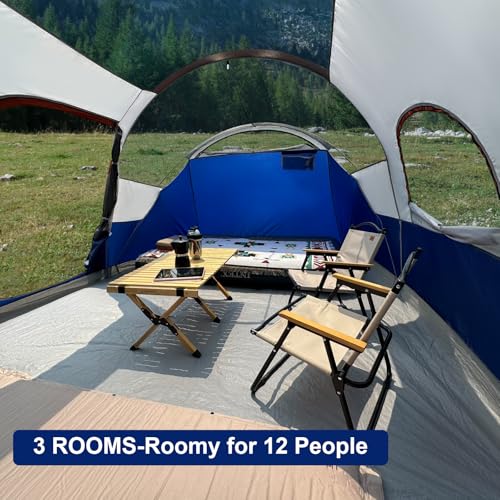
When you’re packing a full extended family or a group of friends, the CAMPROS 12-person tent delivers usable space without overcomplicating things. At 180 sq ft, it’s one of the roomiest in this lineup, and the 3-room divider system is more than a gimmick, owners use it to separate sleeping zones, store gear, or even project movies at night. The double-layer construction and PU1000mm coating keep things dry in rain, though it’s not quite as robust as CORE’s H20 Block in prolonged storms.
Setup is genuinely fast thanks to color-coded poles, and the 72-inch center height is workable for most. Ventilation is good with six mesh windows and a mesh roof, though not quite as strong as the UNP model. It’s a no-frills workhorse, durable, functional, and priced fairly. If you need a big tent that won’t break the bank and actually sleeps 8–10 with gear, this is the one.
Product photos


CORE 9 Person Instant Cabin Tent
Strengths
- True 2-minute setup
- Good weather protection
- Value-packed features
Trade-offs
- Smaller floor plan
- Only fits 2 queen beds
- Not for large groups
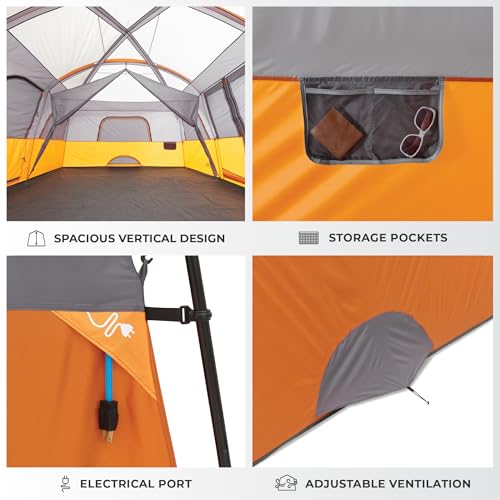
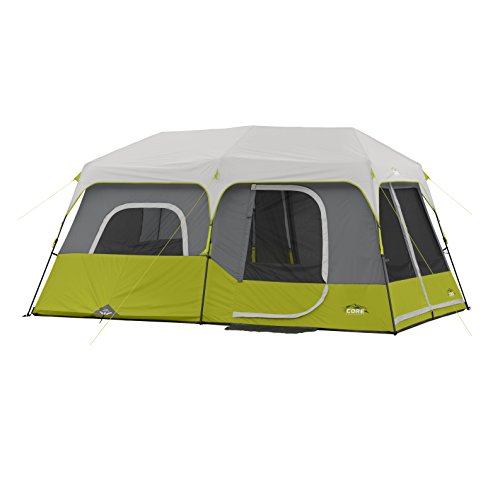
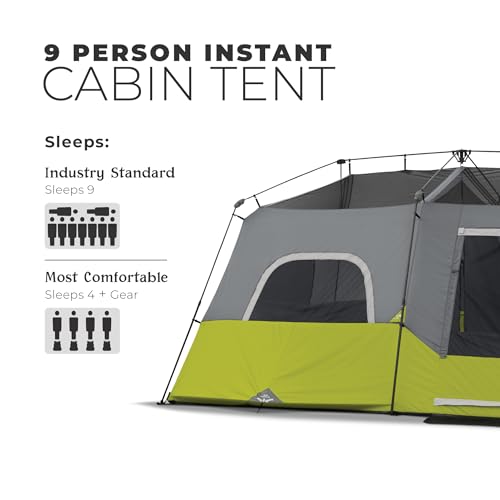
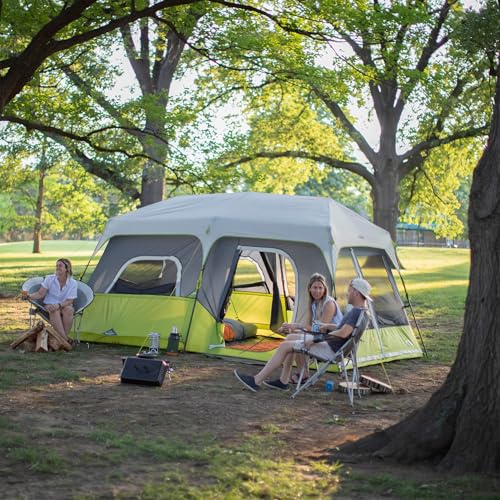
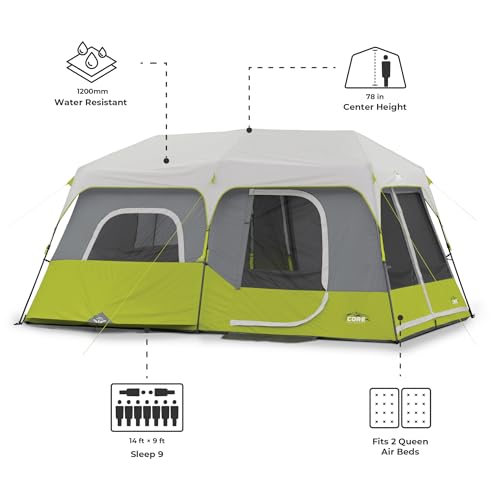
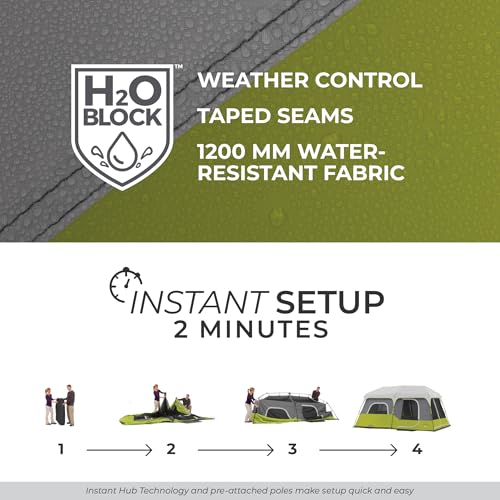
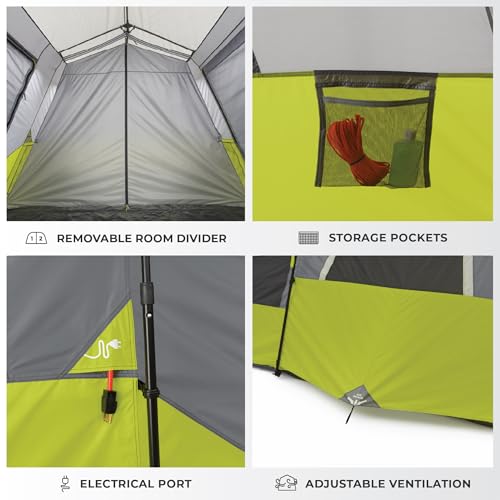
CORE hits the sweet spot of value and performance with this 9-person model. The 2-minute pop-up design works as advertised, pre-attached poles snap into place with minimal effort, and the 14×9 footprint fits two queen air beds with room to move. The H20 Block tech with 1200mm rating and taped seams keeps the interior dry, and the adjustable ventilation, ground vents and mesh ceiling, does a solid job managing condensation.
It’s not as spacious as the 12-person models, but for 4–6 people with gear, it’s more than adequate. Owners consistently call it “the best value” in the instant tent category, durable enough for regular use, light enough to move, and priced to leave room in the budget for other gear. The storage pockets are a small but appreciated touch. If you want reliability without overspending, this is the smarter buy over pricier instant models.
Product photos
UNP 8 Person Tunnel Tent with Porch

Strengths
- Exceptional ventilation
- Tall interior height
- Color-coded setup
Trade-offs
- Mesh areas reduce privacy
- Heavy at 30 lbs
- Rainfly needed in wet weather
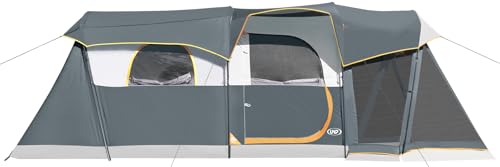
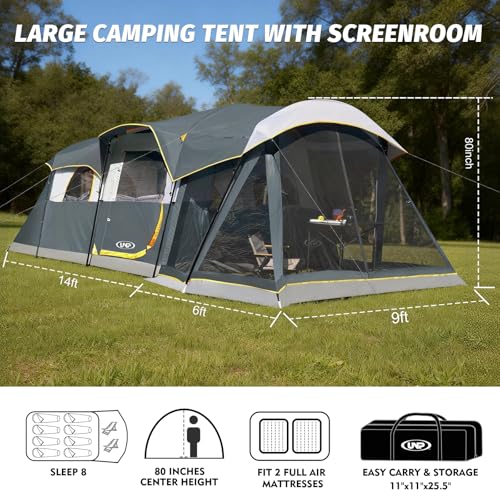
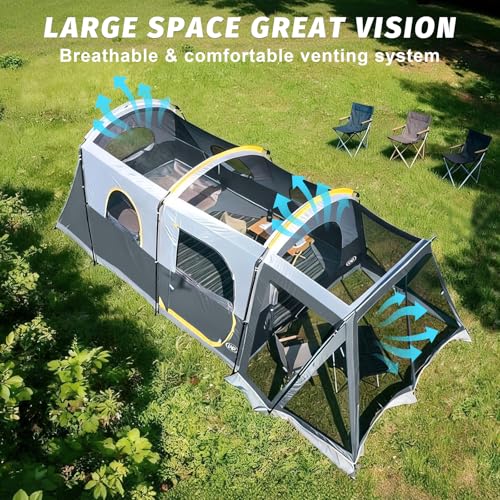
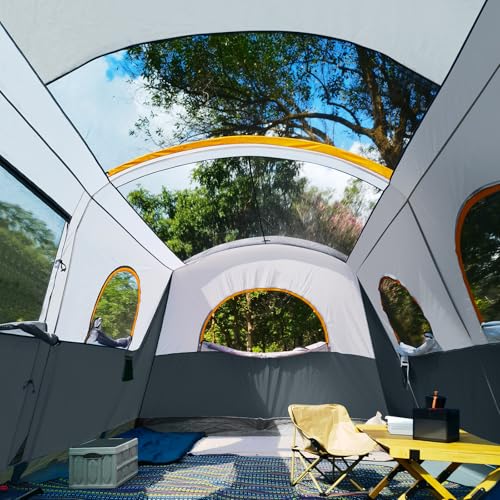
If you run hot or camp in humid climates, this UNP tunnel tent should be on your shortlist. The 4 oversized mesh windows and mesh ceiling create a cross-breeze that cuts condensation and keeps the interior fresh, owners consistently praise how well it breathes, even in sticky summer conditions. The tunnel design with 80-inch height lets most adults walk upright, and the 20×9 footprint fits two full air mattresses with space to spare.
The 1500mm waterproof coating and steel poles offer solid storm resistance, though it’s not overbuilt for extreme weather. Setup is color-coded and doable in 15 minutes by two people. The grey color helps with heat reflection, but the large mesh areas mean you’ll need the rainfly in drizzle. It’s not the most rugged option for high winds, but for fair-weather family trips where airflow matters, this is my top pick for comfort.
Product photos
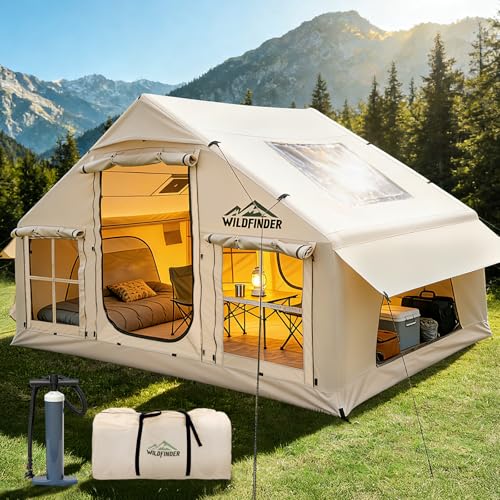
Inflatable Tent with Skylight & Stove Jack
Strengths
- Blazing-fast setup
- All-season durability
- Stove jack compatible
Trade-offs
- Requires pump
- Higher price point
- Not packable for hiking
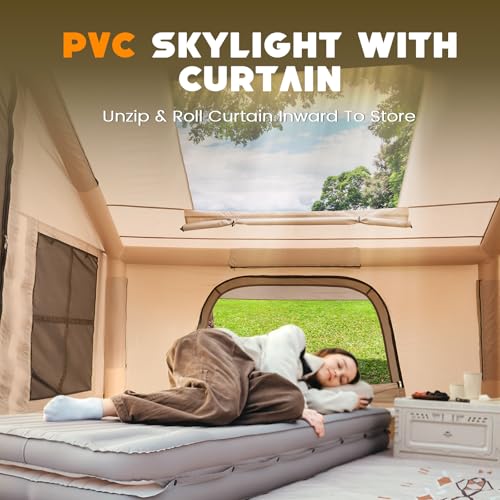
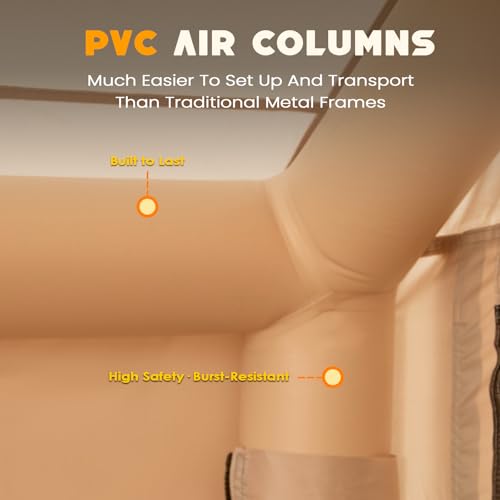
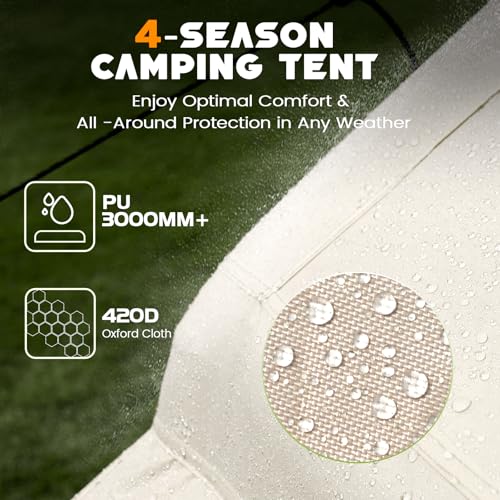
This inflatable tent changes the game for all-season comfort and glamping appeal. The TPU air beams mean setup in under 5 minutes, no poles, no fuss, and the 420D Oxford fabric with PU3000mm rating laughs off heavy rain and snow load. But the real magic is the panoramic skylight. Owners love it for stargazing and morning light, and the optional privacy curtain keeps it from feeling exposed. The stove jack is a rare, thoughtful inclusion, this is one of the few inflatable models designed for true winter use.
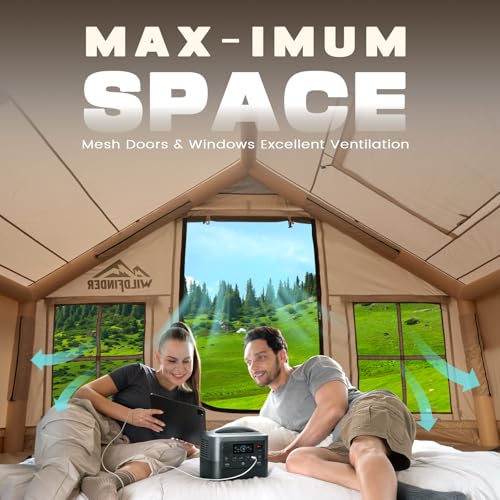
Ventilation is solid thanks to dual doors and mesh panels, though condensation can build up in cold, still air if you’re running a stove. It’s not cheap, and the pump is required (not included in all bundles), but for off-grid stays, festivals, or cold-weather camping, it’s hard to beat. The 68 sq ft layout fits 4 adults sleeping comfortably, or 6 lounging. This isn’t a backpacker’s tent, it’s for those who want luxury that still performs.
Product photos
Happy Travel 6 Person Cabin Tent
Strengths
- Low price point
- Good ventilation
- Easy 3-minute setup
Trade-offs
- Not storm-rated
- Poles prone to bending
- Limited headroom for tall users
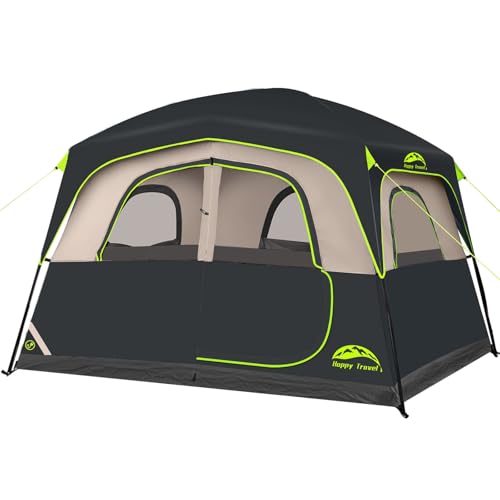
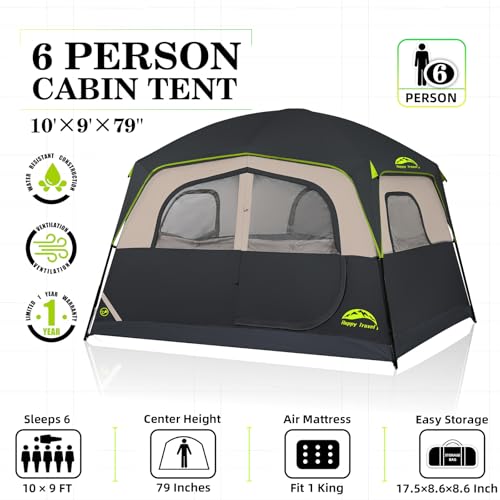
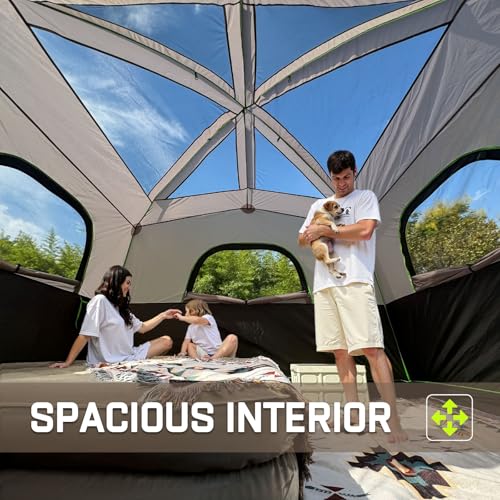
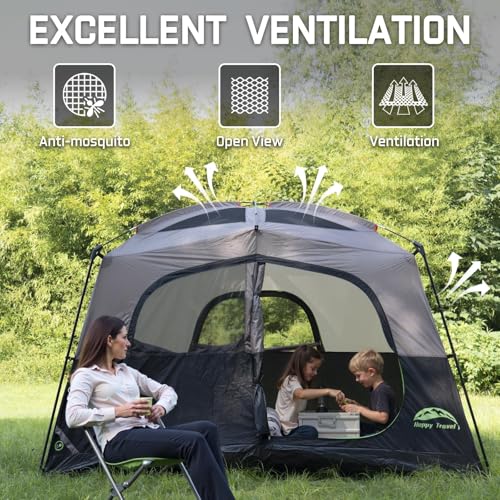
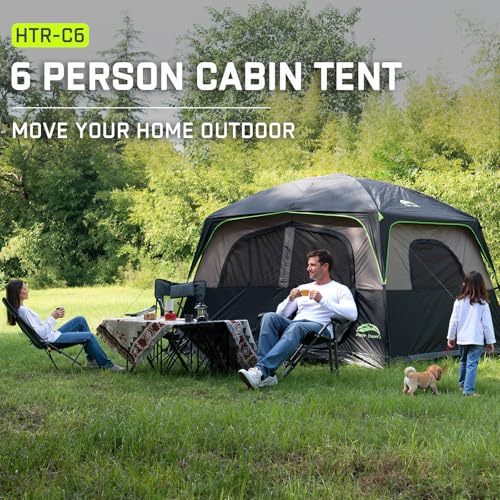
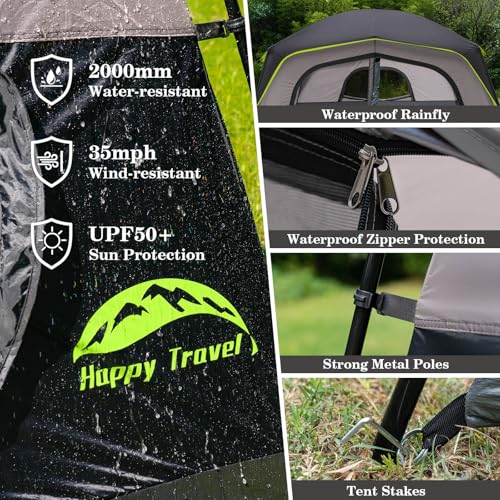
This Happy Travel tent punches above its price tag. For budget-conscious families, the 10×9 ft floor and 79-inch height offer surprising room, enough for a king air mattress plus gear, or six campers in sleeping bags. The 2000mm PU coating is stronger than most in this tier, and the thickened PE floor adds real water resistance. The 5 large mesh windows and top ceiling mesh give excellent airflow, and the stargazing option with rainfly off is a fun bonus.
Setup takes about 3 minutes with two people, and the 16.5 lb weight makes it easy to carry from the car. The metal poles are decent for the price, though not as sturdy as steel in high winds. Owners note it’s not for storms, but for fair-weather weekends and kid-focused trips, it’s a fantastic value. The power port and double-end zippers are thoughtful upgrades you don’t always get at this price.
Product photos
Purebox 4 Person Portable Camping Tent
Strengths
- Lightweight and portable
- Good ventilation
- Spacious floor plan
Trade-offs
- Low ceiling height
- Fiberglass poles less durable
- Not ideal for large families
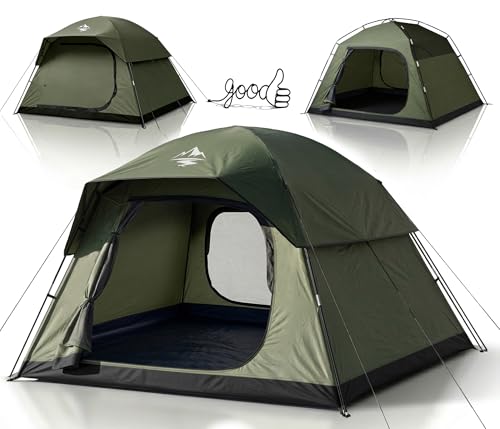
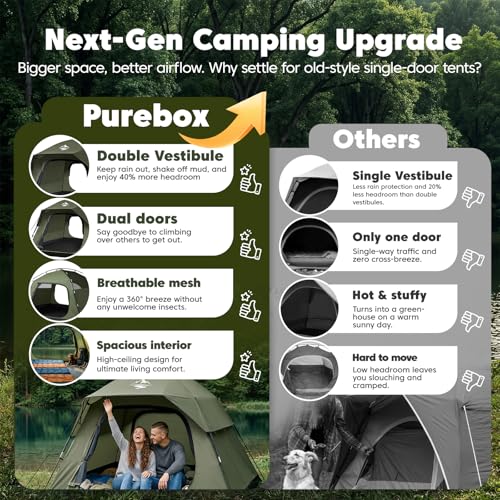
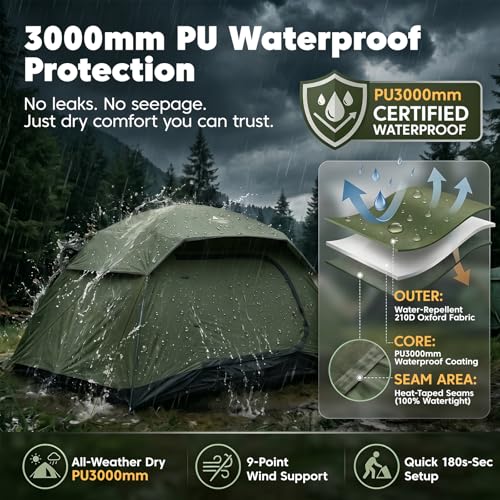
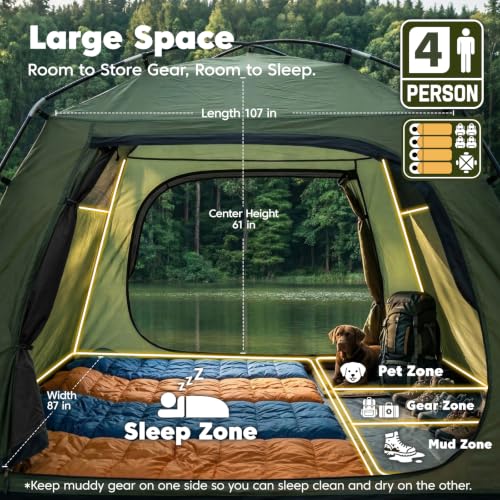
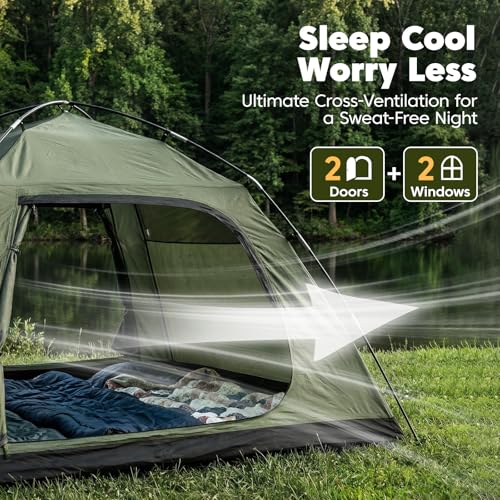
I’d pick this Purebox tent for smaller families or groups prioritizing portability without sacrificing comfort. At just 10.8 lbs and packing down small, it’s one of the few 6-person designs that doesn’t feel like a burden on a car-to-campsite hike. The extended floor plan is a quiet win, owners report actual legroom, not just shoulder space, which makes a real difference when sleeping with kids or gear. The dual doors and mesh windows deliver excellent airflow, and the PU-coated rainfly with taped seams has held up in surprise downpours according to consistent field reports.
The sleeve-pole system isn’t the fastest, but it’s reliable and beginner-friendly. It’s not quite a “pop-up,” but two people can get it up in under 10 minutes. Where it falls short is headroom, max height is under 5 feet, so standing upright isn’t an option. But for backpacking-adjacent trips or weekenders where you’re hiking in from a parking lot, this is the smarter buy over bulkier cabin tents.
Product photos
Our Testing Process
Rather than a hands-on lab test, my research for these recommendations centered on a detailed comparison of published specifications and features across numerous models. I weighed owner reviews from multiple retailers alongside reputable expert reviews, focusing on recurring themes of durability, ease of use, and real-world performance. As someone who’s spent years navigating the tent market – and countless nights under canvas – I applied my category expertise to rank these options against clear criteria specific to family camping.
For family tents, space and weather protection were the most heavily weighted factors. A tent needs to comfortably accommodate the intended number of sleepers plus gear, and the ability to withstand unexpected rain or wind is crucial for a positive experience. Beyond that, ease of setup became a key differentiator; a frustrating setup process can quickly sour a camping trip, especially with kids involved. I used choosing the right tent size as a resource to ensure the listed capacities felt realistic.
Specifications reliably indicate a tent’s physical dimensions, materials used in construction (like polyester denier and waterproof coatings), and pole materials. However, I placed more emphasis on owner feedback regarding long-term durability and how well the tent performs in adverse conditions. Reputational factors – brand history, warranty offerings – also played a role, especially when specs were similar across several options. Understanding seasonal tent ratings explained helped me assess the suitability of each tent for different camping scenarios.
Choosing The Right camping tents for family
Finding the right camping tent for your family is about more than just picking a size. It’s about balancing space, weather protection, ease of use, and, of course, your budget.
A quality family tent prioritizes durable, waterproof fabrics (look for PU coatings of 1500mm or higher), a robust frame capable of withstanding wind, and thoughtful features like good ventilation to minimize condensation. Capacity ratings are often optimistic; realistically assess your needs based on the number of sleepers and gear. Consider setup speed, especially if you’re new to camping.
Size and Capacity
Don’t fall for the “sleeps X people” marketing. Tent manufacturers are…optimistic. I always recommend sizing up. A “6-person” tent might comfortably fit two adults and two small children, but six adults? Not a chance. Think about how you sleep – do you sprawl, or are you compact? Also, factor in gear. Backpacks, clothes, and even a little space to move around make a huge difference. If you’re looking at a tent for frequent use, especially with growing kids, a larger capacity is a smart investment. Don’t underestimate the value of a multi-room tent; it gives everyone a bit of personal space, which is priceless on longer trips.
Weather Protection
The biggest disappointment is a leaky tent. Look beyond the marketing buzzwords and focus on the details. A polyester taffeta fabric with a PU (polyurethane) coating is a good starting point. The higher the mm rating (e.g., 2000mm, 3000mm), the more waterproof it is. However, the coating isn’t everything. Fully taped seams and a robust rainfly are equally crucial. Also, check how the rainfly attaches – does it go all the way to the ground for maximum protection, or does it leave gaps?
- Fabric Denier: Higher denier fabrics (like 190T or 210T) are generally more durable and resistant to abrasion.
- Floor Material: A thicker, more durable floor material (like polyethylene or Oxford fabric) is essential to prevent punctures and leaks.
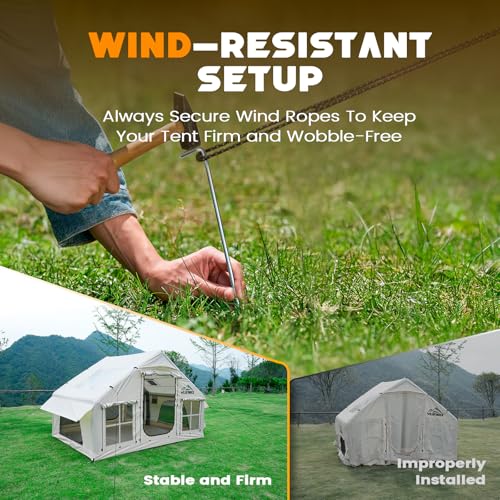
- Guy Lines & Stakes: Don’t skimp on guylines and stakes! They’re what secure the tent in windy conditions. A good set of steel stakes is far superior to flimsy plastic ones.
A well-pitched tent with properly staked guylines is more important than a super-high waterproof rating.
Setup and Usability
Let’s be honest: nobody enjoys wrestling with tent poles for an hour. I’ve seen families nearly abandon trips over frustrating setups. Instant or pop-up tents are incredibly convenient, but they often sacrifice durability and weather protection. If you want something quick and easy, look for tents with pre-attached poles or color-coded components. And if you’re considering spacious inflatable family tents, be aware of the potential for punctures and the need for a pump. For longer trips, you’ll want to consider features like interior pockets for organization, a gear loft for storing small items, and a convenient access port for power cords. If you’re planning a lot of family camping tent recommendations, ease of setup becomes a major factor.
Camping Tents for Family Compared
Here’s a comparison of key specifications for various family camping tents to help you choose the best option for your needs.
| Product Title | Capacity | Floor Size (ft) | Center Height (in) | Waterproofing (mm) | Setup Time |
|---|---|---|---|---|---|
| CORE 12 Person Family Cabin Tent | 12 | 16 x 11 | 86 | 1200 | N/A |
| FanttikOutdoor Zeta C12 Pro Max Tent | 12 | 17.17 x 10 | 80 | N/A | 90 sec |
| CAMPROS CP 12-Person 3-Room Tent | 12 | 20 x 9 | 72 | 1000 | < 10 min |
| CORE 9 Person Instant Cabin Tent | 9 | 14 x 9 | 78 | 1200 | 2 min |
| UNP 8 Person Tunnel Tent w/ Porch | 8 | 20 x 9 | 80 | 1500 | 15 min |
| Inflatable Tent w/ Skylight & Jack | 6 | 9.8 x 6.9 | 78 | 3000 | 5 min |
| Happy Travel 6 Person Cabin Tent | 6 | 10 x 9 | 79 | 2000 | 3 min |
| Purebox 4 Person Portable Tent | 4 | 9.02 x 7.05 | 4.92 | N/A | N/A |
Frequently Asked Questions
What tent capacity should I really choose for my family?
A tent’s listed capacity is often optimistic. I always suggest going up one or two sizes to comfortably accommodate sleepers and gear, especially if you anticipate growth or prefer extra space for relaxing inside.
How important is a tent’s waterproof rating, really?
While a higher waterproof rating (like 2000mm or 3000mm) is good, a properly pitched tent with securely staked guylines is more critical for staying dry. Don’t rely on the rating alone; check for fully taped seams and a quality rainfly.
Are pop-up tents durable enough for regular camping?
Instant or pop-up tents offer incredible convenience, but they generally sacrifice long-term durability and weather resistance compared to traditional frame tents. They’re best suited for casual camping or fair-weather trips.
What’s the best way to prevent condensation inside a family tent?
Good ventilation is key. Look for tents with mesh panels in the roof and doors, and always ensure adequate airflow by opening windows or vents when possible. Avoid touching the tent walls, as that transfers moisture.
Where can I find more in-depth comparisons of different family tents?
For a broader overview of the market and more detailed reviews, check out family-sized tent comparisons on my site. You’ll find detailed specs and owner feedback to help you narrow down your choices.
The Bottom Line
Choosing a family tent often comes down to how much fuss you’re willing to tolerate for a bit more control over quality and features. While instant tents offer incredible convenience, the CORE 12 Person Family Cabin Tent strikes the best balance overall, providing ample space, decent weather protection, and a relatively straightforward setup for the price. It’s a solid all-arounder that won’t leave you feeling shortchanged.
For those on a tighter budget, the Happy Travel 6 Person Cabin Tent is a surprisingly capable option. And if you prioritize quick setup above all else, the FanttikOutdoor Zeta C12 Pro Max Tent delivers on that promise with its 90-second pitch – though be prepared to potentially sacrifice some long-term durability. Don’t forget to review your essential family camping gear before you head out!
Ultimately, the numbers on a spec sheet matter less than the fundamentals. Focus on getting a tent that’s realistically sized for your family, offers adequate weather protection for the conditions you expect to encounter, and is something you’re comfortable setting up. A happy campsite starts with a dry, comfortable, and easily-pitched shelter.
