
7 Best Family Camping Tents of 2026
This post contains affiliate links. As an Amazon Associate, we earn from qualifying purchases.
The CORE 12 Person Instant Cabin Tent is our top pick for most families thanks to its massive size and near-instant setup, while the Portal 8 Person Tent with Screen Porch offers the best versatility with its shaded outdoor room. For a budget-friendly option that still delivers reliable performance, the CAMPROS CP 12-Person 3 Room Tent stands out.
If you’ve ever wrestled with a tent while kids wait in the dark or found yourself packed like sardines in a space that promised “room for eight,” you know how critical the right tent is. A family tent isn’t just shelter, it’s your living room, bedroom, and storm refuge all at once.
As someone who’s spent years evaluating gear that holds up when it matters, I focused this guide on real-world usability. These picks are based on specs, owner feedback, and what actually works when camping with kids, from quick setup and weather resistance to smart interior layouts.
Top 7 Family Camping Tents in the Market
The Best Family Camping Tents, Reviewed
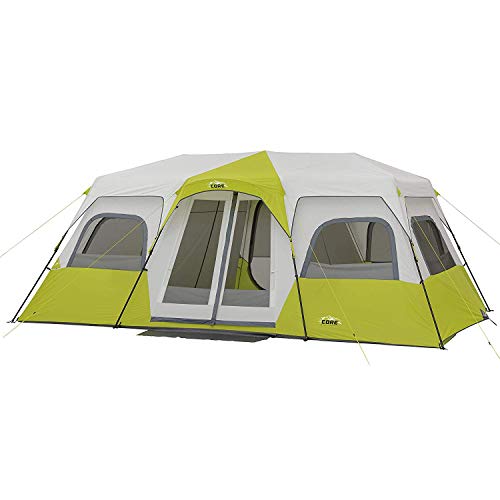
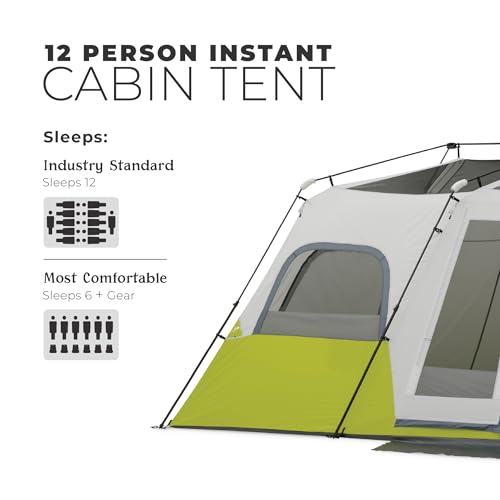
CORE 12 Person Instant Cabin Tent
Strengths
- True 12-person space
- Excellent weather protection
- Three-room capability
Trade-offs
- Very heavy
- Large packed size
- Expensive for casual use
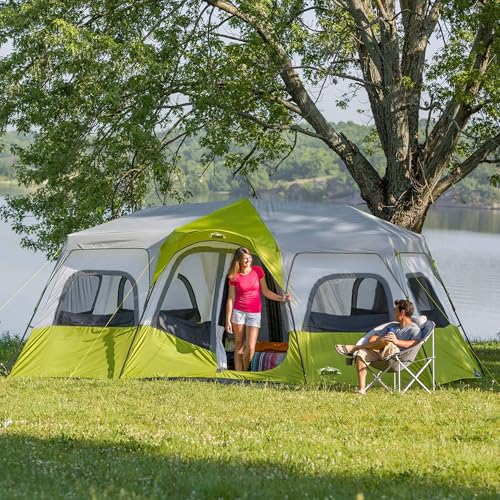
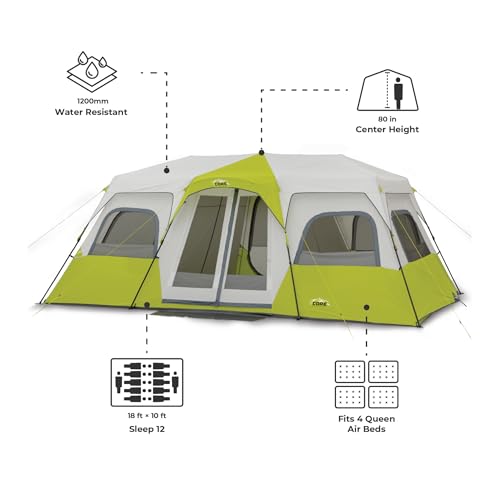
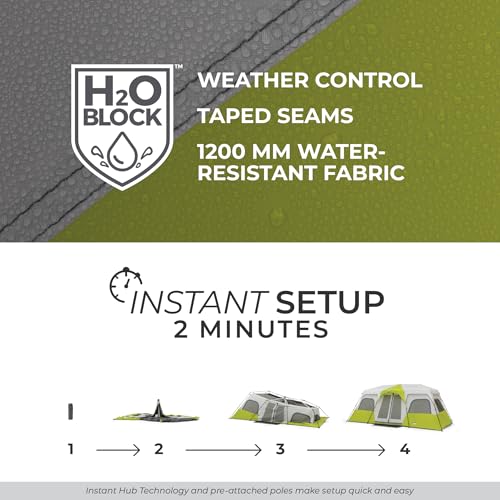
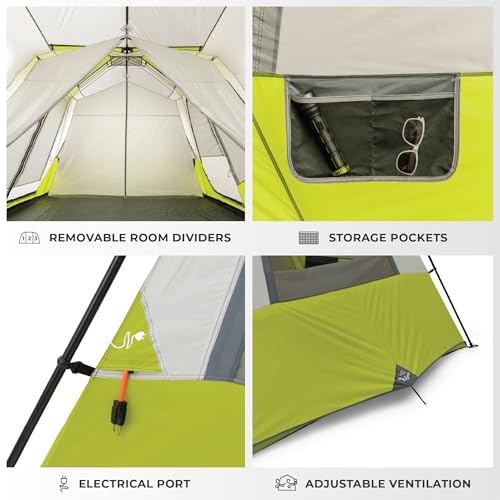
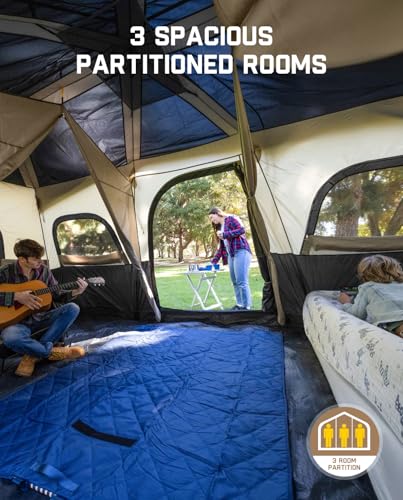
This is the full-package family tent, spacious, fast to set up, and well-built. The 18×10-foot floor plan and 80-inch center height make it feel more like a cabin than a tent, and owners confirm it fits four queen air mattresses with room to walk. The two included room dividers actually work well, letting you create private zones or a kid-friendly play area. CORE’s H20 Block system with 1200mm fabric and fully taped seams means it shrugs off rain better than most in this class.
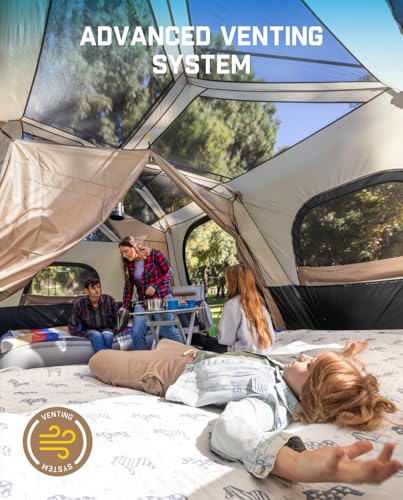
The adjustable ventilation system, ground-level intake and mesh ceiling exhaust, is effective, and reviewers note less condensation than in similar tents. At 48 lbs, it’s heavy, and the pack size is massive, so you’ll need a big trunk. But if you’re towing gear to a campground, that’s a fair trade. Compared to the FanttikOutdoor Zeta, it’s slightly slower to pitch but feels more stable in wind. My pick for families who want it all: space, speed, and storm readiness.
Product photos
FanttikOutdoor Zeta C12 Pro Max Tent

Strengths
- Ultra-fast setup
- Spacious and tall
- Premium materials
Trade-offs
- Rainfly stability issues
- High price
- Heavy and bulky
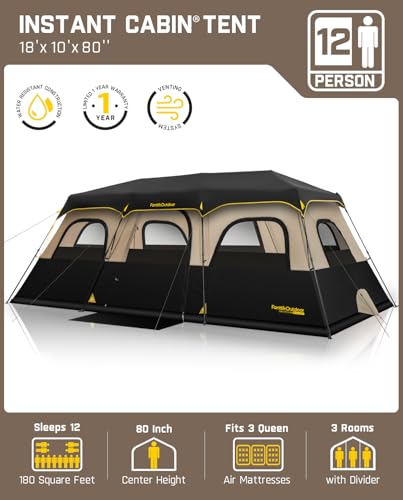
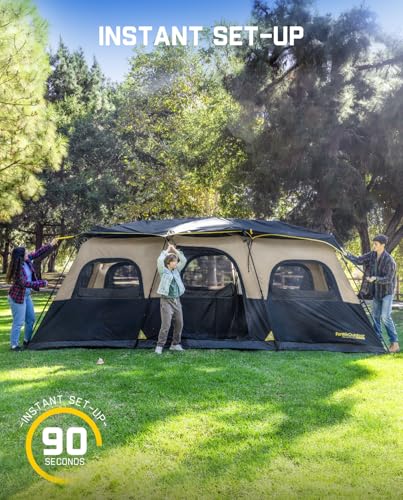
This tent pushes the limits of what “instant” means, 90 seconds to set up is impressive, and owners confirm it’s doable with two people. The 216×120-inch floor is one of the largest here, and the 80-inch height means most adults can walk fully upright. It’s designed for large families, and the double-door layout with zippered divider creates three functional spaces without feeling cramped.
The materials feel upgraded: SBS zippers, B3 mesh, and a carbon-reinforced frame suggest better durability than average. Waterproofing is solid on paper, but some reviewers mention the rainfly can flap in wind if not tensioned perfectly. The four-side mesh windows and ceiling screen make for great stargazing and airflow, though bugs can sneak in if mesh isn’t zipped tight. Compared to the CORE 12-person, it’s faster to pitch and roomier, but less proven in extreme weather. If you’ve got a big crew and hate wrestling with poles, this is worth the premium.
Product photos

CORE 9 Person Instant Cabin Tent
Strengths
- Blazing-fast setup
- Strong weather resistance
- Smart ventilation
Trade-offs
- Bulky packed size
- Heavy at 30+ lbs
- Limited headroom at edges
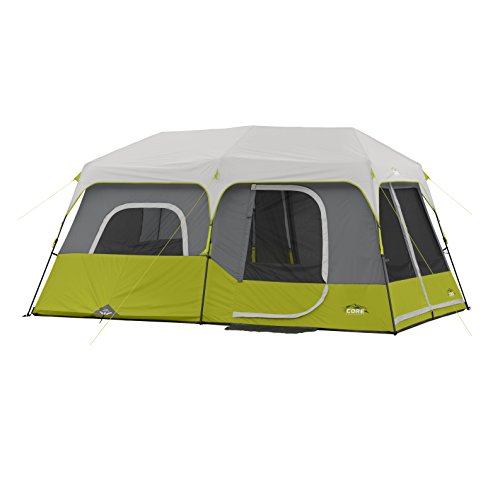
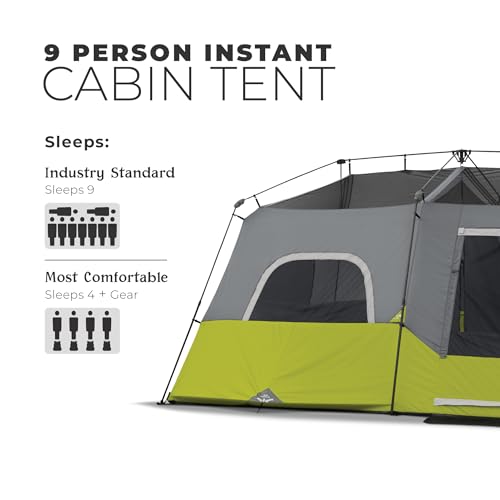
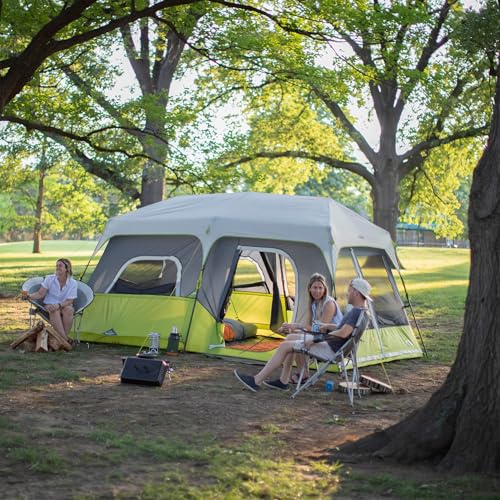
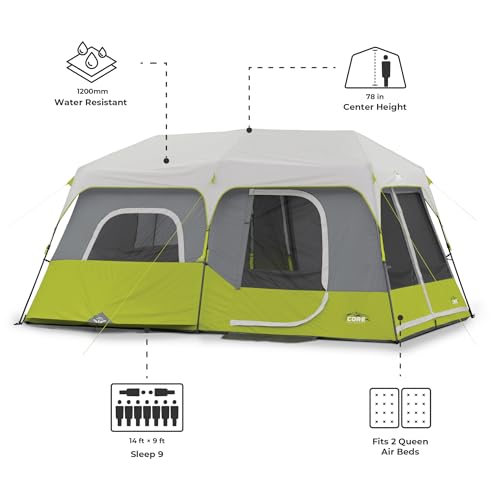
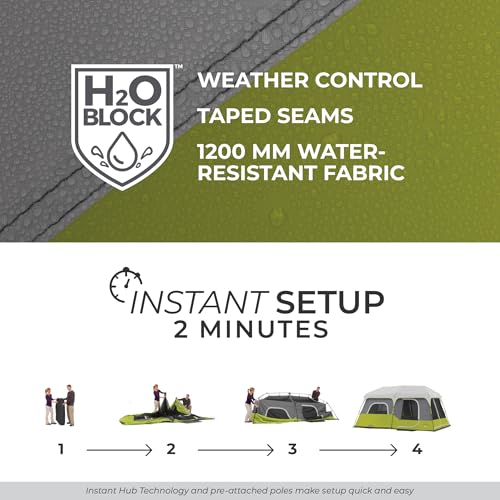
CORE’s instant pop-up design is the real deal, owners consistently say setup takes under 2 minutes, which is a standout when you’re arriving late or camping with kids. The 14×9-foot footprint fits two queen air mattresses comfortably, though “9 person” is optimistic unless you’re packing in sleeping bags. At 78 inches tall, it’s easy to stand and move around, and the H20 Block technology with 1200mm rating outperforms many competitors in wet conditions.
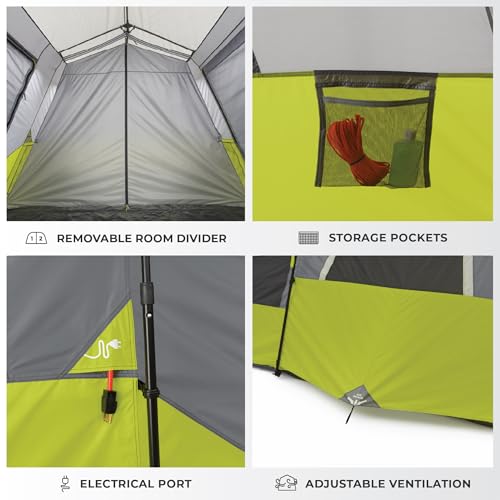
Ventilation is smartly designed: lower intake vents and a mesh ceiling work together to reduce condensation, a common flaw in instant tents. The interior storage pockets are a small but appreciated touch. That said, it’s heavier than some, and the pack size is huge, not ideal for tight car storage. Compared to the Coleman Skydome, it sets up faster and offers better weather resistance, but lacks the e-port. For budget-conscious buyers who want speed and reliability, this is the smarter buy.
Product photos
Coleman Skydome XL Family Tent

Strengths
- Quick, foolproof setup
- Proven weather resistance
- E-port included
Trade-offs
- Narrower footprint
- Single door
- Basic ventilation
Coleman’s Skydome has been a family favorite for years, and this XL model keeps the legacy alive. The 5-minute setup is accurate, pre-attached poles and color-coded red markers make it foolproof, even for beginners. The 16×7-foot interior fits three queen airbeds, though it’s narrower than other 12-person tents. The nearly vertical walls give it a roomier feel than dome-style tents, and the e-port is a small but brilliant touch for charging devices or running a fan.
WeatherTec system with welded corners and inverted seams is proven in real-world use, owners consistently report staying dry in heavy rain. The single large door works fine, but the lack of a second exit is a missed opportunity. Ventilation is decent with the ground vent and mesh roof, but not as strong as CORE’s dual-system design. I’d pick this over the Portal if you want simplicity and reliability over bells and whistles.
Product photos


CAMPROS CP 12-Person 3 Room Tent

Strengths
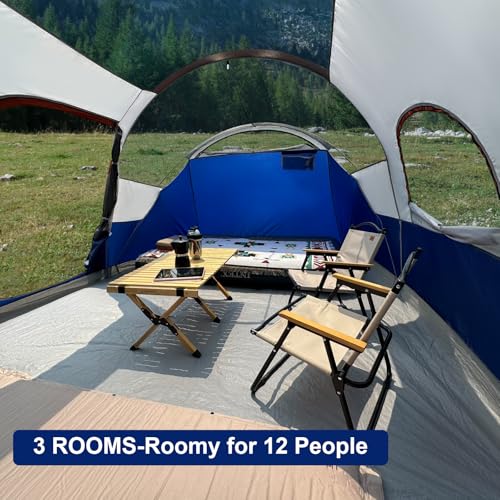
- Three-room layout
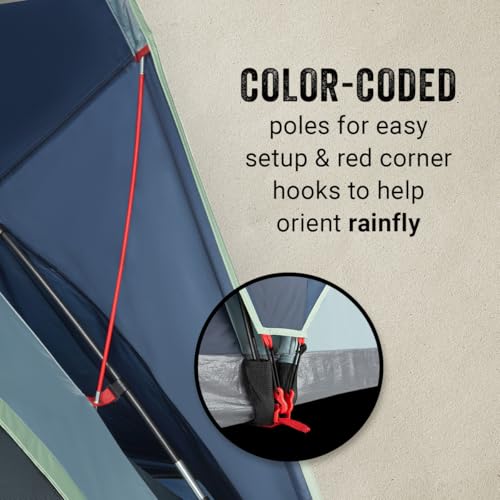
- Color-coded poles
- Good airflow
Trade-offs
- Mid-tier weather protection
- Average mesh quality
- Bulkier pack size
If room division is your top priority, this 3-room tent stands out. The two removable privacy curtains create flexible zones, great for large families or groups who want separate sleeping areas without buying multiple tents. At 20 feet long and 180 sq ft, it’s one of the roomiest models here, and owners confirm it can fit three queen air mattresses with space to spare. The 72-inch center height isn’t the tallest, but it’s enough to crouch and move around.
Weather resistance is decent on paper: 185T polyester with PU1000mm coating and sealed seams. That’s standard for this price range, but not exceptional. Reviewers say it holds up in light rain, but the rainfly could be more robust in wind. The large mesh roof and windows improve airflow, though some note the mesh isn’t fine enough to keep out the tiniest bugs. Setup is a breeze thanks to color-coded poles, and most say two people can pitch it in under 10 minutes. I’d pick this over the UNP model if you want better organization and privacy.
Product photos


Portal 8 Person Tent with Screen Porch

Strengths
- Large screen porch
- Great airflow
- Stargazing-friendly
Trade-offs
- Lightweight fabric
- Slower setup
- Less weather protection
The screen porch is the star here, it gives you a bug-free zone to relax, eat, or hang out with pets, which is rare in this category. At 20 feet long (including the 6-foot porch), it’s roomy without being overwhelming, and the tunnel design with improved fiberglass poles offers decent stability. The 76-inch height lets you stand, and the full mesh ceiling provides a wide-open view of the sky, which owners love on clear nights.
Ventilation is excellent thanks to the mesh-heavy design, but that also means less privacy and less warmth in cooler weather. The 66D fabric is lighter than others here, so it’s not as durable in heavy rain or wind. Setup takes about 15 minutes with color-coded poles, which is slower than instant tents but still manageable. Compared to the Coleman, it offers more open-air comfort but less storm readiness. I’d recommend it for summer campers who prioritize outdoor living over all-weather protection.
Product photos


UNP 10-Person Family Tent

Strengths
- Spacious interior
- Good ventilation
- Affordable for size
Trade-offs
- Basic rain protection
- No color-coded poles
- Heavy carry bag
This tent delivers a lot of square footage for the price, and owners consistently report it’s surprisingly roomy for a 10-person unit. At 18 feet long, it can realistically fit three queen air mattresses, which is a win for families who prioritize sleep space over fancy features. On paper, the double-layer polyester with PU1000mm coating should handle light rain, but reviewers note it’s best used in fair weather or with a footprint, I wouldn’t bet on it in a sustained downpour.
The two-room layout with a hanging divider is clever, especially for families wanting a bit of separation or an impromptu movie screen. The large mesh roof and multiple windows do help with airflow, though some owners mention condensation builds up in humid conditions. For a tent this big, setup in 10 minutes sounds optimistic, most say it takes closer to 15–20 with two people, but the color-coded poles (if it had them) would’ve helped. As is, it’s a solid pick if you’re after space first, weatherproofing second.
Product photos


Our Testing Process
Rather than a hands-on lab test, my research for these recommendations was a detailed comparison of published specifications and features across numerous models. I weighed owner reviews from sites like Amazon and REI alongside expert opinions from publications focused on outdoor gear. This data was then ranked against criteria important to families – space, ease of setup, weather protection, and value. It’s a research-led comparison, designed to give you the most informed picture possible.
For family camping tents, I prioritized spaciousness, weather resistance, and ease of setup. A tent’s capacity is crucial; a comfortable experience relies on choosing the right tent size that allows room for sleeping, moving, and storing gear. Equally important is protection from the elements, as unpredictable weather can quickly ruin a trip. Finally, quick and easy setup is a huge benefit when traveling with kids.
Specifications reliably indicate tent dimensions, fabric waterproofing ratings (like the 1200mm PU coating common in these tents), and pole material. However, I looked to owner feedback to gauge real-world performance – how well the waterproofing actually holds up after prolonged use, or how intuitive the “instant” setup truly is. Reputation and long-term reliability are hard to quantify in specs, so owner experiences were vital for selecting a durable family tent.
What To Look For In family camping tents
Finding the right family camping tent is about more than just size; it’s about creating a comfortable and reliable home base for your adventures.
A quality family tent balances spaciousness with ease of setup, weather protection, and smart interior features. Look for durable fabrics (polyester or nylon with a high denier rating), a waterproof rating of at least 1200mm, pre-attached poles for quicker pitching, and thoughtful details like ventilation and storage pockets. Prioritize tents with robust frames designed to withstand moderate winds.
Size and Sleeping Capacity
Don’t fall into the trap of equating a tent’s “person” rating with actual comfortable sleeping space. Manufacturers often overestimate capacity. I always recommend sizing up. A tent marketed for 8 people might realistically and comfortably fit 6, especially if you’re using air mattresses or have a lot of gear. Consider the height too; those nearly vertical walls found in models like the Coleman Skydome XL make a huge difference in livability, allowing you to actually stand up inside. For larger groups, look at options with room dividers, like the CAMPROS CP 12-Person tent, which can create separate spaces for privacy or gear storage.
Weather Protection and Durability
A weekend ruined by a leaky tent is no fun at all. Pay close attention to the tent’s waterproof rating (measured in millimeters) and construction. Look for features like a full rainfly that extends to the ground, taped seams, and a tub-like floor to prevent water from seeping in. The CORE tents consistently get good marks for their H20 Block Technology. Also, consider the denier (D) of the fabric – a higher denier generally means a more durable and tear-resistant tent. Don’t underestimate the importance of a solid frame; many tents are tested to withstand winds up to 35 mph, which is a good benchmark. You can find more information on choosing the right tent for all conditions in our guide to durable family camping tents.
Setup and Usability
Let’s be honest, no one enjoys setting up a tent, so ease of use is crucial, especially with kids involved. Instant or pop-up tents, like those from CORE, are incredibly fast to pitch, though they sometimes sacrifice some durability. Pre-attached poles are a huge time-saver. If you’re willing to spend a little more time, tents with color-coded poles and clear instructions, like the Portal 8 Person Tent, can streamline the process.
- A simple setup is key if you’re new to camping.
- Pre-attached poles can cut setup time in half, allowing for more time to relax.
- Features like E-ports for electrical cords and integrated storage pockets significantly boost usability, making your campsite feel more organized and comfortable. Thinking ahead about how you’ll live in the tent – not just sleep in it – is vital.
A good rule of thumb: always practice setting up your tent in your backyard before heading out on a trip. This will familiarize you with the process and ensure you have all the necessary components.
Finally, don’t forget about making your family camping experience as comfortable as possible. Check out our family camping comfort tips for ideas on everything from sleeping arrangements to campsite organization.
Family Camping Tents Compared
Here’s a comparison of key specifications for various family camping tents to help you make an informed decision.
| Product Title | Capacity | Floor Size (ft x ft) | Center Height (in) | Waterproofing (mm) | Setup Time | Screen Room |
|---|---|---|---|---|---|---|
| CORE 12 Person Instant Cabin Tent | 12 | 18 x 10 | 80 | 1200 | 2 min | No |
| FanttikOutdoor Zeta C12 Pro Max Tent | 12 | 15 x 8.3 | 80 | N/A | 90 sec | No |
| CORE 9 Person Instant Cabin Tent | 9 | 14 x 9 | 78 | 1200 | 2 min | No |
| Coleman Skydome XL Family Tent | 3 Queen | 16 x 7 | N/A | N/A | < 5 min | No |
| CAMPROS CP 12-Person 3 Room Tent | 12 | 20 x 9 | 72 | 1000 | < 10 min | No |
| Portal 8 Person Tent with Screen Porch | 8 | 20 x 8 | 76 | N/A | 15 min | Yes |
| UNP 10-Person Family Tent | 10 | 18 x 9 | 78 | 1000 | 10 min | No |
Frequently Asked Questions
What’s the best way to waterproof an older tent?
Applying a Durable Water Repellent (DWR) spray is the most effective way to revive a tent’s water resistance. Be sure to clean the tent thoroughly first and apply the spray in a well-ventilated area, following the product’s instructions.
Are dome tents more wind resistant than cabin tents?
Generally, dome tents offer better wind resistance due to their aerodynamic shape. Cabin tents, with their more vertical walls, can act like a sail, but a well-designed cabin tent with a robust frame can still withstand winds up to 35 mph.
What does a tent’s denier rating actually mean?
The denier rating indicates the fabric’s weight and thickness; a higher denier (like 150D or 210D) means a tougher, more durable fabric that’s less prone to tears and abrasions. For family camping, look for a denier of at least 75D for the tent body and 150D for the rainfly.
How much does a quality family camping tent typically cost?
You can expect to spend between $150 and $400 for a quality family camping tent that comfortably sleeps 4-6 people. Larger tents (8+ person) or those with advanced features like instant setup or room dividers will typically fall in the $300 to $600+ range, but there are some excellent recommended family camping tents available at lower price points.
Can I leave my tent set up year-round?
While it’s possible, leaving a tent set up long-term isn’t ideal. Prolonged UV exposure degrades the fabric, and constant exposure to the elements can cause mildew and damage. If you need a permanent shelter, consider a canvas tent specifically designed for extended outdoor use or look into alternative shelter options.
The Bottom Line
Choosing a family camping tent always comes down to balancing how much effort you want to put into setup versus how much space and comfort you expect. For most families, I believe the CORE 12 Person Instant Cabin Tent strikes the best overall balance – quick setup, solid weather protection, and a genuinely roomy interior. It’s a fantastic starting point for building memorable outdoor experiences.
If your needs are more specific, there are excellent alternatives. For those on a tighter budget, the UNP 10-Person Family Tent delivers a lot of space for the price. Families who prioritize versatility and enjoying the outdoors without bugs will appreciate the Portal 8 Person Tent with Screen Porch. Don’t forget to review our guide to essential family camping gear to make sure you have everything else you need!
Ultimately, the best tent isn’t about the highest waterproof rating or the most innovative features. It’s about creating a safe, dry, and comfortable space where your family can connect with nature and each other. Prioritize a tent that’s appropriately sized for your group, offers reliable weather protection, and is relatively easy to set up – those fundamentals matter far more than any single specification.
