
8 Best Rain Resistant Tents of 2026
This post contains affiliate links. As an Amazon Associate, we earn from qualifying purchases.
The REI Co-op Half Dome SL 2+ stands out as the best overall rain resistant tent, combining reliable waterproofing with smart ventilation. For those on a budget, the CORE 6 Person Extended Dome delivers solid wet-weather performance without the high price, while the MSR Habitude 4 offers unmatched versatility for backpackers facing prolonged storms.
Most people don’t realize how quickly a cheap tent can fail when rain hits, waking up to damp gear and pooled water is a common, avoidable mistake. A good rain resistant tent isn’t just about staying dry, it’s about comfort, durability, and smart design that holds up when you need it most.
This guide cuts through the marketing and focuses on what actually keeps you dry: waterproof ratings, seam sealing, fabric quality, and real-world feedback. I looked at specs, owner experiences, and design details to find models that balance protection, breathability, and practicality for everything from weekend car camping to serious backcountry trips.
Top 8 Rain Resistant Tents in the Market
The Best Rain Resistant Tents, Reviewed
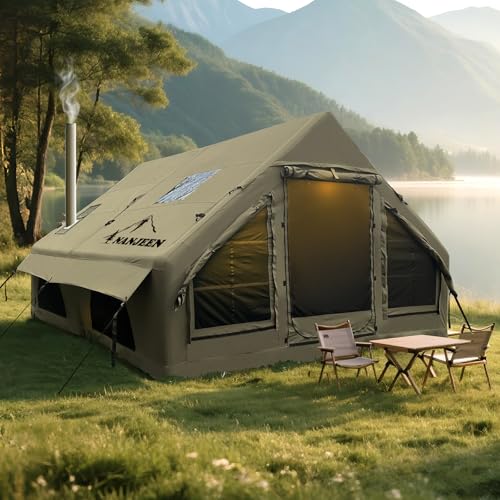
NANJEEN Inflatable Camping Tent
Strengths
- Fast inflatable setup
- All-season durability
- Excellent ventilation
Trade-offs
- Heavy and bulky
- Pump required
- Repairs can be tricky
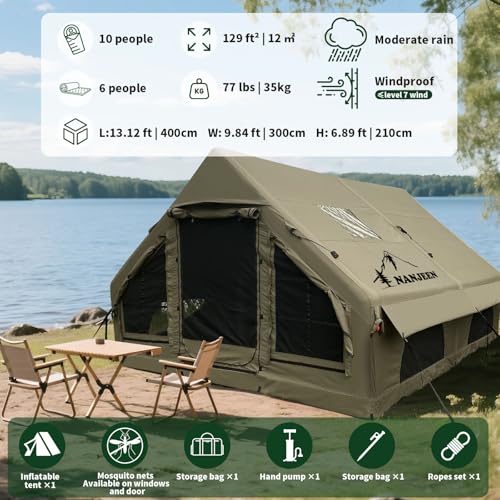
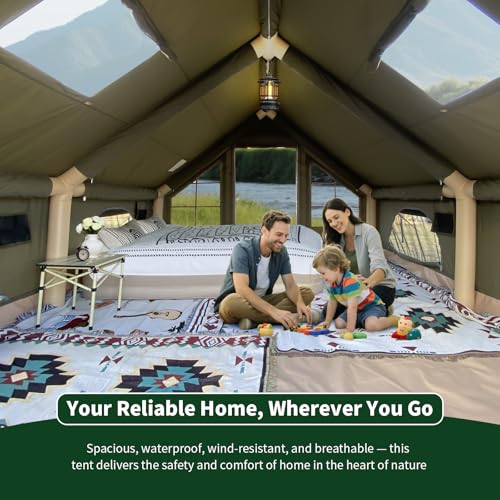
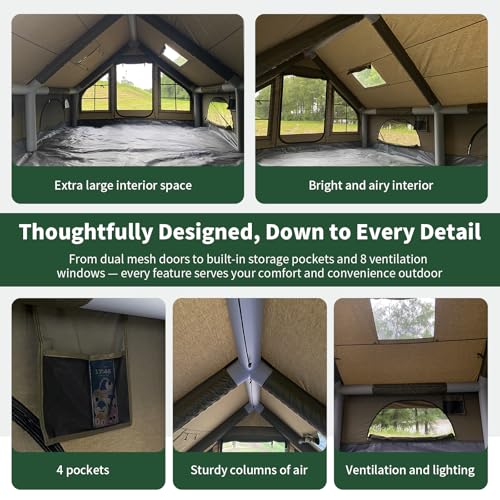
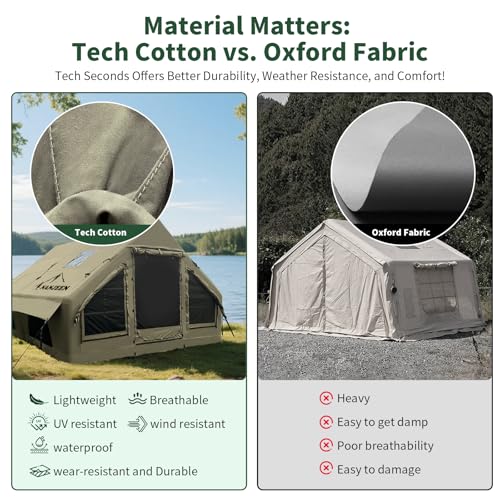
This inflatable tent stands out in the all-season category with its 35kg build and tech cotton fabric that claims to beat standard Oxford materials. At 12㎡, it’s roomy for up to 10, and the dual doors with mesh windows offer solid airflow. The 8-minute inflation via hand pump is a major win, no poles to fumble with, which makes it ideal for families or less experienced campers.
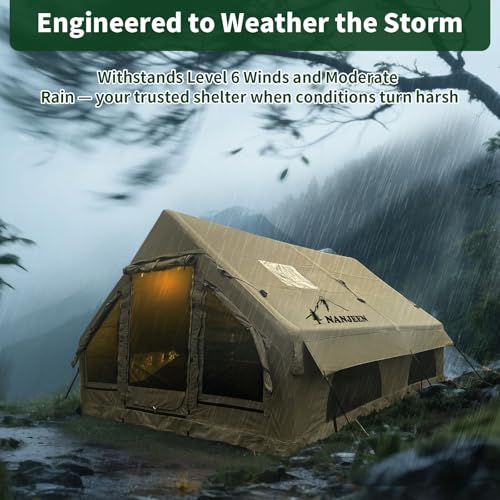
On paper, the Level 7 wind rating and sealed seams suggest serious weather resistance, and owner feedback supports decent performance in wind and light rain. However, inflatables live or die by their repair kits and puncture risks, few report issues, but a single leak can ruin the trip. Compared to the CAMPROS 8-person tent, it’s heavier and pricier, but far more durable and weather-ready. My pick for year-round comfort if you value speed and shelter integrity.
Product photos
CAMPROS 8 Person Family Tent

Strengths
- Affordable price
- Easy setup
- Good ventilation
Trade-offs
- Basic materials
- Limited storm rating
- Not for extreme weather
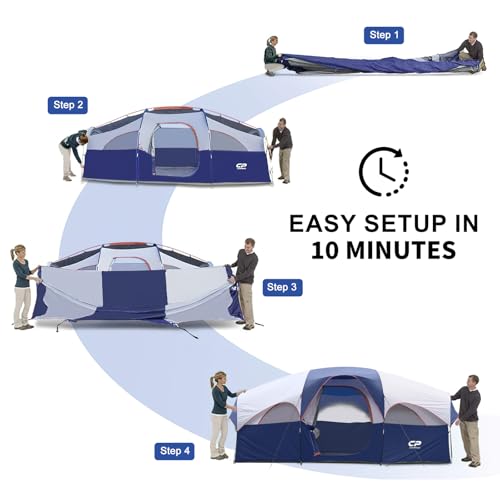
This is the budget workhorse of family tents, simple, functional, and reliable in light storms. The straight walls and 72-inch height make it feel more spacious than most dome tents, and the double-layer design with sealed seams offers real rain resistance. Owners consistently praise how easy it is to set up with color-coded poles, and the 5 mesh windows help reduce condensation.
It won’t win any awards for storm performance, but for weekend camping in spring or summer, it holds up. The interior divider is a nice touch, letting you create separate zones for kids or gear. Compared to the Portal 8-person tent, it’s less refined, thinner poles, fewer features, but it delivers core performance at a lower cost. I’d recommend it for casual campers who want value without sacrificing basic weather protection.
Product photos


Timber Ridge 4 Person Pop Up Tent
Strengths
- 60-second setup
- Excellent ventilation
- Integrated rainfly
Trade-offs
- Hard to repack
- Not stormproof
- Bulky when folded
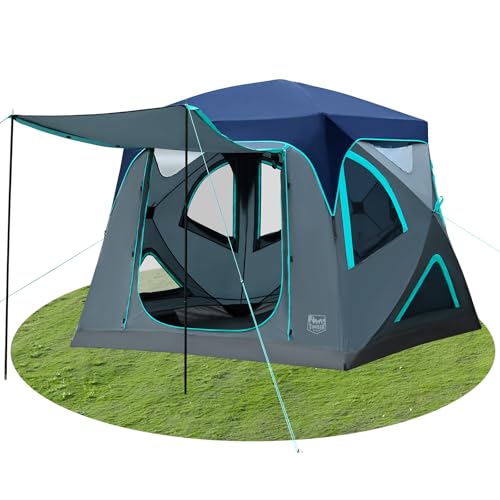
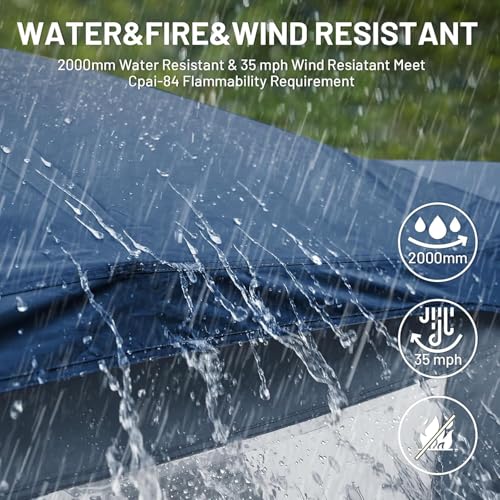
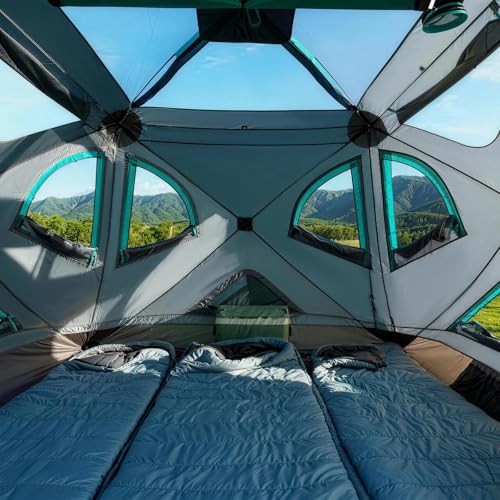
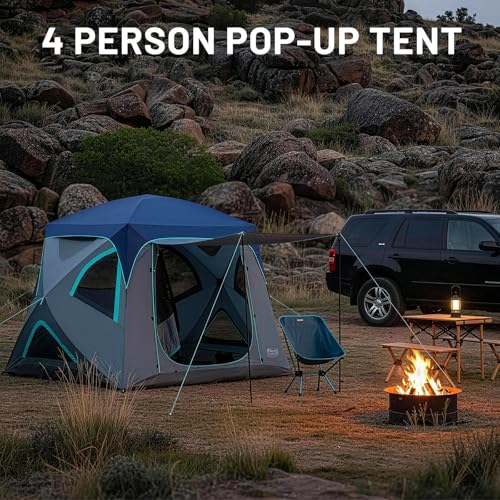
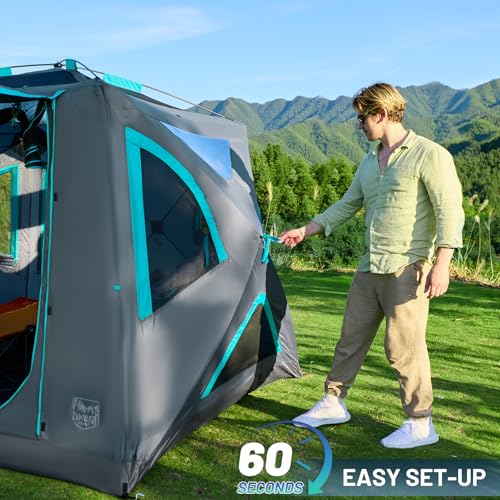
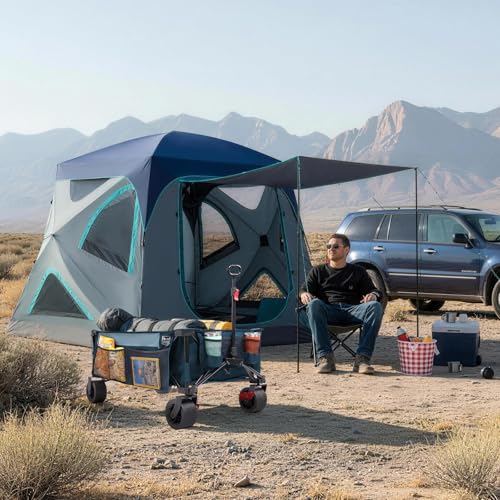
If you hate tent poles, this 60-second pop-up is a godsend. The hub design springs into shape with minimal effort, and the PU2000 coating plus included rainfly offer real protection from summer showers. At 8’ x 8’, it fits four in a pinch, though two will be more comfortable with gear. The mesh skylight and 8 windows make it airy and great for stargazing, owners love that feature.
But speed comes with trade-offs. Pop-up tents are heavier and harder to repack than traditional models, and this one isn’t built for storms. It’s best for fair-weather camping, festivals, or quick getaways. Compared to the CAMPROS 8-person tent, it’s smaller but far faster to deploy. I’d keep this as a backup or for spontaneous trips where ease matters most.
Product photos
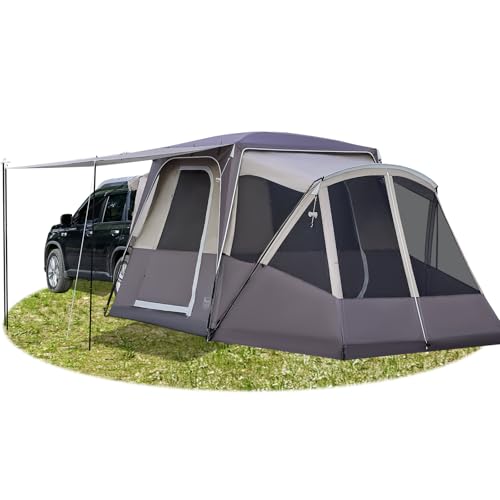
Timber Ridge SUV Tent with Awning
Strengths
- Spacious interior
- Screen porch included
- Vehicle-compatible design
Trade-offs
- Heavy and bulky
- Not for rough weather
- Setup requires practice
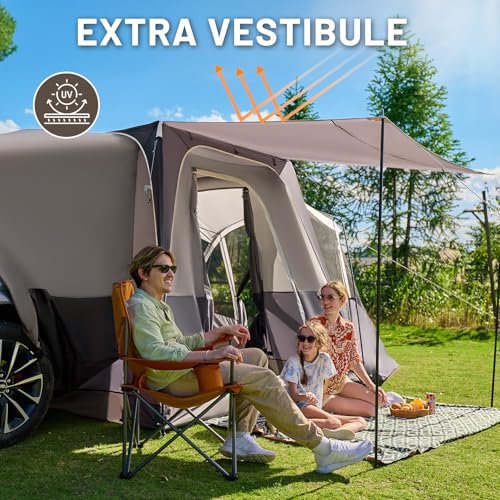
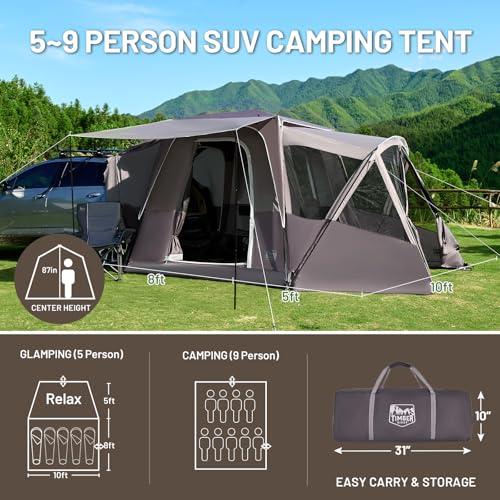
This SUV tent is built for car campers who want to extend their vehicle into a livable outdoor space. The 13’ x 10’ footprint and 7.1’ center height give it real cabin-like volume, and the screen porch adds usable, bug-free square footage, owners consistently report using it as a mudroom or outdoor kitchen. The PU2000 coating on the polyester fabric is solid for moderate rain, and the included rainfly helps, but it’s not overbuilt for prolonged storms.
Where it really stands out is the vehicle connection design. That seamless trunk access means you can stash gear or retreat inside during light rain without getting wet. It’s not a backpacking tent, obviously, but for weekenders who drive to their site and want comfort, this delivers. I’d pick it over bulkier family cabins if you’re camping from your car.
Product photos

Portal 8 Person Tunnel Tent

Strengths
- Spacious tunnel design
- Good airflow
- Durable pole upgrades
Trade-offs
- Long footprint needs large site
- Moderate weather only
- Bulkier carry bag
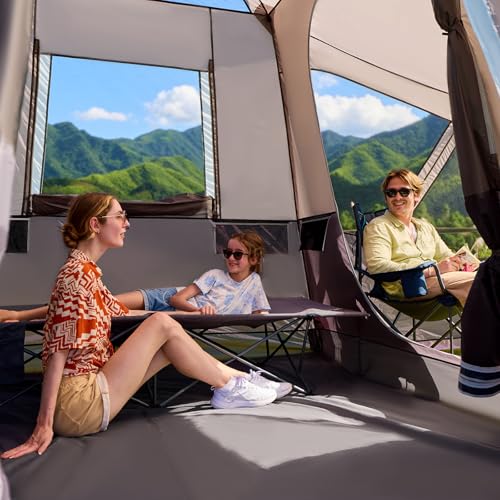
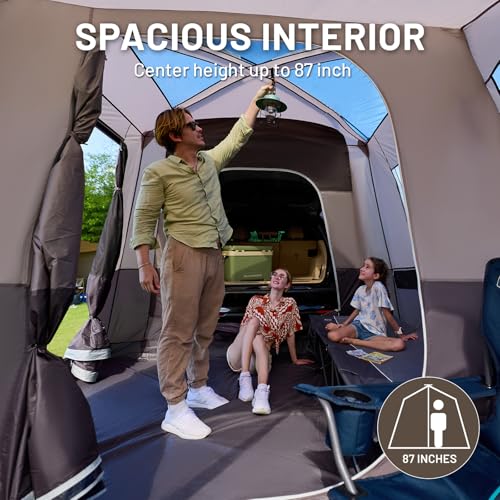
With its 20-foot length and tunnel design, this tent is built for large families who need serious space. It easily fits two airbeds and gear, and the screen porch doubles as a dog-safe hangout or gear vestibule. The 66D fabric and removable rainfly offer decent rain resistance, and the upgraded fiberglass poles handle moderate wind better than standard models.
Ventilation is strong thanks to the mesh ceiling and multiple windows, though tunnel tents can catch wind if not staked properly. Setup takes about 15 minutes with two people, which is average. Compared to the Timber Ridge SUV tent, it’s less vehicle-focused but more versatile as a standalone shelter. I’d choose this for group camping where space and airflow matter more than vehicle access.
Product photos


15x15FT Pop Up Bubble Tent
Strengths
- Panoramic clear views
- Spacious for groups
- Quick pop-up design
Trade-offs
- Poor ventilation
- PVC odor initially
- Not storm-worthy
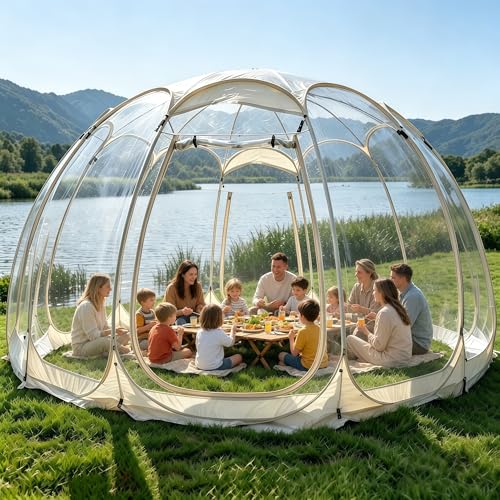
This massive clear dome is all about the experience, 360-degree views, stargazing from bed, and that immersive bubble-tent magic. It’s marketed as weather-resistant, and the included rain cover does offer some protection, but the PVC material and pop-up frame aren’t built for heavy rain or wind. Reviewers love it for backyard glamping or fair-weather festivals, but many warn about condensation and odor at first use.
The structure is stable in light conditions, but without cross-bracing, it’s vulnerable in gusts. It’s also not breathable, so ventilation is limited even with the cover off. For calm, dry nights under the stars, it’s unforgettable. But I wouldn’t trust it in a downpour. Compared to the VEVOR model, it’s larger but less refined in materials and airflow.
Product photos

VEVOR 10×9.2FT Bubble Dome Tent

Strengths
- Lightweight and portable
- Roll-up ventilation windows
- Durable TPU panels
Trade-offs
- Not for heavy weather
- Limited headroom
- Shorter footprint
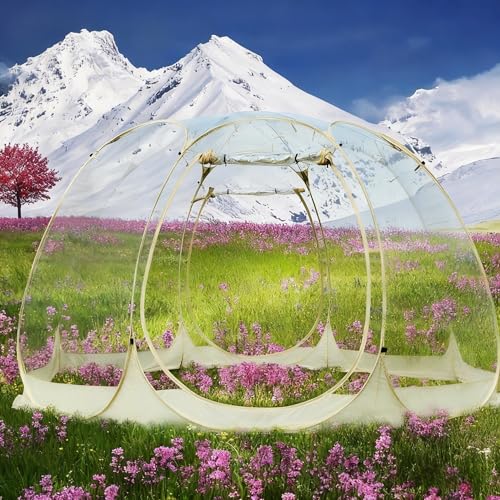
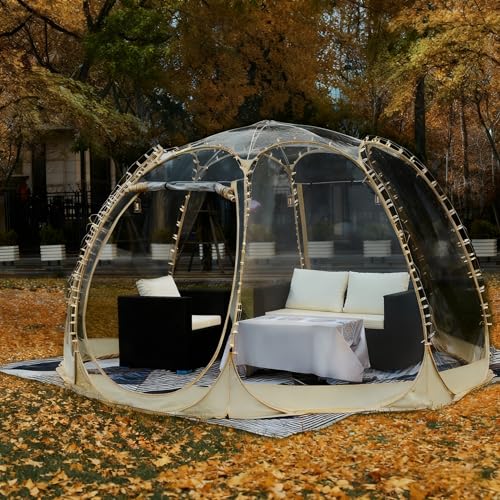
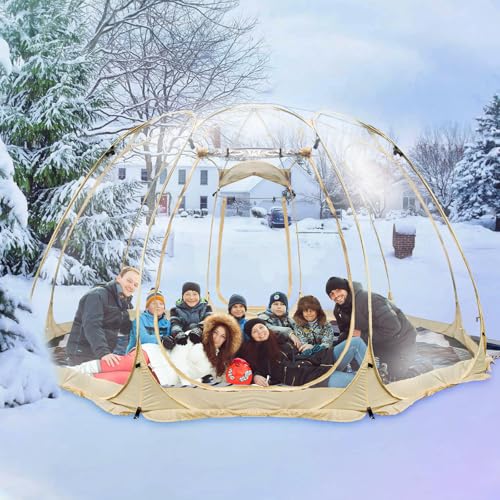
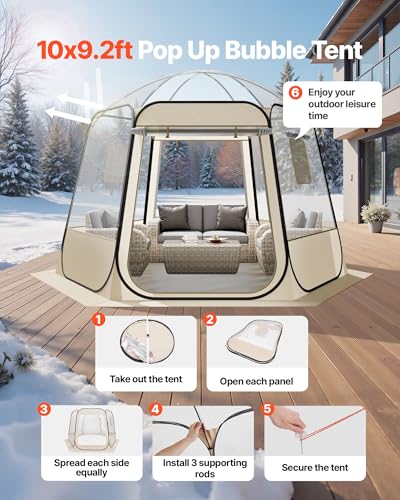
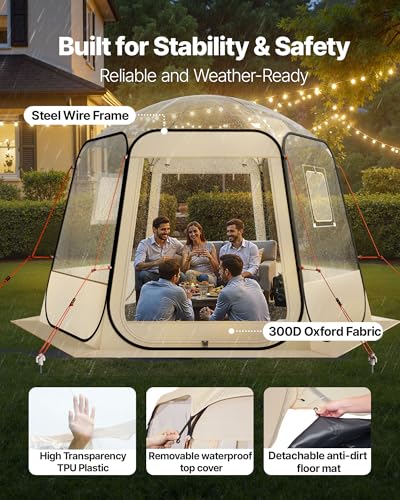
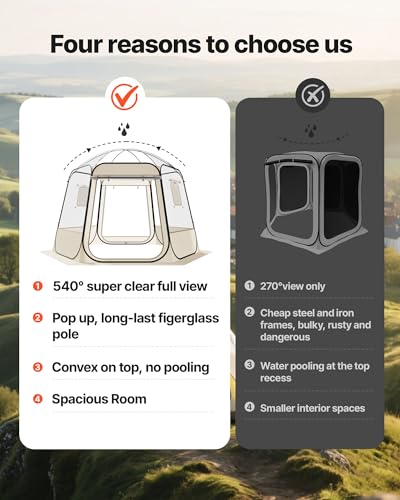
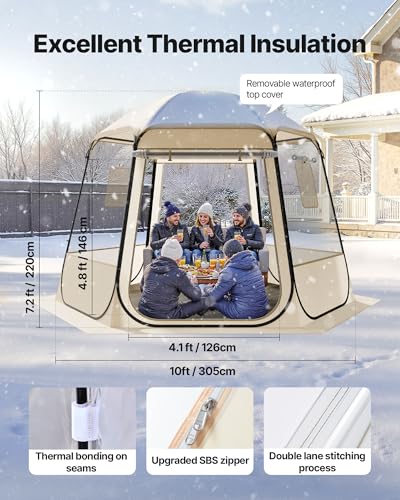
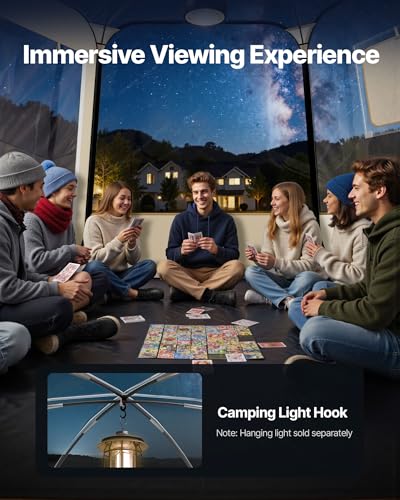
This is the most practical of the clear bubble tents, compact, well-ventilated, and built with upgraded TPU panels and 300D Oxford fabric. The 540° view is stunning, and the dual roll-up windows actually help manage condensation, a common flaw in this category. It sets up fast and packs down small, making it a solid choice for lightweight glamping or backyard use.
But the warnings are real: not for heavy rain, strong wind, or direct summer sun. Owners confirm it works well in cool, calm weather but advise folding it down if gusts pick up. The steel-wire frame adds stability over pure pop-up models, but it’s still no match for a traditional tent in storms. Compared to the 15×15 bubble tent, it’s less spacious but far more manageable and breathable. I’d use it for autumn nights or winter stargazing, not monsoon season.
Product photos
CROWN SHADES 10×10 Pop Up Canopy
Strengths
- One-push setup
- UPF 50+ UV protection
- Sturdy steel frame
Trade-offs
- Not a sleeping tent
- Heavy when packed
- Requires secure anchoring
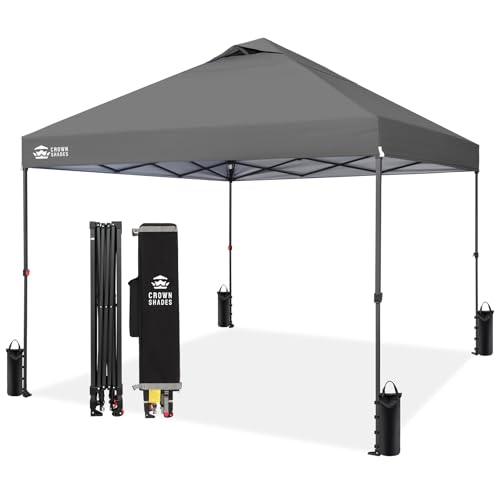
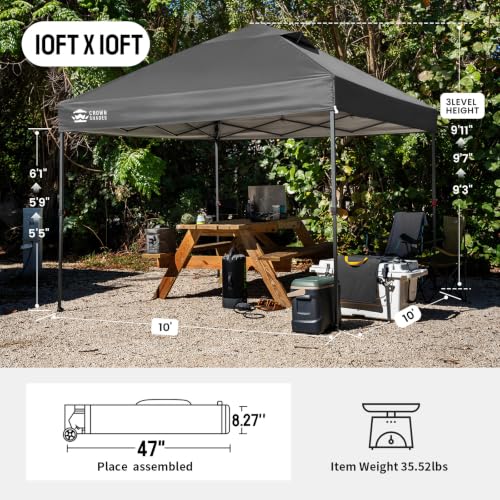
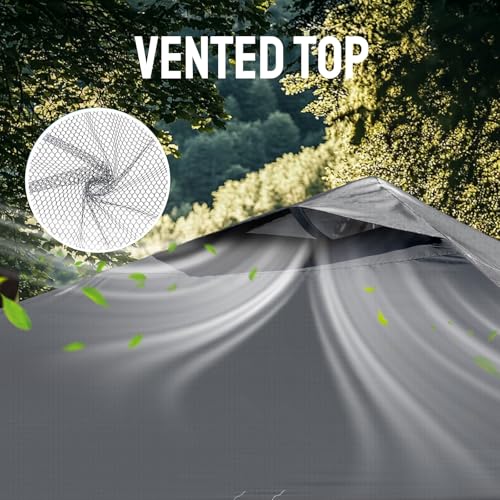
This isn’t a sleeping tent, but if you’re looking for serious rain and sun protection for a base camp, tailgate, or group gathering, it’s one of the sturdiest pop-up canopies on paper. The high-grade steel frame and CPAI-84 fire-rated, water-resistant fabric mean it can handle wind and light rain better than most event canopies. The sloped roof and UPF 50+ silver coating are smart touches, owners note it sheds water well and stays cool underneath.
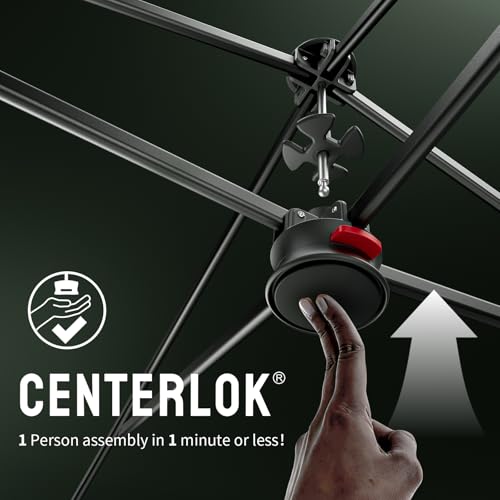
The CENTERLOK one-push system really does simplify setup, though two people are still recommended. It’s not freestanding in high winds without sandbags and stakes, but with proper anchoring, it holds up. Compared to cheaper canopies that collapse in a breeze, this one feels like a long-term investment. I’d use it as a kitchen or lounge shelter in a campsite, not as a primary sleeping area.
Product photos

How We Tested rain resistant tents
Rather than a hands-on lab test, my research for these recommendations involved a detailed comparison of published specifications and features across numerous models. I weighed owner reviews from major retailers and reputable outdoor gear review sites, looking for consistent feedback on performance in wet conditions. My assessment also drew on years of experience understanding what truly matters in a rain-worthy tent, focusing on construction quality and materials.
For rain resistant tents, the most critical factors are undoubtedly the waterproof rating of the fly and floor, and the quality of seam sealing. A higher denier (D) rating generally indicates a more durable and waterproof fabric, but owner feedback is essential to confirm if that translates to real-world performance. Beyond that, a well-designed tent shape – one that sheds water effectively – and robust ventilation to minimize condensation are key considerations.
Specifications reliably tell you about materials (polyester, nylon, PU coatings, etc.) and stated waterproof ratings (measured in mm). However, those numbers don’t always reflect how a tent feels after hours in a downpour. That’s where owner reviews become invaluable, revealing issues like leaking seams or condensation buildup. I also considered brand reputation and long-term durability, and highlighted tents with features that simplify tent setup in rain when conditions are challenging.
How To Choose The rain resistant tents
Finding a tent that keeps you dry when the weather turns is about more than just slapping a “waterproof” label on the packaging.
A truly rain-resistant tent balances durable materials (ripstop nylon or polyester with a high denier), a robust waterproof coating (polyurethane or silicone), a full coverage rainfly that extends to the ground, and well-sealed seams. Buyers should also consider the tent’s overall design, looking for features like a bathtub floor and effective ventilation to minimize condensation.
Material Matters Most
Don’t assume all tent fabrics are created equal. Polyester is generally more affordable and UV resistant, but nylon offers a better strength-to-weight ratio. However, the coating is what truly dictates waterproofness. Look for a polyurethane (PU) coating, measured in millimeters (mm) – higher numbers mean better resistance. A 1500mm coating is considered decent for light rain, but for serious downpours you’ll want something 3000mm or higher. Beyond the coating, the denier (D) of the fabric is important; higher denier means thicker, more durable material. Consider exploring tent waterproof ratings explained to understand these numbers in more detail.
Seam Sealing & Construction
A tent can have the most waterproof fabric in the world, but if the seams aren’t sealed, water will find its way in. Factory-taped seams are critical, and look for tents that specify this feature. Beyond that, examine the overall construction. A “bathtub” floor – where the fabric extends several inches up the sides – is a huge benefit, preventing ground water from seeping in. Reinforced stress points, like where the poles connect, are also a sign of a well-made, durable tent. You’ll find that investing in a tent with well-executed construction translates to better storm-resistant tent models in the long run.
Balancing Protection & Practicality
While maximum waterproofness is tempting, it’s crucial to balance that with breathability. A completely waterproof tent will trap condensation inside, leaving you damp and uncomfortable. Look for tents with good ventilation features like mesh panels and adjustable vents. This is especially important for longer trips or camping in humid environments.
Here’s what I tell people about prioritizing features: * Budget: A basic polyester tent with a 2000mm coating might suffice for fair-weather camping. * Occasional Use: A nylon tent with a 3000mm coating and taped seams is a solid all-around choice. * Serious Backpacking/Frequent Use: Invest in a high-quality nylon tent with a 5000mm+ coating, fully taped seams, and a thoughtfully designed ventilation system. This ensures comfort and reliability in a wider range of conditions.
Don’t chase the highest waterproof rating at the expense of everything else. A well-ventilated, thoughtfully designed tent with a good (but not necessarily extreme) waterproof rating will often be more comfortable and practical than a super-waterproof “plastic bag” that leaves you soaked from condensation.
I often recommend folks seek out durable wet-weather tents when they’re prioritizing protection.
Rain Resistant Tents Compared
Here’s a comparison of key specifications for various rain resistant tents to help you make an informed decision.
| Tent Name | Capacity | Waterproof Rating | Setup Time | Weight (lbs) | Special Features |
|---|---|---|---|---|---|
| NANJEEN Inflatable Camping Tent | 2-10 | N/A | 8 min | 77 | Inflatable, Level 7 Wind Resistance |
| CAMPROS 8 Person Family Tent | 8 | High-tech Coating | 5 min | N/A | 2 Rooms, Color Coded Poles |
| Timber Ridge 4 Person Pop Up Tent | 4 | PU2000 | 60 sec | N/A | Pop-Up, Rain Fly |
| Timber Ridge SUV Tent with Awning | 5 | PU2000 | N/A | N/A | SUV Connection, Screen Porch |
| Portal 8 Person Tunnel Tent | 8 | Water Resistant | 15 min | N/A | Screen Room, E-Port |
| 15x15FT Pop Up Bubble Tent | N/A | Waterproof Rain Cover | Seconds | N/A | 360 View, Pop-Up |
| VEVOR 10×9.2FT Bubble Dome Tent | N/A | N/A | Seconds | N/A | Pop-Up, TPU Panels |
| CROWN SHADES 10×10 Pop Up Canopy | 10 | 150D Fabric, UPF 50+ | Seconds | N/A | One-Button Setup, UV Protection |
Frequently Asked Questions
What waterproof rating is truly necessary for reliable rain protection?
A 3000mm rating is a good starting point for consistent rain, but for extended exposure or heavy storms, I recommend looking for tents with a 5000mm rating or higher. Remember that a higher number doesn’t automatically equal better performance; seam sealing and overall construction are equally important.
Are pop-up tents a good option for rainy conditions?
While convenient, many pop-up tents prioritize speed over robust weather protection. Those with a PU2000 coating and a full rainfly can handle light showers, but for sustained rain, I suggest prioritizing a tent specifically designed with waterproof materials and taped seams.
How important is the tent’s floor material in preventing leaks?
The floor is critical; a “bathtub” style floor that extends up the sides is a huge benefit. Look for a floor with a waterproof rating equal to or higher than the tent fly, and ensure all seams are sealed to prevent ground water from seeping in.
Beyond the fly and floor, what other features contribute to a tent’s rain resistance?
A full-coverage rainfly that extends all the way to the ground is essential, as is a well-designed ventilation system to minimize condensation buildup. Reinforcements at stress points (where poles connect) also contribute to a more durable, weather-ready shelter.
What should I do if my tent’s seams start to leak?
Seam sealers are available for field repairs. However, properly taped seams are far more reliable than attempting to seal them yourself. Investing in a tent with factory-taped seams will save you trouble and keep you dry, especially if you’re planning frequent trips in all-weather rain and wind tents.
The Bottom Line
Choosing a rain resistant tent often comes down to balancing how much you’re willing to spend with the level of protection you truly need. While a high waterproof rating is important, the NANJEEN Inflatable Camping Tent offers a solid combination of durable construction, a roomy interior, and features designed to withstand challenging conditions, making it a strong all-around choice for most campers.
For those on a tighter budget, the Timber Ridge 4 Person Pop Up Tent provides a quick and easy setup with adequate rain protection for fair-weather trips. If you prioritize space and group camping, the CAMPROS 8 Person Family Tent is a good option, while those seeking a unique experience might consider the VEVOR 10×9.2FT Bubble Dome Tent for its panoramic views.
Ultimately, the numbers on a spec sheet are less crucial than understanding how a tent is built and how well it ventilates. Focusing on quality seam sealing, durable fabrics, and a design that promotes airflow, and learning some tent rain protection tips, will keep you far drier and more comfortable than chasing the highest waterproof rating alone.
