
8 Best Screened Tents for 2026
This post contains affiliate links. As an Amazon Associate, we earn from qualifying purchases.
The Quictent 10×10 with Magnetic Doors is the best overall screened tent for its smart design and hassle-free entry, followed by the VEVOR 12x12ft Pop Up Gazebo as a solid budget pick that delivers ample space, and the Lenotos 10×10 Pop Up Screen House for those who want extra ventilation with dual doors and reliable UV protection.
If you’ve ever settled into a campsite only to be driven out by clouds of mosquitoes, you know a good screened tent isn’t a luxury, it’s essential. A poorly built one flaps in the wind, sags under light rain, or leaves gaps bugs can exploit.
This guide cuts through the noise by focusing on what matters: stability, mesh quality, and real-world usability. I looked at specs, owner feedback, and expert insights to find screened tents that actually perform when you need them most.
Top 8 Screened Tents in the Market
The Best Screened Tents, Reviewed
VEVOR 12x12ft Pop Up Gazebo with Netting

Strengths
- Removable wind panels
- Large 12×12 space
- High versatility
Trade-offs
- Heavy and bulky
- Setup takes longer
- Higher price
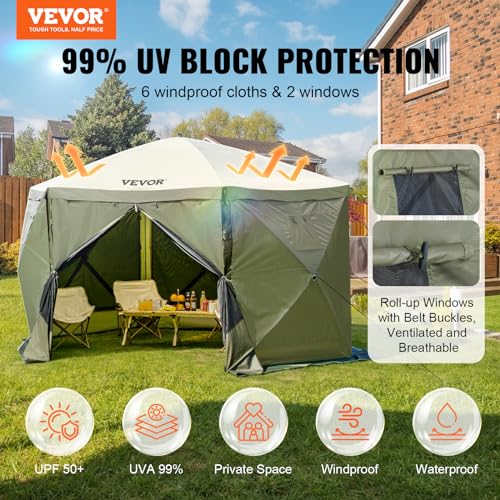
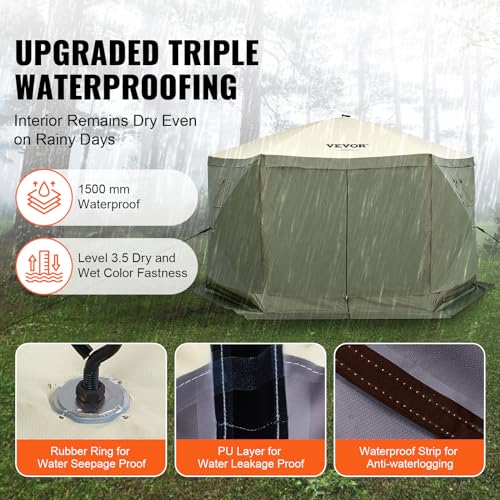
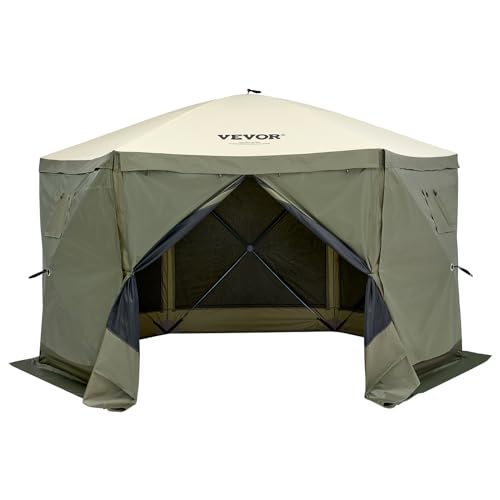
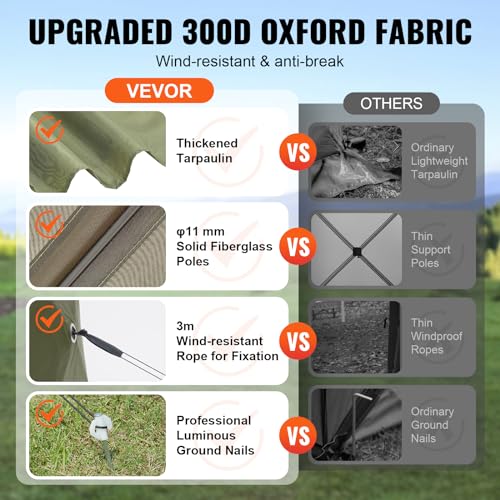
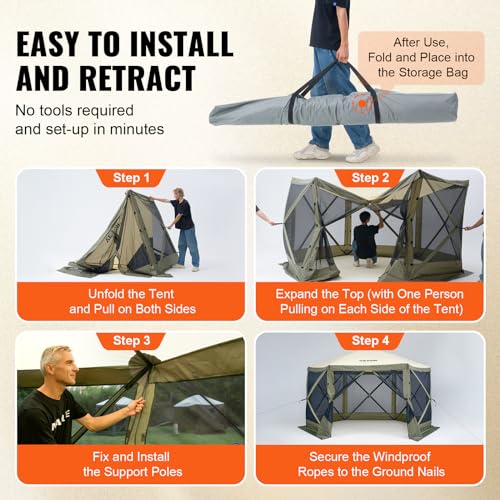
This is the most complete package in the lineup, 12×12 feet of space, removable wind panels, mesh windows, and a rugged hybrid frame that holds up in real conditions. The ability to swap mesh for solid panels makes it adaptable: open for airflow on calm days, closed for privacy or wind protection when needed. Owners consistently rate it as the most versatile screen shelter they’ve owned.
It’s not the lightest, and setup takes a few extra minutes due to the panel system, but the trade-off is unmatched flexibility. Compared to the East Oak or Lenotos, this one does more, it’s closer to a hybrid screen room than a pop-up. The UPF 50+ canopy and dual zippers add comfort, and the carry bag, while heavy, keeps everything organized. If you want one shelter that handles sun, bugs, wind, and privacy, this is the one.
Product photos
Screen House Tent 13x9ft with Magnetic Doors

Strengths
- Includes projection screen
- Large 13×9 footprint
- Magnetic doors
Trade-offs
- Bulky setup
- Screen limits airflow
- Not for rugged use
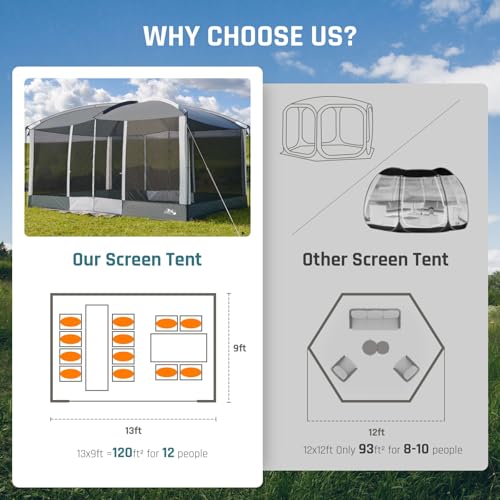
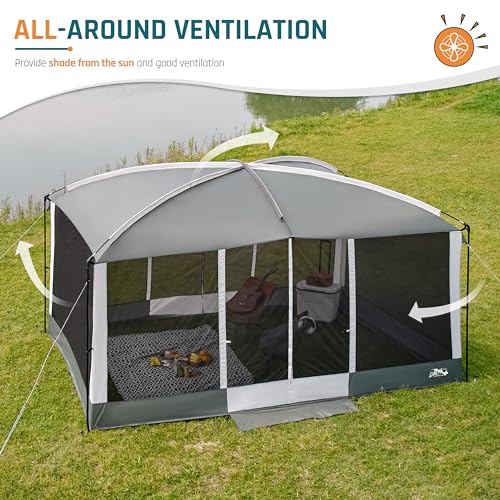
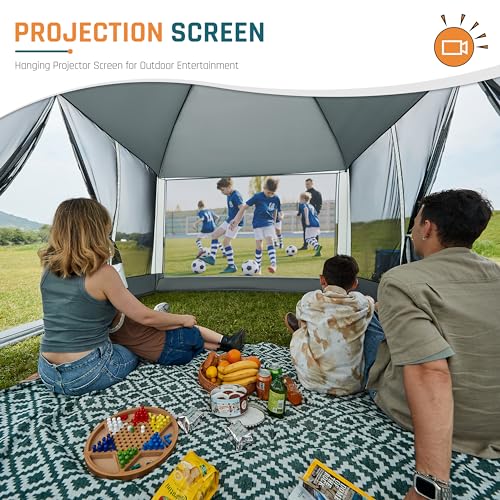
This is the party tent of the bunch, 13×9 feet gives you nearly 120 sq ft, and the included projection screen turns any backyard into an outdoor theater. The magnetic doors are functional, and the step mats and reflective guylines add thoughtful safety touches you won’t find elsewhere. Owners love it for movie nights, kids’ sleepovers, and weekend hangouts.
But that entertainment focus means it’s not optimized for trail use. The size makes it slow to anchor, and the screen, while fun, is an extra point of failure. Ventilation is good but not exceptional, and the gray color absorbs more heat. Compared to the VEVOR or Lenotos, it’s less durable and more niche. If you want a movie-ready backyard dome, this is your tent. For serious camping, look elsewhere.
Product photos


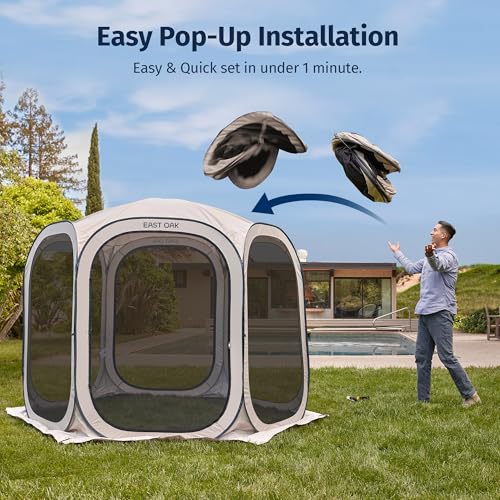
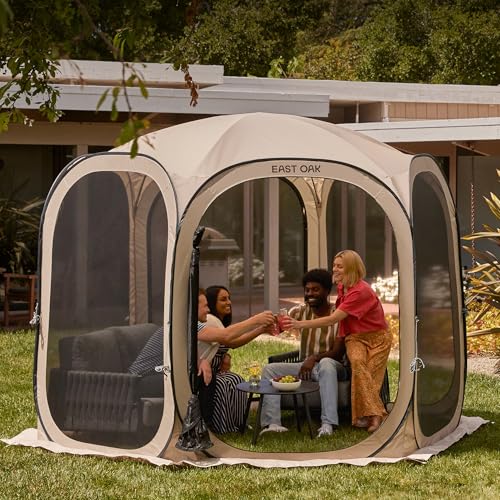
East Oak 10×10 Pop Up Screen Tent

Strengths
- Steel frame for stability
- Durable stitching
- Great value
Trade-offs
- Heavier than fiberglass
- No magnetic doors
- Carry bag not wheeled
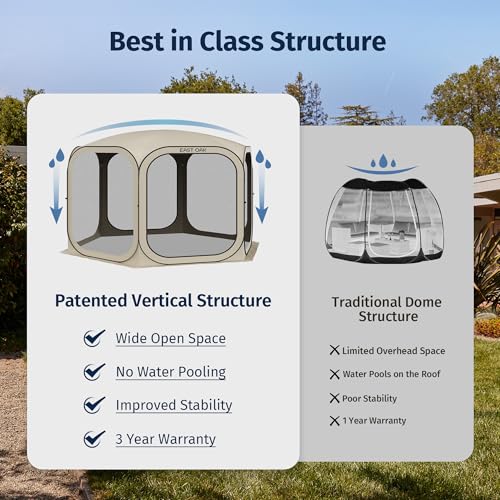
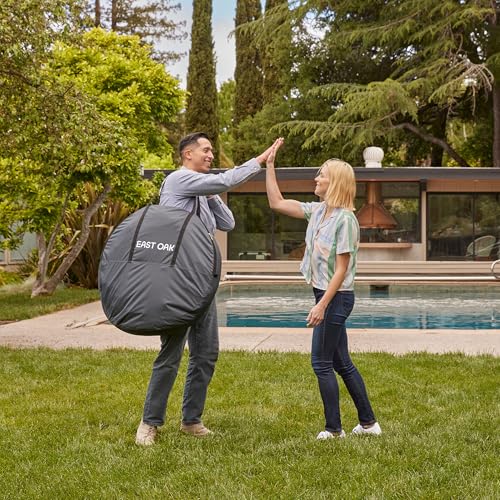
This is the tent I’d recommend to a friend who wants solid performance without overspending. The reinforced steel frame sets it apart, it’s heavier than fiberglass models, but owners consistently say it feels more grounded, especially when fully staked. The 10×10 footprint is generous, and the double-stitched zippers are a small but meaningful upgrade over cheaper alternatives that rip after a season.
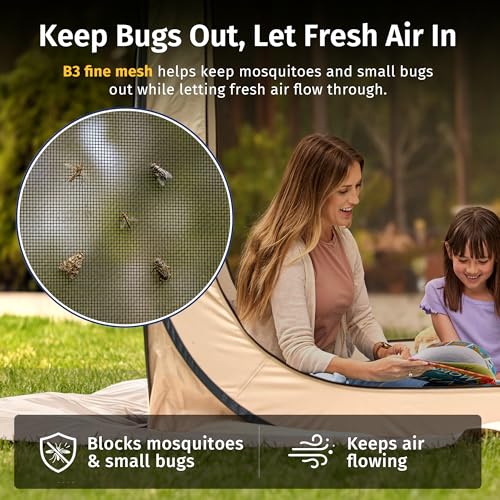
It doesn’t have flashy features like magnetic doors or a projection screen, but it nails the basics: UPF 50+ protection, full mesh walls, and a one-person setup that actually works. Compared to the Quictent budget model, this one feels more durable and better finished. For most buyers, this is the sweet spot between cost and confidence. You’re not paying for gimmicks, just a reliable screened space.
Product photos
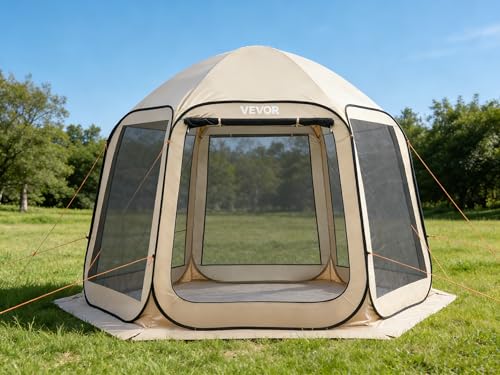
VEVOR 10×9.2ft Pop Up Screen House
Strengths
- Sturdy hybrid frame
- Good wind resistance
- Includes full accessory kit
Trade-offs
- Bulkier than ultralight models
- Slightly awkward shape
- Not fully waterproof
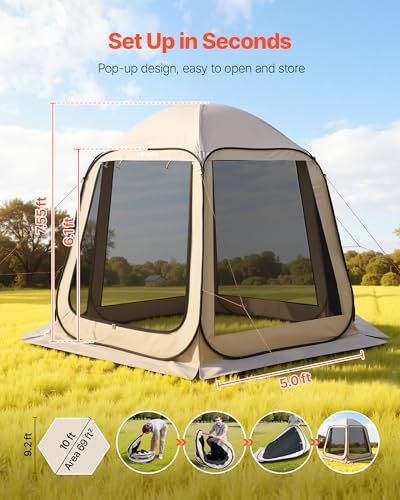
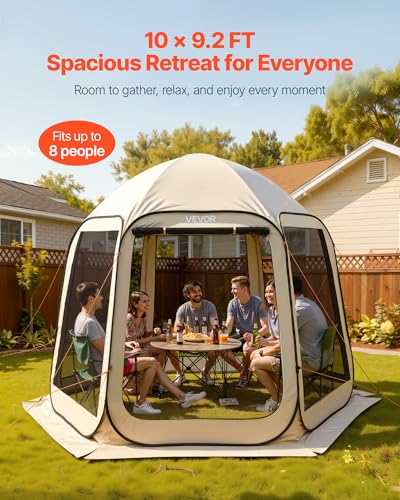
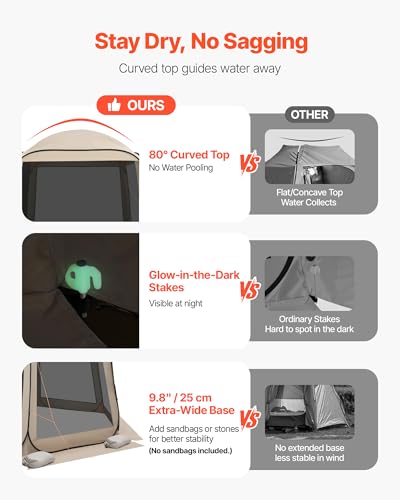
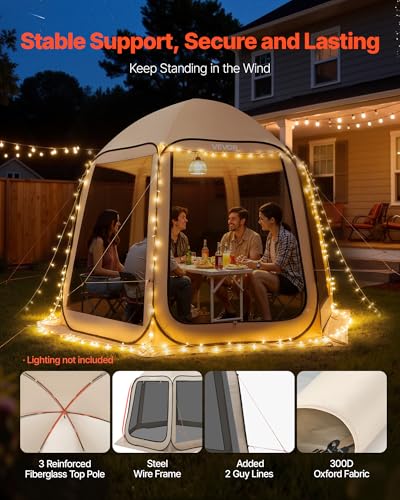
This model leans hard into stability, and it shows. The hybrid steel and fiberglass frame is noticeably more rigid than most pop-up screen houses, and owners praise its ability to hold up in gusty conditions, a rarity in this category. At 10×9.2 feet, it’s slightly asymmetrical but still fits 6–8 people comfortably, and the curved roof helps shed wind and light rain. It’s not the lightest, but the trade-off is real durability.
The 300D Oxford canopy adds a layer of weather resistance that many competitors lack, and the full mesh walls offer reliable bug protection. Setup is truly tool-free and repeatable, even after multiple uses, a common pain point with cheaper pop-ups. Compared to the Alvantor, this one feels like the grown-up version: heavier, yes, but far more dependable when the wind kicks up. My pick if you’re using it on a deck or campsite with exposure.
Product photos
Alvantor Hexagon Pop Up Screen House

Strengths
- Ultra-lightweight
- Pop-up in seconds
- Compact carry bag
Trade-offs
- Fiberglass less stable in wind
- Not waterproof
- Requires full anchoring
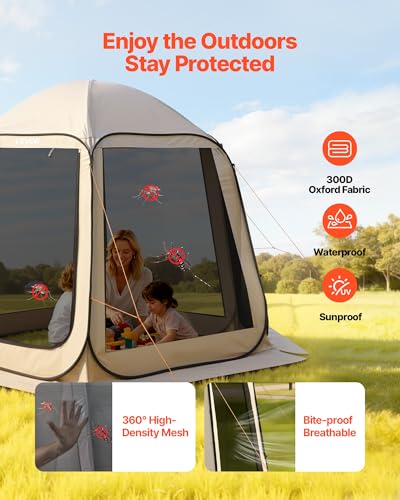
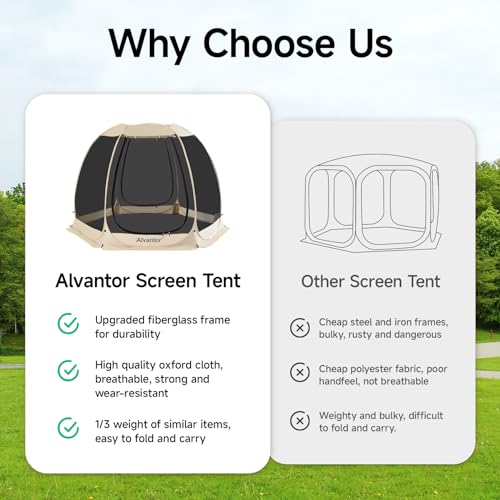
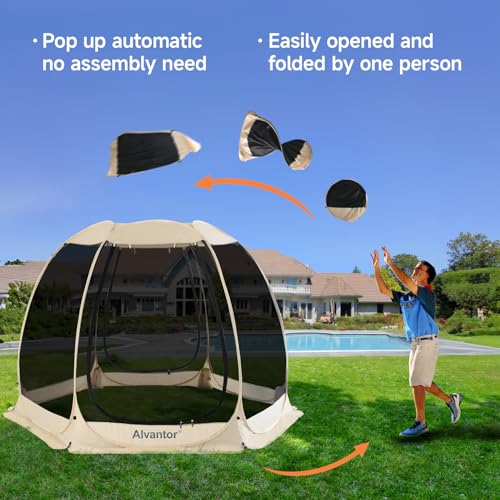
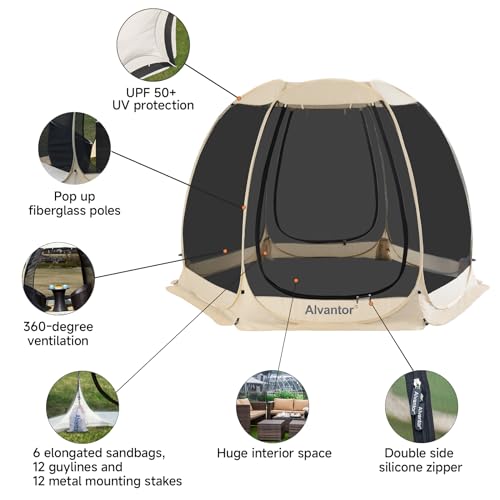
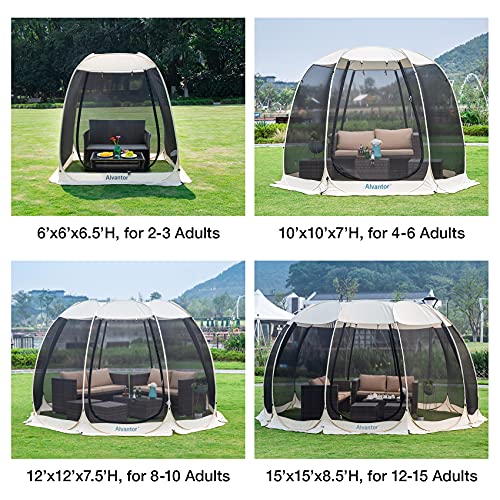
At 15 pounds, this is the lightest pop-up screen house in its size class, a real standout if you’re hauling gear to a campsite or setting up in the backyard solo. The fiberglass frame delivers on the promise of a quick, automatic pop-up, and owners consistently report it goes up in under a minute with no tools. For its weight, it’s impressively spacious at 10×10 feet, and the hexagonal shape gives it a unique look that fits well in garden or patio settings.
That said, the lightweight design comes with trade-offs. The fiberglass frame, while rust-resistant, doesn’t handle strong wind as well as steel-reinforced models. Reviewers note it needs full anchoring, stakes, sandbags, guylines, even in moderate breezes. And despite the UPF 50+ top, it’s not waterproof, so sudden showers mean a quick takedown. If you prioritize portability over ruggedness, this makes sense. But for exposed sites, I’d look elsewhere.
Product photos

Quictent 10×10 with Magnetic Doors
Strengths
- Magnetic doors work well
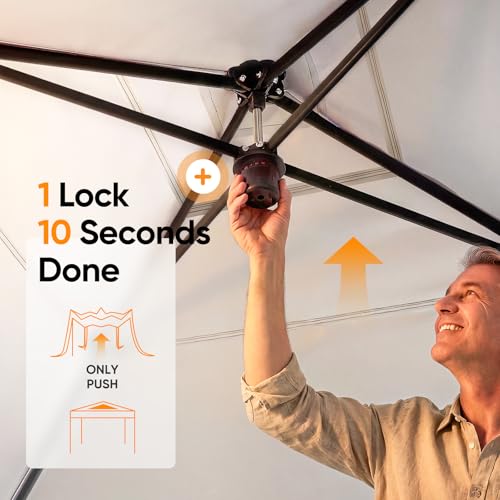
- Quick one-person setup
- Waterproof and UV-resistant
Trade-offs
- Fiberglass frame wobbles in wind
- Wheeled bag adds bulk
- No sandbags included
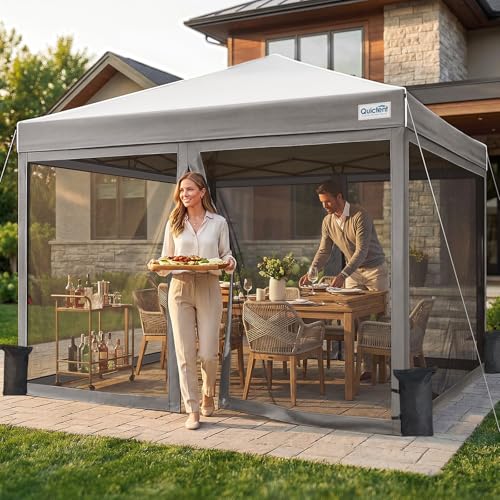
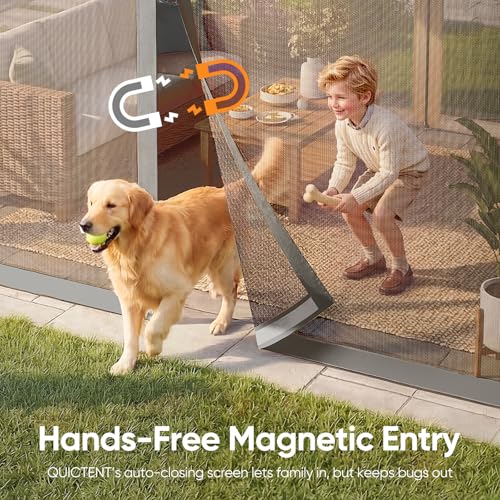
The magnetic doors are the star here, they work well enough that owners actually mention using them hands-free, even with arms full of coolers or gear. That makes this one of the most user-friendly models for families or frequent entries. The center-lock frame ensures quick setup, and the 420D Oxford top offers solid UV and water resistance, similar to the other Quictent model but with smarter access.
It’s not the most rugged, the fiberglass frame still limits wind performance, but for backyard hangs or casual camping, the convenience factor is high. Compared to the VEVOR or East Oak, it trades some stability for ease of use. If you’re constantly going in and out, this one reduces friction in a way others don’t. Just don’t expect it to anchor like a steel-frame tent.
Product photos

Quictent 10×10 Pop Up Screen Canopy
Strengths
- Waterproof canopy
- Lowest price point
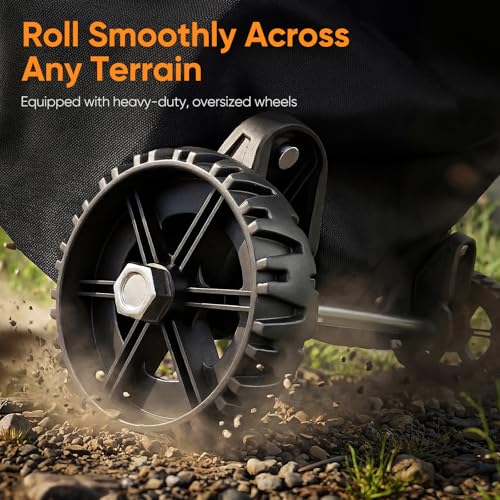
- Wheeled carry bag
Trade-offs
- Less durable frame
- No sandbags or guylines
- Zippers can snag
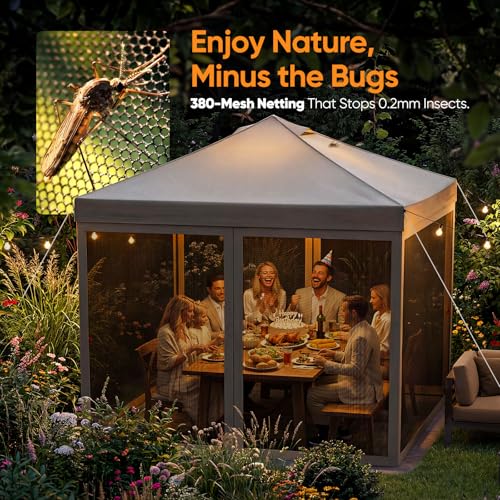
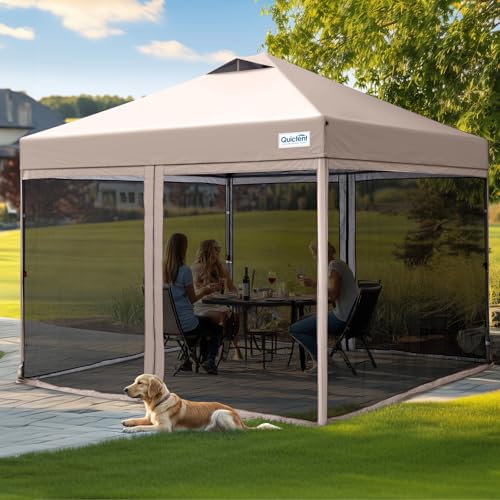
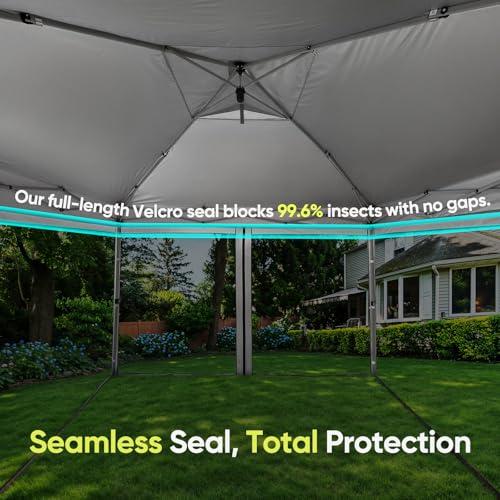
If you’re on a tight budget but still want a full 10×10 footprint, this Quictent delivers. It’s one of the few affordable models that includes waterproofing, the 420D Oxford fabric with PU coating can handle light rain, which most screen houses can’t. The full Velcro seal around the mesh is a smart touch, eliminating gaps where bugs sneak in.
But that budget price means compromises. The frame isn’t as robust as East Oak’s steel build, and some owners report slower pop-up action after repeated use. It also lacks the stability upgrades like sandbags or guylines, you’re relying on stakes alone. Still, for occasional use or fair-weather camping, it’s hard to beat the price. I’d pick this for weekend picnics or as a second tent for guests, not for long-term or exposed setups.
Product photos
Lenotos 10×10 Pop Up Screen House
Strengths
- Excellent UV protection
- Waterproof canopy
- Compact folded size
Trade-offs
- Fiberglass frame less stable
- Higher price than basic models
- No magnetic doors
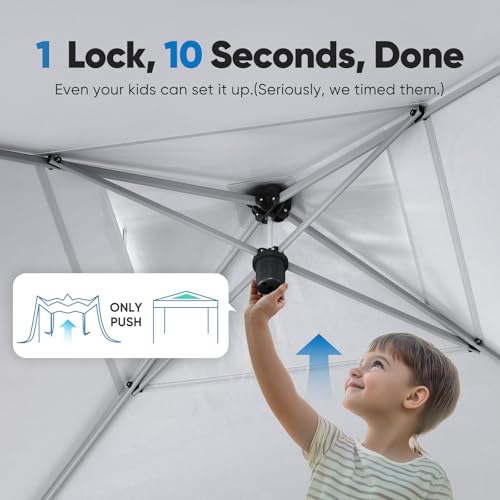
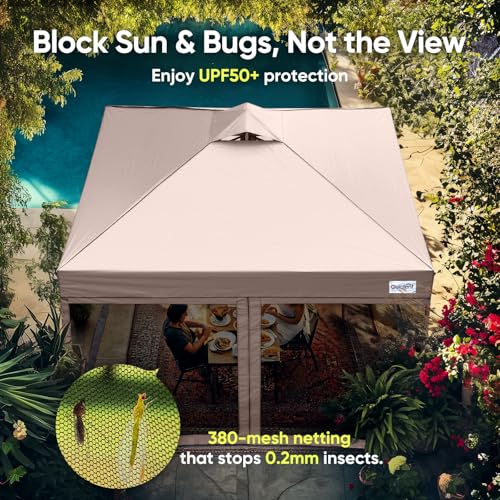
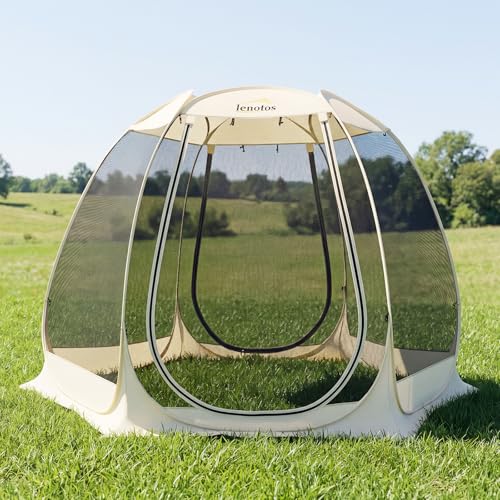
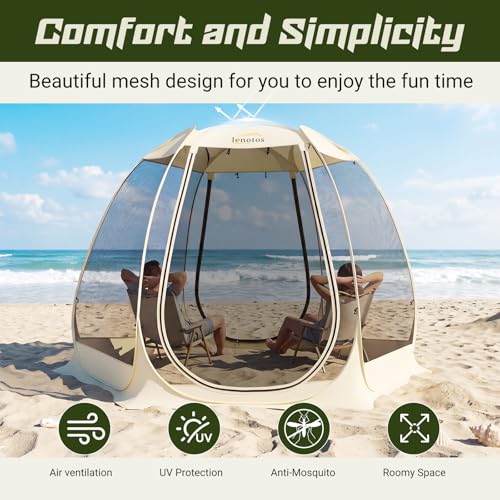
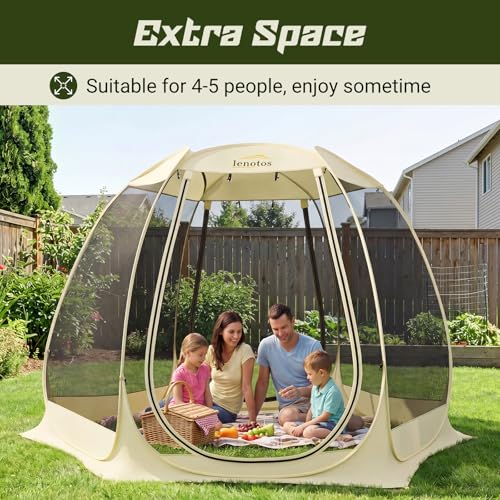
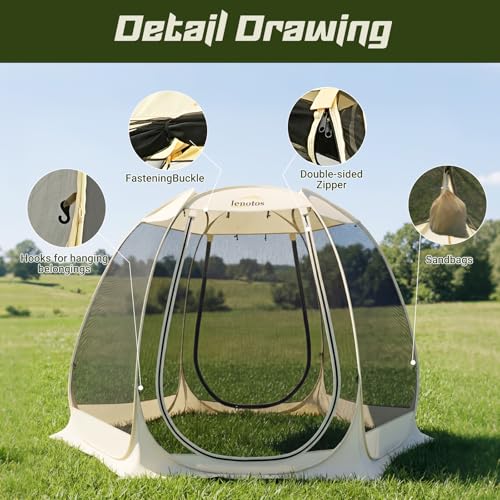
This tent makes UV protection its headline feature, and it delivers. The 150D Oxford fabric with UPF 50+ blocks 99% of UV rays, making it one of the best options for all-day sun exposure. It’s also one of the few that claims true waterproofing, and owner feedback confirms it holds up in light storms better than most mesh-only models.
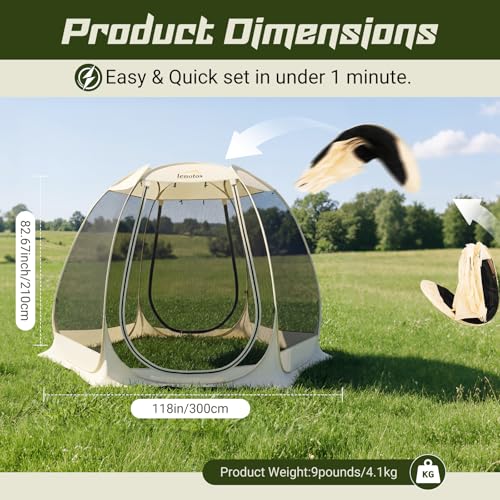
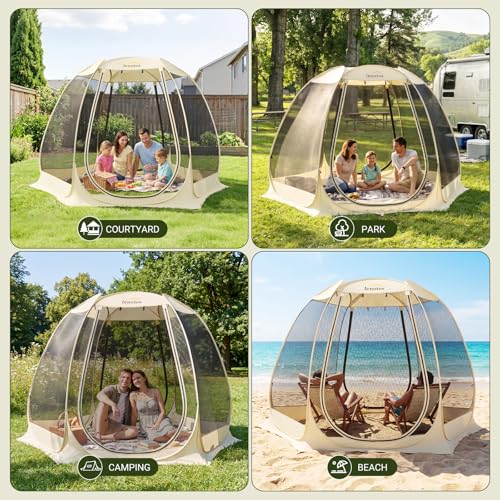
The compact 28-inch fold is excellent for storage, and the triple anchoring system (stakes, sandbags, guylines) adds real peace of mind. Setup is consistently smooth, and the dual doors improve traffic flow. Compared to the East Oak, it’s slightly less rugged in frame but better in sun and rain defense. If you’re setting up at the beach or in a high-sun zone, this is the smarter buy.
Product photos
How We Chose These screened tents
Rather than a hands-on lab test, this is a research-led comparison of specs and owner feedback to determine the strongest contenders among screened tents. I dove into published specifications – focusing on materials, dimensions, and included accessories – and then weighed those against what owners are saying about real-world performance. We also considered expert reviews from established outdoor gear sites to build a well-rounded understanding of each model’s strengths and weaknesses. Ultimately, we ranked these tents based on how well they delivered on core promises.
For screened tents, stability, bug protection, and ease of use were the most heavily weighted factors. A flimsy tent that collapses in a breeze isn’t useful, no matter how affordable. Similarly, gaps in the screening or a poorly designed door negate the whole point of keeping insects out. Finally, a tent that takes an hour to set up is a non-starter for casual campers or backyard relaxation, so quick setup was a priority. Knowing which models consistently deliver on these points separated the top performers.
Specifications reliably tell you about materials – the denier of the fabric, the type of poles, and the mesh density. However, owner feedback provided critical insights into durability and wind resistance. For example, specs might state a tent is “windproof,” but reviews will reveal if it actually holds up in moderate gusts. We also looked to owner comments to gauge the accuracy of advertised features and identify any common issues with quality control. Learning which are the top screened tent brands helped focus our research.
Choosing The Right screened tents
Picking the right screened tent can dramatically improve your outdoor enjoyment, but there’s more to it than just keeping bugs out.
A quality screened tent balances ventilation, stability, and ease of use. Look for durable materials like fiberglass or steel frames, tightly woven mesh for effective insect protection, and features like reinforced corners and secure anchoring systems. Consider the size needed for your group and intended activities, and prioritize UV protection for extended sun exposure.
Size and Capacity
Don’t assume a “10×10” tent will comfortably fit ten people. Manufacturers often state maximum capacity, but real-world comfort depends on how you intend to use the space. Are you planning to set up camp chairs and a small table inside? Or will it be a dedicated dining area? I’ve seen too many gatherings cramped because someone overestimated the usable space. For most families, a 10×10 is decent, but if you anticipate hosting larger groups, especially if you live in an area with unpredictable weather, stepping up to a 12×12 or larger model will pay off.
Frame Material and Stability
The frame is the backbone of any screened tent, and material choice heavily influences both weight and durability. Fiberglass poles are common, keeping costs down and weight manageable, but steel frames offer superior wind resistance. If you camp in exposed areas or frequently encounter gusty conditions, investing in a tent with a steel or reinforced fiberglass frame is worth it. Consider also the anchoring system; flimsy stakes are useless in anything beyond soft ground. A good tent will come with robust stakes and guylines, and ideally, also offer sandbag options for added security. If you’re looking for something to use as a more permanent backyard shelter, consider how easily the stakes will penetrate the ground you have.
- A basic polyester tent with aluminum poles might be fine for calm backyard use.
- A fiberglass-framed tent is a good all-around choice for occasional camping or picnics.
- A steel-framed tent is the most durable option, perfect for frequent use or areas prone to strong winds, and it’s often what you’ll find in commercial-grade setups.
Features and Usability
Beyond the basics, several features can significantly enhance your experience. Magnetic closures on the doors, like those found in the Quictent models, are incredibly convenient, allowing hands-free entry and exit. Removable panels add versatility, letting you adjust ventilation and privacy as needed. If you plan to use your screened tent for more than just bug protection, look for features like a projection screen (as seen in the DMH Outdoors tent) for outdoor movie nights. And remember that even a simple hook for hanging a lantern or light strip can make a big difference. If you’re planning on using the tent frequently, especially on uneven ground, a well-designed setup and takedown process is crucial. Don’t underestimate the value of a good carry bag, and remember that even the best shelter benefits from a tent footprint purpose to protect the floor.
A tent’s wind resistance isn’t just about the frame; it’s about the whole system. Secure the guylines properly, use all the provided stakes and sandbags if possible, and orient the tent to minimize exposure to prevailing winds.
Finally, if you are looking for a more compact shelter for shorter trips, researching the top two-person tents might be a good place to start.
Screened Tents Compared
Here’s a comparison of key specifications for various screened tents to help you make an informed decision.
| Product Name | Size (ft) | Capacity | UV Protection | Waterproof | Doors |
|---|---|---|---|---|---|
| VEVOR 12x12ft Pop Up Gazebo | 12×12 | 6-8 | UPF 50+ | No | 1 |
| Screen House Tent 13x9ft | 13×9 | 6-8 | N/A | N/A | 2 |
| East Oak 10×10 Pop Up Screen Tent | 10×10 | 4-6 | UPF 50+ | N/A | 1 |
| VEVOR 10×9.2ft Pop Up Screen House | 10×9.2 | 4-8 | N/A | Yes | 1 |
| Alvantor Hexagon Pop Up Screen House | 10×10 | 4-6 | UPF 50+ | No | 1 |
| Quictent 10×10 with Magnetic Doors | 10×10 | 8-10 | N/A | Yes | 2 |
| Quictent 10×10 Pop Up Screen Canopy | 10×10 | 8-10 | UPF 50+ | Yes | 1 |
| Lenotos 10×10 Pop Up Screen House | 10×10 | 4-6 | UPF 50+ | Yes | 2 |
Frequently Asked Questions
What level of water resistance should I expect from a screened tent?
Most screened tents aren’t fully waterproof, but many offer some water resistance in the roof material. Expect a water resistance rating of around 2000mm for light rain, but heavier downpours may require additional coverage like a tarp, especially since screened walls won’t keep water out.
Are screened tents difficult to set up?
Pop-up styles are incredibly easy, often setting up in under a minute. Those with frames require a bit more effort, but most are designed for straightforward assembly with color-coded poles and clear instructions. If you anticipate frequent moves, a pop-up design will save you time.
What’s the difference between UPF and bug protection in a screened tent?
UPF (Ultraviolet Protection Factor) ratings indicate how well the tent fabric blocks harmful UV rays from the sun, which is crucial for extended daytime use. Bug protection refers to the mesh density that prevents insects from entering, and a tighter weave offers better defense against no-see-ums and other small pests.
Can I use a screened tent on a hard surface like a patio?
Yes, but you’ll need to adapt your anchoring method. Traditional stakes won’t work on concrete, so consider using sandbags or weight bags placed over the legs of the tent to provide stability. Some models also have loops for securing with rope or bungee cords.
What are the benefits of a hexagonal screened tent over a traditional square or rectangular one?
Hexagonal designs generally offer more usable space for the same footprint, and the shape can improve airflow. They also tend to look a bit more visually appealing, and can sometimes be better at deflecting wind. If you’re looking for something a little different and want a larger interior, explore the top two-man tent picks.
The Bottom Line
Ultimately, choosing a screened tent comes down to balancing convenience with robustness. You can find options at various price points, but for a blend of quality, features, and durability, the Quictent 10×10 with Magnetic Doors stands out as the strongest overall performer. It offers a comfortable space, helpful features like magnetic closures, and a level of weather protection that many simpler models lack.
If you’re on a tighter budget, or primarily need a shelter for calm backyard days, the VEVOR 12x12ft Pop Up Gazebo is a fantastic value. For those prioritizing versatility and a unique design, the Alvantor Hexagon Pop Up Screen House delivers a spacious and visually appealing option. And for anyone needing a truly waterproof screened shelter, the VEVOR 10×9.2ft Pop Up Screen House is a standout choice.
Don’t get caught up chasing the highest denier rating or the most elaborate feature set. A well-chosen screened tent, properly secured, will provide years of enjoyment. Prioritize a stable frame, reliable bug protection, and a size that comfortably accommodates your needs, those fundamentals are far more important than any single specification when choosing the right tent.
