
7 Best 10-Person Tents of 2026
This post contains affiliate links. As an Amazon Associate, we earn from qualifying purchases.
The CORE 10 Person Cabin Tent is the best overall for its tall walls and reliable build, the HINSTANT 10 Person Instant Cabin Tent is a solid budget-friendly pick with strong weather resistance, and the PORTAL 3-Room Tent with Screen Room offers unmatched versatility for large groups needing separate spaces.
If you’re planning a family reunion, a group trip, or just need serious shelter for a big crew, a ten-person tent sounds like the answer, until you realize how many compromises some of them make. Too often, they’re heavy, cramped, or flimsy in wind and rain. I’ve seen it happen more times than I can count.
This guide cuts through the marketing hype. I focused on real-world feedback, build quality, and smart features that matter when you’re actually out there, dealing with weather, setup stress, and ten different personalities. These picks balance space, durability, and value based on what actual owners report and what the specs tell us.
Top 7 Ten Person Tents in the Market
The Best Ten Person Tents, Reviewed
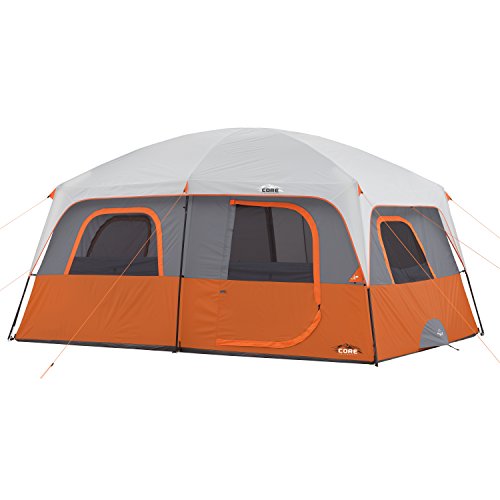
CORE 10 Person Cabin Tent
Strengths
- Excellent weather protection
- Spacious upright design
- Built-in storage
Trade-offs
- Heavier than average
- Setup slower than instant tents
- Rainfly could cover more
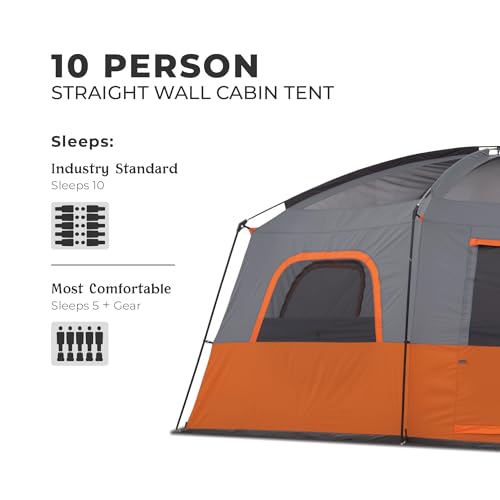
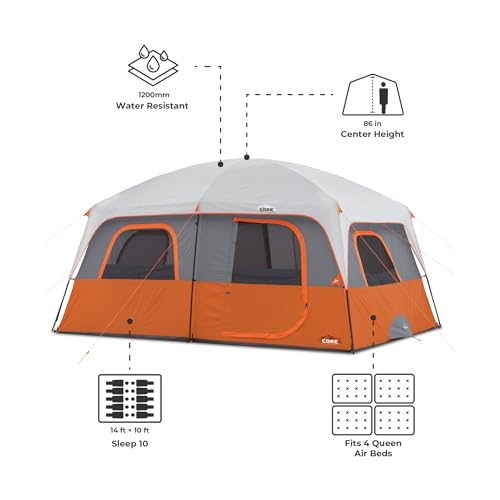
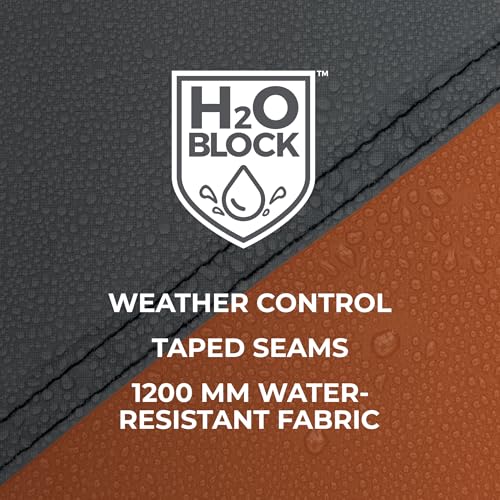
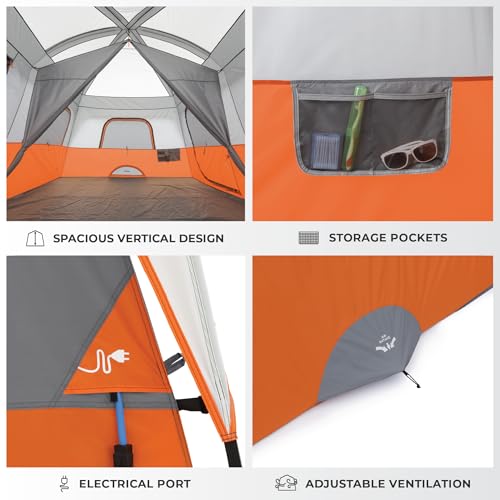
This is the tent I’d recommend to a friend who wants one reliable, all-season family shelter without overcomplicating things. The nearly straight walls give it a roomier feel than most dome designs, and the 86-inch height lets adults move freely. The 1200mm waterproofing and fully taped seams are where it pulls ahead, reviewers consistently say it stays dry in downpours that soak lesser tents.
It’s not the lightest at 32 lbs, but the trade-off is durability and smart features like the gear loft and interior pockets. Ventilation is solid with lower intake vents and a mesh ceiling, though not class-leading. Compared to instant models, setup takes a few extra minutes, but the stability is worth it.
Product photos

PORTAL 3-Room Tent with Screen Room
Strengths
- Family-friendly room layout
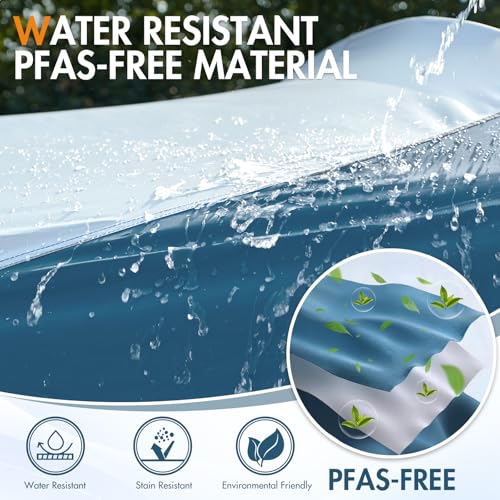
- Eco-friendly materials
- Large screen room
Trade-offs
- Tunnel design less wind stable
- Longer setup time
- Heavier than average
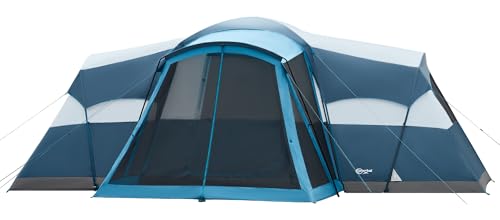
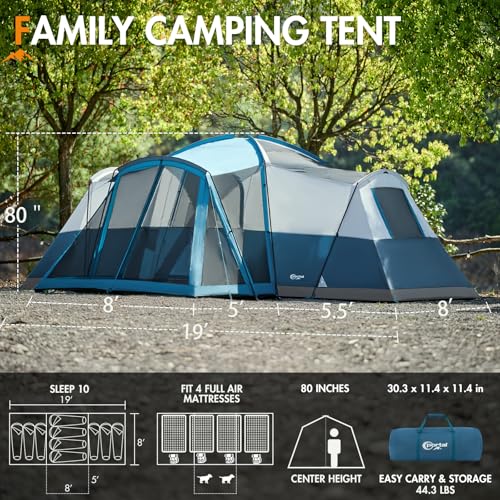
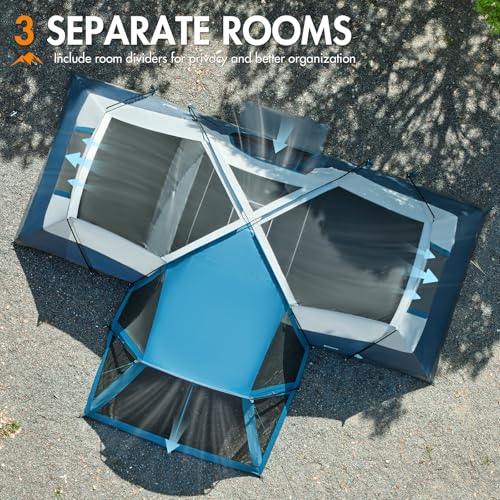
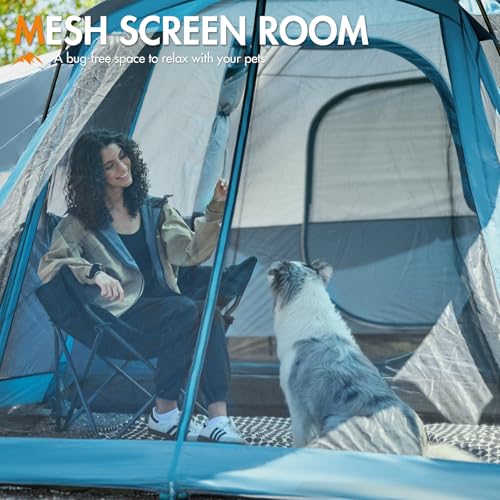
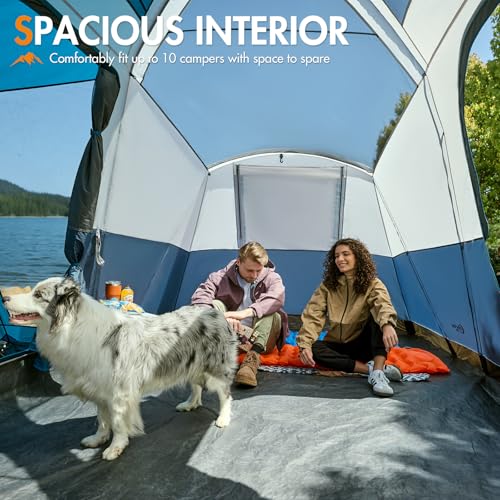
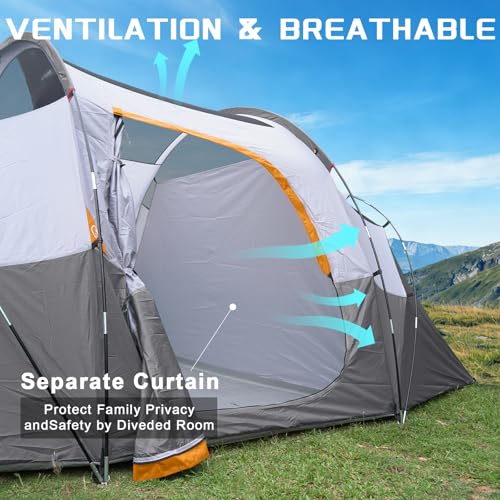
The three-room layout and separate screen room make this feel like a camping suite, it’s built for families who want space, privacy, and comfort without sacrificing eco-conscious materials. The 80-inch height and tunnel design give it a homey, open layout, and the 66D fabric feels more rugged than typical polyester.
Owners love the screen room for morning coffee or bug-free evenings, and the PFAS-free construction is a real differentiator for environmentally aware buyers. Ventilation is excellent, though the tunnel shape can catch wind, the included guylines help. It’s not the fastest to set up, but the organization and thoughtful design make it worth the extra minutes.
Product photos
Wakeman 10 Person Cabin Tent
Strengths
- Budget-friendly
- Room divider included
- Good headroom
Trade-offs
- Low waterproof rating
- Heavy for size
- Basic ventilation
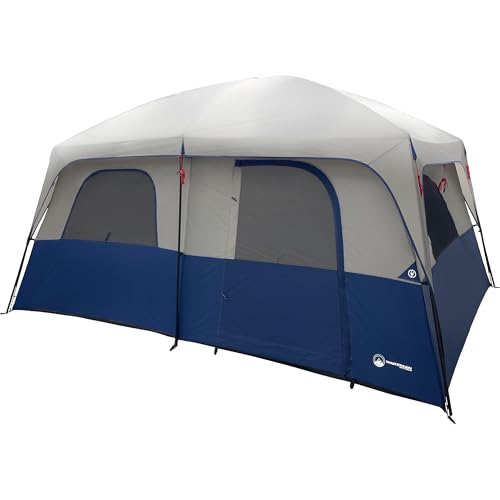
This is clearly built to undercut pricier models, and it shows. The 86-inch center height and 4-queen-mattress capacity make it competitive on space, and the inclusion of a room divider and power port adds value. But the 800mm taffeta rating is where it cuts corners, owners in rainy regions report damp floors after prolonged exposure.
It’s not an instant tent, but setup is straightforward with included poles and instructions. At 31.3 lbs, it’s on the heavier side for its class, and ventilation is just average. Still, for a first-time buyer or occasional camper on a budget, it delivers core functionality without frills.
Product photos
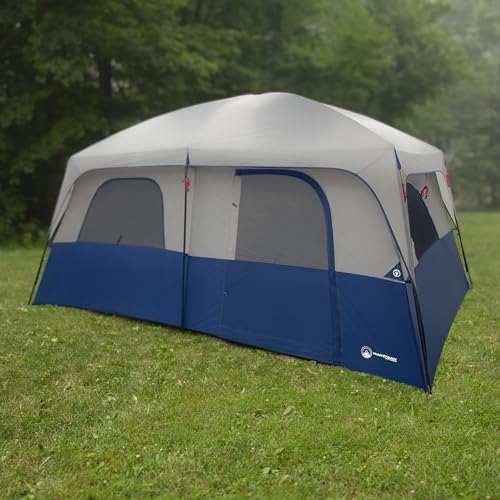
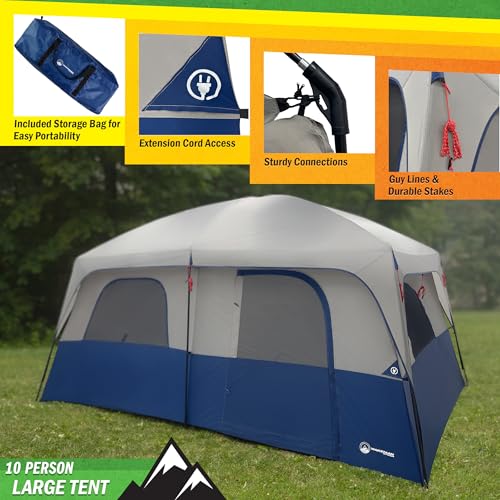
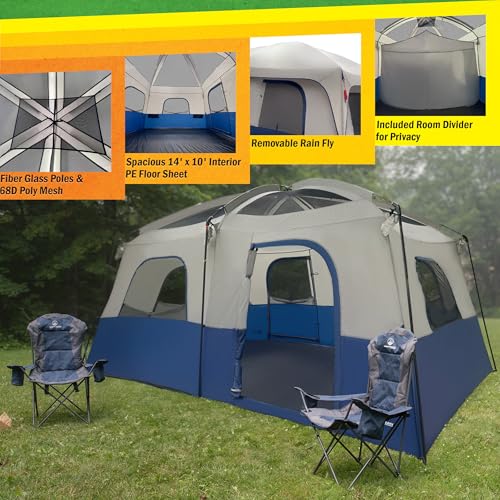
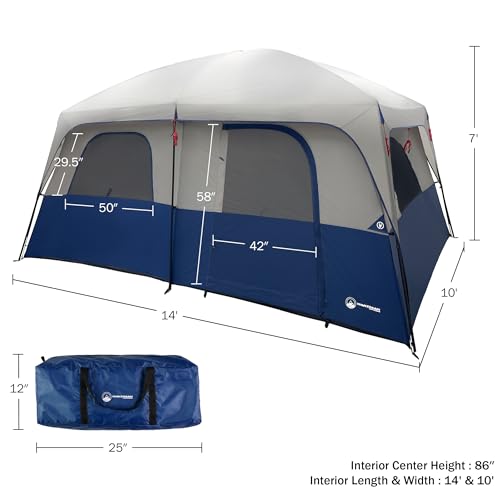
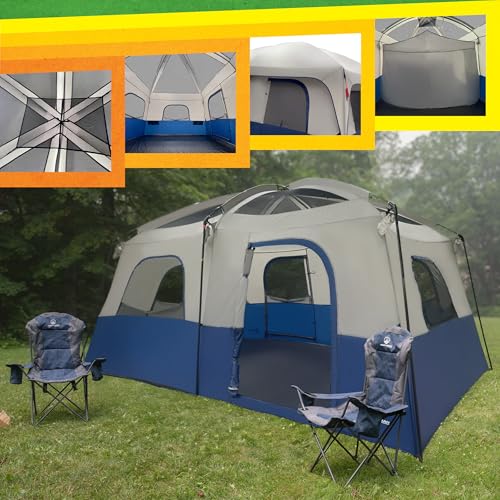
FanttikOutdoor Zeta C10 Pro Instant Tent

Strengths
- True instant setup
- Good wind resistance
- Excellent mesh ventilation
Trade-offs
- Inner tent not waterproof
- Fiddly repacking
- Rainfly required in rain
The 60-second setup is real, this tent lives up to its instant promise, thanks to pre-attached poles and a carbon steel frame that snaps into place cleanly. At 27.5 lbs, it’s manageable for transport, and the 76-inch height works for most. The B3 mesh on all sides delivers strong airflow, and owners report it handles 35 mph winds well when staked properly.
One caveat: the inner roof is mesh, not solid, so the outer rainfly is essential in wet weather. Some users mention zipping the tent into the carry bag is tricky if not folded precisely. But for beginners or those tired of wrestling with poles, this is one of the most user-friendly options.
Product photos
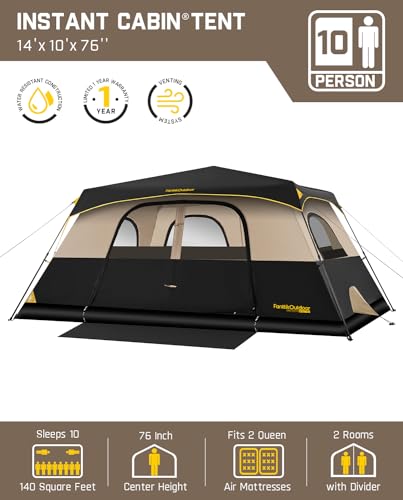
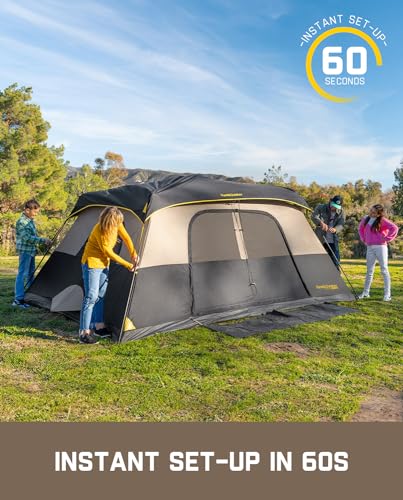
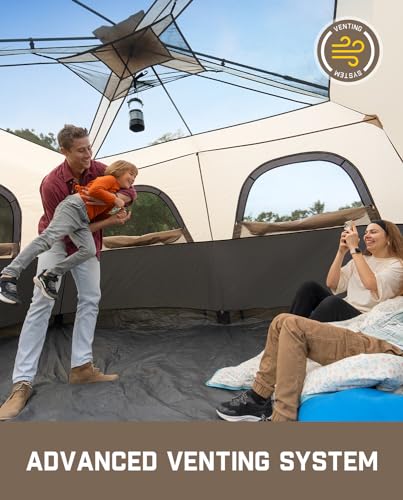
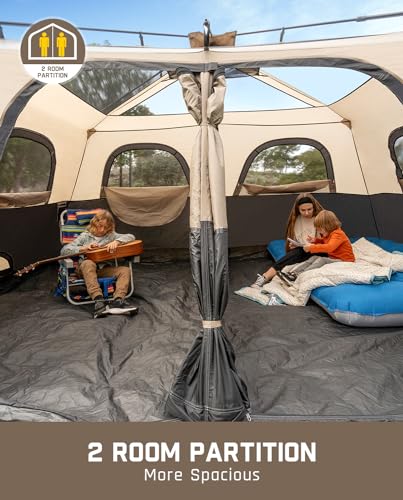

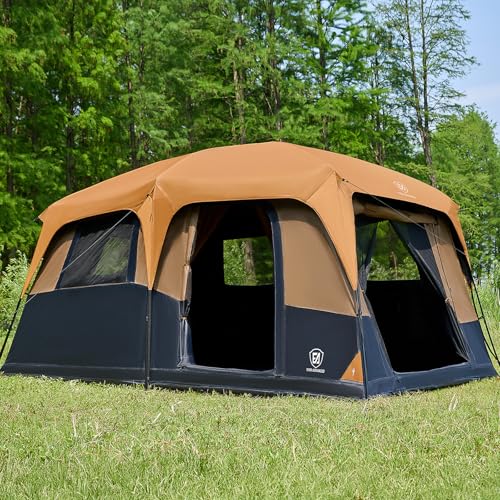
EVER ADVANCED Blackout 10 Person Tent
Strengths
- Superior sun protection
- Tall interior height
- Blackout for better sleep
Trade-offs
- Dark interior not for everyone
- No stargazing ceiling
- Slightly heavier
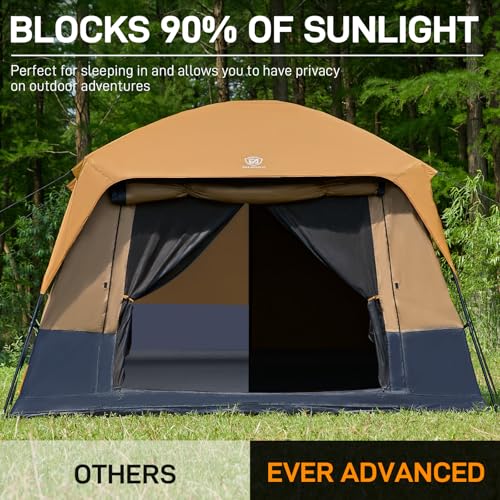
The blackout fabric is the star here, it drops interior light significantly, making it easier to sleep late or shield kids from morning sun. The dark coating also reduces heat buildup, and owners in sunny regions say it stays noticeably cooler than standard tents. With 84 inches of headroom, it’s the tallest on this list, and the dual doors with awning potential add versatility.
Ventilation is strong with four roll-up mesh windows and overhead netting, though the solid roof limits stargazing. The 14×10 footprint fits three queen air mattresses comfortably. It’s not the lightest, and the blackout material may feel too dark for some, but for sun-drenched festivals or hot climates, it’s a smart pick.
Product photos
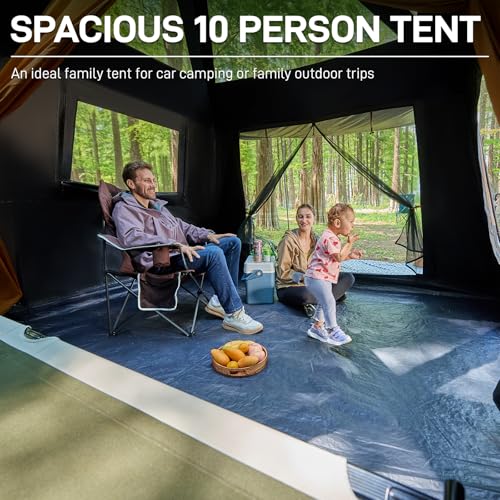
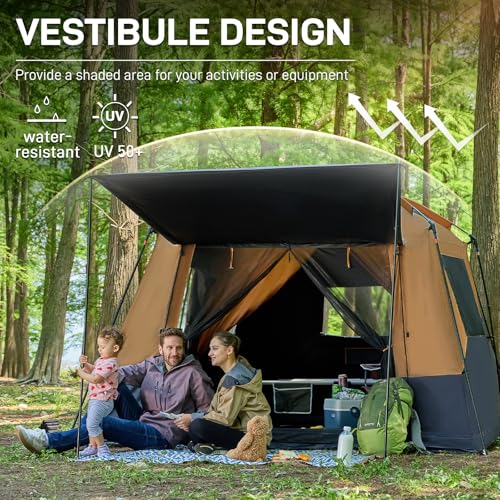

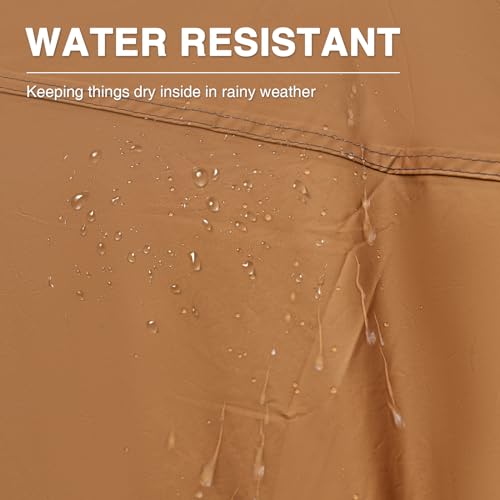
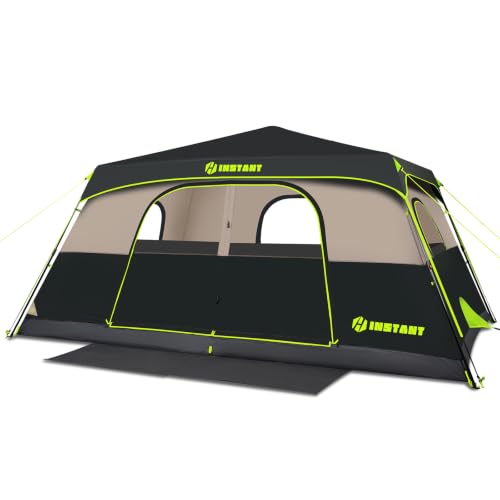
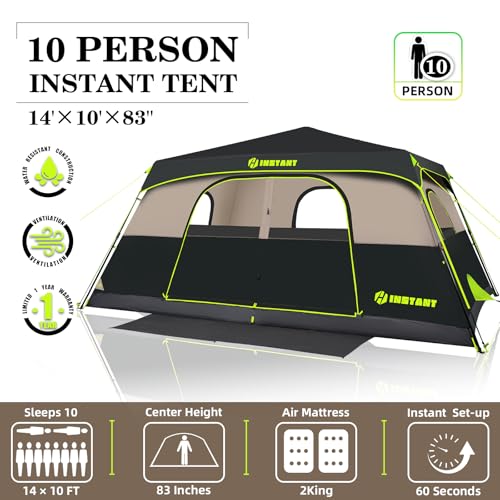
HINSTANT 10 Person Instant Cabin Tent
Strengths
- Outstanding ventilation
- Strong waterproofing
- Quick 60-second setup
Trade-offs
- Bulky packed size
- Mesh ceiling limits privacy
- Occasional pole resistance
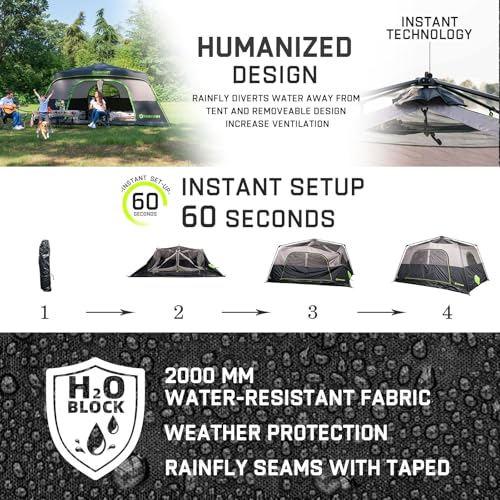
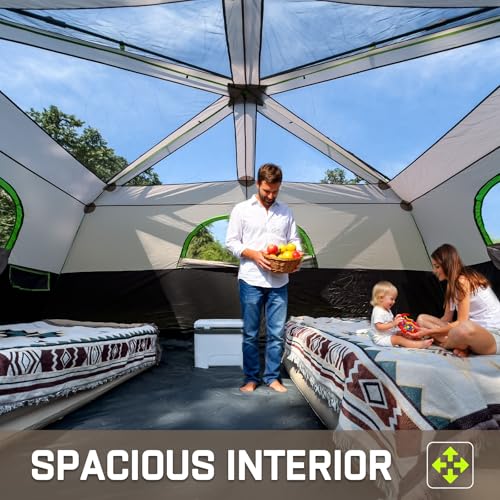
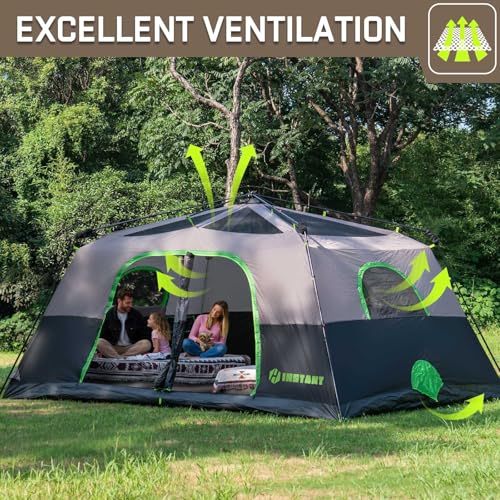
If ventilation were the only scoring category, this tent would win hands down. The mesh ceiling, six large windows, and dual bottom vents create real airflow, owners in humid climates especially praise how well it breathes. The 83-inch height helps, and the 2000mm PU rating is solid for rain, backed by a fully taped rainfly and thick stakes.
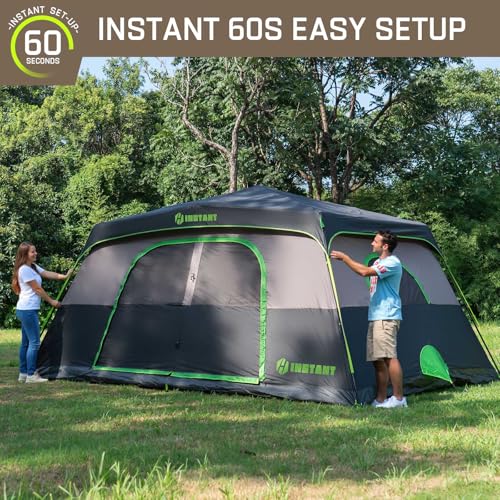
The instant pop-up mechanism works as advertised, but some users note the poles can bind if not aligned perfectly. At 27 lbs, it’s not the lightest instant tent, but the expandable carry bag is a nice touch. I’d pick this over others if I were camping in buggy, sticky conditions where airflow is critical.
Product photos
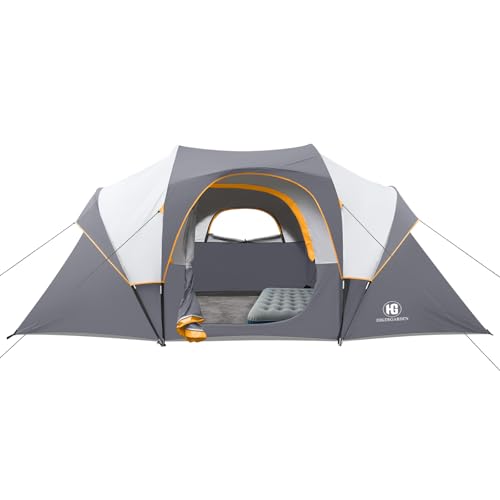
HG 10 Person Family Dome Tent
Strengths
- Lightweight
- Easy setup
- Privacy divider
Trade-offs
- Low waterproof rating
- Modest headroom
- Fiberglass poles
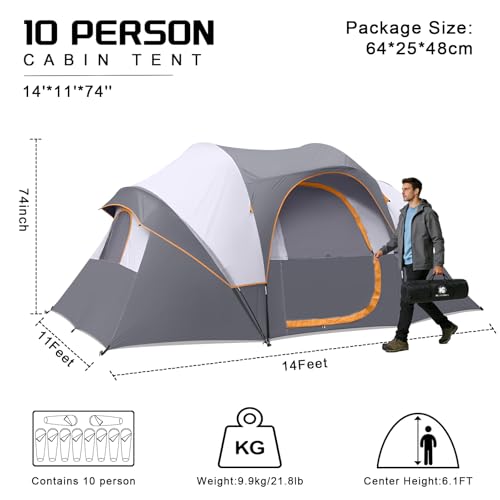
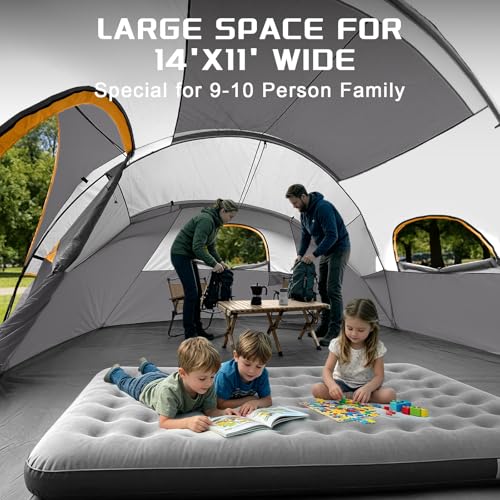
At 20.5 lbs, this is one of the lighter 10-person tents on paper, and that matters when you’re hauling gear from car to site. The 74-inch center height is workable, but not generous, taller users will still need to duck slightly. Owners consistently report it holds up fine in mild wind, though the fiberglass poles don’t inspire confidence in serious storms.
Where it stands out is simplicity: setup in under 10 minutes, smooth zippers, and a privacy divider that actually works. But don’t expect luxury, the 1000mm PU coating is basic by modern standards, and ventilation is minimal compared to newer models. For weekend car campers who want something light and no-fuss, it’s a decent starting point.
Product photos
How We Picked These ten person tents
Rather than a hands-on lab test, my research for these recommendations focused on a detailed comparison of published specifications and features across numerous models. I weighed owner reviews from major retailers alongside expert opinions from established outdoor gear reviewers. My goal was to identify the tents that consistently receive positive feedback regarding durability, spaciousness, and ease of use – all crucial for a comfortable group camping experience. This process allowed me to rank tents against clear criteria relevant to families and groups.
For ten-person tents, several factors proved most decisive. Spaciousness, naturally, was key; interior dimensions and usable floor space significantly impacted the overall ranking. Equally important was weather protection, specifically the quality of waterproofing (measured in mm rating) and the robustness of the tent’s construction. Finally, ease of setup played a large role, as a quick and straightforward pitch is essential when camping with a larger group. Understanding the differences between large event tents or smaller family options was also important.
Published specifications reliably indicate a tent’s physical size, material quality, and waterproofing capabilities. However, I placed greater emphasis on owner feedback regarding real-world performance – things like how well the tent holds up in wind and rain, how easy it is to set up in practice, and whether the stated capacity matches the actual usable space. Reputation and consistent positive reviews were strong indicators of a tent’s overall value and reliability, especially considering the variety of construction methods like pole and frame tents.
Choosing The Right ten person tents
Picking a ten-person tent isn’t as simple as just finding the biggest one you can. A good family-sized tent balances space with practicality, durability, and features that actually make camping more enjoyable.
A quality ten-person tent prioritizes robust waterproofing (at least 2000mm rating on the rainfly), a durable floor (at least 100gsm PE), and a frame capable of withstanding moderate winds. Look for features like multiple doors and windows for ventilation, thoughtfully placed storage pockets, and a design that maximizes usable interior space – a nearly straight-wall cabin design is preferable to a heavily sloped dome. Consider packed weight and size if you anticipate moving camp frequently.
Size and Sleeping Capacity
Don’t fall for the “ten-person” label without reading the fine print. Manufacturers often calculate capacity based on fitting people like sardines. I always recommend sizing up. If you realistically plan to have ten adults, look for a tent with a floor area of at least 150 square feet. For a more comfortable experience, especially with gear, consider a tent marketed for twelve people. Think about how you sleep, too – will everyone be on air mattresses, or are some happy with sleeping pads? Air mattresses take up significant space.
Weather Protection & Materials
A sudden downpour can ruin a camping trip quickly, so prioritizing weather protection is crucial. Beyond the waterproof rating I mentioned earlier, pay attention to seam sealing. Fully taped seams are a must-have to prevent leaks. The denier (D) of the fabric also matters; higher denier generally means more durability. Look for polyester or nylon fabrics. Also, don’t overlook the materials used for the poles. Fiberglass is affordable but can be prone to breakage, while aluminum is lighter and stronger, and is what you’ll find in tents from top tent manufacturers.
- Rainfly Coverage: Full coverage is best, extending all the way to the ground.
- Floor Material: A bathtub floor (sides extend a few inches up the walls) prevents water from seeping in.
- Ventilation: Multiple vents and mesh windows are essential to prevent condensation buildup inside the tent.
A good rule of thumb: if you’re camping in an area with unpredictable weather, invest in a tent with a higher waterproof rating and a robust pole system.
Features and Usability
Beyond the basics, consider features that will enhance your camping experience. Room dividers are fantastic for families, providing privacy and organization. A vestible (covered area outside the door) is great for storing muddy boots and gear. Many tents now include features like electrical cord access ports, which can be incredibly convenient. If you’re looking for a quick setup, consider an instant tent, but be aware that these often compromise on durability compared to traditional designs. If you’re still unsure, check out some 10-person tent comparisons to see how different models stack up. I often recommend checking out what reputable camping brands are offering, as they generally prioritize quality and longevity.
Ten Person Tents Compared
Here’s a comparison of specifications for popular ten-person tents to help you choose the best fit for your needs.
| Product Title | Capacity | Floor Size (ft x ft) | Center Height (in) | Weight (lbs) | Waterproof Rating (mm) |
|---|---|---|---|---|---|
| CORE 10 Person Cabin Tent | 10 | 14 x 10 | 86 | 32 | 1200 |
| PORTAL 3-Room Tent with Screen Room | 10 | 19 x 8 | 80 | N/A | N/A |
| Wakeman 10 Person Cabin Tent | 10 | 16.8 x 12 | 86 | 31.3 | 800 |
| FanttikOutdoor Zeta C10 Pro | 10 | 14 x 10 | 76 | 27.5 | N/A |
| EVER ADVANCED Blackout 10 Person Tent | 10 | 14 x 10 | 84 | N/A | N/A |
| HINSTANT 10 Person Instant Cabin Tent | 10 | 14 x 10 | 83 | 27 | 2000 |
| HG 10 Person Family Dome Tent | 10 | 14 x 11 | 74 | 20.5 | 1000 |
Frequently Asked Questions
What’s the minimum waterproof rating I should look for in a ten-person tent?
At least 2000mm on the rainfly is ideal. While lower ratings might suffice for light rain, a higher rating provides much better protection during heavier downpours and extended exposure to wet conditions.
How important is the tent’s floor material, and what should I look for?
The floor material is very important as it directly impacts water resistance and durability; aim for a PE material of at least 100gsm. A bathtub floor construction, where the sides extend up the walls, offers the best protection against water seeping in from below.
Are “instant” ten-person tents as reliable as those with traditional setups?
Generally, instant tents sacrifice some durability for convenience. While quick to pitch, the poles and fabric often aren’t as robust as those found in traditionally framed tents, making them less ideal for frequent use or harsh weather.
What’s the best way to determine if a ten-person tent actually has enough space?
Check the floor area (in square feet) and compare it to your group’s needs. For ten adults, 150 square feet is a bare minimum, but consider a larger tent (advertised for twelve people) for more comfort, especially if using air mattresses. You can find more details in these spacious ten person tents.
Besides waterproof ratings, what other features indicate a tent is well-made?
Look for fully taped seams to prevent leaks, high-denier fabric for durability, and robust pole systems (aluminum is stronger than fiberglass). Multiple doors, windows, and interior storage pockets add to the overall usability and convenience; you can find details in 10-person tent reviews.
The Bottom Line
Choosing a ten-person tent always involves a trade-off between having enough space for everyone to stretch out and managing the weight and complexity of a larger shelter. For the best overall combination of space, weather protection, and reasonable ease of setup, I recommend the CORE 10 Person Cabin Tent. It consistently receives high marks from owners for its livability and ability to withstand varying conditions.
If you’re on a tighter budget, the Wakeman 10 Person Cabin Tent offers a surprisingly spacious option at a lower price point. Or, if versatility is your priority and you want a space to escape bugs, the PORTAL 3-Room Tent with Screen Room provides a fantastic layout with its added screened porch area. These will get you into the woods without breaking the bank, though you may sacrifice some of the premium materials found in higher-end models.
Ultimately, the specifications matter, but they aren’t everything. Focus on finding a tent with a solid waterproof rating, a durable floor, and a reliable pole system. A well-made tent isn’t just about staying dry; it’s about creating lasting memories and enjoying your time outdoors, and knowing how to approach big tent setup guide will help you get there.
