
8 Best Tent Cots of 2026
This post contains affiliate links. As an Amazon Associate, we earn from qualifying purchases.
The ABORON XXL Camping Cot with Mattress Pad is the overall best tent cot for its unmatched stability and high weight capacity, while the Gonex 31.5″ Tent Cot Combo stands out as a smart budget-friendly pick that doesn’t skimp on comfort or weather protection. For backpackers needing something light, the Naturehike Ultralight Aluminum Camping Cot offers solid performance in a featherweight build.
If you’ve ever woken up stiff, damp, or cramped in a tent, you know why a good tent cot changes everything. It lifts you off uneven ground, improves insulation, and can even act as a full shelter, when you pick the right one.
After comparing the field and analyzing owner feedback, I focused on models that deliver real-world reliability. This guide breaks down what actually matters: frame strength, sleep comfort, packed size, and how well the tent portion handles wind and rain, so you can find a setup that works for your kind of camping.
Top 8 Tent Cots in the Market
The Best Tent Cots, Reviewed
ABORON XXL Camping Cot with Mattress Pad
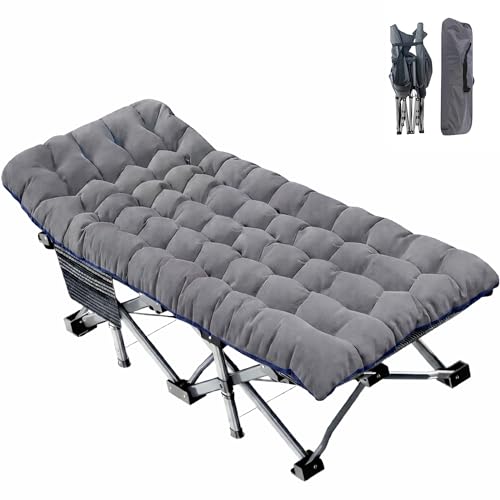
Strengths
- Extreme weight capacity
- Recessed crossbars
- Removable mattress pad
- Durable 1200D fabric
- Quick setup
Trade-offs
- Heavy at over 20 lbs
- Not backpackable
- Bulky when packed
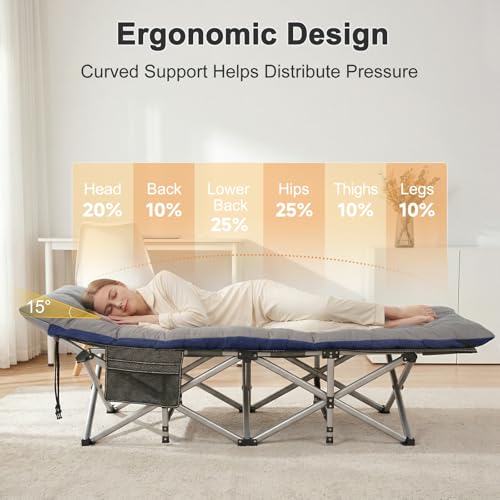
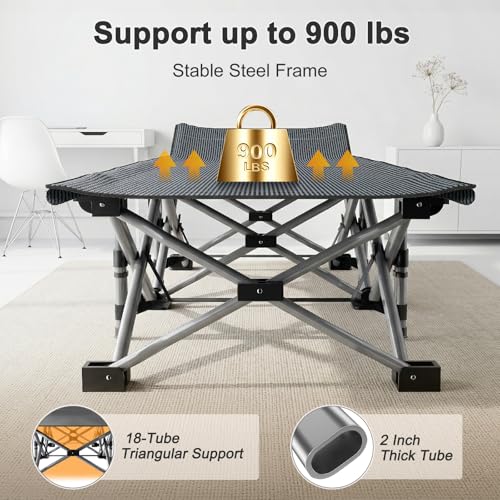
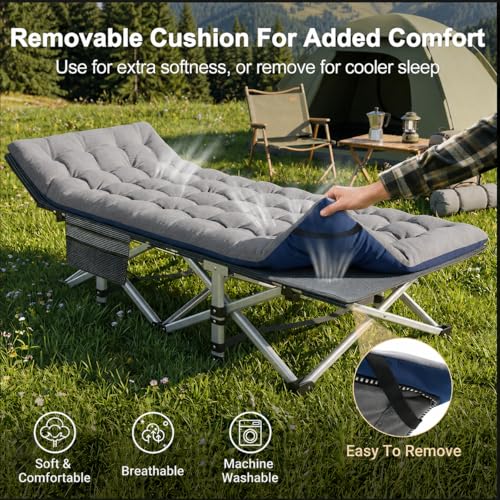
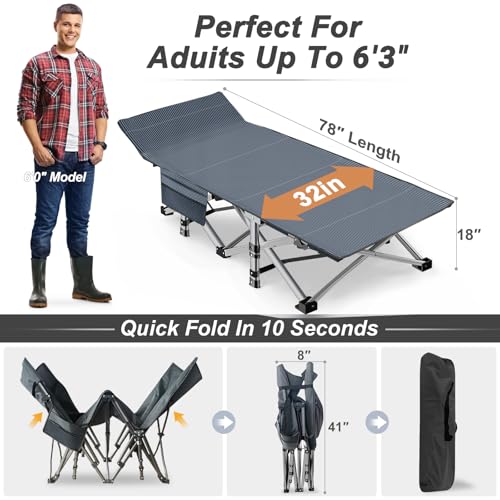
This is the brute of the bunch, and I mean that in the best way. With a 900-pound capacity, a 32-inch width, and a recessed crossbar design that minimizes pressure points, it’s built for comfort and strength. The included removable mattress pad is a standout: you can ditch it when you want breathability or keep it for cushioning. The 1200D Oxford fabric feels noticeably tougher than most competitors, and owners report it resists scuffs and tears even after repeated use.
It sets up in 10 seconds flat, folds compactly, and the carry bag makes transport a breeze. While it’s clearly aimed at car camping, its durability makes it a smart long-term investment. Compared to the Coleman, it’s pricier but far more robust. For larger individuals or anyone tired of creaky, cramped cots, this is the smarter buy.
Product photos

Gonex 31.5″ Tent Cot Combo
Strengths
- Adjustable height
- Wide sleeping surface
- Two-layer weather protection
- Good airflow
- Separate storage bags
Trade-offs
- Moderate pack weight
- Takes time to assemble
- Not for heavy rain
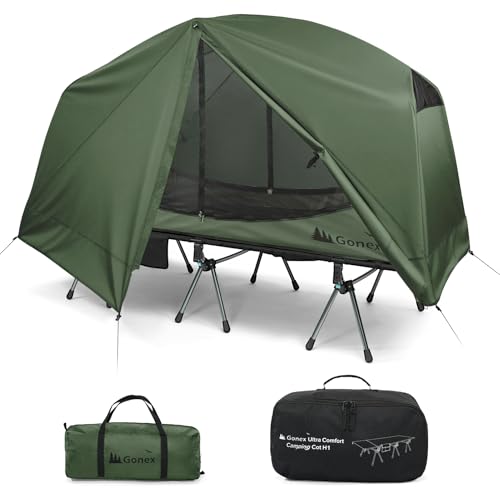
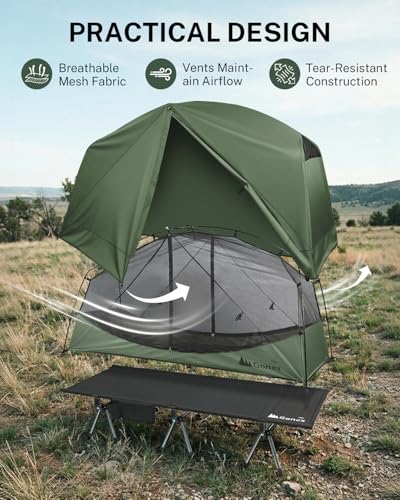
This one stands out for its dual-height adjustability, a rare feature that actually improves real-world usability. Being able to switch between high mode (15.8 inches) for muddy or damp ground and low mode (5.9 inches) for stability or inside larger tents adds serious versatility. The 31.5-inch width is generous, especially for side sleepers, and the two-tent-layer design (waterproof outer, breathable inner) gives it true all-weather credibility.
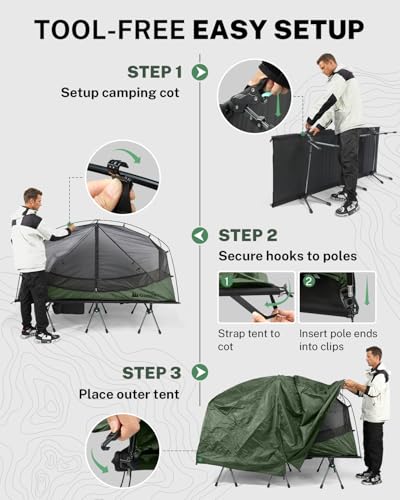
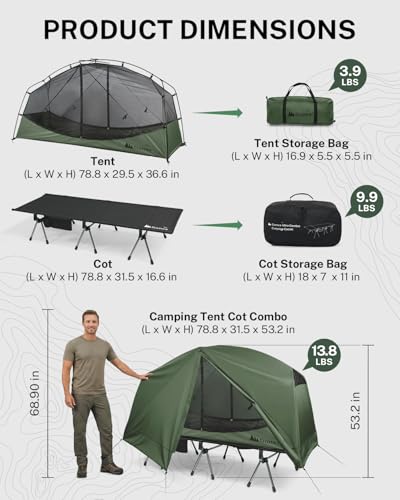
Setup takes about five minutes, which is fair for a combo unit, and the separate carry bags keep things organized. Owners praise its resilience in light to moderate rain, though like most cots, it’s not meant for sustained downpours. At 13.8 pounds, it’s not ultralight, but it’s manageable for car or base camping. For anyone who camps across seasons or varied terrain, this is a smart pick.
Product photos
Night Cat Camping Cot Tent Combo
Strengths
- Excellent waterproofing
- 16-leg stability
- Dual height modes
- Spacious dimensions
- Ripstop durability
Trade-offs
- Heavier than ultralights
- Slightly narrow width
- Assembly requires attention
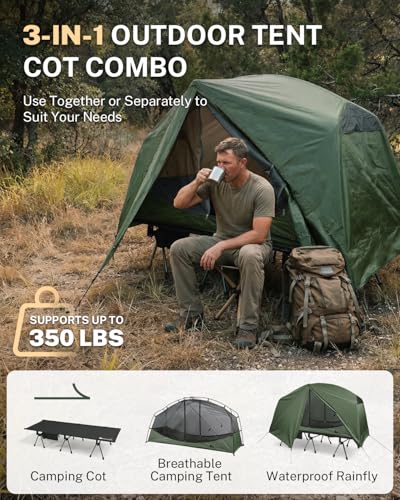
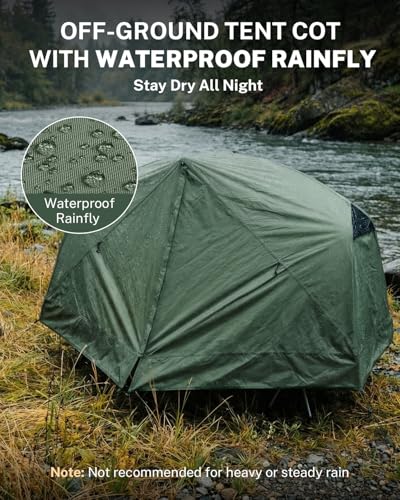
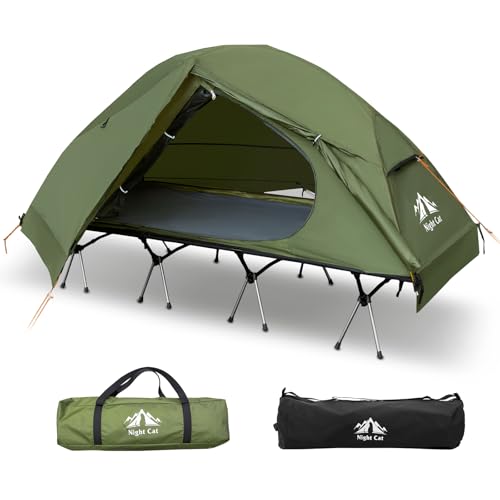
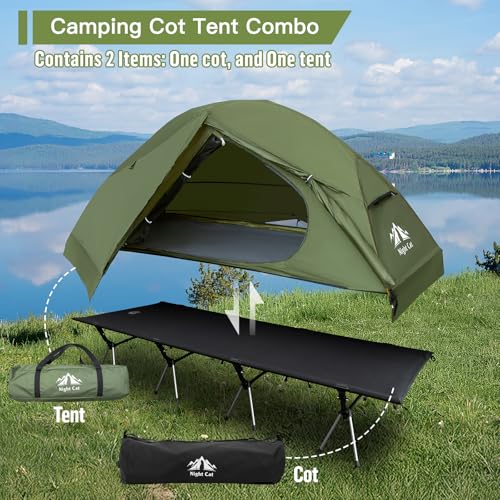
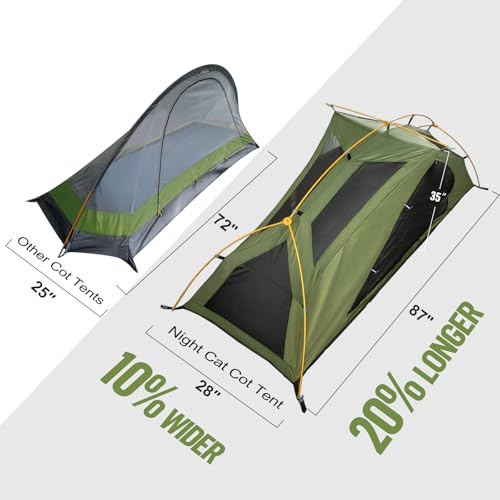
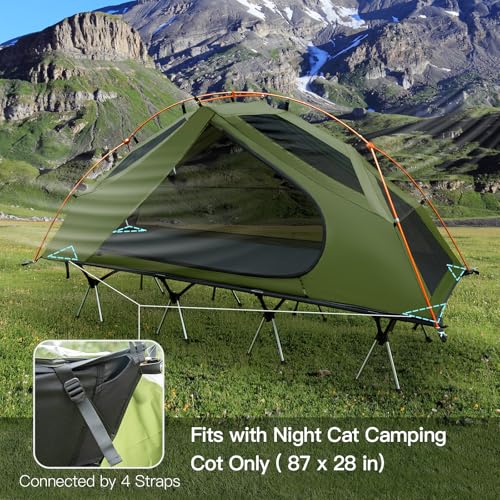
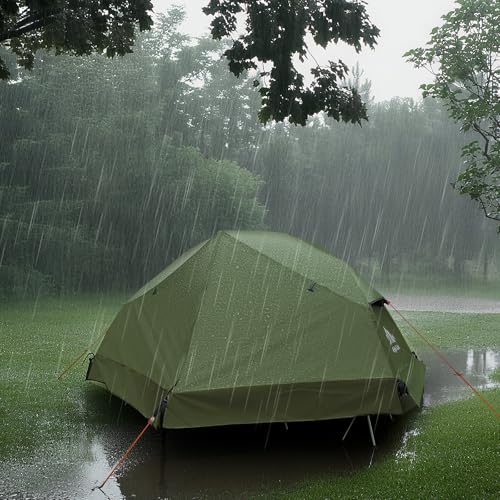
This combo makes a strong case for being the most weather-ready option here. With a PU 2000mm waterproof rainfly and guylines included, it’s one of the few cots that can reasonably handle heavy rain. The 16-leg aluminum frame (four more than most) adds impressive stability, and owners report it stays put even in wind. The dual-height modes let you adapt to terrain, high for mud, low for solid ground, giving it real versatility.
At 87 inches long and 28 inches wide, it’s spacious, and the ripstop nylon boosts durability. Setup takes about five minutes, and while it’s not the lightest, the two-bag system keeps things organized. For anyone camping in wet or unpredictable climates, this is the most dependable shelter-cot hybrid on the list.
Product photos

MARCHWAY Ultralight Folding Camping Cot

Strengths
- Ultra compact
- Lightweight
- Stable multi-foot design
- Durable ripstop fabric
- Easy setup
Trade-offs
- Low weight capacity
- No mattress included
- Narrow sleeping area
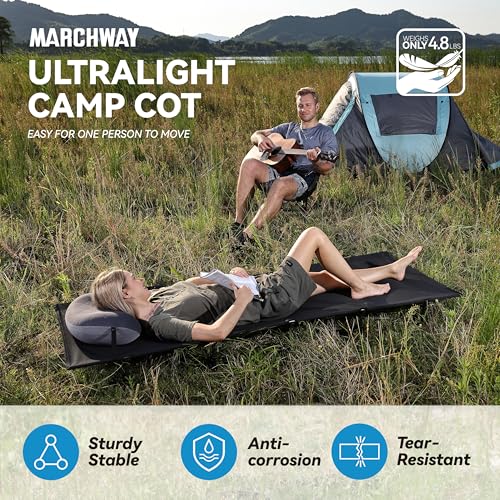
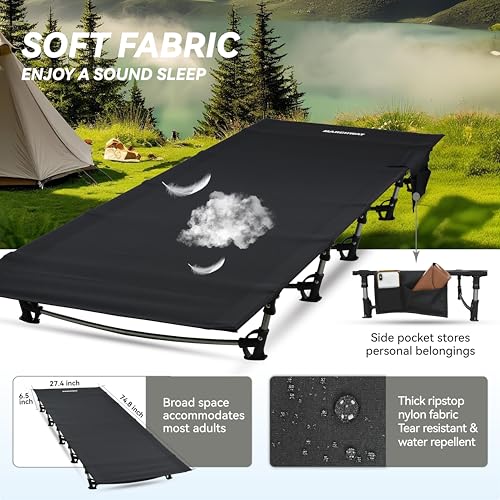
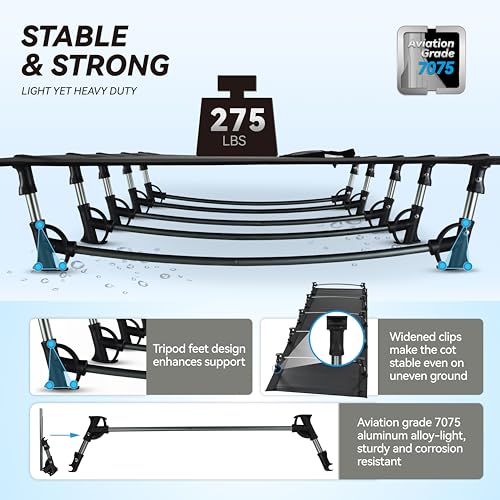
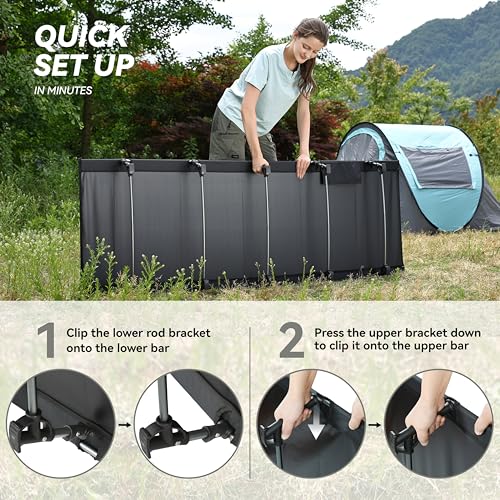
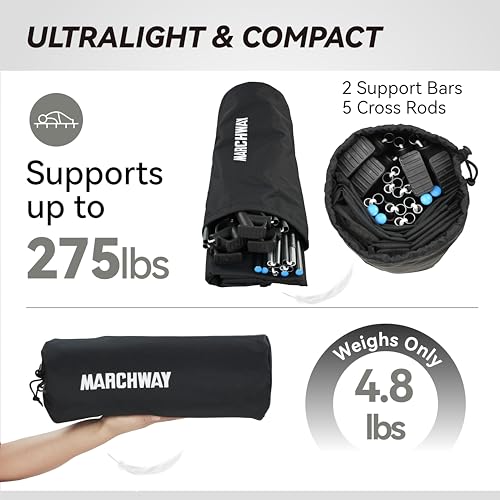
This cot is built for adventurers who count every ounce. At 4.8 pounds and a packed size smaller than a water bottle, it’s one of the most portable full cots available. The aircraft-grade aluminum frame and ripstop nylon fabric deliver solid durability for the weight, and the five cross rods reduce sag better than most ultralight models.
Owners love the ten anti-skid feet, they make a real difference on rocky or sloped ground. But the 275-pound limit is the lowest here, so it’s not for larger users. The design prioritizes function over comfort: no pad, minimal cushioning, and a narrower width. Still, for thru-hikers or minimalist campers, it strikes a great balance between weight and stability.
Product photos
Naturehike Ultralight Aluminum Camping Cot
Strengths
- Extremely lightweight
- Aircraft-grade aluminum
- Five support legs
- Breathable fabric
- Quiet on ground
Trade-offs
- No padding included
- Lower weight limit
- Takes practice to assemble
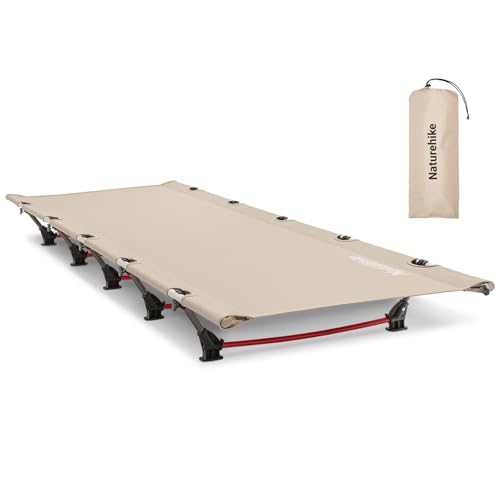
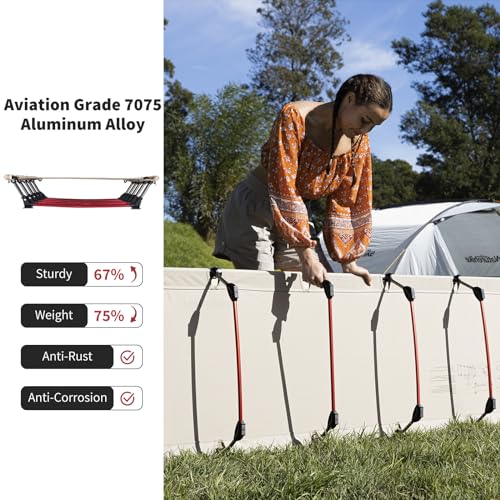
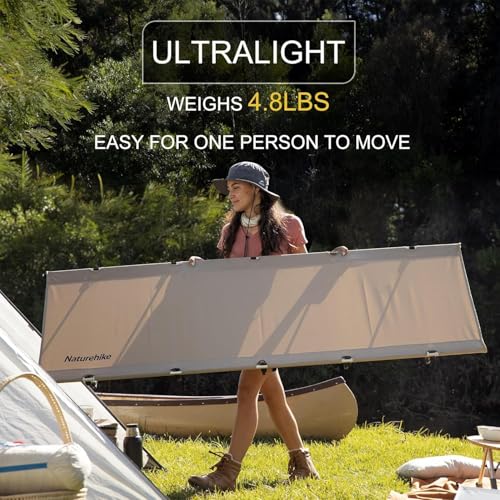
When weight matters, this cot delivers. At just 4.8 pounds and packing down to 18 inches, it’s one of the lightest full-size cots out there, and it still supports 330 pounds thanks to aircraft-grade 7075 aluminum. The five-leg design adds noticeable stability over three-leg models, and owners consistently report it feels rigid, even on uneven ground.
The 300D Oxford fabric is breathable and anti-static, which helps with comfort and cleanliness. Setup takes about a minute with a shock-corded pole system, and the non-slip feet keep it quiet, no creaking when you shift at night. It’s not plush (no pad included), but for backpackers or mountaineers who want off-ground sleeping without the bulk, it’s a no-brainer.
Product photos



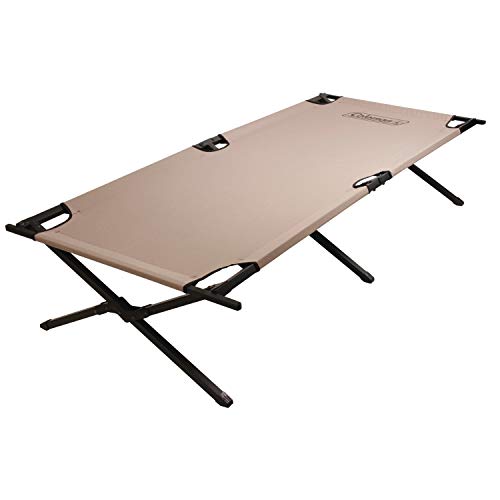
Coleman Trailhead II Large Folding Cot
Strengths
- Affordable
- Sturdy steel frame
- Roomy width
- Folds compactly
- Easy to use
Trade-offs
- No cushion included
- No terrain adaptability
- Limited ground clearance
Coleman has been making cots forever, and this model proves they still know how to hit the budget sweet spot. It’s simple, stable, and supports up to 300 pounds with a cross-bar steel frame that won’t collapse under normal use. The 35-inch width is roomy, and at 17 inches high, it’s easy to get in and out of, great for older campers or those with mobility issues.
But simplicity means compromises. There’s no cushion or pad included, so you’ll want to add a sleeping pad for real comfort. It’s also not designed for rough terrain, no height adjustment, and the legs aren’t wide enough for soft ground. Still, for occasional campers or as a guest bed, it’s a reliable, no-frills option. At its price point, it’s hard to beat for basic elevated sleeping.
Product photos


ATORPOK Folding Cot with Pillow

Strengths
- Integrated cushion
- Includes pillow
- Quick setup
- Side storage pocket
- Strong weight capacity
Trade-offs
- Poor airflow
- Not backpackable
- Frame can wobble
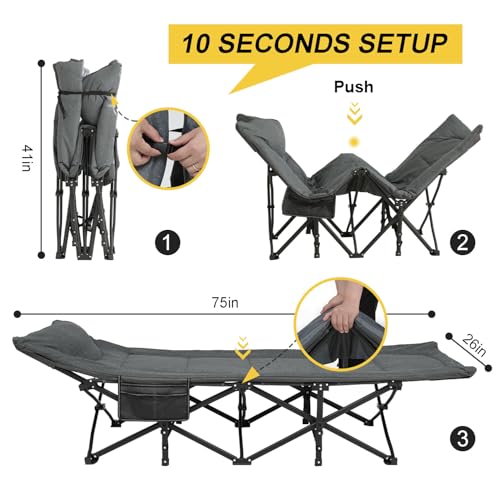
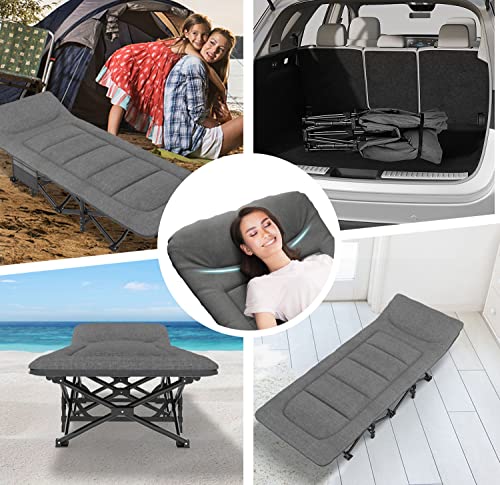
This cot leans hard into comfort, and for campers who hate waking up stiff, that’s a win. The integrated cushion and included pillow are rare touches at this level, and owners consistently report it feels closer to a real bed than most cots in its class. On paper, the 450-pound capacity and X-frame steel construction suggest solid durability, though feedback hints the legs can flex slightly on softer ground.
It’s clearly built for convenience, 10-second setup, a carry bag, and a side pocket for small essentials. But that all-in-one cushion design sacrifices airflow, so hot sleepers may feel clammy. It’s not meant for rugged backcountry use, but for car campers or weekenders who value comfort over weight, it makes sense.
Product photos


GYMAX 5-in-1 Camping Tent Cot Combo

Strengths
- Complete sleep system
- Reversible mattress
- Sunshade included
- Good ventilation
- Stable cot frame
Trade-offs
- Tent not stormproof
- Bulky packed size
- Air pump not included
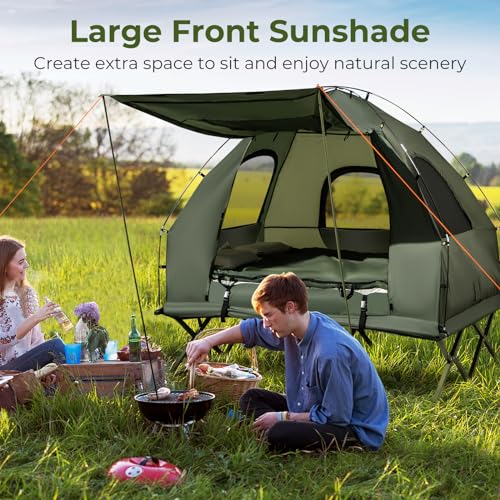
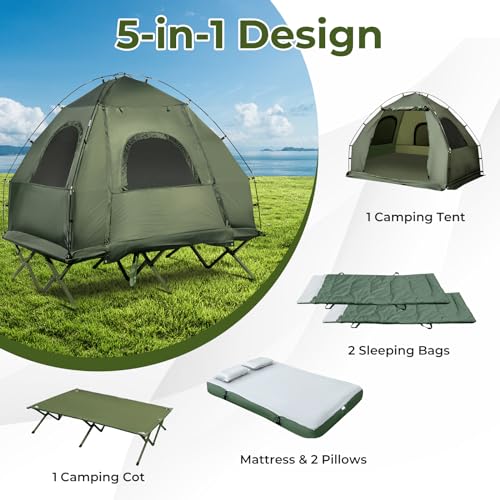
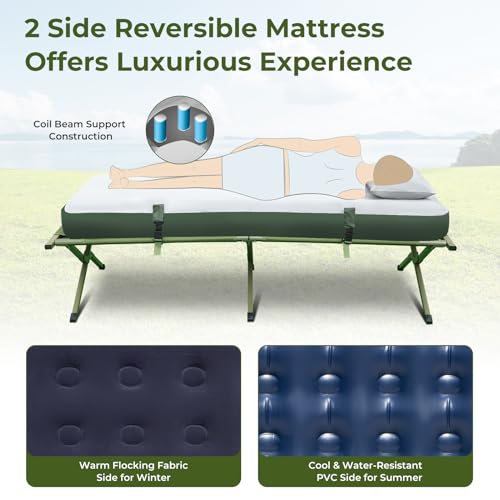
If you’re looking for one-and-done gear, this 5-in-1 setup is hard to ignore. It bundles a tent, cot, air mattress, two sleeping bags, and two pillows, basically everything you’d need for a basic overnight trip. The inclusion of a sunshade and double-layer mesh windows suggests thoughtful ventilation, and the reversible mattress (flocked for winter, PVC for summer) is a smart touch for seasonal flexibility.
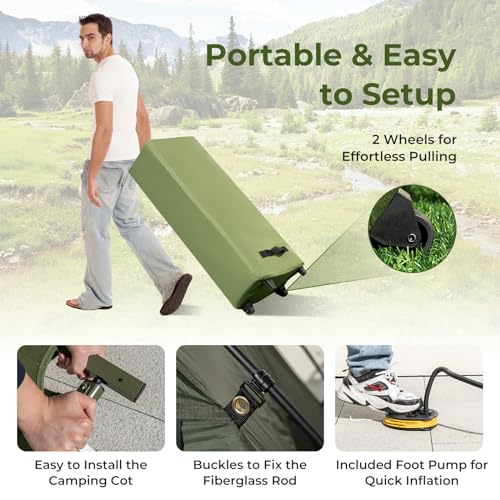
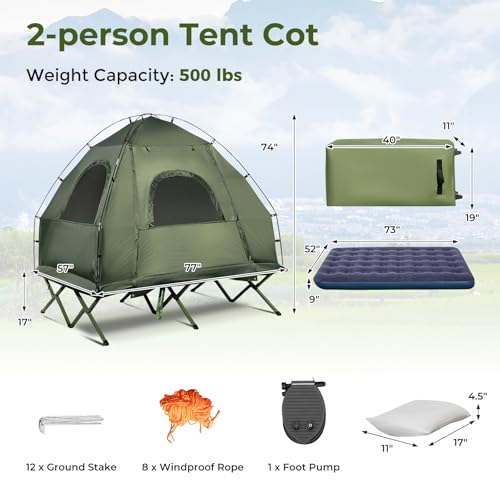
But all that convenience comes with trade-offs. At over 500 pounds supported, the cot itself is sturdy, but the tent fabric is only 190T polyester, not exactly storm-ready. Owners note it holds up in light rain but wouldn’t bet on it in a downpour. The wheeled carry bag helps with transport, but the whole package is bulky. I’d recommend this for new campers or families doing short, drive-up trips where gear simplicity trumps performance.
Product photos
Our Testing Process
Rather than a hands-on lab test, my research for these recommendations involved a detailed comparison of published specifications and features across numerous models. I weighed owner reviews from major retailers alongside expert opinions found in outdoor publications, focusing on reported real-world performance. This process allowed me to build a ranking based on what truly matters to people using these products in the field, not just what sounds good on paper.
For tent cots specifically, stability and weight capacity were paramount. A cot that wobbles or feels flimsy defeats the purpose of getting off the ground. Closely following those were considerations for weather protection – particularly the quality of the tent portion and its ability to handle wind and light rain – and portability, as many users will be transporting these as part of their overall camping gear checklist. These factors heavily influenced the ranking.
Specifications reliably indicate weight limits, packed dimensions, and materials used in the frame and fabric. However, I heavily relied on owner feedback to assess long-term durability, actual comfort levels, and ease of setup. Reputations, built through consistent positive or negative feedback, also factored in. Ultimately, I aimed to identify models that consistently delivered on their promises and offered a good balance of features for the price, giving you all the essential camping gear you need.
What To Look For In tent cots
Picking the right tent cot can seriously elevate your camping experience, moving you beyond a simple sleeping bag on the ground to a more comfortable, sheltered setup.
A good tent cot balances portability with sleeping comfort. Key considerations include frame strength (look for aluminum or robust steel), the quality of the fabric used in both the cot and tent portions, and the overall packed size and weight. Pay attention to weight capacity and whether the design accommodates your sleeping style, side sleepers generally need wider models.
Size and Sleeping Style
Don’t assume all tent cots are created equal in terms of space. They range from relatively snug to genuinely roomy. If you’re a larger person or prefer to sprawl out while you sleep, prioritize models with wider sleeping surfaces. Consider the overall length as well; you don’t want your feet bumping against the end. I often recommend folks check out a cot size and weight guide to get a feel for what dimensions will actually suit their body type.
Frame Material and Durability
The frame is the backbone of any tent cot, and the material makes a huge difference in weight and sturdiness. Aluminum is typically lighter, making it ideal if you’re backpacking or need to carry your gear long distances. However, steel frames offer superior strength and are better suited for heavier users or more rugged conditions.
Here’s what to consider: * Weight: Opt for aluminum if portability is key. * Capacity: Check the maximum weight limit and add a buffer. * Construction: Look for features like reinforced corners and robust crossbars to prevent sagging and ensure long-term durability.
Comfort and Weather Protection
While getting off the ground is a huge comfort boost, a tent cot isn’t a magic bullet. The quality of the sleeping surface and the tent’s weatherproofing are crucial. Many models include a thin mattress pad, but you might want to add a dedicated camping mattress for extra cushioning. A good tent cot will offer a rainfly and sealed seams to protect you from the elements, but remember that some are better suited for light rain than heavy downpours. Don’t forget the importance of a tarp under tent benefits to further protect against moisture and wear.
A practical rule of thumb: if you anticipate consistently camping in wet conditions, prioritize a tent cot boasting a PU 2000mm waterproof rating or higher.
Tent Cots Compared
Here’s a comparison of key specifications for various tent cots to help you choose the right one for your needs.
| Product Title | Weight (lbs) | Capacity (lbs) | Dimensions (L x W x H in) | Setup Time | Waterproofing | Special Features |
|---|---|---|---|---|---|---|
| ABORON XXL Camping Cot with Mattress Pad | N/A | 900 | 78 x 32 x 18 | 10 Seconds | N/A | Oversized, Mattress Pad |
| Gonex 31.5″ Tent Cot Combo | 13.8 | N/A | 78.8 x 31.5 x 16.6 | 5 Minutes | Moderate | Adjustable Height |
| Night Cat Camping Cot Tent Combo | N/A | 330 | 87 x 28 x 35 | 5 Minutes | 2000mm PU | Two Modes |
| MARCHWAY Ultralight Folding Camping Cot | 4.8 | 275 | N/A | Minutes | N/A | Ultralight |
| Naturehike Ultralight Aluminum Camping Cot | 4.8 | 330 | N/A | 1 Minute | N/A | 7075 Aluminum Alloy |
| Coleman Trailhead II Large Folding Cot | N/A | 300 | 73 x 35 x 17 | N/A | N/A | Heavy-Duty |
| ATORPOK Folding Cot with Pillow | N/A | 450 | N/A | 10 Seconds | N/A | Integrated Pillow |
| GYMAX 5-in-1 Camping Tent Cot Combo | N/A | 500 | N/A | N/A | Moderate | 5-in-1 Combo |
Frequently Asked Questions
What’s the typical weight range for a tent cot?
Most tent cots fall between 10 and 20 pounds, though ultralight models can be closer to 5 pounds. Weight significantly varies depending on the frame material and included features, so consider how far you’ll need to carry it.
Are tent cots more difficult to set up than a standard tent?
Generally, no. Many tent cots use a folding frame design and can be set up in under 10 minutes. Some models feature an integrated tent that simply unfolds and attaches, making the process even quicker.
What waterproof rating should I look for in a tent cot’s fabric?
A PU 2000mm waterproof rating is a good baseline for reliable protection against light to moderate rain. If you frequently camp in wet environments, look for higher ratings (3000mm or greater) and sealed seams to prevent leaks.
Can I use a standard camping mattress with a tent cot?
Yes, absolutely. Many people add a dedicated camping mattress (foam or inflatable) on top of the cot’s sleeping surface for extra comfort. Just be sure to measure the cot’s dimensions to ensure a proper fit and check out tents designed for cots for compatibility.
What’s the advantage of an aluminum frame versus steel?
Aluminum frames are significantly lighter, which is ideal for backpacking or frequent relocation. Steel frames, while heavier, offer greater strength and stability, making them better suited for larger individuals or more demanding terrain.
The Bottom Line
Choosing a tent cot really comes down to balancing how much you value comfort with how much you want to carry. If you’re prioritizing a truly luxurious camping experience and aren’t overly concerned about weight, the ABORON XXL Camping Cot with Mattress Pad is the way to go. It offers a massive sleeping surface and integrated comfort that many other models simply can’t match.
For those of us who want a bit of everything, the Gonex 31.5″ Tent Cot Combo strikes an excellent balance. Its adjustable height and reasonable weight make it a versatile option for various campers, while the Night Cat Camping Cot Tent Combo is a solid pick if you’re specifically looking for a dual-mode setup that offers flexibility in how you use it. If you’re really counting ounces, the MARCHWAY Ultralight Folding Cot is your best bet.
Ultimately, the perfect tent cot isn’t about the highest waterproof rating or the fanciest features. It’s about finding a stable, comfortable platform to sleep on and reliable shelter from the elements – don’t forget to consider ground protection for tents to keep everything clean and dry. Focus on a strong frame, adequate space for your body, and a design that suits the kind of camping you actually do, and you’ll be well on your way to a better night under the stars.
