
7 Best Tents for Families of 4 2026
This post contains affiliate links. As an Amazon Associate, we earn from qualifying purchases.
The Mimajor 4 Person Instant Camping Tent stands out as the best overall family tent for four, thanks to its quick setup, solid 3500mm waterproof rating, and spacious design. For those watching their budget, the Happy Travel 4 Person Dome Tent offers solid performance at a lower price, while the LOYEAHCAMP 4 Person Blackout Tent brings added comfort with its light-blocking fabric and strong weather resistance.
Families don’t just need a tent that sleeps four, they need one that works for four, with room to move, stay dry, and avoid constant setup struggles. Too many “family” tents promise space but deliver a cramped, leak-prone mess.
This guide cuts through the marketing by focusing on real-world usability, comparing specs and owner feedback to find tents that actually deliver comfort and reliability. We looked at space, weather protection, and ease of use to find the ones worth your trust.
Top 7 Tents For Families Of 4 in the Market
The Best Tents For Families Of 4, Reviewed
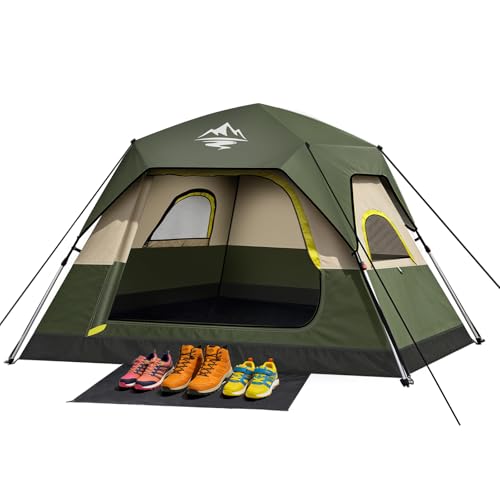
Mimajor 4 Person Instant Camping Tent
Strengths
- Fastest full setup
- Best waterproof rating
- King air mattress fit
Trade-offs
- Heaviest at 15.4 lbs
- Bulkier packed size
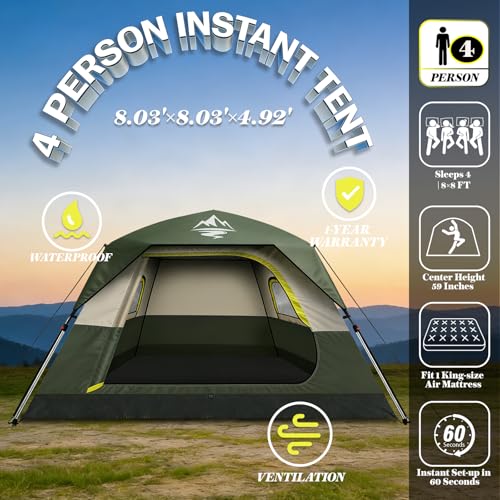
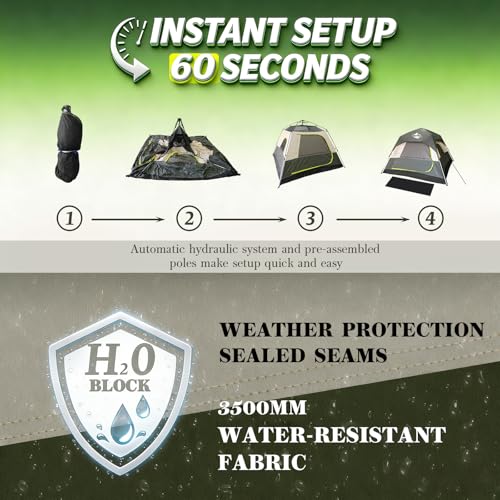
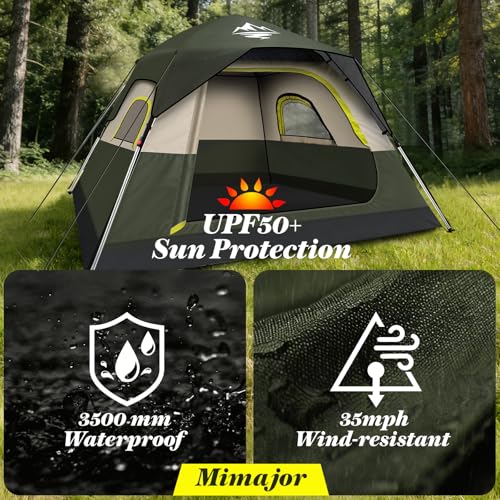
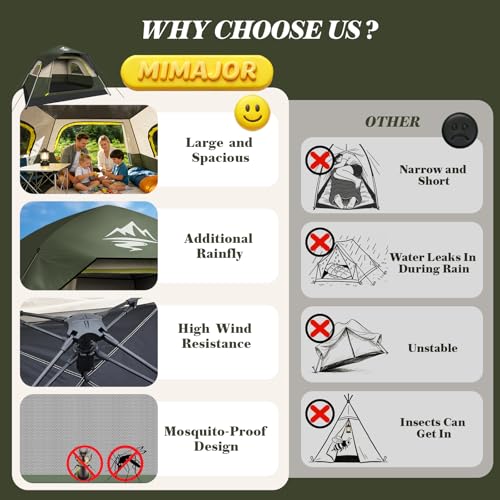
This is the closest thing to a true “best overall” pick in this group. The 60-second setup with pre-attached poles is a real time-saver, and owners love how stress-free it makes family camping. The 3500mm waterproof rating is among the highest here, and the fully taped seams plus 19 stakes and 11 guylines mean it’s built to handle serious weather. The aluminum poles add durability without excessive weight.
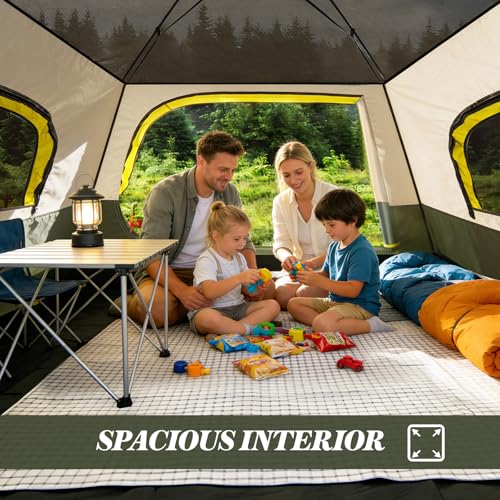
Inside, it’s just as strong, the full mesh ceiling and three large windows create excellent airflow, and the 59-inch height fits most adults comfortably. It even holds a king air mattress, which is rare. The welcome mat and interior pockets are small but smart upgrades. Compared to the FanttikOutdoor or Purebox, this one balances speed, space, and storm readiness better. My recommendation? This is the tent I’d bring for a mixed-weather family trip.
Product photos
LOYEAHCAMP 4 Person Blackout Camping Tent
Strengths
- Excellent sun protection
- Good UV blocking
- Stable structure
Trade-offs
- Ventilation needs management
- Slightly bulky pack size
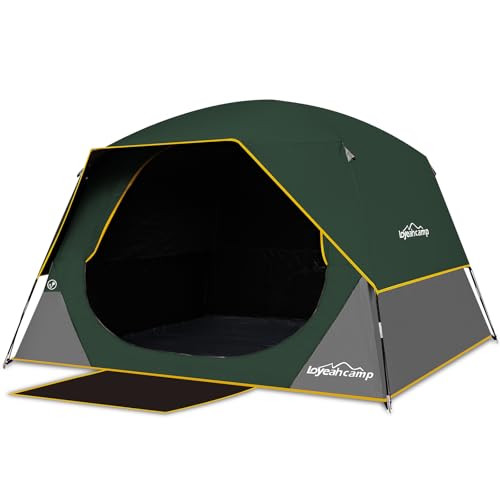
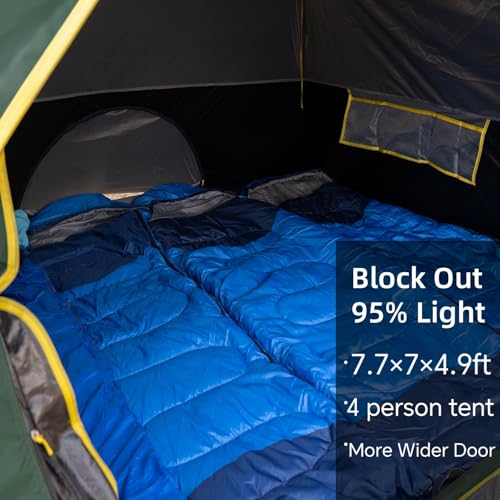
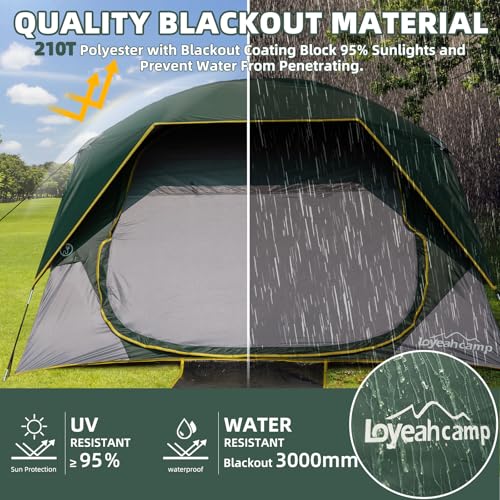
The blackout fabric here isn’t just marketing, it makes a real difference in sleep quality. With 99% UV block and 3000mm waterproofing, this tent stays cooler in direct sun and drier in rain than most. Owners consistently report being able to sleep later in the morning, which is a win with kids. The nearly vertical walls give it more usable floor space than typical domes, and the 59-inch height is comfortable for sitting and changing clothes.
Ventilation is solid with the chimney-effect design, but some owners note airflow can lag if all vents aren’t opened. The 2-way zipper and interior pockets are nice touches, and setup in 5 minutes is achievable. It’s not the lightest at 8.7 lbs, but that’s expected for this build. I’d pick this over others for summer camping where sun and heat are issues.
Product photos



Purebox 4 Person Camping Tent
Strengths
- Dual doors
- Excellent ventilation
- Taped seams
Trade-offs
- Lower peak height
- Heavier than average
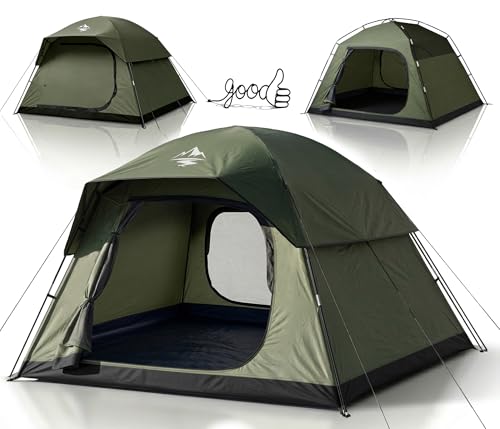
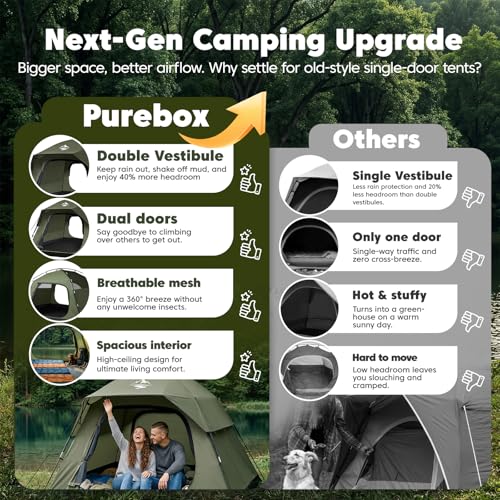
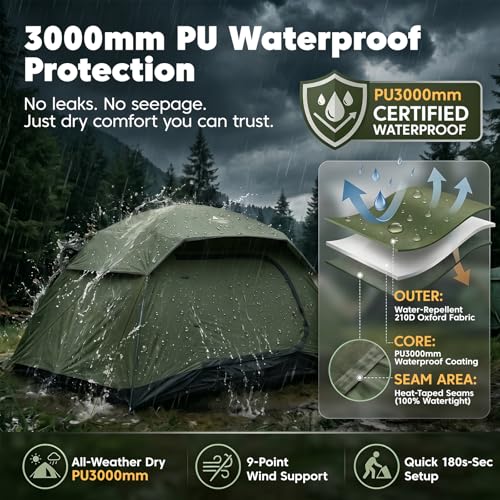
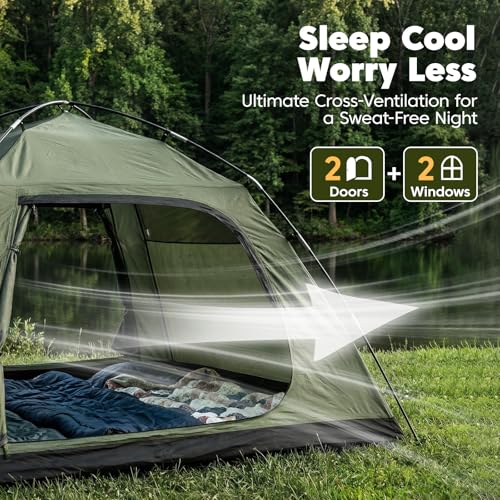
Dual doors are a standout for family tents, and the Purebox delivers where it counts. The extended floor and 9 x 7 ft layout give it a roomy feel, and owners praise how easy it is to move around without stepping on sleeping bags. The two doors mean no more crawling over kids at 2 a.m., and the cross-breeze from dual mesh windows cuts down on condensation, something many 4-person tents struggle with. The fully taped seams and PU-coated rainfly also boost its credibility in wet weather, making it a dependable 3-season option.
At 10.8 lbs, it’s not the lightest, but the sleeve-pole system makes setup fast and stable. I’ve seen similar designs perform well in breezy conditions, and the included guylines add confidence. My only hesitation is that the 4.92 ft peak height is a bit low compared to others, less ideal for taller adults changing clothes. Still, for families who value airflow and easy access, this is a strong contender.
Product photos
4 Person Instant Cabin Tent
Strengths
- Fastest setup time
- Lightweight for cabin style
- Good airflow
Trade-offs
- Lower waterproof rating
- Fewer storm reinforcements
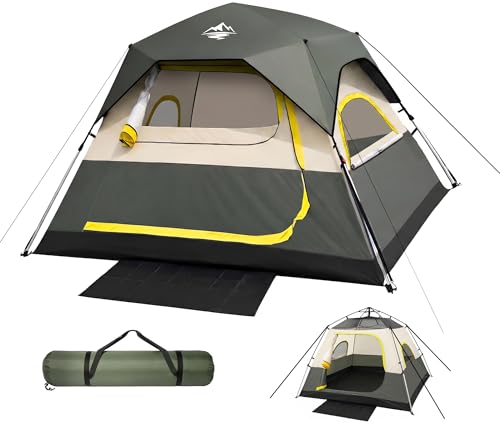
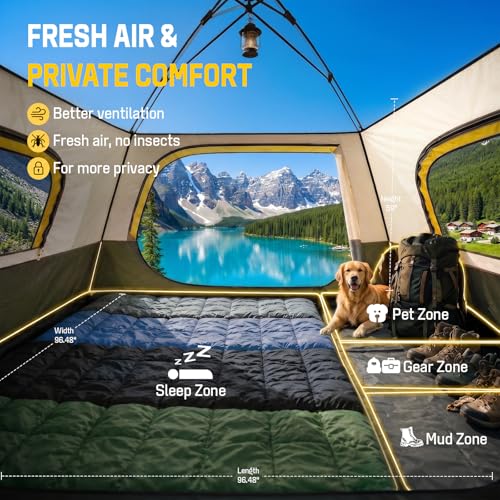
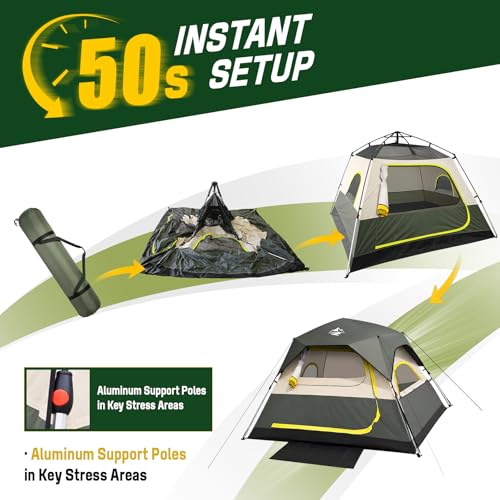
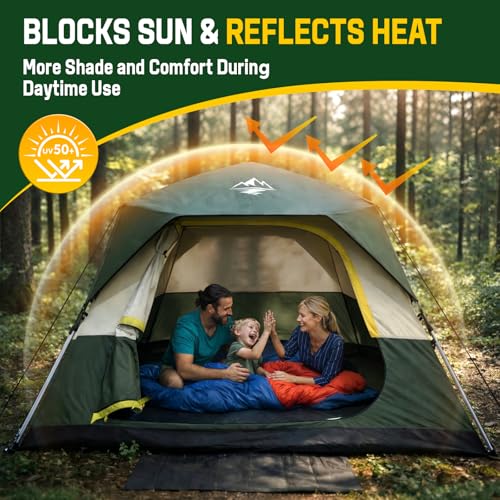
The 50-second claim isn’t hype, this is one of the fastest tents to deploy in the lineup, thanks to its pre-attached hybrid poles. For families who hate setup drama, this alone makes it a top choice. The 8.04 x 8.04 ft floor and 59-inch height match the Mimajor, and it weighs less at 13.4 lbs, making it easier to carry. Owners report smooth zippers, good mesh coverage, and solid airflow, especially with the rainfly off for stargazing.
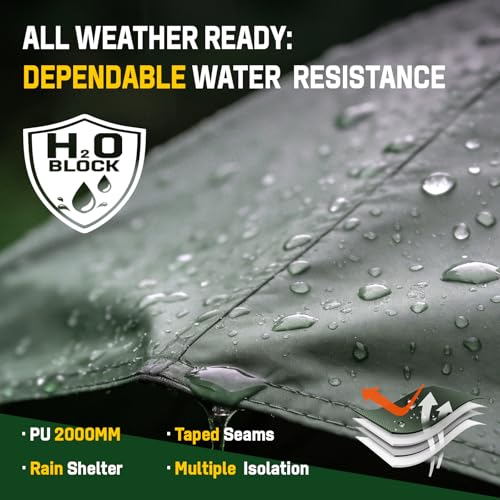
But the 2000mm waterproof rating is a step down from the Mimajor, and the lack of extra guylines or stakes means less storm confidence. It’s great for fair weather or last-minute trips, but I wouldn’t trust it in a downpour as readily. If speed and ease are your top priorities and you’re not facing rough weather, this is a smart buy.
Product photos

FanttikOutdoor Zeta C4 Pro Tent

Strengths
- Windproof design
- Good ventilation
- Fast setup
Trade-offs
- Heavy at 14.5 lbs
- Mesh roof not waterproof
If wind is a concern, this one deserves attention. The manufacturer claims it can handle up to 35 mph winds, and owner feedback backs that up, many report it staying upright in gusty conditions where other tents folded. The tub-style floor and drainage channels are thoughtful touches that help keep water out, and the pre-attached poles make setup genuinely quick. The all-around mesh and ceiling venting provide strong airflow, which is rare in a tent built for wind resistance.
But that 14.5 lb weight is hefty for a 4-person tent, and the interior height is just 59 inches, fine for sitting, tight for standing. The mesh roof is a nice touch for stargazing, but the warning note about it not being waterproof is critical: you must use the rainfly in wet weather. I’d recommend this for windy coastal sites or open fields, but not for backpacking or anyone needing lightweight gear.
Product photos


Happy Travel 4 Person Dome Tent
Strengths
- Spacious footprint
- High headroom
- Good ventilation
Trade-offs
- Average weather resistance
- Fiberglass poles
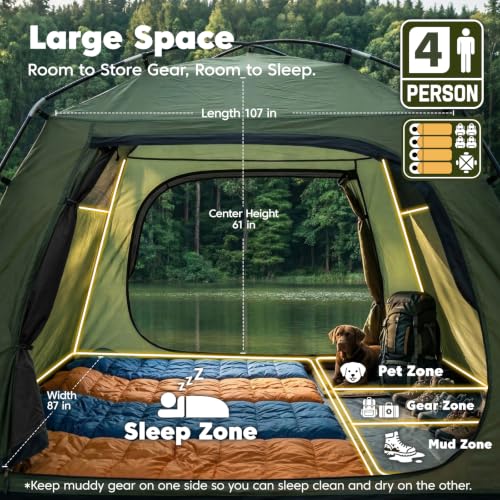
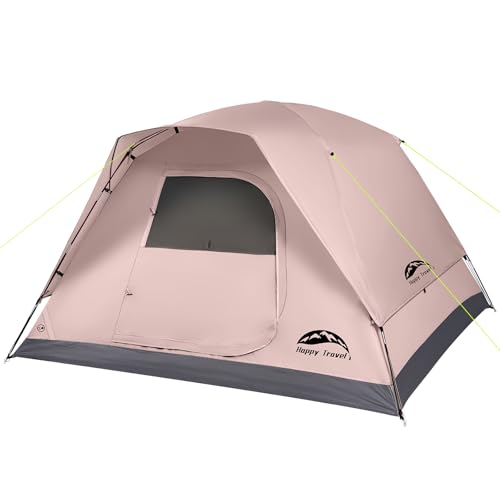
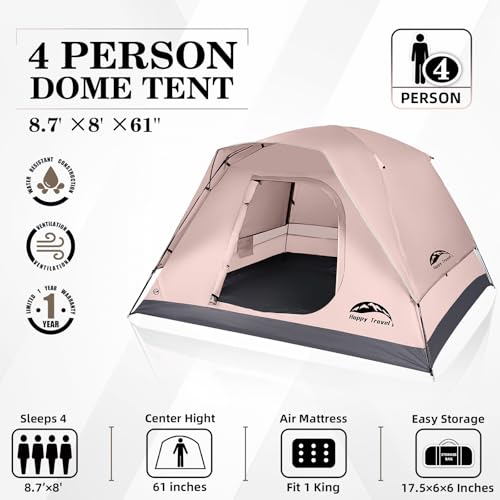
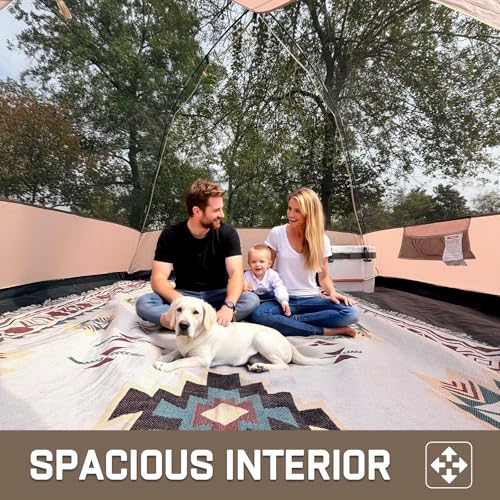
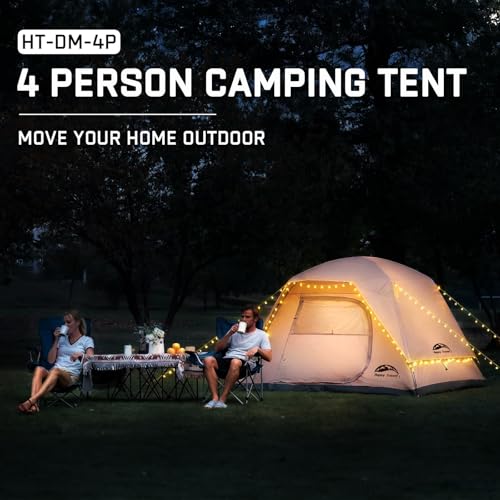
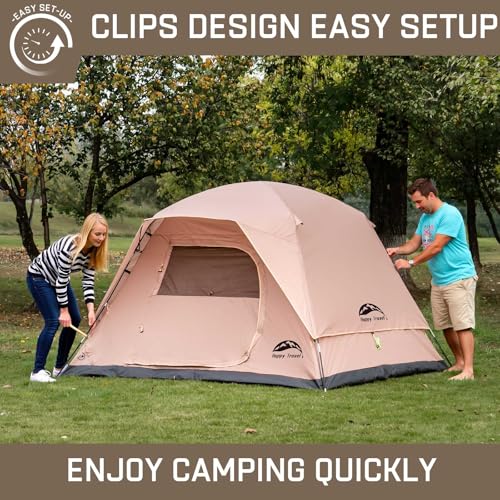
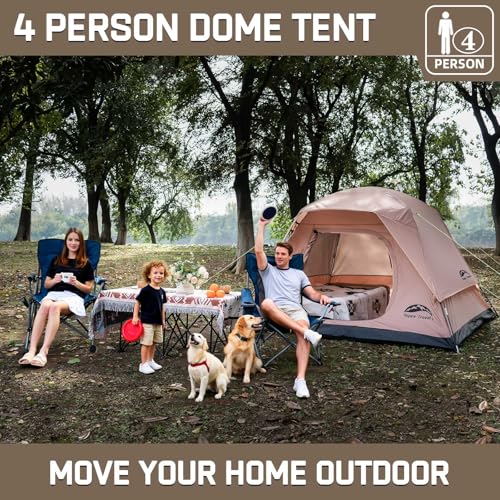
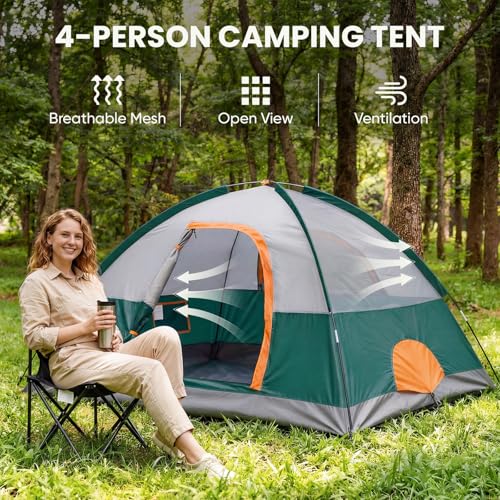
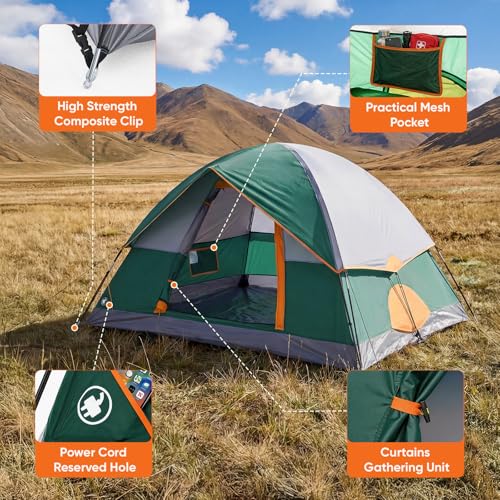
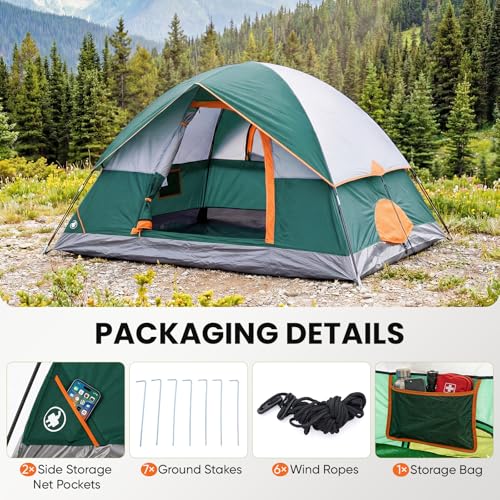
This tent stands out for families who prioritize interior space and headroom. On paper, the 8.7 x 8 ft footprint and 61-inch center height give it a real edge over most 4-person models, and owners consistently report it feels more like a 5-person when sleeping with gear. That extra room makes a tangible difference when you’re sharing a tent with kids and don’t want to be packed like sardines. The mesh-heavy roof and three-side ventilation are smart touches, especially for warm-weather camping, and the electrical access port is a small but appreciated feature for those using fans or charging devices.
Still, the 9.5mm fiberglass poles and 2000mm waterproof rating are solid but not exceptional in this category. Reviewers note it holds up fine in light rain and moderate wind, but heavier storms reveal its limits. The lightweight 8.6 lbs is a plus, but don’t mistake this for a rugged all-season shelter. I’d pick this over more cramped domes for car camping comfort, but not for exposed or alpine conditions.
Product photos
OLIXIS 4 Person Dome Tent
Strengths
- Ultra lightweight
- Fast setup
- Multi-directional vents
Trade-offs
- Less interior space
- Dome shape limits headroom
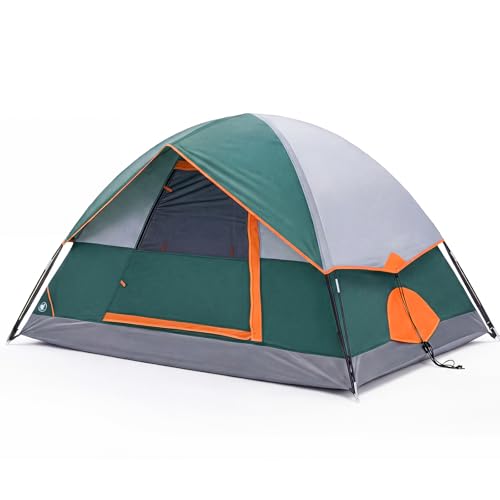
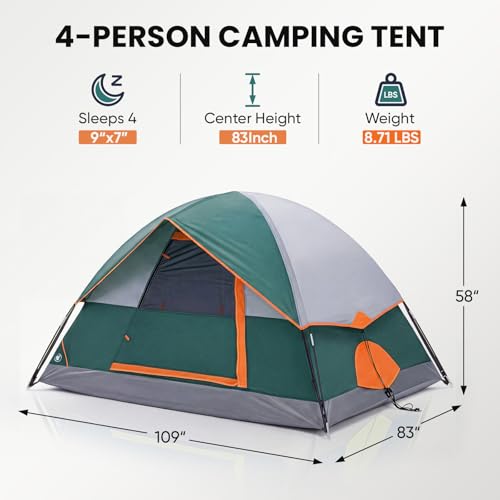
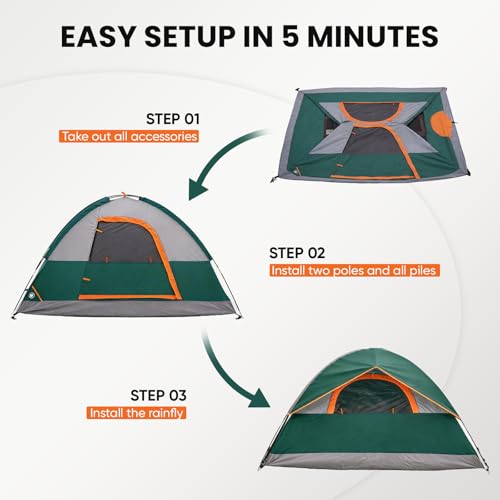
At just 8.7 lbs, this is one of the lightest 4-person dome tents in the lineup, and that makes it a standout for car campers who still want to hike a short distance to their site. The 5-minute setup is realistic based on owner reports, and the multi-directional vents, including skylights and a ground vent, help manage condensation better than most domes. The 210T polyester and sealed seams offer decent weather protection, though it’s not overbuilt for storms.
Where it falls short is space. While it fits four in a pinch, the dome shape and lower walls mean gear storage is tight. It’s more of a 2-3 person tent with gear than a true family four. But for couples or small families who prioritize light weight and quick pitch, this hits a sweet spot. I’d compare it to the Happy Travel tent but stripped down for efficiency.
Product photos
How We Chose These tents for families of 4
Rather than a hands-on lab test, this is a research-led comparison of specifications and owner feedback. I researched tents for families of four by compiling and comparing published specs – focusing on dimensions, waterproof ratings, and materials – alongside owner reviews from major retailers and reputable outdoor gear review sites. We then ranked options based on how well they met the needs of a family, prioritizing features important for comfortable and reliable camping.
For family tents, spaciousness, weather protection, and ease of setup are paramount. We weighted these factors most heavily. A roomy interior is essential for comfortable sleeping and moving around, especially during inclement weather. Reliable waterproofing protects against unexpected rain, and a quick, frustration-free setup means more time enjoying the outdoors and less time wrestling with poles and fabric. Some families may also consider alternatives like spacious inflatable camping tents for even faster pitching.
Specifications reliably indicate a tent’s potential for weather resistance and size, but owner feedback proved crucial for assessing real-world performance. Specs tell you the waterproof rating of a fabric, but reviews reveal if it truly holds up in heavy rain. Similarly, dimensions are useful but don’t convey how usable the space actually is. Owner experiences helped us judge durability, ventilation effectiveness, and the accuracy of manufacturer claims.
What To Look For In tents for families of 4
Choosing the right tent for your family of four can feel overwhelming, but focusing on a few key features will make all the difference.
A good family tent prioritizes space, weather protection (look for a minimum 2000mm waterproof rating and taped seams), and ease of setup. Consider door configuration for convenience, ventilation to avoid condensation, and durable materials to withstand repeated use. Weight is less crucial for car camping, but still worth noting if you plan to hike even short distances with the tent.
Size and Layout
Don’t fall for the “sleeps four” label without looking at the floor dimensions. Many tents marketed for four people are cramped once you add sleeping pads and gear. I generally recommend looking for a tent with a floor area of at least 60 square feet for four people, and ideally closer to 70-80 square feet if you value personal space. Think about how you actually camp – do you change clothes inside the tent? Play games? A larger footprint will significantly improve your experience. Also, consider the peak height. A taller center height allows for easier movement and makes the tent feel less claustrophobic. If you’re looking for even more space and organization options, check out family camping tent reviews for expanded layouts.
Weather Resistance
A weekend ruined by a leaky tent is no fun at all. While no tent is truly waterproof, a good one will keep you dry in heavy rain. Pay attention to the denier (D) of the tent fabric and the waterproof rating (measured in millimeters – mm). A higher number indicates greater water resistance. For family camping, I suggest a rainfly with at least a 2000mm rating, and ideally 3000mm or higher if you camp in consistently wet conditions. Beyond the fabric, look for fully taped seams and a bathtub floor (where the floor fabric extends up the sides of the tent) to prevent water from seeping in. Good guylines and stakes are also essential for securing the tent against wind.
- A robust rainfly is your first line of defense against the elements.
- Fully taped seams prevent water from infiltrating through the stitching.
- A bathtub floor significantly reduces the risk of ground water seeping into the tent, keeping your sleeping area dry even in damp conditions.
Features & Usability
Beyond the basics, consider features that will enhance your camping experience. Dual doors can be a lifesaver, especially with kids, allowing for easy entry and exit without climbing over each other. Mesh pockets are incredibly useful for organizing small items and preventing them from getting lost. A tent vestibule benefits provides valuable, weather-protected [extra shelter tent design] for storing muddy boots and backpacks.
Don’t underestimate the value of a well-designed door. A full-zip door allows for maximum ventilation, while a D-shaped door offers a balance of privacy and accessibility.
Tents for Families of 4 Compared
Here’s a comparison of key specifications for tents designed to accommodate four people.
| Product Title | Capacity | Waterproof Rating (mm) | Weight (lbs) | Packed Size (in) | Setup Time |
|---|---|---|---|---|---|
| Mimajor 4 Person Instant Camping Tent | 4 | 3500 | 15.4 | 39×7.5×7.5 | 60 seconds |
| LOYEAHCAMP 4 Person Blackout Camping Tent | 4 | 3000 | N/A | 17.1×7.09×7.8 | 5 minutes |
| Purebox 4 Person Camping Tent | 4 | N/A | 10.8 | N/A | N/A |
| 4 Person Instant Cabin Tent | 4 | 2000 | 13.4 | 39.4×7.1×7.1 | 50 seconds |
| FanttikOutdoor Zeta C4 Pro Tent | 4 | N/A | 14.5 | N/A | 60 seconds |
| Happy Travel 4 Person Dome Tent | 4 | 2000 | 8.6 | 17.5x6x6 | 3 minutes |
| OLIXIS 4 Person Dome Tent | 4 | N/A | 8.7 | N/A | 3-5 minutes |
Frequently Asked Questions
What’s the biggest mistake people make when choosing a family tent?
Many people underestimate the space they’ll actually need. A “4-person” tent often comfortably fits only two adults and two small children, so I advise looking at floor dimensions and peak height, and erring on the side of larger, especially if you plan extended trips or encounter bad weather.
Are expensive tents always better?
Not necessarily. While higher price points often correlate with better materials and construction, a more expensive tent isn’t always the best fit. Focus on the features you need – a basic, well-made tent from a reputable brand will outperform a feature-rich, poorly constructed one, regardless of price.
What does a 2000mm waterproof rating really mean?
A 2000mm rating indicates the fabric can withstand 2000mm of water pressure before leaking. However, this is a lab measurement and doesn’t account for wear and tear or seam integrity. For reliable family camping, I recommend at least 2000mm, and preferably 3000mm, combined with fully taped seams.
How long should a tent actually take to set up?
Setup time varies greatly, but a good quality tent shouldn’t take more than 15-20 minutes for two people. “Instant” tents can be up in under a minute, but often sacrifice durability and weather protection. If you’re looking for quick setup and detailed [4p tent comparisons], consider cabin-style tents or those with pre-attached poles.
What’s the best way to extend the life of my family tent?
Proper care dramatically increases a tent’s lifespan. Always allow the tent to dry completely before packing it away to prevent mildew. Store it loosely in a cool, dry place, and regularly check seams and zippers for damage. Applying a waterproofing treatment annually will also maintain its weather resistance, check out reviews of the [best 4-person tents] for recommendations on repair kits and treatments.
The Bottom Line
Choosing a family tent always comes down to balancing ease and control. Do you want something up in a flash, or are you willing to spend a little more time for guaranteed durability and weather protection? For most families, the Mimajor 4 Person Instant Camping Tent strikes the best overall balance – its quick setup and solid waterproof rating make it a reliable choice for weekend adventures.
If budget is your primary concern, the Happy Travel 4 Person Dome Tent offers a surprisingly capable shelter at a very attractive price point. For those who prioritize speed and convenience above all else, the FanttikOutdoor Zeta C4 Pro Tent boasts an impressively fast setup time. And if you anticipate needing extra space or are planning more ambitious camping trips, exploring options for setting up large family tents is a smart move.
Ultimately, the best tent isn’t about the highest specs or fanciest features. It’s about finding a shelter that keeps your family comfortable, dry, and safe, allowing you to focus on making memories. Prioritize a solid waterproof rating, adequate space for everyone to sleep and move around, and a design that suits your camping style – those fundamentals matter far more than any single number on a spec sheet.
