
How to Fold a Tent: A Guide That Actually Works
This post contains affiliate links. As an Amazon Associate, we earn from qualifying purchases.
To fold a tent correctly, match its dry state to a specific folding pattern and a climate-controlled storage environment. The core sequence is to clean, flatten, fold in thirds, accordion-fold, then roll around the poles. Failing on any one point risks mildew, broken poles, or a bag that never zips.
Most people think a neat fold is about saving time. It isn’t. It’s about stopping a chemical reaction called hydrolysis, where trapped moisture permanently weakens nylon fabric. I learned this the hard way.
I once rushed to pack my MSR Hubba Hubba NX 2 after a foggy morning in the Lake District, thinking ‘damp’ was fine. I skipped the full dry-out. Six months later, when I pulled it out for a trip to Snowdonia, the nylon floor had a permanent, brittle crease along the fold line. The repair quote from MSR was steep. Now, I use a pack towel from my Sea to Summit Ultralight set to blot every seam before I even think about folding.
This guide covers the universal method, then the brand-specific rules and soggy-edge cases that actually determine your tent’s lifespan.
Key Takeaways
- Dry beats clean, clean beats fast. Storing a tent damp, even loosely, invites mildew and hydrolysis, a chemical breakdown of the fabric. A tent folded wet once can lose its waterproofing in a single off-season.
- Fold in thirds first, then accordion. This creates a manageable rectangle that rolls evenly. Random folding creates pressure points that stress seams and coatings.
- Your poles are a rolling axle. Laying the poles alongside the bundle and rolling around them presses out air and creates a tight cylinder that slides into the sack without force.
- The manual isn’t a suggestion. Brands like Karsten specify fold patterns (thirds for small models, quarters for large ones) to prevent bag strain and void warranties.
- The stuff sack is for transport, not storage. At home, store your tent loosely in a large cotton bag or plastic tub in a climate-controlled space to relieve fabric tension.
What is the universal method for folding a tent?
The universal method is a five-step sequence that works for most dome and tunnel tents. It prioritizes creating a flat, rectangular bundle that can be evenly compressed, avoiding the random creases and air pockets that come from haphazard stuffing.
A tent should be completely dry and free of debris before folding. Disassemble poles and guylines, then lay the tent body exterior-side down on a clean, flat surface. Fold one side to the center, then the opposite side over it to create a long rectangle. Accordion-fold this rectangle into a compact bundle, then roll it tightly around the tent poles to form a cylinder for the stuff sack.
Step 1: The Non-Negotiable Dry-Out. Clear all gear. Shake it out. Unclip every canopy attachment and disconnect all guylines. If you have a separate rainfly, remove it. Folding with anything still attached creases and can puncture the fabric.
Step 2: Create Your Clean Canvas. Your folding surface matters. I’ve used everything from a Tyvek sheet (abrasive, don’t) to a dedicated Nemo Equipment Pango Sunshade (perfect, but bulky). For most, a simple 6x8ft painter’s drop cloth works. Lay the tent body flat on it, exterior down, and zip all doors and windows.
Step 3: The Thirds Fold. Pick a side, left or right, and fold it inward toward the tent’s central seam. Smooth it flat. Fold the opposite side over on top. You now have a long, narrow rectangle roughly one-third the tent’s original width.
Common mistake: Folding the tent in half repeatedly instead of in thirds, this creates a thick, square bundle that won’t roll evenly, forcing you to cram it into the sack. The zipper strains, and fabric at the folds is under constant stress.
Step 4: Accordion to Compact. Starting at one end, fold the rectangle over onto itself. Make each fold about the width of your tent poles. Continue back and forth like an accordion. Kneel on each fold as you make it to force out air, you’ll hear a satisfying shush of nylon.
Step 5: The Final Roll. Lay your collapsed tent poles alongside one end of the bundle. Use them as a core to roll the tent tightly toward the other end. This final compression creates a neat cylinder. Slide the roll, poles and all, into your stuff sack.
TL;DR: Clean, flatten, fold in thirds, accordion, then roll using poles as an axle. This prevents air pockets and bag strain.
When does the universal folding method not apply?
Your tent’s manual contains specific folding diagrams for a reason. Brand engineers design these patterns to minimize stress on specific seams, fabrics, and air beams. Ignoring them can shorten your tent’s life and, as the Karsten manual notes, void the warranty.
| Tent Brand / Type | Specific Folding Instruction | The Consequence of Ignoring It |
|---|---|---|
| Karsten Inflatable Tents | Type 200/220: fold in thirds lengthwise. Type 240-380: fold in quarters. | Forcing a quarter-fold tent into a bag sized for thirds overstresses the air beam material at the crease points, risking seam failure. |
| MSR Tents (Humid Climates) | Use the inner grommet in the stake loop for pole tips. | Nylon expands with moisture. The inner grommet provides needed slack, preventing the fly from being drum-tight and overstressing seam tape. |
| Canvas Camping Tents | Store poles separately: large (head), medium (middle), small (foot). | Mixing pole sizes leads to setup confusion and can cause you to force the wrong pole into a sleeve, damaging both pole and fabric. |
| Large Cabin Tents | Collapse walls inward onto the floor first, creating a flat package before the thirds fold. | Starting with a bulky, vertical-walled shape leads to uneven folds and a bundle too thick for its sack. |
The 12-month warranty on a Karsten tent is voided by improper storage, which includes using the wrong fold pattern. This spec directly protects the air beam material.
Beyond folding, knowing your tent’s architecture helps. For instance, the Exped Orion series allows a canopy-only setup as a bug shelter, which changes how you view the components you’re packing. This modular thinking is useful when selecting versatile two-person tents for different trip types.
How should you handle a tent that’s wet or damp?
You wake up to rain. The ideal move is to wait it out. If you can’t, your single priority is to get the tent dry within hours. Mildew spores germinate on damp nylon in under 12 hours, and hydrolysis, the water breaking nylon’s polymer chains, begins almost immediately.
Do not fold a wet tent. Do not roll it tightly. Here is the drill straight from the MSR, Exped, and Coleman owner’s manuals:
1. Shake off excess water.
2. Loosely roll or bundle the tent with the rainfly on the outside.
3. Transport it in a loose bag, a trash bag, or even the back of your truck.
4. At home or your next dry stop, immediately unroll it and hang it to dry completely.
Before you start: A wet tent is heavy and slippery. Ensure you have a safe, clear space to hang it (a clothesline, shower rod, or two IKEA JÄTTESTA clothes racks). Handling a soaked canvas tent alone risks back strain or dropping the tent onto dirty ground.
Exped’s manual offers a clever workaround for their tunnel tents in the rain: disassemble and pack the dry inner canopy first under the cover of the fly. Take down the wet rainfly separately. Next pitch, set up the fly first, then clip in the dry inner. This kind of systems thinking is what makes backpacking two-person tents from brands like Exped so resilient.
What are the best tools and mindset for folding a tent?
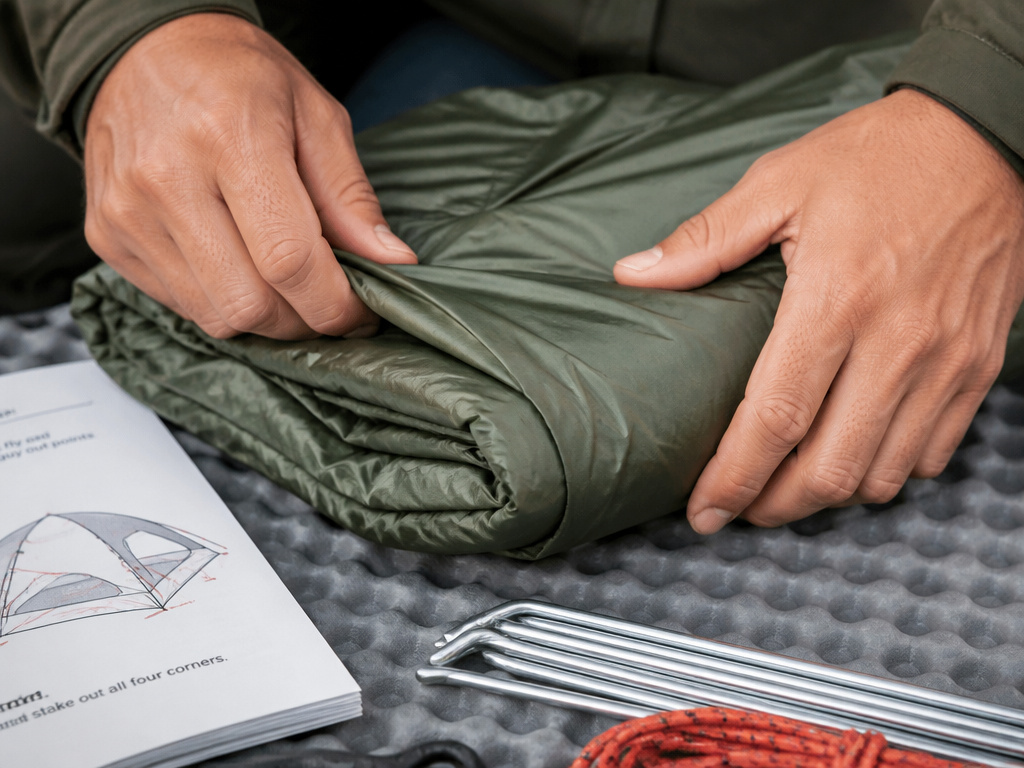
Your toolkit is simple, but missing an item guarantees frustration. Beyond your hands, you need a clean surface and the right frame of mind.
- A Dedicated Folding Surface. I now only use a Gossamer Gear Thinlight foam pad, it’s clean, provides cushion to smooth wrinkles, and doubles as my sit pad. A tarp or groundsheet works, but avoid abrasive surfaces.
- Patience (The Real Tool). Rushing leads to skipped steps. You’ll forget a guyline, fold over a pole segment, or miss a damp spot. That single mistake can cost you a tent.
- The Actual Manufacturer’s Manual. This is non-negotiable. Before folding a new tent for the first time, find the PDF online if you’ve lost the paper copy. The five minutes you spend reading the storage section, like the MSR Tents Owner’s Manual, will save you hours of repair work later.
Investing in supportive tent camping accessories like a large storage tub makes the entire care process simpler and protects your investment, whether you own budget tents under $100 or premium car camping tents.
Why is long-term storage different from packing a stuff sack?
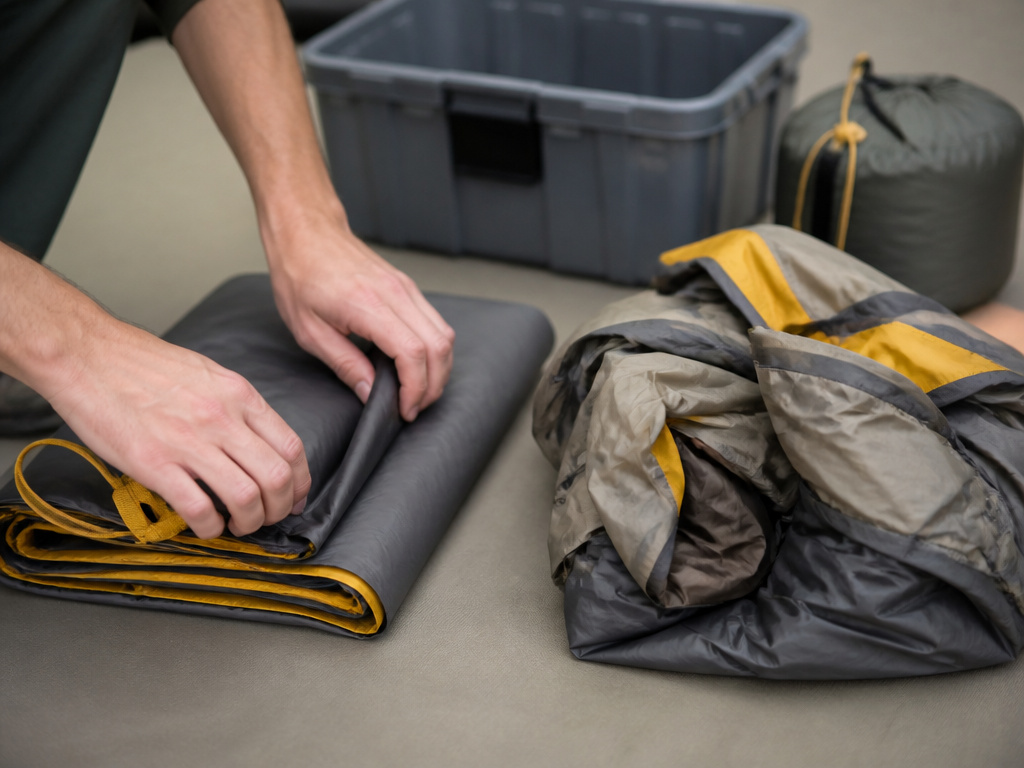
The bag your tent comes in is for transport, not long-term storage. Constantly stuffing a tent, instead of folding and rolling it, has concrete consequences.
First, it creates random, sharp creases that micro-fracture the waterproof polyurethane (PU) coating. After dozens of cycles, those fractures connect and the coating flakes off. You’ll see white, chalky patches inside your rainfly.
Second, stuffing makes the tent harder to pack next time. The irregular shape fights the bag, requiring more force to close the zipper, force that translates directly to stress on the tent’s seams.
The correct storage protocol: After your trip, dry the tent thoroughly, fold and roll it using the method above, and place it in the stuff sack for the ride home. Once there, remove it and store it loosely in a large cotton pillowcase or a plastic tub in a climate-controlled closet. This relieves all fabric tension. It’s a practice that benefits all shelters, from pop-up beach tents to durable stand-up tents.
Common mistake: Leaving a tent tightly rolled in its stuff sack in a garage or car trunk for the off-season, temperature swings and residual humidity degrade materials even if the tent felt dry when packed. The fabric can become permanently creased and lose its waterproof treatment.
Frequently Asked Questions
My tent won’t fit back in the bag after I fold it. What did I do wrong?
You likely folded it into a square or irregular bundle instead of a long rectangle before accordion-folding. Go back to Step 3: ensure you have a uniform rectangle one-third the tent’s width. Also, you may have missed the “roll around the poles” step, which is crucial for final compression.
Is it okay to just stuff the tent for a short weekend trip?
For a single night, it’s less harmful, but it’s a bad habit. It still creates random creases. The better practice is the quick version of the method: flatten, fold in thirds loosely, roll, and stow. It takes 90 seconds more and preserves your gear.
How do I dry a tent indoors when the weather is bad?
In my flat, I drape the tent over two clothes racks with a fan on low blowing underneath. For a rainfly, a shower rod works. The key is maximizing air flow, not heat. Avoid direct heat sources like radiators, which can damage coatings.
What’s the biggest difference between folding a dome tent and a cabin tent?
Cabin tents have vertical walls and more fabric. You must start by collapsing those walls inward onto the floor, creating your own flat “package” before beginning the third-folding process. The accordion folds will be shorter and wider than with a dome.
Can I fold an inflatable tent the same way?
No. First, deflate the beams completely via the double-valve system. Then, follow the brand’s specified pattern, thirds or quarters, as shown in the manual. Never fold an inflatable tent with air still in the beams; the pressure will strain glued seams at the crease points.
Before You Go
Muscle memory. After a hundred pitches, and folds, my hands know the drill. The cool heft of the pole bundle, the final tug of the stuff sack’s drawstring. A tent cared for this way doesn’t just last. It welcomes you back, trip after rainy trip, without a sigh.
Remember the chain. Dry beats clean. Clean beats fast. A dry, loosely stored tent will outlive a hastily stuffed one by years. Keep your manual in your files, your storage tub in the closet, and your tent ready for the next trail. Your future self, under a taut, silent fly on a windy ridge, will thank you.
