
How to Fold a Pop-Up Tent Without Breaking It
This post contains affiliate links. As an Amazon Associate, we earn from qualifying purchases.
To pack a pop-up tent, flatten it, fold it into a taco shape, twist the top and bottom loops into a figure-eight, then collapse the figure-eight into a circle for the bag. The crucial twist motion, not a straight push, protects the flexible poles. Always start with a completely dry tent and follow your model’s specific instructions to avoid damage.
I’ve watched more people wrestle with a pop-up tent than I’ve seen successful pitches. The struggle isn’t a sign of a bad tent; it’s a sign of missing one simple mechanical truth. These tents are designed to coil, not to crunch.
This guide breaks down the method that actually works, grounded in official manufacturer instructions. I’ll explain why skipping the twist can void your warranty, how to handle a tent after rain, and what to do when it simply refuses to cooperate.
Key Takeaways
- The storage strap or marked side is your “base.” Putting the wrong side down guarantees a fight.
- Twist the loops into a figure-eight. Pushing them straight together bends the frame and can crack plastic hubs.
- A damp tent folds poorly and risks mildew. The POP-UP TENT 2.1 manual explicitly warns against improper maintenance.
- Never store the tent tightly compressed in its bag long-term. Fiberglass poles can take a permanent set.
- If the tent resists collapse, check for closed zippers first, trapped air is the most common culprit.
Why Does a “Instant” Tent Fight You?
Pop-up tents use a continuous, flexible pole system sewn into the fabric. This frame has two stable states: fully open or fully closed. The fight happens in the transitional middle ground, where people apply force incorrectly.
Forcing a push-pin collapse, jamming the two sides straight together like a button, puts lateral stress on the pole hubs. After a few attempts, you may hear a sharp click. That’s a plastic hub cracking, a repair that often isn’t covered under warranty as zips and other wearing parts are excluded, as noted in the POP-UP TENT 2.1 manual.
The OEM manual for the POP-UP TENT 2.1 (Item number IAN 384971_2107) states that assembly in the wrong order may cause damage and voids the 3-year warranty. Folding is part of disassembly. The correct method respects the frame’s natural pivot points.
TL;DR: The frame needs to coil along its designed path. The twist creates that coil.
The Official Taco-to-Figure-Eight Method
Follow this sequence exactly. Rushing the initial flattening step leads to minutes of frustrating re-dos.
Step 1: Flatten and Clear the Tent
Lay the tent on its side on a clean, dry surface. Unzip every door, window, and vent flap completely. This isn’t just about air escape; a single zipped vent creates an air pocket that bulges and prevents a clean fold.
Walk the perimeter and push the entire frame flat against the ground. You should have an even circle or square. If you’re packing a larger shelter like many spacious car camp tents, double-check the interior for stray socks or essential camping gear.
Step 2: Form the Taco Shape Correctly
Kneel beside the tent. Find the two bottom corners closest to you and bring them together. Now, walk your hands along the edge, gathering the fabric and frame into a long, narrow strip. Your goal is a uniform “taco shell” width from end to end.
Most pop-up tents have a sewn-in webbing strap or a distinct plastic loop on one side. This marks the designated “base” that must rest on the ground during the fold. The BAGGU Popup Tent Folding instructions and other OEM manuals reference this strap as the key orientation point for proper storage.
Step 3: Identify the Base and Execute the Twist
Locate the strap or marked side. Place that side of the taco firmly on the ground. The opposite side points upward. Hold the top loop with one hand and the bottom loop (often the strap itself) with the other.
The critical move: rotate your wrists in opposite directions. Twist the top loop towards you and the bottom loop away. The frame will cross into a loose figure-eight. This uses the flex of the poles. A straight push fights it.
TL;DR: Strap side down. Twist, don’t push.
What If Your Tent Still Won’t Cooperate?
Even following the steps, sometimes the tent resists. The problem is usually one of these three specific issues.
The tent is damp. Fabric friction increases dramatically with moisture. If you’ve just taken down a wind-resistant pop-up tent after a humid night, wipe the exterior dry first.
A zipper is closed. This is the most frequent culprit. Trapped air acts like a pillow, blocking the frame from flexing fully. Open everything and press the air out again.
You’re fighting the bag. Never use the storage bag to force the collapse. Fold the tent completely first, then pack it. The bag is for transport, not a compression tool.
| Symptom | Likely Cause | Immediate Fix |
|---|---|---|
| Frame locks mid-twist | A closed zipper or vent | Open all doors/windows, press out air, restart from a flattened position. |
| Fabric bunches unevenly | Grabbing fabric, not the frame | Follow the physical pole with your hands; ignore the slack fabric between. |
| Can’t form a clean taco | Tent not fully flattened | Walk the entire perimeter, applying even downward pressure. |
| Twist feels impossible | High humidity or damp fabric | Dry the tent thoroughly, or accept a looser fold for transport home. |
Packing the Bag Without Damage
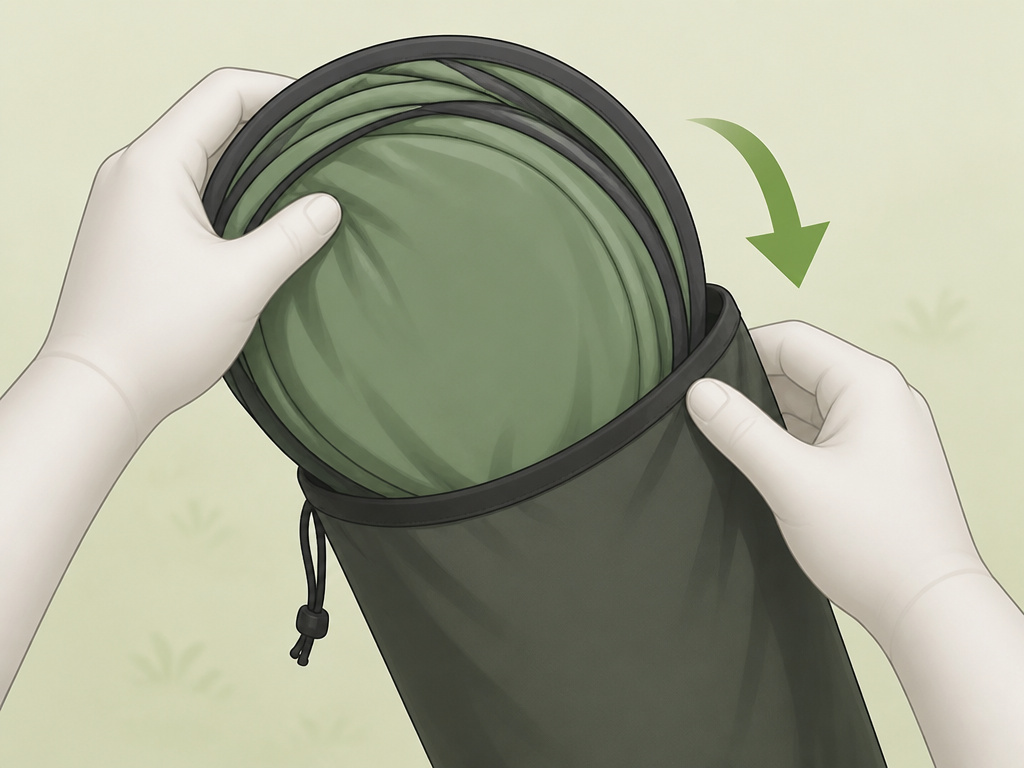
With the tent collapsed into a tight circle and secured, you’re ready for the bag. This is where good folds get ruined by bad technique.
Hold the folded tent vertically. Align the edge of the circle with the long seam of the storage bag. Slide it in like a record into a sleeve. Avoid twisting or cramming.
If the tent doesn’t fit, the fold is still too bulky. Take it out, release the strap, and re-collapse the figure-eight with slightly more pressure. For larger models like many tents with standing room, a snug fit is normal.
Common mistake: Forcing a damp tent into its bag. I’ve torn two bags this way. Wet fabric swells. A torn bag leads to loose straps and lost poles. If the fit isn’t easy, the tent needs more drying time.
Essential Pre-Pack Checks
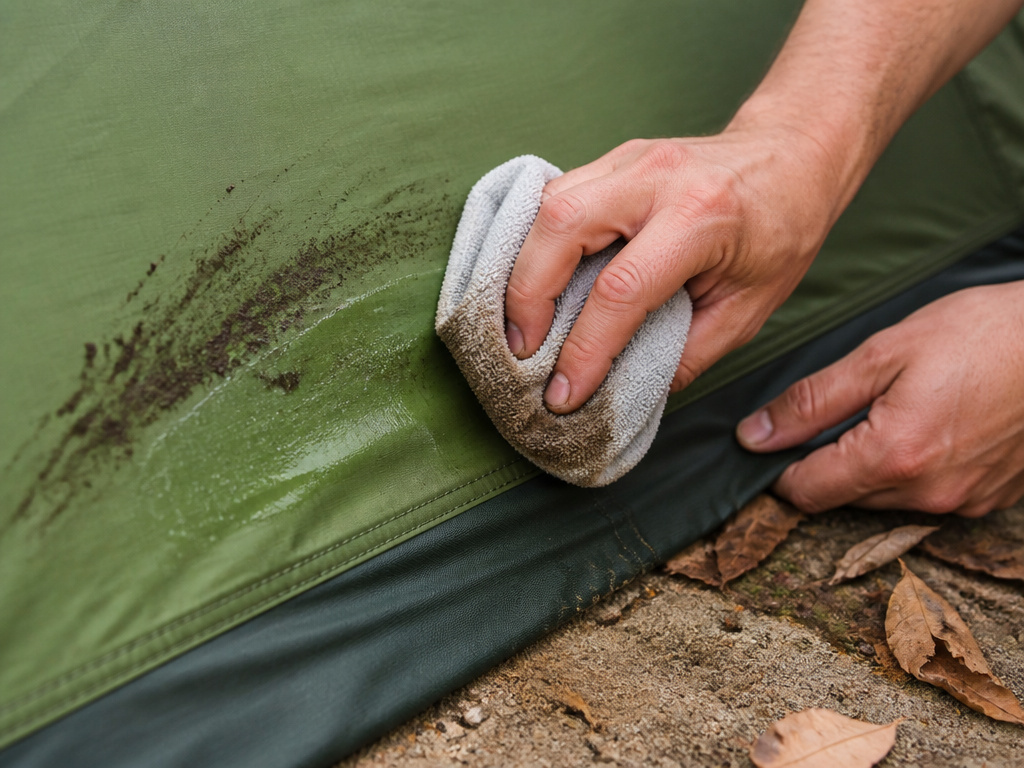
Packing is the final step of your trip. What you do before folding matters more than the folding itself.
Dry it completely. The POP-UP TENT 2.1 manual notes that condensation forms in all synthetic tents and advises frequent airing. Packing a wet tent risks mildew and can degrade the waterproof coating (Hydrostatic head: 2000mm). A tent that’s a quality option under $200 deserves this care.
Clean off debris. Shake out leaves, dirt, and sand. Wipe mud with a damp cloth only. The manual explicitly warns: never wash the tent in a machine, as this destroys its watertight finish.
Inspect the poles. Look for sharp bends or cracked hubs. A damaged pole can fail during the next setup. Proper folding reduces this risk, but inspection catches problems early.
TL;DR: Dry, clean, inspect. Then fold.
Storing Your Tent for Longevity
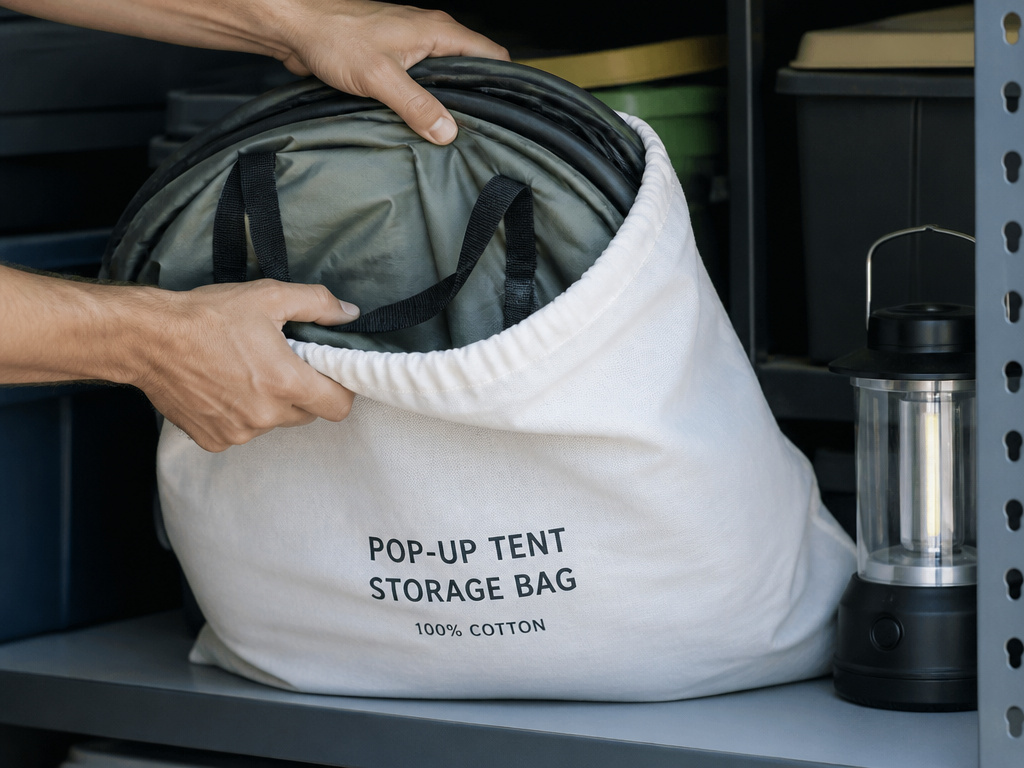
The storage bag is for transport, not for six months in your garage. Long-term compression fatigues the fiberglass poles and can deform them.
After your trip, unpack the tent. Let it air out one more time in a dry space. For long-term storage, keep it loosely in a large, breathable cotton bag or an old pillowcase in a cool, dry place. This practice extends the life of any shelter, from budget tents under $100 to durable canvas tents.
Consider your storage environment alongside other tent camping equipment like portable tent lanterns or climate control for shelters. A dry, organized space protects all your gear.
Frequently Asked Questions
Why does my pop-up tent have a strap on one side?
The strap marks the designated “base” side for folding. Placing this side on the ground during the taco-to-figure-eight process aligns the frame’s natural pivot points, making the twist motion work correctly. It’s a critical design cue from the manufacturer.
Can I fold a pop-up tent by myself?
Absolutely. The key is using your feet to pin the base side of the taco to the ground after you identify it. This stabilizes the tent and frees both hands to manage the twist. Doing this on grass or a soft surface gives you better leverage.
How do I fold a pop-up tent after rain?
First, wipe the exterior with a towel. Unzip everything and leave it in the sun for 15-20 minutes if possible. If you must pack it wet, use the same method but don’t force the final tight collapse. Fold it loosely, and unpack it to dry completely within 24 hours once you’re home.
What’s the difference between twisting and pushing?
Twisting rotates the frame hubs along their intended axis of motion, allowing the poles to coil naturally. Pushing applies direct compression force, which can snap plastic connectors or bend pole segments. The twist feels smoother and meets far less resistance.
The Bottom Line
A perfect pack starts with a dry, flat tent. Find the strap, put that side down, and remember the wrist-turn twist. That single motion bypasses most of the struggle.
If the tent isn’t fitting in the bag, it’s communicating: it’s still damp, a zipper is closed, or the taco shape isn’t even. Listen to it. Forcing the process is the fastest way to damage your gear and void a warranty.
A neatly packed tent means a quick, frustration-free setup next time. That’s the real reward, ending one trip smoothly and starting the next one with ease.
