
How To Wash A Tent | The 24-Hour Mildew Mistake
This post contains affiliate links. As an Amazon Associate, we earn from qualifying purchases.
Wash your tent by hand in cold water with a tent-specific cleaner like Nikwax Tech Wash, rinse until the water runs clear, and air-dry it completely in a shaded, ventilated area before storing. Skipping the thorough dry or using a washing machine voids warranties and starts mildew growth within 24 hours in warm conditions.
Most people get this wrong because they treat a tent like laundry. They see dirt, think “washing machine,” or they do a half-hearted rinse and pack it away while it’s still damp. That’s the shortcut that ruins $300 shelters.
Here’s how to actually clean a tent without wrecking its waterproofing, zippers, or seams. We’ll cover the right cleaners, the hand-wash sequence, the non-negotiable drying rules, and what to do with tents that have lights or tricky vinyl fabric.
Key Takeaways
- Use only cold water and a tent-specific cleaner; dish soap or laundry detergent strips waterproof coatings.
- Hand-wash by submerging and gently agitating; machine washing tangles, tears, and voids most warranties.
- Drying is the most critical step, a tent stored even slightly damp grows mildew in as little as 24 hours.
- For tents with integrated lighting like Big Agnes mtnGLO, keep the controller dry and never submerge the light strand.
- Store clean, bone-dry tents loosely in a cool, dry place between 50°F and 70°F to prevent UV and moisture damage.
The Wrong Way Will Void Your Warranty
Manufacturers are not kidding. The Aztec Tent maintenance guide states plainly that using a commercial washing machine “will void the warranty of the fabric.” It’s not about being fussy. A top-loader’s agitator twists and stretches tent fabric until the seam tape delaminates. A front-loader’s tumbling action beats the waterproof polyurethane coating off the inner wall.
Common mistake: Throwing a muddy tent in the washing machine, the agitator snags and stretches the bug mesh, the spin cycle crushes the pole sleeves, and the warranty is void before the cycle ends.
The other wrong move is using the wrong soap. Dish detergents and laundry pods contain degreasers and brighteners designed to strip oils. On a tent, those chemicals attack the durable water repellent (DWR) finish on the rainfly and the waterproof coating on the inner tent body. Your tent might come out smelling like a spring meadow, but the next storm will soak right through.
TL;DR: Hand-wash only, with cold water and a cleaner made for technical fabrics. Your warranty and dry nights depend on it.
The Right Cleaning Gear (It’s Not Much)
You don’t need a garage full of equipment. You need three things that won’t hurt your tent.
First, a container. A clean bathtub works. So does a large plastic storage tub or a kiddie pool. Next, soft agitation tools. Your hands are the best. A soft microfiber rag or a sponge is fine for spot cleaning. Avoid brushes with stiff bristles.
The critical item is the cleaner. General web advice says “mild soap,” but that’s vague and risky. You want a product formulated for waterproof fabrics.
| Cleaner | Best For | Why It’s Safe |
|---|---|---|
| Nikwax Tech Wash | General cleaning & revitalizing water repellency | Non-detergent formula; won’t clog membrane pores |
| McNett Mirazyme | Odor removal & mildew treatment | Enzyme-based; breaks down organic matter without harsh chemicals |
| Non-detergent soap (e.g., Castile) | Very light, superficial dust | Minimal additives; still requires extremely thorough rinsing |
Brands recommend these specifically. Big Agnes Europe calls out Nikwax Tech Wash. Eureka! recommends McNett Mirazyme. This isn’t a paid placement. It’ s the difference between a clean that preserves your gear and one that slowly degrades it.
If you’re maintaining other tent camping gear, a bottle of Tech Wash pulls double duty on rain jackets and sleeping bag shells too.
The 7-Step Hand-Wash Process (and the One Step Nobody Skips)
This is the core sequence. It works for most nylon and polyester backpacking, family, and stand-up tents.
Step 1: Shake it out, hard. Set the tent up in your yard or living room. Unzip everything. Sweep out the floor with a hand broom. Shake each wall vigorously. You want to get rid of sand, pine needles, and dirt before it turns into slurry in your wash tub.
Step 2: Mix the solution with cold water. Fill your tub with cold water. Hot water can damage coatings and set stains. Add the cleaner according to the bottle’s directions, usually a capful or two per gallon.
Step 3: Submerge and swish. Take down the tent and immerse it fully. Gently move it around with your hands, like you’re washing a delicate sweater. Agitate for a good five minutes. Focus on visibly dirty areas: the floor, doorways, and corners.
Fully submerge the tent in cold water with a technical fabric cleaner. Gently agitate by hand to loosen dirt without abrading the waterproof coatings or seam tape. Rinse repeatedly in clean cold water until no soap residue remains, then press, do not wring, excess water from the fabric before air-drying in shade.
Step 4: Attack stains with a rag. For ground-in dirt or sap, put some cleaner on a damp rag and gently dab or rub the spot. Don’t scrub aggressively. For tricky materials like vinyl, Aztec Tent advises consulting a pro before using other chemicals.
Step 5: The rinse cycle you can’t shortcut. Drain the filthy water. Refill the tub with clean cold water. Submerge the tent again and swish. Drain. Repeat. You rinse until the water drains completely clear. This is the step people skip, they leave soap in the fabric. That residue attracts dirt and can degrade coatings over time. For a heavily soiled tent, you might rinse three or four times.
Step 6: Press, never wring. Lift the tent and let it drain. Then, press the water out by hand, working from the top down. Wringing or twisting puts extreme stress on seams and can permanently crease the fabric.
Step 7: Dry it like your sleep depends on it. Because it does.
Drying: The Non-Negotiable Finale
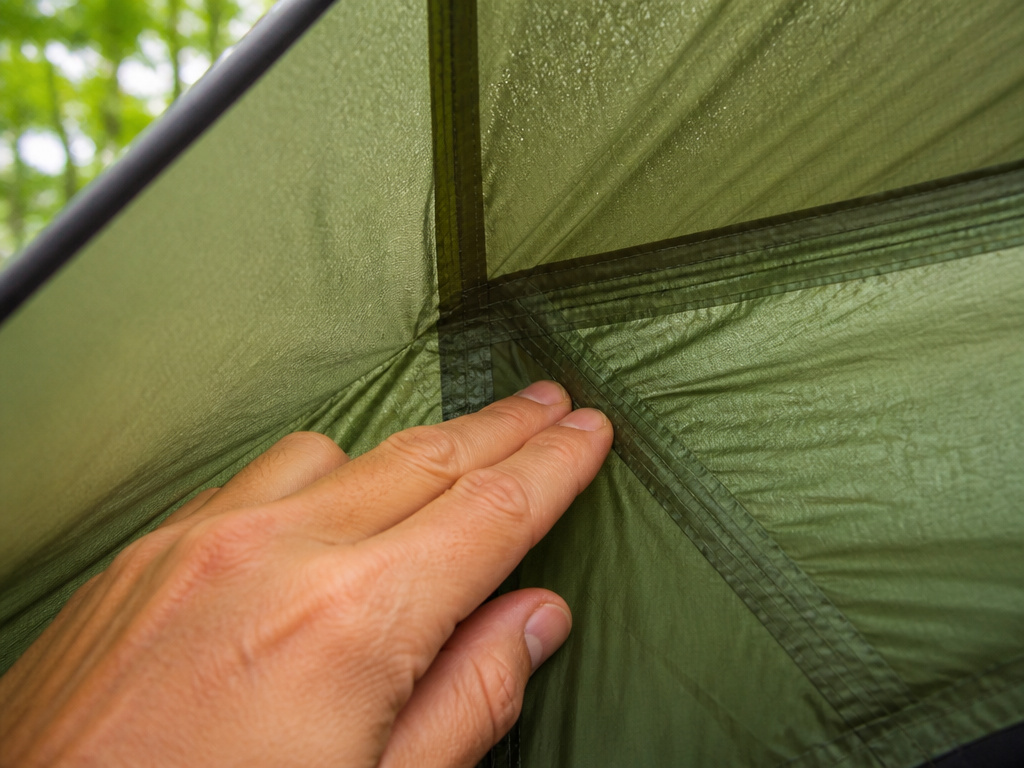
This is where trips are ruined months in advance. A damp tent in storage equals mildew. The MSR owner’s manual is blunt: “Storing a wet tent for as little as 24 hours in warm weather is also likely to start the process of mildew.”
Your job is to eliminate every molecule of moisture.
First, set the tent up again if you have space. This is the fastest way. Hang it over multiple clotheslines if you don’t. You need airflow inside and out. Open all vents and doors.
Second, pick the right location. Dry in the shade. Direct sunlight, especially at high elevations, accelerates UV damage that weakens fabric fibers. A breezy, shaded porch or under a tree is perfect.
Third, check everywhere. Feel the corners. Run your hand along the seam tape. Check the stuff sack. It’s dry only when every single part is dry to the touch. This can take a full sunny afternoon or, in humid climates, a full day.
Common mistake: Packing a tent that’s “mostly dry”, the damp corner you missed becomes a black-speckled mildew colony by next season, and the smell never fully comes out.
If you’re forced to pack a wet tent, like breaking camp in rain, your next stop is a setup to dry. Don’t go home and forget it in the trunk. That 24-hour clock is ticking.
For long-term storage, the Aztec guide recommends a cool place between 50°F and 70°F. A closet is better than a hot garage or damp basement. Loosely store the tent in a large cotton sack or old pillowcase, not its tight stuff sack.
Special Cases: Lights, Vinyl, and Big Tents
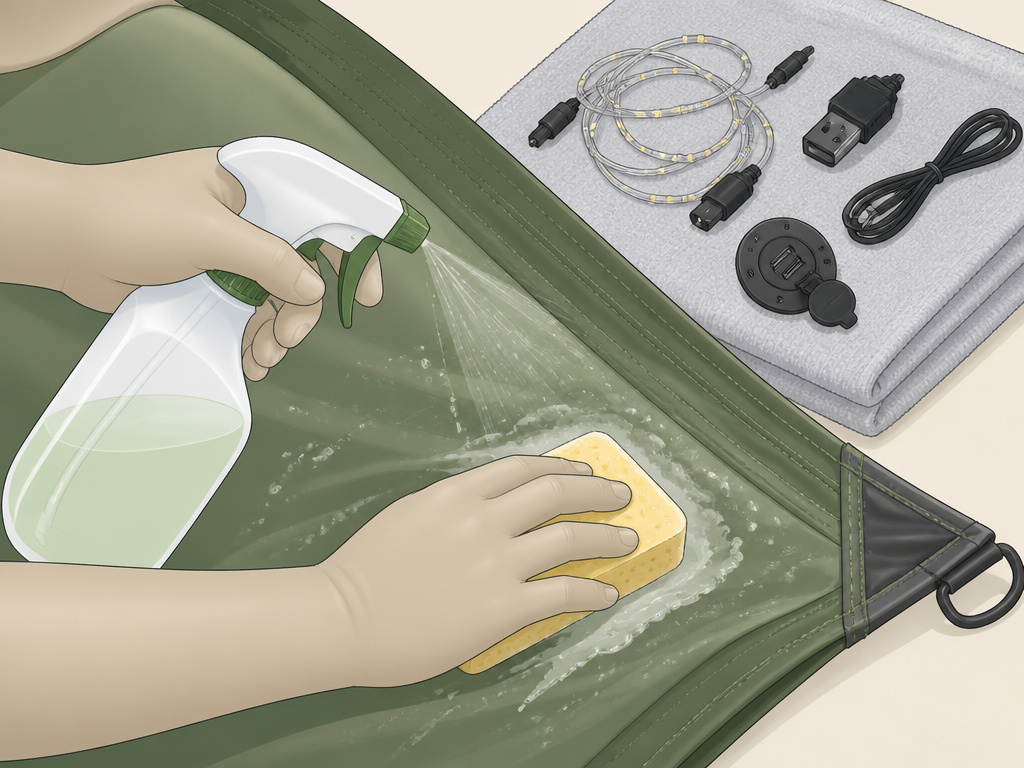
Not all tents are simple nylon domes. The procedure adjusts at the edges.
Tents with integrated lighting (Big Agnes mtnGLO): The light strand and controller are not submersible. Big Agnes Europe says to disconnect the strand and seal the USB port before washing. Wash the tent body as described, but keep the electronics completely dry. Never apply soap or water directly to the lights.
Vinyl or heavy-duty canvas tents: These are heavier and hold more water. Aztec recommends cleaning large vinyl tents in sections so the cleaner doesn’t dry on the fabric. For canvas tents, the same cold-water, mild-cleaner rule applies, but drying takes significantly longer, sometimes days. Ensure perfect ventilation to prevent interior mildew.
Large family or cabin tents: You might not have a tub big enough. The “sectional” wash works here too. Clean and rinse one part at a time, ensuring thorough rinsing before moving on. Drying these giants often requires creative use of multiple lines and frequent repositioning.
Having the right tent accessories, like a portable clothesline, makes handling these bigger shelters much easier.
When to Wash (And When to Wipe)
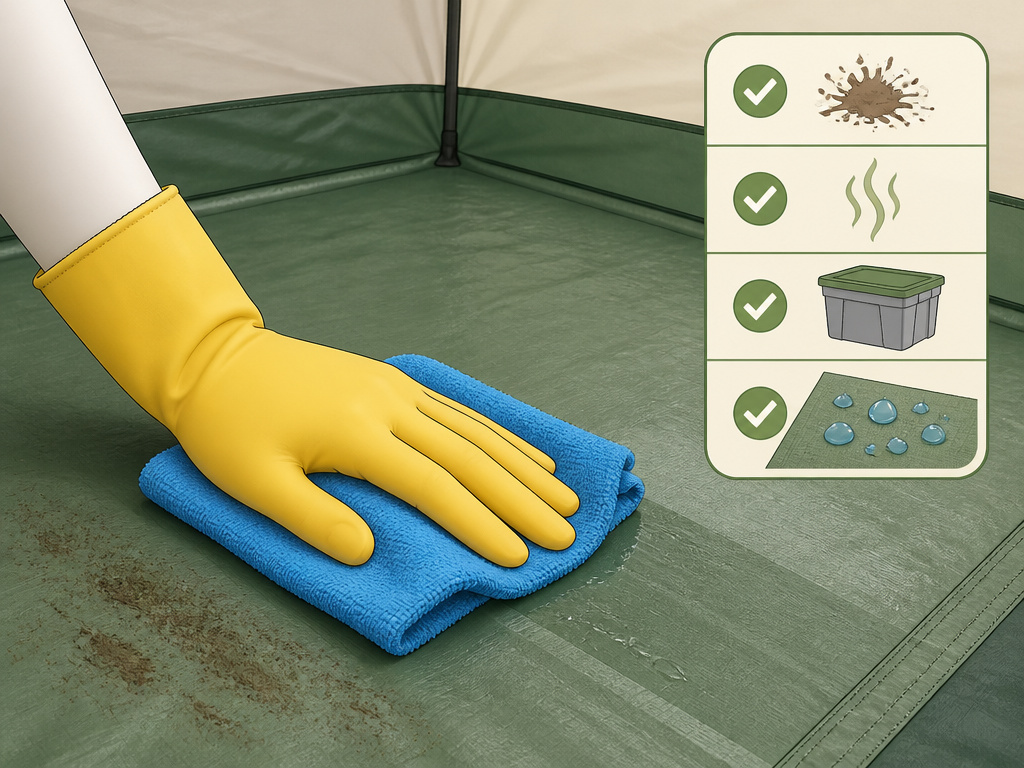
You don’t need a full wash after every weekend trip. That’s overkill and puts unnecessary wear on the tent.
Give it a full wash when:
– It’s visibly soiled with mud, sap, or bird droppings.
– It smells musty or of mildew.
– You’re preparing it for long-term storage at season’s end.
– You’ve noticed a decrease in water beading on the rainfly (a wash with Tech Wash can sometimes revive DWR).
For routine maintenance, a simple wipe-down suffices. After a trip, set the tent up at home. Use a damp cloth to wipe down the interior floor and walls. This removes sunscreen, bug spray, and dirt before it sets. Let it air out for an hour before packing. This habit drastically extends the time between full washes.
This routine is just as important for budget tents as it is for premium models. Care makes a cheap tent last.
Storage: The Final Guard Against Damage
A clean, dry tent is only safe if stored correctly. Three enemies lurk in storage: moisture, heat, and UV light.
Moisture you’ve already beaten by perfect drying. Heat accelerates the chemical breakdown of waterproof coatings, a process called hydrolysis. The MSR manual cites “prolonged exposure to moisture” as the cause, and heat speeds it up. That’s why a hot attic or garage is a poor choice.
UV damage is more insidious. The same manual states UV light causes fabric to fade, lose strength, and tear, with effects accelerating at higher elevations. Sun damage is not covered under warranty.
The ideal storage spot is a cool, dark, dry closet inside your home. Store the tent loosely, not compressed in its sack. This prevents permanent creasing in the waterproof coatings.
Think of it as putting your tent to bed. You’ve fed it (cleaned it), dried it off, and now it’s resting in a cool, dark room. It’ll be ready and strong when you next call on it, whether it’s a storm-resistant tent built for abuse or a mid-range tent for casual car camping.
Frequently Asked Questions
Can I use a pressure washer to clean my tent?
No. The high-pressure stream will force water through the waterproof laminate, saturate the insulation, and likely tear seams or bug mesh. It’s far too aggressive.
What if my tent already has mildew?
Mix a solution of lukewarm water and a cleaner like McNett Mirazyme, which contains enzymes that eat mildew. Gently clean the affected area, let the solution sit for 10 minutes, then rinse thoroughly. Be aware that mildew stains may remain even after the spores are killed.
How do I dry a tent if I don’t have a yard?
Use a bathroom with a strong vent fan. Hang the tent over the shower curtain rod, on hangers over the tub, and from any doorframe. Crank the fan and open a window. It will take longer, but it works.
Is it okay to wash a tent in the winter?
Yes, but drying becomes the main challenge. You’ll need a large indoor space with good airflow, like a basement rec room or garage (if it’s dry). The cold air itself isn’t the problem; lack of evaporation is.
Can I re-waterproof my tent after washing?
Yes, and it’s a good practice every few seasons. After your tent is clean and dry, apply a DWR treatment like Nikwax TX.Direct Spray-On to the rainfly while it’s set up. Follow the product instructions closely.
Before You Go
Washing a tent isn’t about making it look new. It’s about preserving its ability to keep you dry and comfortable for years. The process boils down to cold water, the right cleaner, gentle hands, and relentless drying. Forget the washing machine, ignore the dish soap, and never, ever pack it away damp. That 24-hour mildew warning from MSR isn’t a suggestion, it’s a fact printed in the manual.
A clean tent is a reliable tent. Spend the two hours now so it’s ready when the next trail calls. Your future dry, mildew-free self will thank you.
