
Bear Outside Your Tent? Stay Calm and Do This
This post contains affiliate links. As an Amazon Associate, we earn from qualifying purchases.
If you hear a bear outside your tent, freeze and listen. Stay quiet for the first 60 seconds to assess if it’s passing through. If it lingers, speak in a calm, firm voice to identify yourself. Your response depends entirely on the bear’s behavior: de-escalate a defensive, agitated bear; aggressively haze a curious, non-defensive one. Your tent is not armor, your goal is to convince the bear you are not food and not a threat.
That first, heart-pounding sniff right outside the nylon wall is a sound you never forget. I know. I’ve heard it twice. Once was a curious black bear in the Adirondacks that left after a calm word. The other was a grizzly in Montana that required a very different, more intense protocol. In both cases, what I did, and didn’t do, in those first moments dictated the outcome.
This isn’t about generic wildlife tips. It’s a minute-by-minute action plan grounded in the latest National Park Service bear safety guide and my own hard-learned lessons. We’ll move beyond just “fight or play dead” to understanding why a bear is there and how to read its energy to choose the right response.
Key Takeaways
- Your first and most powerful tool is silence. A bear just cutting through camp will often leave within a minute if it hears nothing interesting.
- Behavior trumps species. A defensive bear (agitated, loud) requires you to be passive. A non-defensive bear (quiet, curious) demands you be loud and aggressive.
- Never, ever deploy bear spray inside your tent. The incapacitating cloud will trap you. Wait until you can aim the cloud out of a vestibule or door.
- Camp setup is 90% of prevention. Cook, eat, and store all smellables, including toothpaste and sunscreen, at least 100 yards from your tent in an Interagency Grizzly Bear Committee (IGBC)-approved container.
- Your tent is a scent barrier, not a physical one. If a bear wants in, it will get in. Your job is to make sure it doesn’t want to.
The Golden Minute: What to Do First
Don’t move. Don’t breathe through your mouth. Lie still in your sleeping bag and just listen. Your brain will scream at you to grab a light or shout. Ignore it. This 60-second pause is your most critical diagnostic tool.
You’re listening for rhythm. The heavy, four-beat shuffle of a bear just moving through? That’s often a non-event. It’s the stop that changes everything. If the footsteps halt right by your head, you’ve transitioned from a passerby to a point of interest.
A bear’s investigative pause outside your tent often lasts exactly 12–15 seconds of complete silence before it decides to leave or probe further. Count silently. If you make noise during that window, you reset its curiosity clock.
Common mistake: Immediately shouting or banging a pot, this can startle a defensive bear into a charge. You must assess the bear’s energy first.
What’s the bear’s energy? High and loud (huffing, jaw-popping, swatting)? That’s defensive, it feels threatened. Low and quiet (methodical sniffing, silent pacing)? That’s non-defensive, it’s curious or food-motivated. Your response must be the opposite. High-energy bear gets low-energy you. Low-energy bear gets high-energy you.
TL;DR: Freeze and listen for a full minute. Identify if the bear is passing or investigating. Match your response to the bear’s energy: passive for defensive, aggressive for non-defensive.
Reading the Bear’s Intent: A Behavior-Based Guide
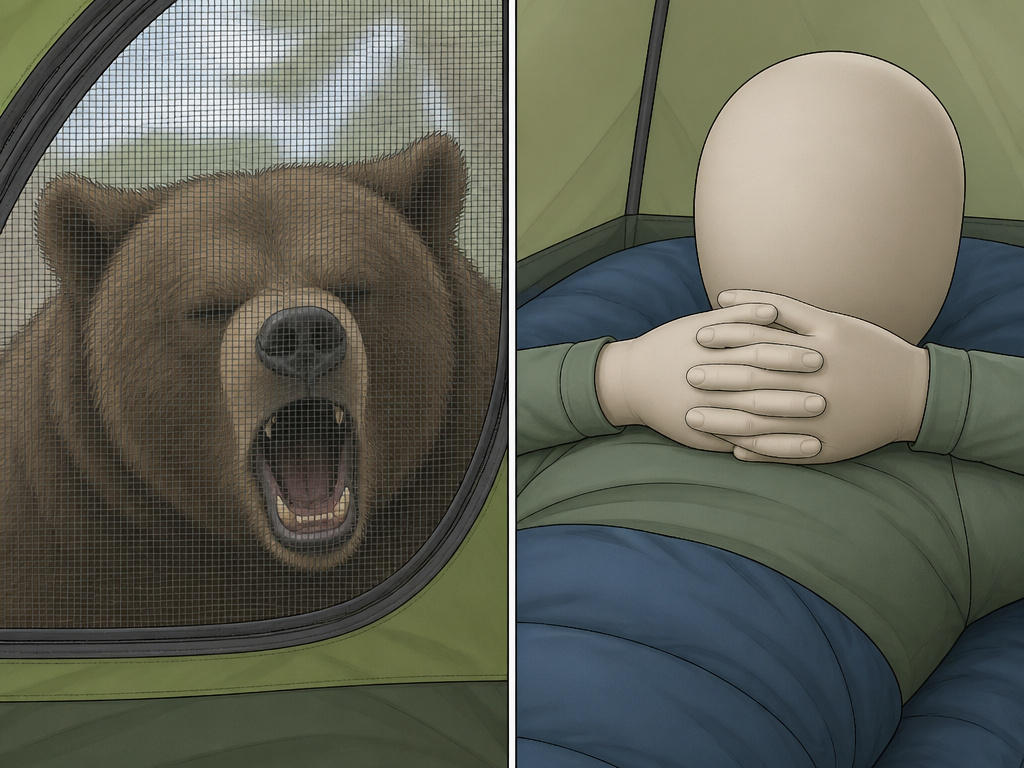
Forget the old “black bear fight, grizzly play dead” rule. Modern guidance from places like Denali National Park emphasizes that your response should be based on the bear’s behavior, not just its species. This table breaks down the two critical behavioral categories.
| Behavior Type | Sounds & Body Language | Your Immediate Response | If It Makes Contact |
|---|---|---|---|
| Defensive (Feels Threatened) | Huffing, loud jaw-popping, swatting ground, bluff charges, ears back, head low. It’s loud and explosive. | De-escalate. Speak in calm, low tones. Avoid direct eye contact. Move slowly. Prepare to play dead. | Play dead. Lie face-down, hands clasped behind neck, legs spread wide. Do not move or make a sound until the bear is gone. |
| Non-Defensive (Curious/Predatory) | Silent, slow, purposeful movement. Direct, unwavering approach. Sniffing at tent seams or pack straps. Focused intensity. | Escalate. Be loud and big. Yell, bang pots, stand up in the tent. Act aggressively to convince it you’re not worth the trouble. | Fight back. Use anything—trekking pole, camp stove, fists. Aim for the eyes and nose. Do not stop. Do not play dead. |
A defensive attack is about neutralizing a threat. Once you’re no longer a threat (by playing dead), it usually ends. A non-defensive encounter is about food or, in extremely rare cases, predation. Playing dead here makes you an easy meal. The Interagency Grizzly Bear Committee encounter advice is clear: if a bear enters your tent, fight back.
Your Three In-Tent Tools (And the Right Order to Use Them)
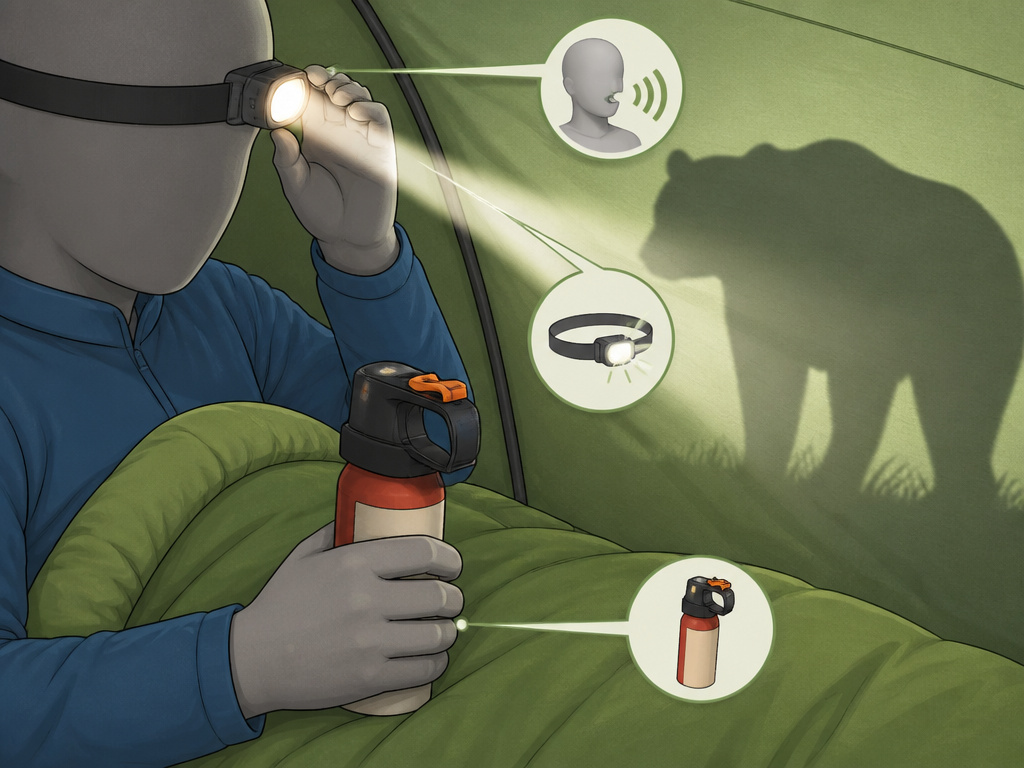
What’s actually within arm’s reach? Just three things, but if you mess up the sequence, you’re toast.
- Your Voice. After the initial silent assessment, if the bear is lingering, use a firm, low tone. “Hey bear. I’m here. Move on.” This identifies you as human, not prey. I learned the hard way that a panicked shout can sound like a wounded animal. A calm, authoritative voice projects control.
- Your Light. Only after you’ve spoken, turn on a bright headlamp or flashlight and shine it through the tent wall. The sudden light can be a deterrent, and it helps you see shadows. My go-to is a headlamp with a strobe function, the disorienting flash has made more than one curious bear think twice.
- Your Bear Spray. This is your last-resort tool, not a first step. Keep it in your sleeping bag with you, not on the tent floor. Canisters lose pressure in the cold; body heat keeps it effective. I carry Counter Assault Bear Deterrent because its 2.0% MC capsaicinoid concentration is the maximum EPA allows.
Before you start: Bear spray is a potent inflammatory agent. Deploying it inside your tent will incapacitate you, leaving you blind and choking. Only use it when you can aim the cloud outward through a partially open door or vestibule.
Common mistake: Fumbling for bear spray first, in the dark and panic, you’ll likely miss the safety clip. Voice first. Always. It gives you time to get your bearings and your spray ready.
The Critical Decision: Fight Back or Play Dead?
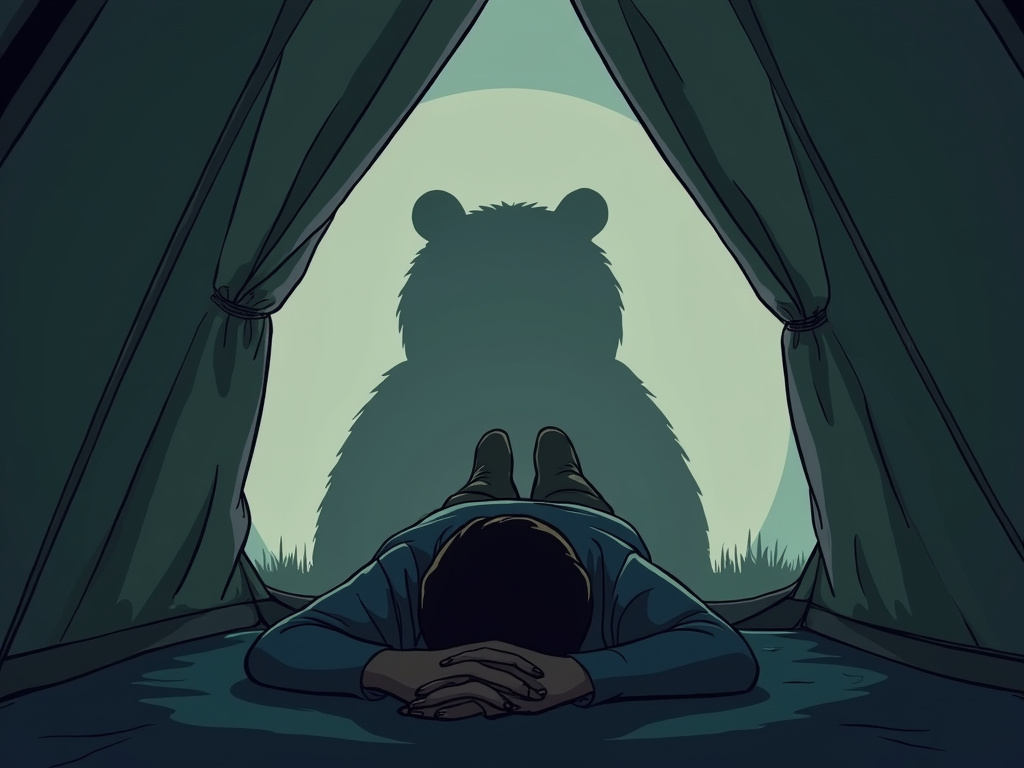
This is the moment everything leads to. The bear isn’t leaving, and it’s making contact.
For a defensive bear (the one huffing and popping its jaws):
* Go face down immediately. Play dead.
* Leave your pack on for back protection.
* Clasp your hands behind your neck, tuck your chin.
* Spread your legs wide, not just for stability, but because a bear trying to flip you will get its nose in the dirt, which can cause it to sneeze and lose interest.
* Stay still until you are certain the bear has left the area. These attacks are often brief.
For a non-defensive bear (the quiet, investigative one) that breaches your tent:
* Fight immediately and with everything you have. Your tent is now compromised.
* Yell. Scream. Be as loud and vicious as possible.
* Target the eyes and muzzle with any object, a heavy flashlight, a pot, your fists. The goal is to make you the most difficult “meal” it has ever encountered.
* The Bear Smart Society encounter recommendations stress that playing dead with a non-defensive bear is an invitation to be eaten.
How to Set Up Camp So Bears Walk On By
Prevention isn’t just a good idea; it’s everything. A bear at your tent is almost always there because of a smell you brought. I learned this after a black bear shredded a vestibule in the Wind River Range because I’d left a mint ChapStick in my pocket. Now, my routine is obsessive.
Follow the 100-Yard Triangle Rule, used in parks like Denali. Your sleeping, cooking, and food storage areas should each be 100 yards apart, forming a triangle. This puts food smells a football field away from where you sleep.
- Cook dinner downwind of your tent site, using a camp stove (less odor than a fire). Clean every pot and utensil meticulously.
- Store ALL smellables in a certified Bear Resistant Food Container (BRFC). This means food, trash, toothpaste, sunscreen, lip balm, and even that empty snack wrapper. I prefer the BearVault BV500 for solo trips, but the Garcia Backpacker’s Cache is what many ranger stations issue, its latch is simpler with cold-numbed fingers.
- Change clothes before bed. If you cooked in your jacket, it gets stored with the food. The scent of dinner on fabric is a powerful attractant.
- Pitch for visibility. Choose a site where you and a bear can see each other from a distance. Thick brush is an ambush zone.
This level of camp hygiene, supported by the right essential tent camping gear like odor-proof bags and a dedicated bear hang kit, is your strongest defense. It turns a potential crisis into, at worst, a story about hearing something walk past.
The Gear That Actually Makes a Difference
Your equipment supports the protocol; it doesn’t replace common sense. Here’s what earns its weight in your pack:
- EPA-Approved Bear Spray: Not “pepper spray.” Look for the EPA approval and a range over 25 feet. Check the expiry date before every trip.
- IGBC-Approved Bear Canister: In many parks, like Denali, these are required. A hard-sided canister like a BearVault or Garcia is non-negotiable. Soft bags are not bear-resistant.
- Headlamp with Strobe: A sudden, disorienting strobe can buy you precious seconds to get your spray ready.
- Whistle or Air Horn: Useful for hazing a bear that’s still at a distance (50+ yards). Useless once it’s close.
Having reliable tent lighting solutions and knowing how to use your camping stove options cleanly are part of this system. And if you’re in a canvas tent with a stove jack using a hot tent stove, remember that food smells from cooking linger, be extra diligent with your 100-yard triangle.
What Never, Ever to Do
These actions feel instinctive but are dangerously wrong.
- Never run. Bears can sprint 35 mph uphill. Running triggers a chase reflex. Back away slowly if you must move.
- Never climb a tree. Both species can climb, and you’ll be trapped.
- Never drop your pack as a distraction. It provides back protection, and its smells may just give the bear more to investigate near you.
- Never sleep with ANY smellables. Not a single gum wrapper. A bear will shred a $500 tent for a tube of toothpaste.
- Never assume your tent is safe. It’s a thin nylon scent barrier, not a fortress. Its only job is to keep your scent contained, not to stop claws.
Frequently Asked Questions
Should I try to scare the bear away immediately?
No. Immediate noise can startle a defensive bear into a charge. Use the golden minute of silence to assess. If the bear is just passing, let it. If it has stopped and is investigating, then use your voice calmly first before escalating.
What if I can’t tell if it’s a black bear or a grizzly?
Focus on behavior, not color or species. A loud, huffing bear is acting defensively, prepare to play dead. A quiet, methodical bear is non-defensive, get loud and aggressive. This behavior-based approach is now the standard.
Is a gun better than bear spray?
Studies, including those cited by the U.S. Fish & Wildlife Service, show bear spray is more effective at preventing injury in close encounters. Spray creates a large, hard-to-miss cloud that works even in poor light or if your aim is off. A wounded bear is exponentially more dangerous.
Do bear bells work?
They are largely ineffective. Bears habituate to the constant, non-threatening jingle. Your variable, human voice is a far more convincing deterrent.
How do I know if a bear is predatory?
True predatory behavior is very rare. The bear will stalk you silently, possibly following for a long time, with no defensive bluffs. If you suspect this, do not play dead. Group up, stand your ground, and fight back with everything if it attacks.
Before You Go
Your safety in bear country hinges on your plan, not your tent. Most nighttime visits end with a bear ambling away, disinterested. Your job is to ensure there is nothing of interest, no food smells, no trash, no toiletries, anywhere near your sleeping area.
Commit the flowchart to memory: listen, assess, respond. Defensive energy gets passivity. Non-defensive energy gets aggression. Have your bear spray in hand, not buried. And make that 100-yard triangle your non-negotiable camp setup. That single habit prevents more problems than any gadget ever could.
Your choice of shelter supports this protocol. In exposed, high-wind areas, a storm-proof tent model provides critical security. For wet climates, a truly waterproof tent keeps you dry and removes the temptation to cook in the vestibule. And for family trips, a spacious car camping tent often means you can keep all smellables locked in your vehicle, the ultimate bear-resistant container.
