
Where Is The Great British Bake Off Tent? Find Its Location
This post contains affiliate links. As an Amazon Associate, we earn from qualifying purchases.
The Great British Bake Off tent is a temporary structure erected each spring on the lawn of Welford Park, a private country estate in Berkshire, England. It films there from April through July, but the tent is not a permanent fixture and is not open for public tours during filming.
Most fans assume the iconic white tent has always been in one place. They picture it as a permanent studio. The reality is more chaotic and far less static than the show’s cozy vibe suggests.
This guide walks through every location the tent has ever called home, explains why you can’t just pop in for a visit, and details the one year it truly went on a national tour.
Key Takeaways
- The Bake Off tent films primarily at Welford Park in Berkshire from April to July, but it’s taken down after filming wraps.
- The show’s first series in 2010 was a traveling roadshow, with the tent moving to a different UK location each week.
- Due to COVID-19 restrictions, the 2020 series filmed at Down Hall Hotel, with everyone living on-site in a sealed “biosphere.”
- You cannot visit the tent itself, but Welford Park opens its grounds for seasonal events like the Snowdrop Season and Festival of Light.
- The production uses a massive, custom-built marquee, not a standard off-the-shelf event or camping tent.
The Tent’s Current Home: Welford Park
Since 2014, the Bake Off tent has been pitched on the south lawn of Welford Park, a stately home near Newbury, Berkshire. The location is chosen for its picturesque backdrop of the main house and its relative seclusion.
Filming typically begins in April and runs for 10 to 13 weeks, wrapping in July. The structure is a large, custom-built white marquee, far more substantial than any recreational canvas tent or pop-up tent. It’s equipped with full kitchen stations, production lighting, and camera rigs. After the final episode is shot, the entire tent is dismantled and removed, leaving no trace for most of the year.
The tent is a temporary film set, not a permanent attraction. It goes up in spring and comes down in summer, so arriving in August or September means you’ll see only an empty lawn.
Welford Park is a private estate. The grounds, including the exact filming area, are closed to the public during the entire filming period for security and privacy. This is a non-negotiable condition from the production company, Love Productions.
TL;DR: The tent lives at Welford Park from April to July, then vanishes. Don’t expect to see it outside that window.
Can You Visit the Bake Off Tent?
No. The tent is a closed film set during production. The public cannot access Welford Park’s grounds while filming is underway.
However, the estate does host two major public events annually where you can visit the grounds. You just won’t see the tent.
| Event | Typical Dates | What You’ll See | Tent Status |
|---|---|---|---|
| Snowdrop Season | Late January to early March | Famous snowdrop woodlands, the estate gardens. | Not erected. Filming hasn’t started. |
| Festival of Light | Mid-October to early November | Illuminated woodland trails, light installations. | Already taken down. Filming ended months prior. |
These events offer a chance to see the beautiful setting that hosts the show. According to a Telegraph Welford Park location guide, the estate’s charm is a key part of the show’s aesthetic. But the marquee itself is long gone by the time the Christmas lights go up.
TL;DR: Visit for the snowdrops or the lights, not the tent. The tent is only there when the public isn’t.
The Original “Tent-on-Tour” (2010)
The Bake Off tent’s first season was its most nomadic. In 2010, the show adopted a “tent-on-tour” format, moving the entire production to a different location each week based on that episode’s theme. This logistical feat was never repeated.
Common mistake: Believing the tent has always been stationary, its inaugural year was a traveling circus, with the crew, judges, and bakers relocating every week.
The schedule was punishing. Here’s where they went:
- Week 1 (Cakes): The Cotswolds. A quintessential English countryside setting.
- Week 2 (Biscuits): Scone Palace in Perthshire, Scotland. The home of the Stone of Destiny.
- Week 3 (Bread): Sarre Windmill in Kent. A fitting location for grinding flour.
- Week 4 (Puddings): Bakewell, Derbyshire. The namesake town for the Bakewell tart.
- Week 5 (Pastry): Mousehole, Cornwall. A picturesque fishing village.
- Week 6 (Tea Party): Fulham Palace, London. A historic bishop’s palace.
This approach added authentic scenery but came with immense cost and complexity. Packing up ovens, workstations, and camera gear each week proved unsustainable. After one series, the producers sought a single, stable base.
TL;DR: Season one was a road trip. The tent hit six iconic UK spots before the show settled down.
Before Welford Park: Other Permanent Bases
After the 2010 tour, the show needed a permanent home. It cycled through a few estates before finding its long-term match.
- 2011 (Series 2): Valentines Mansion in Redbridge, East London. An urban setting that didn’t quite capture the pastoral vibe the show wanted.
- 2012-2013 (Series 3 & 4): Harptree Court in Somerset. This offered the right countryside feel but perhaps lacked the grand architectural backdrop.
Neither location stuck. The search continued until they found Welford Park in 2014, which provided the ideal blend of privacy, beauty, and space. It has been the primary home ever since, aside from one major exception.
The COVID-19 Exception: Down Hall Hotel (2020)
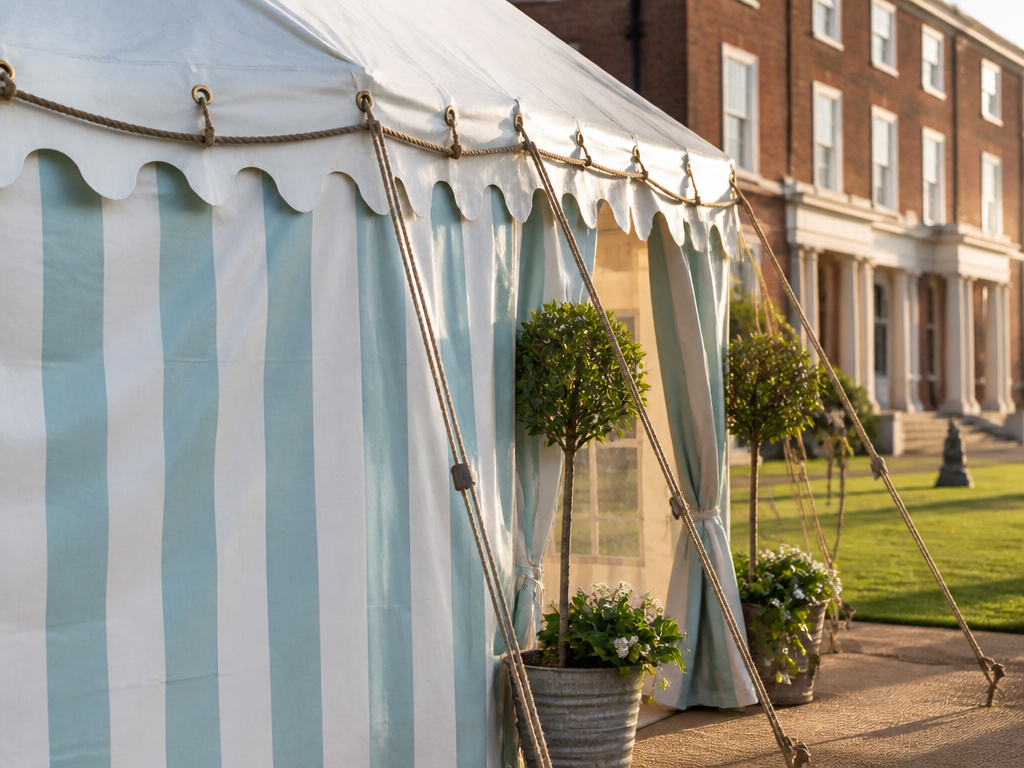
The 2020 series presented an unprecedented challenge. Lockdowns and social distancing rules made the usual 12-week filming schedule at Welford Park impossible.
The solution was radical. The entire production moved to Down Hall Hotel in Bishop’s Stortford, Hertfordshire. Everyone, bakers, judges, hosts, and crew, moved into the hotel for a condensed, six-week shoot. They formed a “self-contained biosphere,” with strict testing protocols. Partners, children, and even dogs were allowed to join to make the extended stay feasible.
I’ve spent weeks in remote family camping tents with my crew, but the Bake Off biosphere was on another level. It was a filming bubble, not just a set.
This was a unique moment in the show’s history. The tent was pitched on the hotel grounds, but the experience was unlike any other season. It highlighted the extreme logistics behind the show’s gentle facade. You need more than just a great tent camping gear list to pull that off; you need a full operational plan.
Tent Logistics vs. Your Camping Trip
The GBBO tent is in a different league from recreational shelters. Understanding the differences shows why it’s not just sitting there year-round.
| Aspect | Great British Bake Off Tent | Standard Large Camping Tent |
|---|---|---|
| Structure | Custom-built professional marquee | Mass-produced nylon or polyester shelter |
| Setup | Professional crew, heavy machinery | Manual, often by a small group |
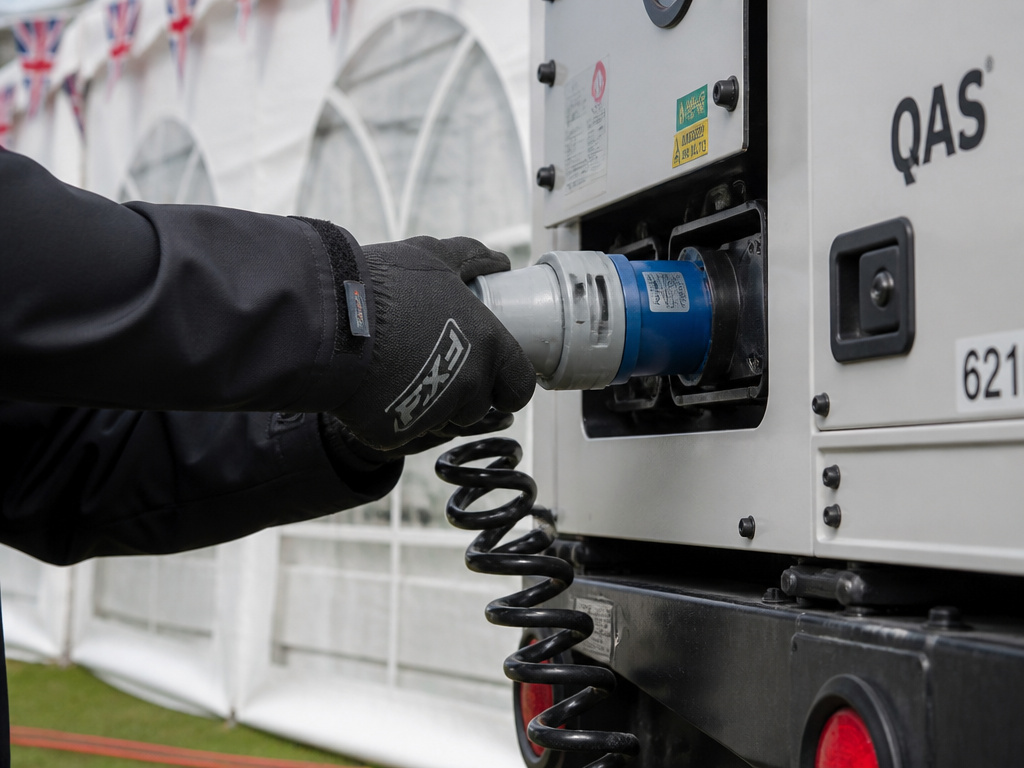
| Utilities | Full electrical grid, plumbing, industrial kitchens | Battery-powered tent lighting or portable stoves |
| Climate Control | Industrial air conditioning & heating | Natural ventilation or a small portable air conditioner |
| Permanence | Erected for ~13 weeks, then dismantled | Pitched for days or weeks at most |
The marquee is a temporary film studio. It requires construction permits, generator trucks, and a small army of technicians. It’s the opposite of a simple pop-up canopy tent. After filming, every cable, counter, and light fixture is packed away. The lawn is restored, leaving no sign a television show was ever there.
TL;DR: The Bake Off tent is a temporary industrial film set, not a campsite. It arrives, films, and disappears.
Why the Location Matters
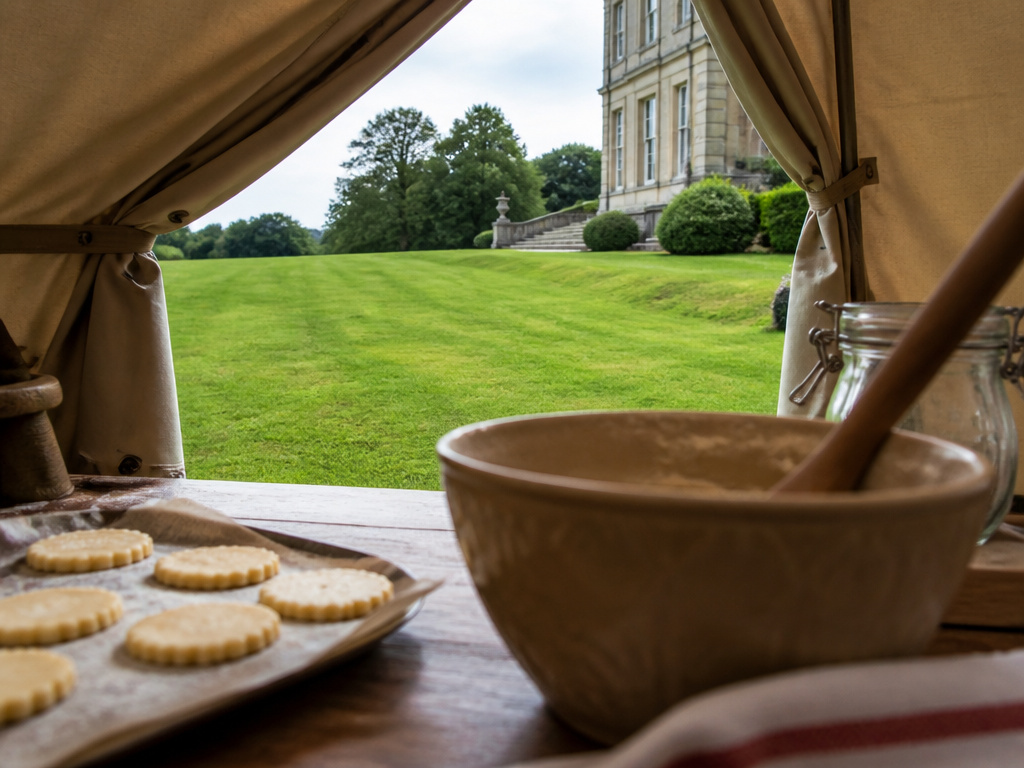
The setting is a silent character on the show. The rolling lawns, the grand house, the changing trees, they create the comforting, timeless atmosphere that viewers love. A studio lot couldn’t replicate it.
This focus on a serene, private estate also allows for the controlled environment necessary for reality TV filming. It keeps paparazzi and fans at a distance, which is crucial for preserving the contestants’ experience and the show’s magic. It’s less about finding a pretty backdrop and more about securing a functional, controllable fortress of baking.
The estate’s privacy is paramount. A single spectator photo leaked during filming could spoil a technical challenge or a winner’s reaction.
The location scouting likely considered sightlines, power access, parking for dozens of vehicles, and proximity to accommodations for the crew. It’s a balance of aesthetics and hard logistics, a lesson any organizer of a large outdoor event learns quickly.
Frequently Asked Questions
Is the Bake Off tent at Welford Park all year?
No. It is only erected for the filming period, which runs from approximately April to July each year. For the rest of the year, the lawn is empty.
Can you visit Welford Park when the tent is there?
No. The estate is closed to the public during the entire filming period. Security is tight to prevent spoilers and ensure the contestants’ privacy.
Where was Bake Off filmed during COVID?
For the 2020 series (Collection 11), filming moved to Down Hall Hotel in Bishop’s Stortford. The entire cast and crew lived on-site in a “biosphere” for a condensed six-week shoot.
Has the tent always been in one place?
No. The first series in 2010 toured six different locations around the UK. From 2011 to 2013, it was at Valentines Mansion and then Harptree Court before settling at Welford Park in 2014.
What’s the best time to visit Welford Park?
Visit during their public events: the Snowdrop Season (late January to early March) or the Festival of Light (mid-October to early November). You’ll see the beautiful grounds, just not the tent.
Before You Go
The Great British Bake Off tent is a seasonal visitor to Welford Park. It’s a massive, temporary film set, not a permanent landmark. While you can’t walk into the tent or watch filming, you can experience the estate’s charm during its public openings.
Remember its nomadic first year and the extraordinary effort of the 2020 biosphere shoot. The next time you watch, you’ll know the tent’s journey is almost as storied as the bakers’ trials within it. For your own outdoor adventures, remember that a reliable stand-up tent or well-chosen camping equipment makes all the difference, whether you’re baking or just braving the elements.
