
Where to Have a Tent Wedding: A Real-World Location Guide
This post contains affiliate links. As an Amazon Associate, we earn from qualifying purchases.
Your tent wedding location needs three things: enough flat, clear space for your tent size, legal permission to host an event there, and practical access for power, restrooms, and guests. The perfect spot balances scenery with raw logistics. A breathtaking mountain meadow is useless if you can’t get a luxury bathroom trailer up the access road.
Most couples fixate on the view and forget the paperwork. They pick a dream spot, book a tent, then discover a county ordinance bans gatherings over 50 people or the property needs a special use permit that takes six weeks. The venue gets scrapped two months out.
I’ve pitched more tents than I can count, through rain, wind, and those perfect golden-hour evenings. I’ve also seen what happens when logistics fail. This isn’t just a guide; it’s a collection of hard-won lessons on turning a beautiful idea into a solid, unforgettable day. Let’s find your spot.
Key Takeaways
- Guest count dictates tent size. A 20×40 ft frame tent holds about 50 guests for dinner. A 30×30 ft tent fits 100.
- Public land is not a free pass. Many state parks and forest service campgrounds explicitly prohibit weddings due to past misuse. Always call and verify.
- An outlet does not equal enough power. A remote cabin’s outdoor outlet may trip if you plug in a speaker system and string lights. You will likely need a generator.
- Luxury bathroom trailers require road access. Their weight and size mean they cannot be towed across a field or down a narrow trail.
- Permits and insurance are separate. A permit from the city allows the tent. Event liability insurance protects you from accidents. You need both.
A frame tent utilizes a self-supporting aluminum or steel truss structure, eliminating interior poles. This allows for installation on hard surfaces like concrete or decks and provides unobstructed space for dining layouts and dance floors. Pole tents, reliant on center poles and ground-staked ropes, require soft, penetrable earth and offer a lower price point at the cost of interior flexibility.
What’s the Best Tent for a Wedding Celebration?
Your tent is more than decoration; it’s your primary venue. The choice between a frame tent and a pole tent comes down to your ground. I learned this the expensive way for my own wedding. I booked a 30x30ft pole tent for my aunt’s sloping pasture, assuming the grass was flat. The rental company arrived, took one look, and refused to install it, the 5-degree slope meant water would pool under the dance floor. I lost my $500 deposit and had to scramble for a last-minute community hall. The consequence? Always use a laser level and check for slopes over 2% before you sign a contract.
For a classic, durable feel, I now insist on a Springbar Highline or similar heavy-duty canvas tents for my own events. It’s not just about the beautiful, diffused light; it’s because its 12oz army duck canvas can withstand the 50mph winds I’ve experienced in Wyoming, where a standard vinyl tent would have shredded. You can explore more traditional canvas wedding tents on our dedicated review page.
Sizing is a non-negotiable math problem. Crowding guests is the fastest way to ruin the vibe. You need space for tables, chairs, a dance floor, catering, and circulation. Use this chart as your starting point.
| Tent Size | Approx. Guest Capacity (Seated Dinner) | Layout Reality Check |
|---|---|---|
| 20×20 ft | 25 guests | Fits ceremony chairs or a very tight cocktail area. Forget a seated dinner. |
| 20×40 ft | 50 guests | Allows a central dance floor with tables around the perimeter. Plan carefully. |
| 30×30 ft | 100 guests | Demands strategic zoning for dining, dance floor, and service areas to avoid a cramp. |
| 40×60 ft | 150+ guests | Permits multiple zones: separate dining, lounge, and dance areas with breathing room. |
TL;DR: Use a frame tent for flexibility on any surface. Size it using the chart above. For large groups, don’t skimp on square footage.
Where Can You Actually Pitch a Wedding Tent?
Each venue type swaps a rental fee for a different kind of work. Your choice dictates your to-do list.
Is a Backyard or Private Property Wedding Right for You?
This is the most personal option. It’s also the most work. You become the venue manager, site prep crew, and logistics coordinator all at once.
The first step is a brutally honest site inspection. Is the lawn truly level? Where will the caterer’s 26-foot box truck park? Is there space for a 50-foot restroom trailer to turn around? You’ll learn the weight of wet grass firsthand when you’re hauling 40 folding chairs across a dew-soaked lawn at 7 AM, your boots sinking into the mud you thought was firm.
Common mistake: Assuming your home insurance covers a wedding, most homeowner policies exclude commercial-scale events. If a guest trips on a tent rope and breaks an ankle, their health insurer will subrogate against you. I saw a couple get a $42,000 bill for a simple fracture. A $250 policy from Wedsure or The Event Helper would have covered it.
You must check local zoning. Many residential areas have noise ordinances that kill music by 10 PM. Some require a permit for any tent over 200 square feet. The process can take weeks. Start early.
Can You Get Married in a Public Park?
Parks offer scenic, affordable spaces. They are also bureaucratic minefields.
Not all public lands allow weddings. Some county or state park systems have banned events outright due to past guest damage. You must call the specific park’s management office, not just check the website. Ask: Is a wedding a “special event” requiring a permit? What’s the fee and deposit? Are there vendor restrictions?
Many parks have “first-come, first-served” picnic areas that cannot be reserved. You cannot risk your wedding party being evicted by a family reunion at 2 PM.
What About a Private Farm, Vineyard, or Ranch?
These locations provide rustic beauty and more space than a backyard. The owner is your single point of contact for rules.
Access is the big question. Is the field accessible by a heavy truck delivering tables? If it rains the week before, will that truck get stuck? I once saw a caterer’s van axle-deep in a field because the couple didn’t consider soil saturation.
You’re renting from a person, not a corporation. Get every detail, power, water, noise curfews, cleanup, in a signed contract. Clarify who handles trash and what happens if you leave a day later due to weather.
Are Glamping Sites or Campgrounds a Good Hybrid?
These are a popular solution, designed for overnight guests with event packages. They solve the lodging problem but come with trade-offs.
A true glamping wedding means your guests sleep in furnished tents or cabins on-site. When evaluating, ask how many guests their septic and power systems can handle. A campground built for 50 campers scattered over 40 acres might not support 100 guests drawing power in one central area for eight hours.
Review their vendor policy. Some sites require you to use their in-house catering, which can double your food budget. If you need to bring your own large-capacity tents for guests, confirm that’s allowed.
Do Any Traditional Venues Allow You to Bring Your Own Tent?
Some dedicated wedding venues have a “bring your own tent” option for their lawn. This is the simplest but often priciest path.
The venue handles basics like permanent restrooms and parking. Your job is coordinating with the venue manager and your tent company to ensure the installation method (e.g., no stakes in a historic lawn) meets their standards. It’s less DIY, but the site rental fee is usually substantial.
How Do You Power a Wedding in the Middle of Nowhere?
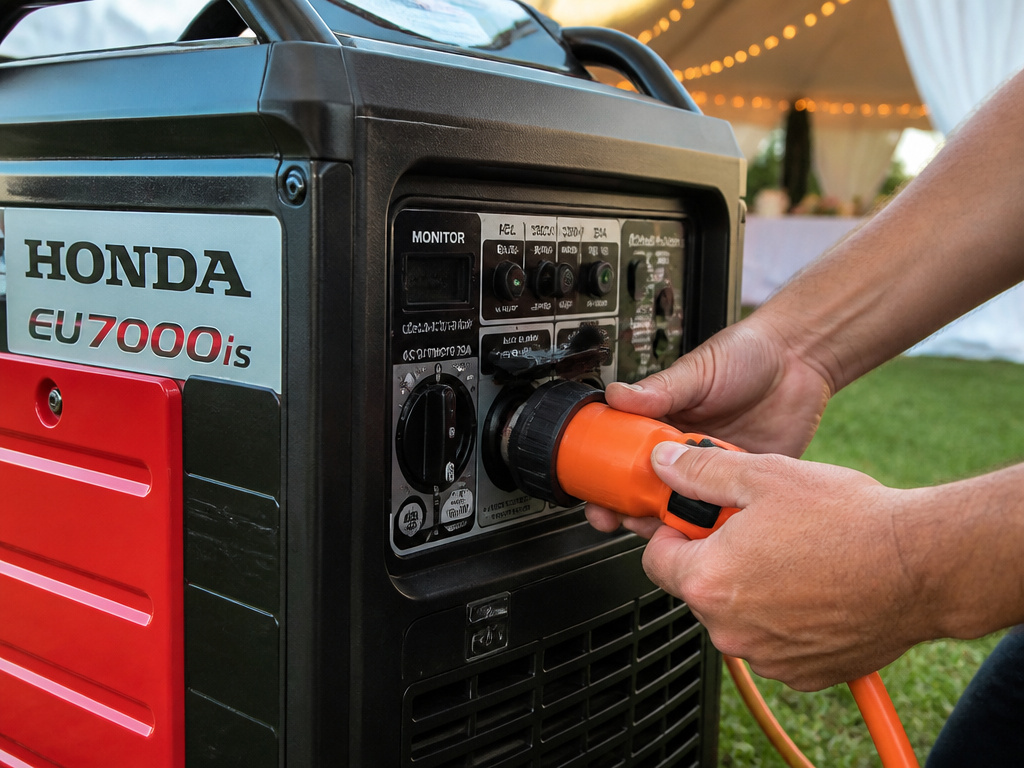
Ever had 100 guests in the dark? I have. Let’s talk about not blowing circuits. The math is simple, but everyone forgets the coffee maker.
A string of 100 LED bulbs draws about 50 watts. A professional DJ system pulls 1500 watts. A catering hot box uses 1000 watts. A standard 15-amp household outlet provides only 1800 watts. You’ll blow a circuit before dinner is served.
For any gathering over 50 with amplified music, plan for a generator. Skip the generic rental and ask for a Honda EU7000is or Yamaha EF6300iSE inverter generator. They cost about $150/day but are 50% quieter than a construction-grade Generac. I learned this when a cheaper 8000-watt contractor generator drowned out my sister’s vows, the video is unusable. You’ll also need heavy-duty outdoor extension cords and a power distribution box. For extreme heat, consider how a portable air conditioner for tents would factor into your total wattage calculation.
I learned this the hard way at a family reunion. We plugged coffee makers and string lights into a cabin’s outdoor circuit. When the band plugged in, everything went dark. We spent the first hour of the event resetting breakers and running cords from the kitchen.
What Permits and Insurance Can’t You Skip?
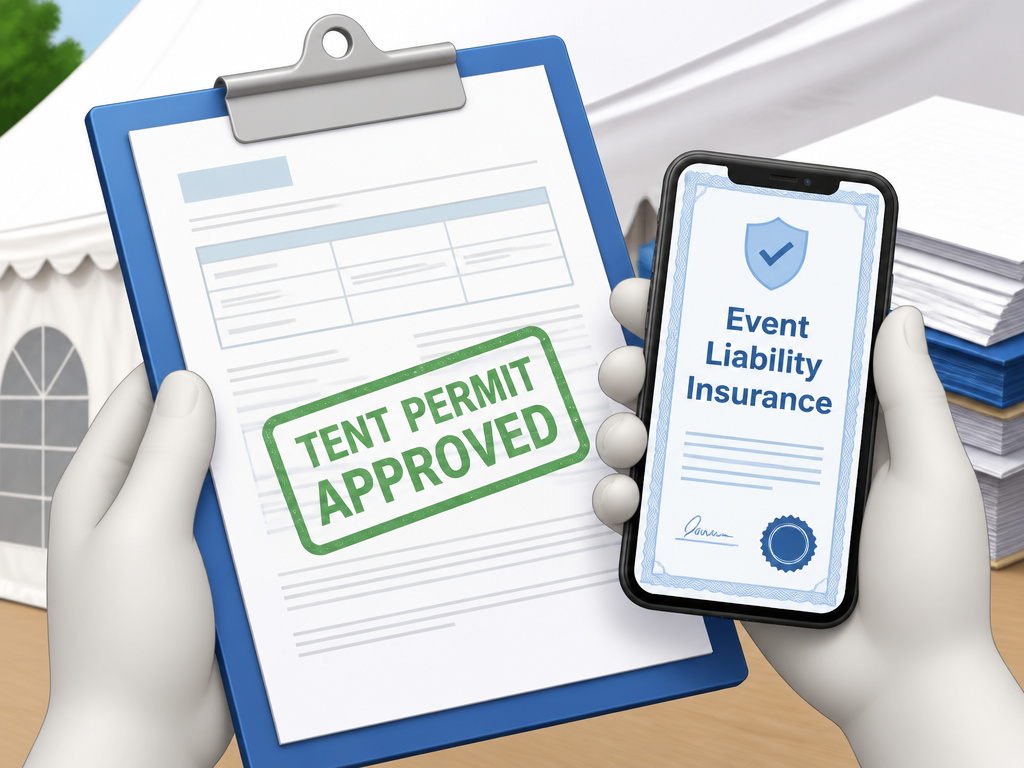
This is the unsexy backbone. Get it wrong, and your wedding doesn’t happen, or you face financial ruin.
Most local governments require a permit to erect a large tent (often over 200 sq ft). The fire department may need to inspect it. If serving alcohol, you need a separate permit. In a public park, you need a special use permit. Apply early, six to eight weeks in advance is smart.
Event liability insurance is different. It protects you from accidents. Most tent rental companies will not install until you show a certificate of insurance naming them as an additional insured. It’s a standard, relatively low-cost policy you get online.
TL;DR: The permit allows the event. The insurance protects your wallet from the fallout of an accident. You need both.
How Do You Handle Bathrooms for 100 Guests Without a Building?
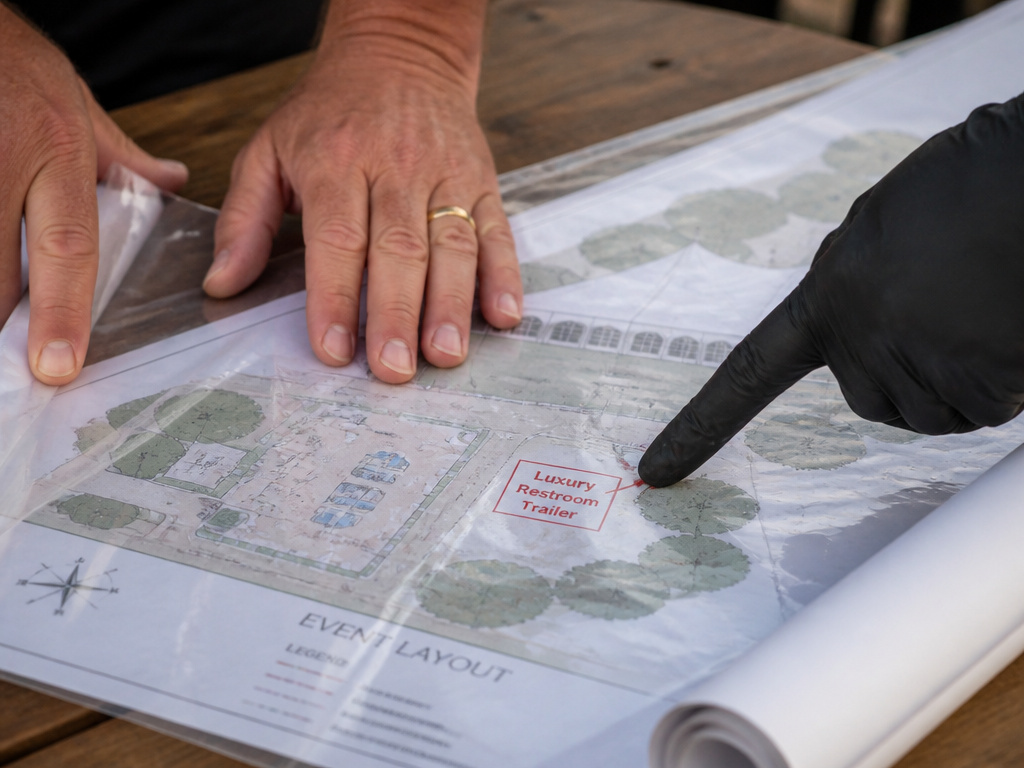
Porta-potties are the default. For a wedding, you can, and should, do better.
A standard single-station porta-potty for 100 guests is a nightmare. You need multiple units. For comfort, rent a luxury restroom trailer from a company like Royal Restrooms or The Throne Room. They have flush toilets, running water, and A/C.
But they’re not magic. A luxury trailer is heavy and long, often 30 feet. It requires a flat, stable surface and clear road access for delivery. It cannot be towed across a soggy field. Confirm access with your rental company during the site visit. This is a non-negotiable part of your camping gear checklist.
What’s the Real Budget for a Tent Wedding Infrastructure?
The tent is just one line. You’re building a temporary venue from scratch. Here’s what that actually costs.
- Shelter & Floor: A 30×30 ft frame tent from a company like Sperry Tents starts around $2,500 for a weekend. Add $800+ for a subfloor if the ground isn’t perfect.
- Power: A quiet inverter generator rental runs $150-$300/day. Fuel costs extra.
- Restrooms: A luxury 4-station trailer is $1,200-$2,000.
- Climate: For winter, a SunStar SS-220 propane forced-air heater rents for $200/day, plus $150 for propane tanks. For summer, fans or portable AC units.
- Lighting & Extras: String lights, a distribution box, and heavy-duty cords can add $500. Don’t forget essential tent camping accessories for comfort.
The infrastructure often costs as much as or more than the tent rental itself. Budget accordingly.
Frequently Asked Questions
Can you have a tent wedding in the winter?
Yes, but it becomes a climate-controlled environment. You need a frame tent that can support insulated sidewalls, a heavy-duty heating system like a forced-air heater, and a subfloor to insulate from the frozen ground. Costs increase significantly for rental, fuel, and flooring.
How far in advance should you book a tent wedding venue?
Book the venue 12-18 months out, especially for parks or popular farms. Secure your tent rental company 6-9 months in advance. Their inventory, especially for large or specialty tents, is limited during peak summer and fall weekends.
Are tent weddings cheaper than traditional venue weddings?
Not necessarily. While you may save on a venue fee, you pay for every element à la carte: tent, generator, restrooms, lighting, etc. The costs can equal or exceed an all-inclusive venue when you add labor and planning stress. The value is in total customization and a unique location.
What is the best backup plan for rain?
Your tent with sidewalls is the primary backup. Rent a stand-up tent with ample headroom so guests don’t feel claustrophobic if enclosed. Also, plan for waterproof pathways with gravel or mats from parking to the tent entrance to keep feet dry.
Can I use a large camping tent instead of renting an event tent?
For a very small, casual gathering, perhaps. But for a wedding with meals, dancing, and adults in formalwear, event tents are in a different league. They’re engineered for stability, have high ceilings, and accommodate flooring and lighting systems. For a group celebration, reliable tents for large groups designed for events are worth the investment.
The Bottom Line
Choosing where to have your tent wedding is about matching a vision with practical reality. The most beautiful field is a liability if you cannot get power to it or a permit for it.
Start with your non-negotiable guest list to determine the tent size. Then, evaluate venues not just by their Instagram view, but by their access, rules, and hidden requirements. Visit your top site candidates with a critical eye. Look at the ground, the road, the distance to the nearest power pole. Make the calls to the zoning office and the insurance agent early.
The effort you put into solving these problems upfront pays off in a celebration that feels effortless. When the sun sets and the string lights glow inside your durable canvas shelter, the only thing you’ll notice is the joy under the canvas. Now, go find your spot.
