
How To Use Tent Tie Downs
This post contains affiliate links. As an Amazon Associate, we earn from qualifying purchases.
To use tent tie downs effectively, attach appropriate tie downs—such as ratchet straps for heavy tents or elastic bungee cords for lighter ones—to the tent’s guy out loops using secure knots like the taut-line hitch. Drive stakes into the ground at a 45-degree angle to enhance grip and consider using eco-friendly materials for your lines. These basic steps ensure your tent remains stable in various conditions. Further details and tips on securing your tent will be provided below for those interested in a deeper understanding.
Essential Facts in 30 Seconds
- Choose tie downs suitable for your tent type and environment.
- Attach tie downs to guy out loops with secure knots like bowline or taut-line hitch.
- Insert stakes into the ground at a 45-degree angle for better hold.
- Keep tie down lines straight and perpendicular to tent edges.
- Inspect and clean tie downs regularly; store them properly to maintain durability.
Selecting the Right Tent Tie Downs
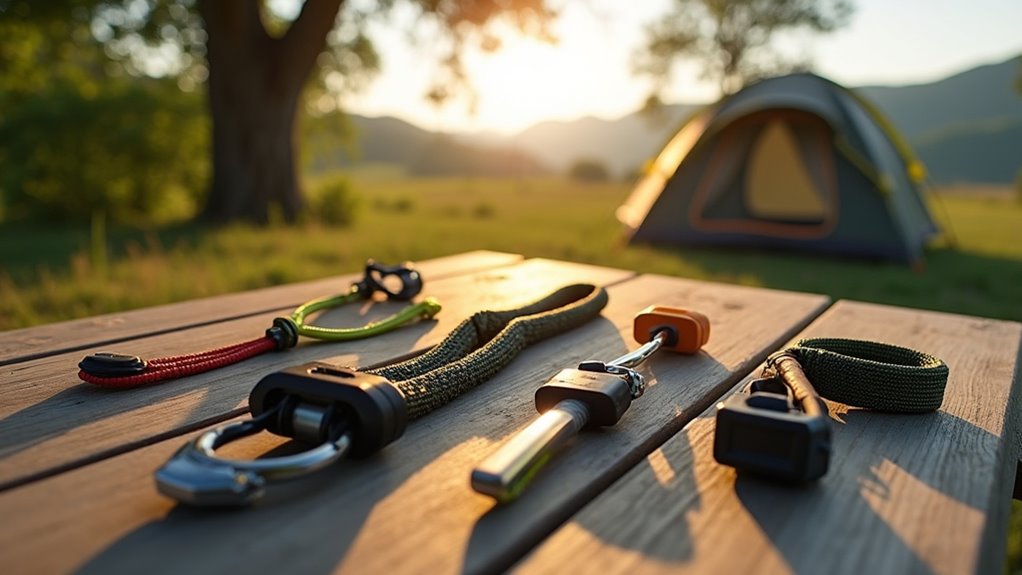
Select tent tie downs based on the type of tent and environment. Ratchet straps provide strong tension for heavy tents. Cam buckle straps give moderate tension to protect delicate fabrics. Elastic bungee cords work well for light tents and quick setup. Rope tie-downs allow you to adjust length for uneven spaces.
Check the load rating on each strap. Make sure the working load limit (WLL) is higher than your tent’s weight and gear. Heavy tents need ratchet straps with solid anchors like E-track or L-track. Light tents suit cam buckle straps or bungee cords better.
Use corrosion-resistant materials in wet areas to avoid rust and keep straps strong. Strong tie downs keep your tent safe and stable in all weather. Choose the right type to match your tent and conditions.
Effective Installation Techniques
Mastering tent installation ensures your shelter stays strong in wind and rain.
First, attach tie downs to the tent’s guy out loops. Use fixed knots like bowline or taut line hitch. These knots hold tight and don’t slip. Tighten tie downs slowly to keep the tent stable and avoid damage.
Drive stakes into the ground at a 45-degree angle, pointing inward. This angle gives the best hold. Keep tie down lines straight and at right angles to the tent edges. This reduces force on the stakes.
Hard ground calls for sandbags or heavy objects instead of stakes. Check tie downs often and tighten them if the soil shifts or wind blows hard. Use heavy-duty stakes that fit your ground type. Additionally, remember to secure corner stakes first for enhanced stability in your setup.
Combine methods for strong support in bad weather. Strong tent setup means safer, more comfortable camping.
Common Knot Techniques for Stability
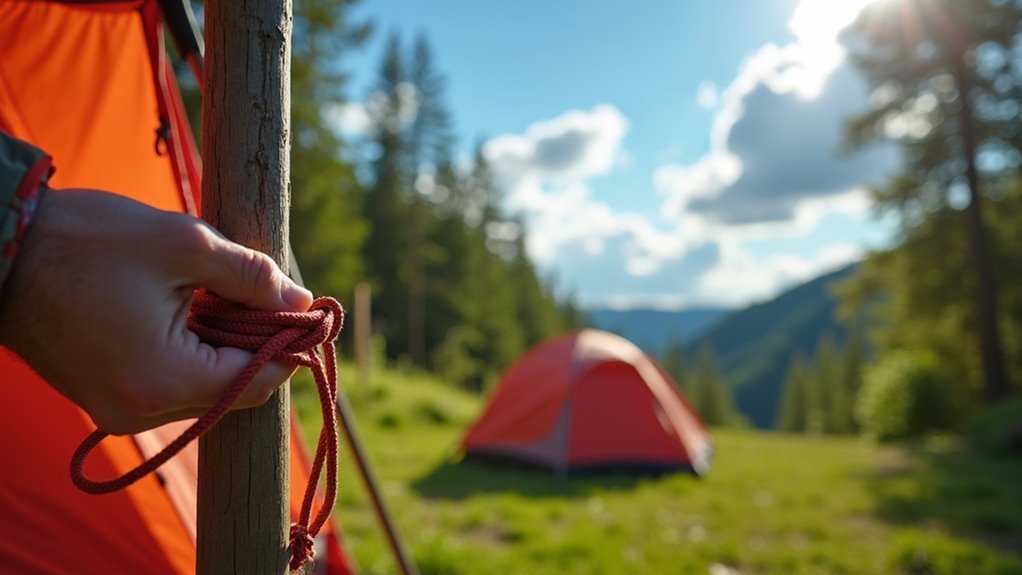
Right knots make your tent strong in wind and rain. Knowing these knots helps you tie lines better.
Use these three knots for best results:
- Bowline Knot: Makes a strong loop to tie tent lines to stakes. Easy to untie after pulling tight. Additionally, using a strong attachment point on the tent can enhance stability.
- Taut-Line Hitch: Lets you change rope tightness fast. Slide it up or down to keep tent steady.
- Prusik Knot: Grips the main rope and locks when pulled. Great for small adjustments on ropes. Additionally, proper guy rope usage is crucial for maintaining tent stability in various weather conditions.
Environmental and Safety Considerations
Environmental and safety matters are very important for a great camping trip. Use tent tie downs made from eco-friendly materials. These ropes break down naturally and do not harm soil or water. Select ropes made from natural fibers or biodegradable materials. They help keep nature safe. Additionally, using a tarp under your tent can provide extra moisture protection against wet ground conditions. A tarp also acts as a moisture barrier, enhancing the overall comfort of your camping experience.
Here is a simple table to guide you:
| Eco-Friendly Materials | Ground Protection Tips |
|---|---|
| Natural fibers | Check soil type before use |
| Biodegradable ropes | Use weight systems, not tension |
| Reusable tie downs | Use screw-in stakes |
| Low-impact synthetics | Do not press on soft soil |
Protect the ground. Avoid digging or pressing hard on the soil. This keeps plants and animals safe. Use the right stakes for your tent. This will keep your camp stable and nature healthy.
Maintenance and Storage Tips
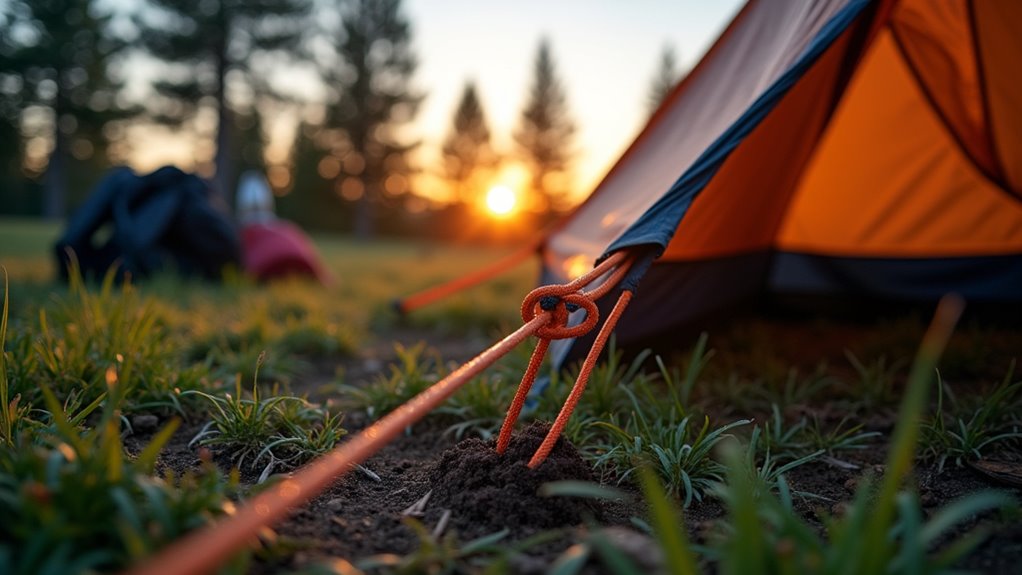
Proper care keeps your tent tie downs strong and ready for camping. Follow these simple steps to make them last longer.
- Clean and Dry: Shake off dirt after use. Wash with mild soap and water. Dry completely to stop mold and rust. Regularly check for dirt or debris that may accumulate on the tie downs.
- Check Often: Look for tears or weak spots before every trip. Focus on ropes and joints. Change any bad parts right away.
- Store Smart: Use bags made of mesh or cotton. These let air flow. Keep tie downs in a cool, dry spot. Avoid sunlight and damp places. Regular cleaning helps maintain their strength and durability.
Good care saves money and trouble. Strong tie downs hold your tent safe.
Easy steps, big results!
Frequently Asked Questions
What Are the Best Tie Downs for High Winds?
Heavy-duty stakes and screw-type anchors made from strong materials hold best in high winds. Use adjustable straps to tighten your tent securely. Add sandbags or other ballast for extra weight and stability. These steps help your tent stay firm during strong gusts without damage.
Can I Use Tent Tie Downs on Concrete Surfaces?
Tent tie downs work well on concrete surfaces. Use heavy weights like sandbags or water barrels. You can also use special concrete anchors. These anchors drill into the concrete and hold strong. This keeps your tent safe, even in strong wind. Many campers trust these methods to secure their tents. Stability matters. Keep your tent steady and avoid accidents.
How Do I Know if My Stakes Are Secure?
Check that stakes are tightly anchored in the ground. Make sure they do not move when you pull them. Press soil firmly around each stake to hold it strong. Strong stakes keep your tent steady and safe. This also helps the tent resist wind better. Secure stakes make outdoor setups safer and more stable.
Are There Weight Limits for Different Tie Down Types?
Tie downs have specific weight limits. Each type holds a certain load safely. Check the working load limit before use. Match the tie down’s strength to your tent’s weight. This keeps the tent stable and safe in wind or rain. Using a weak tie down can cause accidents or damage. Strong materials like nylon straps often hold heavy loads well. Always use the right tie down for your camping needs.
How Can I Prevent Rust on My Hardware?
Rust damages metal tools fast. Clean your hardware often to stop rust. Use oil or spray to cover metal parts. Store tools in dry places. Moisture causes rust. Wipe tools dry after use. Rust can ruin expensive equipment. Protect your tools to save money and time. Simple care keeps tools strong and ready.
Conclusion
Mastering tent tie downs keeps your shelter strong against wind and rain. Choose tie downs made for your tent type. Use simple knots like the bowline or taut-line hitch for good hold. Secure stakes deep into the ground for firm grip. Check weather before setting up to avoid damage. Always keep safety in mind while installing. Store your tie downs dry and clean to last longer. Follow these steps to enjoy safe and stable camping every time.
