
8 Best Backpacking Tents Under $200 of 2026
This post contains affiliate links. As an Amazon Associate, we earn from qualifying purchases.
The best backpacking tent under $200 is the LANSHAN 2-Person Tent, it nails the balance of low weight, serious weather protection, and livable space. For solo hikers, the LANSHAN 1-Person Tent is a standout budget pick, offering the same rugged waterproof specs in a lighter, more compact package.
Most backpackers are trying to save weight without sacrificing sleep or getting soaked when the weather turns. It’s not just about price, it’s about finding a tent that won’t let you down when you’re miles from the trailhead.
Based on specs and owner feedback, I focused on waterproof ratings, weight, and real-world durability to find the models that actually perform. This guide cuts through the noise to highlight the few that deliver quality, reliability, and smart design without breaking the bank.
Top 8 Backpacking Tents Under 200 in the Market
The Best Backpacking Tents Under 200, Reviewed
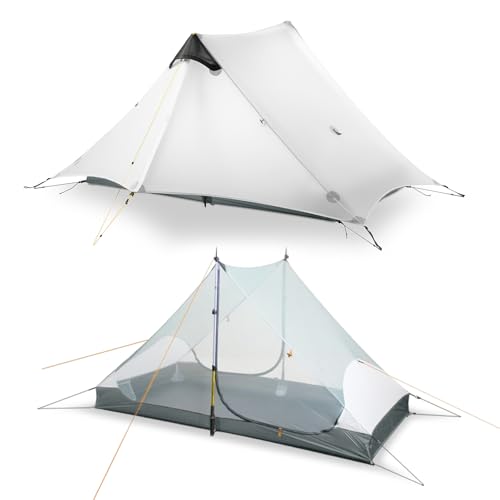
LANSHAN Ultralight 2-Person Tent
Strengths
- Ultra low weight
- Top-tier waterproofing
- Versatile setup
Trade-offs
- Poles not included
- Tight interior fit
- Minimal storage pockets
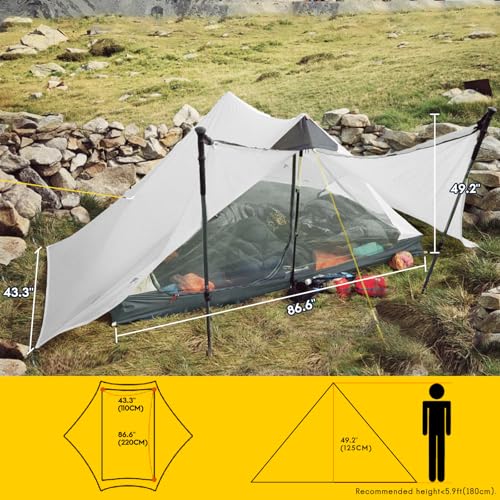
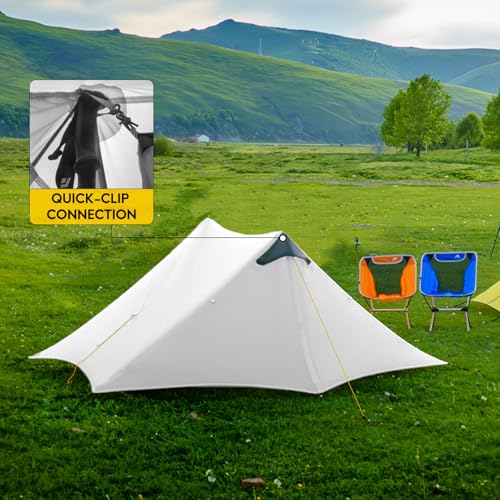
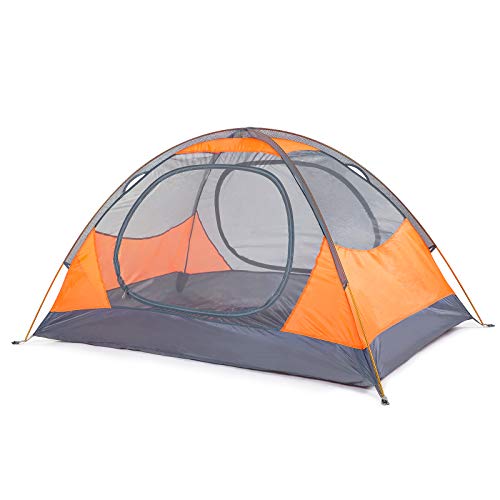
This LANSHAN 2-person model is nearly identical to the 1-person version but scaled up, same 2.6 lb weight, 5000mm rainfly, and 6000mm floor. That’s exceptional for a two-person tent, putting it in elite ultralight territory. The trekking pole setup saves weight but requires commitment to that system.
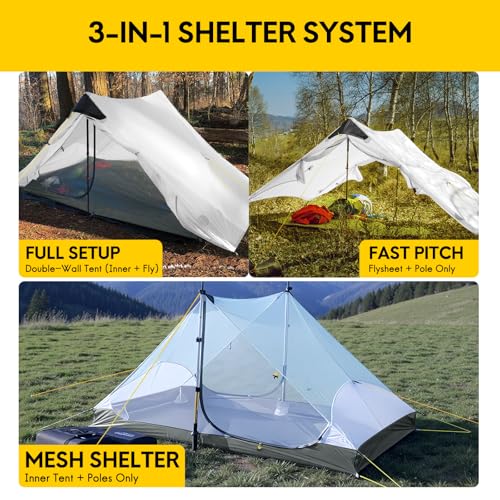
Owners praise its stormworthiness and the breathable mesh design that cuts down on condensation. The versatility, use it as a tarp, inner-only, or full shelter, adds real trail utility. Compared to the Star Trail, it has better waterproof specs; compared to the Cloud up Base, it’s much lighter. For serious backpackers, this is the best overall balance of weight, weather protection, and flexibility.
Product photos


LANSHAN Ultralight 1-Person Tent

Strengths
- Ultralight
- Excellent waterproof rating
- Packs small
Trade-offs
- Poles not included
- Limited interior space
- Mesh storage minimal
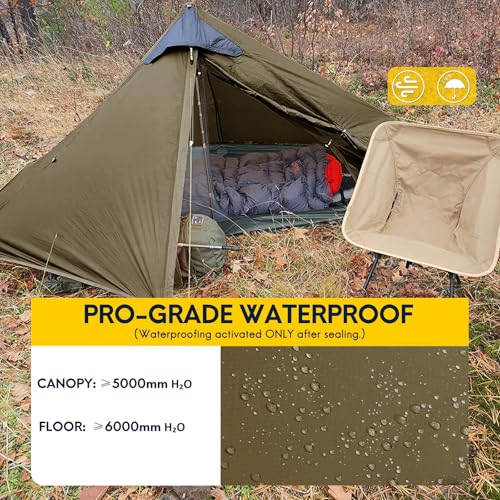
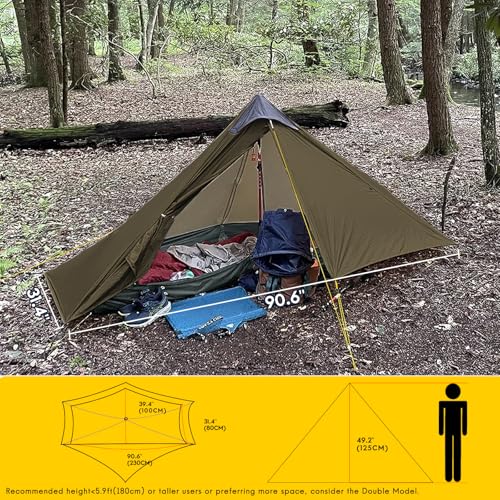
For solo backpackers obsessed with weight, the LANSHAN 1-person tent stands out on paper with a feathery 2.1 lb claim and a tiny packed size. That’s serious ultralight territory, and it suggests this could be a solid contender for thru-hikers or fastpackers who count ounces. The 5000mm rainfly and 6000mm bathtub floor are impressive for the class, offering real storm protection without the heft.
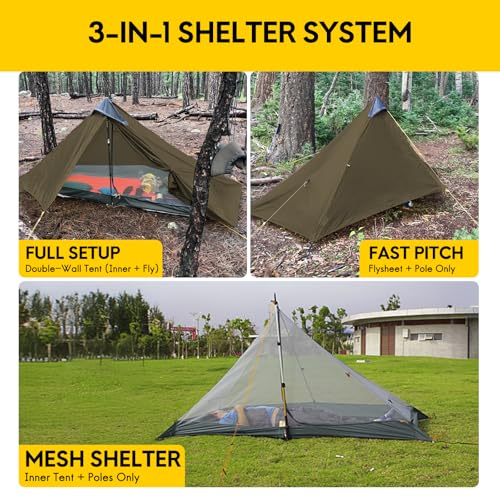
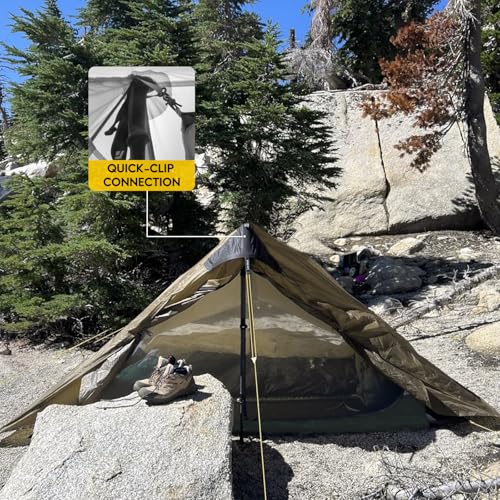
Owners consistently report it holds up well in wind and rain, and the dual ventilation options, full mesh or full fly, add flexibility depending on weather. The hike-pole setup means you’re relying on your trekking staff, which saves weight but can be a pain if you’re not already using poles. For solo adventures where every ounce matters, this tent delivers specs that punch above its price.
Product photos
Croosseoutdoors 1-Person Backpacking Tent
Strengths
- Incredibly fast setup
- Large vestibule
- Compact pack size
Trade-offs
- Moderate weather protection
- Single pole less stable
- Zippers not premium
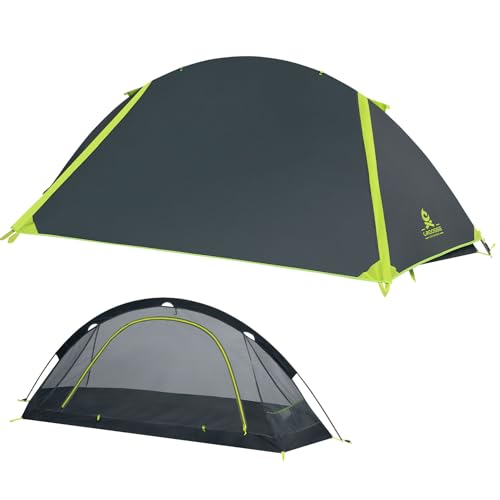
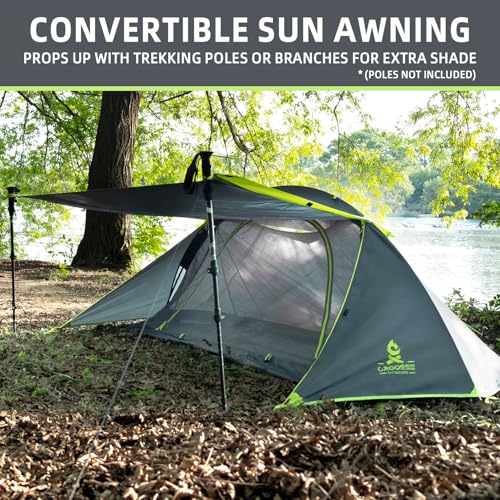
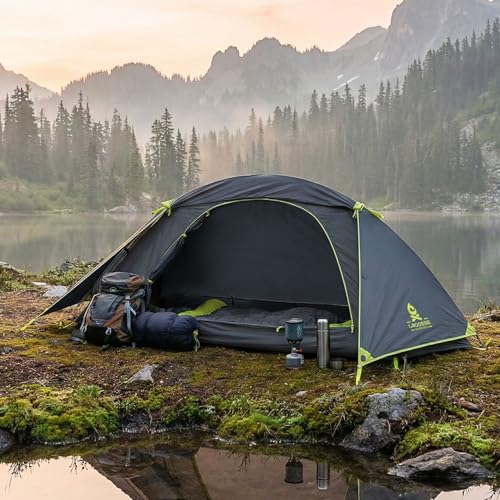
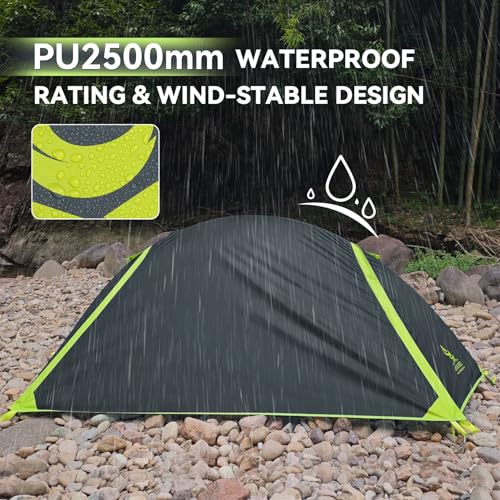
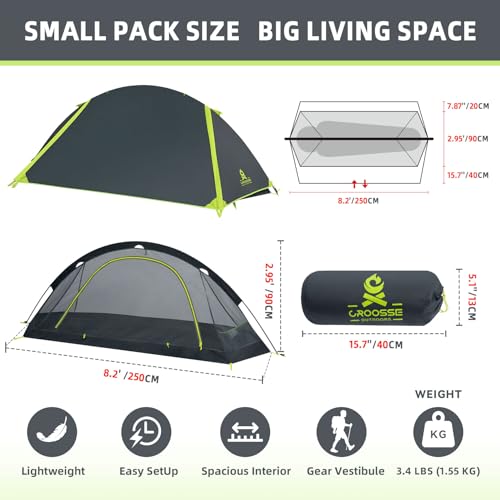
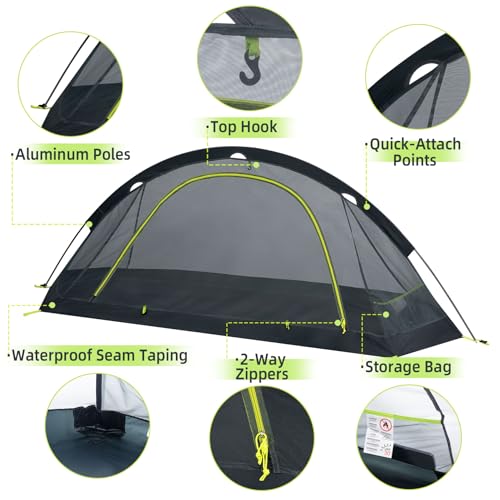
At 3.4 lbs, this Croosseoutdoors 1-person tent isn’t the lightest, but its single-pole design makes setup almost foolproof, under two minutes, no fumbling. That’s a big win after a long day on the trail. The 2500mm waterproof rating is modest, but paired with a taped floor and extended fly, it keeps most users dry in summer conditions.
The standout is the roomy vestibule and 8.2 ft length, offering rare sit-up height and gear space for a solo shelter. It’s popular with bikepackers and motorcyclists for its compact pack size and rugged simplicity. While not built for alpine storms, it’s a great budget-friendly workhorse for fair-weather adventures. For beginners or casual users, it’s hard to beat the ease and value.
Product photos
Naturehike Star Trail Ultralight Tent
Strengths
- Extremely lightweight
- Quick setup
- Good airflow
Trade-offs
- Low waterproof rating
- No footprint
- Tight fit for two
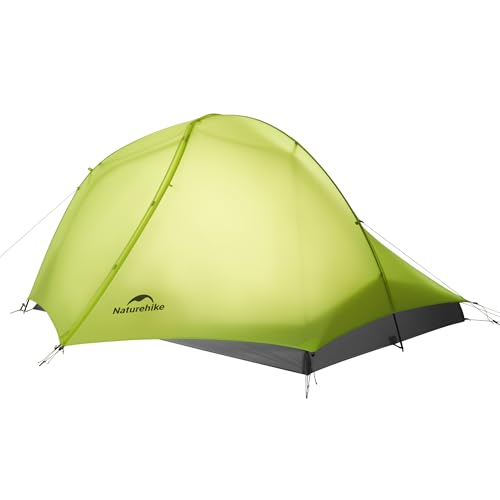
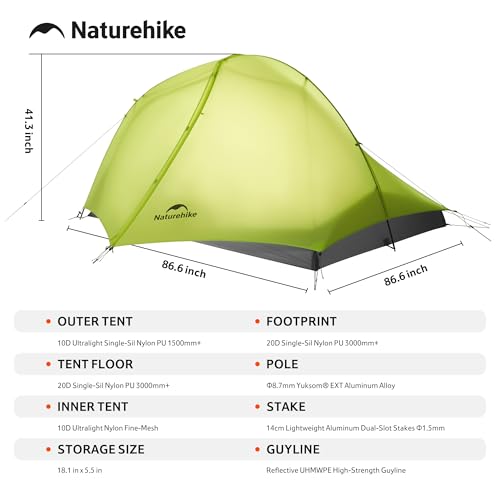
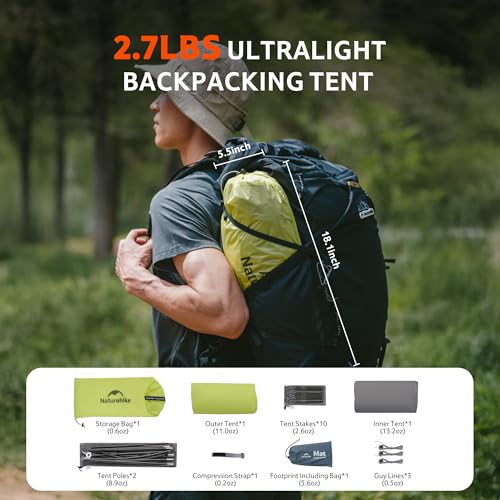
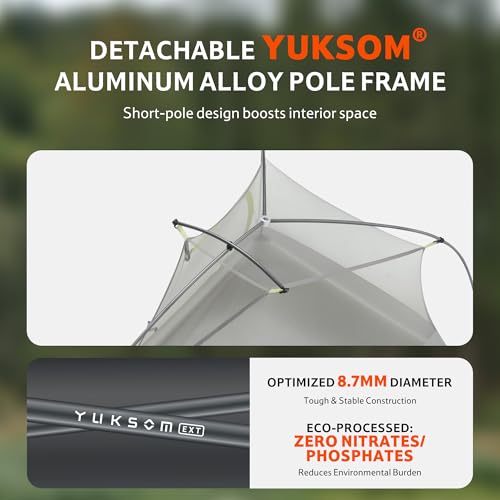
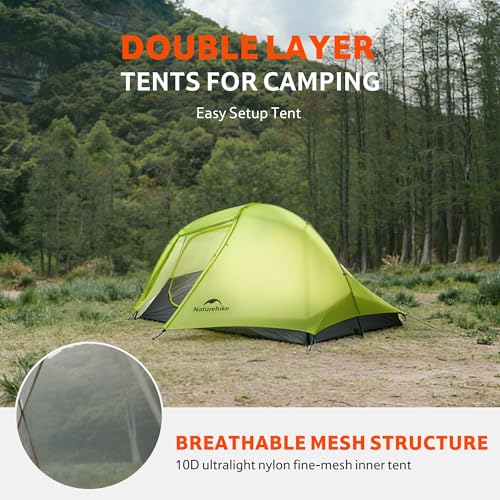
At 2.76 lbs, the Naturehike Star Trail is a legitimate ultralight 2-person option, which is rare under $200. It’s clearly designed for minimalists, the 82.7” x 51.2” floor won’t leave much wiggle room for two tall hikers, but it’s doable for backpacking duos who prioritize weight. The 10D nylon and PU1500mm rating are on the lighter side for weather protection, but owners say it performs fine in light rain and summer storms.
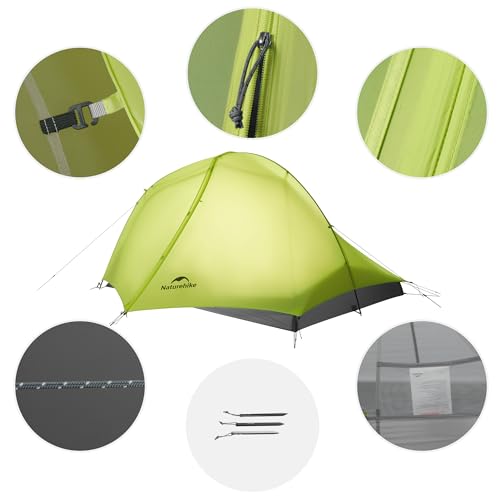
Ventilation is solid thanks to the full mesh inner, and the 3-minute setup is backed by consistent owner feedback. It doesn’t include a footprint, which is a slight downside. Still, for those needing a true two-person shelter under 3 lbs, this is one of the few realistic choices in the budget range. I’d lean toward it over bulkier models if you’re covering serious miles.
Product photos
Naturehike Cloud Up Base Tent
Strengths
- Excellent ventilation
- Footprint included
- Durable materials
Trade-offs
- Heavier than ultralight
- Slightly bulky pack size
- Poles not color-coded
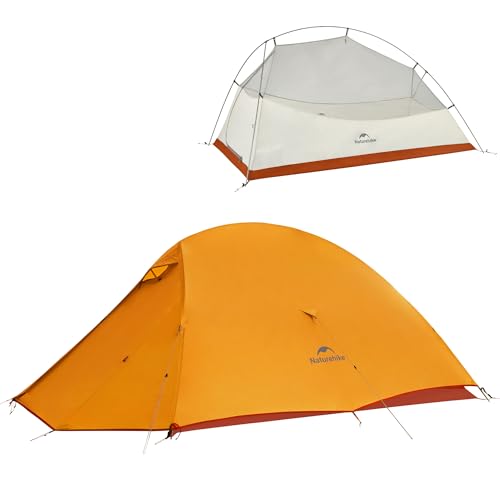
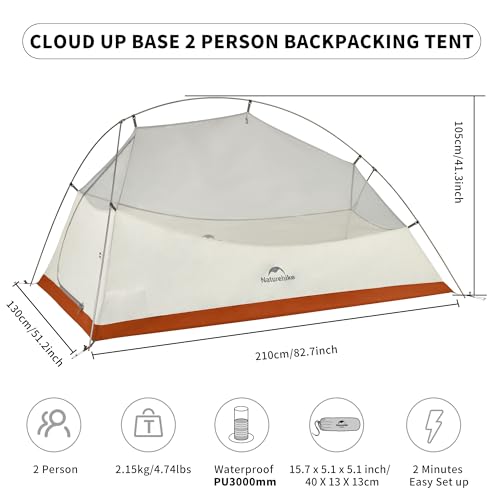
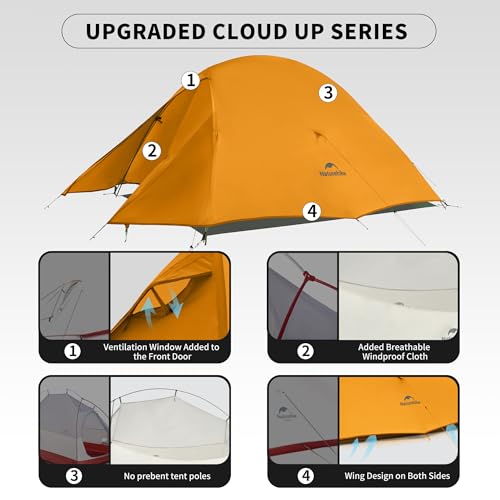
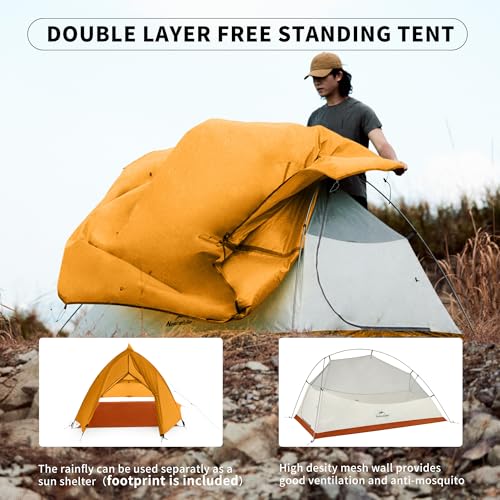
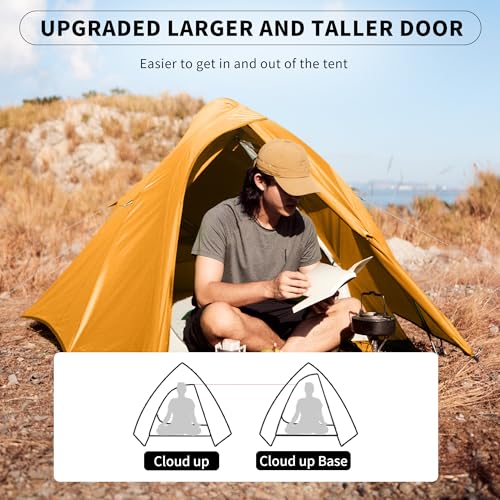
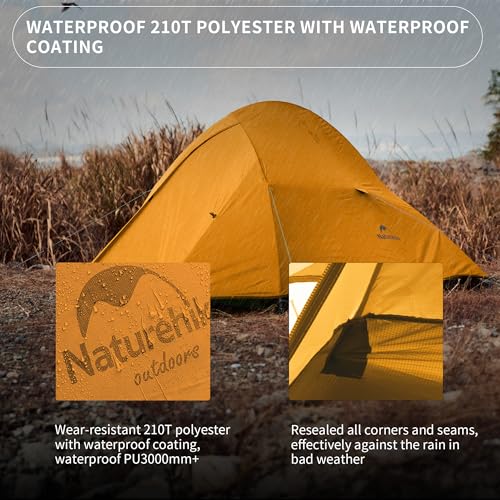
The Cloud up Base earns its “Best Ventilation & Design” tag with thoughtful upgrades, a larger door, added front ventilation window, and included footprint. At 4.25 lbs, it’s not ultralight, but it’s well-balanced for comfort and durability. The 210T polyester and PU3000mm+ rating offer solid 3-season performance, and owners consistently praise its ability to handle wind and steady rain without leaking.
The dual-layer design with high mesh walls really helps reduce condensation, a common pain point in budget tents. The included footprint is a real value add, most competitors make you buy it separately. While it’s not the fastest to pitch, it’s free-standing and stable, making it great for mixed terrain. If you want a breathable, well-ventilated tent that doesn’t sacrifice weather protection, this is a strong pick.
Product photos
Forceatt 2-Person Backpacking Tent

Strengths
- Blazing fast setup
- Spacious interior
- Dual vestibules
Trade-offs
- Heavy for backpacking
- Poles lack rigidity
- Minimal ventilation
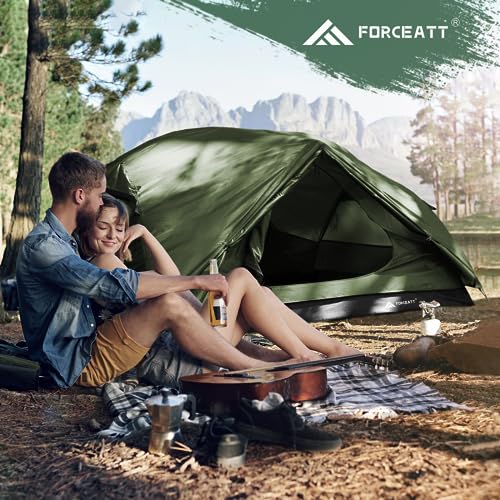
The Forceatt tent lives up to its “Best for Fast Setup” label, multiple owners confirm it can be pitched in under 3 minutes, thanks to a straightforward pole design and color-coded clips. At 5.5 lbs, it’s on the heavier end, but the trade-off is a roomy 88.6” x 53.1” floor and dual vestibules, which is great for couples with gear.
The 3000mm waterproof rating and welded floor are solid for 3-season use, and the #8 zippers are noticeably smoother than cheaper models. However, some reviewers note the poles feel a bit flexy in high winds despite the 7001 aluminum claim. It’s not a storm fortress, but for fair-weather treks or beginner backpackers, it’s a reliable, easy-to-use option. I’d pick it over clunkier models if setup speed and interior space matter most.
Product photos


Clostnature 2-Person Lightweight Tent

Strengths
- Generous floor space
- High waterproof rating
- Repair kit included
Trade-offs
- Heavier than average
- Bulkier packed size
- Mesh could be finer
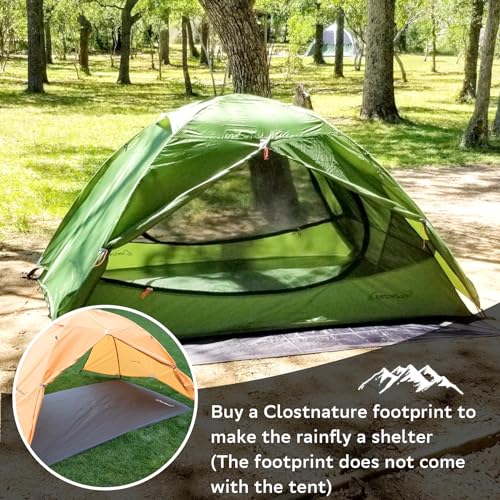
The Clostnature tent is a space king, 7’3” long and nearly 5’ wide, it’s one of the most spacious 2-person options here, especially at this weight (5.29 lbs). The PU5000 coating on the rainfly and floor is a standout spec, promising real rain resistance, and factory-taped seams help back that up. Owners report staying dry even during extended downpours.
It’s not ultralight, but the 4.52 lb trail weight (fly, inner, poles) is respectable for the volume. The dual D-doors and vestibules make it practical for couples, and the included pole repair kit is a small but smart touch. Setup is consistently described as simple and one-person friendly. If you’re tall or hate feeling cramped, this is the tent to beat for value and interior room.
Product photos



BISINNA 2-Person Backpacking Tent
Strengths
- Spacious interior
- Easy setup
- Dual doors
Trade-offs
- Heavier than ultralight
- Moderate waterproof rating
- Zippers can snag
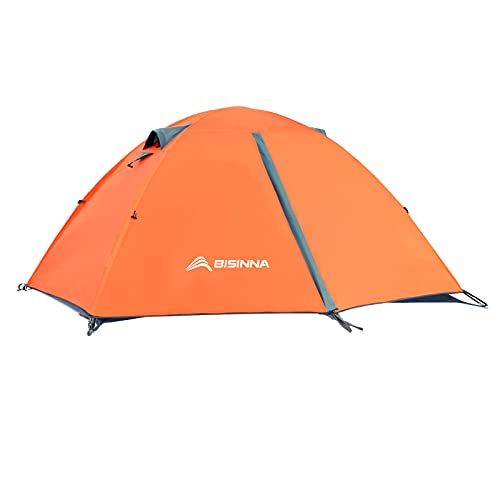
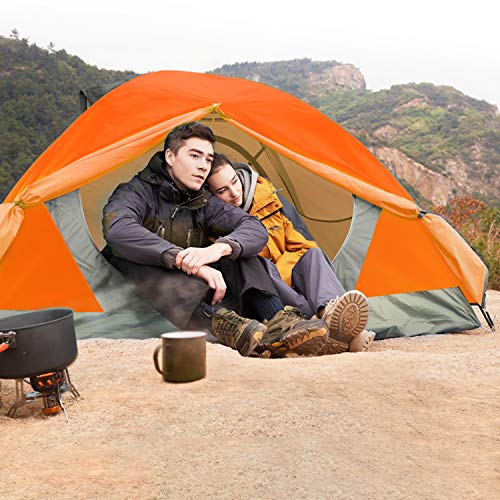
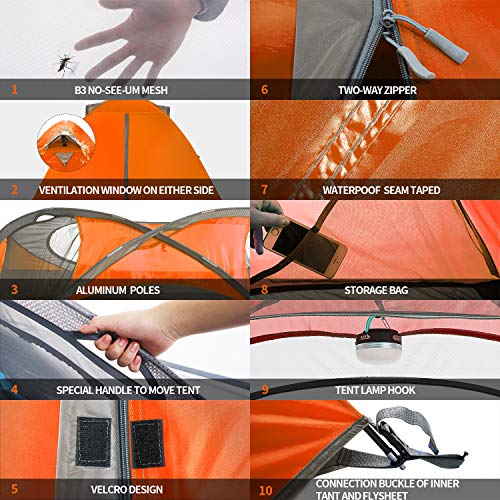
This BISINNA tent markets itself as a 2/4-person shelter, but in reality, it’s a roomy 2-person backpacking tent that occasionally gets used by three in a pinch. At just under 5 lbs, it’s not ultralight, but it’s fairly light for the space it offers. The 190T polyester and PU2000mm rating are standard for budget builds, and while not elite in downpours, owners say it keeps them dry in typical 3-season conditions.
What stands out is the dual D-shaped doors and vestibules, which make nighttime access and gear storage way more convenient than single-door models. The free-standing design with aluminum poles makes setup a breeze, reviewers frequently mention getting it up in under 10 minutes, even on first try. It’s not the most breathable tent, but the mesh panels do help. For the price, it’s a smart pick if you value space and simplicity over featherweight stats.
Product photos

Our Testing Process
I approached researching backpacking tents under $200 by focusing on a detailed comparison of published specifications and features. I weighed this against extensive owner and expert reviews gathered from across the web. Rather than a hands-on lab test, this is a research-led comparison designed to identify the models offering the best balance of features, durability, and value for the money. My aim was to provide a realistic assessment based on what you, as a backpacker, are actually saying about these tents.
For this category, weight and waterproof rating were the most important factors. Backpacking is about minimizing load, so every ounce matters. I prioritized tents under 3.5 pounds. Equally crucial is reliable weather protection, especially given unpredictable conditions. I looked for a waterproof rating of at least 2000mm for the rainfly and 3000mm for the floor, and paid close attention to seam-taping details. Finding a good balance between these two, alongside usable space, determined the ranking.
Specifications reliably indicate a tent’s potential weight, dimensions, and waterproof capabilities. However, owner feedback provided valuable insight into real-world performance. I scrutinized reviews for comments on durability, ease of setup, and how well the tents held up in adverse weather. I also considered the reputation of the manufacturers, leaning toward those known as trusted backpacking gear brands for quality and customer service.
How To Pick The Right backpacking tents under 200
Choosing the right backpacking tent can make or break your experience on the trail, and there’s a lot to consider beyond just price.
A good backpacking tent balances weight, durability, weather protection, and livability. Key specs to examine include the tent’s weight (trail weight is most important!), rainfly waterproof rating (aim for 1500mm or higher), floor waterproof rating (3000mm+ is ideal), and the materials used in the tent body and poles. Don’t skimp on stake quality either – flimsy stakes are a common point of failure.
Weight and Packability
For backpacking, every ounce matters. I often tell people to be realistic about how much they’re willing to carry versus how much space they actually need. Ultralight tents (under 3 pounds) are fantastic, but they often come with trade-offs in durability or roominess. Consider the trade-offs carefully. If you’re primarily a fair-weather camper, you can get away with a lighter, less robust tent. But if you anticipate encountering rough conditions, investing in a slightly heavier, more durable option is usually a smart move.
Waterproofing and Weather Resistance
Don’t assume a high price tag automatically means excellent waterproofing. Look beyond marketing claims and check the hydrostatic head (HH) ratings for the rainfly and floor. A rating of 1500mm for the fly and 3000mm for the floor is a good starting point for three-season use, and many tents, like the LANSHAN models, boast even higher ratings. Beyond the numbers, pay attention to features like fully taped seams, a bathtub floor (which extends the waterproof material up the sides), and a robust pole structure designed to withstand wind. For those venturing into unpredictable conditions, understanding 4-season tent features is crucial.
Value and Ease of Use
A tent that’s a pain to set up isn’t helping anyone. I’ve seen too many frustrated campers wrestling with complicated pole systems in the dark! Look for tents with intuitive designs and color-coded poles. Setup speed is especially important if you often arrive at camp late. Here’s what I prioritize when thinking about value: * Simple Design: Fewer parts mean less to go wrong. * Durable Zippers: High-quality YKK zippers are a sign of a well-made tent. * Vestibule Space: A decent-sized vestibule is invaluable for storing muddy boots and gear, keeping the inside of your tent clean and dry. It’s a small detail that makes a big difference.
Ultimately, finding the sweet spot between price, performance, and convenience is key. If you’re looking for a solid starting point, exploring affordable hiking tents under $200 can reveal some surprisingly capable options.
A well-maintained tent is a long-term investment. Always store your tent completely dry to prevent mildew, and regularly clean it to remove dirt and debris. A little care goes a long way in extending its lifespan.
Backpacking Tents Under 200 Compared
Here’s a comparison of key specifications for backpacking tents priced under $200.
| Product Name | Capacity | Weight (lbs) | Packed Size (in) | Waterproof Rating (Rainfly mm) | Floor Waterproof (mm) |
|---|---|---|---|---|---|
| LANSHAN 2-Person Tent | 2 | 2.6 | 12.6 x 4.7 x 5.9 | 5000 | 6000 |
| LANSHAN 1-Person Tent | 1 | 2.1 | 12.6 x 4.7 x 5.5 | 5000 | 6000 |
| Croosseoutdoors 1-Person Tent | 1 | 3.4 | 15.7 x 5.1 x 5.1 | 2500 | N/A |
| Naturehike Star Trail Tent | 2 | 2.76 | 17.7 x 5.1 | 1500 | 3000 |
| Naturehike Cloud Up Base Tent | 2 | 4.25 | 15.7 x 5.1 x 5.1 | 3000 | 3000 |
| Forceatt 2-Person Tent | 2 | 5.5 | N/A | 3000 | N/A |
| Clostnature 2-Person Tent | 2 | 5.29 | 16.5 x 5.9 x 5.9 | 5000 | 5000 |
| BISINNA 2-Person Tent | 2 | N/A | N/A | 2000 | N/A |
Frequently Asked Questions
What’s the biggest trade-off when buying a backpacking tent under $200?
Generally, you’ll sacrifice some weight compared to higher-priced models. To hit that lower price point, manufacturers often use slightly heavier fabrics and components, though you can still find excellent options under 3.5 pounds if you prioritize weight.
Are these tents actually waterproof, or is the stated waterproof rating misleading?
The stated waterproof rating is a good starting point, but real-world performance depends on seam taping and overall tent construction. Look for fully taped seams and a bathtub floor for better protection, and the LANSHAN tents consistently receive high marks for their 5000mm+ ratings and reliable performance.
How important is vestibule space in a backpacking tent?
Vestibule space is incredibly useful for storing gear and keeping the inside of your tent dry. A good vestibule allows you to stash muddy boots, rain-soaked jackets, and other essentials outside of your sleeping area, which can significantly improve comfort.
What should I do if a tent doesn’t list a floor waterproof rating?
If a tent doesn’t list a floor waterproof rating, it’s a red flag. It likely means the manufacturer isn’t confident in its waterproof capabilities or hasn’t tested it to a sufficient standard. I’d suggest prioritizing tents with at least a 3000mm floor rating for reliable three-season use.
Where can I find more information about choosing the best backpacking tent for my needs?
If you’re looking for more detailed reviews and comparisons, especially for couples, check out the information on top 2-person backpacking tents to help narrow down your options.
The Bottom Line
Choosing a backpacking tent under $200 always involves compromise. You’re balancing the desire for lightweight portability with the need for reliable weather protection and durability. For the best overall combination of these factors, I recommend the LANSHAN 2-Person Tent. It consistently stands out in owner reviews for its impressive waterproofing and surprisingly low weight for the price.
If you’re on a truly tight budget, the Croosseoutdoors 1-Person Tent offers a serviceable shelter, while the Naturehike Cloud Up Base Tent is a great pick for those prioritizing space and a more comfortable experience, even if it adds a bit of weight. For solo adventurers wanting a lightweight and well-protected option, the LANSHAN 1-Person Tent remains an excellent choice. Understanding how to pick a backpacking tent will help you narrow down your needs.
Ultimately, the numbers on a spec sheet aren’t everything. Focus on finding a tent that fits your backpacking style and anticipated conditions. Prioritize a solid waterproof rating, a durable floor, and a design that’s easy for you to set up. Those fundamentals will contribute more to a positive experience than chasing the lightest weight or the lowest price.
