
7 Best 1 Person Tents of 2026
This post contains affiliate links. As an Amazon Associate, we earn from qualifying purchases.
The best overall 1 person tent is the Clostnature Ultralight 1, thanks to its strong weather resistance and thoughtful design. If you’re watching your budget, the Sutekus Single Camouflage offers solid value, while the Night Cat Pop-up stands out for its instant setup when convenience is key.
Solo camping means carrying less, but your shelter still needs to hold up when the weather turns. Too many lightweight tents sacrifice durability or leak in heavy rain, leaving you frustrated at the end of a long day.
In this guide, I break down the top options based on specs, real owner feedback, and what actually matters in the field, like true pack weight, waterproofing, and how easy it is to pitch in the dark. These picks balance performance, price, and the realities of hiking and camping solo.
Top 7 1 Person Tents in the Market
The Best 1 Person Tents, Reviewed
ALPS Mountaineering Lynx 1-Person Tent

Strengths
- Freestanding design
- Good ventilation
- Durable 75D fabric
Trade-offs
- Heavier than ultralight options
- Bulkier packed size
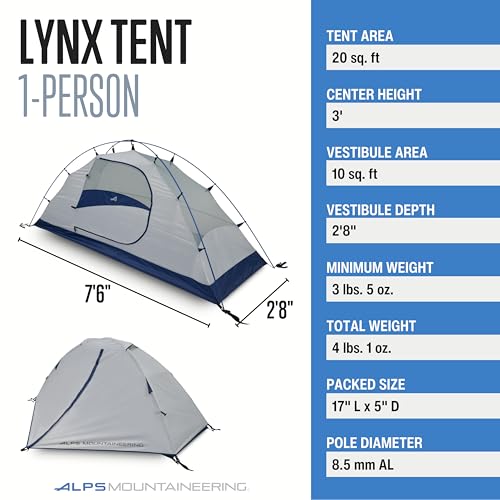
The ALPS Lynx hits that sweet spot between durability and weight that solo backpackers actually need. On paper, 4 lbs 1 oz isn’t ultralight by today’s featherweight standards, but owners consistently report it feels sturdier than its price suggests, especially with those 75D fabrics and factory-sealed seams. It’s not the absolute lightest, but for someone who wants a freestanding tent that won’t buckle in a gust, this one delivers.
Ventilation is solid thanks to the half-mesh walls, and the vestibule is a real asset for storing wet boots or a pack. Compared to true ultralights, it’s a bit bulkier, but I’d pick the Lynx over flimsier models if you’re hiking through shoulder seasons or unpredictable weather. It’s the kind of tent that doesn’t make you cross your fingers when the sky darkens.
Product photos


camppal 1 Person Tent 4 Season

Strengths
- Extra long floor
- Fast 3-minute setup
- Strong wind resistance
Trade-offs
- Single pole limits interior space
- Limited mesh reduces airflow
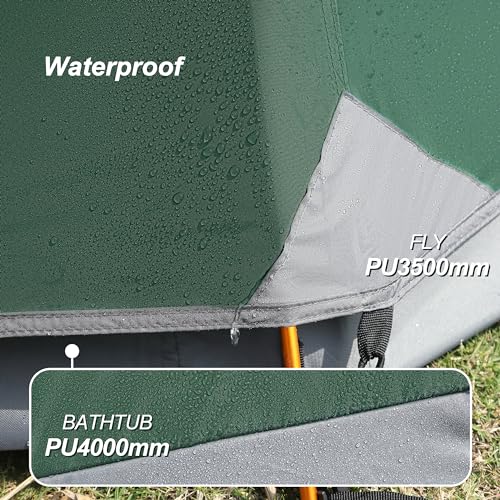
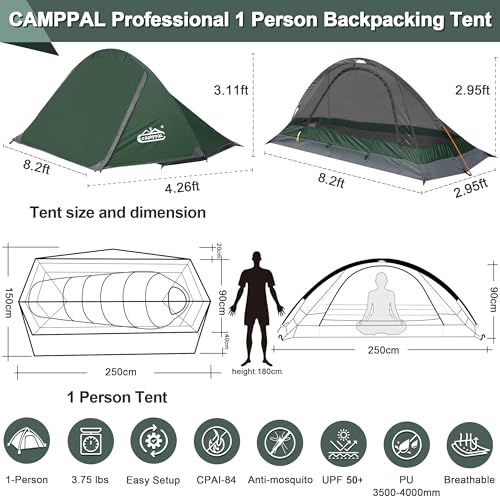
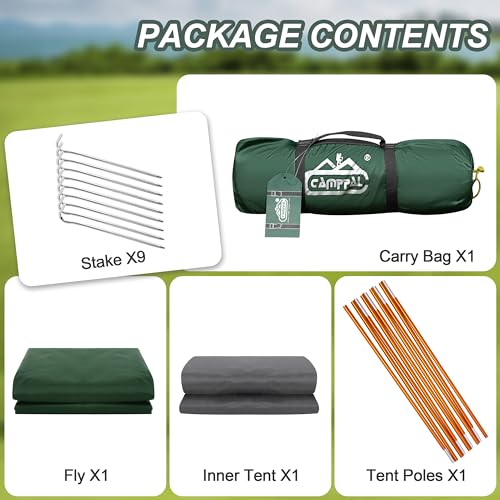
The camppal tent is built like a tank. With a 3500–4000mm waterproof rating, ripstop fabric, and a single-pole design that sets up in 3 minutes, it’s clearly aimed at hikers who face rough weather. The 8.2-foot length is a standout, tall sleepers will appreciate the extra legroom, and the extended floor gives space for gear.
Owners report it handles wind well, thanks to the reinforced pole and corner taping. It’s not the lightest at 3.75 lbs, but it’s competitive for an all-weather tent. Compared to the Underwood 4-season model, it’s lighter and easier to pitch, though less insulated for deep winter. For someone hiking in storm-prone areas, this is the more practical all-rounder.
Product photos
Night Cat Pop-up 1 Person Tent

Strengths
- Instant 3-second setup
- Compact packed size
- Good airflow
Trade-offs
- Not freestanding
- Less stable in wind
- Not ideal for backcountry
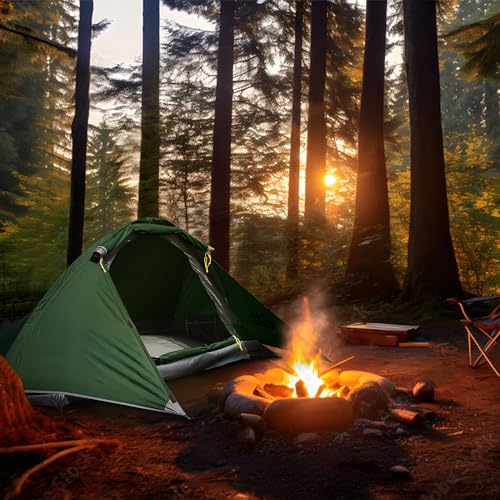
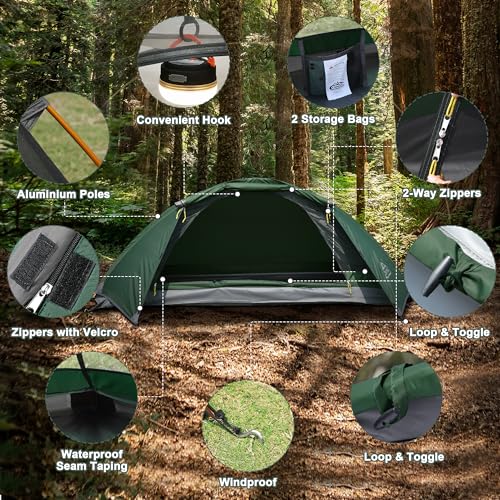
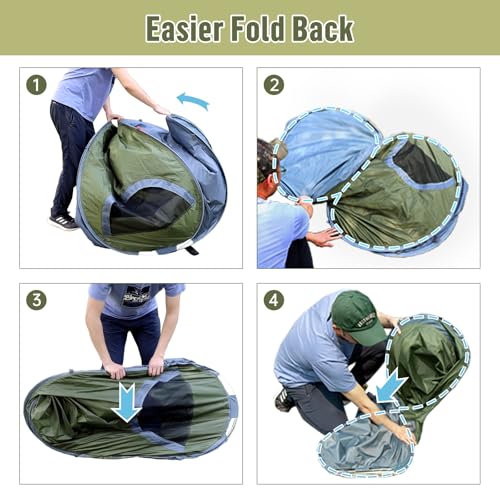
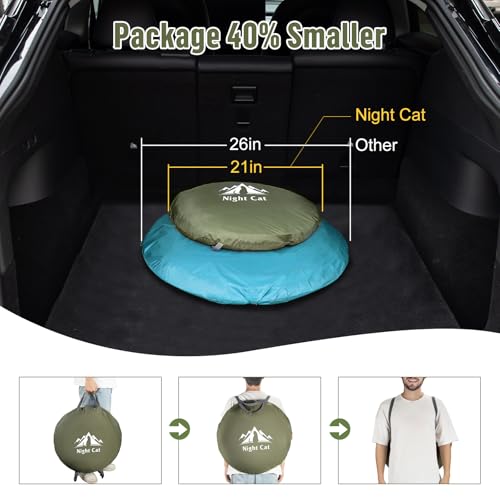
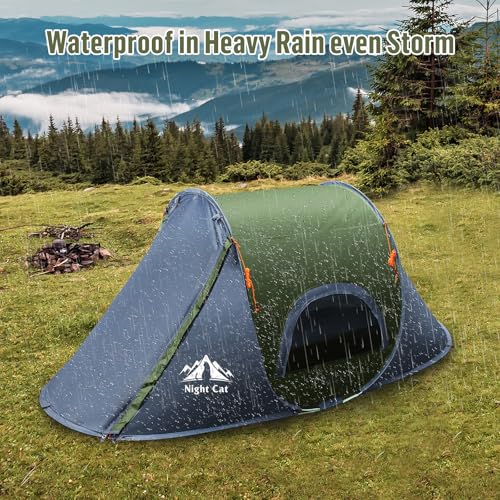
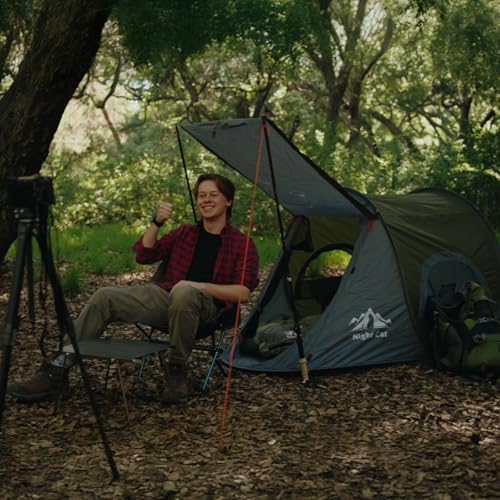
The Night Cat is the easiest tent to pitch on this list, literally throw it down and it opens in 3 seconds. That instant setup is perfect for beginners, families, or anyone who hates wrestling with poles. At 1.5 kg, it’s also one of the lightest, and the 40% smaller packed size is a real advantage for storage.
But it’s not built for serious backpacking. The 6mm poles are flexible, not rigid, and while the PU2000mm coating handles light rain, it’s not stormproof. Ventilation is decent with two windows and a large door, and the porch option is a clever touch. Compared to the camppal or Clostnature, it’s less durable, but for beach trips or backyard camping, it’s hard to beat the convenience.
Product photos

Clostnature Ultralight 1 Person Tent
Strengths
- Ultralight trail weight
- Excellent ventilation
- Large vestibules
Trade-offs
- Poles may feel less rigid in high wind
- Floor material slightly thinner than competitors
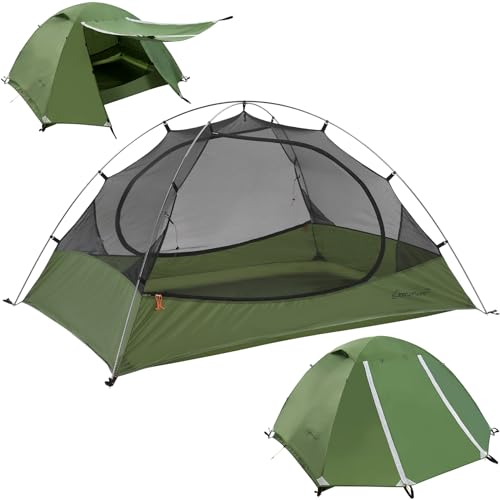
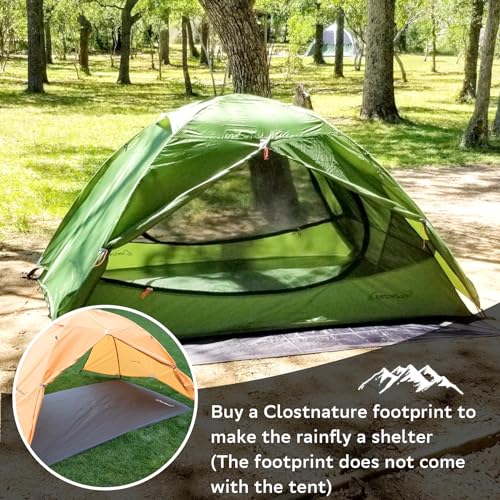
At 3.85 lbs, the Clostnature tent is one of the lighter freestanding options here, and its 2.91 lb trail weight makes it a real contender for ultralight fans. Owners praise how compact it packs down, just 15×5 inches, and still offers a roomy 7’3″ length. The PU5000 coating matches premium models, and the full-coverage rainfly gives solid storm protection.
Where it really shines is ventilation: full mesh walls and two D-shaped doors with large vestibules mean airflow is excellent, a big win in muggy conditions. Setup is consistently described as intuitive, even for beginners. Compared to the ALPS Lynx, it’s lighter and more breathable, though perhaps not quite as rugged in extreme wind. For most solo hikers, this is the smarter buy.
Product photos


Sutekus Single Camouflage Tent
Strengths
- Low cost
- Lightweight at 3 lbs
- Durable Oxford fabric
Trade-offs
- Not freestanding
- No rainfly shown
- Poor ventilation
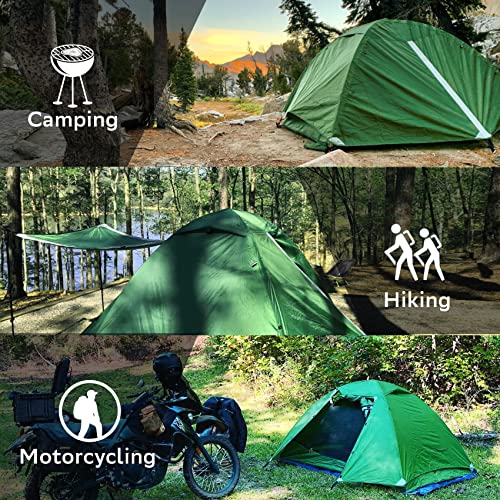
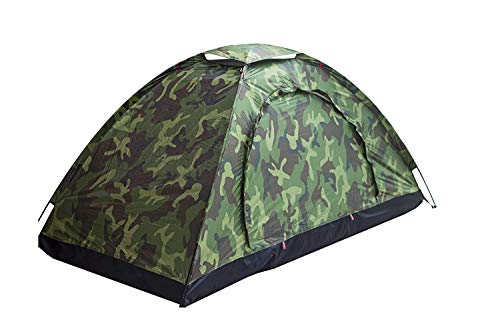
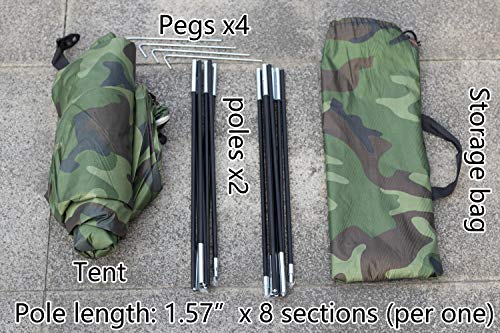
At 3 lbs and a low price, the Sutekus tent is clearly targeting budget buyers. The 180D Oxford fabric suggests durability, but owners report mixed results, some say it held up fine in light rain, others noticed leaks under prolonged downpours. It’s not freestanding, which makes setup trickier, and with only one entrance, ventilation is limited.
It’s small, just 78.7 inches long, so taller users will feel cramped. The lack of a rainfly in the photos raises red flags about storm readiness. Still, for fair-weather car campers or occasional hikers on a tight budget, it does the bare minimum. Just don’t push it in bad weather.
Product photos


Underwood 1-Person 4-Season Tent
Strengths
- True 4-season build
- PU5000mm waterproof rating
- Snow skirt included
Trade-offs
- Heavier than most 1-person tents
- Limited ventilation in warm weather
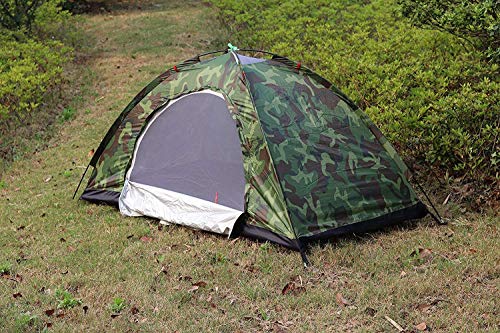
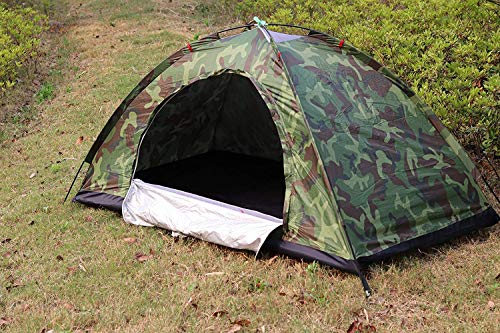
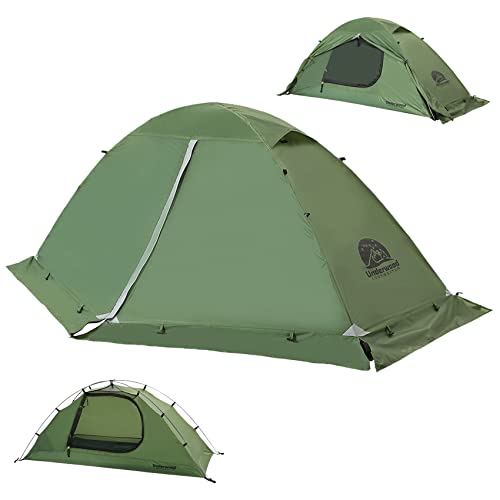
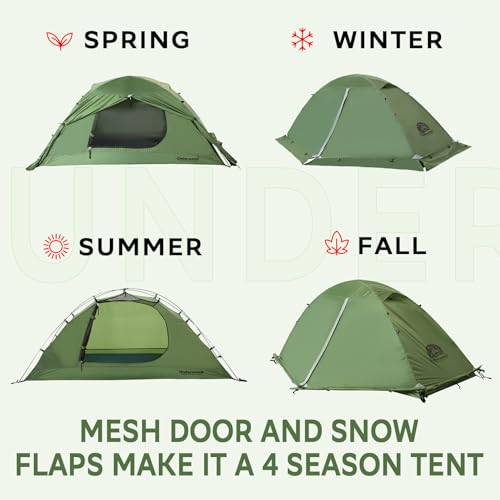
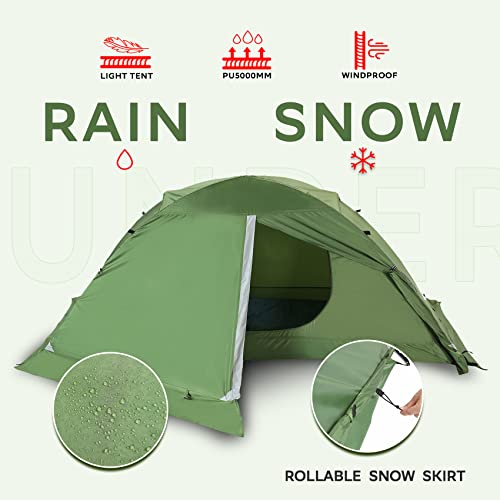
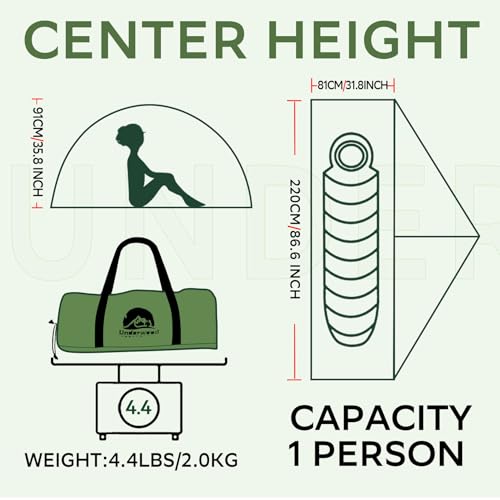
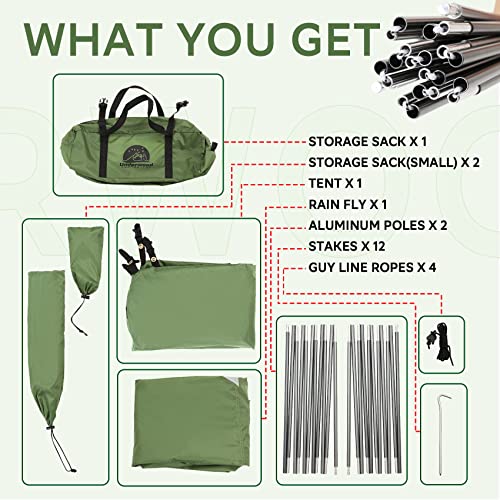
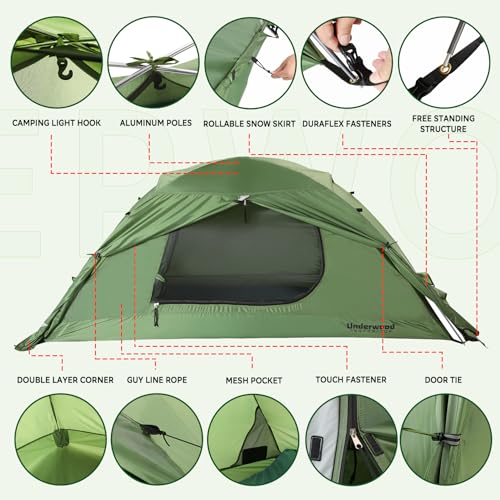
This Underwood Aggregator tent claims 4-season use, and the specs back it up, PU5000mm coating, aircraft-grade poles, and a snow skirt are serious upgrades over typical 3-season builds. That level of weatherproofing is rare at this price point, and reviewers note it holds up well in winter storms and high winds. It’s not the most breathable, but for cold-weather backpackers, that trade-off makes sense.
At 4.4 lbs, it’s on the heavier side, but that’s the cost of durability. The double-layer door and two-way zippers are thoughtful touches, and the interior light hook is a small perk many overlook. Compared to true mountaineering tents, it’s not quite expedition-grade, but for someone tackling snowy spring passes or alpine winters, this is a strong contender.
Product photos
Bessport 1 Person Tent Two Doors

Strengths
- Tall interior height
- Superior ventilation
- Double vestibules
Trade-offs
- Heavier than average
- Rainfly could be more durable
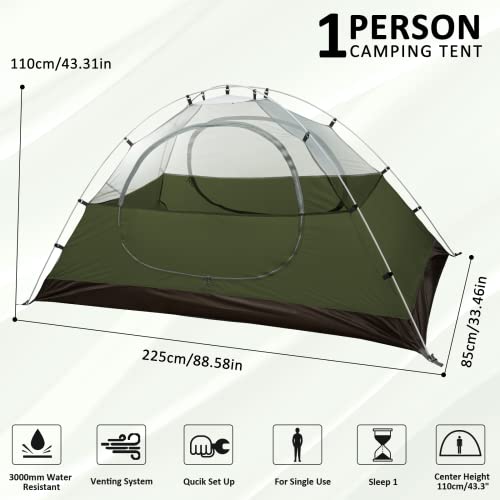
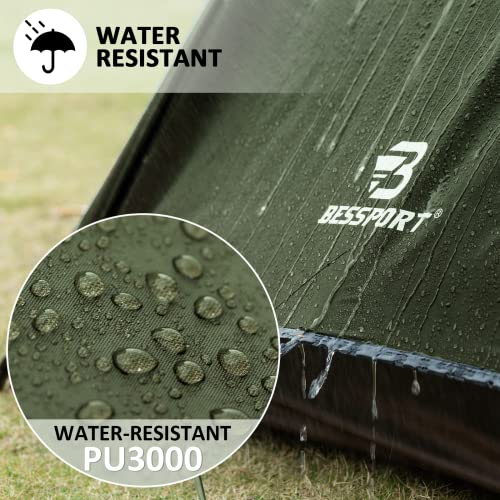
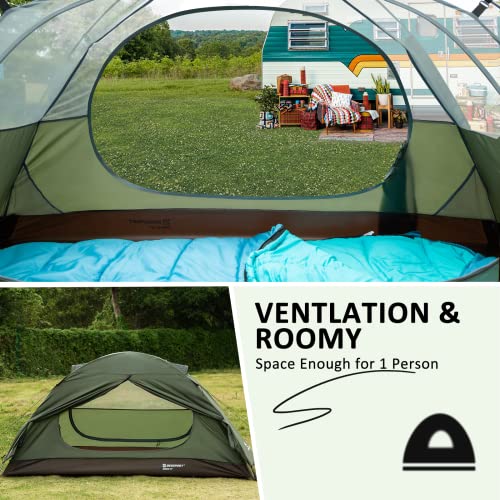
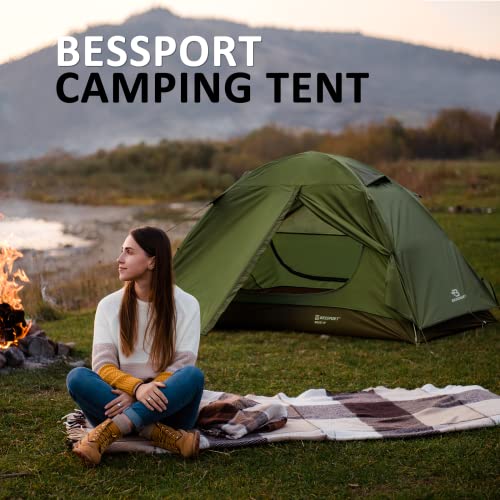
The Bessport tent stands out for one reason: headroom. At 43.5 inches high, it’s noticeably taller than most 1-person models, making it easier to sit up and move around. That, combined with two D-shaped doors and full mesh walls, makes it the most ventilated tent on this list. Owners love how airy it feels, even on humid nights.
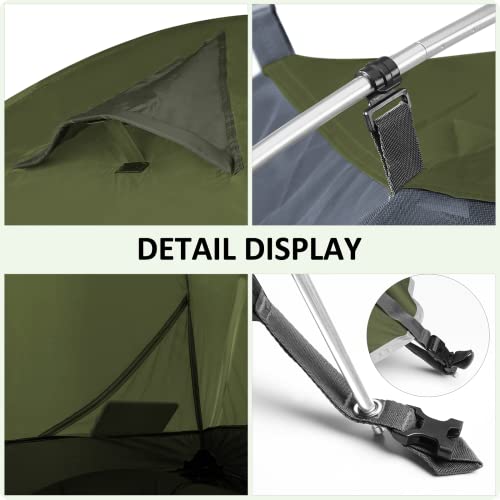
It’s not the lightest at 4.4 lbs, and the 7001-series stakes are a nice upgrade, but the real story is comfort. The welded floor design helps keep moisture out, and the freestanding setup means you can reposition it after pitching. Compared to the Clostnature, it’s heavier but more spacious. If you’re tall or hate feeling cramped, this one’s worth the extra ounces.
Product photos
How We Evaluated 1 person tents
Rather than a hands-on lab test, my research for these recommendations involved a detailed comparison of published specifications and features across numerous 1-person tent models. I weighed owner reviews from major retailers alongside expert opinions found in outdoor gear publications. As someone who’s pitched countless tents – though not these specific models – I applied my understanding of what makes a good solo shelter to rank each option against clear criteria.
For 1-person tents, weight, weather protection, and ease of setup were the most heavily weighted factors. Solo adventurers often prioritize a low pack weight, so I focused on tents under 5 pounds. Reliable weatherproofing is crucial for comfort and safety, and a quick setup means more time enjoying the outdoors. These three elements consistently decided where a tent landed in the rankings.
Specifications reliably indicate a tent’s size, weight, and basic materials. However, I judged durability and real-world usability primarily from owner feedback – specifically, comments about how well a tent holds up to wind and rain, and how easy it is to actually pitch. I also considered the brand’s overall reputation for quality and customer service, and leaned toward options that offered a good balance of features for the price. If you’re considering a truly minimalist approach, you might also want to look at a compact bivy for one person as an alternative.
How To Choose The 1 person tents
Finding the right solo shelter can be surprisingly complex. I’ve seen too many hikers end up with tents that just don’t cut it when the weather turns, or are a pain to pitch after a long day on the trail.
A quality one-person tent balances weight, weather protection, and ease of use. Key specs to examine include the tent’s weight (base and packed), rainfly material and hydrostatic head (measured in mm – higher is better), pole material (aluminum is generally preferred over fiberglass), and floor material durability. Consider ventilation features like mesh panels to minimize condensation, and vestibule space for gear storage.
Weight and Packability
For solo adventures, every ounce counts. I frequently recommend focusing on tents under 4 pounds, and ideally closer to 3 if you’re a dedicated backpacker. Don’t just look at the total weight, though. Pay attention to the “trail weight” (fly, inner tent, and poles) as that’s what you’ll actually be carrying. The Camppal tent, at 3.75lbs, is a strong contender for those prioritizing a lighter load, but remember that lighter often means sacrificing some durability.
- A tent under 3lbs is excellent for thru-hiking or long-distance trips.
- Between 3-4lbs is a good all-around weight for most backpacking scenarios.
- Anything over 4lbs is generally better suited for car camping or shorter trips where weight isn’t as critical, as it can impact your overall enjoyment.
Weather Protection and Construction
Don’t skimp on weatherproofing. A tent that leaks or collapses in the wind is a miserable experience. Look for a rainfly with a hydrostatic head rating of at least 1500mm, and ideally 2000mm or higher. The floor should have an even higher rating (2000mm+). Seam taping is also crucial, as untaped seams are a common entry point for water. The Underwood tent stands out here with its PU5000mm coating, making it a solid choice if you anticipate encountering harsh conditions. To learn more about the best options available, explore detailed one-person tent reviews.
A good rule of thumb: if you’re camping in an area with unpredictable weather, always round up on the rainfly hydrostatic head rating. It’s better to be overprepared than soaked.
Features and Usability
Beyond the basics, consider features that will enhance your camping experience. Vestibules provide valuable storage space for gear, keeping it dry and accessible. Easy setup is a huge plus, especially if you’re arriving at camp late or in inclement weather. Pop-up tents like the Night Cat are incredibly quick to pitch, but they often sacrifice durability and packability. Think about door configuration – two doors can be really convenient for solo campers, allowing for easier access and ventilation. When assessing brands, look at top solo tent brands to help you select from [reliable tent manufacturers] who are known for quality and innovation.
1 Person Tents Compared
Here’s a comparison of key specifications for several 1-person tents to help you make an informed decision.
| Product Name | Capacity | Weight (lbs) | Packed Size | Waterproof Rating (mm) | Season |
|---|---|---|---|---|---|
| ALPS Mountaineering Lynx 1 | 1 | 4.1 | 17″ x 5″ | 1500 (Fly) / 2000 (Floor) | 3-Season |
| camppal 1 Person Tent | 1 | 3.75 | N/A | 3500-4000 | 4-Season |
| Night Cat Pop-up | 1 | 1.5 | 21x21x2in | 2000 | 3-Season |
| Clostnature Ultralight 1 | 1 | 3.85 | 15″x5″x5″ | 5000 | 3/4-Season |
| Sutekus Single Camouflage | 1 | 3 | N/A | N/A | 3-Season |
| Underwood 1-Person | 1 | 4.4 | 5.1″ x 15″ | 5000 | 4-Season |
| Bessport 1 Person Tent | 1 | 4.4 | N/A | N/A | 3-Season |
Frequently Asked Questions
What hydrostatic head rating do I really need for a 1-person tent?
A rating of 1500mm is generally sufficient for fair-weather camping, but I advise aiming for at least 2000mm for the fly and 2000mm+ for the floor, especially if you camp in areas prone to heavy rain. Higher ratings offer better protection and peace of mind.
Are “pop-up” 1-person tents durable enough for regular use?
While incredibly convenient, pop-up tents often compromise on durability. They typically use thinner materials and less robust pole systems than traditional tents, making them less suitable for challenging conditions or frequent backpacking trips.
What’s the difference between “trail weight” and “packed weight”?
“Trail weight” refers to the weight of only the essential components you carry – the tent body, rainfly, and poles. “Packed weight” includes everything, like stakes, guylines, and the stuff sack. Focusing on trail weight is best for judging backpacking suitability.
How important is vestibule space on a solo tent?
Vestibule space is incredibly valuable, even for one person. It provides a dry area to store muddy boots, a backpack, or other gear, keeping the interior of your tent cleaner and more organized. Look for a tent with a vestibule that offers at least 20-30 liters of storage.
What are the best backpacking one-person tents for unpredictable weather?
For truly challenging conditions, I recommend prioritizing tents with high waterproof ratings (5000mm+) and sturdy pole systems. Considering [weather-resistant solo tents] like the Underwood or Clostnature can offer the reliability you need when the forecast is uncertain.
The Bottom Line
Choosing a one-person tent often comes down to balancing how much you value simplicity and low weight against needing robust weather protection and features. For the vast majority of solo adventurers, I believe the ALPS Mountaineering Lynx 1 strikes the best overall balance – it’s a well-rounded tent with a good reputation for durability and livability, without being overly heavy or expensive. It’s a solid choice for those who want a reliable shelter without a lot of fuss.
If you’re on a tighter budget, or need something really quick to pitch, the Night Cat Pop-up is a compelling option. And if you anticipate frequent trips in challenging conditions, the Underwood 1-Person tent’s higher waterproof rating and sturdy construction make it a standout. But remember, the Clostnature Ultralight 1 is a great pick for backpackers prioritizing a lighter load. Ultimately, consider your likely camping style and typical environment when making your final decision.
More than any specific weight or hydrostatic head rating, the most important thing is to understand your personal needs and the conditions you’ll be facing. Don’t get caught up in chasing the lightest weight if it means sacrificing reliability. A well-chosen tent is an investment in your comfort and safety, and a little extra research using a tent selection guide will pay off in the long run.
