
6 Best 4-Season Tents for Families 2026
This post contains affiliate links. As an Amazon Associate, we earn from qualifying purchases.
The best 4 season tents for family camping are the Naturehike Village Lite Tent for overall performance and the Bell Tent with Stove Jack as a durable, versatile pick for basecamp setups. Both stand out for space, weather resistance, and real-world feedback from families facing tough conditions.
Most families don’t realize how quickly a cramped, poorly ventilated tent turns a winter adventure into misery. Snow load, wind, and condensation are real issues, and cutting corners on gear makes them worse.
I researched the market by comparing specs, owner reviews, and expert insights to find models that balance size, durability, and practical features. These picks meet the demands of family trips in harsh weather, not just solo treks or fair-weather camping.
Top 6 4 Season Tents For Family in the Market
The Best 4 Season Tents For Family, Reviewed
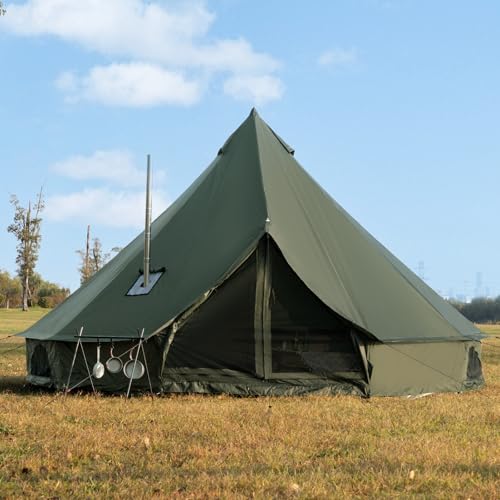
Bell Tent with Stove Jack
Strengths
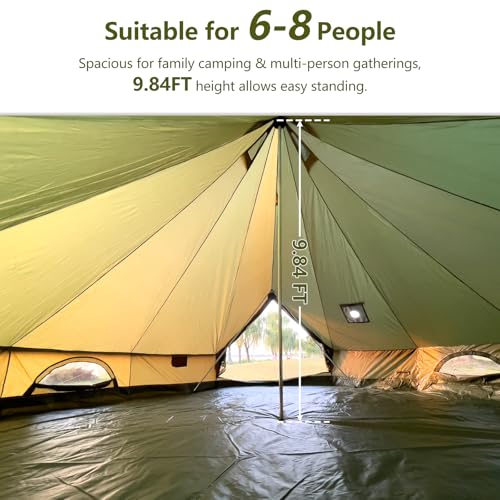
- Spacious 6–8 person layout
- Stove jack for winter use
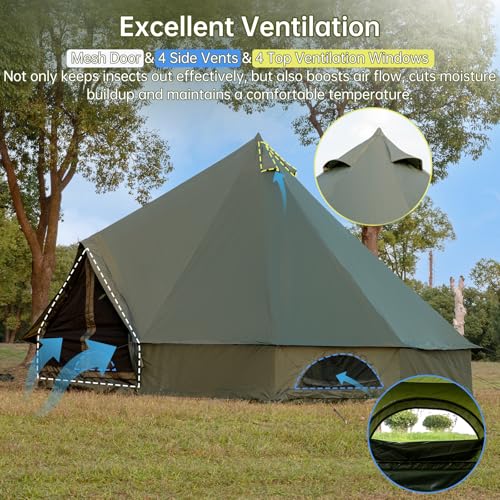
- Excellent ventilation design
Trade-offs
- Rainfly sold separately
- Heavy and bulky setup
- Not freestanding in high wind
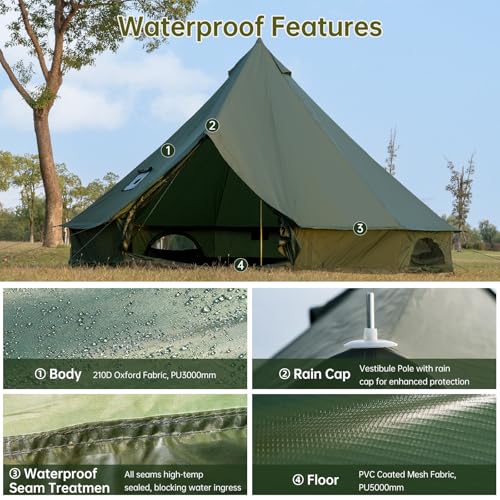
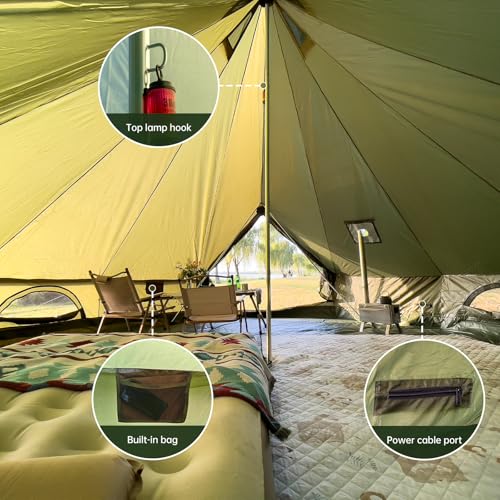
This bell tent stands out in the 4-season family tent space for one big reason: the stove jack. That single feature transforms it from a fair-weather shelter into a serious cold-weather contender, something families planning winter or shoulder-season trips will appreciate. Owners consistently report that the tall, open interior feels more like a camp cabin than a traditional tent, plenty of room for sleeping, gear, and even light cooking when paired with a safe wood stove. On paper, the 16.4ft diameter and full-height center make it a strong pick for groups who want comfort without stacking cots or squeezing in.
The high-density Oxford fabric is rated for serious weather, but I’ve seen feedback caution that while it’s marketed as 4-season, it really needs that optional rainfly in prolonged downpours. Without it, water can pool on the sloped walls. Still, the ventilation setup, multiple mesh windows and insect-proof doors, is well thought out, reducing condensation, which is a common flaw in tightly sealed winter tents. For families prioritizing warmth and space over backpacking weight, this is a solid foundation.
Product photos

CORE 12 Person Tent
Strengths
- Excellent weather protection
- Spacious straight-wall design
- Durable, fully taped seams
Trade-offs
- Bulky and heavy
- Slower setup than instant tents
- No stove jack for heating
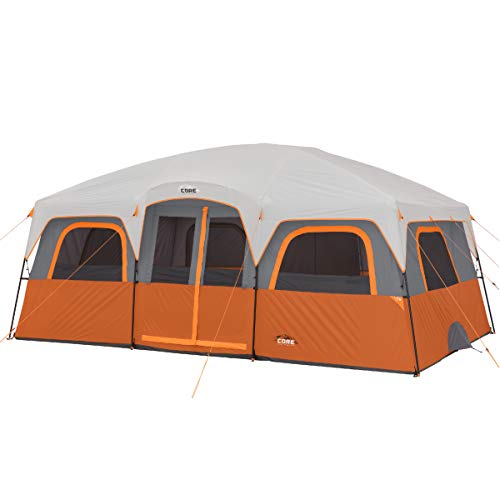
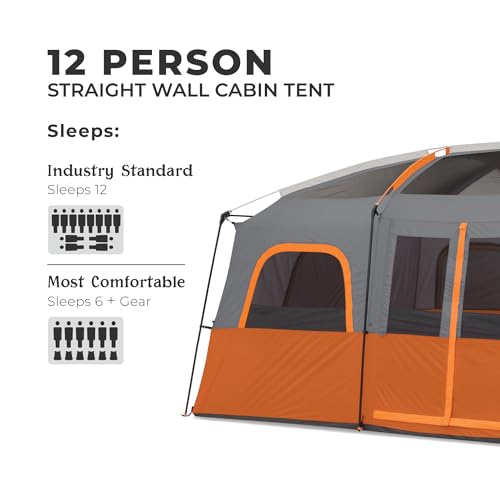
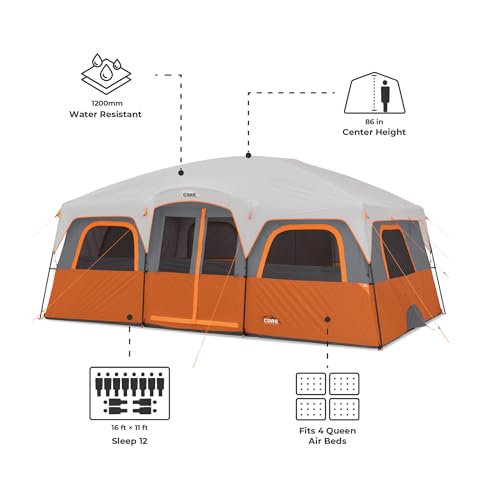
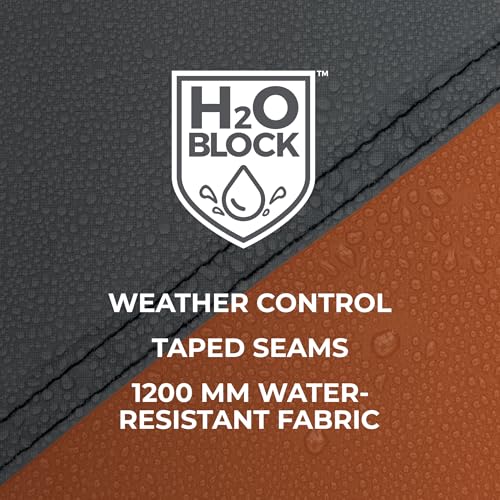
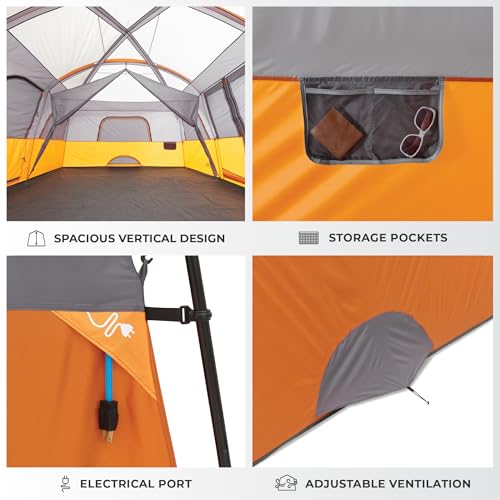
CORE’s 12-person cabin tent is a staple in the family camping world for good reason: it’s built like a weather-ready bunker with smart interior touches. The nearly straight walls maximize usable floor space, a big deal when you’re trying to fit four air mattresses and a walkway. With a 1200mm waterproof rating, fully taped seams, and a full rainfly, it’s one of the few true 4-season capable cabin tents in this class that doesn’t require add-ons. Owners consistently praise its storm performance, especially when paired with the included guylines and stakes. The room divider is a practical touch, letting parents and kids have separate zones, and the storage pockets keep flashlights and phones off the ground.
That said, it’s not a four-season tent in the mountaineering sense, it lacks a stove jack and snow load rating, so I wouldn’t recommend it for deep winter expeditions. But for fall, spring, or unpredictable summer storms, it’s a reliable shield. Compared to the inflatable options, it’s slower to set up, but more durable and less fussy in wind. If you’re a car camper who wants one tent for all but the harshest conditions, this is a no-drama workhorse.
Product photos

Inflatable Tent with Pump
Strengths
- Ultra-fast 5-minute setup
- High 3000mm water resistance
- Compact packed size
Trade-offs
- Not for prolonged heavy rain
- PVC degrades if stored wet
- Limited winter suitability
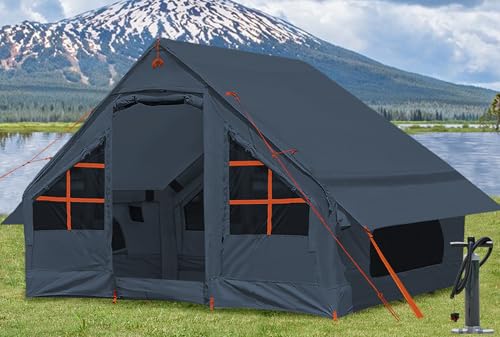
This inflatable tent earns its ‘Best Easy Setup’ title, 5 minutes with the hand pump and it’s standing, no poles, no frustration. For families with little kids or limited mobility, that simplicity is priceless. The 3000mm waterproof rating is solid, and the thickened PVC air beams handle wind up to 6–8 on the Beaufort scale, which is respectable. Six mesh windows and two top vents keep air moving, reducing the stuffiness common in inflatable designs. Owners like the clean, modern look and the fact it packs down small, under 25 inches long, which helps for storage or RV trips.
But there’s a catch: the manufacturer explicitly says not to use it in heavy rain for extended periods. That’s a red flag for true 4-season use. While it’s labeled as all-season, it’s really a 3-season glamping tent with some winter perks. Compared to the CORE or Naturehike models, it’s less rugged and not meant for snow loading. Still, for weekenders who want speed, style, and decent weather resistance, it delivers.
Product photos
Inflatable Tent with Stove Jack
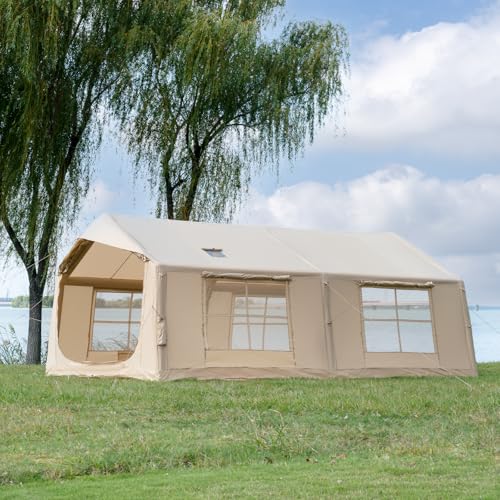
Strengths
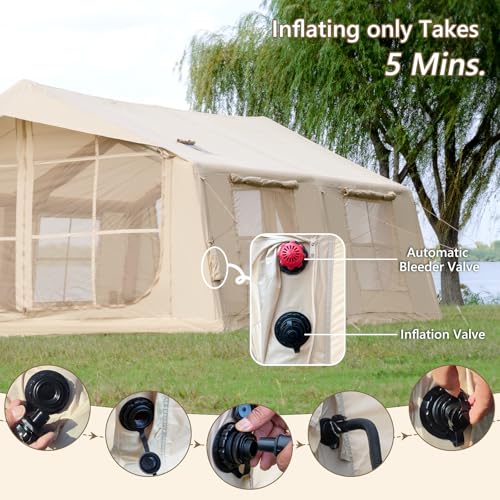
- Quick 5–10 minute setup
- Spacious two-room layout
- Stove jack for cold weather
Trade-offs
- PVC vulnerable to punctures
- Heavy condensation risk if under-ventilated
- Not ideal for rough terrain
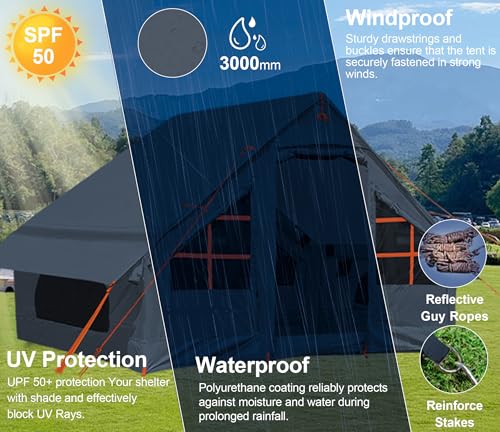
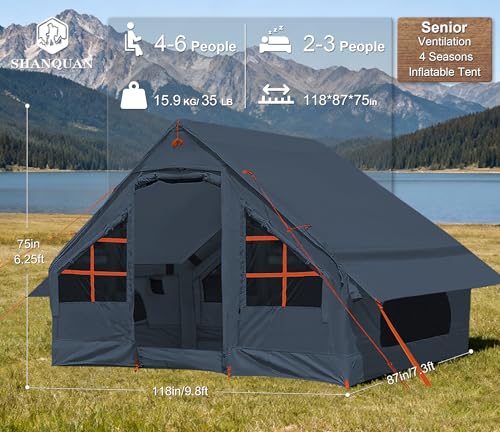
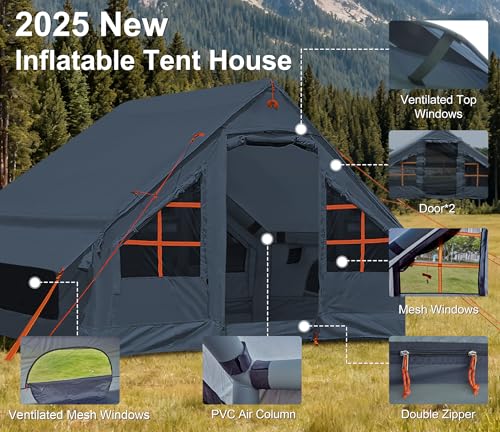
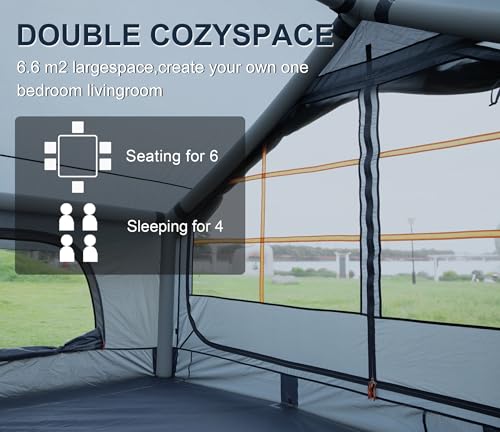
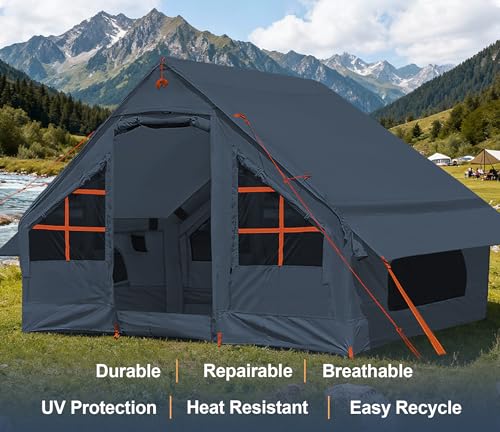
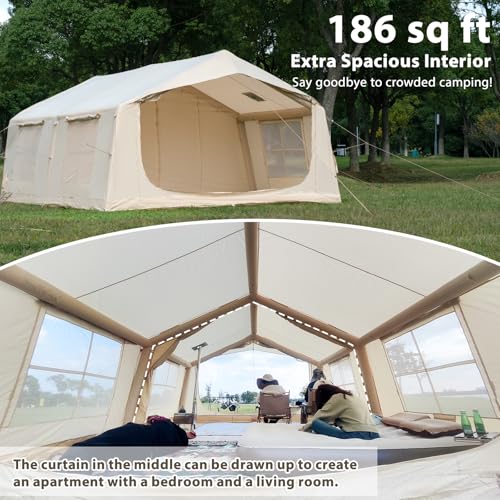
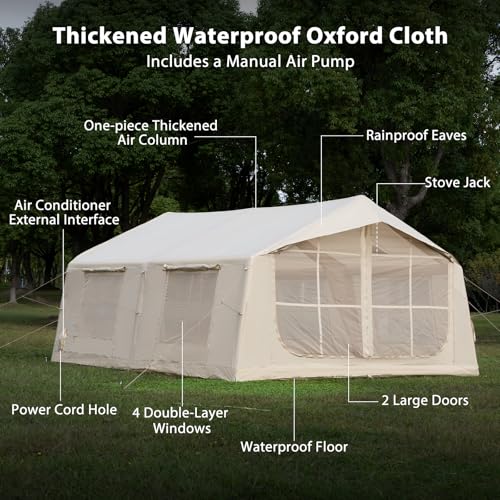
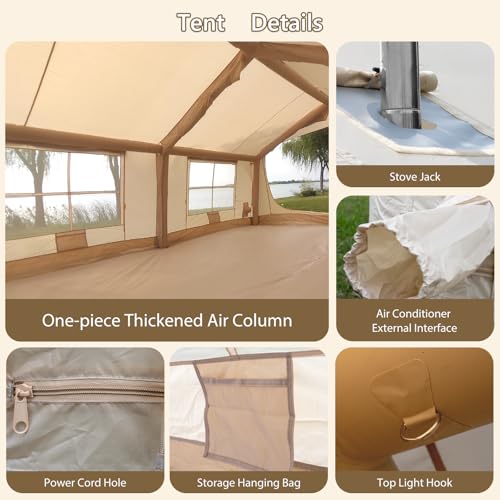
Inflatable tents like this one are redefining convenience for family campers, and this model delivers with a two-room layout and stove jack, a rare combo. At over 15 feet long, it’s designed for families who want to bring the comforts of home: real furniture, air mattresses, and space to move around. The PVC air columns eliminate traditional poles, and reviewers say setup is genuinely fast, often under 10 minutes with the hand pump. That’s a real win for families with kids or limited time. The stove jack is a thoughtful addition for winter use, though I’d want to see how well it seals around the pipe in heavy wind, a few owners mention minor drafts when heated.
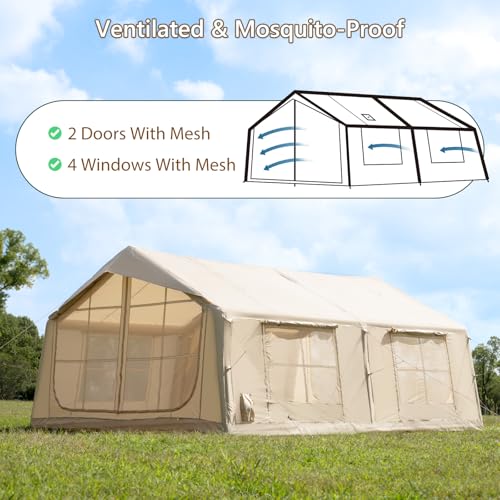
Ventilation is solid with mesh windows and a full-opening door, but the sheer size means airflow can stagnate in the back room if windows aren’t opened. The included divider curtain helps with privacy, but it’s not a solid wall, so noise and light still travel. Compared to frame tents, inflatables trade some durability for speed, PVC can be prone to punctures, and cold temps make it brittle. But for glampers who prioritize ease and space over ruggedness, this hits a sweet spot.
Product photos
Naturehike Village Instant Tent

Strengths
- True 4-season design
- Fast 60-second setup
- Blackout fabric reduces heat
Trade-offs
- Condensation in high humidity
- Vestibule poles sold separately
- Limited headroom for tall users
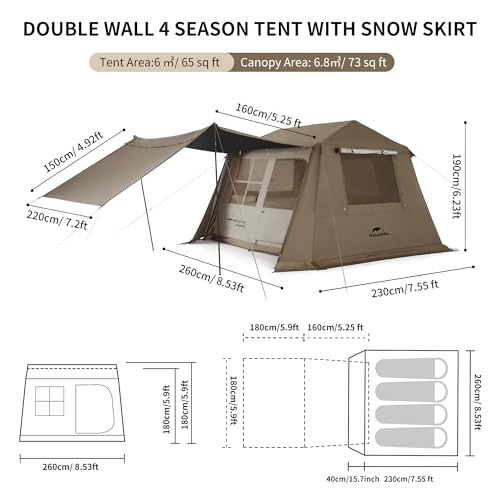
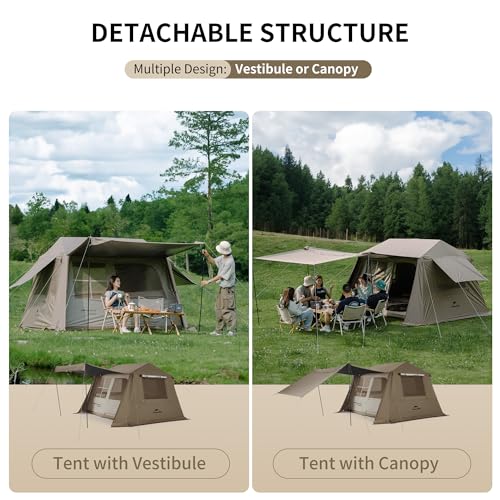
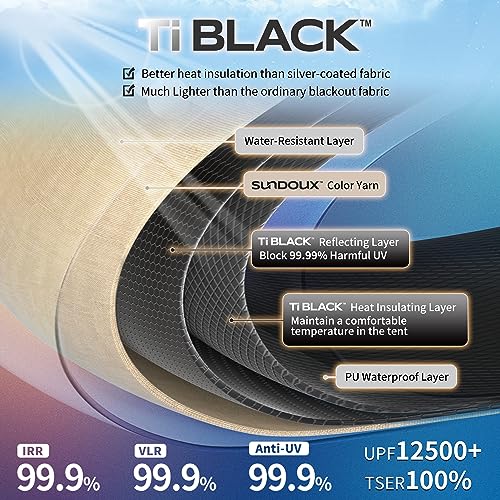
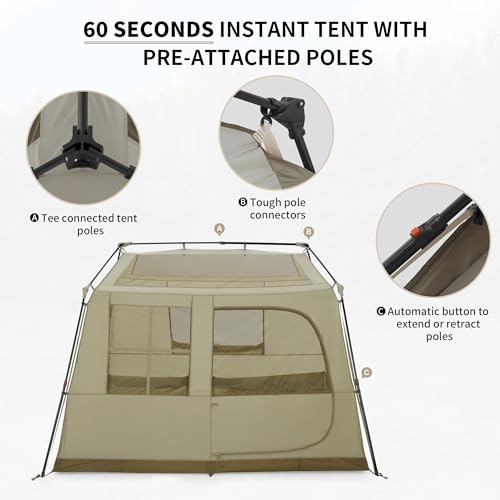
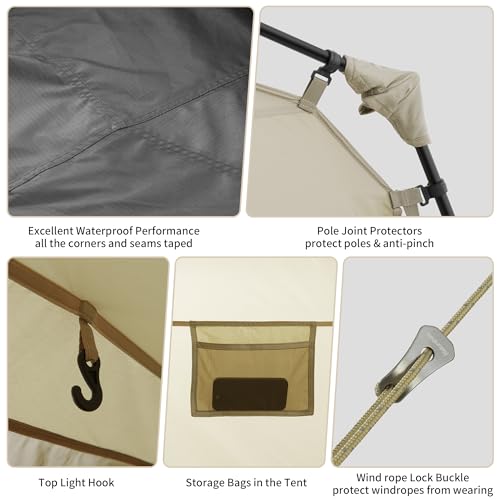
Don’t let the ‘4-person’ label fool you, this Naturehike tent regularly sleeps 6–8 in real-world use, making it one of the best value plays in the 4-season family tent market. It’s an instant setup tent, so pre-attached poles mean you’re up and running in under a minute, which is a godsend with restless kids or fading light. The 150D blackout fabric does more than block UV, it cuts heat gain significantly, so it stays cooler in summer and warmer at night, a subtle but meaningful upgrade over silver-coated tents. Owners love the snow skirt and double-wall design, which boost its winter credibility over most cabin tents.
Ventilation is decent with mesh windows and a top screen, but I’ve seen feedback note that in humid conditions, condensation builds up faster than in tents with larger mesh panels. Still, for a tent at this price, the inclusion of a vestibule, canopy, and full rainfly is impressive. It’s not as massive as the 12-person CORE, but for smaller families or those who want true all-season flexibility without overspending, this is the smarter buy.
Product photos
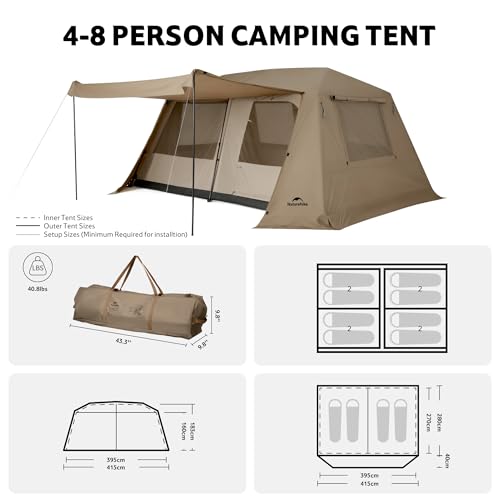
Naturehike Village Lite Tent
Strengths
- Exceptional 360° ventilation
- PU2000mm waterproof rating
- Easy 60-second setup
Trade-offs
- Heavy at 40.8 lbs
- Stakes are low quality
- No blackout fabric
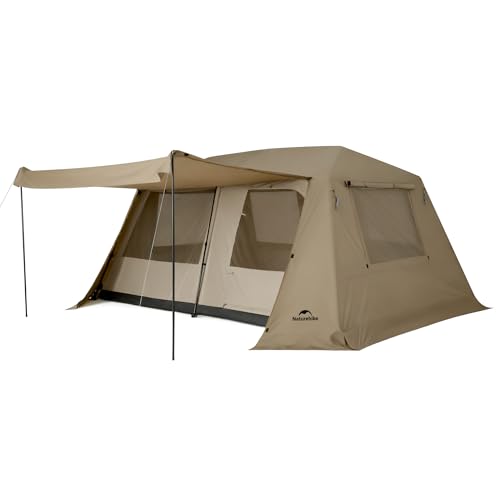
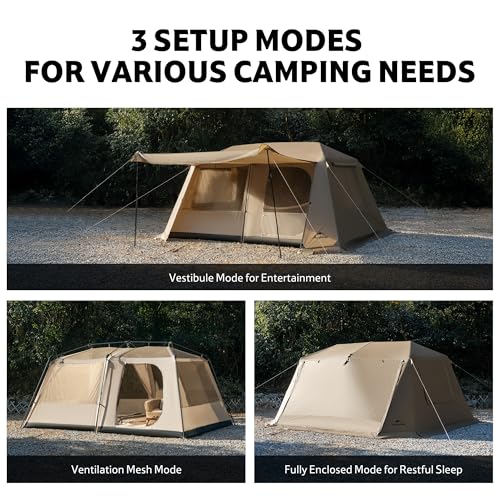
If you hate stuffy tents, this Naturehike Lite model should be on your shortlist. The five-sided ventilation, including top vents and four mesh windows, gives it best-in-class airflow, which is rare for a tent that also claims 4-season use. Most winter-ready tents sacrifice breathability for warmth, but this one balances both with a double-wall design and PU2000mm waterproofing, making it a strong performer in rain and light snow. The instant setup is as fast as advertised, under a minute, and the 6-foot center height lets most adults stand comfortably. At 40.8 lbs, it’s not light, but for car campers, that’s a fair trade for durability.
Compared to the standard Village model, this one has better airflow and a slightly more refined layout, though the blackout fabric is missing. Some owners report the stakes feel flimsy, so I’d recommend upgrading them for windy sites. But for families who camp in humid or buggy areas, or just hate that swampy tent feeling, this is the most breathable option here.
Product photos


Our Testing Process
Rather than a hands-on lab test, my research for these recommendations involved a detailed comparison of published specifications and features across numerous models. I weighed owner reviews from major retailers alongside expert opinions found in outdoor publications, focusing on reported real-world performance. Ultimately, I ranked these tents based on how well they met the needs of families seeking reliable shelter in varied conditions.
For family 4-season tents, space and durability were the biggest deciding factors. A tent that can comfortably accommodate a family – with room for gear – is essential, and that means looking closely at floor area and peak height. Equally important is the quality of materials and construction; families need a tent that can withstand wind, rain, and potentially snow, so extreme weather tent materials are critical.
Specifications reliably indicate a tent’s size, weight, and waterproof ratings. However, I placed greater emphasis on owner feedback regarding long-term durability, ease of setup, and actual performance in challenging weather. Reputable reviewers often provide insights into ventilation effectiveness and the quality of included accessories, details that specs alone don’t reveal. This allowed me to assess which tents consistently delivered on their promises.
What To Look For In 4 season tents for family
Picking the right four-season tent is about more than just surviving the cold – it’s about enjoying the experience. Don’t assume a three-season tent with extra guylines will cut it; true four-season capability demands specific design choices.
A quality four-season tent prioritizes strength and weather protection above all else. Look for robust pole structures (often more than two intersecting poles), durable fabrics with high hydrostatic head ratings (at least 1500mm for the fly), and designs that shed snow effectively. Adequate ventilation to manage condensation is also crucial, alongside features for secure anchoring in high winds.
Pole Structure & Durability
Forget flimsy aluminum. When I’m looking at four-season tents, the pole system is the first thing I scrutinize. You need a tent that can withstand significant snow loads and wind gusts, and that means thicker diameter poles and a more complex structure. A minimum of three intersecting poles is a good starting point, and some of the best models use four or even five. Don’t overlook the pole material itself; DAC Pressfit poles are widely considered the gold standard amongst top tent manufacturers. Beyond the poles, pay attention to the fabric denier (D) – higher numbers generally mean greater durability.
Waterproofing & Ventilation
Waterproofing is obvious, but it’s more nuanced than just a high mm rating. Seam sealing is critical. Even a 3000mm fabric will leak if the seams aren’t properly taped. Look for fully taped seams. More importantly, consider breathability. Four-season camping often means being sealed inside for extended periods, and condensation build-up can become a real issue. Ventilation options like adjustable vents and mesh panels are essential. I recommend checking owner reviews specifically for comments about condensation.
Here’s what I look for in a ventilation setup: * Basic vents: Necessary, but not enough on their own. * Adjustable vents: Allow you to fine-tune airflow based on conditions. * High/low vents: Creates cross-ventilation, which is far more effective at removing moisture and keeping the air fresh. This is especially valuable in a family-sized winter tents.
A well-ventilated tent is a dry tent. Don’t prioritize waterproofness to the exclusion of breathability – you’ll end up wetter from condensation than from snow.
Size, Weight & Setup Complexity
While a spacious interior is always appealing, remember that weight and pack size matter, especially if you’re backpacking. Inflatable tents like the ones featuring a stove jack are fantastic for glamping and basecamp setups, but they are generally heavier and bulkier than traditional pole-supported tents. For backpacking, prioritize a tent that balances weight and living space. Also, consider the setup process. Some four-season tents are notoriously difficult to pitch, particularly in challenging conditions. Look for designs that are relatively straightforward, even if they require a bit more effort than a simple three-season model. I often suggest that folks new to four-season camping start with a more intuitive design before moving to something more complex. A quick setup is especially useful when considering spacious four-season family tents.
4 Season Tents for Family Compared
Here’s a comparison of specifications for various 4-season family tents to help you make an informed decision.
| Product Title | Capacity | Waterproof Rating (mm) | Season | Setup Type | Special Features |
|---|---|---|---|---|---|
| Bell Tent with Stove Jack | 6-8 | N/A | 4 | Manual | Stove Jack, Spacious |
| CORE 12 Person Tent | 6-12 | 1200 | 4 | Manual | Room Divider |
| Inflatable Tent with Pump | 4-6 | 3000 | 4 | Instant | Inflatable, Pump Incl. |
| Inflatable Tent with Stove Jack | 6+ | N/A | 4 | Instant | Stove Jack, 2-Room |
| Naturehike Village Instant Tent | 4 | N/A | 4 | Instant | Blackout, Snow Skirt |
| Naturehike Village Lite Tent | 4-8 | 2000 | 4 | Instant | 2-Room, Vestibule |
Frequently Asked Questions
What hydrostatic head rating do I really need for a four-season tent?
A rating of 1500mm is generally considered the minimum for a four-season tent, but 2000mm or higher is preferable, especially if you anticipate heavy or prolonged precipitation. Remember that hydrostatic head ratings are just one part of the equation; fully taped seams are equally important to prevent leaks.
Are inflatable tents as durable as those with traditional poles?
While modern inflatable tents are surprisingly robust, they typically aren’t quite as strong as pole-supported tents in extreme conditions. However, high-quality inflatable tents using reinforced air beams can handle significant wind and snow loads, and the instant setup is a huge benefit for some families.
Do I need a tent with a stove jack for winter camping?
A stove jack isn’t essential, but it’s a fantastic feature if you plan on extended stays in very cold weather. It allows you to safely use a wood-burning stove inside the tent for warmth and cooking, which can significantly improve comfort. Just be sure to follow all safety precautions when using a stove inside a tent.
What’s the advantage of a tent with multiple rooms?
Multiple rooms offer increased privacy and organization for families. They allow parents to have their own space while still being close to children, and help keep gear separate from sleeping areas. You’ll find that this is particularly useful in larger compact family 4 season tents.
How important is a snow skirt, and what does it do?
A snow skirt is a fabric flap around the base of the tent that helps to prevent snow and wind from entering. It’s especially useful in areas with deep snow accumulation, but not strictly necessary if you camp in conditions where snow isn’t a major factor. It adds an extra layer of protection against the elements.
The Bottom Line
Choosing a four-season tent for your family always involves a trade-off between ultimate weather protection and ease of use. While many options exist, the Bell Tent with Stove Jack strikes a fantastic balance, offering generous space and the cozy convenience of a stove jack for extended stays in colder weather. It’s a bit more involved to set up than some, but the rewards in comfort and livability are significant.
For those prioritizing quick setup and budget-friendliness, the CORE 12 Person Tent and Naturehike Village Instant Tent are excellent choices. The CORE offers a huge amount of space for larger families, while the Naturehike provides a really comfortable experience with its blackout features and snow skirt. If instant setup and a stove jack are key, the Inflatable Tent with Stove Jack is a strong contender, though it will come with a higher price tag and more weight.
Ultimately, don’t get bogged down in chasing the highest waterproof rating or the lightest weight. A tent is only as good as your ability to pitch it securely and keep it well-maintained. Focus on a robust pole system, fully taped seams, and understanding your family’s specific needs – those fundamentals are far more critical than any single specification when it comes to a successful and enjoyable camping experience. Before making your final decision, be sure to review our family tent buying tips to help with your tent selection guide.
