
Can You Live in a Tent Full-Time? A Real-World Guide (54 chars)
This post contains affiliate links. As an Amazon Associate, we earn from qualifying purchases.
Yes, you can live in a tent full-time, but your timeline is governed by law and fabric durability. On public land, agencies like the Bureau of Land Management enforce a strict 14-day stay limit per location. For a true long-term setup, you need a tent built for continuous exposure, think heavy-duty canvas, standing-height walls, and a system for heat, water, and waste that goes far beyond weekend camping.
The dream is simple: a tent under the stars, freedom from rent, and a life pared down to essentials. The reality, I learned the hard way, involves rangers, zoning codes, and the silent, relentless work of the sun on nylon.
My first attempt at a six-month camp failed because I treated UV, seams, zippers, and poles as separate problems. They’re not. The sun bleached my fly. I thought the chalky strip was just dirt. Then the seams on that brittle section started weeping during an October sleet storm. In my panic to re-seal them, I forced a gritty zipper and stripped three teeth. A week later, a gust found the weak spot where the stressed pole met the compromised fabric. I was fixing symptoms, not the system: continuous exposure.
This guide walks through what it actually takes, from navigating the legal paperwork to choosing a tent that won’t quit on you before you’re ready to quit on the lifestyle.
Key Takeaways
- Public land stays are capped at 14 consecutive days per location; you must then move camp beyond a 25-mile radius.
- A tent’s “four-season” rating is for intermittent storms, not year-round sun; UV degradation destroys most fabrics within 12-18 months of continuous exposure.
- Livable space requires vertical walls; seek out tents with standing room like wall or bell tents with at least 5-foot sidewalls.
- Private land is governed by hyper-local county zoning and HOA rules, which often prohibit tent living outright or cap it at 30 days per year.
- Moisture management is a daily discipline; without proactive ventilation and a rainfly, mold can establish in a damp tent within two weeks.
Where Can You Legally Live in a Tent?
Before you stake your first guy line, you need to understand the paperwork. The most beautiful, remote spot is useless if a ranger can evict you on day 15.
On most Bureau of Land Management and U.S. Forest Service land, the rule is 14 consecutive days in one spot. After that, you must relocate your entire camp to a site more than 25 miles away. This National Bureau of Land Management policy exists to prevent semi-permanent settlements. Rangers do patrol and track occupancy.
Common mistake: Assuming “dispersed camping” means “unlimited camping.” The 14-day clock resets only after you’ve been absent from that specific administrative area for 28 consecutive days. Simply moving a mile down the same forest road does not restart your clock.
Private land feels like the solution, but local law is the final arbiter. County zoning codes frequently prohibit living in “temporary structures,” and Homeowners Association covenants can be even stricter. Some counties offer temporary camping permits for your own land, often renewable monthly or yearly, but these are typically for construction or agricultural work, not indefinite residence. Your first call should be to your county planning department.
| Land Type | Typical Stay Limit | Key Governing Body | Primary Concern |
|---|---|---|---|
| BLM / National Forest | 14 consecutive days | Federal Agency (BLM, USFS) | Preventing permanent habitation |
| National Park | 7-14 days (varies) | National Park Service | Protecting visitor access & environment |
| Private Land (Owned) | Varies by county/state | County Zoning Office | Health, safety, and property codes |
| Private Land (Rented) | As per lease agreement | Landlord / HOA | Lease violations and liability |
TL;DR: Public land gives you two weeks per spot. Private land law is hyper-local and often restrictive. Always verify rules with the actual land manager or county office.
What Makes a Tent Durable Enough for Full-Time Living?
A weekend warrior’s tent will fail you. The fabric turns brittle, seams leak, and poles fatigue. You need a shelter engineered for standing, not just sleeping. My Big Agnes Copper Spur HV UL2, the darling of every lightweight blog, lasted exactly 47 days pitched in a San Juan Mountain meadow. The 15-denier ripstop nylon fly developed a chalky, sun-bleached scar along the ridgeline. I told myself it was cosmetic. Then, during a pre-dawn wind event that weather.gov later clocked at 53 mph, that scar became a six-foot tear. I spent the next four hours in my truck, $700 worth of gear soaked, because I’d chosen a backpacking tent for a homesteading job.
For true longevity, you’re looking at canvas or heavy-duty synthetic canvas. Brands like Elk Mountain build wall tents with 11 oz PolyShield fabric, a 27-inch hydrostatic head waterproof rating, and fully sealed seams. Their 13×13 foot model offers an 8-foot peak and 5-foot sidewalls, actual living space. A 13-foot diameter bell tent provides over 130 square feet. These are investments, starting around $1,050, but they’re built for the long haul.
Long-term tent durability requires a fabric weight over 10 oz/sq yd, fully sealed seams, and a frame designed for constant static load, not occasional dynamic stress. UV-resistant treatments like PolyShield+ can extend fabric life but are not a permanent shield against degradation.
The upgrade to PolyShield+ for about $199 adds factory-applied mildew and wear resistance. In the damp coastal climate where I often test, that treatment has been the difference between a musty smell after a rainy month and a tent that still feels fresh. When comparing long-term canvas tent options, these material specs are your baseline.
How Do You Secure a Tent Against Season-Long Weather?
So you’ve found a legal spot and bought the right tent. Now forget all of that, because the wind doesn’t care about your paperwork or your fabric weight. Security starts and ends with what’s in the ground.
The stakes that come with any tent are for temporary holds. For a season, you need 18-inch steel stakes, hammered in at a 45-degree angle all the way to the head. In sandy soil, I switch to 24-inch screw-in sand stakes. Elk Mountain recommends 8-10 of these heavy-duty stakes per wall tent, and they’re not wrong. A taut pitch is your first defense against wind fatigue, the constant vibration that weakens fabric and seams over weeks.
Common mistake: Using only the tent’s corner tie-outs. You must use every single guy line and tie-out point on the tent, tightening them until they have a slight, firm tension. A flapping guy line transfers destructive energy directly to the tent fabric.
A full-coverage rainfly is non-negotiable, and not just for rain. Spaced a few inches off the main tent body, it acts as a sacrificial buffer, absorbing the brunt of sun, wind, and precipitation. Site selection is part of security: pitch on dry, well-ventilated ground, slope the site for drainage, and face the door away from the prevailing wind.
What Are the Critical Systems for Heat, Water, and Waste?

Living moves beyond camping when you solve for daily comfort and sanitation. These are the unsexy essentials that make the difference between a miserable experiment and a viable lifestyle.
Temperature Control: For winter, a small wood stove is the gold standard for dry, reliable heat. This means choosing a canvas tent with a stove jack. Installing one is a careful process, cutting a 4 to 6-inch hole and sealing a fire-resistant sleeve, but it transforms a cold shelter into a warm room. Electric heaters are safer but demand serious power. A 1500-watt heater will flatten a generic 100Ah lithium battery in three hours. For real off-grid heat, you’re looking at a power station like a Bluetti AC200MAX paired with solar panels.
Before you start: A wood stove inside a tent raises the interior temperature fast. Never leave it unattended. Keep a Class B fire extinguisher mounted inside the door. Clear all flammable material at least three feet from the stove. The stovepipe must extend at least two feet above the tent peak to prevent sparks from landing on the roof.
Water Access: Your water source must be within 100 yards, any farther and hauling five-gallon jugs becomes a full-time job. For drinking, I trust the Sawyer Squeeze filter. For washing dishes and yourself, you need volume: the Platypus GravityWorks 4L system is my go-to because its dirty bag can be filled from a silty stream without clogging, unlike pump models.
Waste Management: This is the biggest legal and practical hurdle. On public land, you often must pack out solid waste. On private land, a composting toilet like the Nature’s Head is popular, but its agitator handle is a known weak point. I prefer the Separett Villa 9000 for its electric vent fan, which eliminates odor completely, a non-negotiable for tent living. Always check local health codes first.
What Gear Turns a Tent into a Livable Space?
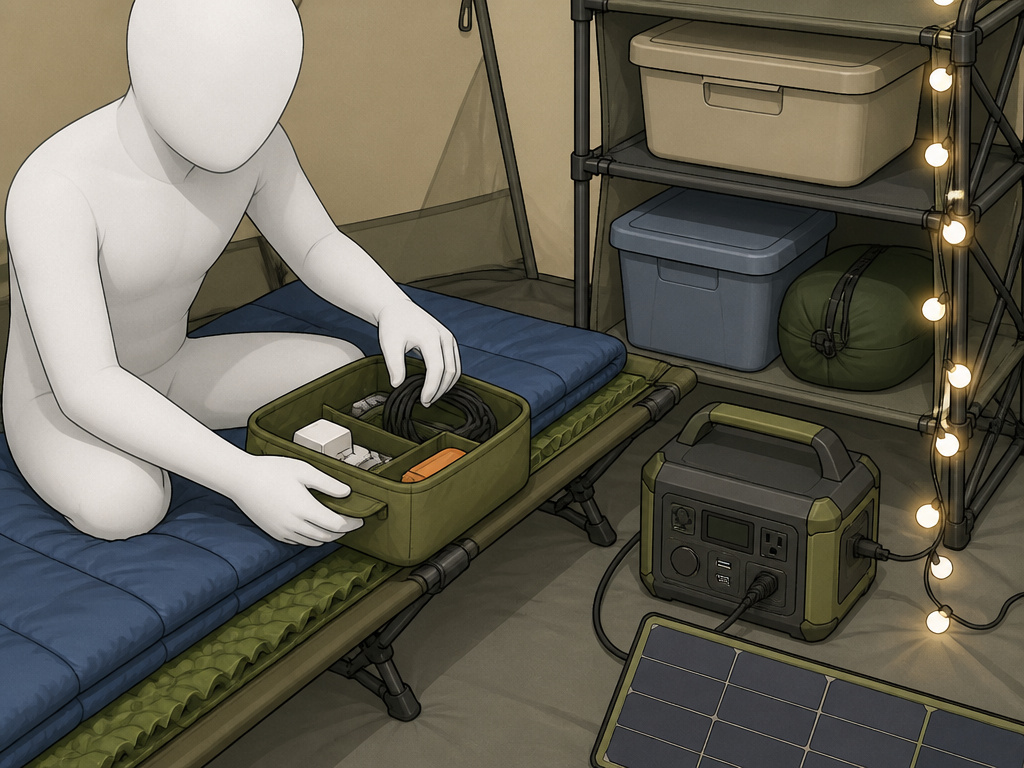
Your shelter is just the shell. The right essential camping equipment inside it creates a home.
- Sleeping System: A cot lifts you off the ground, improving insulation and comfort. Pair it with a high-R-value sleeping pad and a season-appropriate sleeping bag.
- Power & Lighting: A solar generator (like Jackery or Bluetti) paired with a panel can run lights, charge devices, and even power a small fan. For interior tent illumination, a combination of headlamps, string lights, and a bright lantern covers all needs.
- Storage & Organization: Use collapsible shelves, hanging organizers, and waterproof storage bins to keep gear dry and off the floor. Chaos accelerates quickly in a small space.
- Climate Control: Beyond heating, consider a battery-powered fan for summer airflow. In extreme heat, a portable tent air conditioner can work, but requires a power source and proper venting.
Investing in durable, multi-purpose items from the start saves money and frustration later. This is where a well-considered tent living gear list pays off.
Frequently Asked Questions
How long can you legally live in a tent on public land?
On most BLM and National Forest land, the limit is 14 consecutive days in one specific location. After that, you must move your entire camp to a new site at least 25 miles away. You cannot return to the original area for 28 days.
What is the best tent for living in year-round?
wall tent or large bell tent made from heavy-duty synthetic canvas (like 11 oz fabric) is best. These designs offer vertical walls for standing room and robust frames for wind and snow load. They are fundamentally different from recreational dome tents. For families, a spacious nine-person tent in this style provides necessary room.
Can I live in a tent on my own property?
It depends entirely on your county’s zoning laws and any HOA rules. Many counties prohibit living in a “temporary structure” for more than 30 days per year. You must contact your local planning department for the specific code; never assume it’s allowed.
How do you heat a tent in winter without electricity?
small, certified wood stove with a properly installed stove jack is the most effective and reliable off-grid method. Ensure you have a safe, spark-arresting stovepipe and always maintain clearance from tent walls. Never use unvented propane heaters due to carbon monoxide and condensation risks.
How do you prevent mold in a tent?
Maximize airflow constantly. Use a full rainfly, keep all vents open, and use a dehumidifier if you have power. In damp climates, wipe down interior condensation every morning. Never store damp clothing or gear inside the tent. Choose a tent with factory mildew resistance if you’re in a humid area.
What’s the biggest mistake first-timers make?
Underestimating the legal limits and overestimating their gear’s durability. Assuming public land is free to occupy indefinitely and that a “four-season” backpacking tent can handle 12 months of continuous sun, wind, and rain are the two most common and costly errors.
The Bottom Line
Living in a tent full-time is a test of systems, not just survival spirit. The law provides a firm boundary, often 14 days. Your gear must be expedition-grade, chosen not for lightness but for longevity under constant assault from the elements. The daily work is a quiet rhythm of moisture management, stake checks, and system maintenance.
Start with the land and the rules. Then invest in the tent, a true shelter, not a temporary cover. Finally, build the habits: inspect your seams before the rain finds them, know your water source before you’re thirsty, and always have a plan for waste. Get these three pillars, legal, durable, systematic, right, and the view of the stars through your mesh ceiling is a reward, not a consolation prize. For those planning with family, starting your search with the best tents for families designed for long-term comfort is a smart first step.
