
7 Best One Man Hiking Tents of 2026
This post contains affiliate links. As an Amazon Associate, we earn from qualifying purchases.
The GEERTOP Ultralight 1-Person Bivy Tent stands out as the best overall one-man hiking tent for its strong weather protection and low weight, while the Underwood Aggregator Trekking Pole Tent is a smarter pick for ultralight backpackers who already use trekking poles. For those facing harsher conditions, the camppal 1-Person 4-Season Tent offers extra durability and year-round reliability.
Most solo hikers aren’t just looking for shelter, they need a tent that won’t weigh them down, holds up when the weather turns, and won’t collapse on a windy ridge. Too many lightweight options sacrifice durability or leak in steady rain, leaving you damp and frustrated by morning.
This guide cuts through the noise by focusing on real-world performance, not just marketing claims. I looked at specs, owner feedback, and design details to find one-man hiking tents that actually deliver on the trail. These picks balance weight, weather resistance, and practical features based on what matters most when you’re miles from the trailhead.
Top 7 One Man Hiking Tents in the Market
The Best One Man Hiking Tents, Reviewed
GEERTOP Ultralight 1-Person Bivy Tent

Strengths
- Exceptional waterproofing
- Lightweight aluminum poles
- Spacious for one
Trade-offs
- Ventilation could be better
- Pricier than basic models
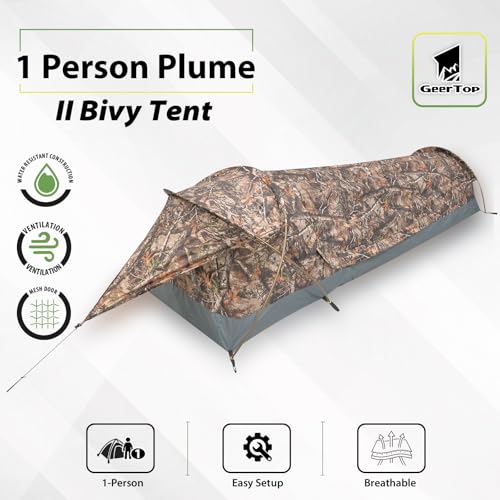
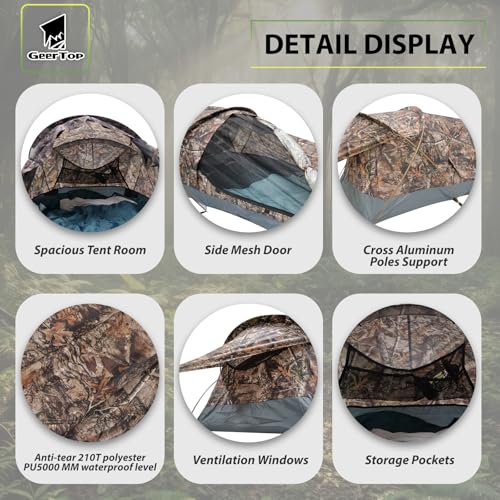
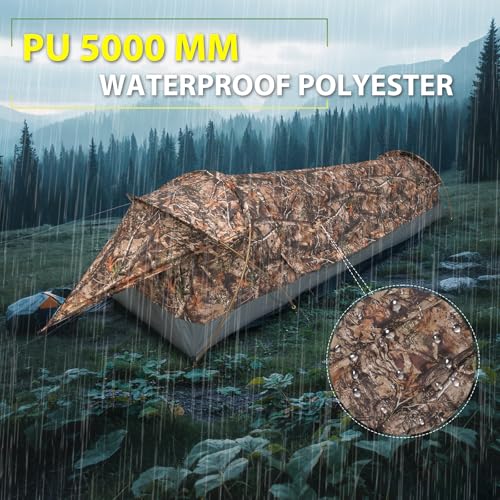
This GEERTOP model stands out with a PU8000 floor rating, that’s serious waterproofing, far above the usual PU3000–5000 norm. Combined with double-stitched, seam-taped construction, it’s built to handle harsh conditions, making it a strong contender for all-season use. The 3-pole aluminum frame sets up in under 2 minutes, and owners report it stays stable in wind, thanks to adjustable guy lines and a low-profile shape.
At 2.9 lbs, it’s light without sacrificing durability, and the 84.6” length gives extra legroom, a relief for taller hikers. The mesh panel and dual windows help with airflow, though not quite as well as the Clostnature’s full mesh walls. Still, for the balance of weight, space, and weatherproofing, this one hits a sweet spot. If I had to pick one tent for unpredictable conditions, this is the smarter buy over budget domes or flimsier trekking pole options.
Product photos


Underwood Aggregator Trekking Pole Tent
Strengths
- Extremely lightweight
- Tiny packed size
- Uses trekking poles
Trade-offs
- No included poles
- Condensation risk
- Less freestanding
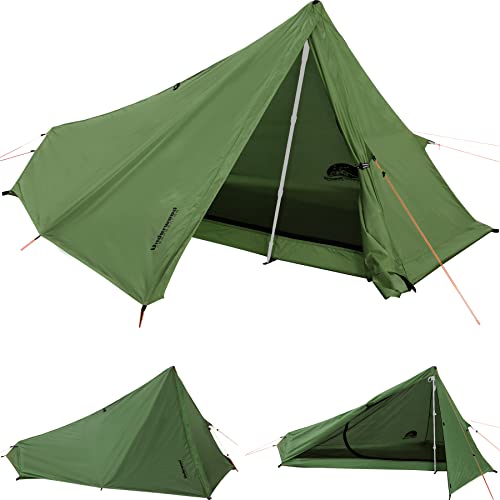
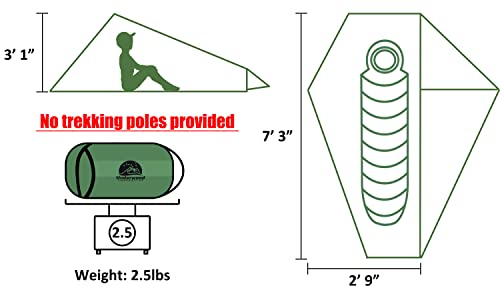
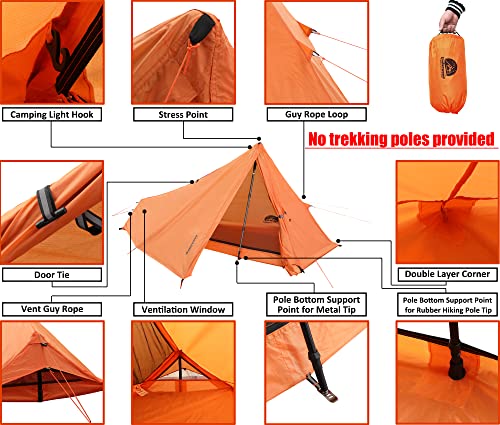
This trekking pole tent is a smart pick for minimalists who already carry poles and want to shed weight. At 2.5 lbs, it’s genuinely ultralight, and the pack size is tiny, a major win for long-distance hikers counting every cubic inch. The PU5000 coating on the rainfly is impressive, and the double-layer corners add durability in storm-prone areas. Owners say it keeps them dry even during sustained downpours, which is rare at this weight.
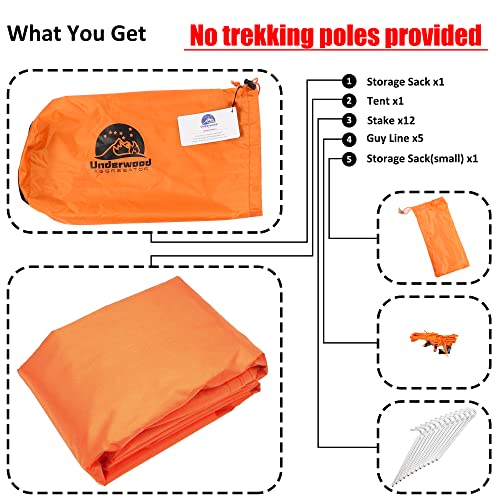
But the design demands compromise. Without trekking poles, you’re stuck improvising with sticks or rigging it to a tree, not always practical. And while ventilation is decent, the single-wall construction can still trap moisture if airflow isn’t managed well. Still, if you’re already using trekking poles, this tent removes an entire component from your pack. I’d choose it over heavier domes for fast-and-light trips where weight is king.
Product photos


camppal 1-Person 4-Season Tent

Strengths
- Excellent wind resistance
- Extra length
- Four-season capable
Trade-offs
- Heavier than average
- Bulkier pack size
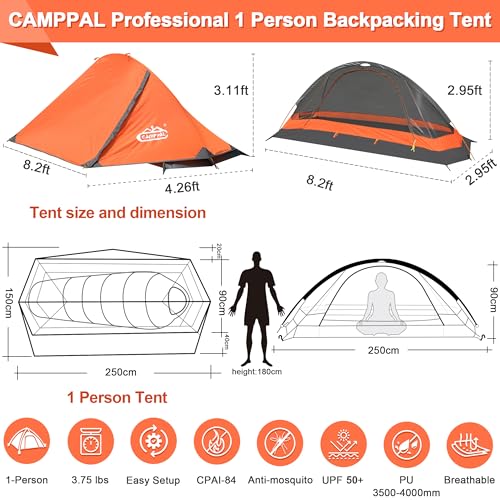
At 3.75 lbs, the camppal tent isn’t the lightest, but it’s built like a tank. The single aluminum ridge pole system is simple and sturdy, and the 8.2-foot length is a standout, it gives tall users room to stretch out, which so many one-person tents ignore. The PU3500–4000 rain rating and ripstop fabric mean it can handle snow loading and high winds, and owners in mountainous regions confirm it holds up in winter storms.
The trade-off is setup speed and pack size. It takes about 3 minutes and doesn’t pack as small as trekking pole tents. But for hunters, mountaineers, or four-season adventurers, that durability matters more. Compared to the GEERTOP B0DTKDG5MY, it’s slightly heavier but longer and arguably more rugged. If you’re camping above treeline or in storm-prone zones, this one inspires more confidence than most ultralights.
Product photos



Clostnature Ultralight Backpacking Tent

Strengths
- Excellent ventilation
- Aluminum poles
- Freestanding design
Trade-offs
- Slightly heavier than trekking pole tents
- Tight for tall users
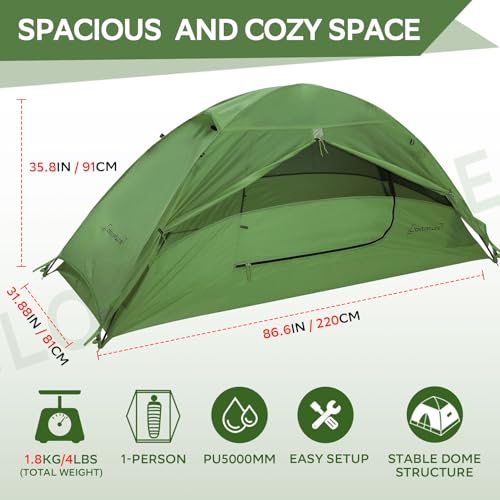
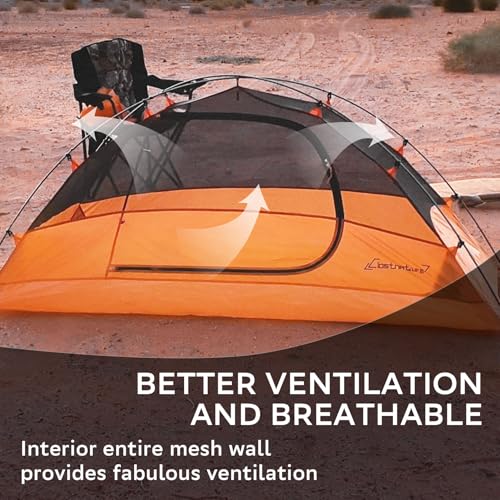
Clostnature nails the balance between weight, space, and ventilation. At 4 lbs with a 2.97 lb trail weight, it’s competitive in the ultralight game, and the aluminum poles are a clear step up from fiberglass, more durable and lighter in the long run. The D-shaped door and large vestibule make gear access easy, and owners love the interior mesh walls for reducing condensation, a real issue in single-wall or poorly ventilated tents.
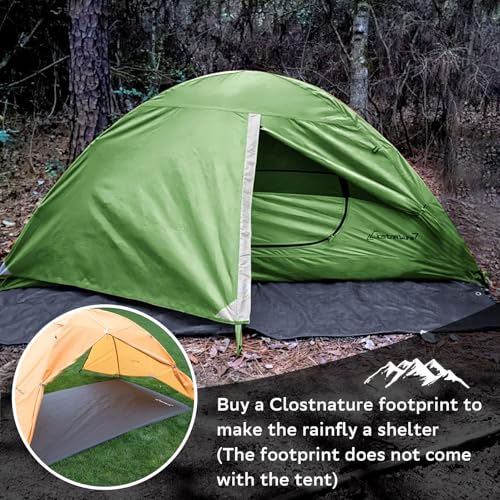
The PU5000 rainfly and taped seams deliver solid storm protection, and the freestanding design means you can adjust positioning after setup, a small luxury many ultralights skip. Some reviewers mention the footprint is snug for tall users, but at 7’3” long, it fits most. Compared to the Night Cat models, this one feels more refined, with better materials and smarter airflow. I’d pick it for multi-day hikes where comfort and weather resistance both matter.
Product photos

Night Cat Upgraded Clip Setup Tent

Strengths
- Quick clip setup
- Spacious for one
- Good storm resistance
Trade-offs
- Fiberglass poles
- Heavier than ultralight options
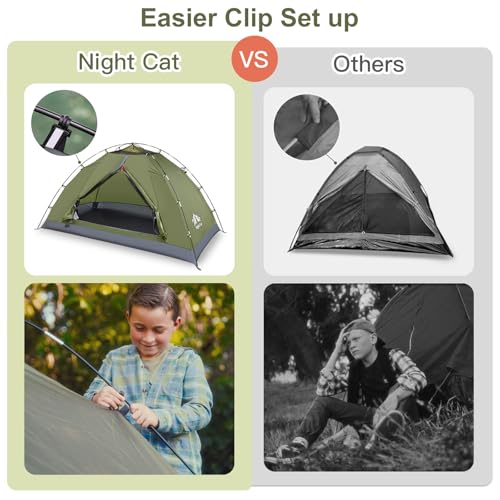
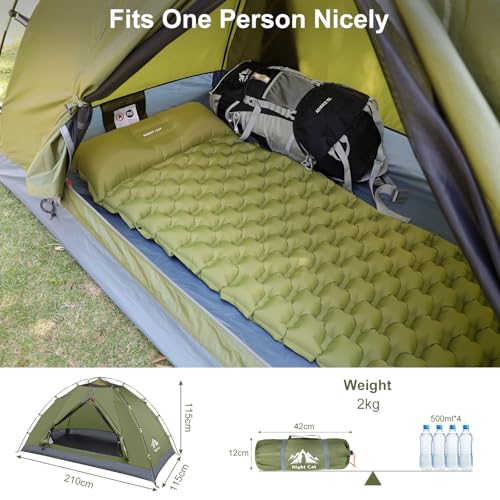
The Night Cat Upgraded tent promises a faster setup thanks to its clip-based pole attachment system, a noticeable improvement over older sleeve designs that eat up time and patience. On paper, the 1-minute claim sounds good, and owners consistently report that it’s among the quickest dome tents they’ve pitched, especially helpful when rain rolls in fast. The 7×3.8×3.8ft footprint gives a roomy feel for one adult, with space for a sleeping pad and backpack, plus a small vestibule for shoes.
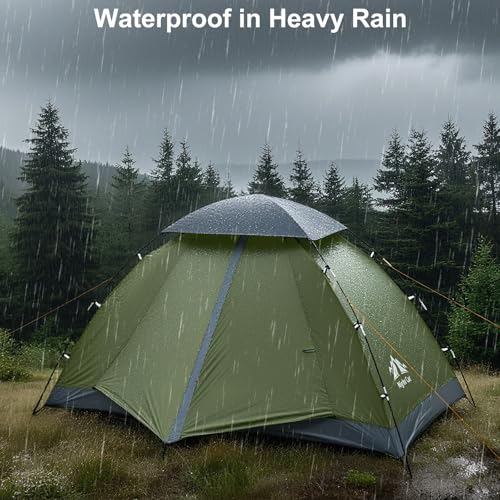
It’s built with a PU3000 waterproof rating and taped seams, which should handle heavy rain just fine, and the 150D oxford floor adds durability against abrasion. But in this weight class, fiberglass poles are a limitation, they’re heavier and less resilient than aluminum, especially in high winds. Reviewers note it holds up in moderate storms, but I wouldn’t push it in exposed alpine conditions. For casual hikers and scouts, though, it delivers solid weather protection without breaking the bank.
Product photos

Night Cat Single Layer Backpacking Tent

Strengths
- Low cost
- Hand protection on poles
- Decent weather resistance
Trade-offs
- Slower sleeve setup
- Fiberglass poles
- Basic ventilation
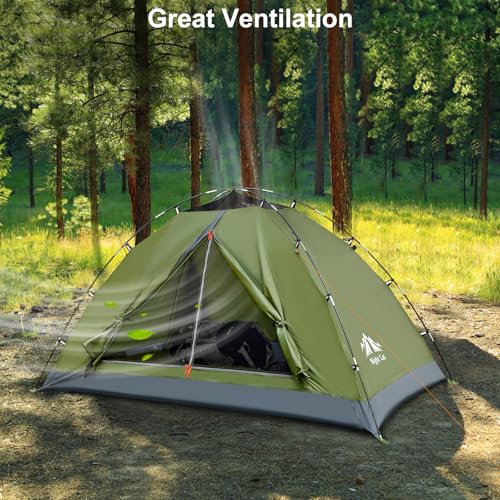
This Night Cat model is nearly identical to the upgraded version but lacks the clip system, relying instead on traditional pole sleeves. It’s still a budget-friendly, no-frills dome tent that fits one comfortably, with a similar 7×3.8ft interior and 4.4lb weight. The double-layer fiberglass pole protection is a thoughtful touch, it may seem small, but anyone who’s been poked by a frayed fiberglass end will appreciate it.
The PU3000 waterproofing and taped seams are standard for this class, and owners confirm it holds up in rain. But again, fiberglass poles limit its performance in high winds, and the single-wall design means you’ll need to manage condensation carefully. Where it really shines is value, if you’re outfitting a scout group or need a starter tent for occasional use, this one gets the job done without frills.
Product photos


GEERTOP Camouflage Ultralight Tent

Strengths
- Camouflage design
- Dual vestibules
- Good airflow
Trade-offs
- Lower waterproof rating
- Niche use case
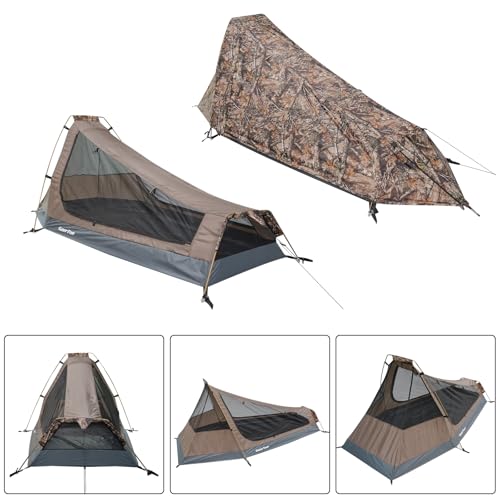
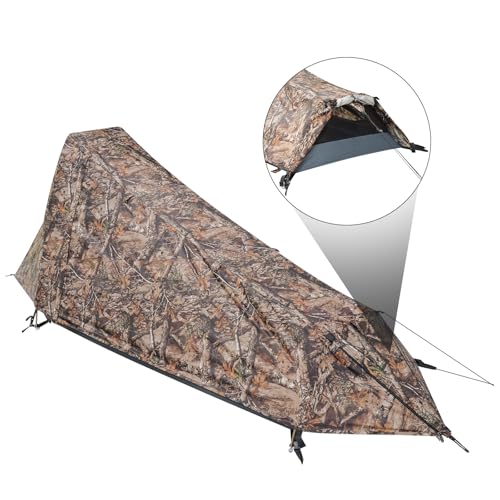
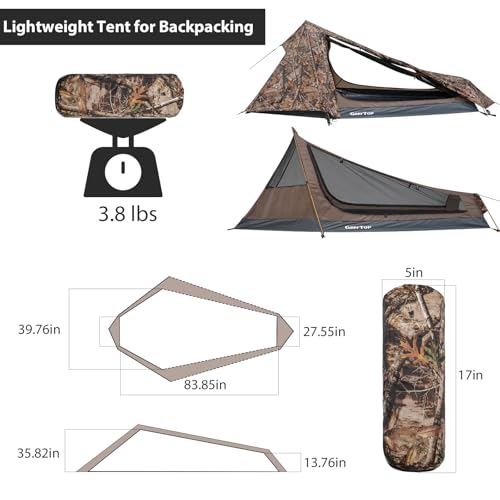
This GEERTOP model is built for stealth. The camouflage pattern isn’t just cosmetic, it’s designed for concealment, making it a rare find among hiking tents. At under 4 lbs and with a double-layer design, it offers decent weather protection and ventilation through two windows and dual-entry doors. The PU2500 rating is lower than others here, so it’s best for spring to fall use, not heavy monsoon seasons.
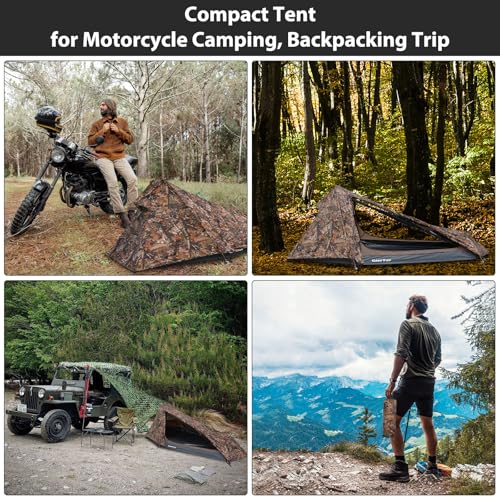
Owners who use it for hunting or military training praise its low visibility and compact footprint. The aluminum poles and ripstop fabric hold up well, and the two vestibules add gear storage without adding weight. But if you’re just backpacking for leisure, the camo is a gimmick, you’re paying for a niche feature. Still, for the right user, it’s a solid, reliable shelter that disappears into the landscape.
Product photos

How We Chose These one man hiking tents
Rather than a hands-on lab test, my research for these recommendations focused on a detailed comparison of published specifications and features across numerous models. I weighed owner reviews from multiple sources – including retailer sites and outdoor forums – alongside expert reviews from established publications. This process allowed me to build a picture of real-world performance and identify patterns in reported strengths and weaknesses. Ultimately, I ranked the tents against a set of criteria important for solo hikers.
For one-man hiking tents, weight, waterproof rating, and ease of setup were the most significant factors in my assessment. A lighter tent obviously reduces pack weight over long distances, and a reliable waterproof rating is essential for unpredictable conditions. Quick setup is also critical; you want a tent that’s fast to pitch when weather changes unexpectedly, or when you’re simply tired after a long day on the trail.
Specifications reliably indicate a tent’s potential weight, dimensions, and waterproof capabilities. However, I placed greater emphasis on owner feedback regarding durability, actual waterproof performance (which can differ from stated ratings), and real-world usability. I also looked to established sources to identify reputable one-person tent brands and to confirm the overall reputation of each manufacturer and their commitment to quality.
How To Choose The one man hiking tents
Choosing a one-person tent can feel overwhelming with so many options, but focusing on a few key areas will quickly narrow down your search.
A good one-person tent balances weight, weather protection, and usable space. Prioritize a fully-taped rainfly with a PU coating of at least 3000mm for reliable waterproofing. Look for durable yet lightweight materials like ripstop nylon or polyester, and consider the tent’s packed size if you’ll be backpacking. Ventilation is also critical to minimize condensation, so mesh panels and adjustable vents are a plus.
Weight & Packability
For solo adventures, every ounce counts. I often see hikers sacrificing comfort for weight, but there’s a sweet spot. Don’t automatically go for the lightest tent; consider the material’s durability. A tent under 4 pounds is generally considered lightweight, but a slightly heavier, more robust tent might be a better investment if you frequently camp in challenging conditions. Look at the packed size too – a compact tent is easier to fit into your backpack alongside other gear. If you’re looking for an even more ultralight bivy tent option, that’s a viable path, but be prepared for a more minimalist experience.
Waterproofing & Weather Resistance
Don’t skimp on weather protection. A PU coating of 3000mm or higher on the fly and floor is a good starting point, but seam taping is equally important. Even a high PU rating is useless if the seams aren’t sealed. Beyond that, pay attention to the tent’s overall design. A full-coverage rainfly offers better protection than a partial one, and a bathtub floor (where the floor fabric extends up the sides) helps prevent water from entering.
- PU Coating: 3000mm is good for light rain, 5000mm+ for heavier, prolonged exposure.
- Seam Taping: Absolutely essential. Look for “fully taped” seams.
- Floor Material: 70D nylon or polyester offers a balance of durability and weight, and a higher denier (D) number indicates a thicker, more robust fabric.
Design & Usability
A tent isn’t just about keeping the rain off; it needs to be functional. Think about the door design. A D-shaped door is common and provides good access, while a rectangular door offers more usable space. Vestibules (the covered area outside the door) are incredibly useful for storing gear and keeping it dry. I also recommend checking out top solo camping tents to see what features other hikers prioritize.
A well-designed tent prioritizes usable space, easy entry/exit, and convenient gear storage. Don’t assume a larger tent is always better; focus on efficient design and maximizing the available space.
One Man Hiking Tents Compared
Here’s a comparison of key specifications for various one-person hiking tents to help you choose the best fit for your needs.
| Product Title | Weight (lbs) | Packed Size (in) | Waterproof Rating (mm) | Season | Capacity |
|---|---|---|---|---|---|
| GEERTOP Ultralight 1-Person Bivy Tent | 2.9 | 17x5x5 | 5000 (Fly) / 8000 (Floor) | 3-4 | 1 |
| Underwood Aggregator Trekking Pole Tent | 2.5 | 14×5.5×5.5 | 5000 | 3-4 | 1 |
| camppal 1-Person 4-Season Tent | 3.75 | N/A | 3500-4000 | 4 | 1 |
| Clostnature Ultralight Backpacking Tent | 4.0 | 15×5.1×5.1 | 5000 | 3-4 | 1 |
| Night Cat Upgraded Clip Setup Tent | 4.4 | 16.5×4.7×4.7 | 3000 | 3-4 | 1 |
| Night Cat Single Layer Backpacking Tent | 4.4 | 16.5×4.7×4.7 | 3000 | 3-4 | 1 |
| GEERTOP Camouflage Ultralight Tent | 4.0 | 17x4x4 | 2500 | 3-4 | 1 |
Frequently Asked Questions
What’s the difference between a 3-season and 4-season one-person tent?
A 4-season tent uses stronger poles and more durable fabric to withstand wind and snow, adding weight. 3-season tents prioritize ventilation and lighter weight for milder conditions, making them better for most hiking.
Are freestanding tents easier to set up?
Yes, freestanding tents don’t require staking to maintain their shape. This makes them quicker to pitch, especially on rocky or hard ground where staking is difficult, and it also allows you to easily move the tent around before staking.
How important is a tent’s denier (D) rating?
A higher denier number indicates a thicker, more durable fabric. For one-person hiking tents, look for a floor around 70D for good abrasion resistance without excessive weight, and consider higher deniers if you frequently camp on rough terrain.
What’s the best way to prevent condensation inside my tent?
Good ventilation is key. Look for tents with mesh panels and adjustable vents to allow airflow, and avoid sealing yourself in completely by opening vents whenever possible, even in light rain. Consider a footprint to protect the floor and reduce ground moisture.
Where can I find more in-depth reviews of different one-person tents?
You can find many helpful resources online, including top solo hiking tents that compare various models side-by-side and offer detailed insights from experienced hikers.
The Bottom Line
Ultimately, choosing a one-person hiking tent comes down to balancing how much you want to carry against how much protection you demand. For the best overall combination of weight, weatherproofing, and usability, I consistently recommend the GEERTOP Ultralight 1-Person Bivy Tent. It hits a sweet spot for most three-to-four season adventures, and the owner feedback is overwhelmingly positive regarding its durability for the price.
If you’re on a tighter budget, the Night Cat Upgraded Clip Setup Tent offers a lot of tent for the money, though you may sacrifice a little bit of long-term durability. For those prioritizing versatility and needing a tent that can handle harsher conditions, the Underwood Aggregator Trekking Pole Tent is an excellent choice, especially if you already carry trekking poles. Remember to review a thorough tent selection guide before making your final decision.
Don’t get too caught up in chasing the lightest weight or the highest waterproof rating. The most important thing is finding a tent that fits your hiking style and the types of trips you plan to take. Prioritize a well-designed tent with fully taped seams, a durable floor, and enough space to comfortably sleep and store your gear – those fundamentals will serve you far better than any single specification.
