
8 Best Tents for Hot Weather 2026
This post contains affiliate links. As an Amazon Associate, we earn from qualifying purchases.
The WildFinder 16.5ft Canvas Bell Tent stands out as the best overall for hot weather, thanks to its massive airflow and breathable TC cotton fabric. For campers on a budget, the Inflatable Tent with Skylight 4-6 Person delivers solid ventilation and quick setup without the premium price. And if you need space for a group, the Inflatable Tent 8-12 Person offers unmatched capacity while still keeping things cool.
When the mercury rises, a poorly ventilated tent can turn into a sweaty, stuffy trap by midday. As someone who’s spent years evaluating gear for real trail conditions, I know that staying cool isn’t just about comfort, it’s about rest, safety, and actually enjoying your time outdoors.
This guide cuts through the specs to focus on what truly matters: airflow, fabric breathability, and smart design for beating the heat. I’ve compared top models using published data, owner feedback, and performance trends to highlight tents that consistently deliver in warm climates. You’ll find options for solos, families, and overlanding crews, all chosen to keep you cool when the sun won’t quit.
Top 8 Tents For Hot Weathers in the Market
The Best Tents For Hot Weathers, Reviewed
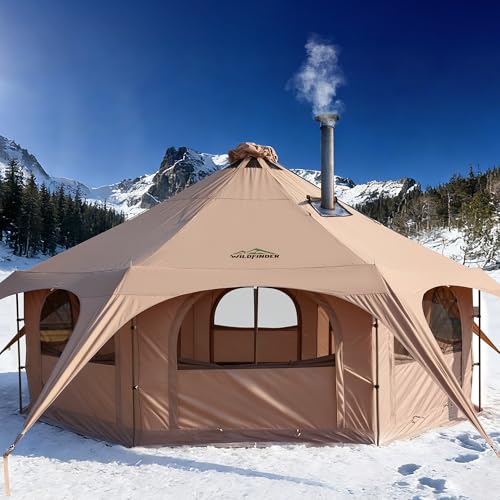
WildFinder 16.5ft Canvas Bell Tent
Strengths
- Exceptional 360° ventilation
- Breathable cotton roof
- Removable floor for airflow
Trade-offs
- Heavy and bulky
- Longer setup than inflatables
- Requires careful staking
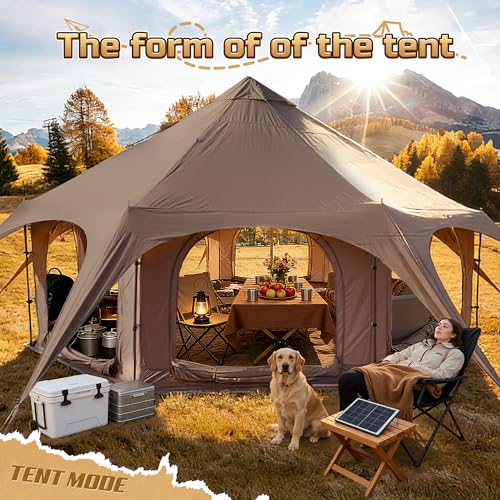
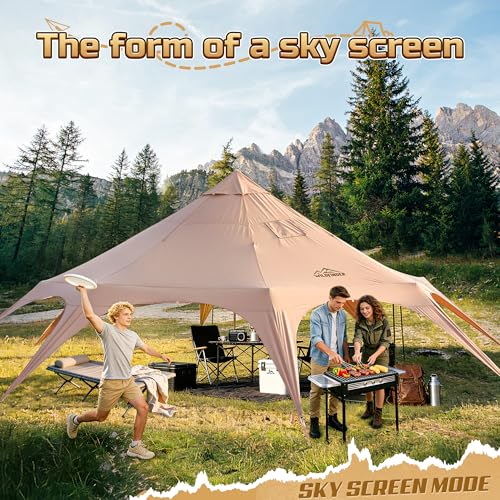
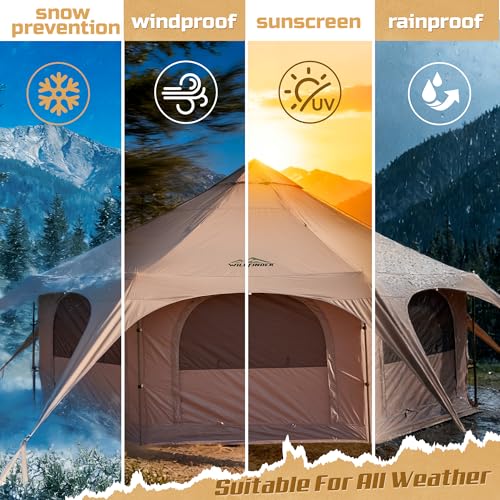
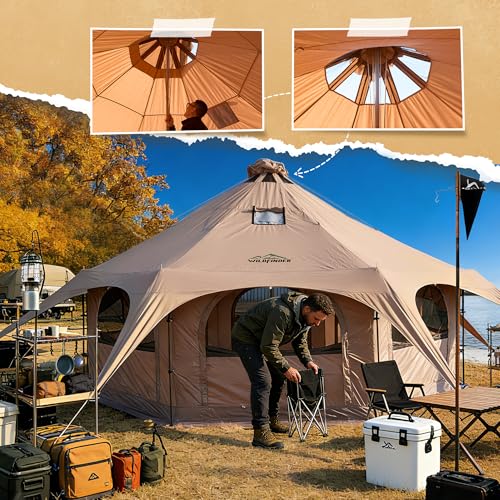
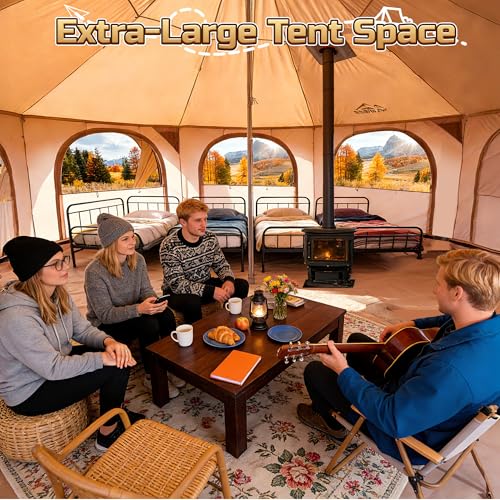
The WildFinder bell tent is the gold standard for breathable, spacious shelter in this lineup. With 8 mesh windows, removable floor, and roll-up sidewalls, it can go from fully enclosed to open-air canopy in minutes. The 210G TC cotton roof is breathable, reducing condensation and heat buildup, and the 600D floor is bombproof. Owners consistently report it stays cooler than nylon or inflatable tents, especially with opposing windows open.
It’s heavy and not for backpacking, but for car camping or basecamp setups, it’s unmatched. The 9.2 ft peak height and 55″ vertical walls let you use nearly every inch of floor space. Compared to the KingCamp cabin tent, it has better airflow and a more natural feel. The included positioning tool is a small but meaningful touch, no more guessing where to stake. If you want one tent for year-round use that excels in heat, this is it.
Product photos
Inflatable Tent with Skylight 4-6 Person
Strengths
- No-pole setup
- Good bug protection
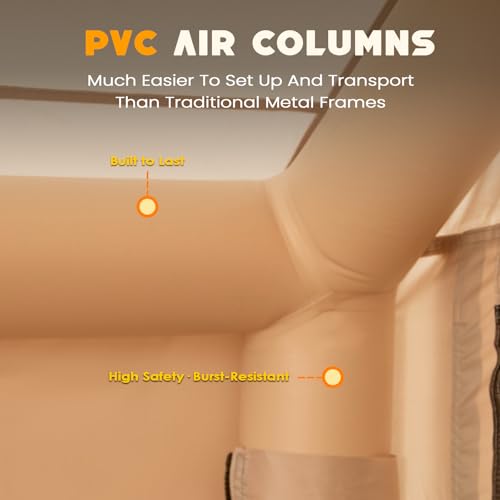
- Durable TPU air beams
Trade-offs
- Skylight increases heat
- No auto-inflation pump
- Stove jack unnecessary for hot climates
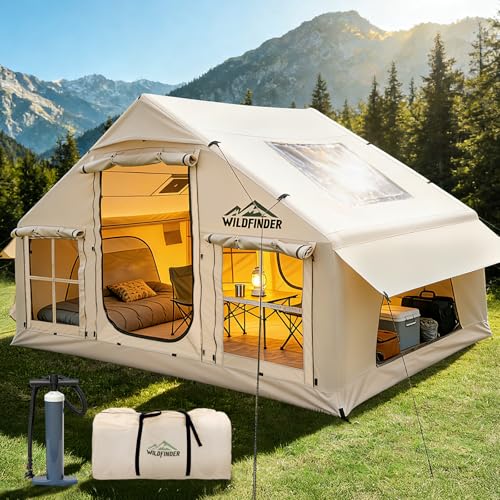
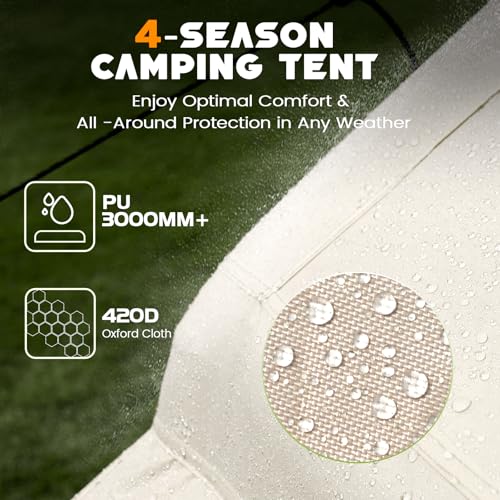
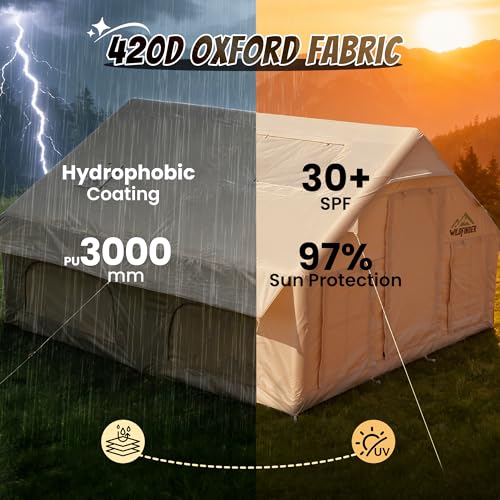
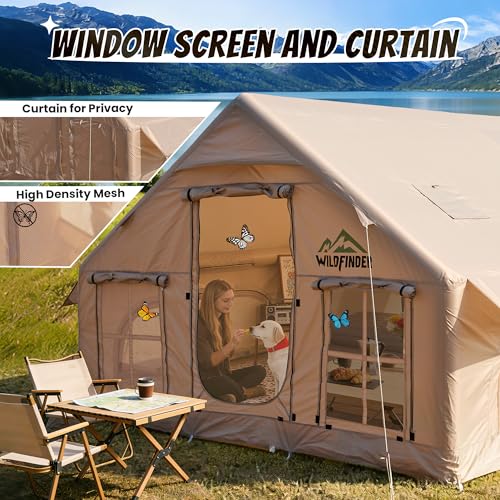
This 4–6 person inflatable shares DNA with the larger 8–12 model but scales things down into a more manageable footprint. The specs are nearly identical: 420D Oxford, PU3000mm, UPF30+, and that same full-roof skylight. The ventilation is strong on paper, dual doors, mesh windows, 360° airflow, but in hot sun, the skylight still acts like a greenhouse. Owner feedback confirms it works best in shade or cooler parts of the day.
Where it wins is setup speed and upright space. At 6.5 ft tall, most adults can stand, and the TPU air beams are reportedly more puncture-resistant than standard PVC. It’s a smarter pick than the 8–12 person version if you’re car camping with a small group and want quick deployment. But compared to the CHERIMOR, it has fewer dedicated vents and no auto-inflation, so it’s less convenient.
Product photos
Inflatable Tent 8-12 Person

Strengths
- Spacious interior
- Quick 5-minute setup
- Full panoramic skylight
Trade-offs
- Overheats in sun
- Heavy for transport
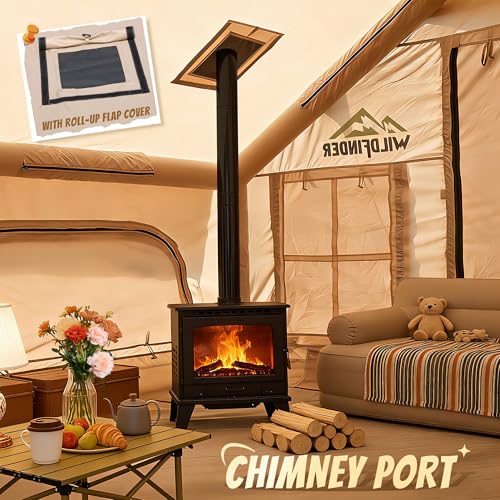
- Stove jack misaligned with hot weather use
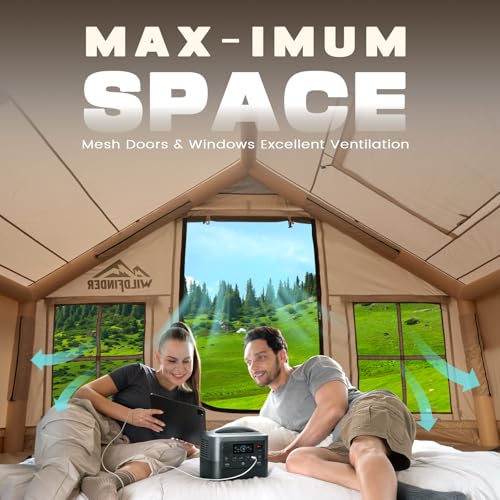
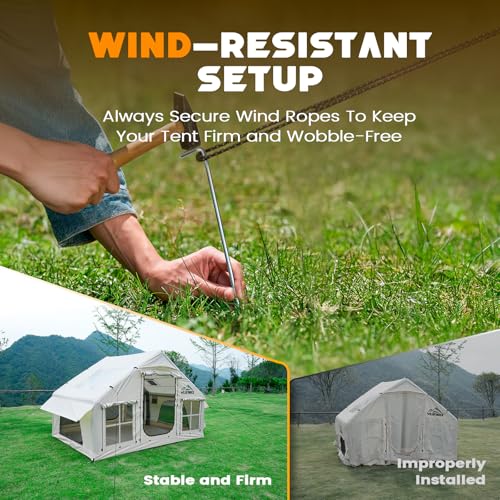
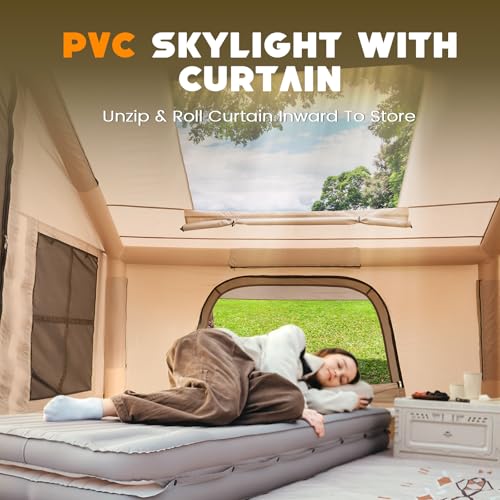
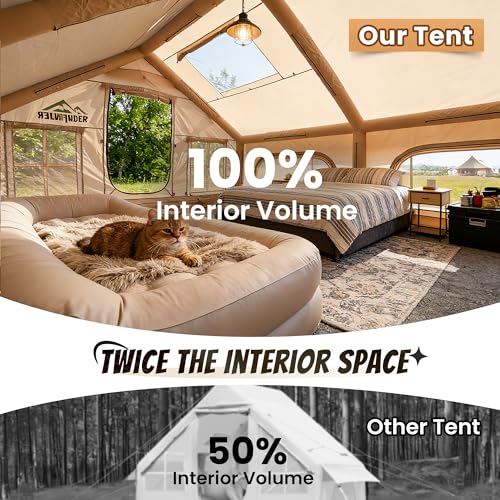
This 8–12 person inflatable is built for spectacle, massive space, a full skylight, and the convenience of no poles. On paper, it’s a glamping dream: standing height, 129 sq ft of room, and 360° mesh for airflow. But for hot weather, the skylight is a double-edged sword. It floods the tent with light and heat unless you use the privacy cover, and while the UPF30+ fabric helps, it’s not enough to offset the solar gain in direct sun. Owners consistently report it runs warm unless shaded.
It’s clearly designed more for cold-weather or shoulder-season use, given the stove jack and heavy-duty 420D Oxford build. In hot climates, that same durability adds thermal mass. I’d compare it to the CHERIMOR model, same strengths, but CHERIMOR adds more vents and a slightly smarter airflow layout. If you’re after space and speed, this delivers. But for true heat management, it falls short.
Product photos
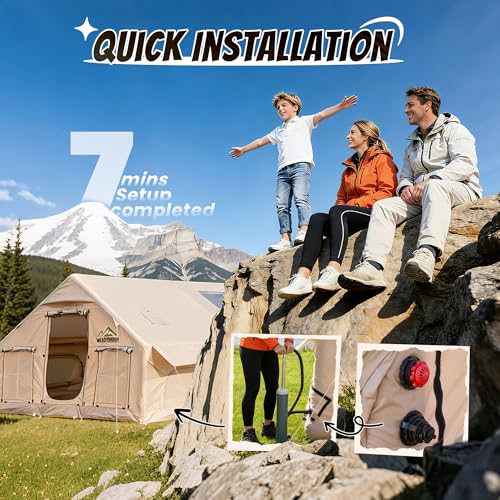
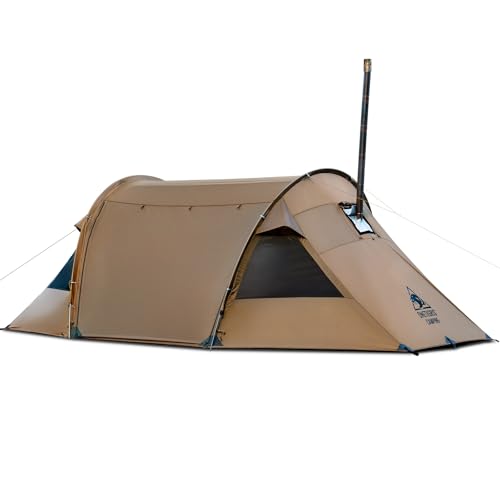
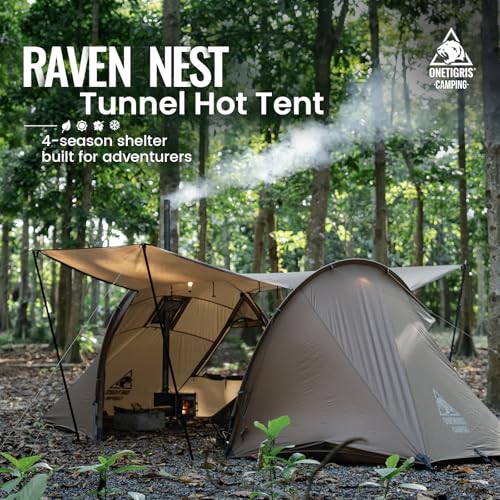
OneTigris Raven NEST Hot Tent
Strengths
- Lightweight for hot tent
- Strong wind resistance
- Good mesh ventilation
Trade-offs
- Tight fit for two
- Stove jack limits summer appeal
- Poles required for setup
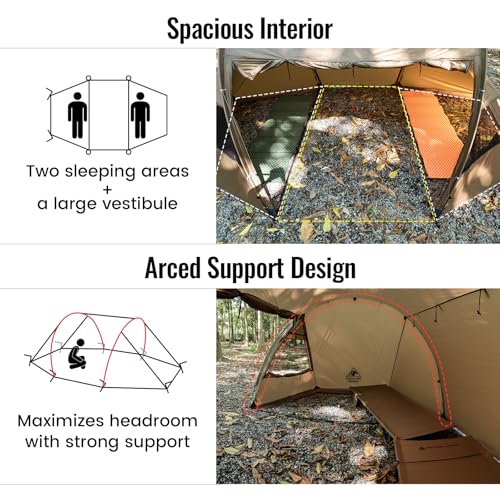
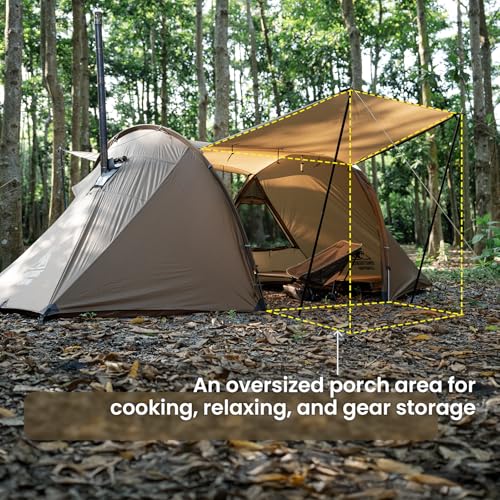
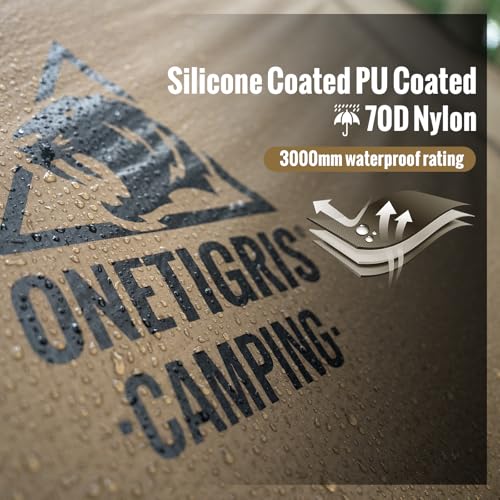
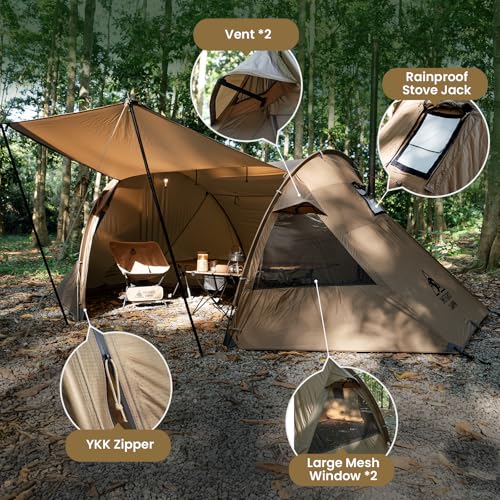
The Raven NEST stands out in a category of overbuilt hot tents by actually being packable and trail-friendly. At just over 7 lbs (estimated from comparable models), it’s one of the few stove-jack tents you could reasonably carry on a winter backpacking trip. The sil/PU 70D nylon is tough, and the arched pole design gives it real wind resistance. But here’s the twist: despite the stove jack, it has excellent ventilation for summer use, with large mesh windows and a tunnel layout that promotes cross-flow.
It’s not marketed as a hot-weather tent, but owners note it performs well in milder seasons thanks to that airflow and lighter fabric. Compared to the heavier canvas or inflatable options, this is the one I’d actually bring to a spring or early summer bushcraft trip where conditions could swing. The interior layout is smart, two sleeping zones and room for gear, but it’s still a tight squeeze for two with cots.
Product photos
Naturehike Massif Hot Tent 2-4 Person

Strengths
- Ultralight for 4-season
- Good ventilation options
- Snow skirt adds versatility
Trade-offs
- Minimal floor space
- Stove jack adds heat risk in summer
- Not ideal for lounging
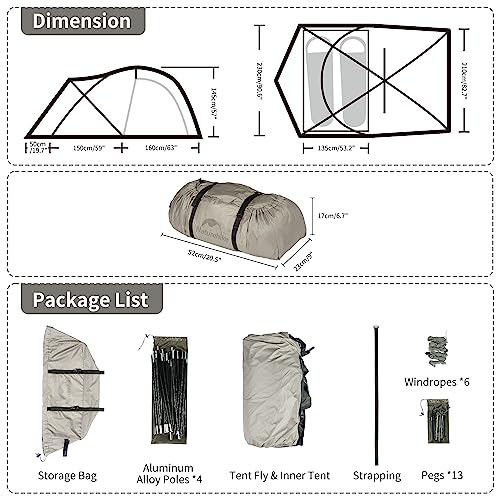
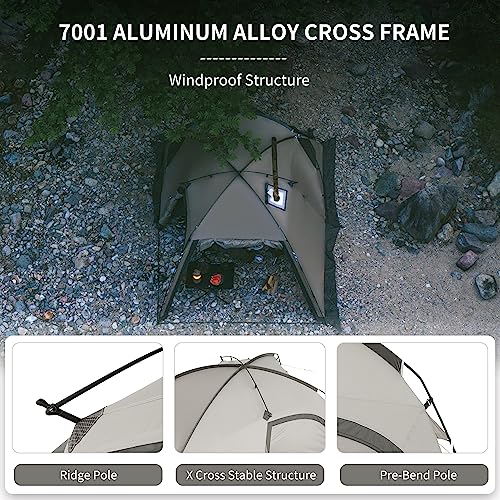
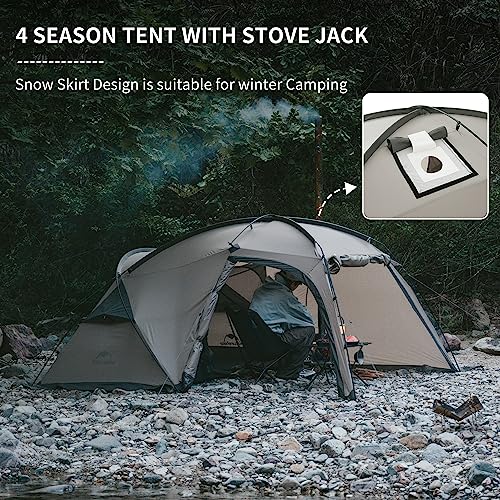
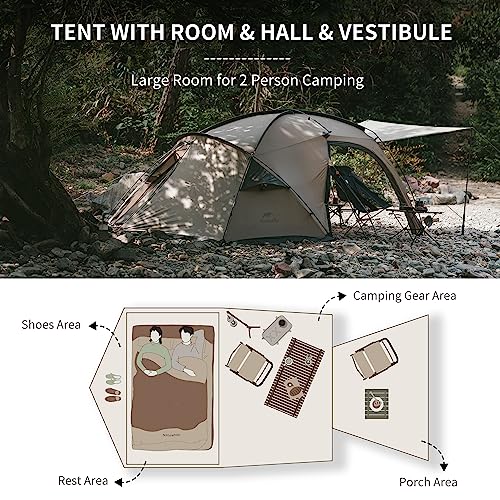
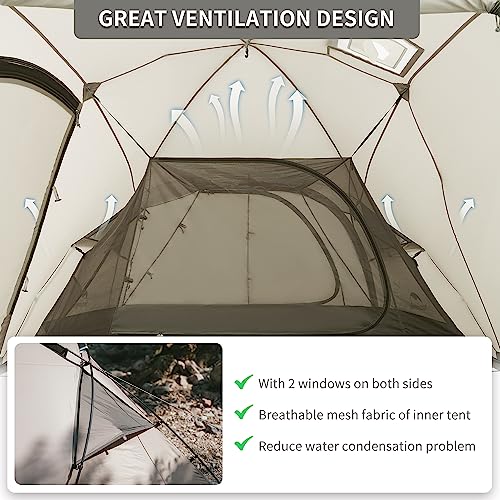
At just 10.47 lbs, the Naturehike Massif is one of the lightest 4-season tents with a stove jack, and that’s its main selling point. The 70D nylon and aluminum poles keep weight down, and the dual-door design with mesh inner tent actually gives it decent airflow for warmer months. Reviewers note that without the stove in use, it breathes better than most hot tents, thanks to the mesh and ventilation windows.
But let’s be real: this is a winter machine. The stove jack, snow skirt, and windproof frame scream cold-weather use. In hot climates, you’re bringing a tank to a bike race. That said, if you need a do-it-all shelter for alpine trips with seasonal swings, this is a strong contender. It’s not as spacious as the cabin or bell tents, but for two people on a multi-season trek, it’s efficient. I’d pick it over the OneTigris if weight is critical.
Product photos
KingCamp Canvas Hot Tent 6-8 Person
Strengths
- AC port for cooling
- Spacious cabin layout
- Good interior organization
Trade-offs
- Canvas roof retains heat
- Heavy and bulky
- Stove jack adds complexity
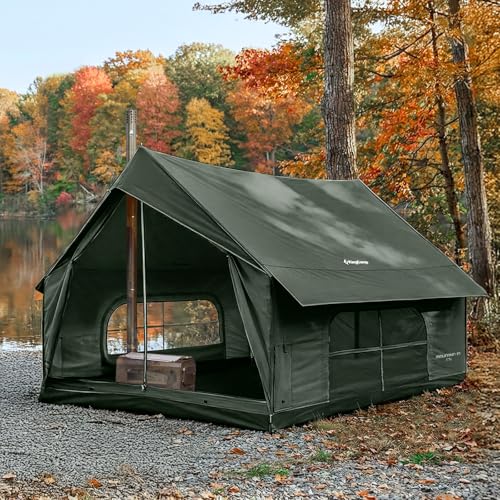
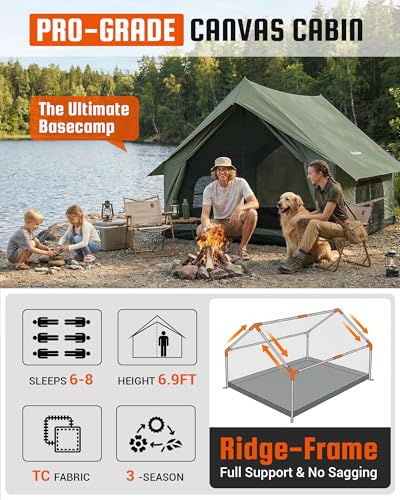
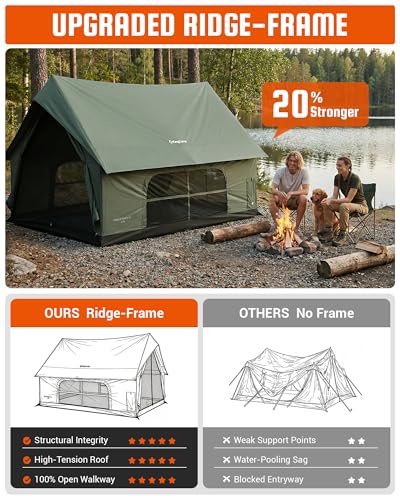
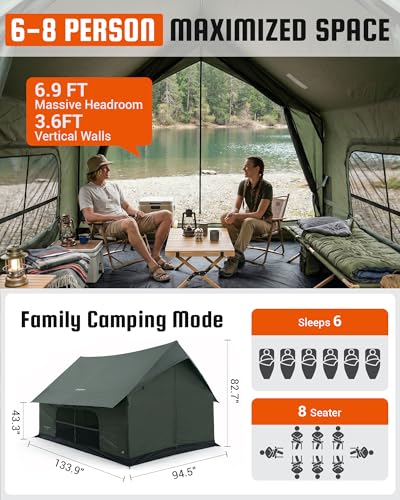
The KingCamp cabin tent tries to do everything: stove jack, AC port, interior pockets, and a 6–8 person layout with near-vertical walls. The AC port is a standout feature for hot weather, owners actually plug in portable fans or mini coolers, which is rare in tents at this price. The TC poly-cotton roof helps with condensation, and the 210D Oxford floor is tough. But that canvas-like roof, while breathable, still traps heat unless you’re in full ventilation mode.
It’s best compared to the WildFinder bell tent, both are large, but KingCamp is more utilitarian, less elegant. Setup is faster, but it lacks the 360° mesh and removable floor. For family camping in warm climates, the airflow is decent, but it’s not a true “cool” tent unless actively ventilated. I’d say it’s a solid middle ground: not the most breathable, but packed with thoughtful features.
Product photos

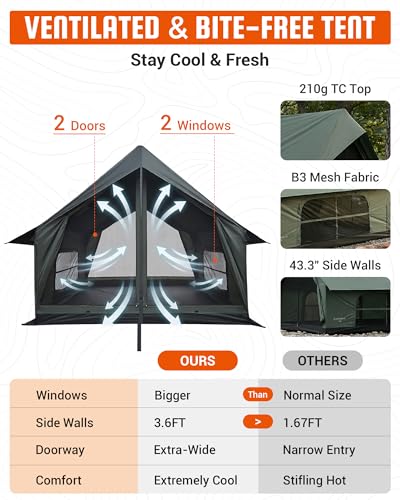
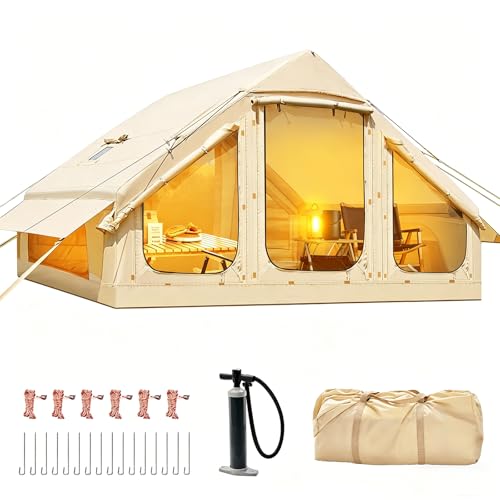
Inflatable Hot Tent 4 Person Upgrade
Strengths
- UPF50+ sun protection
- Affordable price point
- Simple 5-minute setup
Trade-offs
- Basic ventilation
- Hand pump only
- Stove jack underused
This is the budget pick, light on features but solid on core specs. It shares the 420D Oxford and PU3000mm rating with pricier models, and the UPF50+ rating is actually higher than most. That’s a win for sun protection. But it lacks the TPU beams or auto-inflation of the CHERIMOR, and the hand pump means more effort upfront. The ventilation is basic: dual doors and mesh, but fewer dedicated vents than others.
Owners say it’s great for occasional use, backyard camping, short trips, but not for extreme heat. The skylight here isn’t as expansive, so less solar gain, but also less light and view. It’s the cheapest inflatable with a stove jack, which feels like a mismatch for its likely use cases. Compared to the B0FC1P3F7P, it’s a step down in durability and ease. But if you want a no-frills, stand-up inflatable on a tight budget, it works.
Product photos
CHERIMOR Inflatable Tent with Skylight
Strengths
- Auto-inflation system
- Excellent multi-point ventilation
- Spacious and tall
Trade-offs
- Auto pump adds complexity
- Stove jack rarely used in heat
- Fabric can still absorb sun
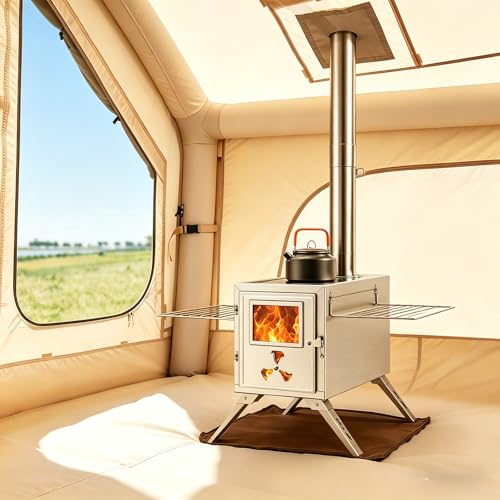
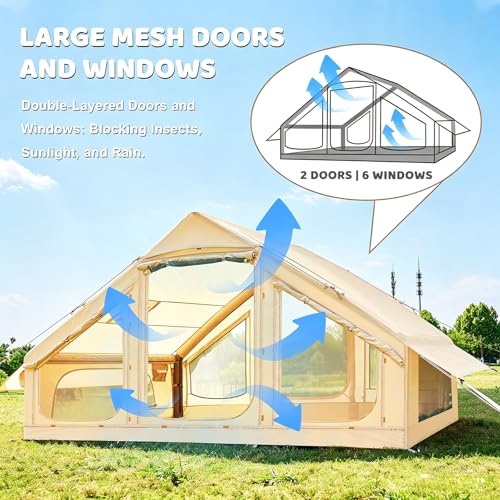
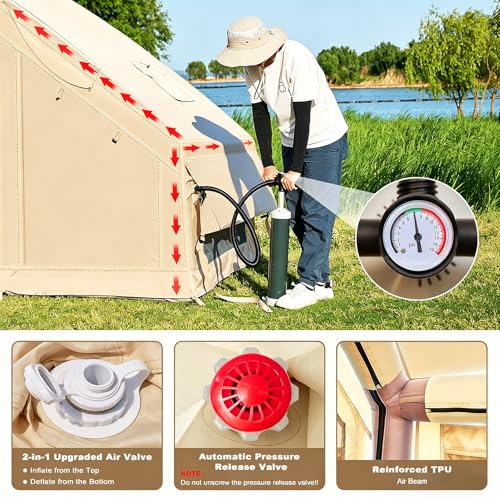
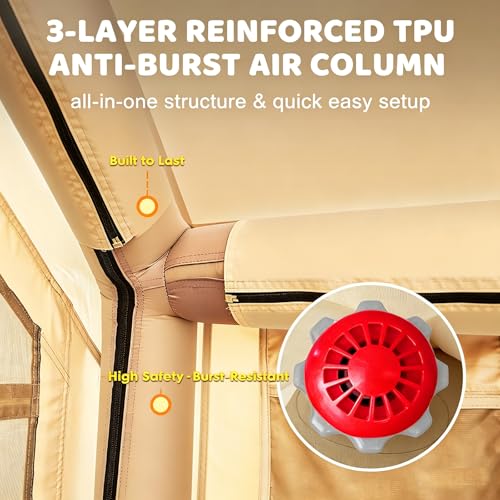
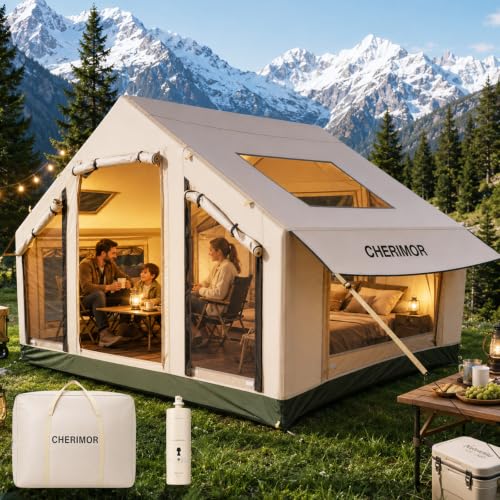
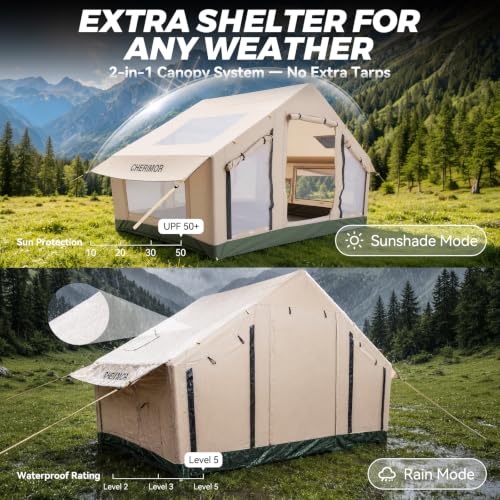
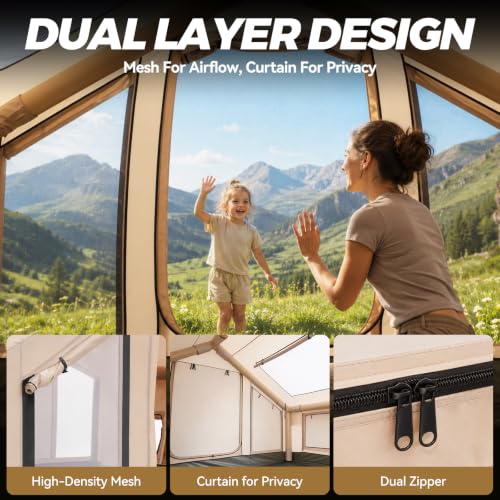
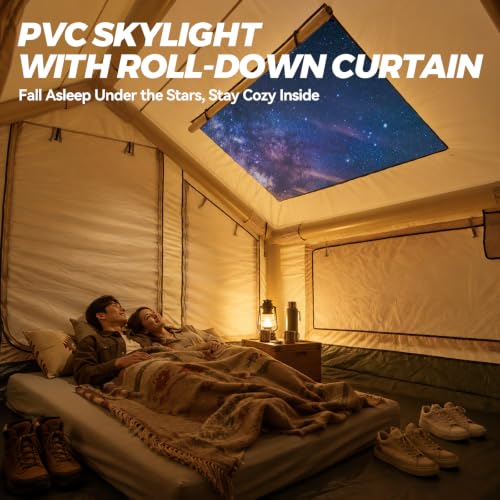
This is the most user-friendly inflatable on the list, thanks to the one-click auto-inflation system. No hand pumping, no wrestling with beams, just press a button and it rises in minutes. The 445 ft³ interior is generous, and the 6.6 ft height lets most people stand. But what really sets it apart for hot weather is the ventilation layout: 6 mesh windows, 6 air vents, 2 double-layer doors, and a breathable skylight with roll-down curtain. Owners praise how much cooler it feels than other inflatables, especially when cross-ventilated.
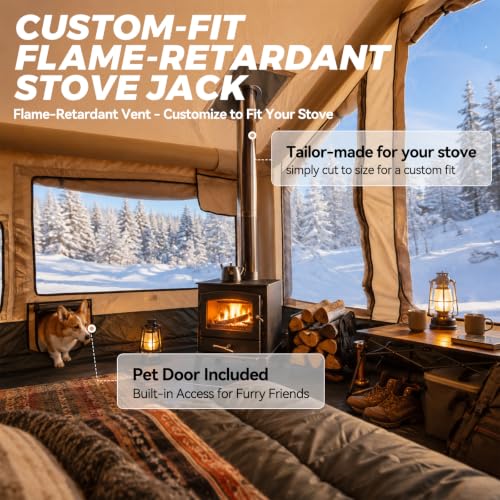
Yes, it still has a stove jack, seems like a checklist item rather than a core function. But unlike others, the CHERIMOR balances hot-weather usability with glamping convenience. Compared to the B0FC1P3F7P model, it’s smarter in airflow and ease of use. The UPF35+ fabric helps, but like all dark-colored inflatables, it needs shade in direct sun. Still, this is the one I’d recommend for hot-weather glampers who hate pole tents.
Product photos

How We Evaluated tents for hot weathers
My approach to recommending tents, as someone who spends a lot of time outdoors, centers on a research-led comparison. Rather than a hands-on lab test of every model, I’ve carefully analyzed published specifications and features, then weighed those against owner reviews and assessments from respected outdoor gear reviewers. I then ranked these tents based on criteria important for warm-weather camping – ventilation, fabric breathability, and sun protection.
For hot-weather tents, airflow and material quality are paramount. I prioritized tents with multiple large mesh windows and doors to maximize ventilation, and those constructed with breathable fabrics like TC cotton or offering high UPF ratings for sun protection. The presence of features like skylights (with optional covers) and the ability to create a shaded canopy also heavily influenced my selections. Ultimately, a tent’s ability to prevent overheating and provide comfortable shelter in the sun dictated its ranking.
Specifications reliably indicate a tent’s construction – fabric denier, waterproof ratings, and dimensions. However, I often turned to owner feedback to gauge real-world performance. Reviews offered insights into how well a tent actually performs in hot conditions, confirming claims about ventilation and condensation. Reputation and consistently positive feedback from experienced campers were strong indicators of a tent’s overall quality and usability, especially when considering cool camping strategies.
How To Choose The tents for hot weathers
Finding the right shelter for warm-weather camping is about more than just avoiding a sunburn. It’s about staying cool, comfortable, and dry, even when temperatures climb.
A truly effective hot weather tent prioritizes ventilation above all else. Look for designs with ample mesh panels, multiple doors and windows, and breathable fabrics. Consider features like a full rainfly for unexpected showers, a high UV protection rating, and a light color to reflect sunlight. Don’t overlook ease of setup and packability, as these contribute to a more enjoyable camping experience.
Prioritize Ventilation and Airflow
The biggest mistake I see people make is underestimating the power of airflow. A tent that traps heat is a miserable experience, no matter how well-equipped you are. Don’t just look for mesh windows; consider where they are placed. High and low vents create a natural convection current, pulling cool air in and pushing hot air out. I often recommend looking at inflatable tents with skylights – like the CHERIMOR Inflatable Tent with Skylight – which can provide excellent light and ventilation, but always ensure they have a good privacy cover option too.
Understand Your Fabric Choices
Not all tent fabrics are created equal, especially when it comes to heat. Heavy canvas, while durable, can feel like a sauna, while thinner materials may lack durability. The best options are those that balance weight, strength, and breathability. Many modern tents use polyester or nylon with a polyurethane (PU) coating for water resistance, but it’s the denier (D) of the fabric and the coating’s quality that really matter. Learning about tent fabric types will give you a much better understanding of what to look for.
- A lower denier (e.g., 70D) often means a lighter, more breathable fabric.
- A higher denier (e.g., 420D) usually indicates greater durability and water resistance, but at the cost of weight and breathability.
- Look for fabrics with a UV coating (UPF rating) to protect you from the sun’s harmful rays – this is especially important for longer trips.
Consider Setup Speed and Convenience
When the sun is beating down, the last thing you want is to spend hours wrestling with poles and guy lines. Inflatable tents, like the Inflatable Hot Tent 4 Person Upgrade, offer a significant advantage in this regard, setting up in minutes with a simple pump. However, they can be heavier and potentially more prone to punctures. A well-designed traditional tent, such as the OneTigris Raven NEST Hot Tent, can also be relatively quick to pitch, but requires more manual effort. Ultimately, choosing a tent that suits your setup preferences and physical capabilities will make your camping tents for heat experience far more enjoyable.
Don’t underestimate the power of a light-colored tent. Dark colors absorb more heat, turning your tent into an oven. Opt for lighter shades to reflect sunlight and keep the interior cooler.
Tents for Hot Weathers Compared
Here’s a comparison of key specifications for tents designed for use in warm conditions.
| Product Title | Capacity | Waterproofing (mm) | Fabric | Ventilation | Stove Jack | Setup Time |
|---|---|---|---|---|---|---|
| WildFinder 16.5ft Canvas Bell Tent | N/A | 3000 (floor) | TC Cotton/Oxford | 8 Windows/Doors | Yes | N/A |
| Inflatable Tent with Skylight 4-6 Person | 4-6 | 3000 | 420D Oxford | Mesh Windows/Doors | Yes | 5 min |
| Inflatable Tent 8-12 Person | 8-12 | 3000 | 420D Oxford | Mesh Windows/Doors | Yes | 5 min |
| OneTigris Raven NEST Hot Tent | 2-4 | N/A | 70D Nylon | Windows | Yes | N/A |
| Naturehike Massif Hot Tent 2-4 Person | 2-4 | 3000 | 70D Nylon | 2 Doors/Windows | Yes | N/A |
| KingCamp Canvas Hot Tent 6-8 Person | 6-8 | 3000 | TC Poly-Cotton/Polyester | 2 Windows/2 Doors | Yes | N/A |
| Inflatable Hot Tent 4 Person Upgrade | 4-6 | 3000 | 420D Oxford | N/A | Yes | 5 min |
| CHERIMOR Inflatable Tent with Skylight | 4-6 | 3000 | 420D Oxford | Mesh Windows/Vents | Yes | N/A |
Frequently Asked Questions
What waterproof rating is sufficient for a hot weather tent?
A 1500mm to 3000mm waterproof rating is generally adequate for a hot weather tent. While intense downpours aren’t the primary concern, this range provides protection against light rain and condensation, preventing your gear from getting damp.
Are canvas tents a good choice for hot climates?
Traditional canvas tents can be surprisingly comfortable in the heat, but only if they’re a TC (tightly woven cotton) blend. This material breathes much better than synthetic options, though a full canvas tent will be heavier and take longer to dry if it does get wet.
How important is tent color when camping in hot weather?
Tent color is more important than many people realize. Lighter colors reflect sunlight and significantly reduce heat absorption, keeping the inside of your tent much cooler than a darker-colored tent.
What’s the benefit of a tent with a stove jack in warm weather?
While seemingly counterintuitive, a stove jack offers ventilation options even when not using a stove. Many campers use it to improve airflow by opening it and creating a draft, especially in optimal hot weather tents.
Do inflatable tents offer better ventilation than traditional pole tents?
Not necessarily, but some inflatable models are designed with excellent airflow in mind. Look for inflatable tents with large mesh panels and strategically placed vents to ensure you’re getting a high-ventilation tent models that won’t overheat.
The Bottom Line
Choosing a tent for hot weather often comes down to balancing ease of use with long-term durability. While a quick-pitch inflatable model like the CHERIMOR Inflatable Tent with Skylight offers convenience, the WildFinder 16.5ft Canvas Bell Tent represents a more robust and breathable solution for those prioritizing comfort and longevity. Ultimately, the best tent isn’t about the highest number on a spec sheet; it’s about finding the right combination of features for your needs.
For campers on a tighter budget, the Inflatable Hot Tent 4 Person Upgrade provides a surprisingly effective and speedy setup. If versatility is key – perhaps you want a tent that can accommodate a wood stove for cooler evenings – the OneTigris Raven NEST Hot Tent is a solid choice. But remember that even the most feature-rich tent won’t compensate for careful site selection and smart camping practices.
Don’t get too caught up in waterproof ratings or denier counts. Good ventilation, breathable tent construction materials, and a light color to reflect sunlight are far more crucial for a comfortable experience when the temperatures rise. Focus on those fundamentals, and you’ll be well on your way to enjoying those warm-weather adventures.