
8 Best Camping Beds for Tents 2026
This post contains affiliate links. As an Amazon Associate, we earn from qualifying purchases.
The FNARMW Double Sleeping Pad is the best overall camping bed for comfort and durability, with its 6-inch thickness and high weight capacity. For budget-focused campers, the HiiPeak Inflatable Sleeping Mat offers solid performance at a lower price. If you’re after something more versatile for car camping, the ABORON XXL Folding Camping Cot stands out for its size and stability.
Most people underestimate how much a poor night’s sleep can ruin a trip. Cold, lumpy ground leads to sore muscles and low energy, which no amount of coffee can fix. After comparing the field and analyzing specs, owner feedback, and real-world use cases, I focused on models that deliver actual rest without breaking down mid-trip. This guide breaks down what to look for, from material quality to packed size, so you can pick a bed that matches your style of camping.
Top 8 Camping Beds For Tents in the Market
The Best Camping Beds For Tents, Reviewed
FNARMW Double Sleeping Pad

Strengths
- 6-inch plush thickness
- 800 lb capacity
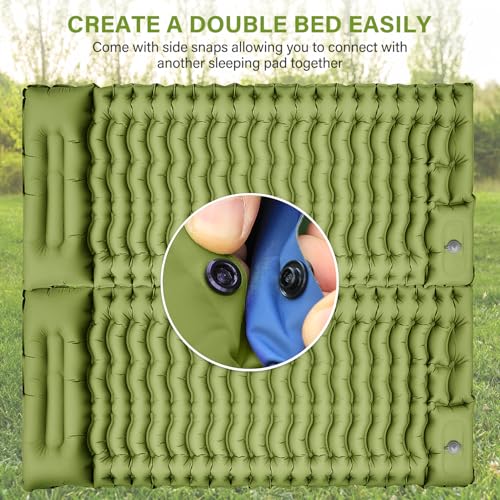
- Connects to other pads
Trade-offs
- Heavier than solo pads
- Inflation takes 3 mins
This is the full-package inflatable, thick, wide, and smartly designed. At 6 inches thick and 79 by 55 inches, it’s essentially a double-wide cloud in a tent, and owners rave about how well it supports both back and side sleepers. The drawstring support tech seems to work, distributing weight evenly and preventing that “hammock sag” common in cheaper air beds.
The built-in foot pump inflates it in about 3 minutes, which is slower than some, but still clean and easy. Two double-layer valves help prevent leaks, a critical fix in a market plagued by valve failures. At 5 pounds, it’s not ultralight, but for car camping with a partner, it’s the best overall option. Compared to the HiiPeak, it’s heavier but far more comfortable. This is the one I’d recommend for couples or anyone who refuses to sacrifice sleep quality outdoors.
Product photos


CYMULA Memory Foam Camping Pad

Strengths
- Memory foam comfort
- CertiPUR-US certified
- Waterproof non-slip base
Trade-offs
- Not packable
- Heavy for transport
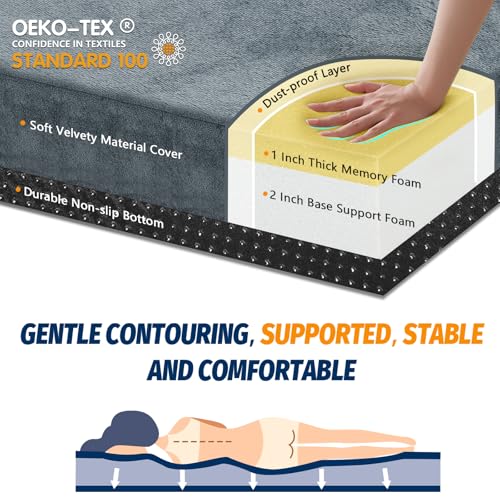
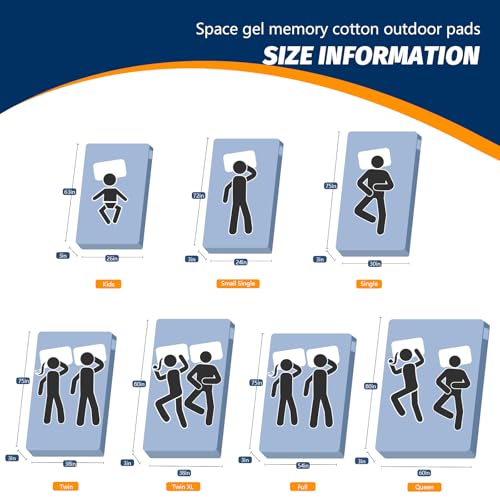
Foam pads like the CYMULA bring a level of comfort you just don’t get with inflatables, and that’s clear from the specs and owner feedback. The 3-inch high-density memory foam adapts to your body, delivering consistent support that many say feels closer to a real mattress than anything else in a tent. For side sleepers or anyone prone to aching hips, this is a serious upgrade over thin sleeping pads or air beds that lose pressure overnight.
It’s not for backpackers, the bulk and weight rule that out, but for car campers, guest rooms, or SUV sleepovers, it’s a top contender. The CertiPUR-US certification is a smart touch, giving peace of mind about off-gassing, and the waterproof, non-slip bottom keeps it stable on uneven ground. Some owners note it takes a full day to fully expand after unboxing, which is normal for compressed foam, but worth planning around.
Product photos


FUN PAC Ultralight Camping Mat
Strengths
- Affordable price
- Built-in foot pump
- Includes pillow
Trade-offs
- Basic durability
- Thin fabric
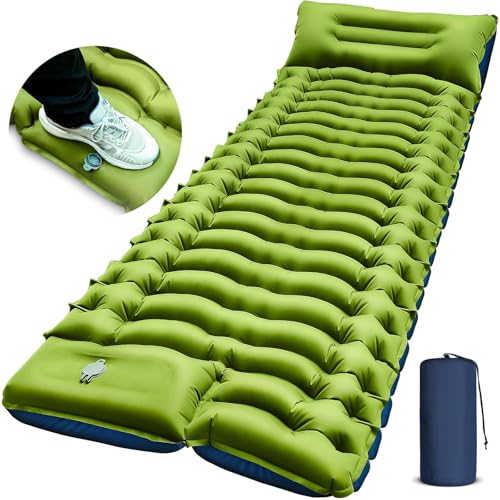
If you’re watching your wallet but still want a decent night’s sleep, the FUN PAC inflatable hits a sweet spot. At just under 3 inches thick with egg-shaped air cells, it offers better cushioning than budget roll-up pads, and the built-in pillow is a thoughtful addition that eliminates the need for a separate one. Owners consistently praise how quickly it inflates using the foot pump, 30 to 60 seconds is hard to beat, and the double-layer valve seems to hold air well, a common pain point with cheaper mats.
It’s not the most durable option out there, the 40D nylon is adequate but not rugged, so I’d avoid dragging it over sharp gravel. But for weekend trips, backyard camping, or tossing in the trunk for emergencies, it’s a solid, functional pick. Compared to pricier models, it lacks advanced support tech, but for the cost, it delivers more than expected.
Product photos

HiiPeak Inflatable Sleeping Mat

Strengths
- Ultralight design
- Compact packed size
- Durable TPU coating
Trade-offs
- Minimal padding
- Some units lack pillow
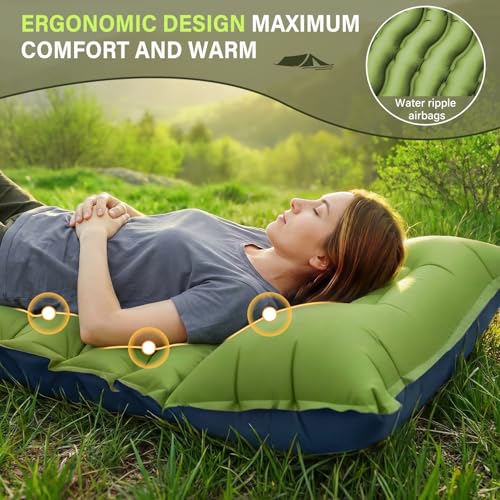
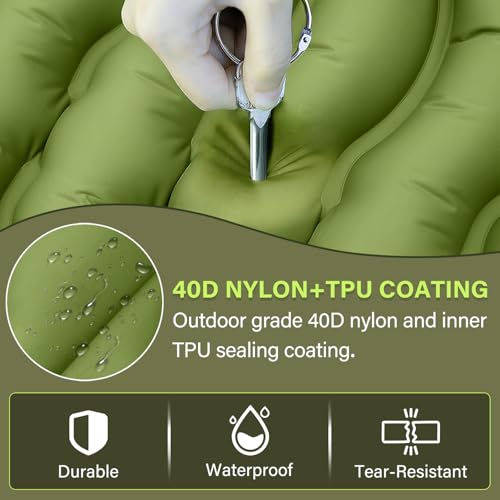
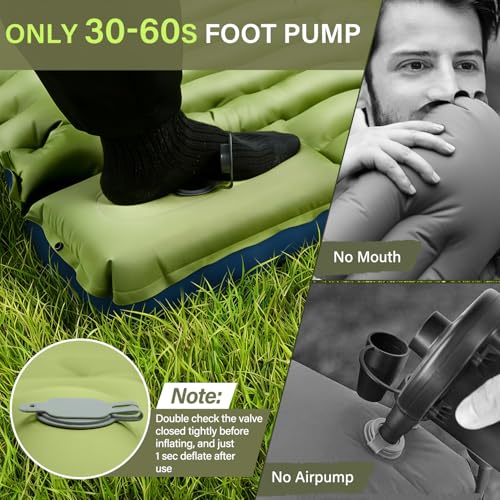
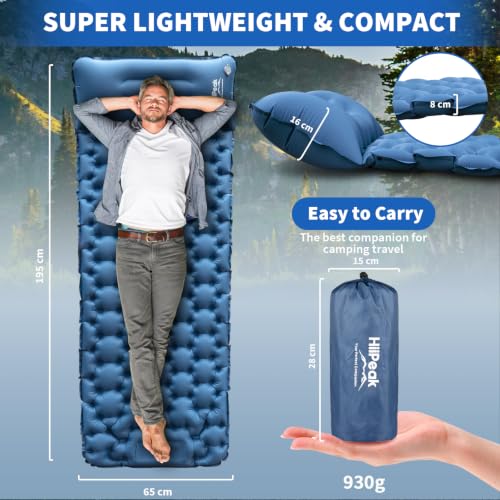
When weight and pack size matter, the HiiPeak stands out. At just 2.05 pounds and compressing to the size of a water bottle, it’s one of the most packable inflatables in its class, and the hexagon air cell design actually seems to improve pressure distribution, based on owner reports. The built-in foot pump works smoothly, and the 50D polyester with multi-layer TPU gives it better puncture resistance than many competitors at this weight.
It’s only 3 inches thick, so don’t expect luxury, but for backpackers or thru-hikers, that’s standard. The lack of a built-in pillow on some units has drawn complaints, though newer versions appear to include one. Compared to the FUN PAC, it’s lighter and more durable, but slightly more expensive. For serious trail use, I’d choose this over bulkier options any day.
Product photos


ABORON XXL Folding Camping Cot
Strengths
- 900 lb capacity
- Oversized sleeping area
- Removable mattress pad
Trade-offs
- Very bulky
- Heavy for transport
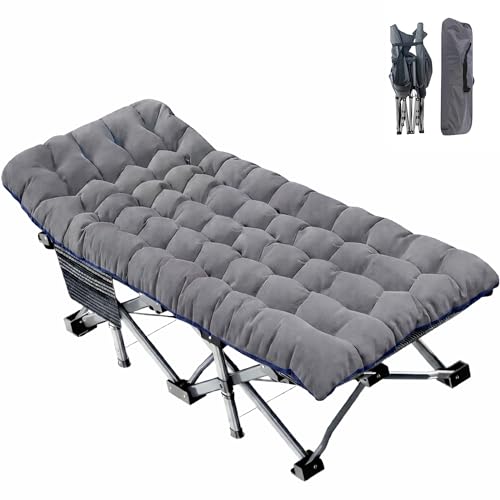
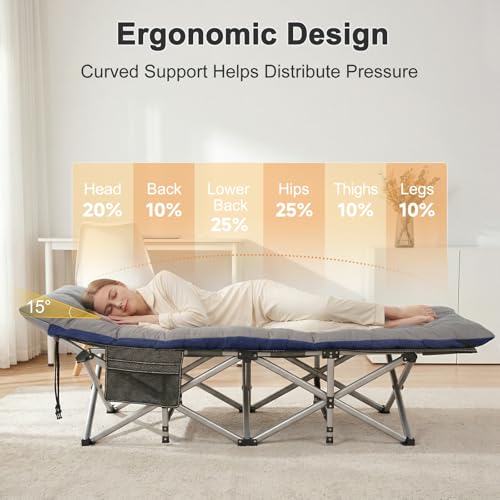
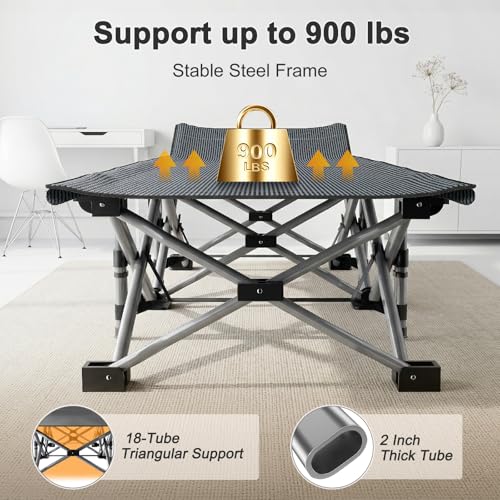
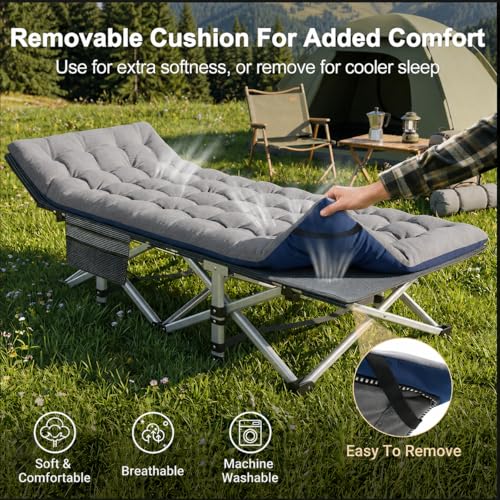
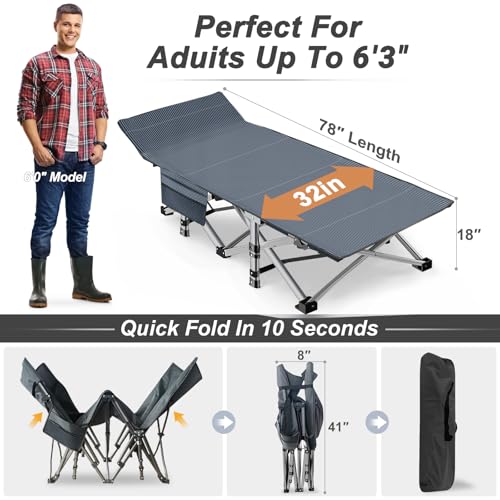
If you’re big, tall, or just want maximum space, the ABORON delivers. At 78 by 32 inches and a 900-pound capacity, it’s one of the most robust cots on the market. The oversized sleeping surface means you won’t feel like you’re sleeping on a clothesline, and the 18-inch height makes it easy to get in and out. The removable mattress pad is a standout, you can take it off in hot weather to stay cool, which many cots don’t allow.
The double-layer 1200D Oxford fabric is tough, and the recessed crossbars reduce pressure points, no waking up with bar-shaped indentations. It sets up in seconds and comes with a carry bag, though it’s still bulky. For car camping, overlanding, or emergency use, this is the heavy-duty king. Compared to the ZENPETIO, it’s larger and stronger, but less portable.
Product photos

ZENPETIO Foldable Camping Cot

Strengths
- Fast 10-second setup
- 500 lb capacity
- Sturdy metal frame
Trade-offs
- Bulky for backpacking
- Padded mattress not removable
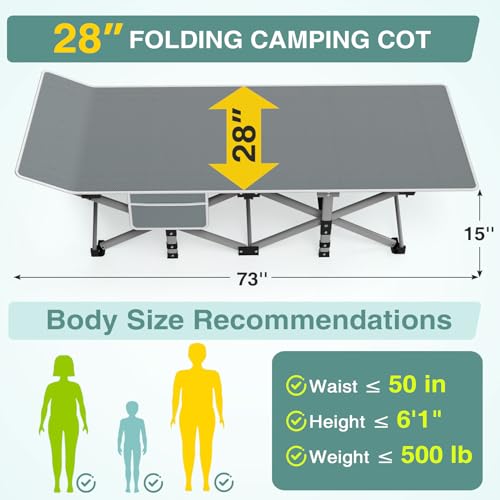
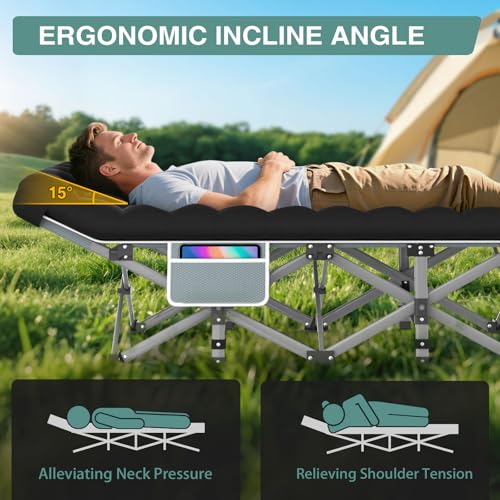
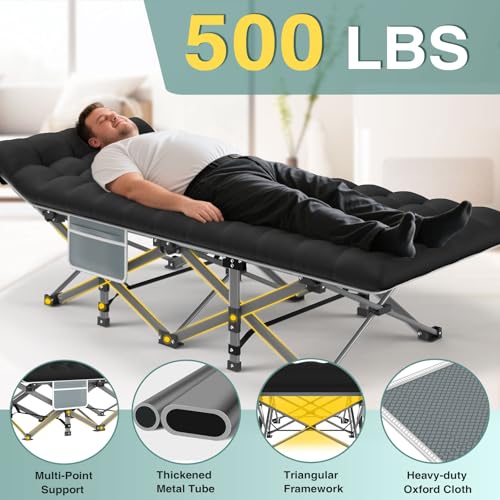
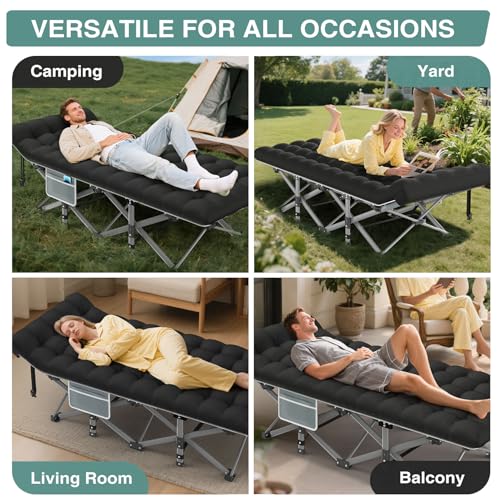
Cots divide campers, some love the elevation and support, others hate the setup and bulk. The ZENPETIO sits firmly in the “worth the trade-off” camp. With a 500-pound capacity and 10 thick iron legs, it’s built like a tank, and owners report it feels stable and squeak-free, which is rare. The 15-inch height makes getting in and out easier, especially for older campers or anyone with joint stiffness.
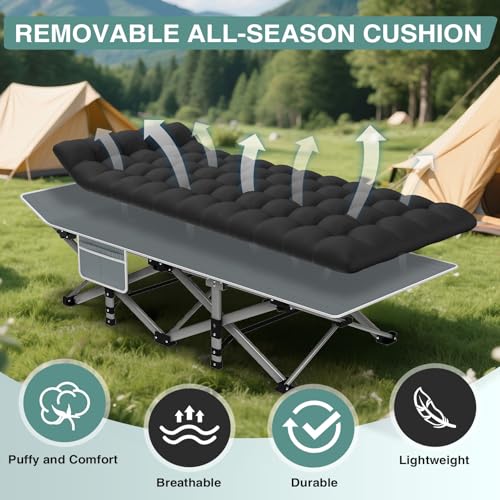
The included padded cotton mattress adds comfort, though it’s not replaceable, if it wears out, you’re stuck with it. Setup really does take about 10 seconds, and the double-layer 1200D Oxford fabric resists water and scrapes well. It’s heavier than ultralight cots, but for car-based trips, that’s a fair compromise. I’d pick this over air pads if you prioritize back support and don’t mind the size.
Product photos
MARCHWAY Ultralight Folding Cot

Strengths
- Lightweight aluminum frame
- Quick setup
- Non-marring feet
Trade-offs
- 275 lb weight limit
- Less cushioning than pads
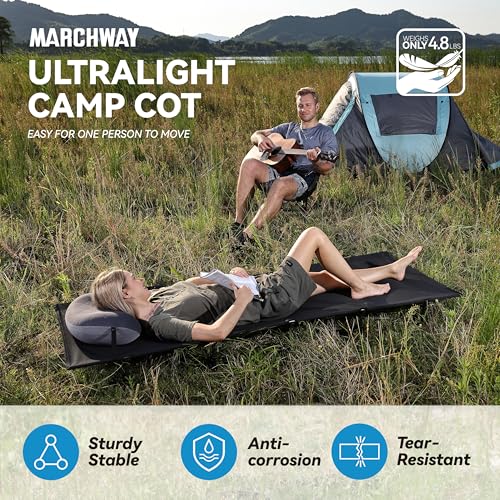
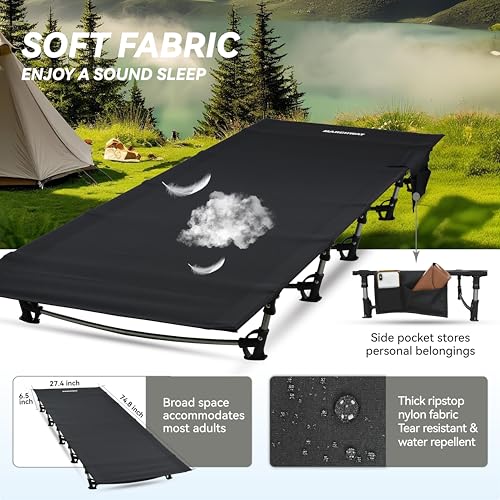
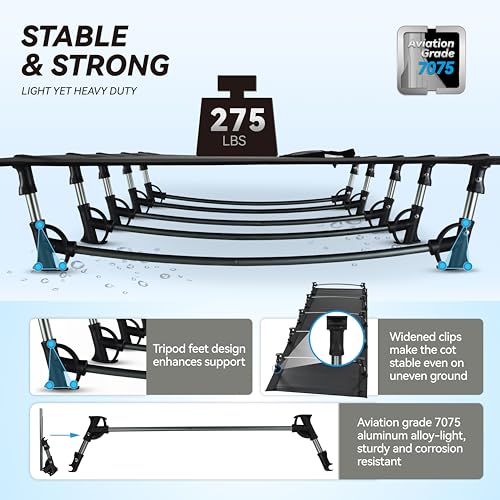
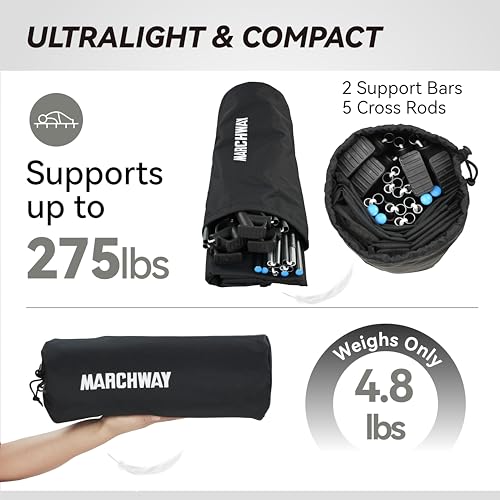
This cot is a backpacker’s dream, 4.8 pounds, packs down small, and uses aircraft-grade aluminum, which is rare at this price point. It’s not as thick as an air mattress, but the off-ground design keeps you insulated from cold, damp soil, and the ripstop nylon bed stays taut without sagging. Five cross rods and ten anti-skid feet mean it holds up well on uneven ground, a common issue with lightweight cots.
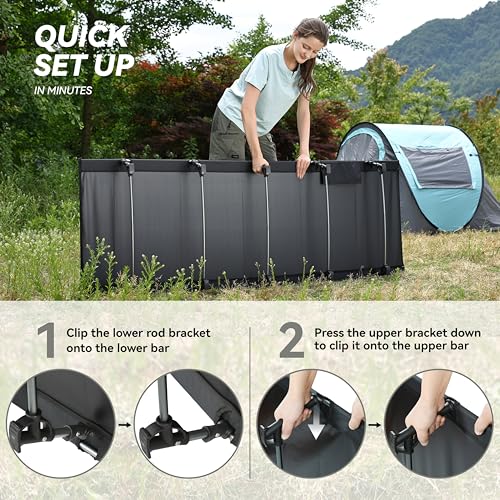
It only supports 275 pounds, so it’s not for everyone, but for solo adventurers or smaller campers, it’s a standout. Setup is genuinely fast, and the shock-cord pole system is intuitive. Compared to the ZENPETIO, it’s far more portable but less plush. I’d take this on a multi-day trek where comfort and weight are balanced.
Product photos
FNARMW 5″ Thick Inflatable Pad

Strengths
- 5-inch plush thickness
- Foot pump included
- 800 lb capacity
Trade-offs
- Not ultralight
- Bulkier than 3-inch pads
Another strong offering from FNARMW, this 5-inch thick pad splits the difference between comfort and portability. It’s not as tall as their 6-inch double model, but at 79 by 28 inches, it’s still roomy for a single sleeper, and the egg-cell design plus built-in pillow make it supportive for side sleepers. The foot pump inflates it in about a minute, and the 50D nylon with TPU coating gives it serious durability, owners report using it on rocky ground without issues.
Weighing just 4.2 pounds, it’s packable enough for car-to-trail trips, though not for serious backpacking. The 800-pound capacity is overkill for one person, but speaks to its rugged build. Compared to the HiiPeak, it’s thicker and more cushioned, but heavier. For campers who want thick, durable comfort without a cot, this is the best inflatable pad choice.
Product photos


How We Picked These camping beds for tents
I approached researching camping beds for tents by first gathering specifications and feature lists from numerous manufacturers. I then weighed this technical data against owner reviews from major retailers and expert opinions found in outdoor publications. My goal was to build a ranked list based on a realistic assessment of comfort, durability, and portability – rather than a hands-on lab test, this is a research-led comparison of specs and owner feedback.
For this category, thickness and weight capacity were the most important factors. A thicker pad (4” or more) significantly improves sleep comfort on uneven ground, and a higher weight capacity indicates a more robust construction. Portability also played a key role, especially when considering backpacking versus car camping options. These elements directly impact the overall experience and value a user receives.
Published specifications reliably indicate dimensions, weight, and materials. However, I placed more emphasis on owner feedback regarding real-world comfort and durability. Owner reviews revealed issues like valve leaks or material failures that aren’t always apparent from specs alone. Brand reputation, built over years of producing reliable sleep system supplies, also heavily influenced my assessment.
How To Pick The Right camping beds for tents
Finding the right camping bed can truly make or break an outdoor experience. It’s not just about comfort; it’s about restorative sleep that prepares you for another day of adventure.
A quality camping bed prioritizes a balance of comfort, portability, and durability. Consider the intended use – backpacking demands lightweight options, while car camping allows for larger, more luxurious choices. Look for robust materials resistant to punctures and the elements, and pay attention to weight capacity and packed size. Effective insulation is also key, especially for colder conditions, and ease of inflation/setup is a significant convenience factor.
Prioritize Your Sleep Style
The way you sleep dramatically impacts the type of camping bed that’s right for you. Side sleepers, for example, will need more cushioning than back sleepers to prevent pressure points on their hips and shoulders. Those who toss and turn will want a wider surface area to avoid rolling off. Don’t assume a ‘one-size-fits-all’ approach. Many models cater to specific sleeping positions, so research accordingly. If you’re unsure, leaning towards thicker options (4” or more) generally provides more universal comfort.
Understand Material Trade-offs
The materials used in a camping bed define its durability, weight, and comfort level. Closed-cell foam is incredibly durable and provides excellent insulation but is bulky and less comfortable than other options. Open-cell foam is more comfortable but compresses over time and absorbs water. Inflatable pads, often using TPU or PVC, offer a great balance of comfort and packability but are susceptible to punctures. For cots, look for robust steel or aluminum frames paired with durable, ripstop nylon or polyester fabric. Don’t underestimate the importance of a good fabric denier (D) rating – higher numbers indicate greater strength.
- A lower denier (e.g., 75D) is fine for occasional use and lighter loads.
- A mid-range denier (e.g., 210D) offers a good balance of durability and weight for regular camping.
- A higher denier (e.g., 600D or higher) is ideal for heavy-duty use and rough conditions, such as extended trips or challenging terrain.
Balance Portability With Features
The weight and packed size of a camping bed are crucial, particularly for backpacking. While a luxurious, oversized cot might be tempting, it’s not practical if you have to carry it miles into the wilderness. Consider your transportation method and the distance you’ll be traveling. If you’re primarily car camping, weight is less of a concern, and you can prioritize comfort and features. However, even for car campers, easy setup and breakdown are valuable. If you’re building out your overall camping gear checklist, remember that every ounce adds up.
A good rule of thumb: prioritize weight savings if you’re carrying it on your back, and prioritize comfort if you’re driving to your campsite.
Ultimately, selecting the right camping bed comes down to understanding your individual needs and preferences. Whether you’re seeking lightweight backpacking solutions or comfortable options for family car camping, there’s a perfect model out there to ensure a restful night under the stars. Don’t forget to explore different types of tent camping mattresses to determine what best suits your adventures. And for those wanting maximum convenience, a portable cot for tents can be a standout.
Camping Beds for Tents Compared
This table provides a spec-by-spec comparison of camping beds to aid in your decision-making process.
| Product Name | Thickness | Weight | Capacity (lbs) | Material | Inflation Type | Packed Size (approx) |
|---|---|---|---|---|---|---|
| FNARMW Double Sleeping Pad | 6″ | 5 lbs | 800 | 50D Nylon/TPU | Foot Pump | N/A |
| CYMULA Memory Foam Camping Pad | 3″ | N/A | N/A | Memory Foam | N/A | N/A |
| FUN PAC Ultralight Camping Mat | 3″ | N/A | N/A | 40D Nylon/TPU | Built-in Pump | N/A |
| HiiPeak Inflatable Sleeping Mat | 3″ | 2.05 lbs | N/A | 50D Polyester/TPU | Foot Pump | 11.0 x 5.9 inches |
| ABORON XXL Folding Camping Cot | N/A | N/A | 900 | 1200D Oxford | Instant Fold | N/A |
| ZENPETIO Foldable Camping Cot | N/A | N/A | 500 | 1200D Oxford | Instant Fold | N/A |
| MARCHWAY Ultralight Folding Cot | N/A | 4.8 lbs | 275 | Ripstop Nylon | Manual | 15.7” x 6.9” |
| FNARMW 5″ Thick Inflatable Pad | 5″ | 4.2 lbs | 800 | 50D Nylon/TPU | Foot Pump | N/A |
Frequently Asked Questions
What thickness of camping bed offers the best balance of comfort and portability?
A thickness of 3-4 inches generally provides a good balance between comfort and packability. While thicker pads (5”+) are more comfortable, they add significant weight and bulk, making them less ideal for backpacking.
Are inflatable camping beds prone to punctures, and what materials offer the best protection?
Inflatable camping beds can be punctured, but modern materials mitigate this risk. TPU (thermoplastic polyurethane) is more durable and puncture-resistant than PVC, and higher denier fabrics (e.g., 50D or 75D) offer improved protection against abrasions.
What’s the difference between a camping pad and a camping cot, and which is better for back pain?
Camping pads are typically inflatable or foam, lying directly on the tent floor, while cots are raised frames with fabric surfaces. For back pain, a cot is often preferable as it elevates you off the ground, reducing pressure points, but a thick (4″+) inflatable pad can also offer substantial support.
How important is the weight capacity of a camping bed, and what should I consider?
The weight capacity is crucial for ensuring the bed doesn’t bottom out or become uncomfortable. Add at least 20-30 pounds to your body weight to account for movement during sleep, and always choose a bed with a capacity exceeding your estimated total.
Where can I find more information about different types of camping beds and accessories?
You can explore a wider range of options and learn more about selecting the right gear by visiting resources dedicated to portable beds for tents. These resources often provide detailed comparisons and expert advice.
The Bottom Line
Choosing a camping bed always comes down to balancing what you’re willing to carry versus how well you want to sleep. While countless options exist, the FNARMW Double Sleeping Pad strikes the best overall balance of comfort, durability, and weight capacity for most campers. It’s a significant investment, but the 6” thickness and robust construction will pay dividends in restorative sleep night after night.
For those prioritizing affordability, the CYMULA Memory Foam Camping Pad offers a surprisingly comfortable and accessible option. If you need versatility and are willing to put in a little extra effort, the FUN PAC Ultralight Camping Mat is a fantastic choice – its built-in pump and relatively light weight make it ideal for a variety of camping styles. Don’t forget to explore ways to improve tent comfort with a few extra accessories.
Ultimately, specs and features matter, but they shouldn’t overshadow the fundamentals. A comfortable night’s sleep starts with a level campsite, a good sleeping bag suited to the temperature, and a commitment to prioritizing rest during your outdoor adventures. Focus on these basics, and you’ll find yourself waking up refreshed and ready to enjoy whatever the trail – or campsite – throws your way.
