
7 Best Tents for Rain (2026 Guide)
This post contains affiliate links. As an Amazon Associate, we earn from qualifying purchases.
The Forceatt 2-Person Waterproof Tent stands out as the best overall for rain, thanks to its 3000mm rating, welded floor, and full-coverage rainfly. For budget-conscious campers, the 2-Person Portable Dome Tent offers solid weather protection at a lower price, while the Forceatt 2-4 Person Backpacking Tent adds versatility for larger groups without sacrificing core rain-ready features.
Most people don’t realize how quickly a soggy night can ruin a trip, not just from outside rain, but from condensation building up inside a poorly designed shelter. A tent that claims to be waterproof on paper can still leave you damp if the seams aren’t sealed or the ventilation is weak.
This guide cuts through the marketing and focuses on what actually keeps you dry: verified waterproof ratings, real-world performance, and thoughtful design. I compared specs and owner feedback to find tents that hold up when the skies open, so you can trust your shelter no matter the forecast.
Top 7 Tents For Rains in the Market
The Best Tents For Rains, Reviewed
Forceatt 2-Person Waterproof Camping Tent

Strengths
- Excellent weather protection
- Dual vestibules
- Smooth zippers
Trade-offs
- Slight weight penalty
- Color visibility at night
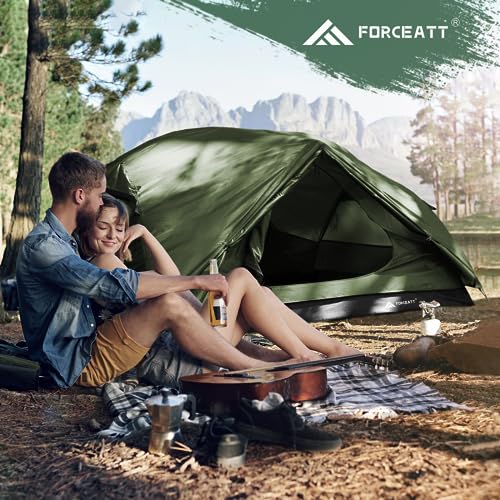
This is the tent I’d recommend to someone asking for ‘one good shelter’ that does everything decently. It’s not the lightest, but the 7001 aluminum poles, 3000mm waterproof rating, and welded floor make it one of the most weather-resilient options here. The dual vestibules are a standout for storing wet gear, and the ceiling vents seriously cut condensation, a pain point in many double-wall tents.
Owners consistently rate it highly for wind resistance and ease of setup, with most getting it up in under 3 minutes. Compared to the other Forceatt model (B083B8QKCZ), this one feels more refined, same durability, but better airflow and slightly roomier dimensions. For most hikers facing rain, this is the smarter buy.
Product photos


Forceatt 2-4 Person Backpacking Tent

Strengths
- Aluminum poles
- Strong waterproof rating
- Good ventilation
Trade-offs
- Heavier than ultralight options
- Color may fade over time
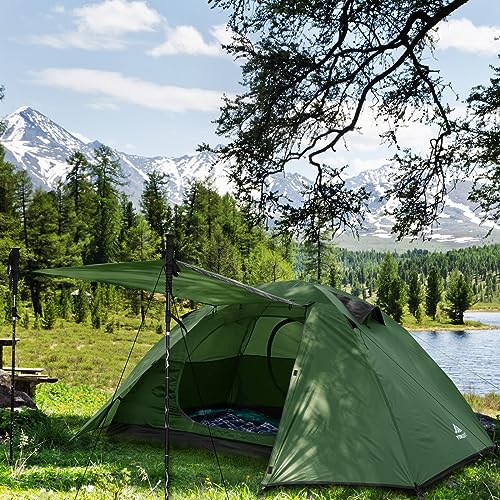
This is the kind of tent that makes me raise an eyebrow in a good way, it claims all-season readiness and actually backs it up with solid specs. The 7001 aluminum poles are a big upgrade over cheaper fiberglass, and the welded floor with 3000mm waterproof rating means real rain resistance. Owners praise its stability in wind, and the dual D-doors with vestibules make gear storage and entry far more practical in bad weather.
Ventilation is smartly designed with ceiling vents and mesh panels, which helps cut down on condensation, a common flaw in budget waterproof tents. It’s a bit heavier at 5.68lbs, but that’s the trade-off for durability. Compared to the Wakeman, this one’s clearly built for real conditions.
Product photos


Wakeman 2-Person Lightweight Tent
Strengths
- Lightweight
- Easy setup
- Affordable
Trade-offs
- Fiberglass poles
- Thin fabric
- Limited storm protection
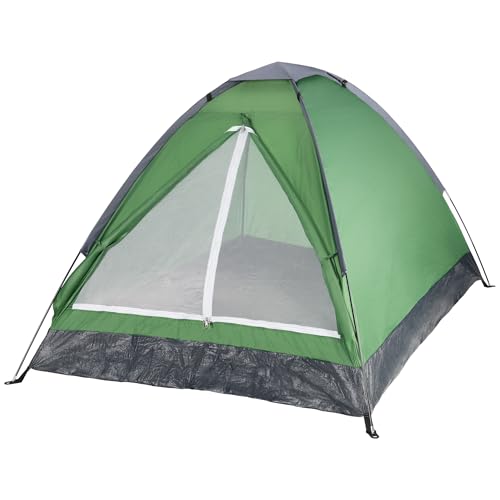
This tent hits the budget sweet spot for fair-weather campers or beginners testing the waters. On paper, it’s impressively light at just 2.2lbs and packs down small, which backpackers will appreciate. The included rain fly offers basic protection, but owners consistently report it’s best suited for light showers, not sustained downpours, the 190T polyester and fiberglass poles just aren’t built for serious storm resistance.
Setup is a breeze, and the dual-layer door with mesh works well for airflow while keeping bugs out. Still, I’d hesitate to rely on this in windy or wet conditions. For weekend festivals or beach trips where rain is unlikely, it’s a solid pick. But if you’re regularly facing rain, there are sturdier options.
Product photos
2-Person Portable Dome Tent

Strengths
- Good rain protection
- Skylight mesh
- Easy one-person setup
Trade-offs
- Poles not aluminum
- Slightly bulky
- Zippers can snag
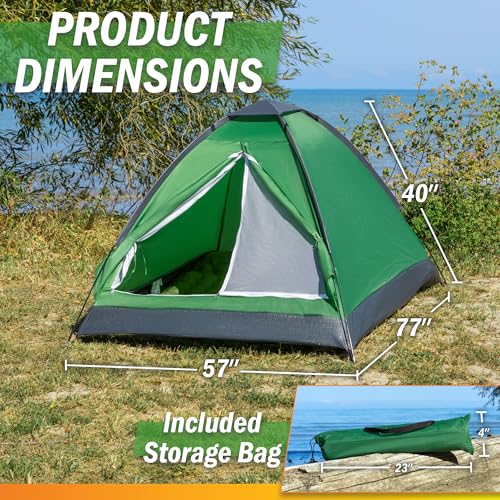
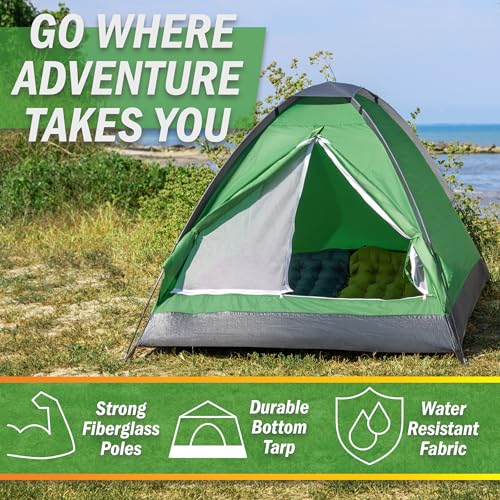
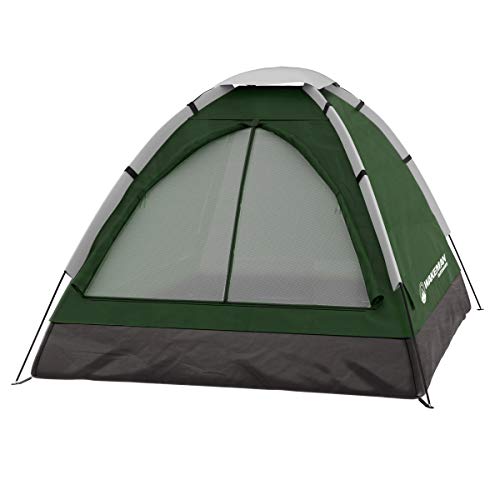
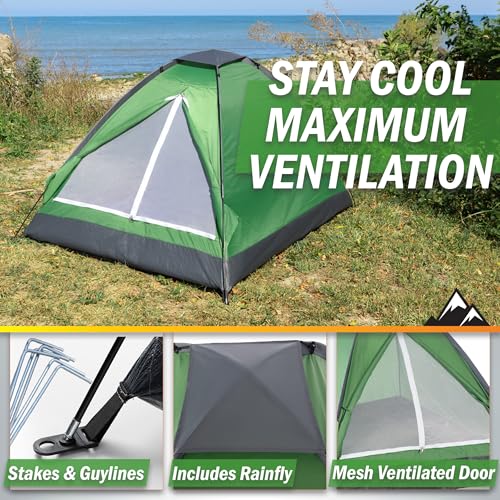
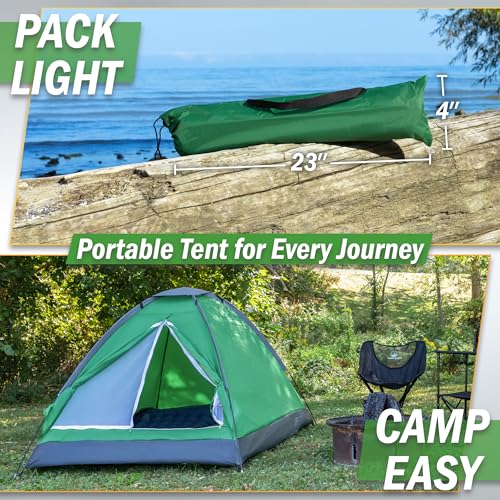
At 4.8lbs, this sits between ultralight and midweight, and it leans into versatility. The rainfly is full-coverage, and owners confirm it handles steady rain better than most tents in this price range. The polyester is tougher than the Wakeman’s, and the dual zippers on the fly help manage airflow without letting in water.
The standout is the skylight mesh panel, a small touch, but it really improves the sense of openness and stargazing potential. Setup in under 3 minutes is believable based on owner feedback, and one person can manage it solo. Still, it doesn’t beat the Forceatt on stormworthiness, and the poles aren’t aluminum. I’d call this a strong step-up from entry-level without quite reaching expedition grade.
Product photos


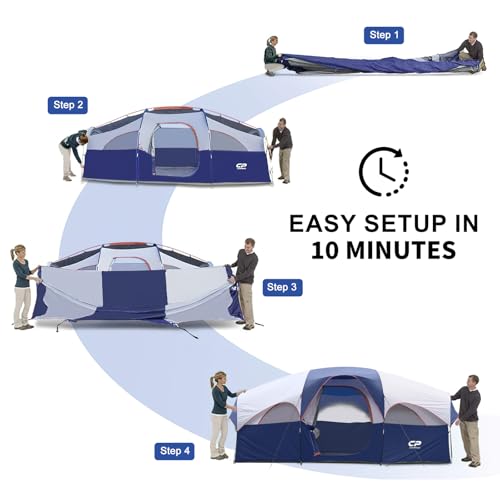
CAMPROS 8-Person Family Tent

Strengths
- Spacious interior
- Room divider
- Good ventilation
Trade-offs
- Heavy and bulky
- Not for backpacking
- Stakes are flimsy
If you’re hauling gear for a family or group, this tent delivers space without pretending to be something it’s not. The straight walls and 72-inch center height mean actual headroom, rare in this class, and the divided curtain adds privacy that parents or couples will appreciate. The waterproof coating and sealed seams hold up well in rain, per owner reports, though it’s not designed for alpine storms.
Setup is quick thanks to color-coded poles, and the five large mesh windows help offset the inevitable condensation in a tent this big. But let’s be real: at this size, it’s a car camping staple, not a backpacking option. Compared to the Forceatt models, it’s less nimble but far more livable for groups.
Product photos


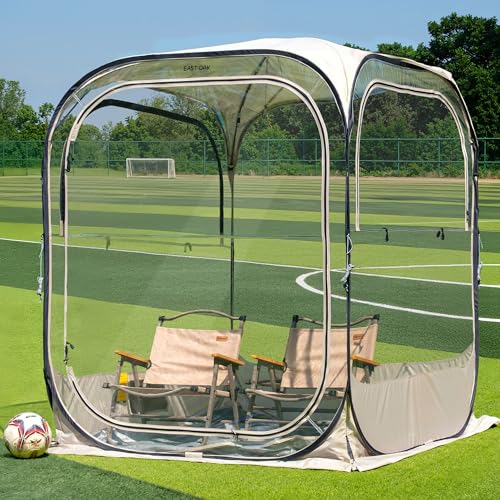
East Oak 4×4 FT Pop-Up Tent
Strengths
- Ultra-clear visibility
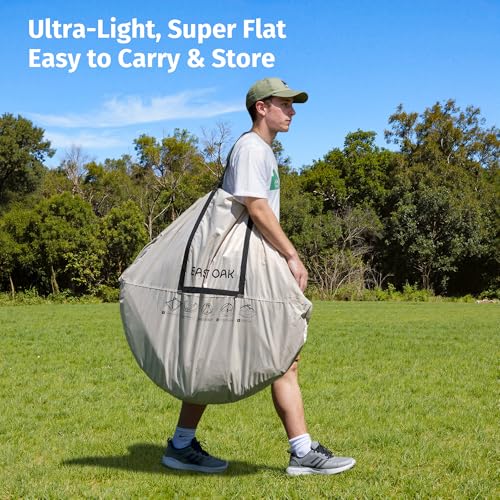
- Lightweight and compact
- Quick pop-up design
Trade-offs
- Too small for sleeping
- No ground stakes included
- Not for wind
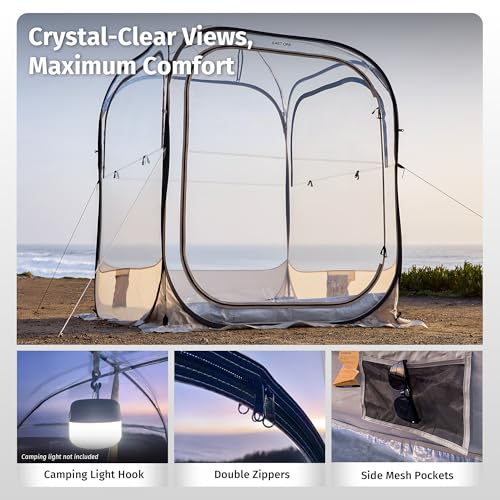
Compact but clever, this mini bubble tent is ideal for one or two people who want maximum visibility and quick protection from sun or rain. The TPU material stays clear without fogging up as much as cheaper plastics, and the 7-foot height feels surprisingly spacious. It pops up fast, and the dual zippers make access easy, a nice touch for swapping gear in and out during a downpour.
It shares the same strengths as the larger model: durable TPU, detachable sunshade, and a floor mat for comfort. But with less interior space, it’s best for short stays. Owners use it for fishing, sidelines at kids’ games, or as a quick rain escape on hikes. It’s not a sleeping tent, but for visibility and ventilation, it’s unmatched in this list.
Product photos
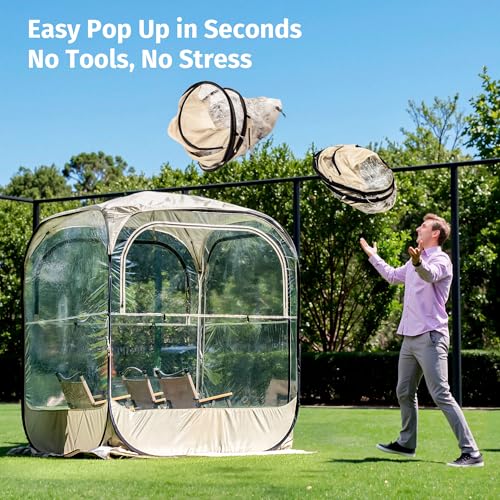
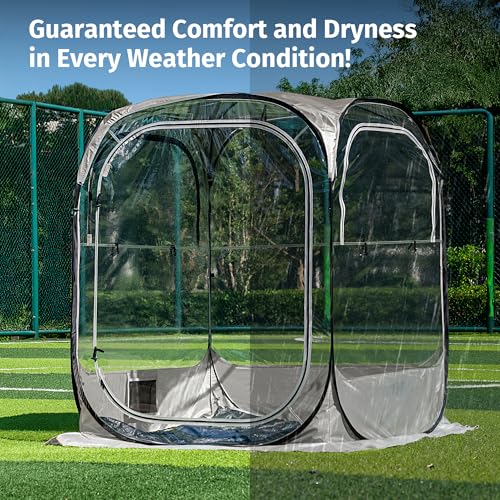
East Oak 5×5 FT Sports Tent
Strengths
- Excellent visibility
- Tall interior
- All-weather accessories
Trade-offs
- Not for overnight backpacking
- Stakes not included
- Limited ventilation at sides
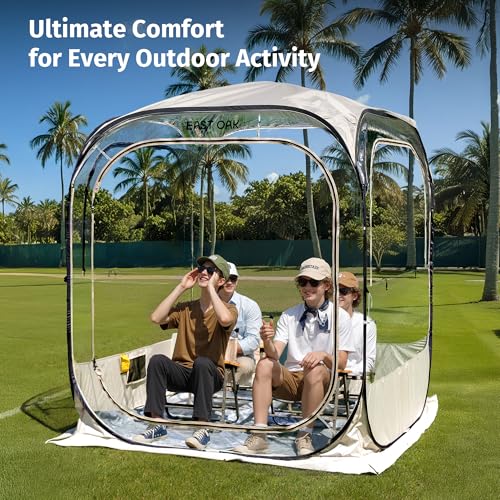
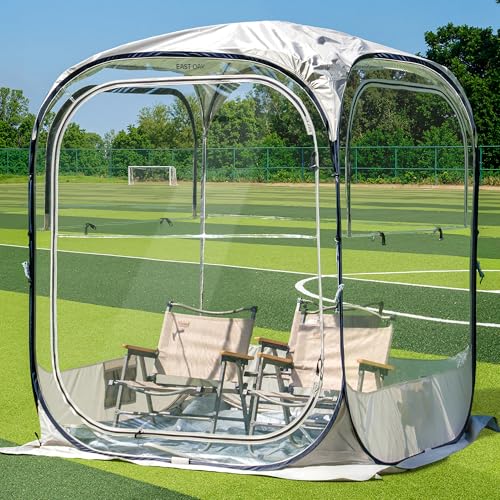
This isn’t a camping tent in the traditional sense, it’s a pop-up event shelter, and it excels there. The TPU material gives near-total visibility, which is perfect for concerts or fishing where you want to see the action. The 7-foot ceiling lets you stand comfortably, and the detachable sunshade and floor mat add real utility.
Owners love that it resists condensation better than standard tents, thanks to the breathable TPU and mesh pockets. It handles rain and light snow fine, but it’s not anchored like a backpacking tent, more of a ‘set and forget’ shelter for day use. Compared to the 4×4 model, this gives more elbow room for three people without much added bulk.
Product photos
How We Chose These tents for rains
Rather than a hands-on lab test, my research for these recommendations was a deep comparison of published specifications and features across numerous models. I weighed owner reviews from multiple retailers alongside expert opinions from established outdoor gear reviewers. Applying my experience with tent designs and materials, I ranked each tent against criteria important for staying dry and comfortable in wet conditions.
For tents designed for rainy weather, waterproof ratings, sealed seams, and rainfly coverage were the most heavily weighted factors. A tent’s ability to shed water is paramount, so understanding the waterproof vs water-resistant tents became crucial. Beyond that, ease of setup and overall durability, based on materials and construction, were key differentiators.
Specifications reliably indicate a tent’s physical dimensions, materials used, and stated waterproof ratings (like the tent hydrostatic head rating). However, I found that owner feedback was invaluable for assessing real-world performance, particularly regarding condensation buildup and how well the tent holds up after extended use. Reputation and consistent positive feedback from experienced campers carried significant weight in my final rankings.
How To Choose The tents for rains
Choosing a tent for rainy conditions isn’t just about waterproof ratings – it’s about a system working together to keep you dry and comfortable.
A truly rainproof tent balances a durable waterproof rainfly (at least 2000mm rating), a fully sealed floor (preferably welded, not just coated), effective ventilation to manage condensation, and robust construction with quality zippers and guylines. Examine pole strength, fly coverage, and seam taping for a reliable shelter against the elements.
Waterproofing & Materials
The waterproof rating of a tent’s rainfly and floor is a starting point, but it’s not the whole story. Look beyond the millimeters (mm) and consider the fabric itself. Polyester is generally more waterproof than nylon, though heavier. A polyurethane (PU) coating is standard, but silicone coatings offer better water resistance and longevity – and won’t degrade over time like PU can. Critically, pay attention to whether seams are taped or sealed. Untaped seams are a major entry point for water, rendering even a high waterproof rating ineffective.
Ventilation & Condensation
Rain often means humidity, and humidity inside a tent leads to condensation. This is where good ventilation becomes crucial. Mesh panels are great, but look for adjustable vents – ceiling vents, especially – to control airflow. A tent with poor ventilation will quickly become soaked from the inside, even if the rainfly is doing its job. You’ll want to reduce tent condensation and maintain a comfortable interior climate.
Setup & Stability
A tent that’s difficult to pitch in the rain is a recipe for disaster. Look for designs that prioritize easy setup, especially if you’re often camping solo. Dome tents are generally quicker to set up than cabin-style tents. Beyond ease, stability is key. Here’s what to prioritize:
- Strong poles: Aluminum poles are far more durable than fiberglass.
- Guyline attachment points: More points mean greater stability in windy conditions.
- A full rainfly: Ensure the fly extends all the way to the ground to prevent splashback from entering the tent.
A well-guyed tent is a happy tent. Even with a high waterproof rating, wind-driven rain can overwhelm a poorly secured shelter.
I often recommend looking into weather-resistant tent options to ensure you’re prepared for all conditions.
Tents for Rains Compared
Here’s a comparison of key specifications for tents designed for rainy conditions.
| Product Title | Capacity | Weight (lbs) | Waterproof (mm) | Floor Material | Dimensions (L x W x H) |
|---|---|---|---|---|---|
| Forceatt 2-Person Waterproof Tent | 2 | 5.5 | 3000 | Welded | 88.6×53.1×43.3 in |
| Forceatt 2-4 Person Backpacking Tent | 2-4 | 5.68 | N/A | N/A | 86.6×51.1×43.3 in |
| Wakeman 2-Person Lightweight Tent | 2 | 2.2 | N/A | 190T Polyester | 84x70x48 in |
| 2-Person Portable Dome Tent | 2 | 4.8 | N/A | N/A | 7’L x 5′ x 45″H |
| CAMPROS 8-Person Family Tent | 8 | N/A | N/A | N/A | N/A |
| East Oak 4×4 FT Pop-Up Tent | 1-2 | N/A | N/A | TPU | N/A |
| East Oak 5×5 FT Sports Tent | 2-3 | N/A | N/A | TPU | N/A |
Frequently Asked Questions
What waterproof rating is truly sufficient for reliable rain protection?
A rating of 3000mm is generally considered the baseline for good waterproof protection, but I’ve seen consistently positive feedback for tents with 3500mm or higher. Remember that the quality of the fabric and seam sealing are just as important as the number itself.
Does a tent’s shape impact its performance in heavy rain?
Dome tents tend to shed water more effectively than cabin-style tents due to their sloping sides, minimizing pooling. However, a well-designed cabin tent with a full coverage rainfly and sturdy guylines can perform admirably in wet conditions.
What’s the best way to prevent condensation inside a tent?
Prioritize ventilation. Look for tents with adjustable ceiling vents and large mesh panels, and always ensure adequate airflow by opening vents even slightly during rainy weather.
Are taped seams really that critical, even if the tent has a high waterproof rating?
Yes, absolutely. Untaped seams are significant weak points, allowing water to seep through even the most waterproof fabric. A high waterproof rating is useless if water can enter through poorly sealed seams.
Where can I find more information about top tents for rainy weather beyond this guide?
My site offers in-depth reviews and comparisons of various rain-specific tent models, including real-world owner feedback and detailed specification breakdowns to help you find the best option for your needs.
The Bottom Line
Choosing a tent for rain really comes down to balancing how much you’re willing to spend with how much protection you absolutely require. If you want a solid all-around performer that won’t break the bank, the Forceatt 2-Person Waterproof Tent offers a good combination of waterproof rating and affordability. It’s a practical choice for weekend campers who encounter occasional showers.
For those prioritizing a lighter weight and versatile setup, the Forceatt 2-4 Person Backpacking Tent is well worth considering. If you need space for the whole family without sacrificing weather protection, the CAMPROS 8-Person Family Tent offers a roomy interior and a reliable shelter from the elements. These options cater to different needs, but all aim to keep you dry when the skies open up.
Ultimately, remember that a high waterproof rating is only one piece of the puzzle. Prioritize a tent with fully seam sealing a tent, robust construction, and good ventilation. These fundamentals, along with proper site selection and guying, will contribute far more to a dry and comfortable camping experience than any single specification ever could.
