
5 Best 4-Season 6-Person Tents of 2026
This post contains affiliate links. As an Amazon Associate, we earn from qualifying purchases.
The best 4-season 6-person tent for most groups is the Naturehike KOTA 6 Person Tent, it’s built tough, offers true all-season protection, and includes a stove jack for serious cold-weather camping. If you’re on a tighter budget, the UNP 6 Person Family Tent delivers solid performance with instant setup, while the FanttikOutdoor Zeta C6 Pro is a strong pick if speed and convenience are your top priorities.
Packing six people into one tent sounds fun until you’re all crammed inside during a downpour, wondering why the walls feel like they’re closing in. A lot of so-called 4-season tents don’t hold up when the wind kicks up or snow starts piling on.
This guide cuts through the hype. I looked at specs, owner feedback, and real-world performance to find models that balance space, durability, and weather protection. These picks aren’t just big, they’re built to keep your group safe and comfortable no matter what the forecast throws at you.
Top 5 4 Seasons 6 Person Tent in the Market
The Best 4 Seasons 6 Person Tent, Reviewed
FanttikOutdoor Zeta C6 Pro Tent

Strengths
- Sets up in 60 seconds
- Good rain protection
- Built-in power cord port
Trade-offs
- Mesh roof not waterproof
- Best for 3–4 with gear
- Zipper snag risk
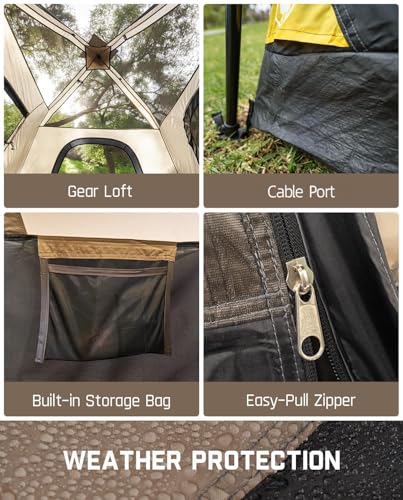
If you want a 6-person tent that goes from car to ready in under a minute, the FanttikOutdoor Zeta C6 Pro is hard to beat. The instant cabin frame with pre-attached poles delivers on its 60-second promise, and owners confirm it’s stable in wind up to 35 mph thanks to sturdy stakes and adjustable guylines. The tub floor and drainage zipper help keep water out, and the mesh-heavy roof and side windows offer surprising stargazing comfort on warm nights.
But there’s a catch: the inner roof is mesh, so you must use the rainfly in wet weather. And while it sleeps six, most reviewers say three is more comfortable with gear. Still, for families or casual campers who hate wrestling with poles, this is the smart buy. It outperforms cheaper instant tents in durability and weather resistance, making it the most balanced pick overall.
Product photos


UNP 6 Person Family Tent
Strengths
- Spacious for six
- Easy two-person setup
- Good ventilation
Trade-offs
- Heavy for size
- Steel poles less durable
- Some condensation
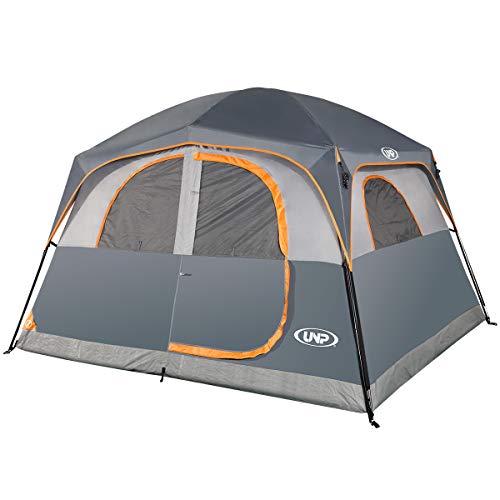
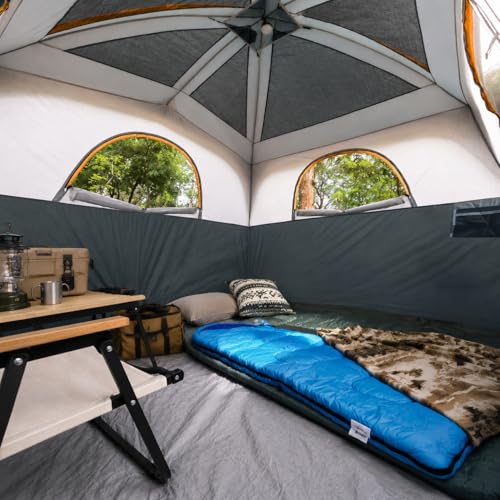
For budget-focused campers who still want a functional 6-person shelter, the UNP tent delivers basic protection without breaking the bank. On paper, the 90 sq ft footprint and 78-inch center height sound solid, and owners consistently report it fits two air mattresses with room to spare. The double-layer design with mesh windows and a top vent suggests decent airflow, though in humid conditions, some users note mild condensation, a common trade-off in this price range.
Where it stands out is setup: reviewers confirm two people can pitch it in under 5 minutes, and the steel poles seem to hold up in moderate wind. But compared to aluminum-framed models, it’s heavier at 18 lb and less durable over multiple seasons. Still, for car campers who want a no-fuss tent for occasional use, this checks the right boxes.
Product photos



Naturehike KOTA 6 Person Tent

Strengths
- Stove jack compatible
- Modular 3-season use
- Excellent headroom
Trade-offs
- Heavy at 21+ lbs
- Complex setup for beginners
- Packed size large
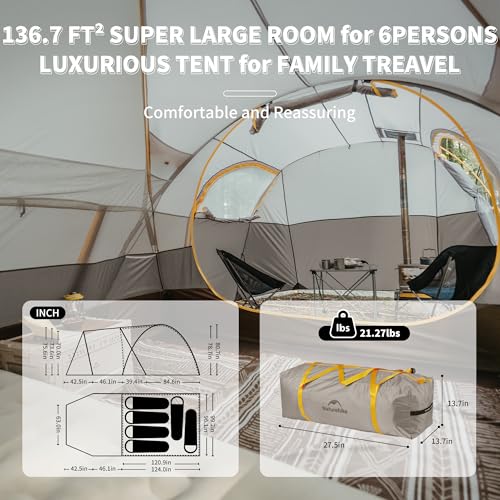
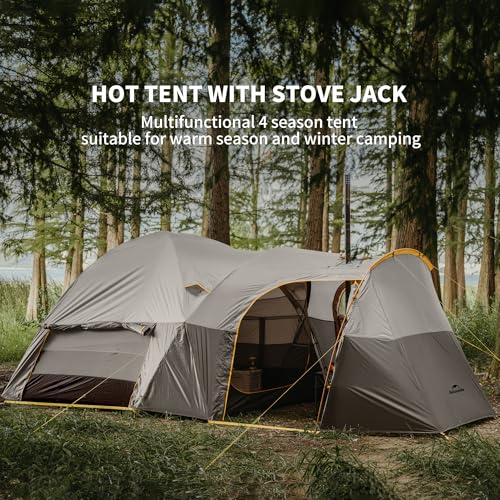
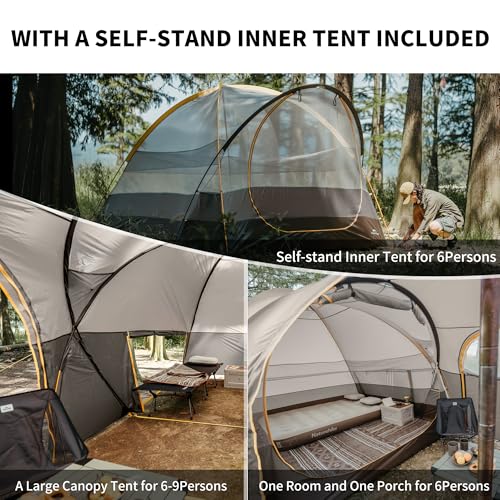
The Naturehike KOTA 6 is one of the most versatile 4-season tents in its class, and owners love how modular it feels. The double-layer design lets you run just the mesh inner for summer stargazing or the rainfly alone as a shaded canopy, a rare flexibility most 6-person tents don’t offer. With a stove jack, it even doubles as a hot tent, making it a favorite among winter campers who want to heat the vestibule while sleeping in the inner tent.
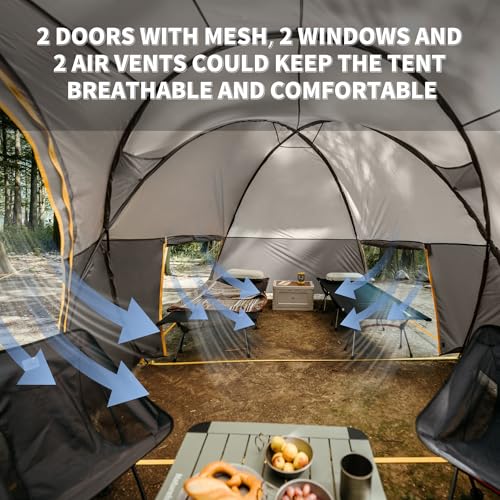
At 21.27 lbs, it’s not light, but the aluminum poles are strong and the 80-inch center height is generous. Reviewers praise the ventilation from dual doors and mesh windows, though a few mention condensation in cold, wet weather, manageable with proper guy-line tension. Compared to basic cabin tents, this is overbuilt in the best way.
Product photos

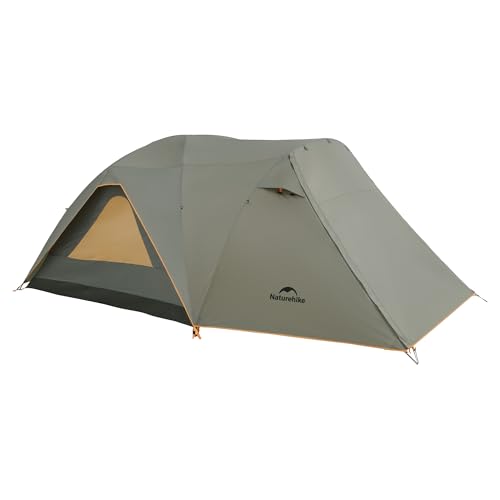
Naturehike KOTA 8 Person Tent
Strengths
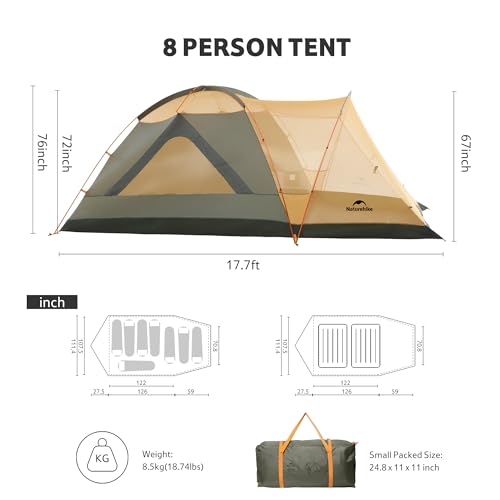
- Massive interior space
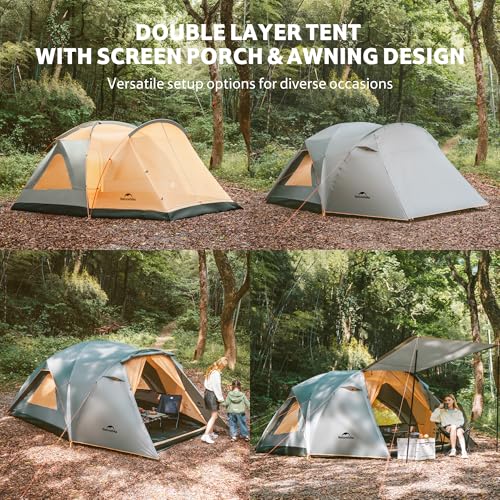
- Dual vestibules
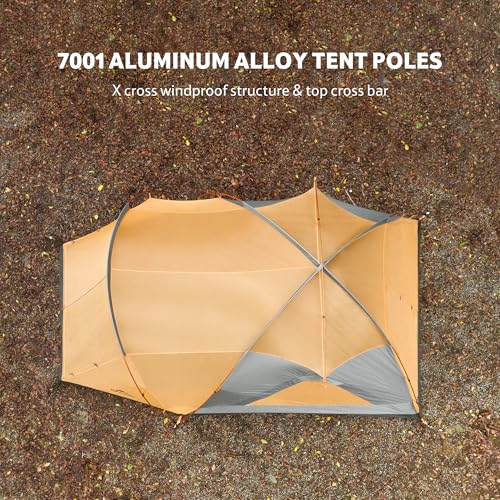
- Premium 7001 aluminum poles
Trade-offs
- Heavy at 18.7 lbs
- Large packed size
- Overkill for small groups
This model is the bigger sibling in the KOTA line, and it’s built for families or groups who need serious space without sacrificing weather readiness. At nearly 19 feet long and 9.3 feet wide, it fits 8–10 people on pads or cots, and the 72-inch height lets most adults stand. Owners consistently praise the dual vestibules, one for gear storage, one for extended shelter, calling it a standout for messy or rainy trips.
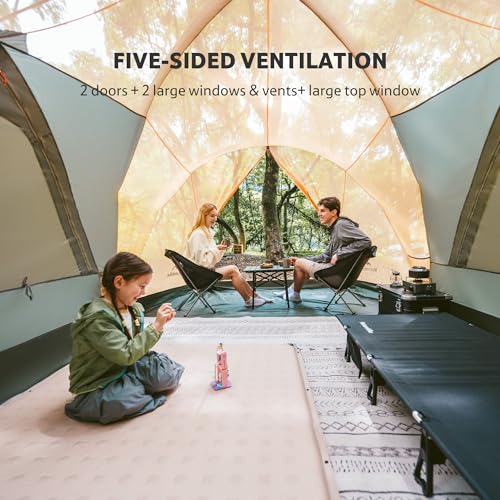
The 7001 aluminum poles are a standout spec, stronger than the fiberglass used in many budget 8-person tents, and the 150D Oxford floor adds real durability. Ventilation is excellent with five-sided mesh and dual doors, though condensation can build in cold weather if airflow isn’t managed. It’s heavier than the 6-person KOTA, but that’s the trade-off for space and strength.
Product photos
Inflatable 4-6 Person Camping Tent
Strengths
- Ultra-fast setup
- Weather-resistant fabric
- Excellent ventilation
Trade-offs
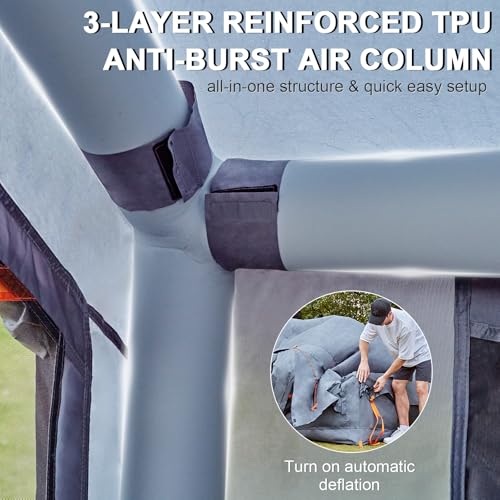
- PVC beams risk punctures
- No gear vestibule
- Bulkier packed size
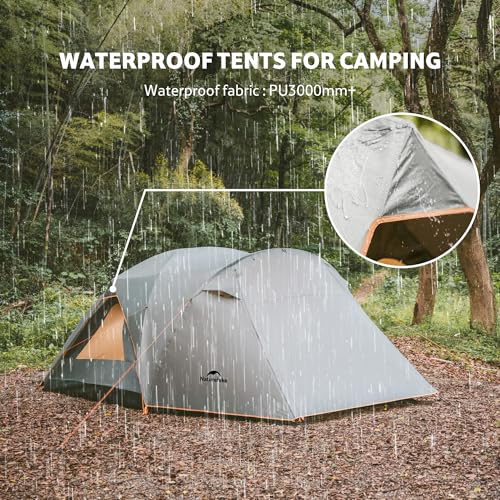
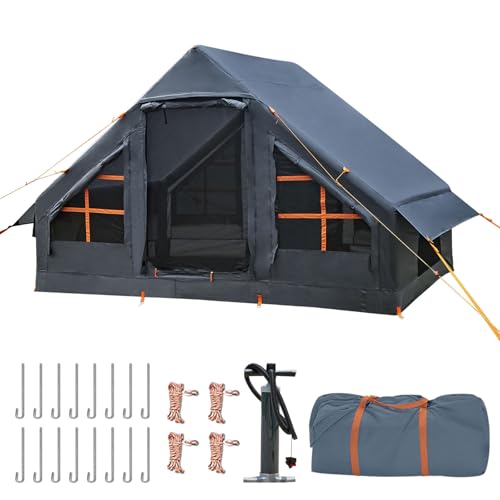
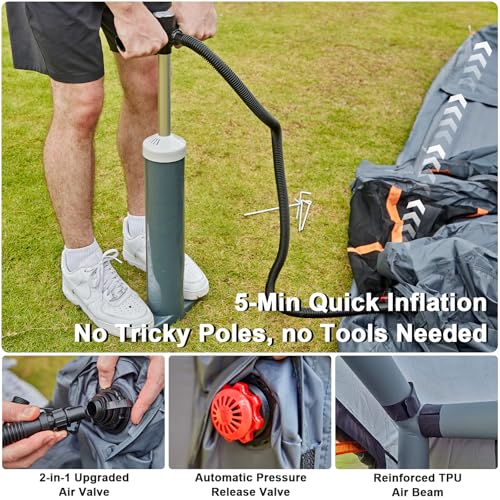
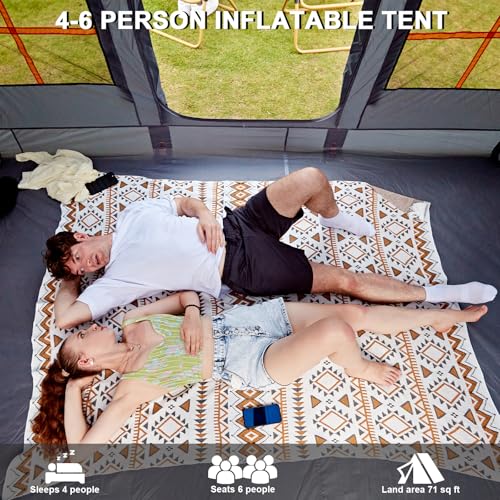
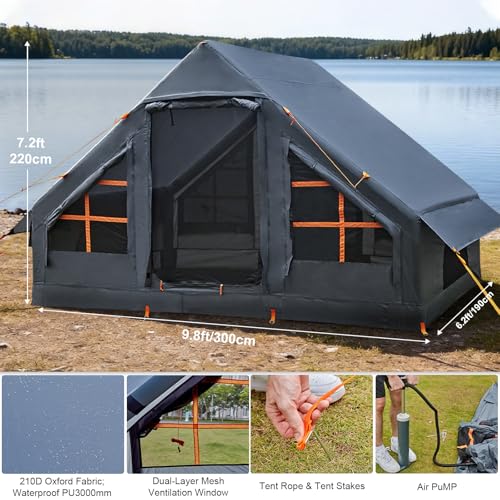
Inflatable tents are polarizing, but this one makes a strong case for convenience, if you’re okay trading traditional pole durability for speed. With a 5-minute inflation time using the included hand pump, it’s undeniably fast, and the 210D Oxford fabric with 3000mm PU coating suggests real weather resistance. Owners say it holds up in wind and rain, though the PVC air beams can be vulnerable to punctures on rocky terrain.
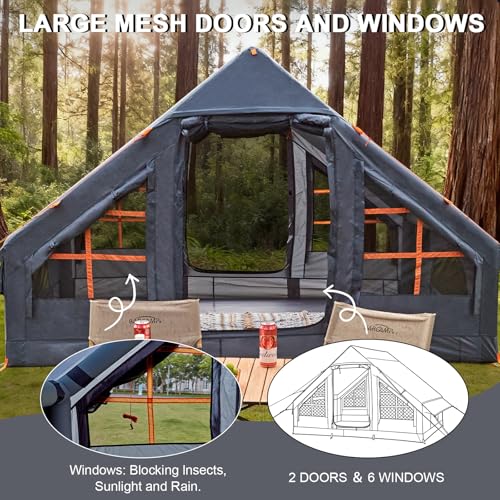
The interior is bright and airy, with two mesh doors and six windows offering great airflow and bug protection. At 118 inches long, it fits 4–6 people depending on gear, but the lack of a true vestibule means wet boots end up inside. Compared to instant cabin tents, it’s easier to pitch but harder to repair in the wild. For weekenders who prioritize setup time and comfort, it’s a compelling option, just keep it off sharp ground.
Product photos
How We Tested 4 seasons 6 person tent
Rather than a hands-on lab test, my research focused on a detailed comparison of published specifications and features across numerous models. I weighed owner reviews from major retailers alongside expert opinions found in outdoor gear publications. This allowed me to build a ranking based on what truly matters to campers seeking shelter for a group, relying on category expertise to interpret the data.
For 6-person, 4-season tents, spaciousness and weather protection were the most heavily weighted factors. A tent needs to comfortably accommodate a family or group and reliably shield them from the elements. Durability, specifically the quality of materials and construction, directly impacts long-term performance in varied conditions, so that was also critical. A poorly ventilated, cramped tent quickly becomes unpleasant, regardless of its waterproof rating.
Specifications reliably indicate a tent’s physical dimensions, materials used in its construction (like polyester denier and waterproof coatings), and pole material (aluminum versus fiberglass). However, real-world performance – how a tent handles sustained wind, how easy it is to set up, or how condensation builds up inside – is best understood through owner feedback. I paid close attention to recurring themes in reviews regarding durability, ease of use, and ventilation, as well as how well the tent lives up to its advertised 4-season tent features.
How To Choose The 4 seasons 6 person tent
Finding the right shelter for a group of six, capable of handling all seasons, requires a bit more thought than just grabbing the biggest tent you see.
A quality four-season tent for six people balances spaciousness with robust weather protection. Key considerations include the denier of the fabric (higher is generally more durable), the pole material (aluminum is superior to fiberglass), the waterproof rating of the rainfly and floor (aim for 3000mm or higher), and the overall design for wind resistance. Look for features like full coverage rainflies, sturdy guylines, and effective ventilation to manage condensation.
Space and Sleeping Arrangements
Don’t automatically assume a “6-person” tent comfortably fits six sleepers. Most manufacturers base that number on a pretty tight squeeze. I always recommend sizing up, or at least being realistic about how much gear you’ll be bringing. If you plan on using queen-sized air mattresses, check the tent’s dimensions carefully. Many 6-person tents can fit one queen, but you’ll be sacrificing a lot of floor space. Consider the shape, too. Dome tents maximize headroom, while cabin-style tents offer more usable wall space.
Weather Resistance is Paramount
Four-season capability isn’t just marketing hype. It means the tent is built to withstand wind, rain, and even snow. Look beyond the waterproof ratings. The quality of the seams and the rainfly’s coverage are just as important. A full-coverage rainfly that extends all the way to the ground provides the best protection against drafts and driving rain. Don’t overlook the durability of the zippers – SBS zippers are generally considered a step above cheaper options. If you’re planning trips into potentially harsh weather, research top-rated cold-weather family tents to get a better understanding of what features truly matter.
- Fabric Denier: A lower denier (e.g., 75D) is lighter but less durable; higher deniers (e.g., 150D) are tougher but heavier.
- Rainfly Material: Polyester with a PU coating is common, but nylon offers a better strength-to-weight ratio.
- Guyline Quality: Sturdy guylines and reflective webbing are essential for securing the tent in high winds and preventing tripping hazards.
A little extra weight in a tent’s construction is almost always a good trade-off for increased durability and weather protection. Don’t skimp on quality when it comes to your shelter.
Setup and Portability
Instant or pop-up tents are tempting for their ease of use, but they often sacrifice durability and weather protection. While the FanttikOutdoor Zeta C6 Pro boasts a 60-second setup, it’s worth considering whether that speed comes at the expense of long-term reliability. For car camping, weight isn’t as critical, but if you anticipate any hiking with the tent, you’ll want to keep it under 20 pounds. Also, consider the packed size. A bulky tent can take up valuable space in your vehicle. Before settling on a brand, I suggest looking into best tent brands to see which ones consistently receive high marks for quality and customer satisfaction from other campers.
4 Seasons 6 Person Tents Compared
Here’s a comparison of key specifications for several 6-person, 4-season tents to help you choose the right one for your needs.
| Product Title | Capacity | Weight (lbs) | Waterproof Rating (Rainfly) | Setup Style | Packed Size (inches) | Special Features |
|---|---|---|---|---|---|---|
| FanttikOutdoor Zeta C6 Pro Tent | 6 | 16.8 | N/A | Instant | N/A | Stove Jack: No |
| UNP 6 Person Family Tent | 6 | 18 | N/A | Instant | 24.6×8.26×8.26 | Stove Jack: No |
| Naturehike KOTA 6 Person Tent | 6-8 | 21.27 | 3000mm+ | Instant | 27.5×13.7×13.7 | Stove Jack: Yes |
| Naturehike KOTA 8 Person Tent | 8-10 | 18.74 | 3000mm+ | Standard | 24.8x11x11 | Stove Jack: No |
| Inflatable 4-6 Person Camping Tent | 4-6 | N/A | 3000mm | Inflatable | 24×13.8×18.9 | Fast Inflation |
Frequently Asked Questions
What waterproof rating do I really need for a 4-season tent?
A rating of 3000mm for both the rainfly and floor is a solid baseline for reliable protection. Higher ratings (5000mm+) offer increased confidence in extended, heavy rainfall, but beyond that, diminishing returns set in.
Are “instant” or “pop-up” 4-season tents truly durable enough for harsh weather?
Generally, no. While convenient, instant tents often compromise on pole strength and fabric quality to achieve quick setup, making them less suitable for sustained winds or heavy snow loads – you’ll find more durable options in [best 4-season 6-person tents].
What’s the advantage of an aluminum pole set over fiberglass?
Aluminum poles are significantly stronger and more flexible than fiberglass, better resisting bending or breaking in strong winds. They also weigh less, which is a benefit if you plan to hike with your tent.
How important is a stove jack in a 6-person 4-season tent?
A stove jack is a nice-to-have if you anticipate cold-weather camping and want to use a wood-burning stove for heat. However, it adds weight and requires careful attention to fire safety and ventilation, so it’s not essential for everyone.
What should I look for in a tent to maximize condensation control?
Prioritize tents with good ventilation features like multiple adjustable vents and a mesh roof panel. A breathable fabric treatment can also help, and avoiding touching the tent walls can minimize condensation buildup – read [6-person all-season tent reviews] to see what owners say about ventilation.
The Bottom Line
Choosing a four-season, six-person tent always involves balancing ease and protection. You can get something up in a flash, but often at the cost of long-term durability, or invest in a more robust build that takes a little longer to pitch. For the best overall combination of features, space, and weather resistance, I believe the Naturehike KOTA 6 Person Tent delivers the most for your money.
If you’re on a tighter budget, or prioritize speed of setup above all else, the UNP 6 Person Family Tent is a solid pick. For those who want the flexibility of a stove jack for colder weather camping, the Naturehike KOTA 6 Person Tent again stands out. And if you’re looking for something truly unique and don’t mind a different setup process, the Inflatable 4-6 Person Camping Tent offers a fast inflation alternative.
Ultimately, the numbers on a spec sheet don’t tell the whole story. Prioritize a tent with a strong waterproof rating, durable materials, and a design that will actually hold up against wind. Don’t get caught up in chasing the lightest weight or the fastest setup time if it means sacrificing the core function of a tent – keeping you and your group safe and dry. If you’re still unsure, consulting a tent buying factors guide can help clarify your needs.
