
7 Best Camping Tents for Rain (2026 Guide)
This post contains affiliate links. As an Amazon Associate, we earn from qualifying purchases.
The Forceatt 2-Person Backpacking Tent stands out as the best overall for rainy conditions, thanks to its 3000mm waterproof rating and durable build, while the Wakeman 2-Person Pop Up Tent is a solid budget-friendly pick that still handles wet weather without breaking the bank. For larger groups, the Happy Travel 6-Person Cabin Tent offers reliable protection with decent waterproofing.
If you’ve ever woken up to a damp sleeping bag or watched rain pool near your tent’s seams, you know a flimsy shelter ruins the trip. Most tents claim to be waterproof, but few hold up when storms roll in.
This guide cuts through the marketing by focusing on real-world performance, material quality, and design details that keep you dry. I looked at specs, owner feedback, and common failure points to find models that actually work when the skies open.
Top 7 Camping Tents For Rains in the Market
The Best Camping Tents For Rains, Reviewed
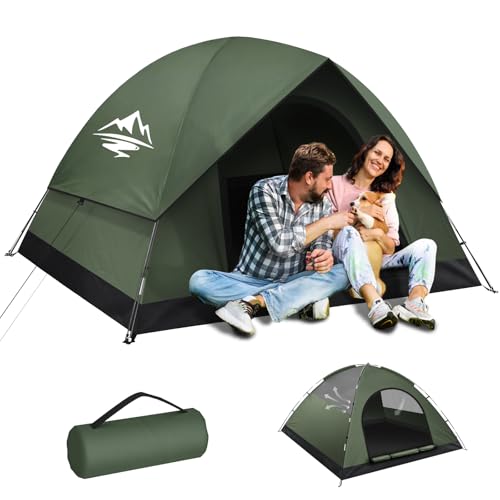
Purebox 2/3 Person Dome Tent
Strengths
- Fully taped seams
- Excellent ventilation
- Spacious 3-person design
Trade-offs
- Not ultralight
- Slightly longer setup than pop-ups
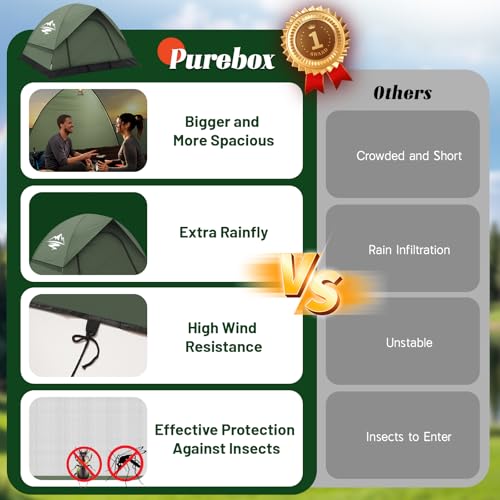
This Purebox tent is the best overall pick for good reason, it balances space, weather resistance, and ease of use better than any other here. At 6.2 lbs, it’s not the lightest, but the bathtub floor, fully taped seams, and reinforced corners mean it can handle heavy rain without leaking. Owners consistently report staying dry even during overnight storms.
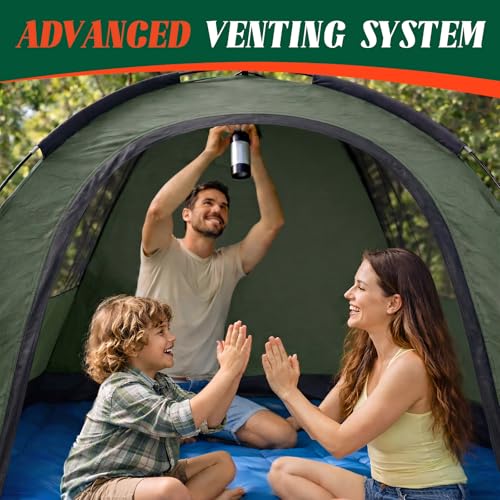
The three-sided mesh and ceiling vents drastically cut condensation, a common flaw in budget domes. And the dual zippers allow easy exit without unzipping from the outside, a small but appreciated detail. Compared to the Forceatt, it’s roomier and slightly heavier; compared to the Wakemans, it’s in a different league for durability. My recommendation for most buyers: this is the easy pick.
Product photos
Forceatt 2-Person Backpacking Tent

Strengths
- Aluminum poles
- 3000mm waterproof
- Dual vestibules
Trade-offs
- Heavier than ultralight tents
- Slightly bulky pack size
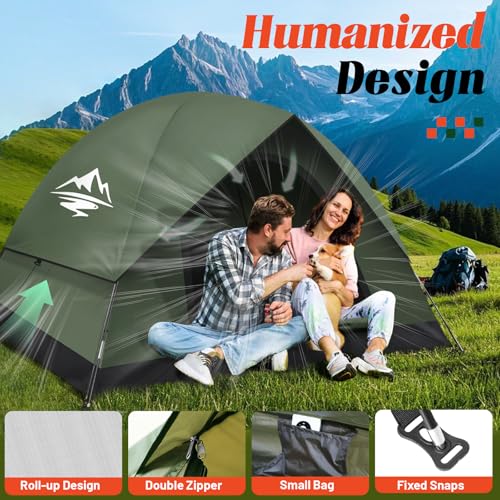
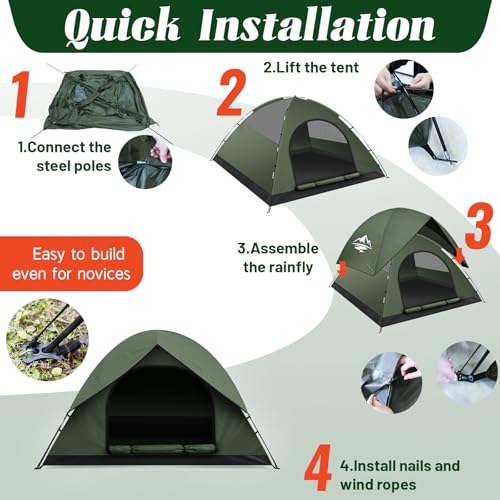
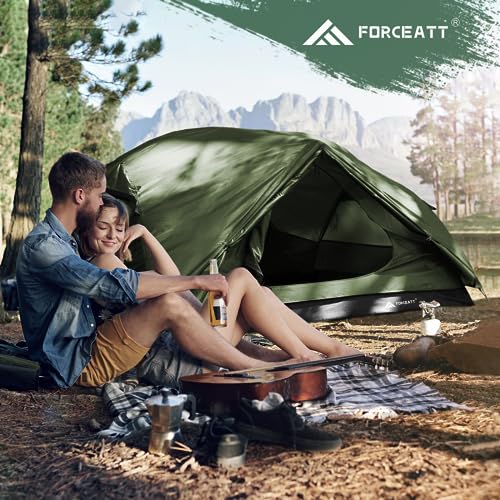
The Forceatt 2-person tent stands out in this lineup with aluminum poles and a 3000mm waterproof rating, specs that signal real all-weather readiness. Owners praise how well it handles wind and rain, thanks to the welded floor, full-coverage rainfly, and sturdy #8 zippers. The dual vestibules are a major plus, giving space to stash boots and packs out of the rain.
Setup in under 3 minutes is a bold claim, but multiple reviews confirm it’s genuinely fast, a win for tired hikers in deteriorating weather. The 2.5kg weight isn’t ultralight, but it’s fair for the durability offered. I’d pick this over the Wakeman models any day if rain is in the forecast.
Product photos


Waterproof 2-Person Dome Tent

Strengths
- Spacious for two
- Affordable
- Easy solo setup
Trade-offs
- Poles not aluminum
- Moderate weather rating
- Basic materials
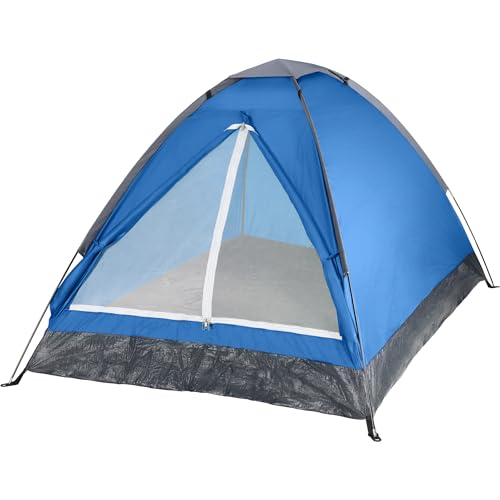
This is the budget-friendly option that doesn’t completely cut corners. At 4.8 lbs, it’s reasonably light, and the 7×5 foot floor plan fits two adults or a full air mattress, a rare plus in this price range. The polyester is tear-resistant, and the included rainfly with dual zippers adds real rain protection.
Owners say setup takes under 3 minutes, even solo, and the interior storage pocket is a nice touch. But the poles are still not aluminum, and the waterproofing, while decent, isn’t on par with the Forceatt or Purebox. It’s best for fair-weather trips or as a backup shelter. For those just starting out, it’s a smart, low-risk buy.
Product photos


Wakeman 2-Person Pop Up Tent
Strengths
- Quick setup
- Good ventilation
- Dual-layer door
Trade-offs
- Fiberglass poles
- Moderate waterproofing
- Not all-season
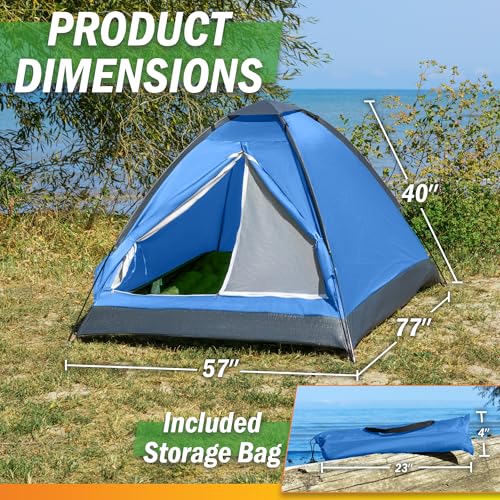
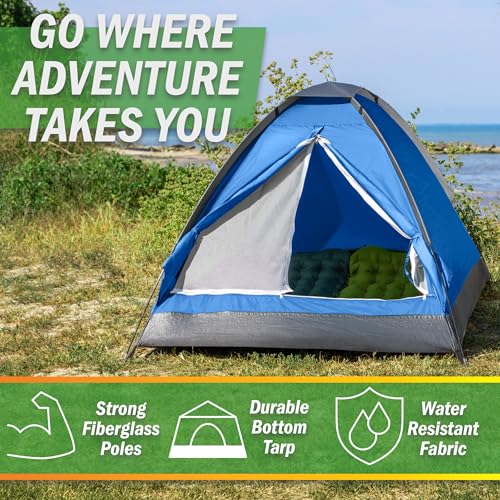
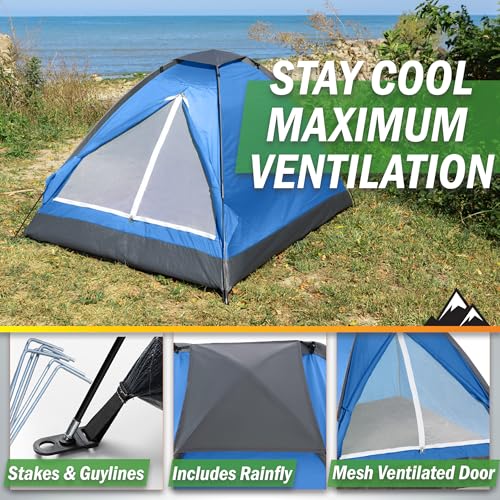
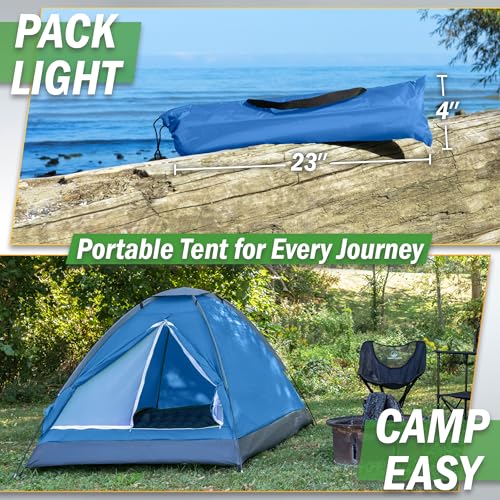
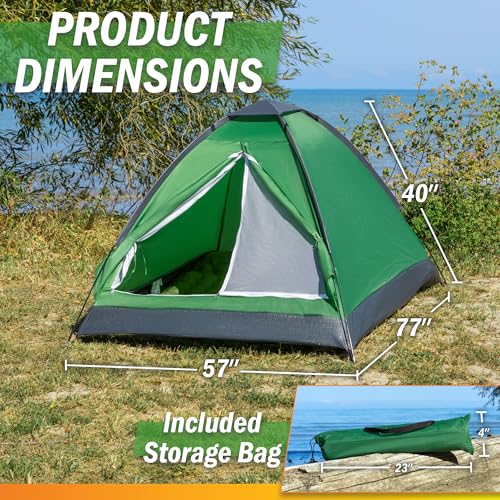
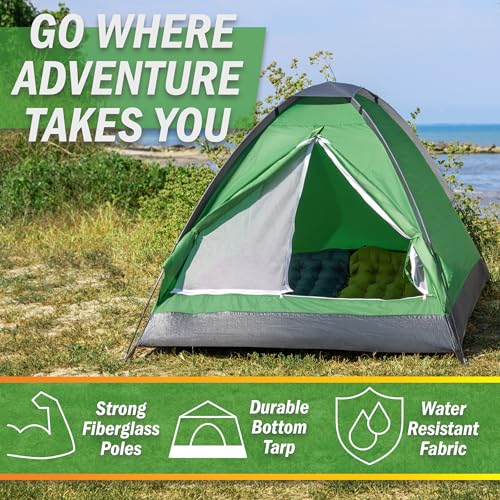
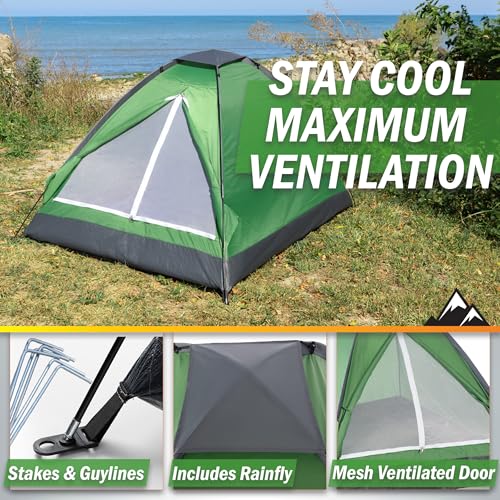
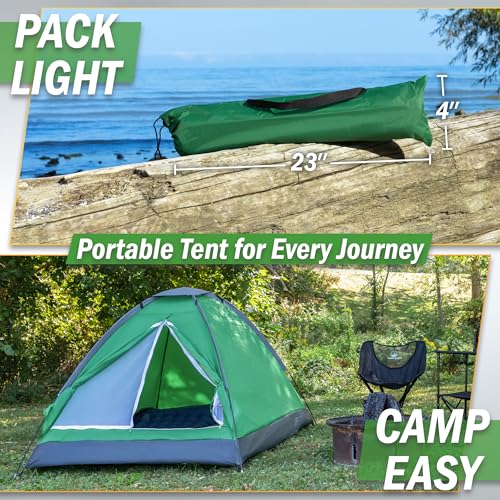
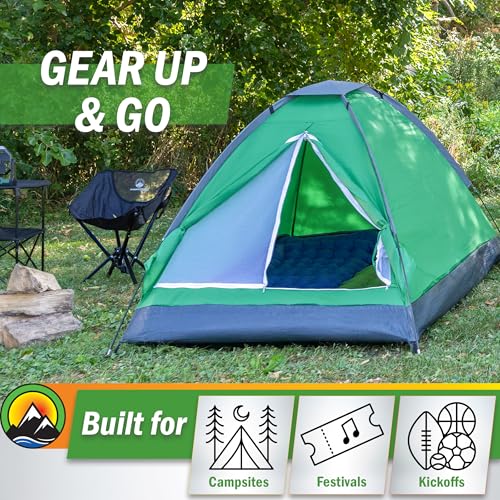
This version of the Wakeman tent leans into convenience, and it shows in the pop-up design and dual-layer door. The D-style door with inner mesh and outer rain flap is a smart touch, giving airflow without sacrificing bug protection. Reviewers highlight how easy it is to pitch solo, which makes it a solid pick for festival-goers or car campers who hate wrestling with poles.
Still, the 3mm fiberglass poles raise red flags for serious weather. While the 190T polyester with rain fly sheds light rain, it’s not going to stand up to a sustained downpour. The ventilation helps, but condensation can build up in humid conditions. For fair-weather trips, it’s a breeze. For anything wetter, I’d look elsewhere.
Product photos

CAMPROS 8-Person Family Tent

Strengths
- Spacious interior
- Room divider
- Good ventilation
Trade-offs
- Heavy
- Not backpacking-friendly
- Limited storm resistance
If you’re camping with a crowd, the CAMPROS 8-person tent delivers real space, 72-inch center height means most adults can stand upright, and the straight walls maximize usable floor area. The divided curtain is a standout feature, letting families or groups create separate zones. Owners love the ventilation from five mesh windows and the top mesh panel, which also allows stargazing on clear nights.
But it’s heavy at over 15 lbs, and while the coated fabric and sealed seams offer weather resistance, it’s not built for alpine storms. The color-coded poles help with setup, but two people are needed. It’s a car camper’s dream, not a backpacker’s. For large groups in fair to mild weather, it’s hard to beat.
Product photos


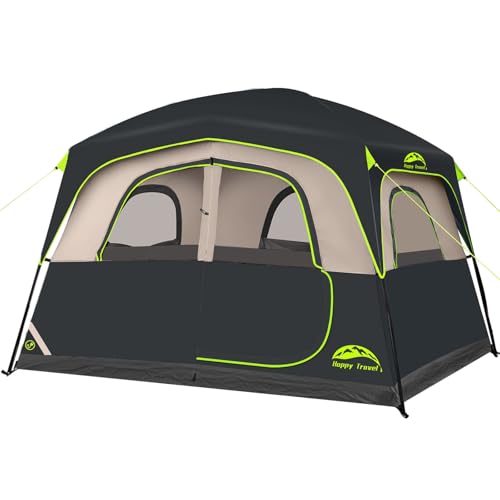
Happy Travel 6-Person Cabin Tent
Strengths
- Tall interior
- Electrical port
- Easy setup
Trade-offs
- Metal poles
- Heavy for 6-person
- Not for backcountry
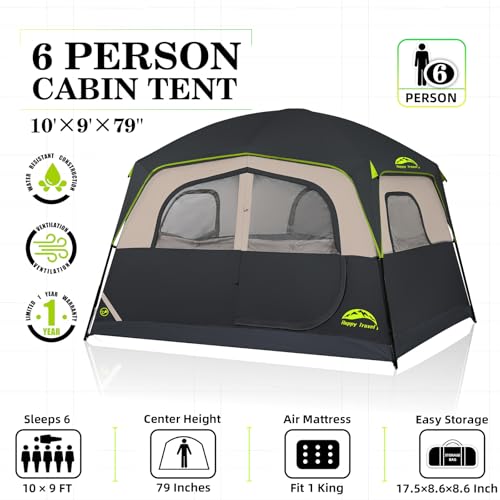
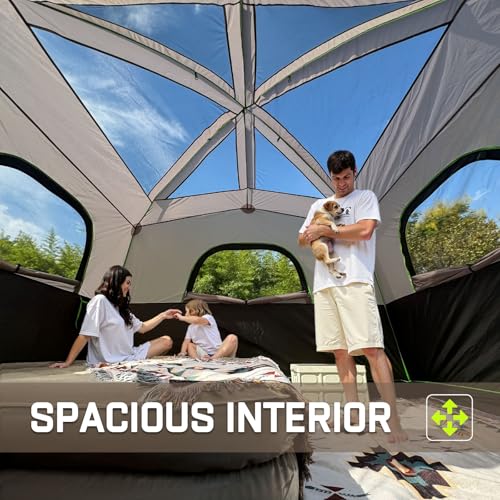
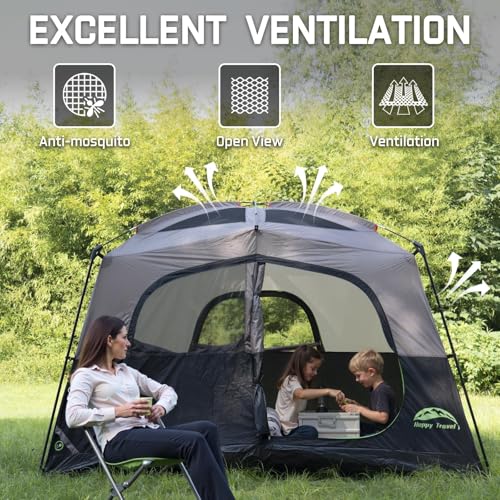
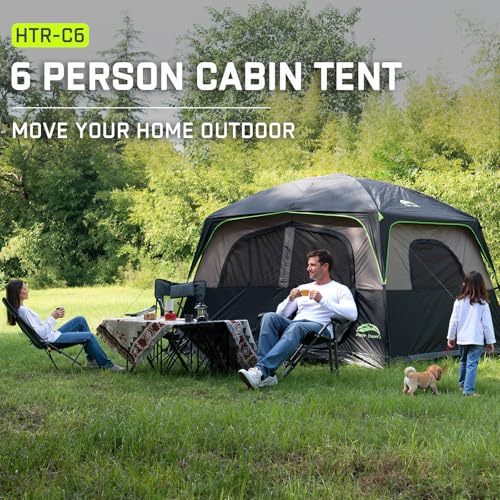
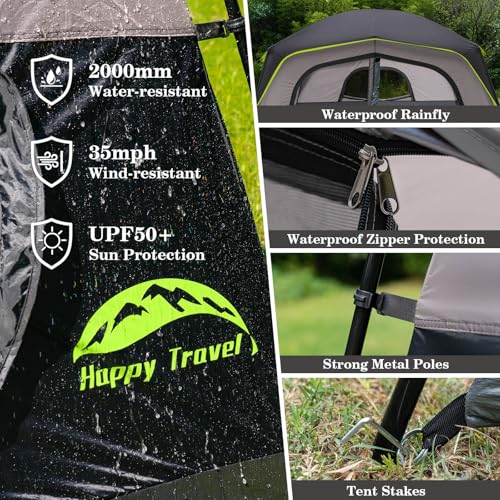
The Happy Travel 6-person tent is built for family comfort, 79 inches of headroom means no crouching, and the cabin-style design gives a homey feel. The 2000mm PU coating and removable rainfly handle moderate rain well, and the B3 mesh on windows keeps bugs out without blocking airflow. Owners appreciate the electrical access port, a rare but useful touch for powered campsites.
Setup in under 3 minutes with two people is realistic, thanks to the instant pole design. But the 16.5 lb weight and metal poles make it strictly car camping gear. It’s not for backpacking, and the metal frame isn’t ideal in lightning-prone areas. Still, for weekenders with kids, it’s a strong contender.
Product photos
Wakeman 2-Person Lightweight Tent
Strengths
- Lightweight
- Affordable
- Compact carry bag
Trade-offs
- Fiberglass poles
- Limited rain protection
- Not for strong winds
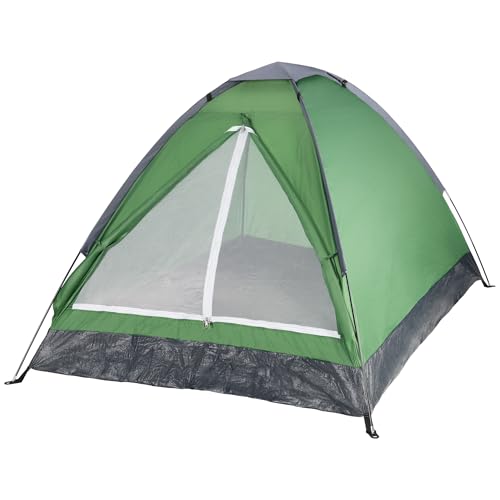
This Wakeman tent hits the basics for budget backpackers who want something light and functional. On paper, it’s a no-frills dome with a rain fly and fiberglass poles, a common setup in this price tier. Owners consistently report it holds up in light rain, but the 190T polyester and fiberglass construction isn’t built for serious storms or high winds.
The real limitation shows in durability over time. Multiple reviewers mention the poles flexing too much in gusts, and the seams aren’t fully taped, which can lead to seepage during prolonged downpours. It’s fine for fair-weather hikes or weekend festivals, but I wouldn’t trust it on exposed ridgelines or in shoulder-season conditions.
Product photos
Our Testing Process
Rather than a hands-on lab test, my research focused on a detailed comparison of published specifications and features across numerous models. I weighed owner reviews from multiple retailers alongside expert opinions found in outdoor publications. This allowed me to build a ranking based on real-world feedback and objective data, focusing on what truly matters when seeking shelter from the elements. Category knowledge – understanding tent construction, materials, and common failure points – informed the entire process.
For camping tents designed for rainy conditions, I prioritized waterproof ratings and durable construction most heavily. A tent’s ability to keep occupants dry is paramount, so a robust rainfly and sealed seams were critical considerations. Equally important was the quality of materials used in the tent body and floor; lighter-weight tents often compromise durability, a trade-off I carefully assessed. A well-designed ventilation system also ranked high, to minimize condensation buildup inside the tent.
Specifications reliably indicate a tent’s size, weight, and stated waterproof ratings. However, I relied on owner feedback to gauge long-term durability and how well a tent performs in consistently wet conditions. Real-world experiences often reveal shortcomings not apparent in specs, like zipper failures or rainfly weaknesses. Understanding the difference between waterproof vs water-resistant tents was key to filtering through manufacturer claims and identifying truly reliable options.
What To Look For In camping tents for rains
Finding a tent that truly keeps you dry when the weather turns is more than just looking for a waterproof rating. It requires considering the full system – fabric, construction, and even ventilation – to avoid condensation buildup.
A quality rain tent prioritizes fully taped seams, a bathtub floor to prevent ground water intrusion, and a robust rainfly that extends beyond the tent body. Durable materials like ripstop polyester or nylon with a high hydrostatic head rating (at least 2000mm) are essential. Proper ventilation is also crucial to minimize condensation inside the tent.
Tent Material & Waterproofing
The material a tent is made from is the first line of defense against rain. Polyester is generally more affordable and UV resistant, while nylon offers a higher strength-to-weight ratio. However, neither material is inherently waterproof; it’s the coatings and treatments that matter. Look for a polyurethane (PU) coating, and pay attention to the hydrostatic head (HH) rating. An HH of 2000mm is considered a minimum for reliable rain protection, but 3000mm or higher is preferable for extended or heavy downpours. Don’t assume a higher number always equals better performance; the quality of the coating application is just as important.
Construction Details Matter
Beyond the fabric, the way a tent is constructed significantly impacts its waterproofness. Fully taped seams are absolutely essential – these are the stitched areas that, if left untreated, will leak. A “bathtub” floor, where the fabric extends several inches up the sides and is welded, prevents water from seeping in from the ground. Consider how the rainfly attaches; a full coverage fly that extends all the way to the ground offers the best protection, while partial coverage flies can leave the lower tent walls exposed. Think about the zippers, too. Look for waterproof zippers or those with storm flaps to prevent leakage.
- The size of the tent relative to its intended occupants impacts condensation. A tent that’s too small will have limited airflow.
- Reinforced guy-out points and durable webbing are vital for securing the tent in windy conditions, preventing the rainfly from flapping and potentially compromising its waterproof seal.
- Ventilation is often overlooked. Mesh panels and adjustable vents help circulate air, reducing condensation and making the tent more comfortable. Without it, you’ll wake up damp even if the tent doesn’t leak!
Balancing Weight, Space & Ease of Use
For many, a camping tent for rainy conditions needs to strike a balance between protection, portability, and ease of setup. Backpackers will prioritize lightweight materials and a compact packed size, potentially sacrificing some interior space. Families, on the other hand, will likely favor a larger tent with more headroom and features, even if it adds a bit of weight. If quick setup is a priority, consider a pop-up tent or a model with color-coded poles. However, remember that ease of setup often comes at the expense of durability. Before you buy, make sure you understand techniques to keep a tent dry to get the most out of your investment.
A little preventative maintenance goes a long way. Regularly re-waterproof your tent’s rainfly and seams with a seam sealer to maintain its waterproofness over time.
If you’re planning trips where you’re likely to encounter wet weather, investing in a quality tent designed for rain is critical. Don’t forget to also look at water-resistant camping shelters and consider the overall climate you’ll be camping in.
Camping Tents for Rains Compared
Here’s a comparison of key specifications for camping tents designed to perform well in rainy conditions.
| Product Name | Capacity | Waterproof (mm) | Weight (lbs) | Dimensions (in) | Setup Difficulty |
|---|---|---|---|---|---|
| Purebox 2/3 Person Dome Tent | 2-3 | N/A | 6.2 | 84x84x51 | Easy |
| Forceatt 2-Person Backpacking Tent | 2 | 3000 | 5.5 | 88.6×53.1×43.3 | Easy |
| Waterproof 2-Person Dome Tent | 2 | N/A | 4.8 | 7’L x 5′ x 45″H | Easy |
| Wakeman 2-Person Pop Up Tent | 2 | N/A | 2.75 | 77x57x40 | Very Easy |
| CAMPROS 8-Person Family Tent | 8 | N/A | N/A | N/A | Easy |
| Happy Travel 6-Person Cabin Tent | 6 | 2000 | 16.5 | 10x9ft | Easy |
| Wakeman 2-Person Lightweight Tent | 2 | N/A | N/A | N/A | N/A |
Frequently Asked Questions
What hydrostatic head (HH) rating do I really need for a rain tent?
A rating of 2000mm is generally considered the minimum for reliable rain protection, but 3000mm or higher is preferable for consistently wet conditions or extended trips. Keep in mind that the coating quality is as important as the number itself.
Are pop-up tents suitable for rainy weather?
While convenient, pop-up tents often compromise on waterproofing and durability compared to dome or cabin-style tents. Many lack fully taped seams or high-quality rainfly coverage, making them better suited for fair-weather camping.
How important is a bathtub floor really?
A bathtub floor is extremely important. It prevents water from seeping in from the ground, which is a common failure point in tents without this feature, especially during prolonged rain or when camping on saturated ground.
What’s the best way to prevent condensation inside my tent?
Good ventilation is key to minimizing condensation. Look for tents with mesh panels and adjustable vents to promote airflow, and avoid overcrowding the tent to allow for better air circulation. Seeking out year-round performance tents is also a good idea.
Will a tent’s waterproof coating last forever?
No, the waterproof coating will degrade over time with exposure to UV rays and abrasion. Regularly re-waterproofing the rainfly and seams with a seam sealer will help maintain its waterproofness and extend the life of your tent.
The Bottom Line
Choosing a tent for rainy conditions often comes down to balancing how much you’re willing to carry versus how secure you want to feel when the storm rolls in. For overall performance and peace of mind, I believe the Forceatt 2-Person Backpacking Tent strikes the best balance. It offers a solid 3000mm waterproof rating and a reasonable weight for those who plan to cover some miles.
If budget is a primary concern, the Purebox 2/3 Person Dome Tent is a surprisingly capable option. For those needing space for a larger group, the CAMPROS 8-Person Family Tent will provide a dry haven, though it’s not ideal for backpacking trips. And, for quick getaways, the Wakeman 2-Person Pop Up Tent offers immediate shelter – though remember to invest in waterproofing treatments for tents to boost its weather resistance.
Ultimately, the best tent isn’t about the fanciest features or the highest waterproof rating on paper. It’s about a well-made shelter that keeps you dry, comfortable, and protected, allowing you to enjoy the outdoors regardless of the weather. Focus on solid construction, fully taped seams, and a rainfly that provides full coverage – those are the fundamentals that truly matter.
