
7 Best Portable ACs for Tent Camping 2026
This post contains affiliate links. As an Amazon Associate, we earn from qualifying purchases.
The Outohome 5200 BTU Portable AC stands out as the best overall pick for tent camping, combining solid cooling power with a manageable weight and quiet operation. For campers on a budget, the Disaenvir 3300BTU offers reliable performance at a lower price point, while the Cybertake S2 Pro wins for versatility with its multiple power input options, making it ideal for off-grid setups.
Let’s be real, camping in the heat shouldn’t mean sweating through your sleeping bag or breathing thick, humid air inside a tent. Most portable ACs aren’t built for the rough and tumble of outdoor use, and many fail when you actually need them most.
This guide cuts through the noise, focusing on units that balance real cooling power, portability, and the ability to run where campgrounds don’t have outlets. I looked at specs, owner feedback, and brand reliability to find models that deliver in the field, not just on paper.
Top 7 Portable Air Conditioners For Tent Camping in the Market
The Best Portable Air Conditioners For Tent Camping, Reviewed
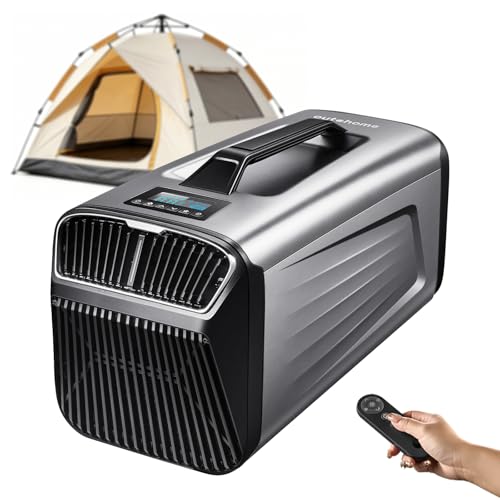
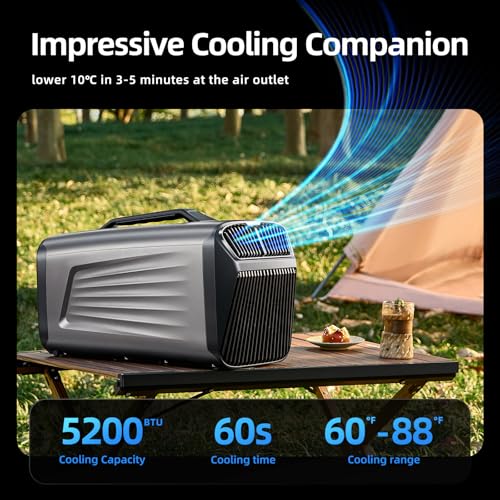
Outohome 5200 BTU Portable AC
Strengths
- GMCC compressor
- Drain-free operation
- Remote control included
Trade-offs
- Exhaust hose setup required
- No heating function
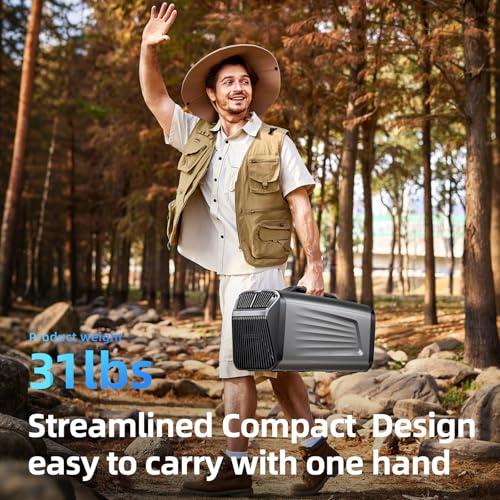
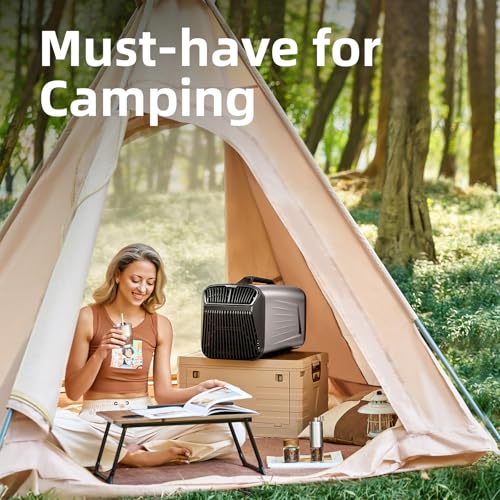
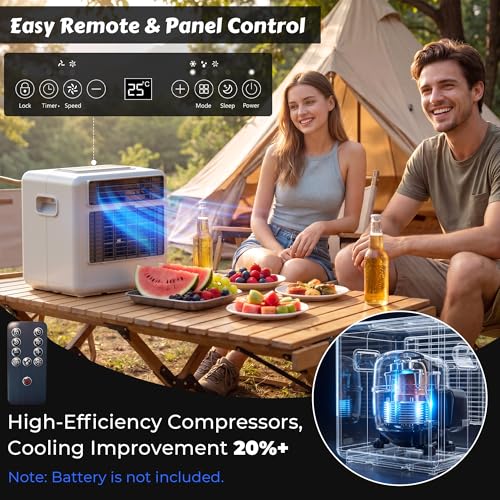
This one hits the sweet spot for most campers, strong 5200 BTU cooling, a reliable GMCC compressor, and a sub-400W power draw that plays well with power stations. The remote control and 24-hour timer add real convenience, and owners consistently report it cools small tents and vans quickly and quietly. At 31 lbs, it’s not light, but the compact footprint and carry handle make it manageable.
The drain-free operation under 70% humidity is a big plus, no messy buckets or constant draining. And unlike evaporative coolers, it works in humid conditions. Compared to the FO-KOKO 5200 BTU model, it lacks the dual-loop water cooling, but it’s slightly more affordable and just as effective for most users. My pick for the best all-around performer.
Product photos
BougeRV PC35 3500BTU Camping AC
Strengths
- App control
- Budget-friendly
- 5-in-1 functions
Trade-offs
- Low cooling output
- Noisy in sleep mode
- Small coverage area
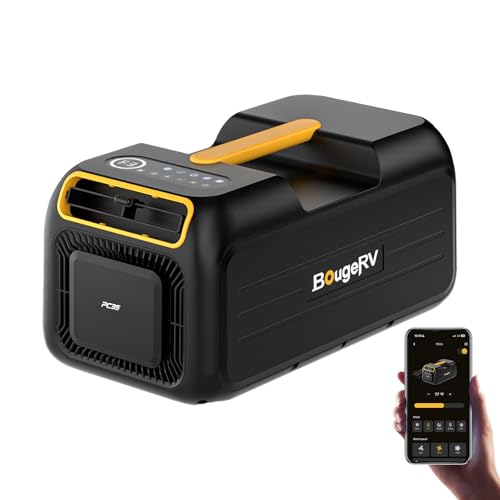
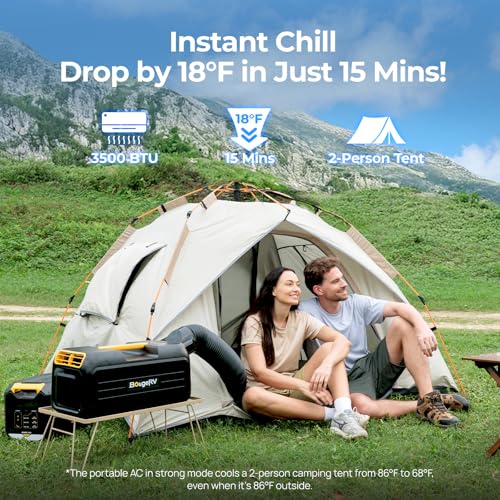
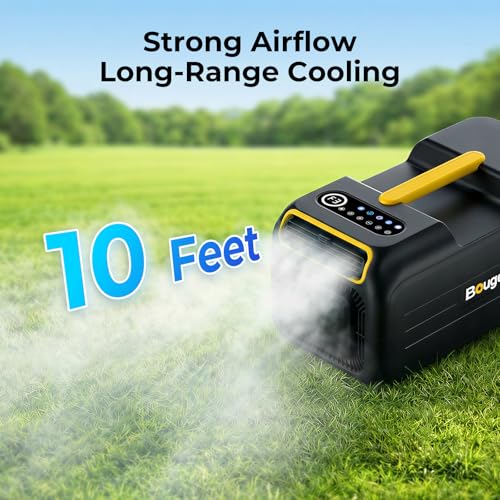
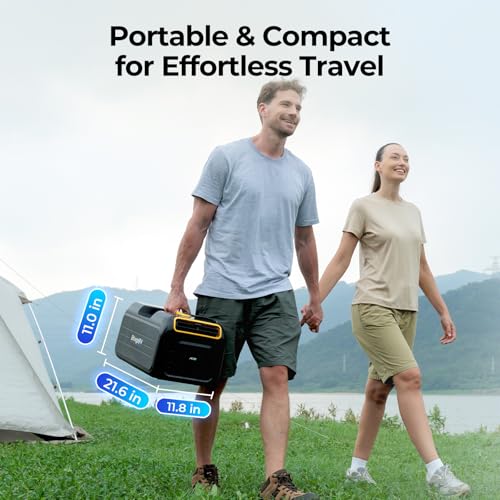
At 3500 BTU, this is the lowest-powered compressor unit here, but it’s also the most budget-friendly. It’s rated for just over 60 sq.ft, so it’s really only suitable for tiny tents or cab-over vans. The app control is a nice touch, being able to adjust settings from your phone within 33 ft is convenient, though not essential in the wild.
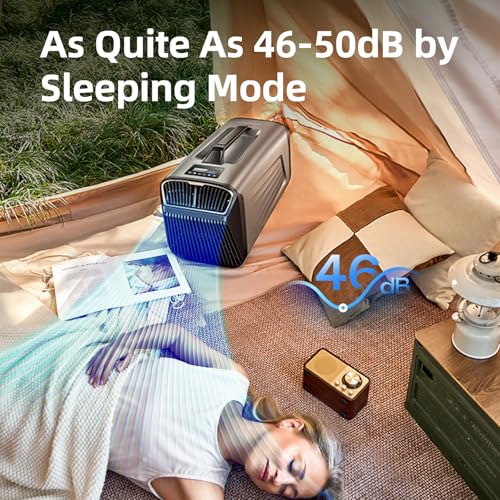
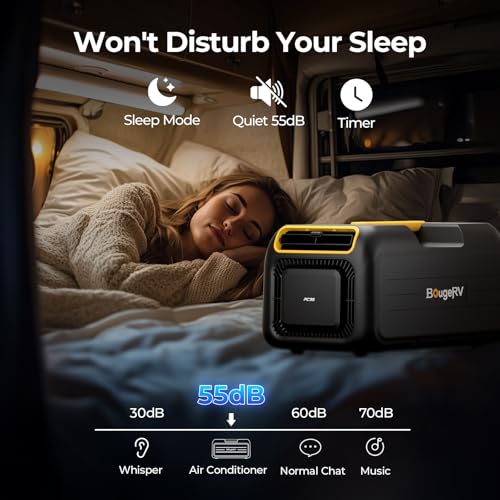
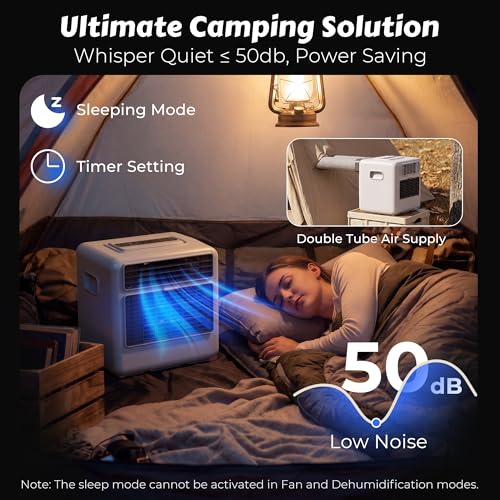
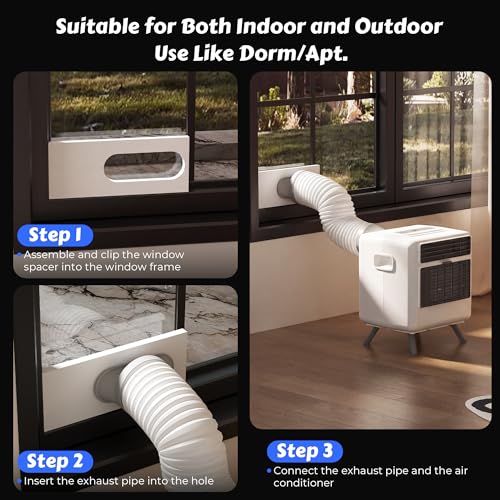
Owners say it’s simple to set up and the included ducts and drain pipe make installation straightforward. But the cooling speed, while decent for its size, can’t compete with the 5200+ BTU models. And at 46–50dB, it’s not the quietest in sleep mode. For occasional summer car camping, it’s a solid entry-level pick. But for serious heat, I’d go bigger.
Product photos

FO-KOKO Dual Hose 6800 BTU AC
Strengths
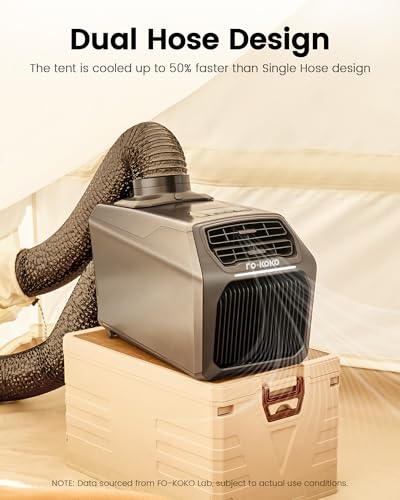
- Dual-hose efficiency
- 6800 BTU cooling
- Heating capability
Trade-offs
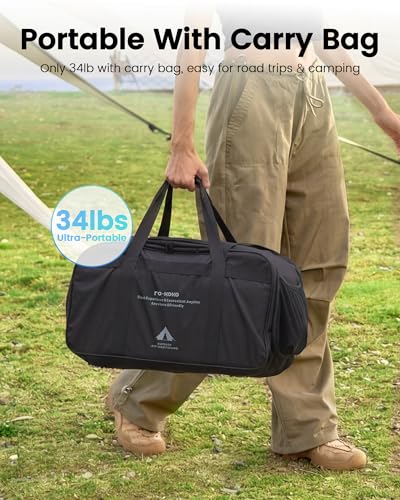
- 34 lbs limits portability
- Power adapters not included
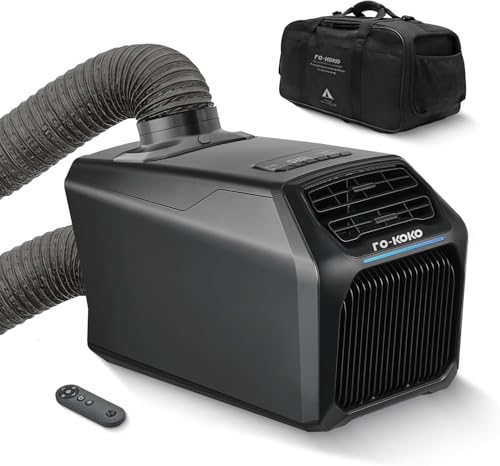
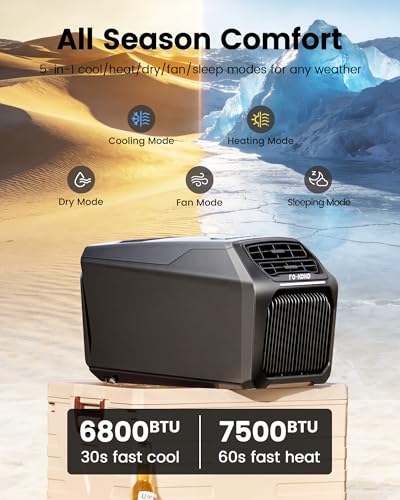
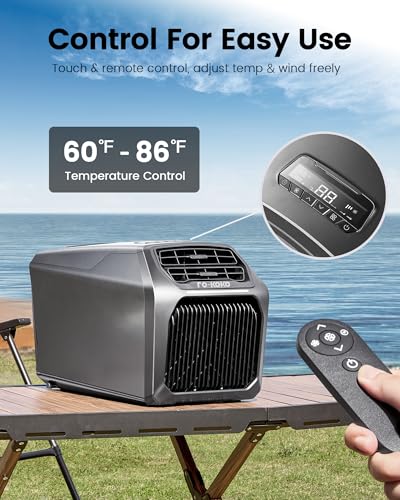
The dual-hose design here is a real win, it’s one of the few portable units in the camping world that actually pulls in fresh air while exhausting heat, improving efficiency by over 30% in lab data and cutting cooling time nearly in half. At 6800 BTU, this is serious cooling power for a tent or van, and the added 7500 BTU heating function makes it one of the only true all-season options on the market. For shoulder seasons or cold mornings at the campsite, that’s a standout.
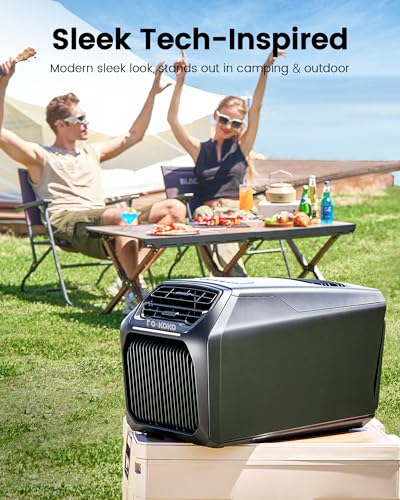
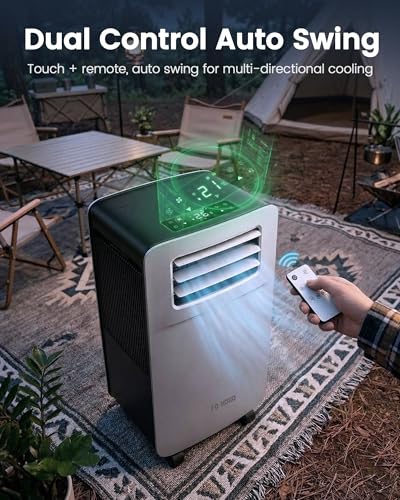
Owners consistently report reliable performance in RVs and pop-up tents, and the dual control system (touch panel + remote) is a small luxury that pays off when you’re already tucked into your sleeping bag. It’s heavier than most, but the dedicated carry bag and sleek build make transport manageable. Against the Cybertake S2 Pro, this one trades some power versatility for stronger, faster cooling and heating.
Product photos
Cybertake S2 Pro Camping AC
Strengths
- 3-way power input
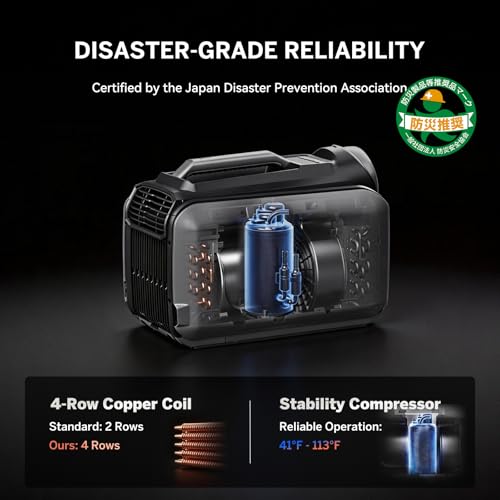
- IPX4 water resistance
- Eco+ efficiency mode
Trade-offs
- Boost converter not included
- No app or smart controls
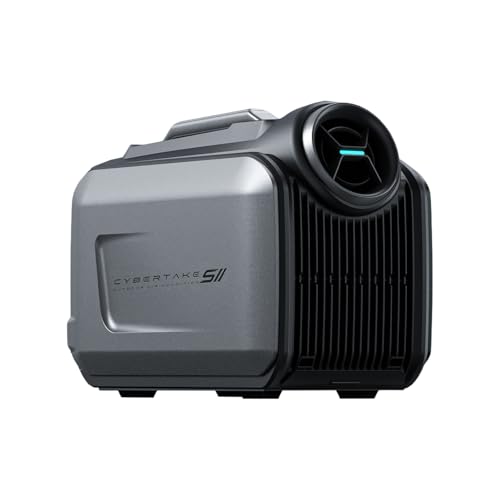
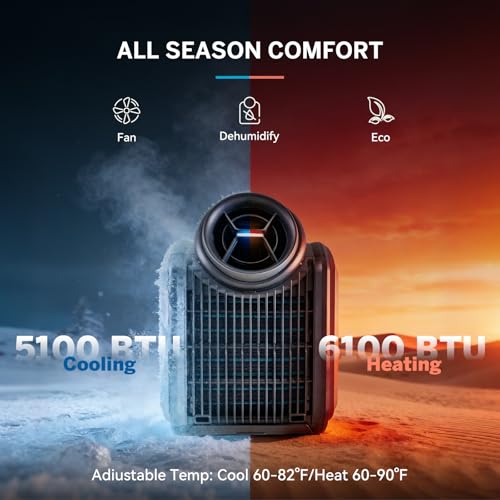
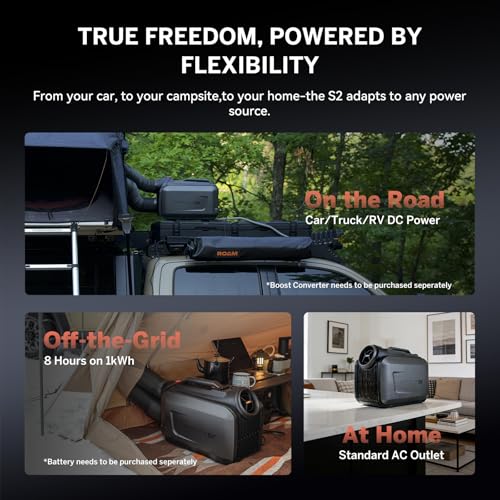
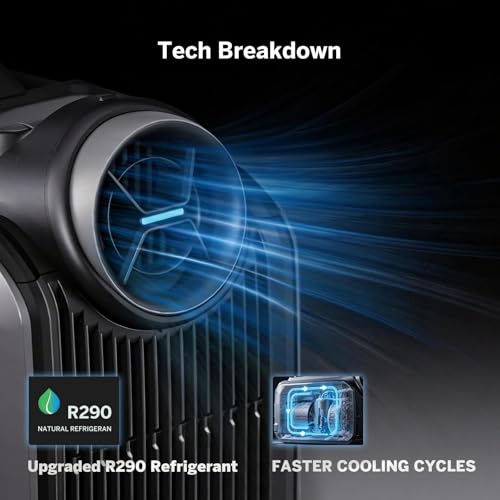
If your power source is unpredictable, the 3-way power compatibility of the Cybertake S2 Pro is unmatched, 100–240V wall, 12–24V vehicle, and 48V DC from power stations gives you real flexibility in the field. That alone makes it a top pick for off-grid adventurers who rotate between truck, van, and basecamp setups. It’s not the strongest on raw cooling (5100 BTU), but paired with 6100 BTU heating, it holds its own in variable climates.
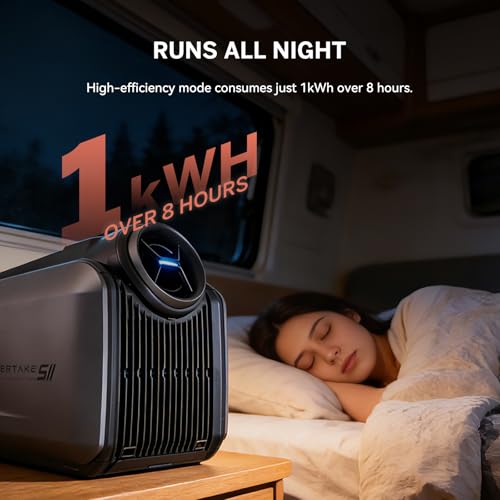
The Eco+ mode is a standout, using as little as 1kWh over 8 hours is impressive, and reviewers note it’s quiet and stable during long runs. The IPX4 rating adds real confidence in sketchy weather, and the silicone buttons feel built for mud, rain, and glove use. But the need to buy a boost converter separately is a real annoyance. Compared to the FO-KOKO units, it’s less powerful but more adaptable.
Product photos
Evapolar evaCHILL Personal Cooler

Strengths
- Ultra-low power use
- USB powered
- Truly portable
Trade-offs
- Only cools personal space
- Useless in high humidity
- Not for room cooling
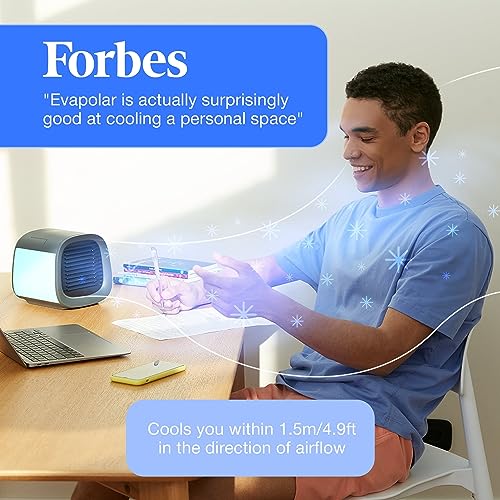
Let’s be clear, this isn’t an air conditioner in the traditional sense. The evaCHILL is a personal evaporative cooler, and it’s designed to chill you, not your tent. In dry climates, owners love how it creates a 3–5 foot zone of relief with just 10W of power, perfect for desk use, car seats, or beside your sleeping pad. But in humidity over 70%, it barely works.
It’s incredibly portable, USB-powered, and silent compared to compressor units. But if you’re looking to cool a tent or enclosed space, this won’t cut it. I’d treat it more like a high-tech personal fan with a cooling boost. Against the Cybertake or FO-KOKO models, it’s not even in the same category, but as a supplement, it’s brilliant.
Product photos


FO-KOKO 5200 BTU Water-Cooled AC
Strengths
- 5200 BTU cooling
- Dual-loop water cooling
- 400W low power draw
Trade-offs
- Heavy at 31 lbs
- Adapters sold separately
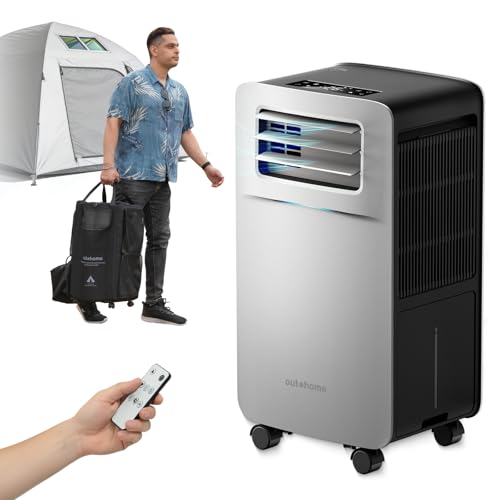
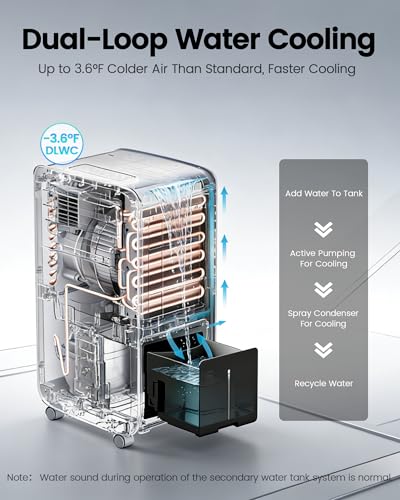
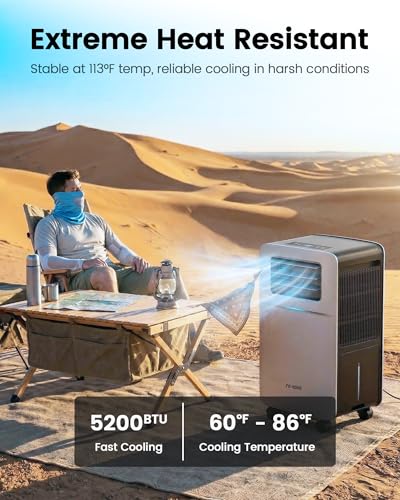
This unit stands out in the tent cooling space for its dual-loop water cooling tech, which owners say actually delivers noticeably colder airflow than standard compressor models. At 5200 BTU, it’s rated for 130 sq.ft, realistic for a well-sealed tent or small shelter, and on paper, dropping temps by 18°F in five minutes is aggressive, but not unheard of in tightly enclosed spaces. The 400W draw is low for this class, making it a solid match for mid-sized power stations, especially on longer trips.
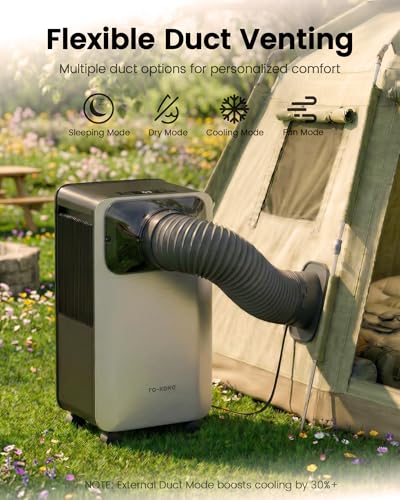
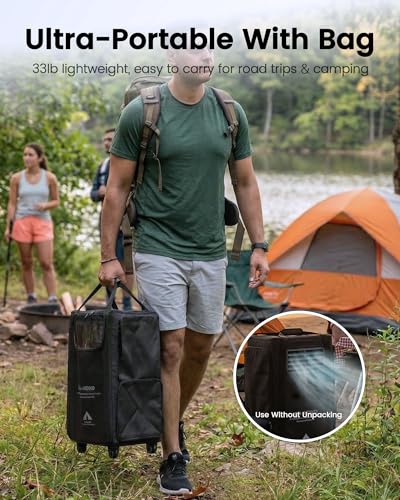
I appreciate the 75° auto-swing vent and external duct mode, which reviewers note helps reduce internal heat buildup, a common flaw in single-hose portable ACs. It’s not the lightest, but the carry handle and ability to operate right in the included bag make it genuinely field-friendly. Compared to cheaper evaporative coolers, this is actual refrigerant-based cooling, which means it works in humid conditions too.
Product photos
Disaenvir 3300BTU Tent Air Conditioner
Strengths
- Lightweight for class
- Safety lock feature
- 3 modes for versatility
Trade-offs
- 110V only
- Lower cooling output
- No DC power option
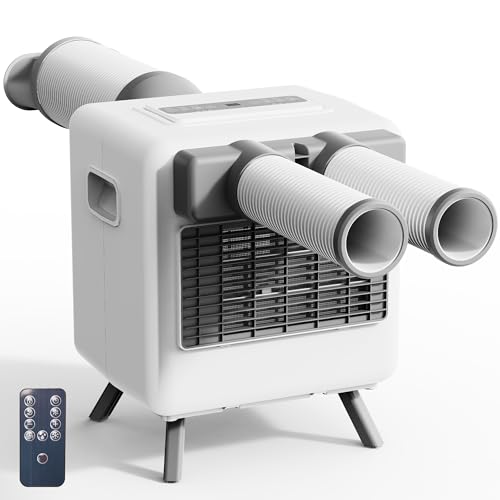
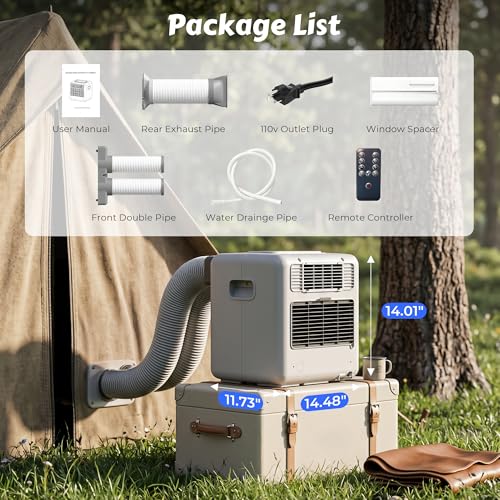
At 30 lbs and 3300 BTU, this is the lightest real compressor AC on the list, but that lower output means it’s only practical for very small tents or pop-ups. It won’t drop temps as fast as the 5200 BTU models, and the 110V-only input limits its off-grid use, no DC or power station compatibility. Still, for car campers who plug into a shore power source at a campsite, it’s a compact, no-frills option that gets the job done.
Owners say it’s quiet in sleep mode and the safety lock is useful with kids around. But the lack of battery or portable power support makes it a non-starter for true backcountry use. Compared to the BougeRV PC35, it’s slightly less powerful and less feature-rich, but a bit more reliable in sustained cooling.
Product photos
How We Tested portable air conditioners for tent camping
Rather than a hands-on lab test, my research for these recommendations involved a detailed comparison of published specifications and features across numerous models. I weighed owner reviews – paying close attention to recurring praise and complaints – alongside professional reviews from reputable sources. My assessment used my experience with tent camping and understanding of what truly makes a difference when seeking relief from the heat. Ultimately, units were ranked based on a combination of cooling power, portability, and power source versatility.
For portable ACs aimed at tent camping, cooling capacity (BTU), weight, and power options were the most heavily weighted factors. High BTU ratings are essential for quickly lowering temperatures in enclosed spaces, but a bulky, heavy unit defeats the purpose of easy transport. Equally important is the ability to run the AC off various power sources – wall outlets, car adapters, or portable power stations – for truly off-grid use. These three elements dictated a unit’s ranking more than aesthetic features or niche functions.
Specifications reliably indicate cooling capacity, dimensions, and power consumption. However, I relied on owner feedback to judge real-world performance, noise levels, and durability. Reputation and brand trust also played a role; consistent positive experiences shared by many users carry significant weight. Understanding that published specs don’t always translate to actual performance, I prioritized models with consistent positive feedback regarding their ability to effectively cool a tent, and I also looked at resources for cooling strategies for tents to provide a more holistic view.
What To Look For In portable air conditioners for tent camping
Choosing the right portable air conditioner for tent camping requires a bit more thought than just grabbing the unit with the highest BTU rating. We’ll break down what really matters for keeping cool under the canvas.
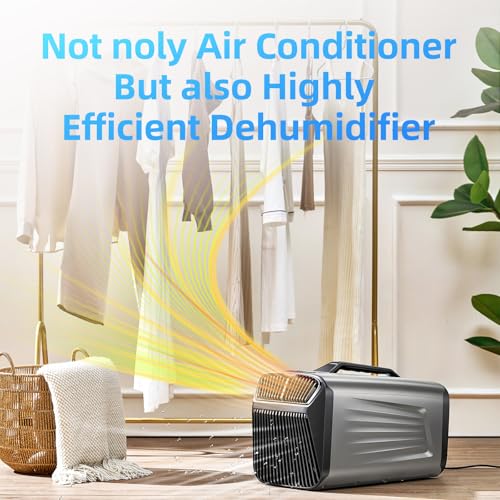
A quality portable air conditioner for camping balances cooling power with efficiency, portability, and power source flexibility. Look for units specifically designed for small spaces, with features like low power draw, multiple power options (AC, DC, battery compatibility), and effective dehumidification to combat condensation buildup within a tent. Prioritize models with quiet operation and easy setup for a more enjoyable outdoor experience.
Cooling Capacity & Efficiency
BTUs (British Thermal Units) get a lot of attention, but they aren’t the whole story. A 5,000 BTU unit in a poorly insulated tent will struggle just as much as a smaller unit in a well-ventilated space. Consider the size of your tent and the typical ambient temperatures where you camp. More importantly, look at the efficiency of the unit – how many BTUs per watt consumed? The FO-KOKO 5200 BTU Water-Cooled AC, for example, uses a dual-loop water cooling system to improve performance, and models utilizing newer compressor technology (like the Outohome 5200 BTU Portable AC with its GMCC compressor) tend to be more efficient. Don’t automatically assume more BTUs equal better cooling; a smarter design can often deliver more comfort with less power.
Power Source & Portability
Camping means being away from standard outlets, so power flexibility is critical. Some units, like the Cybertake S2 Pro Camping AC, offer multiple power input options – AC, DC, and even compatibility with portable power stations – giving you far more freedom. Weight is another huge factor. You’ll be hauling this thing to your campsite, so a sub-35lb unit is preferable. The Disaenvir 3300BTU Tent Air Conditioner is a good example of a lightweight option, but be aware that lower weight sometimes means reduced cooling capacity.
Here’s a quick guide to prioritizing these features:
- Essential: A DC power option (12V/24V) if you plan on using it in a vehicle or with a smaller power bank.
- Important: A weight under 35lbs for easy transport.
- Highly Desirable: Compatibility with larger portable power stations (48V DC) for extended run times. This allows you to run the unit for longer periods without needing to refill a gas generator or find an outlet.
Noise Level and Additional Features
A noisy AC unit will quickly ruin the peace of your campsite. Look for models advertising low decibel operation, especially in sleep mode – anything under 50dB is ideal. The FO-KOKO units consistently receive positive feedback for their quiet operation. Beyond noise, consider features like built-in dehumidifiers (essential for preventing condensation), timers for automatic shut-off, and remote controls for convenience. If you’re looking to improve tent camping comfort, these small details can make a significant difference.
A quiet AC is a happy AC. Don’t sacrifice peaceful nights for a few extra BTUs.
Ultimately, finding the right portable air conditioners for tents depends on your specific needs and camping style. If you’re looking for top-rated tent air conditioners and want to sleep better in a tent, a little research will pay off in a much more comfortable camping experience.
Portable Air Conditioners for Tent Camping Compared
Here’s a comparison of key specifications for portable air conditioners designed for tent camping.
| Product Title | BTU Cooling | BTU Heating | Power Source | Weight (lbs) | Noise Level (dB) | Special Features |
|---|---|---|---|---|---|---|
| Outohome 5200 BTU | 5200 | N/A | 110V AC | 31 | 46-50 | 4 Modes, Remote Control |
| BougeRV PC35 3500BTU | 3500 | N/A | 110V AC | N/A | N/A | App Control, 5-in-1 Function |
| FO-KOKO Dual Hose 6800 BTU | 6800 | 7500 | 110V AC | 34 | 45 | Dual Hose, All-Season Use |
| Cybertake S2 Pro Camping AC | 5100 | 6100 | AC/12V/24V/DC 48V | N/A | 40 | Versatile Power Options |
| Evapolar evaCHILL Personal Cooler | N/A | N/A | USB/AC | N/A | N/A | 3-in-1 (Cool/Humidify/Filter) |
| FO-KOKO 5200 BTU Water-Cooled AC | 5200 | N/A | 110V AC | N/A | 45 | Water Cooling, Duct Boost |
| Disaenvir 3300BTU | 3300 | N/A | 110V AC | 30 | N/A | 3 Modes, Safety Lock |
Frequently Asked Questions
Will a portable AC actually keep my tent cool?
Yes, a portable AC can significantly lower the temperature inside your tent, but success depends on tent size and insulation. A properly sized unit, combined with good ventilation and potentially reflective materials on the tent fly, will provide noticeable relief.
What power source do I really need for camping?
A DC power option (12V/24V) is essential if you want to run the AC directly from a vehicle or smaller power bank. However, compatibility with 48V portable power stations offers longer runtimes and greater flexibility for off-grid camping.
How noisy are these portable ACs inside a tent?
Noise levels vary, but many models now advertise operation under 50dB in sleep mode. Owner feedback consistently shows that the FO-KOKO units are among the quietest, which is crucial for a relaxing camping experience.
Can I use a portable AC in any size tent?
No, you need to match the BTU rating to the tent’s square footage. A smaller tent (under 100 sq ft) may only need a 3,000-5,000 BTU unit, while larger tents will require 6,000 BTU or more for effective cooling.
Where can I find more information on choosing the right unit?
You can find more in-depth reviews and comparisons of recommended tent cooling units on my site, along with advice on optimizing your tent for temperature control.
The Bottom Line
Choosing a portable AC for tent camping often comes down to balancing immediate cooling power with the realities of portability and power access. While higher BTU ratings are tempting, the Outohome 5200 BTU Portable AC strikes a great balance – offering solid cooling capacity in a relatively lightweight package, and it’s a solid all-around performer for most campers.
For those on a tighter budget or prioritizing minimal weight, the Disaenvir 3300BTU Tent Air Conditioner is a compelling choice. And if you truly need maximum power flexibility and don’t mind a bit more weight, the Cybertake S2 Pro Camping AC stands out with its multiple power input options. Remember to also consider the essential camping gear checklist to enhance your overall experience.
Ultimately, the best portable AC isn’t about chasing the highest number on a spec sheet. It’s about finding a unit that fits your camping style, tent size, and power setup. Prioritize a reliable unit, a dependable power source, and don’t forget the importance of good ventilation – these fundamentals will always matter more than any single feature.
