
7 Best 2-Person Waterproof Tents 2026
This post contains affiliate links. As an Amazon Associate, we earn from qualifying purchases.
The best 2 man waterproof tent overall is the Clostnature Ultralight 2 Person Tent, thanks to its high 5000mm waterproof rating, solid weight, and strong owner feedback. For a lighter, quicker setup option, the Wakeman Outdoors Pop Up Tent stands out, though its waterproof specs are less clear. If you need serious four-season toughness, the Underwood 4-Season Backpacking Tent is a top contender.
Most people don’t realize how quickly a cheap or poorly designed tent can ruin a trip when the rain starts. A flimsy fly, weak seams, or zero ventilation turns a weekend escape into a damp, frustrated mess.
This guide cuts through the marketing by focusing on what actually matters: verified waterproof ratings, real user experiences, and smart design choices. I compared specs and feedback across top models to find the ones that deliver true protection and value without weighing you down.
Top 7 2 Man Waterproof Tents in the Market
The Best 2 Man Waterproof Tents, Reviewed
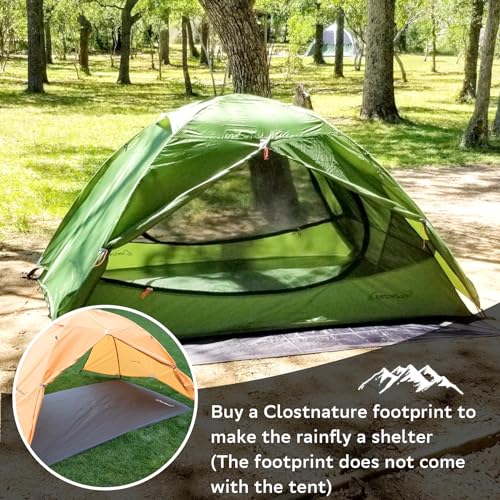
Clostnature Ultralight 2 Person Tent

Strengths
- Excellent waterproof rating
- Good ventilation with full mesh
- Lightweight yet durable
Trade-offs
- Slight condensation in cold weather
- Stakes could be sturdier
- Fly could cover more
With a PU5000 coating, freestanding aluminum poles, and a sub-5.3-pound weight, this tent hits a sweet spot between performance and price. Owners praise the quick setup, one person can pitch it solo in under 5 minutes, and the full mesh walls deliver excellent airflow, cutting down on condensation. The dual vestibules are a real upgrade, offering dry storage for muddy boots or packs.
At 2.4 kg, it’s not the absolute lightest, but it’s close enough for serious backpackers while offering more durability than ultralight budget models. The packed size is compact, and the included repair kit adds peace of mind on remote trails. Compared to others here, it balances weight, weather protection, and ventilation best. My recommendation for most hikers? This is the smarter buy.
Product photos



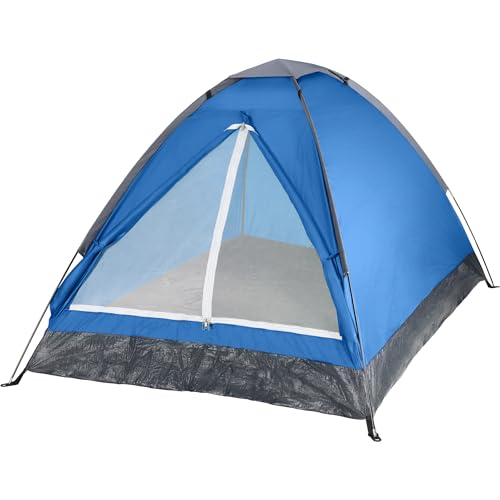
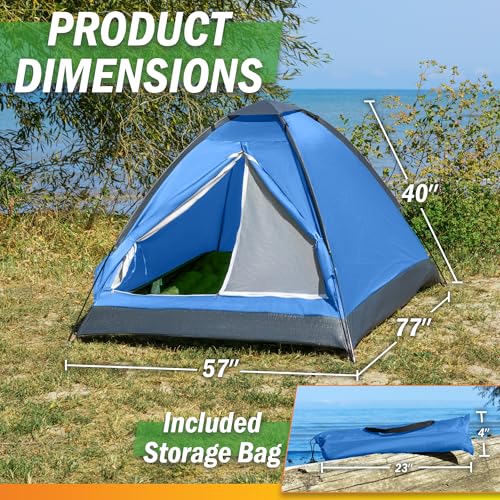
Wakeman Outdoors Pop Up Tent
Strengths
- Ultra lightweight
- Low cost
- Simple dual-door design
Trade-offs
- Fiberglass poles prone to bending
- Minimal weather protection
- Short lifespan with frequent use
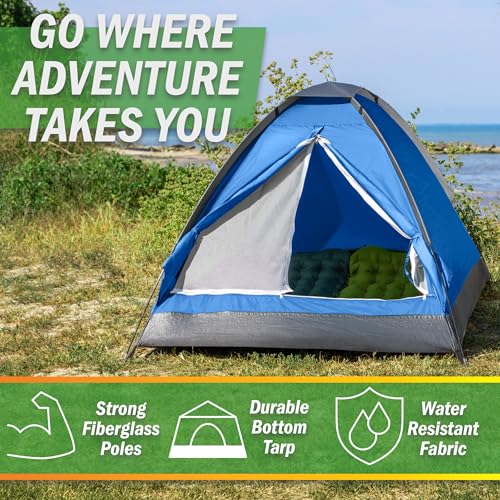
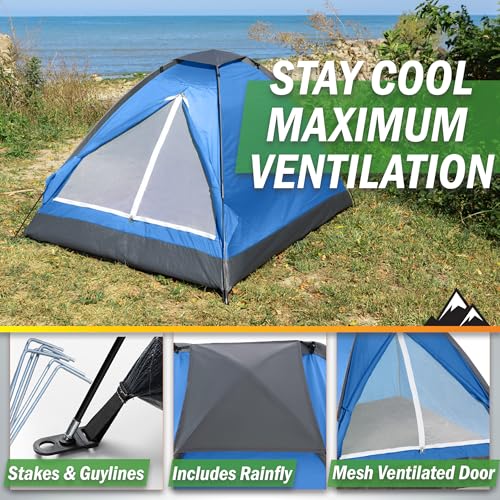
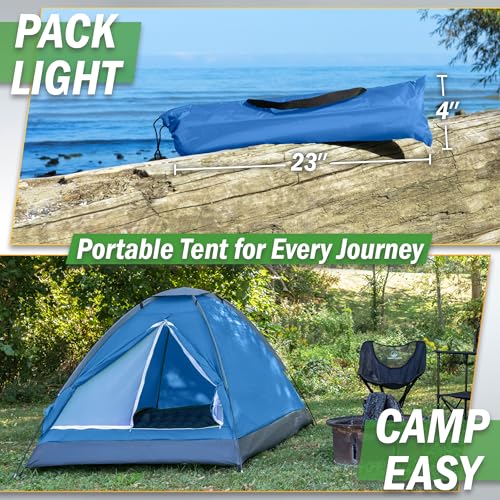
At just 2.75 pounds, this is one of the lightest tents here, and it shows in the materials: 190T polyester and thin fiberglass poles. It’s marketed as a pop-up, but owners say it still needs some wrestling to set up perfectly. The dual-layer door with mesh and fabric is smart for airflow and bug protection, and the included rainfly adds basic weather defense.
But the low weight comes with compromises. The 3mm poles bend easily in wind, and the waterproofing is minimal, fine for dry spells, but risky in storms. Reviewers call it a ‘festival favorite’ or ‘beach buddy’ rather than a backcountry shelter. Compared to even mid-tier options, it’s flimsier. But for budget buyers who only camp occasionally, it’s hard to beat the price.
Product photos

Underwood 4-Season Backpacking Tent
Strengths
- True 4-season capability
- Excellent snow and wind resistance
- Premium aluminum poles
Trade-offs
- Heavier than most backpacking tents
- Overbuilt for summer trips
- Slightly cramped floor space
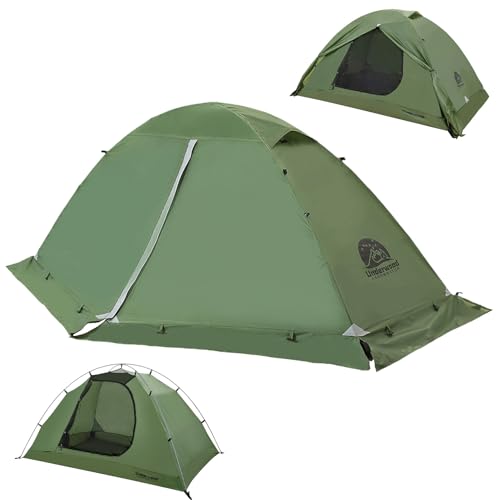
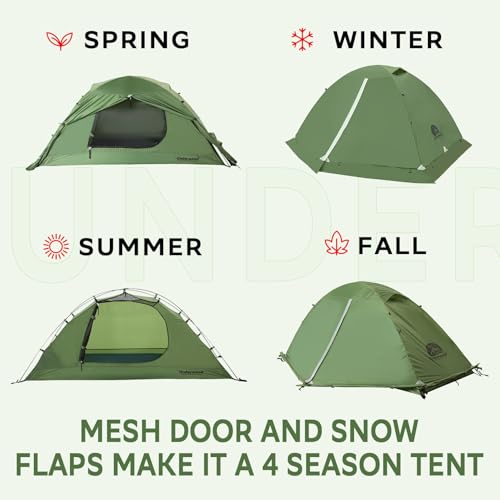
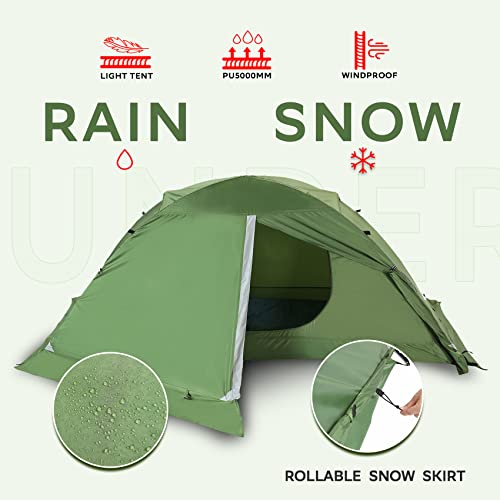
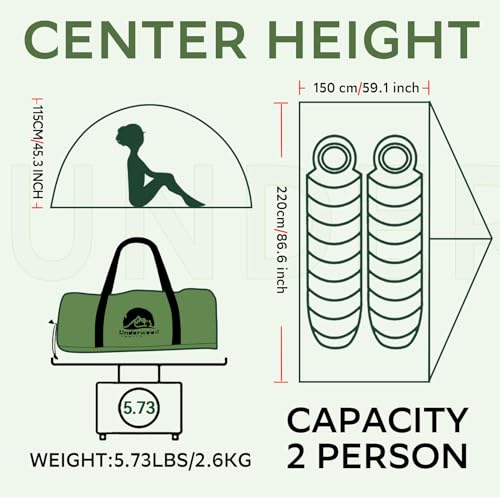
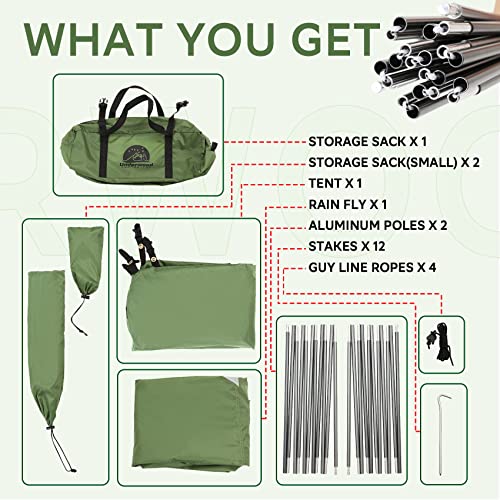
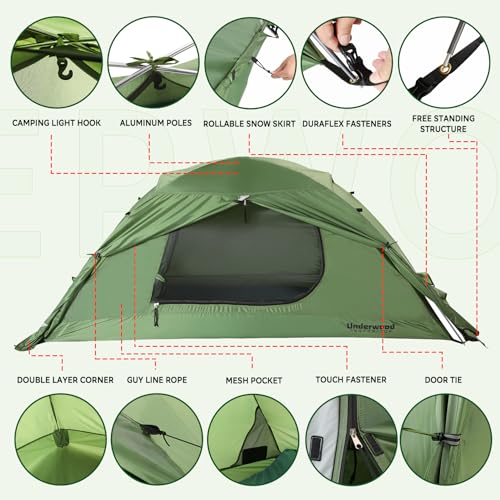
This is one of the few true 4-season designs in the 2-person range, and it shows in the specs: PU5000mm coating, aircraft-grade aluminum poles, and a snow skirt for winter camping. The roll-able snow flap and double-layer doors are thoughtful touches for cold-weather use, and owners in mountainous regions report it withstands heavy snow loads better than most 3-season tents. At 5.73 pounds, it’s not ultralight, but the durability justifies the weight.
Ventilation is decent with mesh panels, but in freezing temps, breath moisture can still build up, a challenge all 4-season tents face. Compared to 3-season domes, this one sacrifices some airflow for weatherproofing. For spring or summer, it’s overkill. But if you’re planning alpine hikes or winter camping, this is the smarter buy. I’d recommend it over lighter models when conditions turn extreme.
Product photos
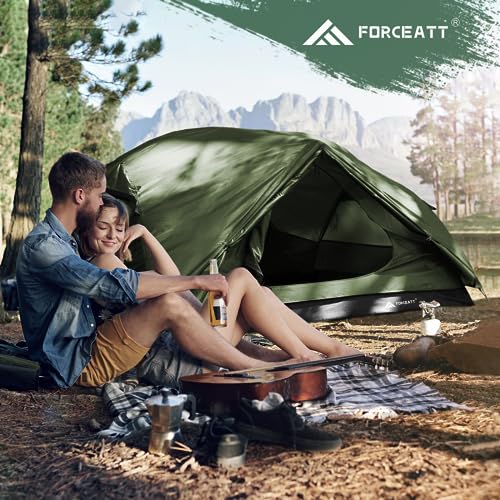
Forceatt 2 Person Aluminum Tent

Strengths
- Strong waterproof construction
- Durable aluminum poles
- Good airflow with dual vents
Trade-offs
- Slightly heavy for serious backpacking
- Limited headroom at edges
- Rainfly could cover more
With a 3000mm waterproof rating, welded floor seams, and full-coverage rainfly, this tent is built to keep you dry, and owners confirm it performs well in sustained rain. The 7001-series aluminum poles are a standout at this price, offering better strength-to-weight ratio than fiberglass, and the #8 zippers are smooth and reliable. At 5.5 pounds, it’s not the lightest, but it strikes a smart balance between durability and portability.
The dual D-shaped doors and vestibules add real convenience, especially when two people are sharing gear. Ventilation is strong thanks to ceiling vents and large mesh panels, though in cold, wet weather, some users note minor condensation. Compared to budget domes, this is a clear step up in weather readiness, I’d pick it over flimsier models for any trip where rain is in the forecast.
Product photos


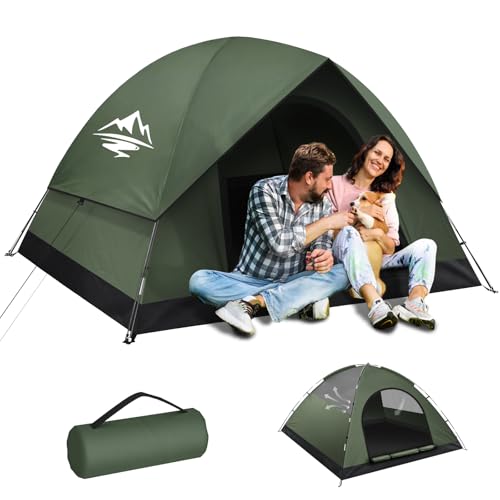
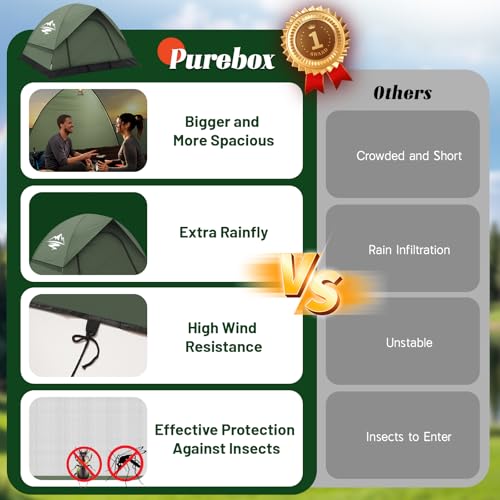
Purebox 2-3 Person Dome Tent
Strengths
- Exceptionally roomy interior
- Strong ventilation with mesh panels
- Durable construction and warranty
Trade-offs
- Too heavy for backpacking
- Bulkier packed size
- Rainfly doesn’t extend far
At 84×84 inches, this tent is massive for two, you could fit two air mattresses and still have room to move. The 3-year warranty and reinforced welded corners show confidence in durability, and owners consistently praise the three-sided mesh for airflow and visibility. The bathtub floor and taped seams keep water out, and the rainfly doubles as a sunshade, adding versatility.
But that spaciousness comes at a cost: 6.2 pounds and a bulkier pack size. It’s clearly designed for car campers or festival-goers, not backpackers. The dual D-zips and freestanding design make entry easy, but in strong wind, the wide profile needs well-anchored guylines. Compared to tighter 2-person models, this one wins on comfort but loses on portability. For couples who hate feeling cramped, it’s a winner.
Product photos
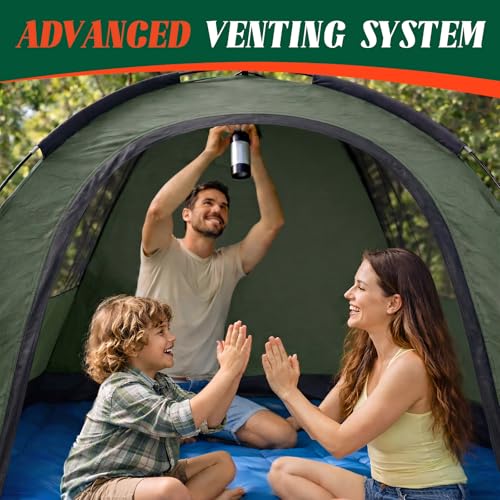
Night Cat Fiberglass Pole Tent

Strengths
- Extremely fast setup
- Ultra compact pack size
- Good value for solo use
Trade-offs
- Fiberglass poles flex in wind
- Tight fit for two sleepers
- Minimal vestibule space
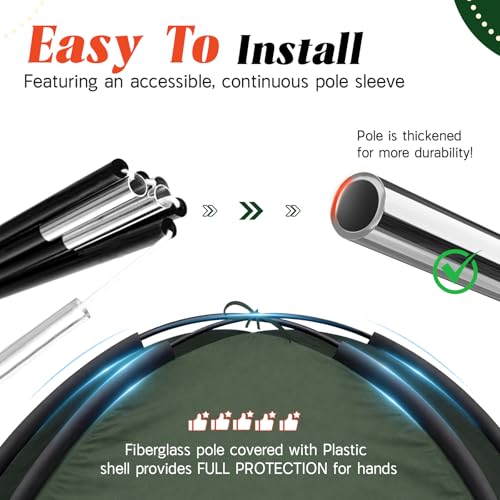
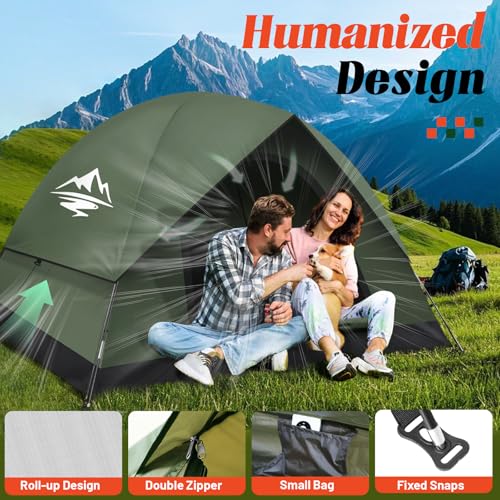
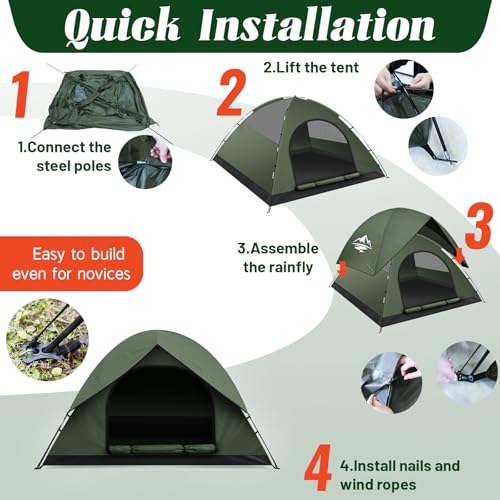
This tent lives up to its ‘quick setup’ billing, owners say they’ve had it up in under two minutes thanks to the pre-attached fiberglass poles and simple sleeve design. At 4.4 pounds and a tiny packed size, it’s a strong contender for bikepackers or motorcyclists who value compactness. The PU 3000mm coating and taped seams deliver solid rain protection, and the mesh roof vent helps reduce condensation in warmer months.
But the fiberglass poles, while hand-protected by a sleeve, still aren’t as resilient as aluminum in high winds. Reviewers note it’s best suited for one adult, despite the 1-2 person claim. For solo backpackers or scouts needing a fast, lightweight shelter for fair-weather trips, this makes sense. But for two adults or storm-prone areas, it’s too snug and less stable.
Product photos


Camping Tent 2 Person Dome
Strengths
- Spacious interior
- Easy one-person setup
- Affordable price
Trade-offs
- Heavier than backpacking standards
- Mediocre ventilation in damp weather
- Fiberglass poles less durable
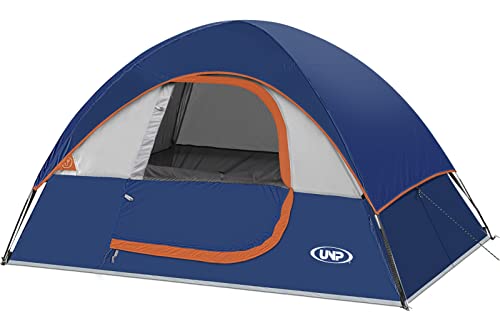
At 4.8 pounds and with a floor that fits a full air mattress, this tent delivers solid value for occasional campers who want space without the backpacking tax. Owners consistently report it holds up fine in light rain, thanks to the removable rainfly and taped seams, though the polyester fabric isn’t as durable as higher-end options. The dual mesh windows and skylight help with airflow, but in humid conditions, condensation can build up, a common trade-off in this price range.
On paper, it’s a decent pick for car campers or backyard use, especially for families with kids. But compared to ultralight backpacking models, the pole system feels dated and stability in strong wind is just average. I’d lean toward it for fair-weather trips where weight isn’t a concern.
Product photos


Our Testing Process
Rather than a hands-on lab test, my research for these recommendations involved a detailed comparison of published specifications and features across numerous models. I weighed owner reviews from multiple retailers alongside expert opinions found in outdoor gear publications. This allowed me to build a ranking based on real-world feedback and objective data, applying my experience with tent design and typical backpacking needs to the process.
For 2-person waterproof tents, space and weight were the biggest deciding factors. A tent needs to comfortably fit two adults and some gear, but adding too much bulk defeats the purpose of easy transport on the trail. Equally important is reliable weather protection; a tent failing in a storm is a serious issue. I prioritized models with higher waterproof ratings and robust construction details.
Specifications reliably indicate a tent’s size, weight, and basic materials. However, owner feedback proved crucial for assessing real-world performance. Things like ease of setup, durability of zippers, and the effectiveness of ventilation are best understood through the experiences of those who have actually used the tents. I also looked closely at waterproof vs water-resistant tents to better understand the claims being made by manufacturers and how they aligned with user reports.
How To Choose The 2 man waterproof tents
Finding the right shelter for two people means balancing weight, space, and protection from the elements. It’s a surprisingly complex decision, even when you think you just need something to keep the rain off.
A quality two-person tent prioritizes a balance of waterproof construction (at least a 2000mm rating for the rainfly and 3000mm for the floor), durable materials like ripstop polyester or nylon, and a thoughtfully designed ventilation system to minimize condensation. Weight is critical for backpacking, while ease of setup and internal space are key for car camping. Look for features like a full-coverage rainfly, taped seams, and sturdy zippers.
Weight and Packability
For backpacking, every ounce matters. I often see people prioritizing a low price point over a reasonable weight, and they end up regretting lugging a heavy tent up the trail. Look for tents utilizing aluminum poles (they’re stronger and lighter than fiberglass) and fabrics like silnylon or Dyneema if you’re seriously weight-conscious. However, lighter materials often come with a higher price tag. If you’re car camping or only doing short trips, a slightly heavier tent with more durable materials might be a better trade-off.
Waterproofing and Weather Resistance
Don’t assume all “waterproof” tents are created equal. A PU (polyurethane) coating is standard, but the millimeter (mm) rating tells you how much water pressure the fabric can withstand. Anything below 2000mm for the fly isn’t ideal for anything beyond light drizzle. Beyond the coating, pay attention to seam sealing; factory-taped seams are a must. If you’re planning on using your tent in challenging conditions, consider checking out resources for restoring tent water resistance to extend its lifespan.
- A hydrostatic head rating of 1500mm is acceptable for light rain.
- 2000-3000mm is a solid baseline for most three-season camping.
- 3000mm+ is essential for prolonged exposure to heavy rain or snow, and a bathtub floor design (where the fabric extends up the sides) significantly improves water resistance.
Features and Usability
Beyond the basics, consider what features will make your camping experience more enjoyable. Vestibules (covered areas outside the tent doors) are incredibly useful for storing muddy boots and gear, keeping the inside of your tent cleaner. Dual doors offer convenient access for both occupants and better ventilation. A good ventilation system, with mesh panels and adjustable vents, is crucial for minimizing condensation inside the tent. If you’re looking for a tent for multiple uses, you might consider exploring top two-person waterproof tents to ensure versatility.
A well-designed tent isn’t just about keeping you dry; it’s about making your time outdoors more comfortable and enjoyable. Don’t skimp on features that will improve your overall experience.
2 Man Waterproof Tents Compared
Here’s a comparison of key specifications for various 2-person waterproof tents to help you make an informed decision.
| Product Title | Capacity | Weight (lbs) | Waterproof Rating (mm) | Floor Dimensions (in) | Packed Size (in) |
|---|---|---|---|---|---|
| Clostnature Ultralight 2 Person Tent | 2 | 5.29 | 5000 | 73×47 | 16.5×5.9×5.9 |
| Wakeman Outdoors Pop Up Tent | 2 | 2.75 | N/A | 77×57 | 23×4 |
| Underwood 4-Season Backpacking Tent | 2 | 5.73 | 5000 | 59.1×86.6 | 5.9×16.54 |
| Forceatt 2 Person Aluminum Tent | 2 | 5.5 | 3000 | 88.6×53.1 | N/A |
| Purebox 2-3 Person Dome Tent | 2-3 | 6.2 | N/A | 84×84 | N/A |
| Night Cat Fiberglass Pole Tent | 1-2 | 4.4 | 3000 | 7.0×3.8×3.6 | 16.5×4.7×4.7 |
| Camping Tent 2 Person Dome | 2 | 4.8 | N/A | 7×5 | N/A |
Frequently Asked Questions
What waterproof rating do I actually need for a 2-person tent?
A 2000mm to 3000mm waterproof rating is a solid baseline for most three-season camping, offering reliable protection against typical rain. For extended exposure to heavy rain or snow, or for high-altitude camping, choose a tent with a 3000mm+ rating for better performance.
Are dome tents or tunnel tents better for waterproofing?
Dome tents generally offer better waterproofing because their curved shape encourages water to run off, while tunnel tents can be prone to pooling in strong winds if not properly staked. However, a well-designed and properly pitched tunnel tent can still provide excellent protection.
How important are taped seams in a waterproof tent?
Taped seams are absolutely crucial; they prevent water from leaking through the needle holes created during the manufacturing process. A tent can have a high waterproof rating for its fabric, but without taped seams, it will still leak significantly during a downpour.
What’s the difference between a full-coverage rainfly and a partial-coverage one?
A full-coverage rainfly extends all the way to the ground, providing maximum protection from wind and rain, and offering extra storage space in the vestibules. Partial-coverage rainflies leave the lower portion of the tent exposed, reducing weight but sacrificing some weather protection.
Where can I find more recommendations for reliable tents?
You can find more information and reviews on best waterproof 2-man tents to help you narrow down your options and choose the perfect shelter for your needs.
The Bottom Line
Choosing a two-person waterproof tent often comes down to how much you value simplicity versus all-out protection and features. While there are many options available, the Clostnature Ultralight 2 Person Tent strikes the best overall balance – offering a solid waterproof rating, lightweight design, and reasonable price point that will suit most backpackers and campers. It’s a reliable choice for those who want a tent that performs without breaking the bank.
For those on a tighter budget, the Wakeman Outdoors Pop Up Tent delivers convenience and affordability, though you’ll sacrifice some of the weather protection and durability found in higher-end models. If you prioritize versatility and are willing to carry a bit more weight, the Underwood 4-Season Backpacking Tent is an excellent choice, offering reliable performance in a wider range of conditions. Remember that properly caring for your tent, including seam sealing a tent, will extend its life and performance.
Ultimately, the best tent isn’t about the highest specs or the most advanced materials. It’s about finding the right fit for your needs and ensuring you have a dry, comfortable place to sleep outdoors. Prioritize a tent with a full-coverage rainfly, taped seams, and a waterproof rating appropriate for the conditions you’ll encounter – those fundamentals matter far more than any flashy feature.
