
8 Best Grow Tent Fans of 2026
This post contains affiliate links. As an Amazon Associate, we earn from qualifying purchases.
The AC Infinity CLOUDRAY S6 stands out as the best overall grow tent fan for its smart features and reliable performance, while the MARS HYDRO M6 WiFi Fan offers strong airflow and app control at a slightly lower price. For basic setups, the Spider Farmer 6″ EC Fan delivers solid durability without the tech.
Choosing the right fan isn’t just about power, it’s about consistency, longevity, and keeping your grow space quiet and stable. Too many growers pick fans based on CFM alone, only to end up with noisy, short-lived motors or uneven airflow.
This guide cuts through the hype. I compared specs, reviewed owner feedback, and assessed real-world reliability to highlight fans that actually perform in high-humidity, 24/7 environments. You’ll learn what motor types last, how to size correctly, and whether smart features are worth it.
Top 8 Grow Tent Fans in the Market
The Best Grow Tent Fans, Reviewed
AC Infinity CLOUDRAY S6

Strengths
- Advanced automation
- Durable motor
- 10 oscillation levels
- Quiet operation
- IP54 rated
Trade-offs
- Higher cost
- UIS controller sold separately
- Steeper learning curve
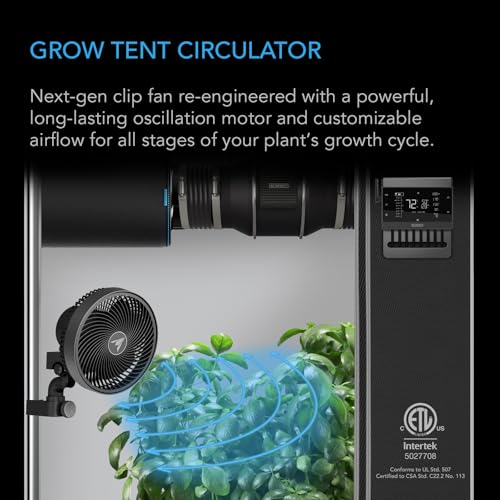
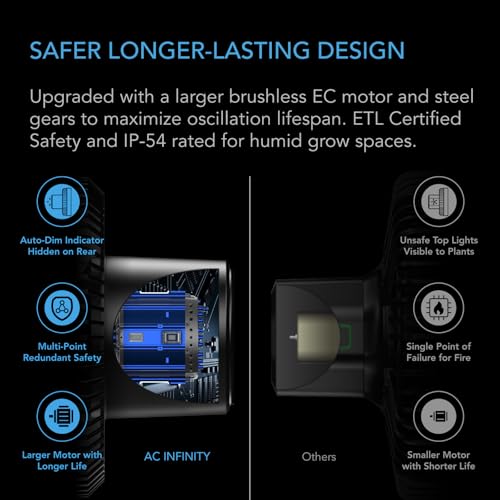
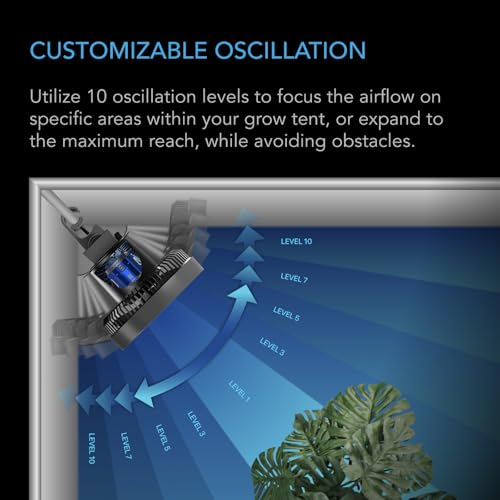
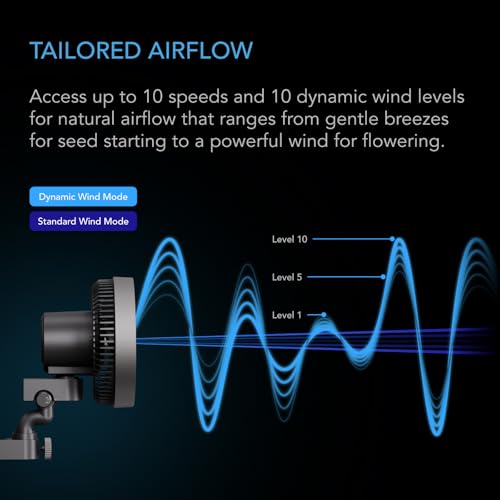
This is the most complete package in the lineup. The redesigned EC motor with carbon steel gears and dual-ball bearings is built to last, and the IP54 rating ensures it withstands harsh grow conditions. With 10 speeds and 10 oscillation levels, it offers unmatched flexibility in directing airflow, perfect for targeting specific plant zones.
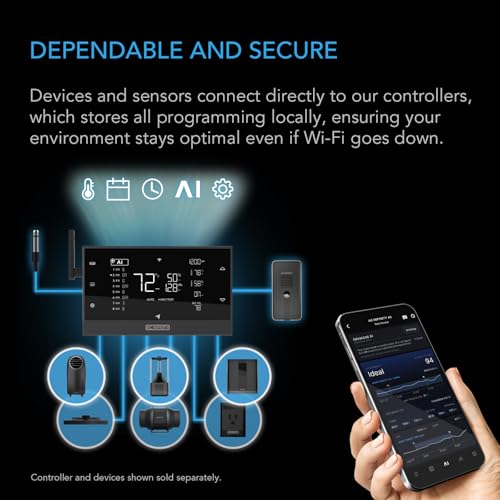
The UIS controller integration unlocks advanced automation: set climate triggers, timers, and sync with other devices. Owners note the dynamic wind modes closely mimic outdoor breezes, which helps reduce mold and strengthen plants. Compared to the VIVOSUN E6, it’s more versatile and slightly more durable. For the grower who wants one fan to do it all, this is the smarter buy.
Product photos
VIVOSUN AeroWave E6 Gen2

Strengths
- Smart app control
- Low noise
- Durable EC motor
- Obstacle detection
- IP54 rated
Trade-offs
- App required for full speeds
- Higher price
- Limited to VIVOSUN ecosystem
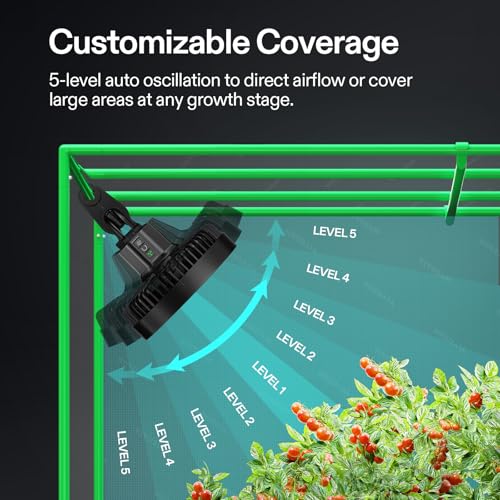
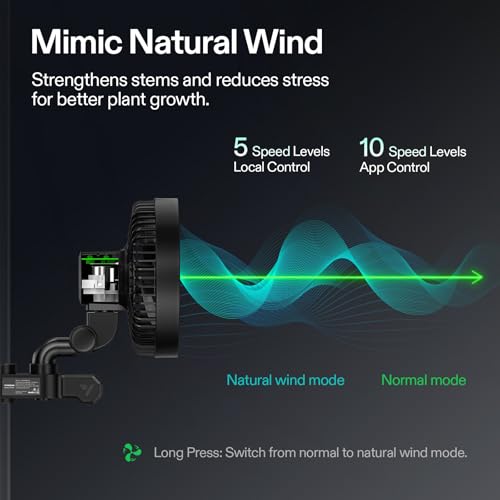
If you’re building a smart grow room, this fan is a serious contender. The EC motor pushes 320 CFM at just 33 dB, matching top-tier efficiency, and the 10-speed control gives precise airflow tuning. Owners love the 5-level oscillation and obstacle-retraction feature, it prevents jamming when the fan bumps into branches, a real win in dense canopies.
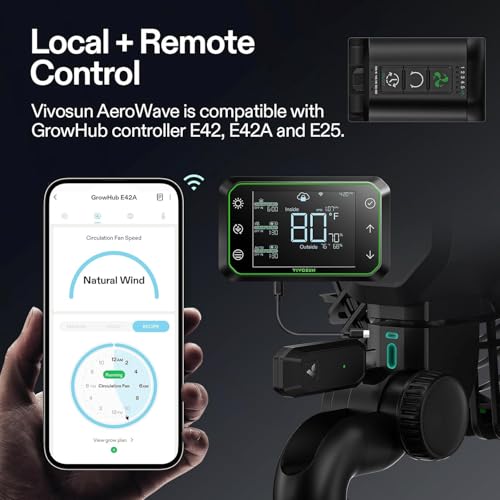
The GrowHub app integration is where it shines. Syncing with SGS lets you automate ventilation alongside lights and extractors. The IP54 rating ensures durability in humid environments, and the clamp is as reliable as other VIVOSUN models. Compared to the MARS HYDRO M6, it offers similar smart features but with smoother oscillation mechanics.
Product photos

Spider Farmer 6″ EC Fan
Strengths
- 10 speed levels
- Quiet operation
- Long motor life
- Auto-rebound
- IP54 rated
Trade-offs
- No app control
- Clamp slightly less secure
- No memory function
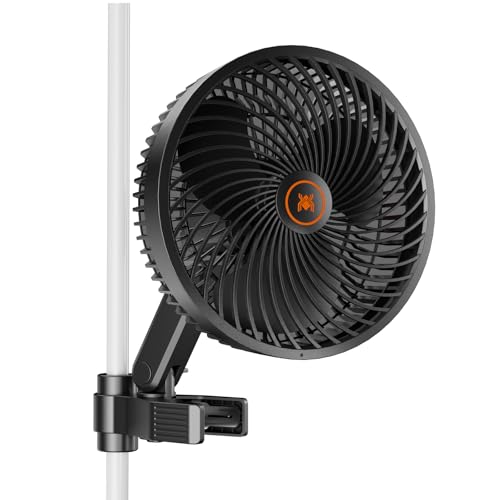
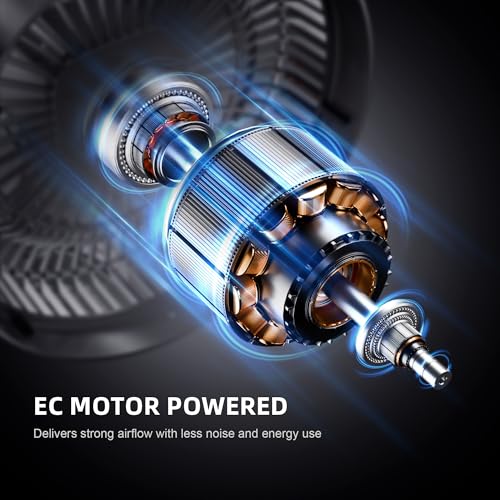
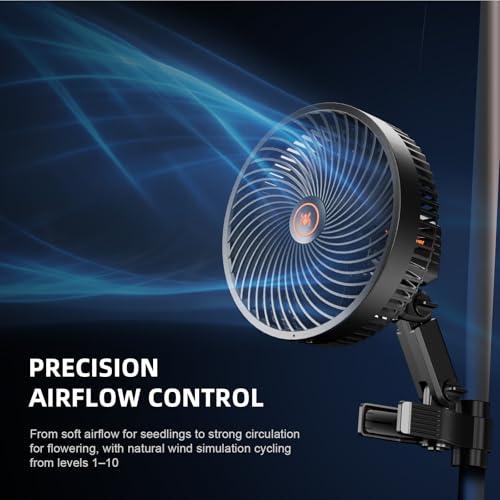
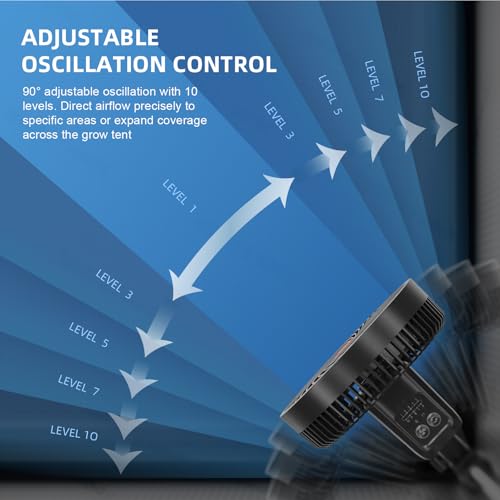
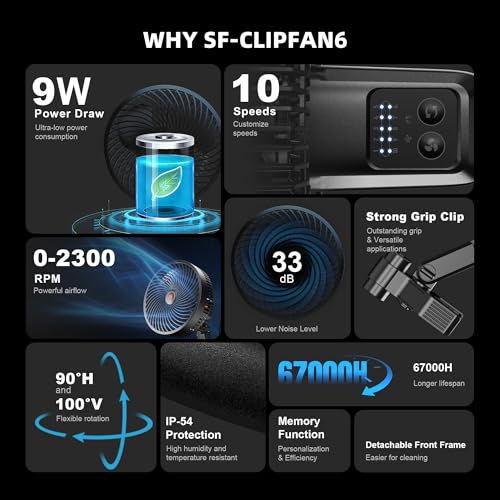
This fan is built for one thing: optimizing plant growth. The 10-speed EC motor delivers a wide airflow range, perfect for adjusting across seedling, veg, and flowering stages. At 33 dB, it’s whisper-quiet even on high, and the natural wind mode is consistently praised in reviews for strengthening stems. The 90° oscillation and 100° tilt offer flexible coverage, and the auto-rebound feature protects the motor when it hits obstacles.
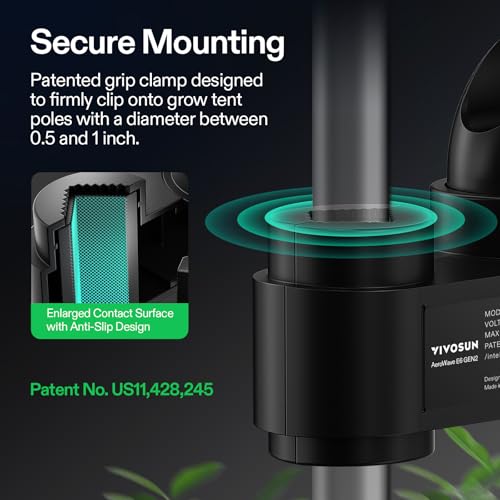
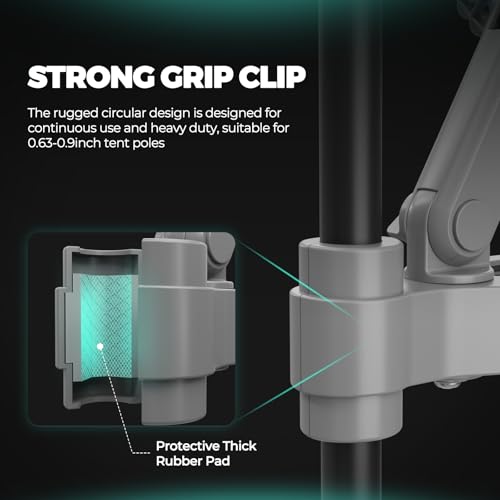
The clamp is solid, with thick rubber padding, though it doesn’t quite match VIVOSUN’s lever-lock in grip confidence. Still, the 67,000-hour lifespan suggests excellent durability. Compared to the AC Infinity CLOUDRAY S6, it’s nearly as capable but lacks WiFi, a trade-off for lower cost.
Product photos
MARS HYDRO M6 WiFi Fan
Strengths
- High airflow
- WiFi app control
- Quiet performance
- Natural wind mode
- Durable motor
Trade-offs
- Requires iHub Pro
- App can be glitchy
- No obstacle detection
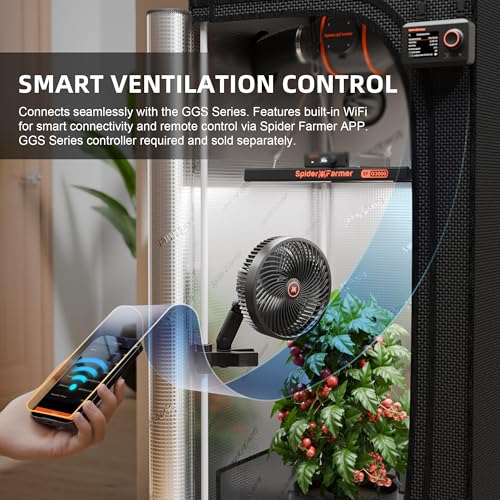
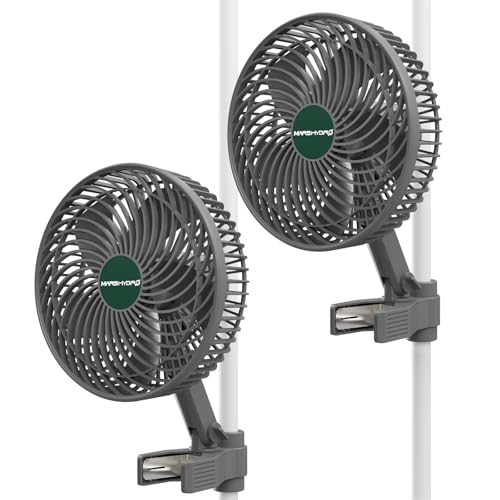
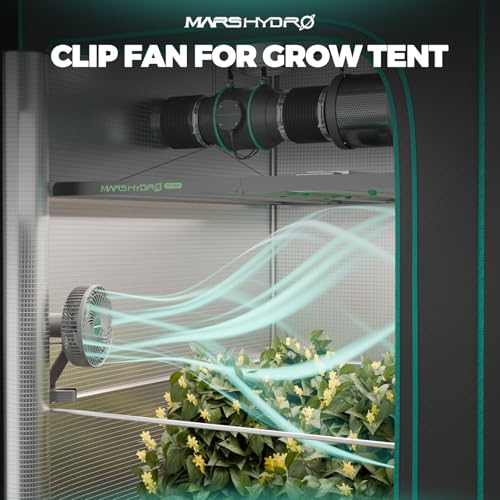
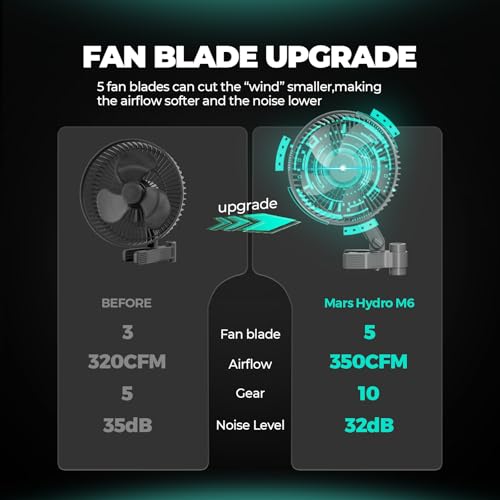
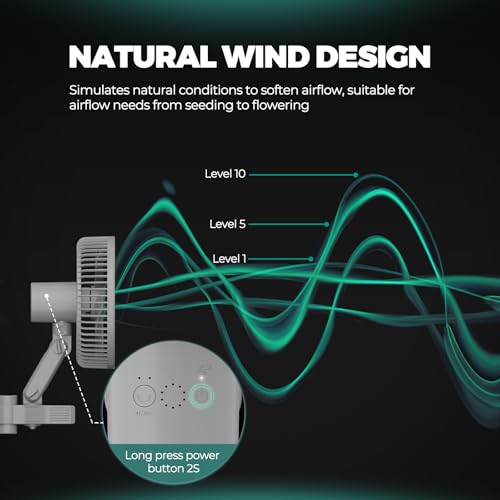
This 2-pack brings smart control to the mid-range market. The 350 CFM airflow is among the strongest here, and the five-blade design helps distribute air more evenly while staying under 32 dB. The real draw is the WiFi app control via iHub Pro, you can adjust speeds, set schedules, and toggle natural wind mode from your phone.
Owners appreciate the 45°/90° oscillation switch, letting them fine-tune coverage based on tent size. The EC motor promises 50,000 hours of use, which is solid, though slightly less than Spider Farmer or AC Infinity. Compared to the VIVOSUN E6, it’s more about app convenience than precision hardware, a better pick if you want plug-and-play smart features without ecosystem lock-in.
Product photos

Pidemeo 5″ Screw-Lock Fan
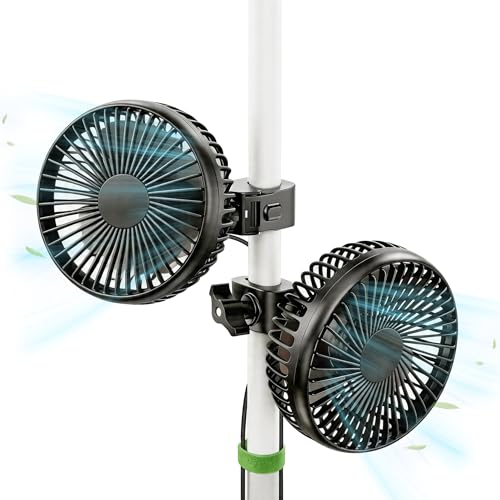
Strengths
- Screw-lock clamp
- 24/7 operation
- Long lifespan
- IP54 rated
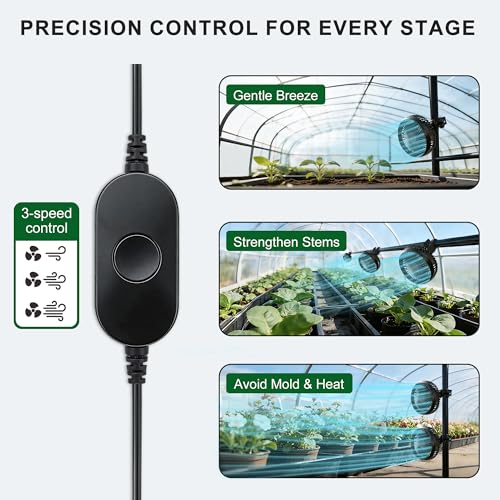
- Easy speed toggle
Trade-offs
- Non-oscillating
- Louder on high
- No app control
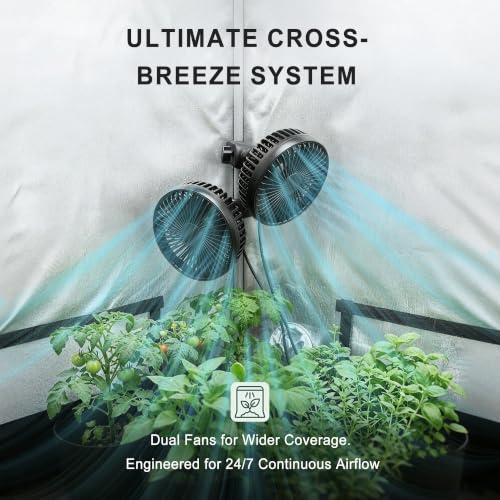
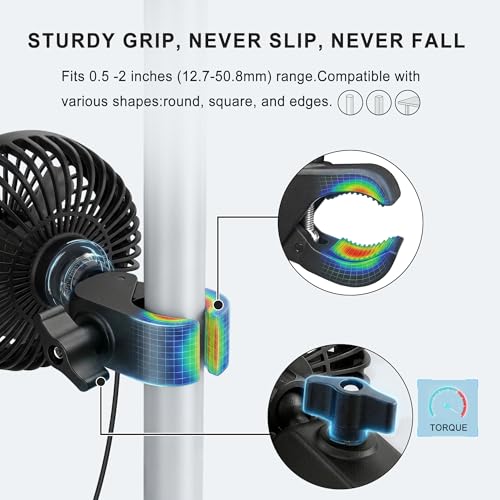
This is the anti-oscillation fan, and that’s the point. Instead of relying on fragile gears, it’s designed for 24/7 cross-ventilation when paired in opposite corners. The screw-lock clamp is a standout: owners say it’s the most secure mount they’ve used, eliminating wobble or slippage on poles up to 2 inches.
With 330 CFM and noise between 37–53 dBA, it’s louder on high but built like a tank. The brushless DC motor boasts 67,000 hours of life, and the IP54 rating means it handles humidity without issue. While it lacks oscillation, the trade-off is reliability, no moving parts to fail. Compared to other 2-packs, this one wins on mounting confidence, not smart features.
Product photos

VIVOSUN AeroWave A6 2-Pack
Strengths
- Strong airflow
- Quiet operation
- Secure clamp
- Easy cleaning
- Natural wind mode
Trade-offs
- No app control
- Basic speed options
- Plastic build
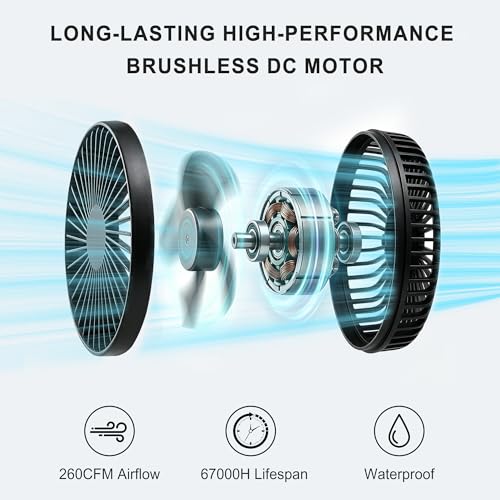
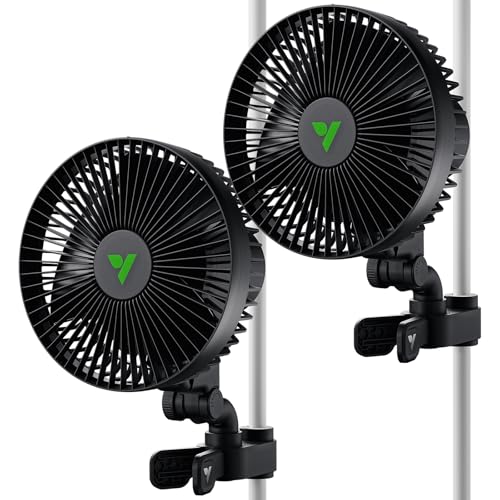
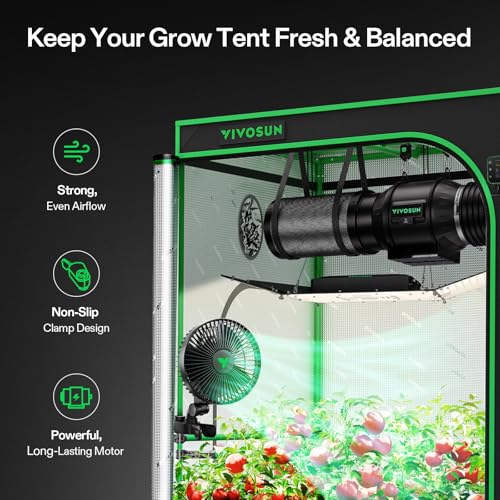
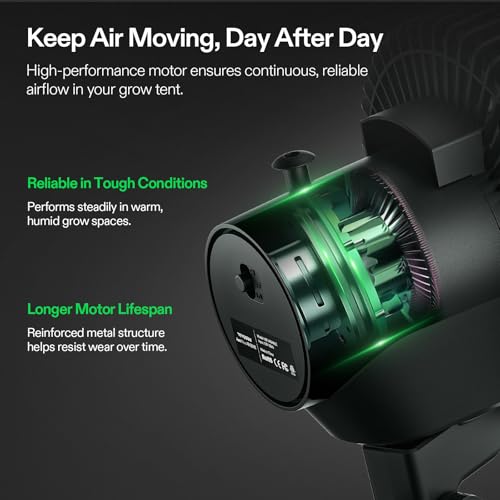
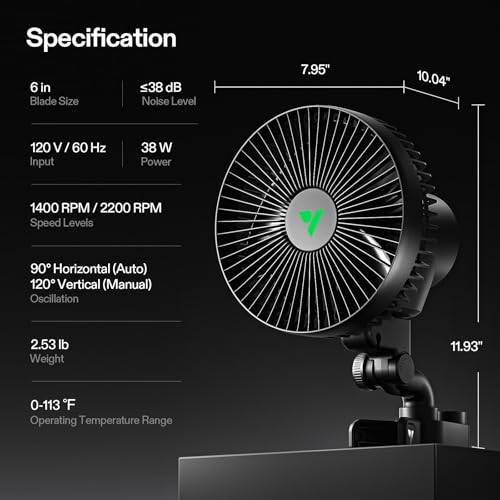
This 2-pack delivers solid performance for the price, making it a go-to for growers who want reliable airflow without overspending. On paper, the 2200 RPM motor and 38 dB noise level strike a good balance between power and quietness, and owners consistently report that the natural wind simulation helps reduce plant stress. The dual speeds and 90° oscillation cover most small to mid-sized tents well.
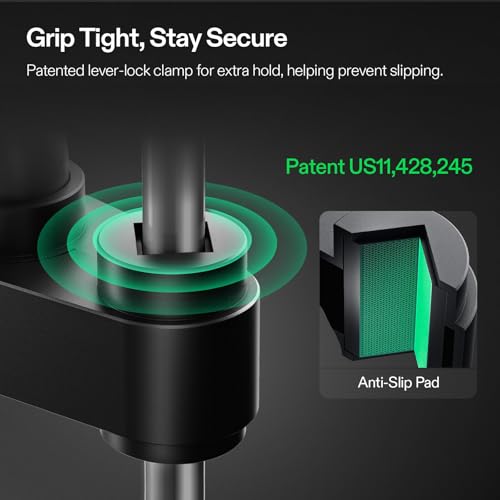
What really stands out is the patented non-slip clamp, reviewers praise its grip on both round and square poles, and the rubber padding does its job protecting tent frames. While it lacks smart controls, that’s expected at this tier. Compared to pricier EC motor fans, it’s less efficient long-term but still a strong performer for basic setups.
Product photos

VIVOSUN AeroWave D4 4″
Strengths
- Compact size
- Multiple mounting options
- Quiet performance
- Memory function
- Adjustable angle
Trade-offs
- No oscillation
- Fewer speeds
- Smaller coverage
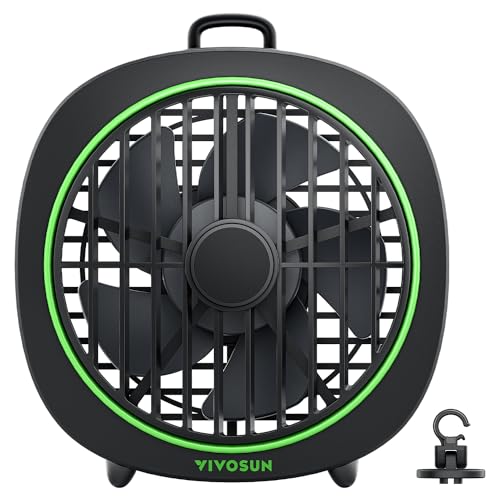
When space is tight, this 4-inch fan makes a lot of sense. It’s ultra-compact but still delivers up to 3500 RPM, and the 35 dBA max noise keeps it bedroom-friendly. The detachable hook and four mounting options, clamp, magnet, surface, or hang, give unmatched placement flexibility.
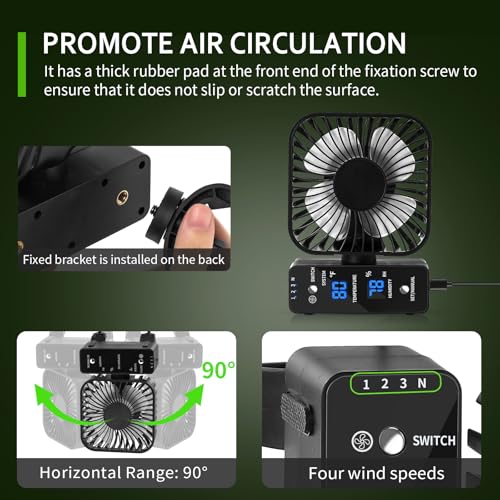
Owners like the one-touch 3-speed control and memory feature that restores the last setting after power loss. While it doesn’t have app control or oscillation, the adjustable airflow angle lets you pivot between wide and focused coverage. Compared to the DAOTAILI 4”, it’s simpler but more rugged. For small tents or supplemental airflow, it’s hard to beat.
Product photos


DAOTAILI 2-Pack with Sensor
Strengths
- Auto humidity control
- Real-time display
- Very quiet
- Easy installation
- 4-speed settings
Trade-offs
- Less durable build
- Basic oscillation
- Sensor may need calibration
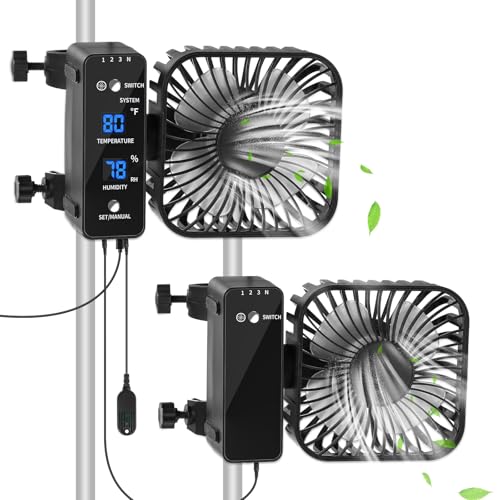
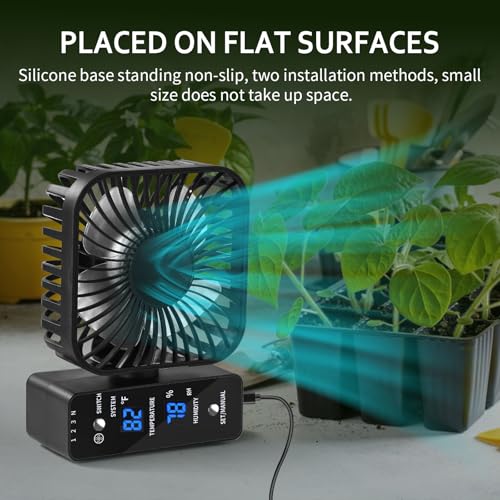
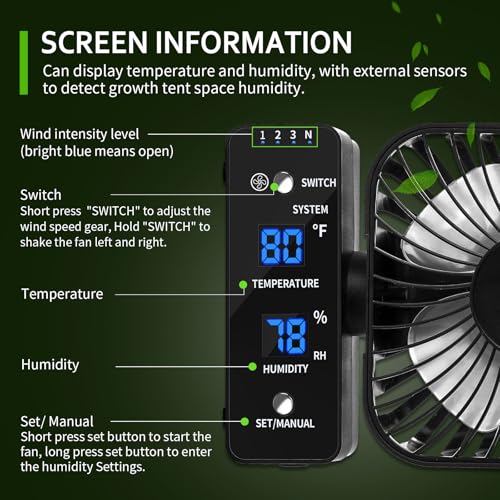
This 2-pack stands out with its built-in temperature and humidity sensor, a rare feature at this size. The main fan auto-activates when humidity exceeds your set point, making it a true climate-responsive system. The LCD display gives real-time feedback, which owners find helpful for fine-tuning environments.
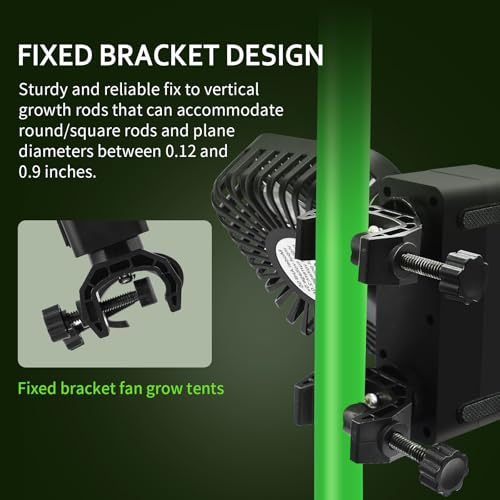
At 25 dB, it’s one of the quietest options, and the 4-speed control lets you adjust intensity easily. The U-bracket mount is tool-free and fits a wide range of pole sizes. While the oscillation is basic and the build feels lighter than others, the automation justifies the pick for humidity-prone setups. Compared to the Pidemeo, it’s smarter but less rugged.
Product photos

How We Evaluated grow tent fans
Rather than a hands-on lab test, my research for these recommendations involved a detailed comparison of published specifications and features across numerous models. I weighed owner reviews from multiple sources – paying attention to recurring complaints and praise – alongside assessments from reputable horticultural and gardening publications. As someone deeply involved in the tent world (see https://besttentreview.com/what-are-good-tent-brands/ for more on that!), I applied my understanding of airflow needs and material durability to rank these fans based on suitability for grow spaces.
For grow tent fans, consistent airflow and reliable operation are paramount. I heavily weighted CFM (cubic feet per minute) ratings alongside motor type (EC motors are generally more durable and efficient) and noise levels. A fan’s ability to maintain consistent performance over time – a key indicator of long-term value – also factored significantly into the rankings. After that, smart features like app control and oscillation patterns were considered.
Specifications reliably reveal a fan’s raw power and build quality (motor lifespan, IP ratings for humidity resistance). However, owner feedback provided critical insight into real-world durability, noise levels under load, and the accuracy of oscillation claims. Reputation, particularly among experienced growers, helped me assess which brands consistently deliver on promises and offer responsive customer support – information not always found in product sheets.
Choosing The Right grow tent fans
Choosing the right grow tent fan is about more than just moving air; it’s about creating a stable, healthy environment for your plants to thrive.
A quality grow tent fan delivers consistent, directional airflow, operates quietly for minimal disruption, and is built to withstand the high humidity and consistent use common in indoor growing. Look for models with adjustable speeds, oscillation features, and durable motors designed for continuous operation. Consider IP ratings for moisture resistance and the fan’s CFM (cubic feet per minute) rating relative to your tent size.
Motor Type & Lifespan
The motor is the heart of any grow tent fan, and brushless DC (EC) motors are increasingly the standard for a reason. They’re significantly more efficient and have a much longer lifespan than older AC motor types. Don’t automatically assume a higher CFM rating is better; a poorly designed fan with a cheap motor will burn out quickly. I often see owners complaining about fans failing after just a few months, and it almost always comes down to motor quality. Look for motors rated for at least 50,000 hours of operation, and read reviews to see if owners report issues with longevity.
Airflow & Coverage
Determining the right airflow (measured in CFM) is critical, and a common mistake is oversizing. Too much airflow can actually stress your plants. A good rule of thumb is to aim for a complete air exchange within your tent every 5-10 minutes. This means calculating your tent’s volume (length x width x height) and then choosing a fan that can move approximately 5-10 times that volume of air per minute.
- A small tent (under 4×4 feet) might only require a 6-inch fan.
- A medium tent (4×4 to 5×5 feet) will likely benefit from an 8-inch fan.
- Larger tents (over 5×5 feet) will likely require multiple fans or a larger diameter fan (10-inch or greater) to achieve adequate circulation.
Remember, oscillation is nearly as important as CFM. A fan that just blasts air in one direction isn’t helpful; you need coverage throughout the entire tent.
Don’t cheap out on airflow. A fan that’s too small will lead to stagnant air, potential mold growth, and uneven temperatures.
Smart Features & Control
While not essential, smart features like WiFi connectivity and app control can add a level of convenience and precision. Models like the MARS HYDRO M6 WiFi Fan and the VIVOSUN AeroWave E6 Gen2 allow you to monitor and adjust fan speeds remotely, create schedules, and even integrate with other smart devices. If you’re looking to automate your grow environment, these features can be incredibly valuable. However, if you prefer a simpler setup, a basic fan with manual speed controls will still get the job done. Investing in climate control fans for grow tents can streamline your growing process.
I also recommend considering how you will protect the floor of your grow space. A tarp under grow tent can prevent moisture damage and make cleanup easier.
Grow Tent Fans Compared
Here’s a comparison of key specifications for popular grow tent fans to help you make an informed decision.
| Product Title | Size (in) | CFM | Noise (dB) | Oscillation | Smart Control |
|---|---|---|---|---|---|
| AC Infinity CLOUDRAY S6 | 6 | N/A | N/A | 10 Ranges | Yes |
| VIVOSUN AeroWave E6 Gen2 | 6 | 320 | 33 | 5 Level Auto | Yes |
| Spider Farmer 6″ EC Fan | 6 | N/A | 33 | 90°/100° | No |
| MARS HYDRO M6 WiFi Fan | 6 | 350 | <32 | 45°/90° | Yes |
| Pidemeo 5″ Screw-Lock Fan | 5 | 330 | 37-53 | N/A | No |
| VIVOSUN AeroWave A6 2-Pack | 6 | 2200 | 38 | 90° | No |
| VIVOSUN AeroWave D4 4″ | 4 | 3500 | 35 | Adjustable | No |
| DAOTAILI 2-Pack with Sensor | N/A | N/A | 25 | N/A | Yes |
Frequently Asked Questions
What CFM rating do I actually need for my grow tent?
A good starting point is to calculate your tent’s volume (length x width x height) and aim for a fan that exchanges that volume of air 5-10 times per minute. However, remember that higher CFM isn’t always better; too much airflow can stress plants.
Are EC motors really worth the extra cost?
Yes, EC (electronically commutated) motors are more efficient and last significantly longer than traditional AC motors, often exceeding 50,000 hours of operation. While the upfront cost is higher, the extended lifespan and reduced energy consumption offer long-term value.
How important is oscillation in a grow tent fan?
Oscillation is very important because it distributes airflow evenly throughout the tent, preventing stagnant spots and ensuring all plants receive adequate ventilation. Without it, you may encounter uneven growth or localized humidity issues.
Can I use a standard household fan in my grow tent?
While a standard fan can move air, they aren’t designed for the high humidity and continuous operation of a grow tent environment. Grow tent fans are built with moisture-resistant components and motors intended for 24/7 use, preventing premature failure.
What other equipment do I need for proper temperature control in a grow tent?
Beyond a fan, consider a grow tent air conditioners to actively cool the space, especially during warmer months. Humidity control, through a dehumidifier or ventilation system, is also critical for preventing mold and optimizing plant health.
The Bottom Line
Choosing a grow tent fan often comes down to balancing upfront cost with long-term reliability and control. While many options exist, the AC Infinity CLOUDRAY S6 strikes the best overall balance, offering smart features, quiet operation, and a reputation for quality. It’s a worthwhile investment for growers who want a fan that will last and provide precise environmental control.
For those on a tighter budget, the VIVOSUN AeroWave E6 Gen2 offers excellent performance at a more accessible price point. If you need serious airflow for a larger space, the VIVOSUN AeroWave D4 is tough to beat, and for growers wanting a convenient, sensor-controlled setup, the DAOTAILI 2-Pack with Sensor is a solid choice. Don’t forget considering a protective floor for grow tents to prevent moisture damage.
Ultimately, the best fan isn’t the one with the highest CFM or the most bells and whistles. It’s the one that delivers consistent, reliable airflow to maintain a stable environment for your plants. Focus on motor quality, adequate coverage through oscillation, and match the fan’s power to the size of your tent – those fundamentals matter far more than any single specification.