
How To Stay Warm Camping In A Tent
This post contains affiliate links. As an Amazon Associate, we earn from qualifying purchases.
Staying warm while camping in a tent requires using insulated materials, adding ground insulation, and selecting a sheltered campsite. Key strategies include choosing polycotton blends and double-wall tent designs to block cold, placing closed-cell foam pads and reflective blankets under your sleeping pad, and keeping gear inside to create a warm barrier. Later in the article, you’ll find more detailed tips and explanations to help you stay comfortable in chilly conditions and enhance your camping experience.
Essential Facts in 30 Seconds
- Choose tents with polycotton or Oxford 300 PU fabric for better insulation.
- Use ground insulation like footprints and closed-cell foam pads.
- Hang reflective materials or insulated liners inside the tent to retain heat.
- Set up tents in wind-sheltered locations to minimize cold exposure.
- Keep sleeping bags away from tent walls and use gear to create a warm barrier.
Tent Insulation Techniques
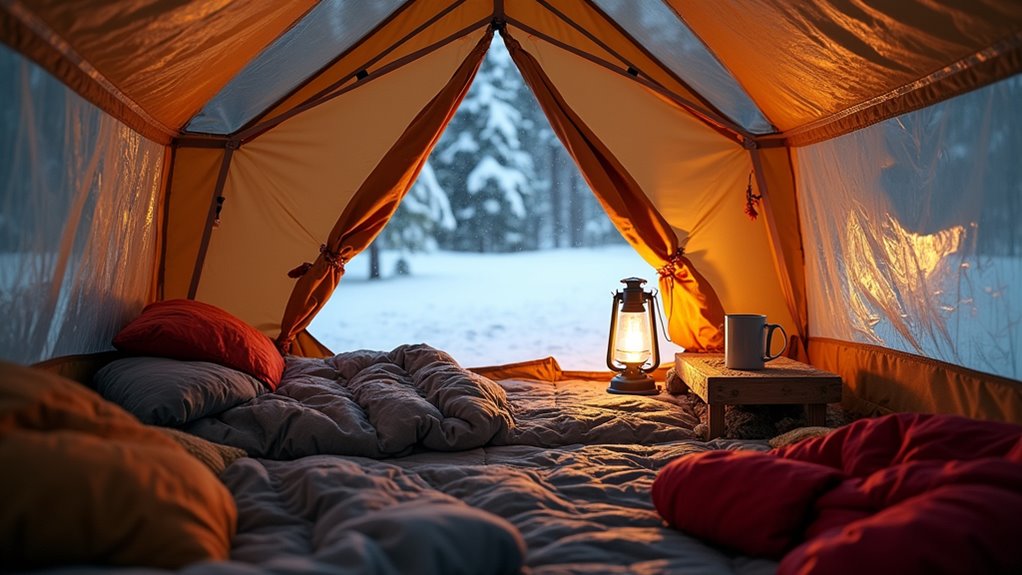
Camping in cold weather needs good tent insulation to stay warm. Pick tents made from materials that keep heat inside, like polycotton blends or Oxford 300 PU fabric. These fabrics hold air and stop heat from escaping.
Double-wall tents work well too. The air between layers blocks cold wind and keeps warmth in. Ground insulation is essential for blocking cold air from the ground as well.
Inside the tent, hang fleece or shiny liners. These reflect your body heat back to you. Use emergency blankets to boost warmth. Open vents a little to let fresh air in. This stops moisture but keeps the tent warm.
Place rocks or logs around your tent to block wind. These steps keep cold air out and warmth in. Remember, higher denier rating tents provide better durability and insulation, enhancing your overall warmth.
Use these tricks to camp comfortably in chilly weather. Stay cozy and enjoy your night under the stars.
Ground Insulation Solutions
Ground insulation keeps you warm during cold camping nights.
Use a tent footprint. It blocks cold and wet ground. Make sure it fits just under your tent.
Foam pads work well. Closed-cell foam traps heat and stops cold from the ground.
Place reflective emergency blankets under your sleeping pad. They bounce your body heat back to you.
A plastic tarp or vapor barrier goes under the footprint. It stops moisture from soaking into your insulation. Additionally, be aware that waterproof ratings can vary significantly between tents, impacting your overall warmth and comfort in wet conditions.
These simple steps keep you dry and warm outdoors. Additionally, ensuring the area is properly prepared can enhance your insulation effectiveness and overall comfort.
Strategies for Insulating Tent Walls and Roof
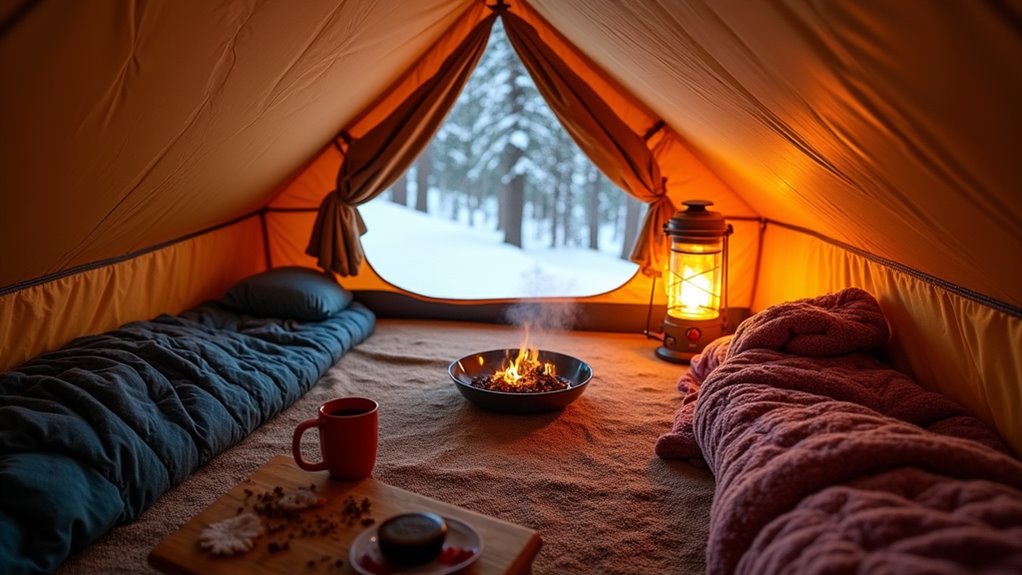
Keep your tent warm during cold nights by insulating its walls and roof well. Use reflective materials like Mylar blankets or thermal foil inside the tent. These materials bounce your body heat back, cutting heat loss a lot. Add more layers of reflective sheets for extra warmth. Additionally, consider using insulated materials like thermal liners to further enhance heat retention.
Try insulation panels made for tents. These quilted polyester panels clip to the poles and block cold air. Hang fleece blankets or insulated liners on the walls and roof. They trap heat inside better. Secure all insulation tightly. This stops cold air leaks but lets some airflow to prevent wetness. Mixing these methods will make your tent warmer and more comfortable. Investing in a well-insulated tent ensures a better camping experience in cold weather. Cold-weather camping becomes easier and more fun this way.
Advanced Materials for Enhanced Warmth
Advanced materials can keep your tent warm in cold weather. They block cold air and hold heat inside. Here are some top choices:
- Synthetic poly-cotton blends with spray-bonded insulation help trap warmth and allow air to pass. Additionally, regular tent maintenance ensures that the material remains effective over time.
- Aerogel is very light and blocks heat loss by reflecting infrared rays.
- Multi-layer waterproof fabrics with foam spacers create air pockets that stop heat from escaping.
- Closed-cell foam has a high R-value, which means it stops heat from moving out.
These materials work well together to keep you warm and comfortable. Using them makes camping in cold weather easier and safer. Your tent stays cozy even during very cold nights. Additionally, insulating the tent with reflective emergency blankets can further enhance heat retention.
Choose the right mix of insulation to build a strong shield against the cold. Enjoy your outdoor trip without feeling chilly.
Optimal Tent Setup and Sleeping Arrangements
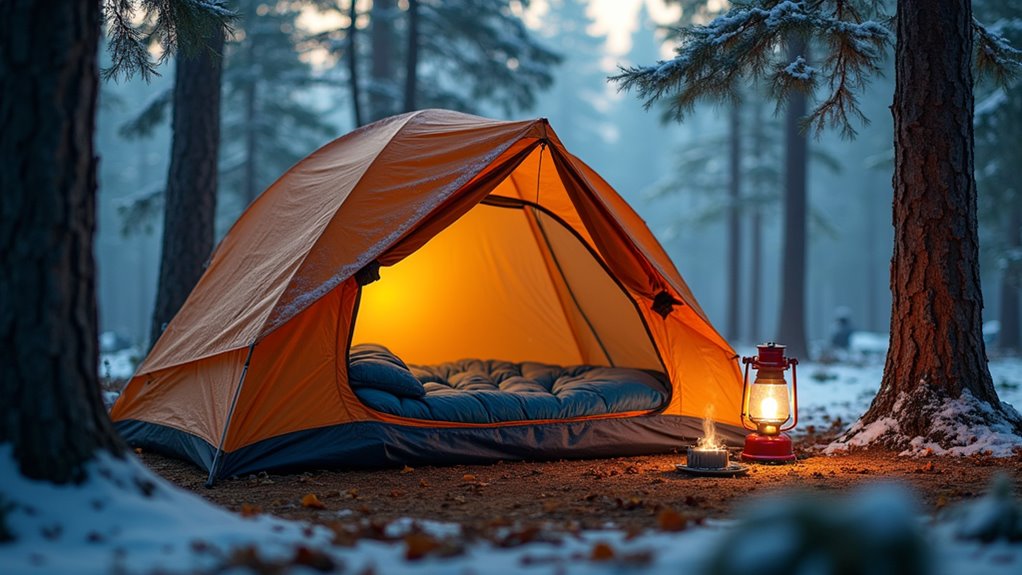
Camping in cold weather demands smart tent setup and sleeping arrangements.
Pick a spot shielded from wind, like behind trees or rocks. Find flat ground and press down snow to make a warm base. Use thick sleeping pads to stop cold from the ground. Keeping your tent clean and dry will help maintain its insulation properties, so be sure to check it before setup. Keep sleeping bags away from tent walls to save your body heat.
Store gear neatly inside the tent to form a warm barrier around you. Four-season tents handle tough weather better. Hot tents with wood stoves can add cozy warmth. Additionally, ensure proper ventilation and humidity control to avoid condensation buildup inside the tent.
Sleep close together to share body heat. These steps help keep you warm and comfortable outdoors.
Frequently Asked Questions
What Type of Sleeping Bag Is Best for Cold Weather Camping?
A down sleeping bag with high fill power gives the best warmth in cold weather. Down traps heat well and is light to carry. Synthetic insulation works better if it gets wet or damp. Check the temperature rating on the bag. Pick one that keeps you warm at the coldest temperature you expect. Look for features like a snug hood and draft collars to keep heat in. Good sleeping bags can keep you comfortable and safe on cold nights.
How Can I Prevent Condensation in My Tent?
Condensation forms when warm air meets cold surfaces inside your tent. Keep vents open to allow air to flow. Pitch your tent on dry, flat ground to reduce moisture from soil. Store wet clothes and gear outside the tent to stop dampness inside. Avoid cooking or boiling water inside the tent. Use a breathable tent fabric that lets moisture escape. These steps reduce wetness and keep your tent dry and comfortable.
What Are the Best Campfire Practices for Warmth?
A campfire gives you warmth on a cold night. Clear away leaves and sticks first. Use dry wood to make the fire burn well. Build the fire in a safe spot, away from tents and trees. Arrange the wood so the fire spreads heat evenly. Keep water or dirt nearby to stop the fire if needed. A well-made fire keeps you warm and safe all night.
How Should I Dress for Sleeping in Cold Temperatures?
Wear layers that keep moisture away from your skin. Start with a thermal base layer to trap heat. Add a warm middle layer, like fleece or wool. Put on a hat and thick socks to keep your head and feet warm. Make sure your clothes are dry before bedtime. Wet clothes make you cold fast. Use blankets or a sleeping bag made for cold weather. Stay warm all night.
Can I Use a Portable Heater Inside My Tent?
Using a portable heater inside a tent is dangerous. It can cause fires and carbon monoxide poisoning. Many accidents happen this way. Stay safe by using thick sleeping bags and warm clothes instead. These keep you warm without risk. Always put safety first while camping.
Conclusion
Staying warm while camping in a tent takes good planning and smart choices. Use foam pads or reflective blankets under your sleeping bag to stop cold from the ground. Put fleece liners on your tent walls to keep heat inside. One camper wrapped a sleeping bag with a thermal blanket and stayed warm even when it froze outside. These simple steps help you stay cozy and enjoy your camping trip no matter the weather.
