
How To Tie A Tent Knot
This post contains affiliate links. As an Amazon Associate, we earn from qualifying purchases.
To tie a tent knot effectively, begin with the Bowline Knot to create a fixed loop for anchoring. Use the Taut Line Hitch to easily adjust tension on guylines, and secure ropes around trees or poles with Two Half Hitches. The Square Knot is ideal for joining ropes securely to provide extra support. These key knots will ensure your tent remains stable and secure. Further explanation and detailed instructions on each knot will follow later in the article for those interested in mastering these techniques.
Essential Facts in 30 Seconds
- Use the Bowline Knot to create a strong fixed loop for anchoring tent poles or ridge lines.
- Tie the Taut Line Hitch to adjust tension on guylines for stability.
- Secure ropes to trees or poles with Two Half Hitches to keep the tent stable.
- Join two ropes of the same size using a Square Knot for securing guy lines or tarps.
- Tie Tent Stake Knots to firmly secure your tent against wind and rain.
Essential Camping Knots for Tent Setup
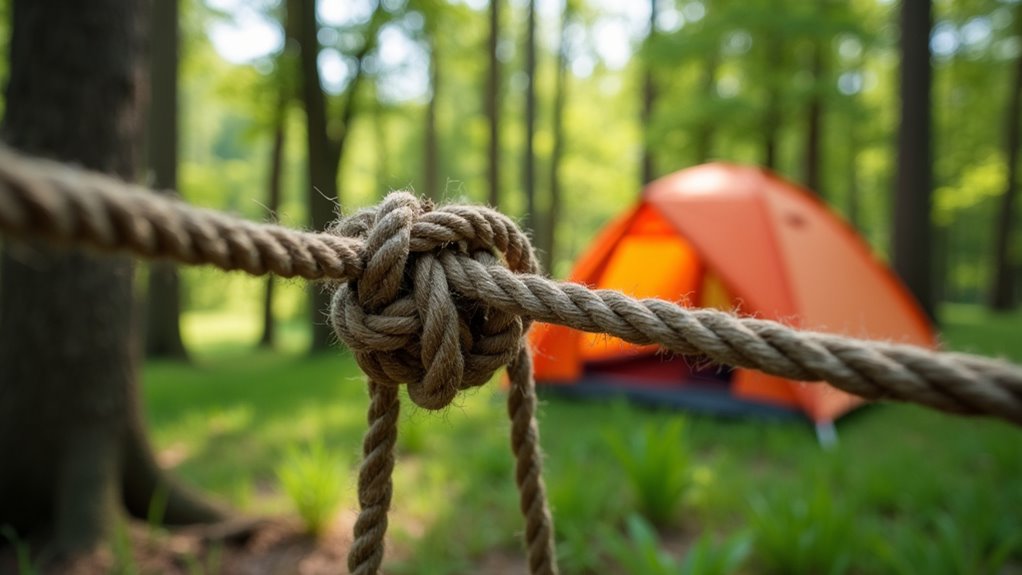
Tying the right camping knots keeps your tent strong and safe.
The Taut Line Hitch adjusts tension on guy lines. Slide it to tighten or loosen easily, ensuring adequate support for your tent structure.
Use the Bowline knot to make a fixed loop for tent poles.
The Clove Hitch works fast to attach ropes but watch for slipping with heavy loads.
The Half Hitch is simple and useful, especially when doubled for more hold.
Two Half Hitches offer steady anchoring to secure your tent. These knots help your tent stand firm in wind and rain. Staking a tent is also crucial for stability and security during adverse weather conditions.
Practice them to make camping easier and better.
Knots for Tarp Camping and Shelter Rigging
Tarp camping needs knots that keep your shelter strong in all weather. Use the Larks Head Knot to tie cords to tarp fabric. The Loop-to-Loop Hitch links guyline loops to tarp tie-outs for a tight fit.
The Clove Hitch anchors quickly to poles or stakes. The Tarp Corner Knot makes tie points if your tarp has no corners. The Taut Line Hitch lets you change tension without untying. The Trucker’s Hitch helps tighten guylines with more force.
Test knots by pulling gently to check strength. Dress knots neatly to keep them strong and safe.
These knots help build a shelter that lasts on every trip.
Practical Uses and Benefits of Tent Knots
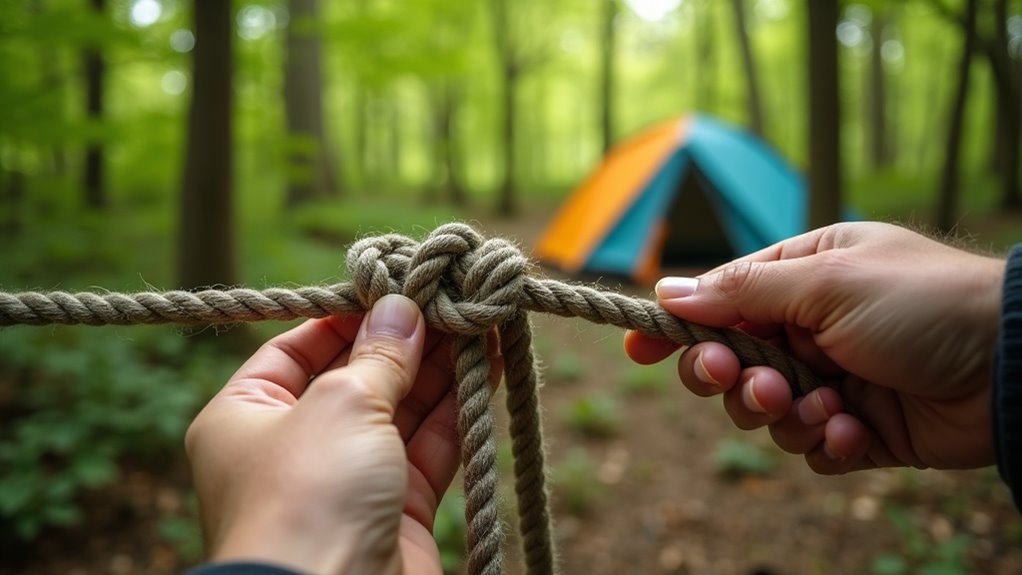
Tent knots play a key role in camping. Knots like the bowline and taut line hitch keep your tent strong and steady. The bowline forms a fixed loop that won’t slip. The taut line hitch lets you tighten or loosen the rope easily. This stops the tent fabric from tearing. Additionally, securing tent stakes in combination with these knots ensures your tent remains stable even in windy conditions.
Double fisherman’s and sheet bend knots share the load evenly. This makes your knots safer during setup. Girth hitches and square knots speed up tent assembly. You spend less time setting up and more time relaxing. Additionally, using tent tie downs secures your tent against strong winds, enhancing stability and safety.
In emergencies, knots like the bowline and surgeon’s knot can save lives. They hold tight and prevent accidents. Learning these knots helps you camp safer and smarter. Practice often. These knots make camping easier and give you peace of mind.
Knot Characteristics and Considerations
Knots make camping easier and safer. Some knots are fast to tie and untie. This helps when weather is bad. Simple knots reduce mistakes and save time. Strong knots hold tight under pressure. The bowline and taut-line hitch are great examples.
Some knots work well with many rope types. The sheet bend fits many rope sizes and materials. Good knots let you adjust tension easily. You can use them again without hurting the rope. Knowing these points helps pick the best knot for any task.
Step-by-Step Examples of Key Tent Knots
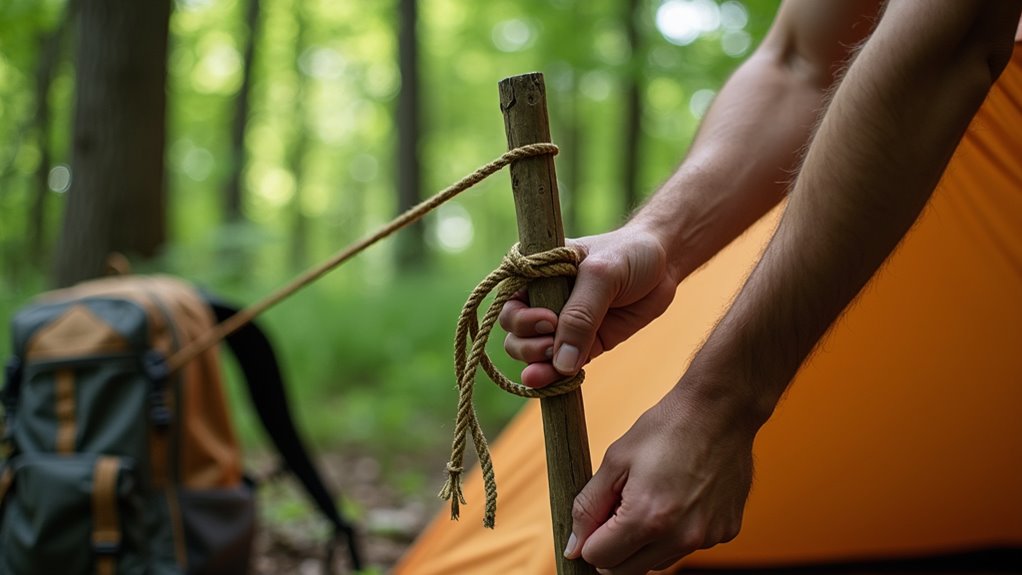
Tying key tent knots makes camping safer and easier. The bowline knot creates a strong loop at the rope’s end. Use it to anchor ridge lines or tent stakes.
Make a small loop, pass the rope end through it, around the standing part, and back through the loop. Pull tight.
The taut line hitch helps adjust tension on tent guylines. Wrap the rope around the anchor, form a loop, and pass the rope end through.
Slide the knot to tighten or loosen. It holds well under pressure.
Two half hitches work great to secure ropes to trees or poles. Tie two half hitches one after another for a firm hold.
The square knot joins two ropes of the same size. It’s perfect for guy lines or tarps.
Master these knots to keep your tent stable in windy or rainy weather, as the tent stake knot is essential for securing your tent against the elements. Practice them to camp with confidence and safety.
Frequently Asked Questions
What Materials Are Best for Camping Ropes?
Polyester and HMPE ropes work best for camping. They stretch very little and stay strong. These ropes hold knots tight, giving you good stability. Nylon ropes stretch too much and lose tension. For safe camping, pick ropes that keep knots firm and hold well under pressure. Strong ropes mean safer tents and gear.
How Do Weather Conditions Affect Knot Performance?
Strong winds and rain change how knots hold. Wet ropes slip more easily. Cold weather can freeze knots, making them stiff and weak. Use knots made for wet or icy conditions. Check and tighten knots often during storms. Smart knot choices keep your tent safe and steady. Don’t guess—secure your gear well!
Can I Use These Knots for Other Outdoor Activities?
These knot types work well for many outdoor activities. Use strong knots for climbing, boating, or tying gear. Good knots keep you safe and secure in all conditions. Practice tying them often to build confidence and skill. Safe knots make your outdoor trips better and worry-free.
What Are Common Mistakes When Tying Camping Knots?
Many campers use the wrong rope for their knots. Too thick or too thin ropes cause problems. Knots must be tight enough to hold but not too tight to damage the rope. Always check knots often during use. Leaving tails too short or tying knots incorrectly leads to slipping. These mistakes make knots unsafe and can cause accidents. Good knot work keeps you safe outdoors.
How Often Should I Practice Tying These Knots?
Practice tying knots every week to build skill and confidence. Try daily sessions if learning many knots at once. Refresh your knot-tying skills every season. This helps you stay ready for any outdoor trip. Regular practice improves speed and accuracy. Keep your hands quick and your knots strong. Simple habits lead to better results.
Conclusion
Tying the right knots keeps your tent strong and safe. Each knot acts like a thread holding your camping gear together. Knots like the Bowline and Taut-Line Hitch hold tight and adjust easily. These knots stop your tent from moving in wind or rain. Learning them makes your camping trip more comfortable and secure. Strong knots mean your shelter stands firm against weather. Practice these knots to feel confident outdoors. Your tent shows your skill and readiness for adventure.
