
What Is A Bell Tent
This post contains affiliate links. As an Amazon Associate, we earn from qualifying purchases.
A bell tent is a spacious, cone-shaped shelter designed for comfortable outdoor living, ideal for activities like glamping and camping. Made from durable, waterproof cotton canvas with a tall central pole and round floor, it provides ample standing room and protection from the elements. Further details about its design, history, and maintenance will be explored later in the article.
Essential Facts in 30 Seconds
- Bell tents are cone-shaped with a central pole and round floor, fitting 1 to 10+ people.
- Made from durable, breathable fabrics like 100% cotton canvas.
- Originated from Indigenous designs and adapted for military use.
- Provide spacious interiors, suitable for glamping, weddings, and festivals.
- Require regular maintenance and proper storage to prolong lifespan.
Definition and Basic Characteristics
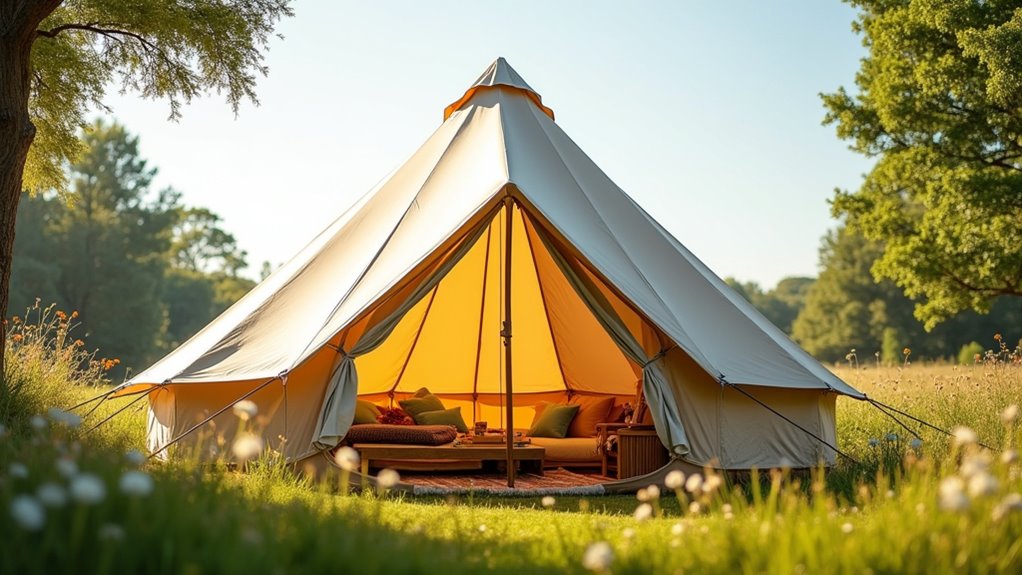
A bell tent stands out with its cone shape and roomy design. It has one tall pole in the center that holds up the tent and gives it the cone look. The floor is round, usually about 10 feet wide or larger. This space fits from one to ten or more people comfortably.
The walls go straight up or tilt slightly, which helps keep the tent steady. Ropes attach near the top and stretch to the ground, holding the tent tight. Inside, the middle is tall enough to stand up easily. This open space helps air flow freely.
Bell tents work well for family trips, glamping, and outdoor events. They feel cozy but stay strong in wind. This type of tent blends usefulness with a classic style. Many campers choose bell tents for a fun and easy outdoor stay.
Construction and Materials
Bell tents use strong fabrics to last long and stay comfortable. The main fabric is 100% cotton canvas. It breathes well and feels strong.
Polycotton blends mix cotton with synthetic fibers. These blends are lighter and resist dampness better. Synthetic fabrics like polyester or nylon don’t last as long as canvas.
The tent frame holds the shape and needs to be tough. Most tents use central poles made from galvanized steel or aluminum. These metals resist rust and stay strong.
Heavy steel connectors and stainless steel cables add extra support. The floor uses waterproof materials like polyethylene. This stops water from coming inside.
Good tents have sealed seams and waterproof coatings. These details keep rain and wind out. They make the tent tough in bad weather.
Inside, the tent stays dry and comfortable for everyone. Durable fabrics and strong frames make bell tents great for camping. Additionally, tent floors made from durable, waterproof materials are crucial for maintaining a dry sleeping area.
Historical Context
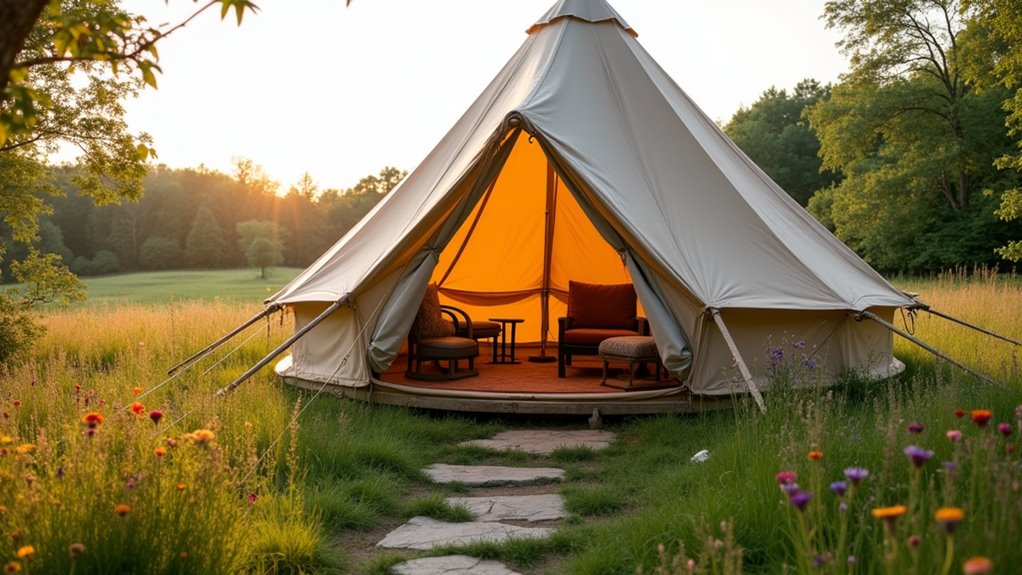
Bell tents have a rich history that spans many cultures and times. They borrow ideas from native shelters like tipis and yurts. These designs show deep cultural meaning.
Armies used bell tents because they’re strong and easy to set up. Over time, people improved their shape and materials.
Today’s bell tents combine old styles with modern needs. This mix makes them popular for camping and events. Understanding their past helps you see why bell tents work so well now.
Origins and Evolution
Bell tents have a long history. They started with Indigenous peoples who used canvas tents. These tents protected them from weather.
Henry Hopkins Sibley changed the design in the 1800s. He made a bell tent based on Native American tipis. The military liked bell tents too. British and U.S. armies used them a lot during the Civil War and World War I. Soldiers found them strong and easy to set up.
After the wars, people began using bell tents for camping and festivals. Today, bell tents offer both comfort and style. This history shows how bell tents grew into useful shelters.
Design Influences
Bell tents have a rich history that shapes their design today. Soldiers in the mid-1800s needed tents that were easy to carry and set up. The central pole design came from these military needs. It creates more space inside the tent.
Native American tipis also influenced bell tents. They share the cone shape and central support. Tipis have smoke vents, but bell tents do not. Instead, bell tents focus on simple design and easy transport.
This mix of military use and Native American ideas made bell tents strong and practical. Today, they serve many purposes, from camping to events.
Cultural Significance
The bell tent holds great cultural value beyond its simple design. Many cultures have used it for centuries. It often stands for community and shared living.
Here are four important points about its meaning:
- Indigenous Roots: Indigenous groups used bell tents to adapt to many environments. They showed skill and cleverness.
- Military Use: In the 1800s, armies used bell tents for living and medical care. They helped soldiers stay safe.
- Social Life: The round shape of bell tents helps people feel equal and close. It builds strong community bonds.
- Modern Appeal: Today, bell tents mix old traditions with fun and comfort. Many people love them for camping and adventure.
Bell tents tell stories of history and culture. They aren’t just tents but symbols of human life and connection.
Key Benefits and Advantages
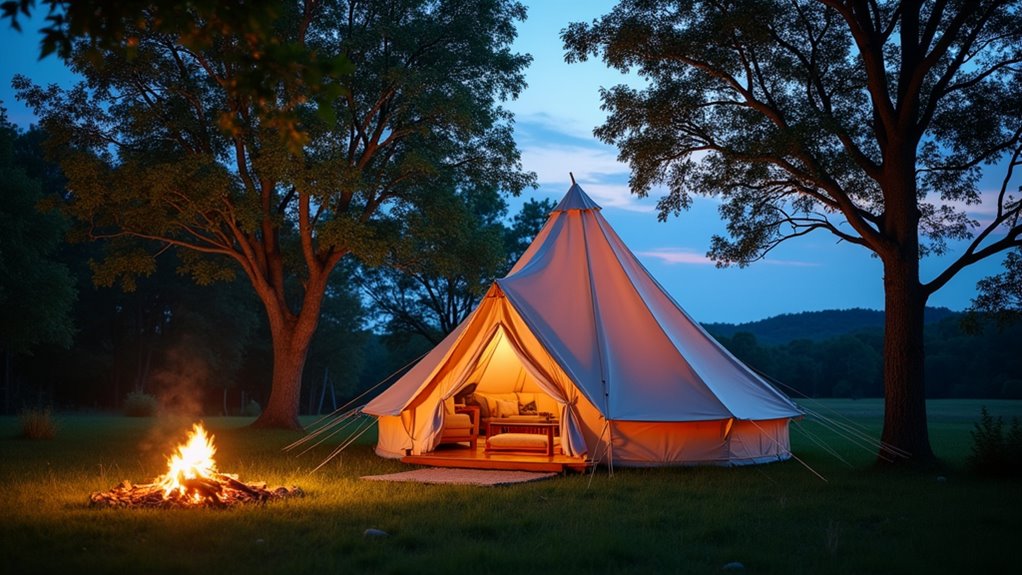
A bell tent offers many benefits that make camping better.
Its large, open space lets you stand and move easily inside. The round shape looks nice and feels cozy. Strong canvas fabric keeps rain and wind out, so you stay dry. The cotton material breathes well, stopping dampness inside. It helps keep you warm in cold weather and cool when it’s hot.
Setting up takes little time and no special tools. With good care, a bell tent can last for many years.
It combines comfort, style, and durability for a great outdoor stay.
Uses and Applications
Bell tents fit perfectly for glamping and outdoor events. They offer plenty of space for furniture and people. This makes them great for weddings or music festivals.
Many customization options help set the right mood for any event. People enjoy the comfort and style these tents provide. They bring a cozy yet spacious feel to gatherings.
Glamping and Boutique Camping
Bell tents change the way you enjoy glamping and boutique camping. These tents offer plenty of space and a stylish touch.
Step inside for a roomy feel with high ceilings that make moving easy. Sleep well on soft, cozy beds with nice decorations around you. Fresh air flows through big windows with mesh screens that keep bugs out. Many bell tents are designed to provide a comfortable atmosphere that enhances your relaxation experience.
Special fabrics like Wottex™ Pro help keep you warm or cool, no matter the weather. Bell tents bring charm and comfort to your outdoor trips. They create perfect spots to relax and connect with nature, enhancing the overall outdoor experience.
Experience these tents on your next adventure and enjoy camping like never before.
Outdoor Events and Gatherings
Bell tents work great for outdoor events and gatherings. They provide roomy, beautiful shelters for weddings and parties. You can arrange dining, dancing, and relaxing areas inside. The tents add a cozy, rustic feel and shield you from wind and rain.
At music festivals, bell tents serve as special VIP spaces or artist lounges. These tents keep guests and workers comfortable. They also fit well for business events, offering green, open spaces for meetings and talks.
At fairs, bell tents become vendor booths or info stands. They keep people safe and easy to spot. Additionally, using bell tents for outdoor events can create a natural setting that enhances the overall ambiance and experience.
Durability and Maintenance
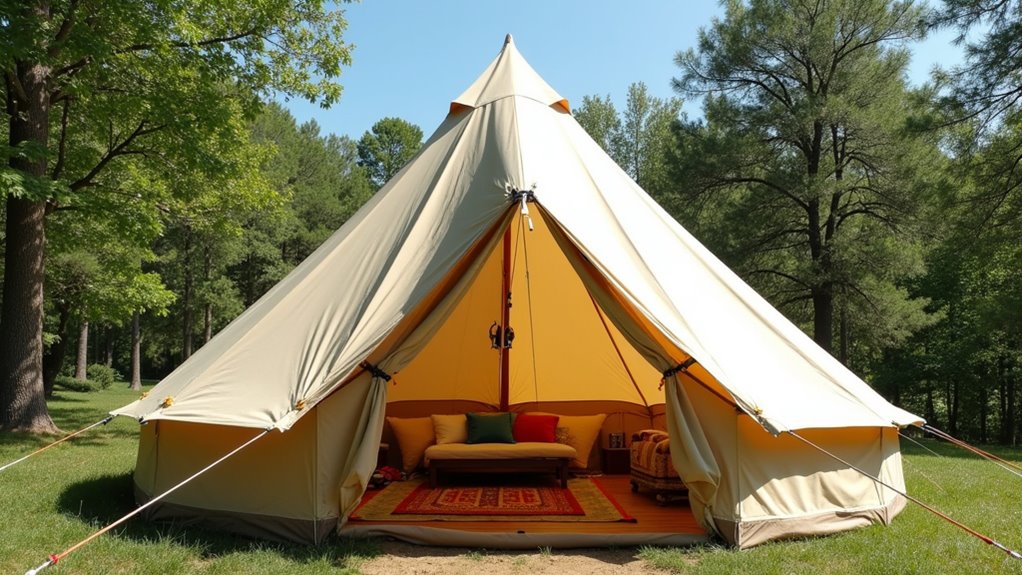
Your bell tent can last many years with proper care. Follow these simple steps to keep it strong and clean.
First, improve water resistance by setting up the tent in dry weather. Soak it fully with water and let it dry completely. Repeat this process 2 to 3 times. This helps prevent leaks and keeps the fabric tough. Additionally, applying waterproofing treatments can enhance the tent’s durability and water resistance.
After each use, clean the tent with a soft brush. Use lukewarm water and special soap to remove stains. Avoid harsh chemicals because they can harm the canvas. Additionally, regular maintenance extends the lifespan of the tent.
Store the tent in a cool, dry place. Make sure it’s completely dry before packing. Use bags that let air pass through. This stops mold and bad smells.
Check the seams often. Fix small tears quickly to stop bigger damage. Every year, apply waterproof spray made for your tent. This keeps rain out and fabric strong.
These easy steps will protect your bell tent and make it last for many camping trips.
Frequently Asked Questions
How Long Does It Take to Set up a Bell Tent?
Setting up a bell tent takes about 15 to 20 minutes. Practice makes it faster. Pick a flat spot to help. Big tents need two people. Use simple steps to save time and avoid frustration.
Can Bell Tents Be Used in Winter Conditions?
Bell tents work well in winter. They use thick canvas that keeps cold air out. Their strong poles hold up against wind and snow. People stay warm inside with a wood stove or extra blankets. These tents also breathe well, stopping moisture build-up. Many campers trust bell tents for cold weather trips. They offer comfort and protect from harsh winter conditions. Perfect for those who want to camp all year.
Are Bell Tents Portable for Hiking Trips?
Bell tents are heavy and bulky. Carrying one on a hiking trip feels like lugging bricks. Hikers need tents that are light and small. Lightweight materials and compact designs work best. Bell tents do not fit this need well. They suit car camping or festivals better. For hiking, pick tents made for easy carrying.
What Accessories Are Recommended for a Bell Tent?
A bell tent needs some key accessories for a great camping trip. A canopy shelter offers extra shade and rain protection. Sleeping cots keep you off the cold ground and add comfort. Lanterns provide light after dark, making it easier to move around. Bug spray helps keep insects away, so you stay safe and relaxed. These items boost comfort, safety, and organization inside your tent. Simple gear makes your outdoor stay much more enjoyable.
How Do I Clean and Maintain a Bell Tent?
Clean your bell tent with warm, soapy water and a soft brush. Gently scrub the canvas to remove dirt. Rinse well with clean water. Always dry the tent in fresh air to prevent mold. Reproof the canvas every year to keep it waterproof. Store the tent in a dry place. Check for tears or damage before and after use. Fix small holes quickly to avoid bigger problems. Keep your tent fresh and strong for many camping trips.
Conclusion
A bell tent offers both style and function for outdoor use. It provides plenty of space and strong materials that last through many trips. People who enjoy simple camping or fancy glamping both find it useful. This tent fits many purposes, from family trips to special outdoor events. Comfort and protection under the stars come easy with a bell tent. You get a reliable shelter that works well in nature’s elements. Choose a bell tent and enjoy your time outside with ease and style.
