
Where to Rent Tents for Camping, Events & Overlanding
This post contains affiliate links. As an Amazon Associate, we earn from qualifying purchases.
You can rent tents from three distinct sources: local event specialists for large gatherings, national outdoor retailers for camping trips, and peer-to-peer marketplaces for specialized vehicle gear. The right choice depends entirely on whether you’re hosting a wedding, heading to a campground, or mounting an overlanding adventure.
I’ve stood in more rental showrooms and scrolled through more online listings than I care to admit. The search for a rental tent often starts with confusion, why are wedding marquees and two-person backpacking shelters showing up in the same results? They shouldn’t. The rental world is sharply divided by purpose, and picking the wrong lane means wasted time and a shelter that doesn’t fit your need.
This isn’t about generic options. It’s about matching your specific plan, a backyard party with 80 guests, a soggy weekend on the Lost Coast Trail, or a month bouncing down fire roads, with the exact supplier that stocks that gear. Let’s cut through the noise and find your perfect temporary shelter.
Key Takeaways
- Event rental companies like JK Rentals or DuPage Tents handle large pole and frame tents as full-service packages, managing delivery, install, and permits.
- Outdoor retailers such as REI Co-op are your go-to for tried-and-true camping and backpacking tents, available for in-store pickup.
- Peer-to-peer platforms (Outdoorsy, RVshare) unlock access to specialized rooftop, truck bed, and overlanding setups directly from owners.
- The single most important step is getting a line-item breakdown of all costs before you pay a deposit.
- For complex events, book 6-12 months out. For a summer weekend camping rental, secure it at least a month in advance.
What Exactly Are You Renting? Tent Types & Their Sources
You don’t search for a “tent.” You search for the tool for your job. A 40-foot Series 2200™ pole tent from Tri-County Tent Rentals and a 3-season backpacking shelter serve universes apart.
Pole, frame, and clearspan tents are installed by professionals for events on specified dates. Camping, backpacking, and vehicle-attached tents are user-setup gear for recreational trips, sourced from retailers or private owners. Confusing these categories guarantees logistical failure.
The Event Tent Ecosystem
This is the domain of local rental houses. They deal in scale and service.
- Pole Tents: The classic, elegant wedding tents. They require a large, clear grassy area for staking. Sizes are substantial, think 40 feet wide and up to 180 feet long in increments, like the models from Tri-County Tent Rentals.
- Frame Tents: The versatile workhorses. Their self-supporting aluminum frames allow installation on hard surfaces like concrete or pavers. Companies like JK Rentals use ballast weights for non-invasive setups on driveways. DuPage Tents & Events lists a 20’x20’ High Peak Frame Tent at $399 and a 20’x80’ version at $1500 for a standard weekend.
- Clearspan Tents: Massive, column-free industrial structures for trade shows or major galas. Rental is exclusively through large-scale event specialists.
The Recreational & Adventure Gear Ecosystem
This is where you go to get outside.
- Camping & Backpacking Tents: Rented from outdoor retailers. REI’s most-rented backpacking model is the polyester-fly Passage 2, forgiving for beginners but 300 grams heavier than a premium nylon-fly option like the Nemo Hornet 2P.
- Specialized Vehicle Tents: This includes rooftop tents, truck bed tents, and dedicated overlanding tents. You will almost never find these at a traditional retailer. Your source is a peer-to-peer platform.
| Your Need | Tent Type | Where to Rent | Critical Note |
|---|---|---|---|
| Wedding, Corporate Picnic | Pole or Frame Tent | Local Event Company (e.g., DuPage Tents) | Full-service install is standard. Get permits in writing. |
| Weekend Car Camping | Car camping tents or Family Dome | Outdoor Retailer (REI) | You handle transport, setup, and cleaning. |
| Backpacking Trip | 2-4 Person Backpacking Tent | Outdoor Retailer | Ask if seam sealer has been recently applied. |
| Vehicle-Based Adventure | Vehicle-attached tents or clamshell rooftop tents | Peer-to-Peer Platform (Outdoorsy) | Inspect all mounting hardware at pickup. |
TL;DR: Event tents come with a crew. Camping tents come with a stuff sack. Know which you need first.
How do I rent a tent for a large event?
You’re not just renting fabric and poles; you’re hiring a production. Companies like JK Rentals manage the entire lifecycle, site planning, engineered drawings for permits, logistics, and coordination of HVAC or flooring. For a simple backyard party, the process is streamlined, but professional setup and takedown remain core.
The initial quote is a starting point. My hard lesson: a quoted price for a frame tent often excludes essential sidewalls. I once faced a $150 surprise add-on for walls as a windstorm rolled in. Now, my first question is always, “Can you email a line-item breakdown of everything included in this total?”
Common mistake: Assuming the quoted price is all-inclusive. Sidewalls, lighting, flooring, and delivery beyond a base distance are frequent add-ons. An un-budgeted $400 surprise on setup day is a sure way to ruin your event’s mood.
Here’s what a thorough rental process looks like:
- Site Visit & Quote: A reputable company will want to see your space. They’ll note ground slope, overhead wires, and access points. Insist on a detailed, itemized quote.
- Contract & Logistics: The contract specifies rental period (e.g., Friday setup, Sunday takedown), delivery windows, and the all-important weather clause. What’s the plan if a storm is forecast? How are reschedules handled?
- Install & Day-Of Coordination: Be on-site during installation to confirm placement. For complex projects, the company handles tent camping accessories like lighting and heaters.
- Takedown & Inspection: Be present for takedown to note any incidental property damage (a torn-up lawn from truck tires) immediately.
What’s the best way to rent a camping tent?
Your best bet is a national outdoor retailer with a robust rental program. REI Co-op is the benchmark. Walking into their rental department feels like a gear nerd’s Christmas, that crisp nylon smell, the orderly rows of stuff sacks. But the thrill fades if you skip the prep.
I rented a Big Agnes Copper Spur HV UL2 from REI Denver for a Lost Coast Trail trip. It looked pristine. I didn’t retreat the seams, assuming their techs had. A midnight squall led to a fine mist of condensation soaking my down bag, a $400 lesson in never making assumptions. Now, I always ask for the seam-sealer application date before I walk out the door.
For a first-time renter, I point you to the REI Co-op Passage 2. It’s forgiving, relatively cheap, and hard to break. For family car camping, I prefer the Kingdom 6 over the Base Camp 6; its color-coded poles and single hub let me set it up solo in 10 minutes, even in 20mph winds on Padre Island.
The process is self-service:
1. Reserve online for in-store pickup.
2. Conduct a brief inspection with staff (check poles, fabric, zippers).
3. You are responsible for transport, setup, breakdown, and cleaning.
Common mistake: Returning a tent dirty or damp. Dirt incurs a cleaning fee. Moisture left inside breeds mildew, which can result in a replacement charge for the entire tent. Shake it out, wipe it down, and ensure it’s bone-dry. Use a tech wash like Nikwax Tent & Gear SolarProof for cleaning, never dish soap, which strips the DWR coating.
Can I rent a rooftop or overlanding tent?
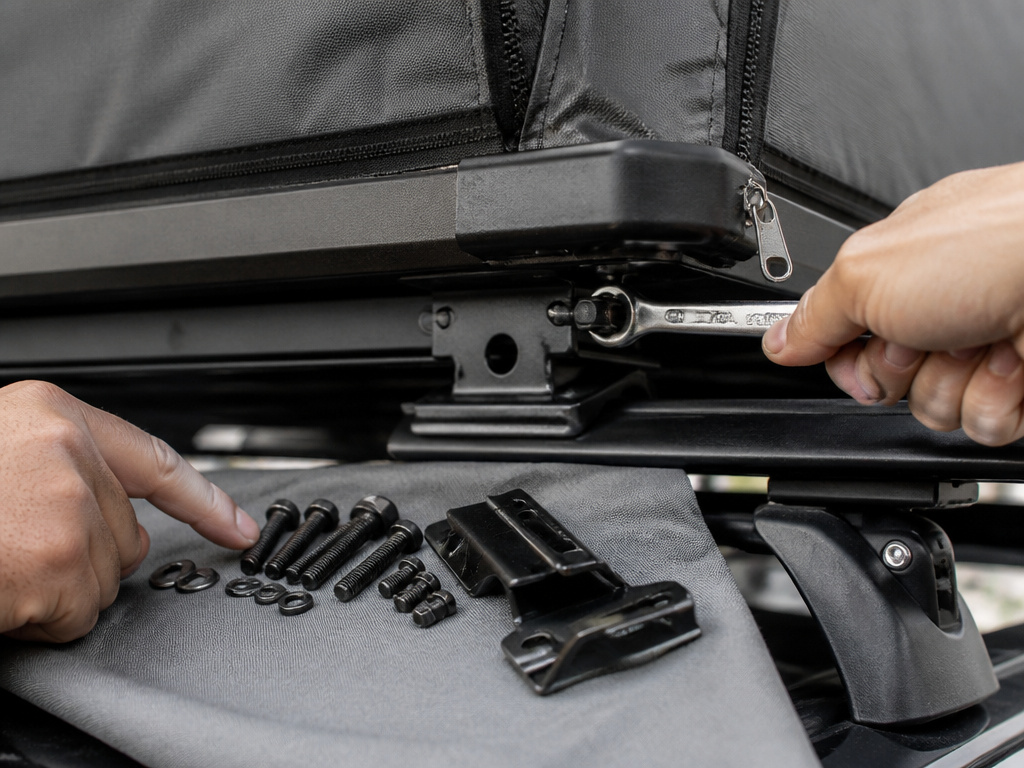
Yes, but not from a traditional store. Peer-to-peer platforms like Outdoorsy are your only real source. It’s Airbnb for adventure gear, where owners rent out their personal canvas tents and vehicle setups.
This reminds me of the time I almost rented a hard-shell from a guy in Moab whose profile picture was just his dog. The tent was fine, but the ladder was… creatively reinforced with duct tape. I passed. The variability is the point, you find unique gear but must vet diligently.
Before You Book:
- Scrutinize Photos: Zoom in on fabric seams, zipper teeth, and mounting points. Look for UV fading or patches.
- Message the Owner: Ask specific questions. “Are all mounting hardware, wrenches, and ladder sections included?” “Has the rainfly been treated with DWR in the last 12 months?” “What’s your policy if a storm hits during my rental?”
- Plan the Handoff: Meet in person for pickup. Do a physical inspection together. Attach and detach the tent if possible to ensure compatibility with your vehicle’s roof rack or truck bed.
This is where skipping a step has immediate consequences. If you don’t check the mounting hardware, you might find yourself at a remote trailhead with incompatible bolts, forcing a three-hour drive back and ruining your first night’s reservation at a prime Michigan tent camping site.
Your Pre-Rental Checklist: Questions That Matter
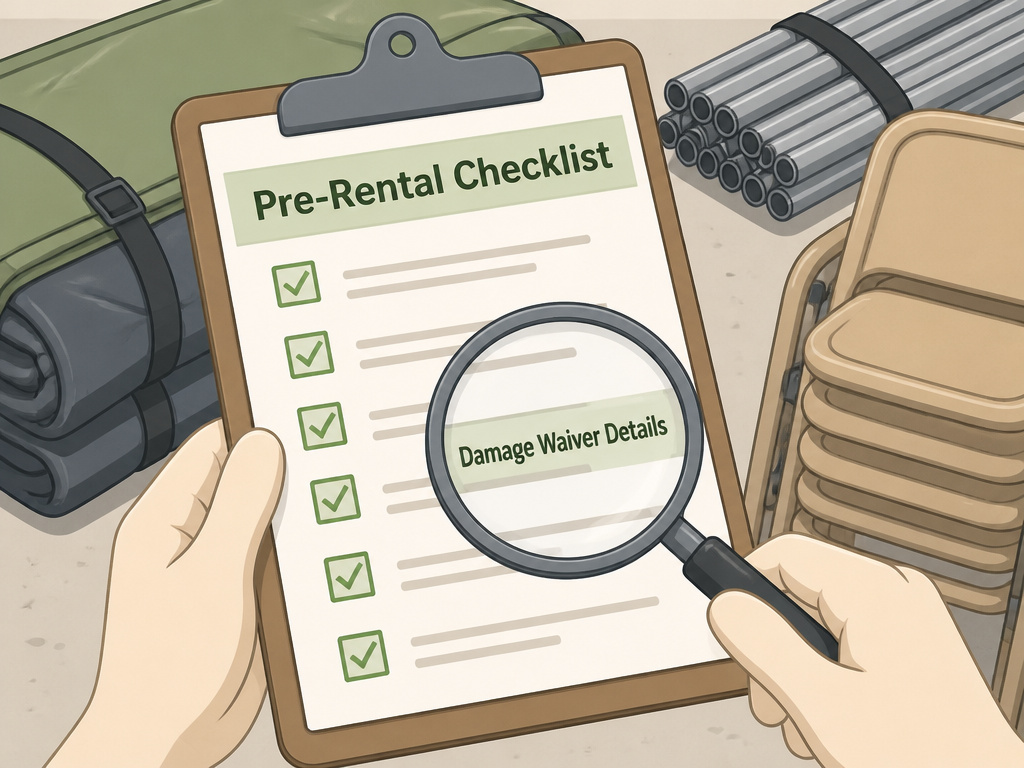
The answers to these questions separate a smooth experience from a costly headache. Never assume.
- “What is excluded from the damage waiver?” Most cover accidents but exclude negligence (e.g., burn holes from a grill ember). Know the boundary.
- “What is your exact weather policy?” Can you reschedule? Is there a fee? Do they offer storm guying or weights for high wind?
- “What time is pickup/return, and what’s the late fee?” Peer-to-peer owners are often strict. A two-hour delay could cost you half the rental rate.
- “Do you offer package deals with tables, chairs, or essential tent camping gear?” Bundling for events can yield significant savings.
- “Can I see the engineer’s permit drawings?” (For large event tents.) This proves they’ve accounted for local wind and snow loads.
| Symptom | Likely Cause | Immediate Fix |
|---|---|---|
| Fine mist inside tent during rain | Compromised seam tape or old DWR coating. | Apply seam sealer (like Gear Aid Seam Grip) and re-treat fly with Nikwax. |
| Zipper snags constantly | Sand or dirt in the zipper teeth. | Clean with a soft brush and lubricate with a silicone-based zipper lube. |
| Tent sags or flaps excessively in wind | Improper guying or staking. | Re-tension all lines, ensuring stakes are at a 45-degree angle away from the tent. Use deadman stakes in sand/snow. |
| Pooling water on fly | Fly not taut, creating low spots. | Adjust pole tension and guylines until fly is drum-tight. |
Frequently Asked Questions
How far in advance do I need to book?
For a summer Saturday wedding, secure an event tent 6-12 months ahead. For a camping tent on a July weekend, book at least a month in advance. Desirable rental rooftop tents on peer-to-peer sites can be booked months out for holiday weekends.
Do companies deliver to remote campgrounds?
Almost never. Event companies deliver to a street address. Retailers require in-store pickup. Your only remote hope is a peer-to-peer owner willing to meet you for an extra fee, this is rare and must be negotiated upfront.
What if I damage the tent?
You will be charged for repairs or replacement. The cost is deducted from your security deposit or billed to your card. This is why understanding the damage waiver’s exclusions is critical. Intentional damage or clear negligence is typically not covered.
Can I rent if I’ve never set up a tent before?
Yes, but choose your source wisely. Opt for a full-service event rental. If camping, rent a simple dome like the REI Passage 2 and practice in your backyard before your trip. Peer-to-peer owners may give a tutorial but won’t travel to your site to help.
Are one-day rentals possible?
For event tents, minimums are usually 2-3 days to allow for setup and takedown. Retailers like REI offer single-day rates, but multi-day discounts are better. Peer-to-peer owners set their own minimums, often 2 days.
Is it cheaper to rent or buy?
For a one-time event or a single annual trip, renting is far more economical and saves storage. If you camp more than 3-4 times a year, buying a quality tent like the durable rental tents we recommend usually pays off.
Before You Go
Renting the right tent boils down to honest self-assessment. Are you hosting or hiking? The answer points you to one of three separate worlds: the full-service event company, the outdoor retailer’s rental counter, or the peer-to-peer marketplace.
Your success hinges on specificity. Define your needs in square footage or person-capacity, get every cost and contingency in writing, and inspect the gear with a critical eye. A clear contract and a confirmed weather plan are always worth more than the lowest quote.
Get it in writing. And maybe pack an extra tarp. (I always do.) Now go find your shelter under the stars.
