
How To Use Tent Guy Ropes
This post contains affiliate links. As an Amazon Associate, we earn from qualifying purchases.
To use tent guy ropes effectively, attach them securely to the tent’s guy-out loops and stake them into the ground at a 45-degree angle to provide optimal tension and wind resistance. Tie adjustable knots like two half hitches to maintain stability, and check the tension regularly to ensure a secure setup. Later in the article, you’ll find more detailed tips and tools, such as the Nite Ize CamJam, to help simplify this process and enhance your tent’s performance.
Essential Facts in 30 Seconds
- Attach guy ropes to the tent’s guy out loops for stability.
- Use knots like two half hitches or taut line hitch for adjustable tension.
- Position ropes at a 45-degree angle to distribute tension effectively.
- Secure stakes deep and angled toward the tent for strong hold.
- Check and adjust rope tension regularly to maintain tent shape.
Purpose and Importance of Tent Guy Ropes
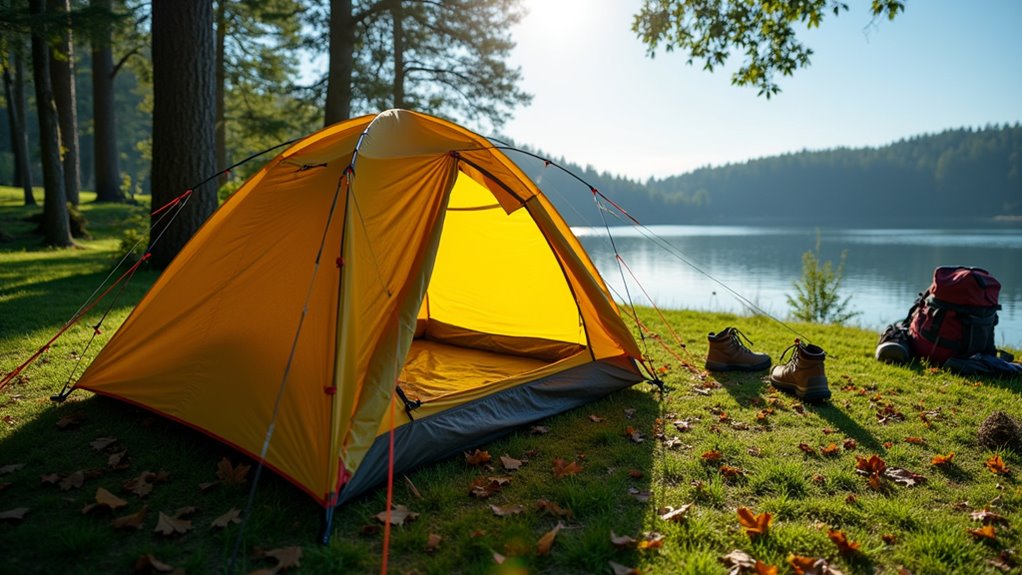
Tent guy ropes keep your tent steady and safe. People have used them since early camping days to fight strong weather. They pull tight and stop poles from bending or breaking in wind. Tight guy ropes make your tent strong and stop it from lifting or falling.
They also help air flow inside the tent. This cuts down on dampness and makes it more comfortable. Guy ropes hold the rainfly away from the tent walls. This stops water from leaking inside and keeps you dry. Additionally, proper tension ensures that the tent maintains its shape and integrity during adverse weather conditions.
Tight ropes stop the tent fabric from flapping and wearing out. Using guy ropes right helps your tent last longer and stay safe. They’re a must-have for every camping trip. Additionally, adequate tension ensures the stability of your tent structure and enhances its overall performance.
Choosing Appropriate Guy Ropes
Pick guy ropes made from strong materials like polyester or nylon. Polyester ropes resist UV light and stretch less. Nylon ropes stretch more and absorb shocks well.
Use ropes between 3mm and 6mm thick. This size gives good strength and easy handling. These ropes keep your tent steady in wind and rain.
Strong ropes help prevent accidents and damage. Choose quality ropes to protect your camping gear.
Material Selection Guidelines
Picking the right material for guy ropes keeps your tent strong and steady. Each type offers different strength and weather resistance. Check the chart below to find the best fit:
| Material | Strength & Stretch | Weather Resistance |
|---|---|---|
| Polyester | Low stretch | Excellent UV & dampness |
| Nylon | High elasticity | Moderate UV & dampness |
| Paracord | Moderate stretch | Good dampness resistance |
| Braided Polyester | Low stretch | Good UV & dampness |
| Reflective Utility Cord | Moderate stretch | Good UV & dampness |
Polyester holds tight and resists sun and rain well. Nylon stretches more and absorbs shock, but wears faster in sunlight. Paracord and braided polyester offer a balance of strength and weather resistance. Using the right guylines can enhance visibility at night and overall stability. Reflective cords add visibility at night. Your choice affects how long and strong your setup lasts. Pick wisely for a safe, secure tent. Additionally, using the right guy ropes can enhance customer engagement and experience by ensuring your tent remains stable and functional during events.
Diameter and Length Considerations
The right diameter and length keep your tent strong and steady.
Thin ropes, about 1.5 to 2.5 mm, weigh less but need careful tightening. Thicker ropes, from 3 to 6 mm, last longer and handle stress better.
Longer ropes give more room to stake your tent, but they add weight. Pick ropes with breaking strength at least twice your expected load.
Thick ropes knot easier and slip less. Strong, easy-to-use ropes mean a safer, more reliable tent setup.
Proper Setup and Use of Guy Ropes
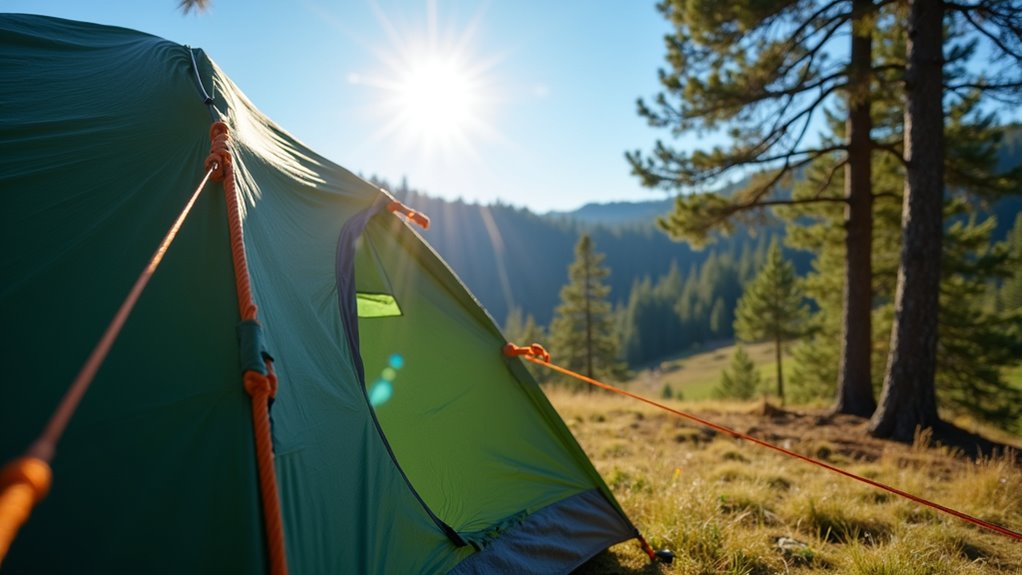
Proper setup and use of guy ropes keep your tent stable and safe.
Find the guy out loops on your tent first. Tie the rope tightly using knots like two half hitches or taut line hitch. These knots let you adjust the rope tension easily and ensure that your tent remains secure against adverse weather conditions.
Stretch the guy ropes out at about a 45-degree angle from the tent. This angle helps resist wind better. Push the stakes into the ground at the same angle. Make sure the stakes stay firm.
Start with the ropes a little loose to make changes easier. Slowly pull the ropes tight until tent walls look firm but not stretched too much. Use reflective cords for safety at night. Properly secured tent pegs enhance the stability of your setup.
Check rope tension regularly during your trip. Loosen ropes before packing to avoid tangles. This way, setting up next time will be quick and easy.
Benefits Beyond Stability
They pull the walls tight, which helps air flow better inside. Better airflow lowers heat and stops water drops from forming. This keeps the tent dry and fresh. Choosing the Right Tent can also enhance airflow and minimize moisture buildup. Additionally, maintaining proper ventilation is crucial for reducing humidity levels and preventing condensation. Dry tents mean less chance of mold and damp smells. Your camping stays comfy and clean with guy ropes in place.
Improved Tent Aerodynamics
Setting up your tent with good aerodynamics improves your camping experience. Properly tightened guy ropes shape your tent and cut wind resistance. This helps air flow smoothly around the tent.
Here are four clear benefits:
- Better Wind Spread: Guy ropes spread wind pressure evenly, protecting the tent fabric. Additionally, secure tent stake knots help maintain the overall stability of the setup.
- Less Noise and Wear: A steady tent stops flapping sounds and keeps materials strong.
- Sharper Tent Shape: Tight ropes make the tent slim, lowering air drag and wind wake.
- Easy Adjustments: You can change guy rope tension to suit different weather and ground. Additionally, ensuring the tent is fully intact with no holes or tears can further enhance tent integrity and reduce vulnerabilities to wind and insects.
Enhanced Ventilation Control
Good ventilation makes camping much better, no matter the weather. Using guy ropes helps air flow inside your tent. Pull the rainfly away from the tent walls to make space for air. This space stops moisture from building up inside. Moist air leaves, so your tent stays dry and fresh.
Tighten guy ropes to keep the tent’s shape strong. This keeps vents open and working well. Adjust ropes to match the weather outside. Strong winds or rain won’t block air flow.
A tent with good air feels bigger and less stuffy. Your camping stays comfortable and dry all night long.
Maintenance and Care of Guy Ropes
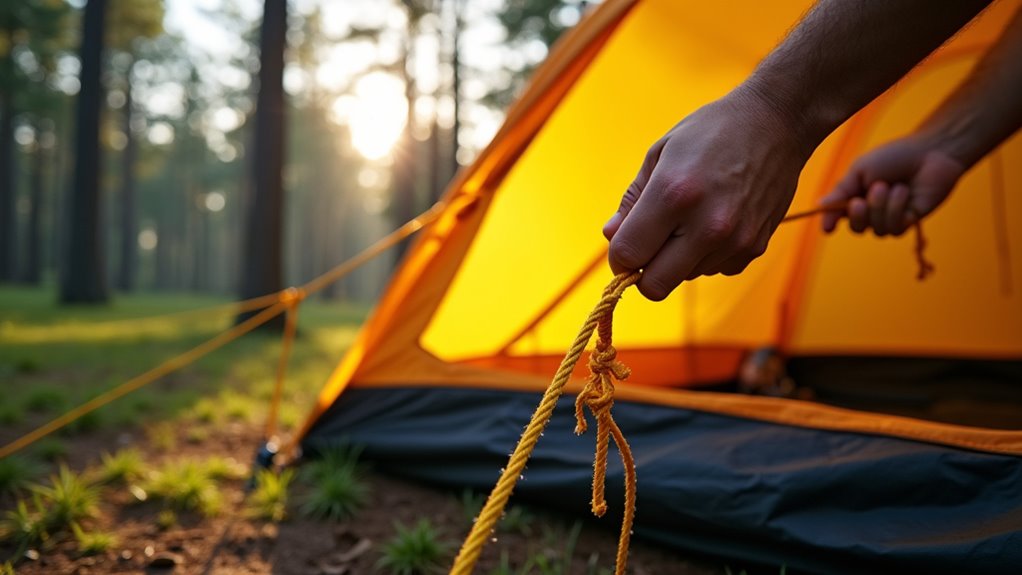
Keep your guy ropes strong and safe with regular care. Check ropes for cuts, frays, or worn spots every time before use. Replace any rope that looks weak or damaged.
Clean ropes by rinsing with fresh water to remove dirt and grit. Let them dry fully in the air to stop mildew growth. Coil ropes gently without tight knots or kinks to avoid damage.
Store ropes in a cool, dark place inside storage bags to keep them neat and tangle-free. Practice tying knots like taut line hitches often. Adjust rope tension to match wind and weather.
Check knots for slipping and tighten as needed. Good care makes your ropes last longer and keeps your tent stable.
Tips for Effective Use in Varied Conditions
Using guy ropes right keeps your tent strong in all weather. Check the ropes often. Tighten ropes so they are firm but not too tight. Adjust ropes after wind or rain to keep the tent steady.
| Condition | Rope Tightness | Best Knot |
|---|---|---|
| Wind | Tighten for firm hold | McCarthy hitch |
| Rain | Loosen to stop tearing | Bowline for strong loops |
| Calm | Keep medium tension | Slippery half hitch |
Fix guy ropes at a 45-degree angle from the tent. Push stakes deep into the ground. Use tools like the Nite Ize CamJam for easy rope tightening. Keep ropes tidy to stop tripping. These steps help your tent stay safe, no matter the weather.
Frequently Asked Questions
Can I Use Regular Rope as a Substitute for Guy Ropes?
Regular rope can replace guy ropes and often costs less. Still, guy ropes made for outdoor use last longer and hold stronger. Weather can wear down regular rope faster, making it less safe in wind or rain. For tough conditions, invest in rope designed for guying. It helps keep tents and poles steady. Safety and strength matter most.
How Do I Know if My Guy Ropes Are Too Tight?
Tent fabric stretched tight like a drum means ropes might be too tight. Check the ropes often. Adjust the tension so the tent stays strong but not strained. Ropes that are too tight can damage tent poles and fabric over time. Keep the tent stable by loosening ropes a little if the fabric looks very tight. Regular rope checks help avoid tears and keep your tent safe.
What Knots Are Best for Securing Guy Ropes?
Use the bowline knot to make a strong loop for guy ropes. It holds tight and won’t slip. The taut line hitch adjusts rope tension easily. These knots keep your tent steady in wind or rain. Simple knots, big difference. Try them for safe, strong tent setup.
Can Guy Ropes Be Used With Tarps or Other Structures?
Guy ropes make tarps and other structures strong and steady. They hold the tarp tight and stop it from flapping in the wind. With guy ropes, your shelter stays firm during rain or storms. People use them to keep outdoor covers safe and in place. Simple knots and strong ropes do the trick. They work well with tents, canopies, and even small buildings. Guy ropes turn a loose cover into a reliable shield.
How Can I Reduce Guy Rope Noise in Windy Conditions?
Guy rope noise in wind can be loud and annoying. Tighten the ropes just enough to keep them firm. Avoid making them too tight; that causes more noise. Change the angle of the ropes to reduce flapping. Use ropes made from soft, flexible materials to lower sound. Add small dampeners or sleeves to stop vibration. These steps keep the ropes quiet and your setup steady in strong wind. Try these tips for a peaceful outdoor space.
Conclusion
Tent guy ropes keep your tent steady like tree roots hold a tree. Pick strong ropes that suit your tent and weather. Tie them tight at the right spots to stop your tent from shaking. Check ropes often to avoid wear or slack. Good rope use stops your tent from falling during wind or rain. It also makes camping safer and more fun. Use these tips to keep your tent firm under the stars.
