
How To Stay Cool Camping In A Tent
This post contains affiliate links. As an Amazon Associate, we earn from qualifying purchases.
To stay cool while camping in a tent, choose breathable tent materials and ensure good ventilation by opening windows and vents. Position your tent in shaded areas with openings facing the wind to maximize airflow. You can also use DIY cooling methods like portable swamp coolers or fans with ice packs. These strategies help manage heat inside the tent and improve comfort. Further details and tips on staying cool will be provided later in the article for those interested.
Essential Facts in 30 Seconds
- Choose a breathable tent with cotton canvas or synthetic materials and ample mesh for airflow.
- Set up the tent in shaded spots and orient openings toward the wind to improve ventilation.
- Open all doors, windows, and vents to increase air circulation and reduce humidity.
- Use DIY cooling methods like portable swamp coolers or wet pads with fans to stay cool.
- Keep the tent tidy and unobstructed to maintain good airflow and manage heat effectively.
Tent Selection and Design for Cooling
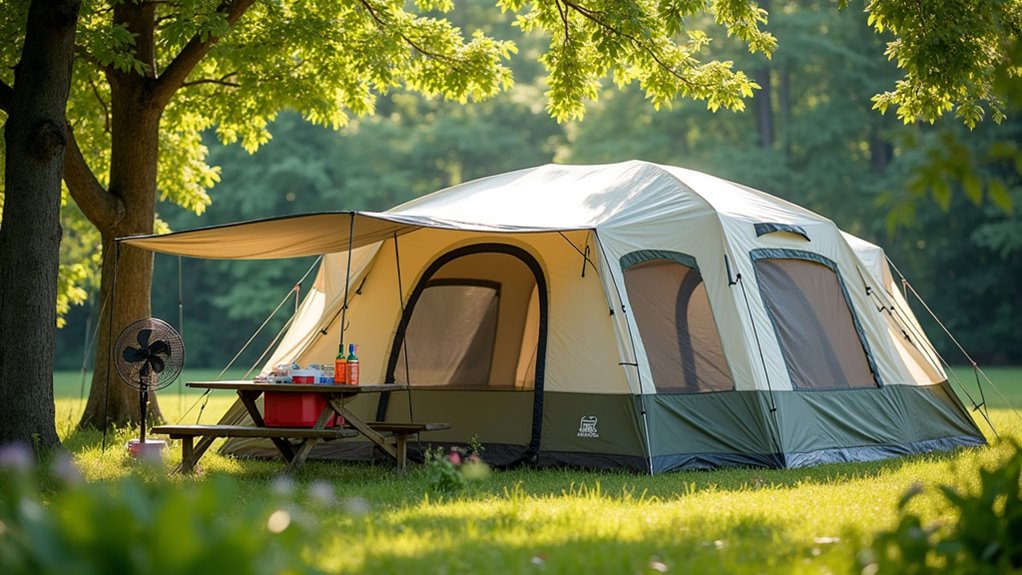
Stay cool during camping by picking the right tent. Tents made from breathable materials like cotton canvas keep the inside cooler. Cotton naturally controls temperature better than synthetic fabrics, making it an excellent choice for those hot summer nights.
Synthetic tents should have lots of mesh to let air flow well. A high mesh area helps reduce heat inside. Tents with big mesh panels on at least two-thirds of the walls let hot air escape easily. Additionally, tents made from lightweight materials like polyester or nylon are easier to set up and can improve ventilation.
Rainflies in light colors or with UV-reflective coatings block sunlight but still allow airflow. Multiple doors and windows create cross-ventilation, moving air through the tent faster.
Choose tents with tall, steep roofs. Hot air rises and leaves the tent quicker this way. Additionally, selecting a tent with a high waterproof rating can ensure that you remain comfortable and dry during unexpected rain showers, preventing the heat from being trapped inside. These simple features make a big difference in staying cool while camping in warm weather.
Tent Positioning and Site Selection
Proper tent placement helps keep you cool while camping. Pick a spot with shade from trees or thick plants. Shade protects your tent from strong sun between 10 AM and 4 PM.
Avoid places where shade comes and goes. These spots let the afternoon sun hit your tent. Face your tent openings toward the wind. This lets air flow through and cool the inside. Avoid hills or walls that block the breeze.
Set your tent on high or sloped ground. Cool air sinks into low areas, making them hotter and damper. Choose dry, firm soil to keep heat away. Additionally, ensure you have proper ground cover to further enhance comfort and insulation from the heat. Using a tarp underneath your tent can also provide an extra layer of moisture protection, making your sleeping area more comfortable.
Leave space around your tent for air to move freely. This keeps your tent cooler and more comfortable.
Ventilation Techniques
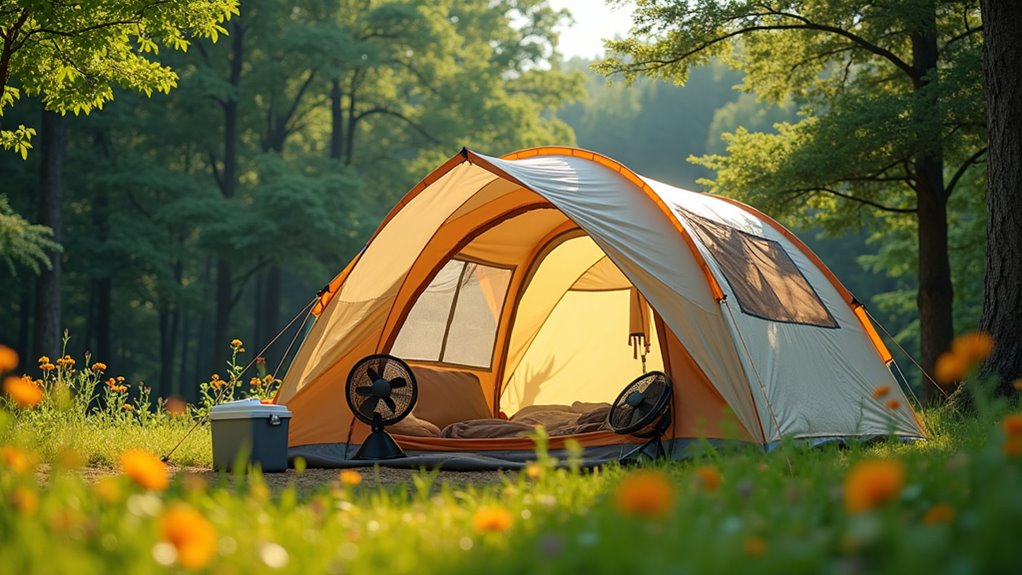
Ventilation keeps your tent cool and dry during warm camping trips. Good airflow stops moisture and heat from building up inside.
Here are easy ways to improve ventilation:
- Open all doors, windows, and vents. Face your tent doors toward the wind. This lets fresh air flow through.
- Add mesh panels or tents with built-in vents. Lift tent edges slightly to let air move under. Additionally, ensuring your tent has proper waterproofing can prevent water from affecting airflow.
- Keep wet clothes and gear outside. Moisture makes the tent damp and uncomfortable.
Air out your tent during cooler parts of the day. Avoid cooking inside to reduce humidity. Additionally, proper ventilation strategies can significantly enhance your camping experience.
These steps lower heat and moisture. Your tent stays fresh and comfy. Camping feels better with fresh air all around.
DIY Cooling Devices and Methods
Staying cool during camping feels hard, especially in hot weather. Build a simple DIY cooler using easy materials. Use a hard or Styrofoam cooler and cut holes in the lid. One hole fits a fan, the other a vent pipe. Fill the cooler with ice packs. Mount a fan to blow air into the cooler. The fan pushes cool air out, keeping your tent fresh.
Try a portable swamp cooler with a bucket, insulation, and a fan. Drill holes in the bucket for air to flow. Add ice inside the bucket. Attach a PVC pipe to send cool air into your tent. Use wet cooling pads with a fan for evaporative cooling. This method can lower temperatures by several degrees.
Place fans carefully to move air well. Frozen gel packs or wet cloths in front of fans help cool air without using much power. These simple tricks make camping much cooler and more comfortable.
Heat Management Practices Inside the Tent
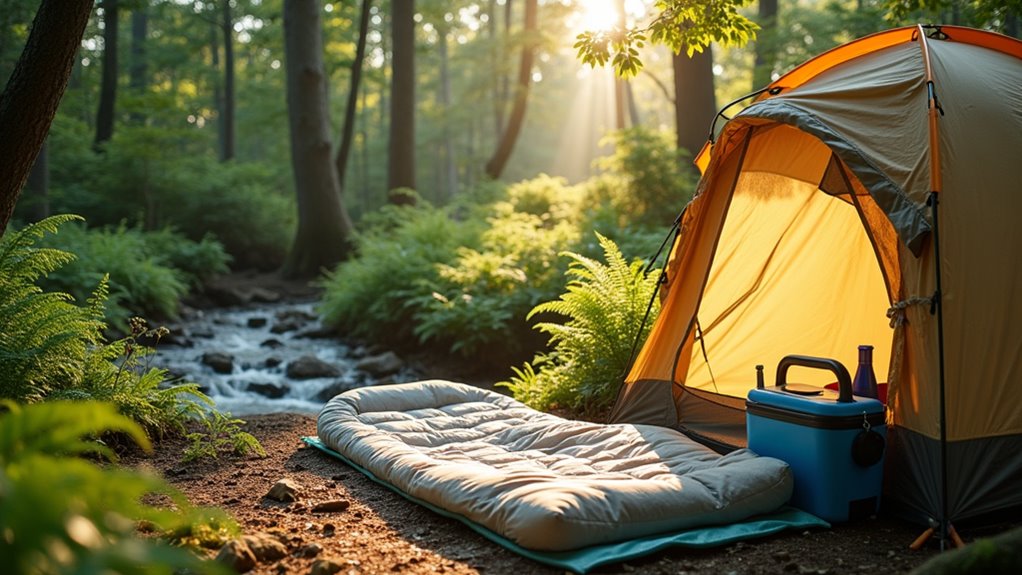
Heat inside your tent can make camping uncomfortable. Use these tips to stay cool.
- Ventilate well. Place exhaust fans near the ceiling to push out hot air. Put intake vents low to bring in cool air. Fans should swap air every 1 to 3 minutes.
- Pick the right tent. Double-wall tents have air gaps that keep air flowing and block heat. Canvas tents also stay cooler by wicking heat away. Use insulated floor mats to keep the ground cool.
- Keep airflow clear. Don’t block vents with gear or people. Put intake fans near ice packs to cool incoming air. Seal tent edges tightly to stop warm air from sneaking in. Additionally, pitching your tent in shaded areas can help maintain a cooler internal temperature.
These simple steps make your tent much cooler and camping more pleasant.
Frequently Asked Questions
What Are the Best Camping Sites for Avoiding Heat?
Shaded camping spots near water keep you cool. Trees block the sun and provide fresh air. Rivers and lakes help lower the temperature around your campsite. Studies show shaded areas can be up to 15 degrees cooler. Campgrounds with dense forests and water access offer the best relief from heat. Choose places with natural shade and nearby water for a comfortable stay.
How Do I Choose the Right Tent Size for Cooling?
A tent should feel like a cool, fresh space. Pick a tent that is bigger than you think you need. Bigger tents let air move better. Look for tents with many windows or mesh panels. These help air flow and stop heat from building up. A tent with good ventilation can lower the inside temperature by several degrees. This keeps you comfortable during hot days. Don’t forget to check how easy it is to open and close the vents. Air moving through the tent makes your camping stay much nicer.
Can I Use a Fan in the Tent During the Day?
Using a battery-powered fan inside the tent during the day helps keep you cool. Open vents or doors to let fresh air flow. This stops heat from building up inside. Fans move air, making you feel more comfortable. Remember, air circulation is key to avoid stuffiness. A well-ventilated tent stays cooler and fresher. Fans also use little energy, so batteries last longer. Stay cool and enjoy your camping!
What Time of Year Is Best for Camping in Hot Weather?
Summer camping can be very hot and hard to enjoy. Late spring and early fall bring cooler weather and fewer bugs. These times offer a better chance for a fun camping trip. Temperatures usually stay comfortable. Campsites feel more peaceful too. This makes camping easier and more fun for everyone.
How Can I Keep My Food Cool While Camping?
Keep food cold on camping trips by using a good cooler. Pack all perishable foods tightly to save space. Use ice blocks instead of loose ice; they last longer. Place the cooler in a shaded spot to avoid heat. Check the cooler often to keep it closed. Cold food stays fresh and safe to eat longer. This simple care stops food from spoiling on your trip.
Conclusion
Camping in a tent on hot days can be comfortable. Pick a tent with good ventilation. Place it under shade like trees or a hill. Open all tent windows and doors to let air flow. Use a small battery-powered fan inside for cool air. Cover your tent with a reflective tarp to block the sun. Avoid setting up your tent on dark ground, as it absorbs heat. Water cools skin quickly; keep a spray bottle handy. Drink plenty of water to stay hydrated. These simple steps help you enjoy camping without feeling too hot.
