
Is Tent Camping Safe
This post contains affiliate links. As an Amazon Associate, we earn from qualifying purchases.
Tent camping is generally safe when you take the right precautions. By following simple safety measures such as using flashlights while setting up your tent, clearing tripping hazards, ensuring proper ventilation, and securely storing food away from wildlife, you can greatly reduce risks. Additional important tips include checking weather conditions and being prepared for emergencies with a first aid kit. Further explanation and detailed safety advice will be provided later in the article for those seeking a deeper understanding.
Essential Facts in 30 Seconds
- Tent camping is safe with proper precautions and clean campsite maintenance.
- Ensure tents are ventilated and stoves are off before sleeping to prevent carbon monoxide poisoning.
- Secure food and understand local wildlife to avoid animal encounters.
- Choose safe campsite locations and monitor weather to avoid hazards like flooding.
- Prepare physically and carry emergency supplies including a first aid kit and water.
Understanding Common Camping-Related Injuries
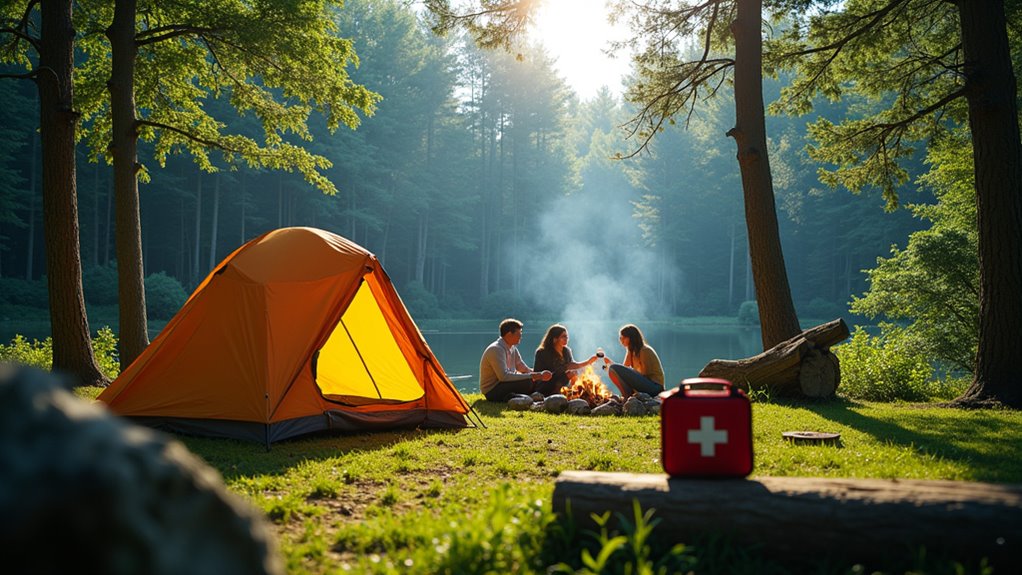
Camping in a tent can lead to injuries, but many are easy to avoid. Every year, about 3,200 people get hurt while setting up tents. Most accidents happen because of poor lighting or tripping over tent stakes. Tent stakes often blend into the ground, making them hard to see. Tent poles can also hit you if you aren’t careful.
Use a flashlight or headlamp when putting up your tent. Keep your area clean to stop falls. Push tent stakes firmly into the ground. Check your tent’s poles and fabric to make sure they hold well before going inside. Understanding the importance of tent pegs can greatly enhance your safety while camping. Additionally, choosing the right campsite can further reduce the risk of encountering hazards during your trip.
Wear strong shoes to protect your feet from sharp sticks or rough ground. Watch the weather. Strong wind can make your tent fall or move. Knowing these risks and acting carefully will keep you safe and happy on your camping trip.
Carbon Monoxide Risks in Enclosed Spaces
Carbon monoxide (CO) is a silent danger during camping. It comes from stoves and heaters that burn fuel. CO has no smell or color but can cause serious harm quickly. Using these devices inside tents can raise CO levels to deadly amounts. Proper ventilation is essential to reduce carbon monoxide risk.
Keep tents well-ventilated. Open vents or windows to let fresh air in. Single-walled tents help air move around better. Never use fuel-burning stoves or lanterns inside your tent.
Watch for signs of CO poisoning. Headaches, dizziness, and confusion are warning signals. If anyone feels these symptoms, get medical help immediately. Proper ventilation is crucial for safety when using propane heaters. Monitor for symptoms of CO buildup, as they can escalate rapidly.
Sleeping near burning stoves is very dangerous. Always turn off stoves before going to sleep.
Taking these simple steps protects you from carbon monoxide risks and makes camping safe.
Safety Guidelines for Wild Animal Encounters
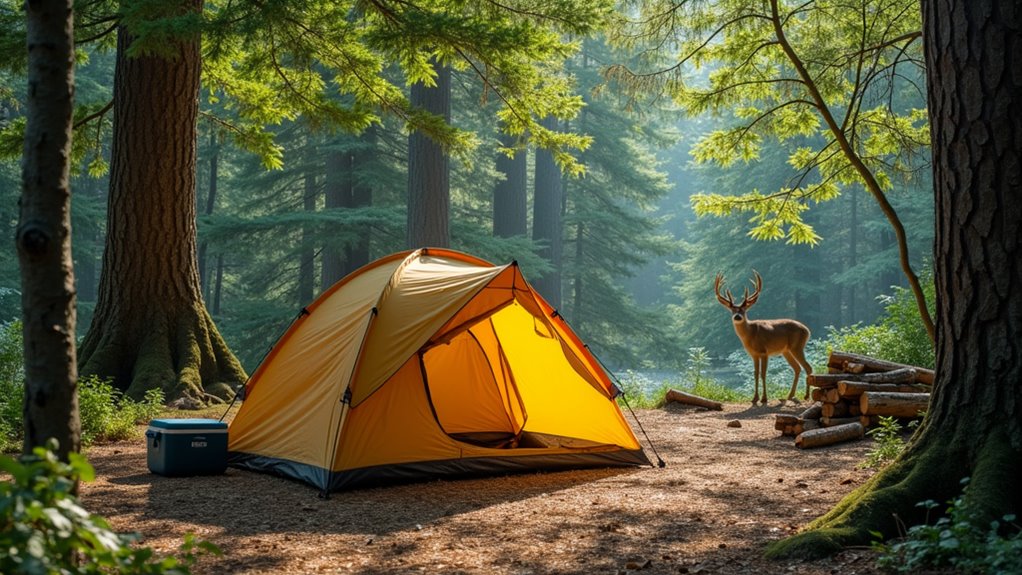
Camping near wild animals needs care and knowledge. Know the animals in your area and how they act. This helps keep you safe. Follow these rules:
| Animal Behavior | How to Avoid Problems | What to Do |
|---|---|---|
| Animals stay away from people | Keep food locked up | Stay far from animals |
| Animals get angry if scared | Throw trash in bins | Speak softly and move back slowly |
| Animals look for scraps | Clean cooking spots | Tell park staff if animals act wild |
| Rarely see big predators | Make noise while walking | Do not run if you see one |
Always keep distance from wild animals. Never feed or touch them. Speak quietly and back up if you see a bear. Stand still and step back slowly from snakes. Tell park rangers about strange animal actions. This helps keep everyone safe.
Managing Weather and Environmental Hazards
Camping outdoors has many risks from weather and nature. Prepare well to stay safe.
Check the weather forecast before and during your trip. Use NOAA Weather Radio for fast updates on storms and floods.
Pick campsites on high, flat land. Avoid valleys or places that flood easily. Find natural windbreaks like trees or bushes. Using a tarp under your tent can also help protect against moisture and dampness from the ground.
Know the flood history of your area. Plan a clear route to escape floods. Move to higher ground at once if flash flood warnings come.
Additionally, ensure you have proper tent setup location strategies to minimize risks associated with rain and flooding.
Stay alert. Stay safe. Enjoy nature without danger.
Preparing for Physical Activity and Medical Emergencies
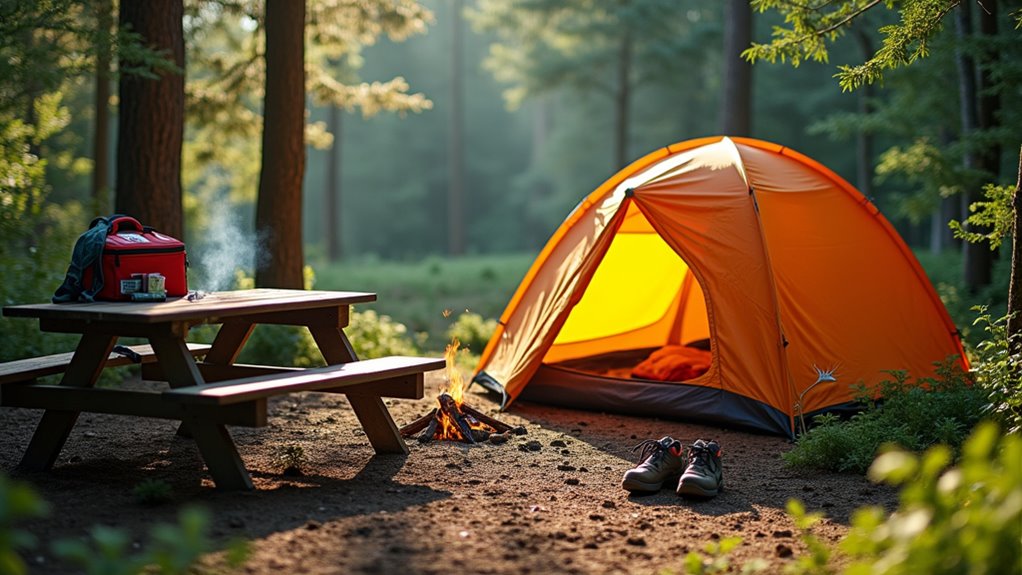
Prepare well to enjoy camping safely and stay healthy. Do exercises like running, lifting light weights, and stretching before your trip. These improve your strength and stamina. At the campsite, find open spaces to play sports or do bodyweight exercises. Walking on different trails can build endurance, and engaging in outdoor activities can enhance your overall experience. Carry important items such as a first aid kit, water bottles, and a phone for emergencies. Ensure your first aid kit includes essentials like band-aids and antiseptic wipes to address common injuries that may occur while camping.
| Preparation Aspect | Details |
|---|---|
| Physical Fitness | Cardio, strength training, and stretching |
| Emergency Supplies | First aid kit, water, and communication devices |
| On-Site Activities | Hiking, sports, and bodyweight exercises |
| Medical Emergency Protocols | Know the closest medical help and first aid skills |
| Monitoring Health | Watch your water intake and how your body feels |
Frequently Asked Questions
What Are the Best Materials for Tent Safety and Durability?
PVC-coated fabrics stand out for their toughness and water resistance. Polyester keeps tents safe from sun damage, lasting longer under UV rays. Dyneema offers incredible strength while staying lightweight. These materials blend durability and protection, making camping safer and more comfortable. Your tent can handle tough weather and wear with these choices. Strong fabrics mean fewer repairs and better shelter. Choose materials that fit your camping needs for the best experience.
How Can I Choose a Safe Camping Location?
Find a safe camping spot by checking the ground first. Pick flat, dry land to stay comfortable and safe. Read the campground rules to avoid dangers. Look for trees or hills that block strong wind. Clear water nearby helps with emergencies and cooking. Avoid places near cliffs or animal paths. These tips make your camping trip safe and fun.
What Should I Pack for a Safe Camping Trip?
Bring a strong tent and a warm sleeping bag. Carry a first aid kit for emergencies. Pack a multi-tool for fixing things. Take cooking gear to prepare meals. Always have water purification tablets or filters. These items keep you safe and ready outdoors. Camping with the right gear makes the trip fun and worry-free.
Are There Specific Safety Tips for Camping With Children?
Keeping kids safe during camping means watching them closely and knowing the risks. Pick a campsite without dangers like steep drops or wild animals. Set clear rules about where children can go. Teach them to spot hazards like sharp rocks or poisonous plants. Always carry a first aid kit and know basic first aid. Plan fun activities that keep kids busy and safe. This way, the whole family enjoys a safe and happy outdoor trip.
How Can I Ensure My Campsite Is Eco-Friendly and Safe?
Keep your campsite clean by managing trash properly. Store food in sealed containers to avoid attracting animals. Pick spots far from animal homes to protect wildlife. Use a camp stove instead of an open fire to reduce fire risk. Bring reusable items to cut down on waste. Water drains should be at least 200 feet from your site to keep water clean. These steps help protect nature and keep you safe. Camping can be fun and kind to the earth.
Conclusion
Tent camping stays safe with the right steps. Keep your tent aired out to stop carbon monoxide risks. Know about local animals and store food where animals cannot reach it. Watch the weather and bring gear for emergencies. Planning and paying attention help you enjoy nature safely. Safety makes camping fun and worry-free.
