
What Is A Rain Fly For A Tent
This post contains affiliate links. As an Amazon Associate, we earn from qualifying purchases.
A rain fly for a tent is a waterproof cover that shields your shelter from rain, wind, and sun. It enhances comfort by keeping the interior dry and helping to retain warmth. Later in the article, you will find a detailed explanation of different rain fly styles, materials, and the benefits they provide for various camping conditions.
Essential Facts in 30 Seconds
- A rain fly is a waterproof cover that protects tents from rain, wind, and sun.
- It prevents moisture from entering and improves insulation inside the tent.
- Rain flies come in several types: roof-only, ultralight, standard, full-coverage, and custom.
- They enhance camping comfort by keeping the tent dry and warm.
- Rain flies can also provide shade or be used as cooking shelters.
Definition and Purpose of a Rain Fly

A rain fly is an important part of your tent. It keeps rain and wind away from the tent. This cover is waterproof and made from strong polyester. You can attach it to the tent or place it over the top.
The rain fly stops water from getting inside. It also helps the tent stand steady in strong wind. It gives you extra privacy and blocks the sun’s rays. It keeps the tent cooler when it’s hot outside. Additionally, a rain fly can enhance the tent’s performance in wet conditions by providing an extra layer of protection.
The rain fly helps reduce moisture inside the tent. It creates space for air to flow. This stops water drops from building up inside.
Using a rain fly keeps your tent dry and safe. It makes camping more comfortable and protects your gear. Additionally, some tents come with added waterproof protection in the form of a rainfly, enhancing their overall performance in wet conditions.
Weather Protection and Insulation Benefits
Camping needs strong weather protection. A rain fly helps keep you dry and warm. It blocks rain, wind, and harmful sun rays. It stops moisture from entering your tent. It also keeps cold air outside. Additionally, a rain fly can enhance tent insulation techniques by adding an extra layer of protection against the elements. Using a rain fly also helps to conduct initial inspections to identify any potential leaks before setting up your tent.
Benefits at a glance:
| Benefit | Weather Protection | Insulation Advantage |
|---|---|---|
| Waterproof | Keeps the tent dry | Holds warm air inside |
| Wind Resistance | Blocks strong winds | Stops heat from escaping |
| UV Protection | Protects from sun damage | Keeps warmth during night |
| Snow and Ice | Stops tent collapse | Cuts cold drafts |
A rain fly makes camping safer and more comfortable. It keeps bad weather out and warmth in. That means better sleep and a happier trip.
Types of Rain Flies Available

Rain flies come in different types to fit your camping needs.
Roof-only rain flies cover just the top of your tent. They improve airflow but leave the sides open.
Ultralight rain flies look like tarps. They’re very light, perfect for backpackers, but cover less area.
Standard rain flies cover the upper part of the tent. They offer good protection for most campers.
Full-coverage rain flies wrap the whole tent. They protect well against strong rain and wind.
Custom rain flies fit specific tents exactly. They give the best fit and protection.
Think about weight, weather, and how much shelter you need. The right rain fly keeps you dry and comfortable outside.
Material and Construction Considerations
The right material and construction make a big difference for your rain fly. Fabric should have good waterproof ratings, last long, and be light. Here is a simple guide:
| Fabric Type | Key Features |
|---|---|
| Nylon | Light and strong against tears |
| Polyester | Affordable and holds shape when wet |
| Dyneema Composite Fabric | Very strong and highly waterproof |
| Canvas/Vinyl-coated Nylon | Tough and protects from sun |
Strong seams and good stitching keep the rain fly durable. Waterproof coatings like silicone or polyurethane help keep water out. Additionally, applying waterproofing treatments can further enhance the rain fly’s ability to repel water. Hydrostatic head ratings show how waterproof fabric is. Aim for above 10,000 mm for heavy rain. Balance weight and strength based on your camping needs. This way, your rain fly stays reliable in any weather. Additionally, proper waterproofing treatments can help enhance the longevity and effectiveness of your rain fly.
Usage Scenarios and Camping Context
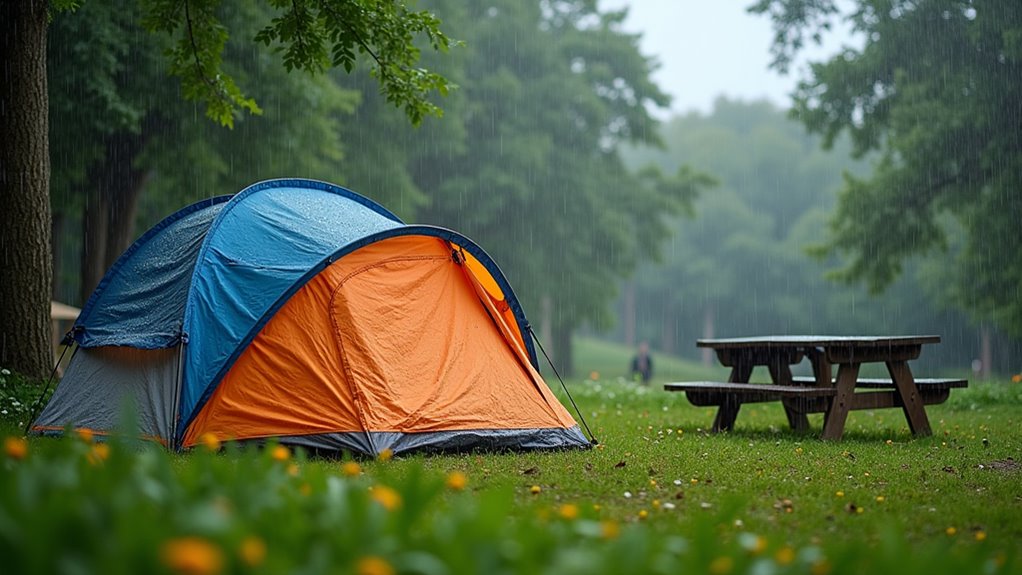
A rain fly is key for a good camping trip. It stops heavy rain from soaking your tent. It also keeps humidity away and holds strong in wind. In wet places, a full rain fly keeps your gear dry and prevents cold from wet clothes. It controls the water drops inside the tent too. Additionally, using a rain fly can help protect against uneven ground which can lead to water pooling under the tent.
In sunny spots, it gives shade and keeps the tent cooler. Set up the rain fly so it covers doors and windows. Change its position with wind or bad weather. You can use the rain fly as a cooking shelter or a private space. Knowing how to use a rain fly helps you stay safe and comfortable. It makes your camping trip better and more fun. Additionally, a rain fly can enhance your tent’s waterproof capabilities by providing an extra layer of protection against moisture.
Frequently Asked Questions
Can I Use a Rain Fly With Any Tent Model?
Rain flies do not fit every tent. Each tent has a specific size and shape. Using the right rain fly keeps you dry and safe. It also stops rain from leaking inside. Always buy a rain fly made for your tent brand and model. This way, it fits well and protects you better. Trying to use a different rain fly can cause gaps and leaks. Proper fit means better shelter during storms. Choose wisely to enjoy your camping trip.
How Do I Properly Set up a Rain Fly?
Set up a rain fly by spreading it flat on the ground. Match the grommets with your tent’s poles or hooks. Secure the rain fly using strong stakes. Use materials made for rain protection, like ripstop nylon or polyester. Pull the rain fly tight to avoid sagging. A tight rain fly stops water from pooling on top. Check the rain fly often during rain. Adjust the tension to keep it firm and dry. This method keeps you and your gear safe from rain.
Are Rain Flies Machine Washable?
Rain flies usually do not go in the washing machine. Their special fabric and waterproof coating can get damaged. Hand washing works best. Use mild soap and warm water. Rinse well to remove all soap. Let it dry fully before storing. This keeps the rain fly strong and water-resistant. Clean rain flies last longer and protect better. Simple care makes a big difference.
How Do I Store My Rain Fly to Prolong Its Life?
Store your rain fly in a cool and dry place. Keep it clean and completely dry before storing. Avoid packing it tightly to prevent damage. Regular cleaning and airing out extend its life. Proper care means your rain fly stays ready for every trip.
Can a Rain Fly Be Used as a Standalone Shelter?
A rain fly works well as a standalone shelter. It sets up quickly and keeps you dry in rain. It also blocks the sun’s heat. This shelter is light and easy to carry. It does not protect against bugs or give much privacy. Use a bug net or tarp for more comfort. Many campers trust rain flies for fast, simple shelter.
Conclusion
A rain fly protects your tent from rain and wind. About 70% of campers face rain on trips. A rain fly keeps you dry and warm inside your tent. Some rain flies are light tarps, others are thick and strong. Both types stop water from leaking in. Check your rain fly and tent before camping. Setting it up right helps you stay safe and comfy outdoors. A good rain fly is a smart choice for any camper.
