
What Is Tent Aluminum Lid Mean | The Real-World Trade-Offs
This post contains affiliate links. As an Amazon Associate, we earn from qualifying purchases.
A tent aluminum lid is a rigid cover or shell component made from aluminum alloy, designed to provide structural integrity, weather protection, and mounting points for accessories on specific types of camping shelters like rooftop tents and large frame tents.
Most people hear “lid” and think of a pot cover or a piece of foil. In the tent world, that mental picture sends you down the wrong trail. You start searching for cooking tips when you should be looking at rivets, struts, and waterproof ratings.
This guide cuts through the confusion. We’ll define what a tent aluminum lid actually is, where you find it, and the real-world trade-offs you make when you choose a shelter built around one.
Key Takeaways
- An aluminum lid is a structural component, not disposable foil. It’s the hard top on a rooftop tent or the reinforced peak cover on a large frame tent.
- The primary benefit is a rigid, lightweight shell that won’t sag under snow or deform in heat, but it requires vigilant maintenance of rivets and silicone seals.
- Using the wrong hardware, like zinc-plated bolts instead of 304 stainless steel, causes galvanic corrosion. Hinges can seize shut within a single season of coastal use.
- For rooftop tents, aluminum lids are often paired with a fabric “flysheet” or rain cover that attaches via M6 eye nuts and cam buckle straps, as detailed in the Alu-Cab Gen 3 manual.
- Compared to ABS plastic lids, aluminum is stronger and more heat-resistant but is more prone to cosmetic denting and requires specific, compatible hardware to avoid corrosion.
The Core Functions of an Aluminum Lid
Forget foil. A tent aluminum lid is a load-bearing part of the shelter’s architecture. Its job isn’t to cover leftovers; it’s to create a stable, protective shell.
On a hardshell rooftop tent, the aluminum lid is the entire upper half of the clamshell. You lift it, and the tent fabric deploys from underneath. On a large frame tent, like the Celina Tent Inc. 10′ x 40′ Classic Series, the aluminum lid might refer to a reinforced aluminum panel that caps the peak, providing a solid anchor point for the heavy-duty 16 oz. PVC coated polyester fabric. In products like the BIGTENT 48L Steel Inner Cover, the “Ultra-Light Aluminum Build” lids form a rigid structure that protects stored gear.
A tent aluminum lid serves three mechanical purposes: it distributes point loads (like snow or wind pressure) across its surface, provides a dimensionally stable mounting plane for hinges and gas struts, and acts as a thermal barrier that reflects sunlight more effectively than fabric or plastic.
TL;DR: An aluminum lid is the rigid, structural “roof” of certain tents, designed for strength and attachment points, not for wrapping food.
Where You’ll Actually Find One
You won’t find an aluminum lid on your standard dome backpacking tent. This is a component for engineered shelters where rigidity is non-negotiable.
* Hardshell Rooftop Tents: The entire top shell is a single, formed aluminum lid. This is the most common context.
* Large Frame Tents & Canopies: Aluminum panels form the “lid” or peak cover. The ExcelTent ET-X04AT-HEX40, a 40mm Hex Aluminum Pop Up Canopy, uses aluminum in its frame and likely its top panels.
* Expedition-Style Base Camp Tents: Heavy-duty models designed for prolonged weather exposure often use aluminum reinforcement at critical stress points, including the roof.
The presence of an aluminum lid signals a move away from ultra-lightweight backpacking gear and toward more permanent, vehicle-based, or group camping setups. It’s a cornerstone of shelters built for winter camping tents and other harsh environments.
Aluminum vs. ABS: The Weight-Durability Trade-Off
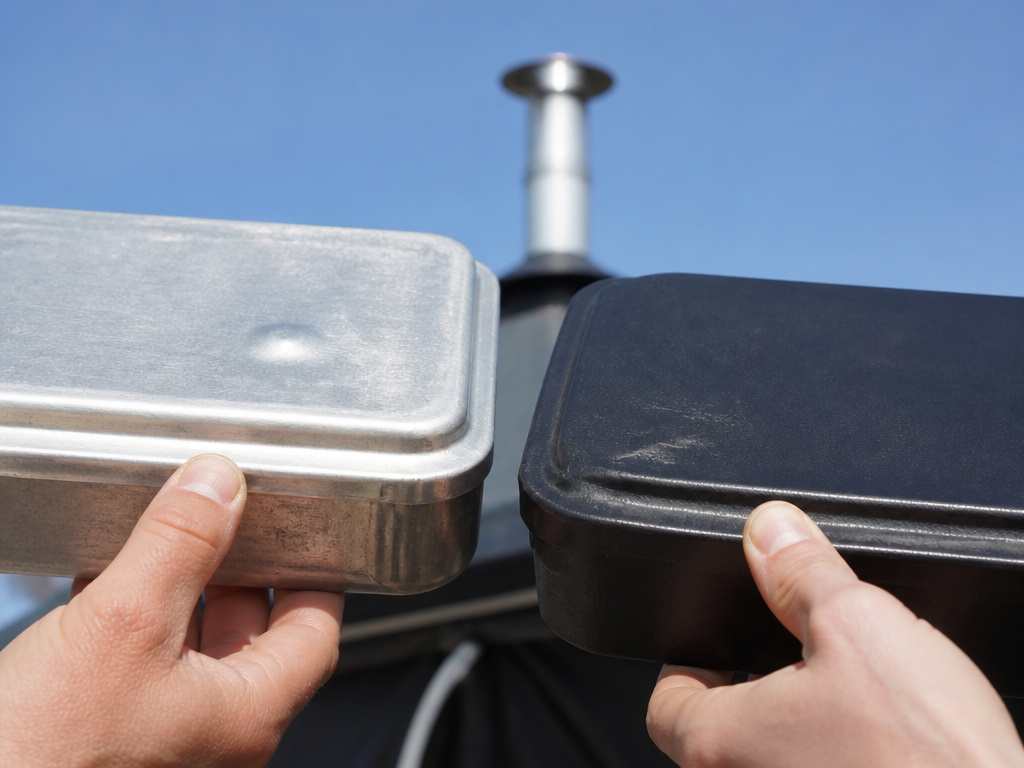
When shopping for a hardshell rooftop tent, you’ll often choose between an aluminum lid and an ABS plastic one. This isn’t a minor detail; it dictates the tent’s personality.
| Feature | Aluminum Lid | ABS Plastic Lid |
|---|---|---|
| Weight | Lighter for its strength. A win for fuel economy. | Heavier, which affects vehicle handling and MPG. |
| Durability | High tensile strength, resistant to UV degradation and extreme temperatures. | More flexible, better at absorbing impact without denting, but can warp in sustained heat. |
| Maintenance | Prone to galvanic corrosion if wrong hardware is used; requires sealant checks. | Chemically inert; won’t corrode, but plastic can become brittle with age and UV exposure. |
| Cost | Generally more expensive due to material and forming costs. | Often less expensive, making it a common entry-point option. |
| Aesthetic | Can dent from hail or branches; shows scratches. | Shows scratches more visibly, but hides small impacts better. |
Common mistake: Assuming an aluminum lid is “maintenance-free” because it’s metal, the silicone perimeter sealant dries and cracks within 2–3 years of sun exposure, and water will find every microscopic gap.
I leaned toward ABS for my first rooftop tent because I feared denting the aluminum on low-hanging branches. After a season, the ABS lid on a friend’s identical model had a slight warp from sitting in the Arizona sun, making it stick when opening. My aluminum one stayed true. The trade-off is real: aluminum can dent, but it holds its shape under thermal stress. Plastic flexes on impact but can deform over time.
For shelters that need to handle a wood-burning tent stove, the heat resistance of aluminum around the stove jack area is a tangible advantage. This is a key reason many canvas tents with stove jacks use aluminum reinforcement plates.
The Hidden Failure Points (And How to Spot Them)
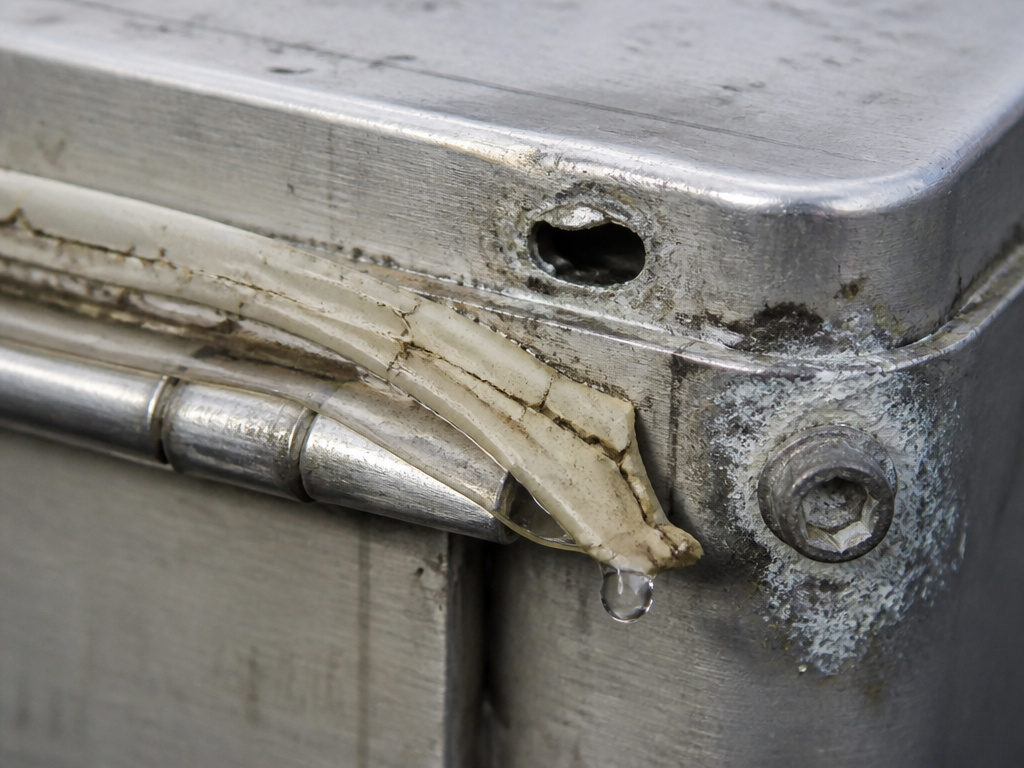
The aluminum itself is tough. The failure happens at the interfaces, where the metal meets another material or where it’s fastened together.
Sheared Rivets: This is the most common structural failure. The aluminum lid is typically riveted to its frame or hinge mechanisms. Off-road vibration and repeated opening/closing cycles work those rivets loose. You’ll see a tell-tale oblong hole where the rivet once sat. If one goes, the load shifts to its neighbors, starting a chain reaction.
Sealant Degradation: Where the aluminum sheet meets an extrusion or a hinge, manufacturers use industrial-grade silicone. This sealant is your waterproofing. When it dries out, cracks, or separates, often from chassis flex, water gets in. The tent might still claim a 3000mm hydrostatic head rating, but if the sealant at the corner is compromised, you’ll get a drip right onto your sleeping bag.
I’ve seen $3,000 rooftop tents pulled off rigs with calcium-like stalactites of failed sealant hanging from the hinge line after just two winters. It weeps slowly, so you don’t notice until the bolt underneath is rusted solid.
Galvanic Corrosion: This is the silent killer. Aluminum is anodic. If it’s in contact with a more cathodic metal like steel or zinc-plated hardware in the presence of an electrolyte (rain, salt, condensation), the aluminum sacrificially corrodes. It literally dissolves away at the contact point.
| Symptom | Likely Cause | Timeline to Failure |
|---|---|---|
| White, powdery crust around bolts or hinges | Active galvanic corrosion | Hinge seizure within 6–12 months in humid climates |
| Water dripping from inside a hinge or bolt | Perimeter sealant has cracked or detached | Leak appears during first heavy rain after the seal fails |
| Lid feels “loose” or rattles excessively | One or more structural rivets have sheared | Remaining rivets will follow within a season of use |
The fix is preemptive. Always use marine-grade 304 stainless steel hardware for any bolt, nut, or washer that touches the aluminum. That yellow-zinc bolt from the hardware store will cost you the lid. This principle of using the right fasteners is as critical as choosing the right tent camping equipment for the conditions.
Installation and Accessory Mounting
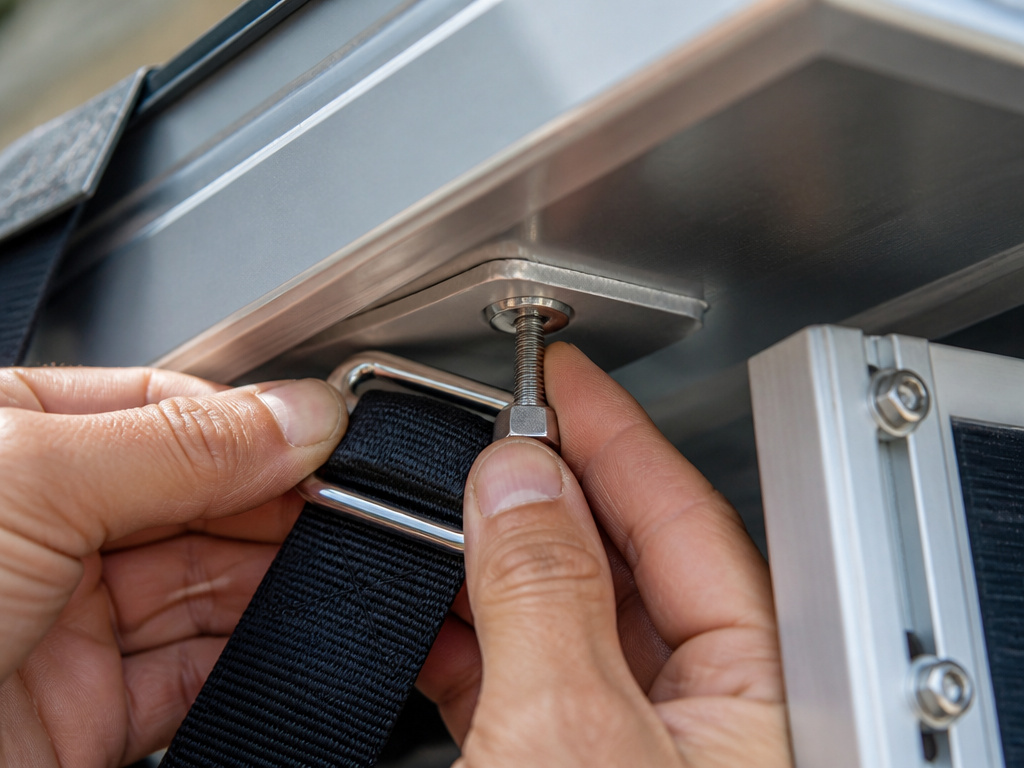
For many aluminum lids, their value is in their utility as a platform. They come pre-drilled with attachment points for a reason.
The Alu-Cab Gen 3 Tent Side Rain Cover installation manual is a perfect case study. It shows how the aluminum lid is designed with M6 threaded eye nuts. You use M6 bolts and a cam buckle strap to secure a side awning or rain fly. The flysheet itself connects to these points using flexi ties and spring hooks, and Velcro straps wrap around the gas strut to close gaps.
This turns the lid from a passive cover into an active part of your camp system. That same solid mounting surface can hold solar panels, recovery boards, or an awning. The process is straightforward but precise:
1. Locate the pre-drilled M6 eye nuts on the underside of the lid.
2. Thread the correct M6 bolt through your accessory’s mounting bracket.
3. Secure with a stainless steel lock nut, never overtighten, as this can strip the aluminum threads.
4. Use a cam strap or secondary lashing for any flexible accessory like a rain fly.
Common mistake: Overtightening mounting bolts into aluminum threads, the aluminum yields before the steel bolt feels tight, stripping the threads and leaving you with a spinning, useless anchor point.
This modular approach is a hallmark of serious overland and expedition gear. It’s why the lid isn’t just a cover; it’s your rig’s rooftop utility grid. Enhancing this functionality often involves adding the right tent camping accessories, from specific brackets to powered tent lighting systems.
Is an Aluminum Lid Right for Your Camping Style?
This choice dictates what kind of camping you’re ready for. An aluminum lid isn’t a universal upgrade; it’s a specific tool.
Choose an aluminum lid if:
* You need a rigid mounting platform for heavy gear like solar panels.
* You camp in very hot or very cold climates where material stability is key.
* You’re using a heated tent and want the heat resistance around a stove jack.
* Weight is a critical factor for your vehicle’s payload.
* You’re willing to perform seasonal maintenance on seals and hardware.
Consider a different material (like ABS or heavy-duty fabric) if:
* Your primary concern is avoiding dents and cosmetic damage from tree branches.
* You want a truly “set-and-forget” shelter with minimal maintenance.
* You’re on a tighter budget and the premium for aluminum isn’t justified.
* You mostly camp in mild, fair-weather conditions.
For family car camping where interior space is king, the aluminum lid’s weight savings might be less important than the headroom offered by a good stand-up tent. Conversely, for a minimalist backpacking hot tent setup, every ounce matters, but so does durability, making the aluminum versus ABS decision central.
Frequently Asked Questions
Can you repair a dent in an aluminum tent lid?
Yes, but it’s rarely cosmetic. Small dents can often be pushed out from the inside if you can access the panel. For structural dents on a seam or hinge line, professional welding or panel replacement is needed. A dent is mostly an eyesore; a cracked weld or sheared rivet is a failure.
How do you clean and maintain an aluminum lid?
Wash with mild soap and water. Avoid abrasive pads that scratch the surface. Once a year, inspect all silicone sealant for cracks or peeling. Re-seal with a marine-grade, UV-resistant silicone. Annually check every bolt and rivet for tightness and signs of white, powdery corrosion.
Does an aluminum lid make a tent hotter inside?
It can, if it’s dark-colored and in direct sun. Aluminum is a good conductor, but it also reflects radiant heat better than many materials. Using a reflective foil sunshade over the lid or parking in shade is more effective than worrying about the material itself. For summer camping, a portable air conditioner for tents addresses heat regardless of the lid material.
Are all aluminum tent lids the same quality?
No. The alloy grade, temper, and thickness (gauge) matter. Cheap lids use thinner, softer aluminum that dents easily. Quality manufacturers use aircraft-grade alloys like 6061-T6 for a better strength-to-weight ratio. The quality of the hinges, gas struts, and sealing methodology matters just as much as the lid material.
Can you install an aluminum lid on a tent that didn’t come with one?
Almost never. The lid is an integral structural component, not an add-on. The tent frame, hinge system, and fabric are engineered for that specific lid. Retrofitting one would require custom fabrication that likely voids any warranty and compromises safety.
The Bottom Line
A tent aluminum lid is a serious piece of engineering. It’s not a piece of foil you toss over a pole. It’s the rigid backbone of a shelter designed for exposure, attachments, and repeated deployment. Its value lies in its strength and utility, but that comes with a responsibility: you must maintain the seals and you must use the right hardware. Choose it for the right reasons, weight savings, heat resistance, a solid mounting platform, not because it just sounds more heavy-duty. Understand that its failure modes are specific and preventable. Then, whether you’re anchoring a rain fly with M6 eye nuts or just enjoying a rigid, sag-free roof, you’ll know exactly what that aluminum lid means for your camp.
